REVIEW · CHESTER
Deva Roman Experience
Book on GetYourGuide →Operated by Big Heritage · Bookable on GetYourGuide
You can feel 2,000 years of Roman Chester. The DEVA Roman Experience turns a visit into a staged journey with Roman scenes you move through, plus special effects that keep things moving. I especially like the Roman bath house and market street parts because they give you a clear sense of daily life, not just big-ticket spectacle. One thing to consider: if you mainly want quiet ruins and slow looking, the show format may feel a bit more performance than “stand and stare.”
What makes it work is the mix of cutting-edge projection mapping and real archaeology on site. I like how the experience tries to connect the tech and the dig—so you get both story and substance rather than lights-and-sounds only. It also runs like a guided experience with a clear flow, and the characters do their job well at keeping attention.
The potential drawback is pacing. The drama includes gladiator fighting to the death and strong theatrical moments, so it’s best if your group is happy with that tone. If you’re visiting with very sensitive kids or you prefer a calmer museum vibe, you’ll want to choose your moment carefully.
In This Review
- Key highlights you’ll care about
- Roman Chester that feels hands-on, not like glass-and-labels
- Roman bath house and market street: the daily-life core
- The amphitheatre moment: gladiators, drama, and projections
- Real archaeology on site: why it’s more than theatre
- What the “voyage” format means for your visit
- Price and value: what $10.78 buys you
- Logistics that matter on the ground
- Who should book the Deva Roman Experience?
- Should you book? My practical take
- FAQ
- FAQ
- Where do I start for the DEVA Roman Experience?
- How long is the DEVA Roman Experience?
- What’s included with my ticket?
- Is there a live guide?
- What language is the tour in?
- Is the experience wheelchair accessible?
- How much does it cost?
- Does it include Roman bath house and market street areas?
- Is there an amphitheatre and gladiator scene?
- Does it use special effects or projection mapping?
- Can I cancel if my plans change?
Key highlights you’ll care about
- Roman Chester scenes you walk through, including a bath house, market street, and amphitheatre
- Projection mapping and special effects that make the setting feel alive
- Real archaeology on site, so it’s not all stagecraft
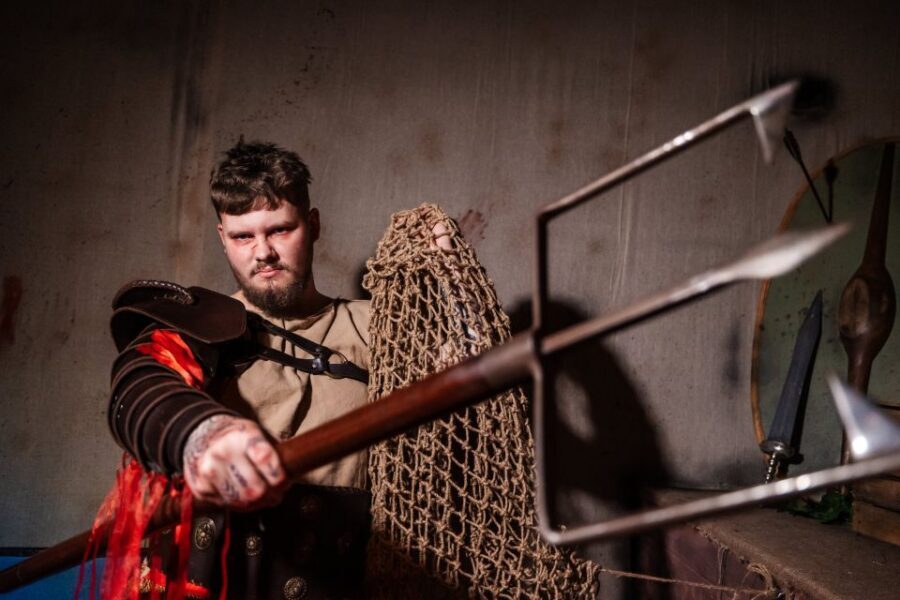
- A gladiator fight scene that’s central to the amphitheatre portion
- Interactive end section with hands-on dig-style displays (including an interactive museum moment)
Roman Chester that feels hands-on, not like glass-and-labels

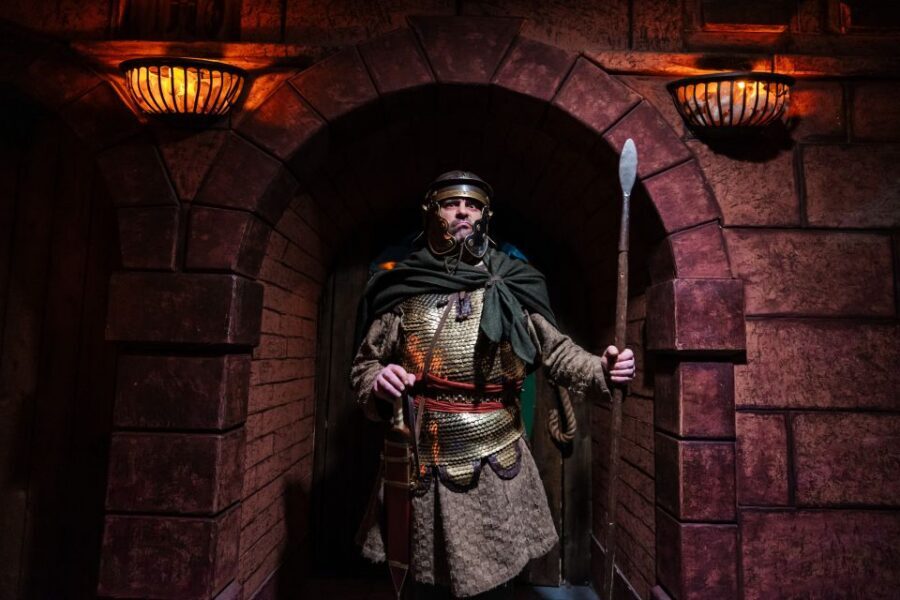
This is the sort of ticket that changes how you look at Chester. Instead of standing outside ancient walls and reading captions, you’re pulled into the world of Roman Britannia and the fortress of DEVA Victrix. You join a legion and get guided through the sights and sounds of Roman Chester as part of a scripted, character-led experience.
I like that the experience aims for physical presence. You’re not just hearing about what the city was like—you’re placed in the spaces where Roman life gets acted out. That makes it a better choice for families and for anyone who learns faster by doing than by reading.
At the same time, it’s still a guided attraction with clear set pieces. So even though it’s history-themed, think of it as a live Roman performance with educational stops, not a self-led archaeological site tour.
You can also read our reviews of more tours and experiences in Chester.



Roman bath house and market street: the daily-life core
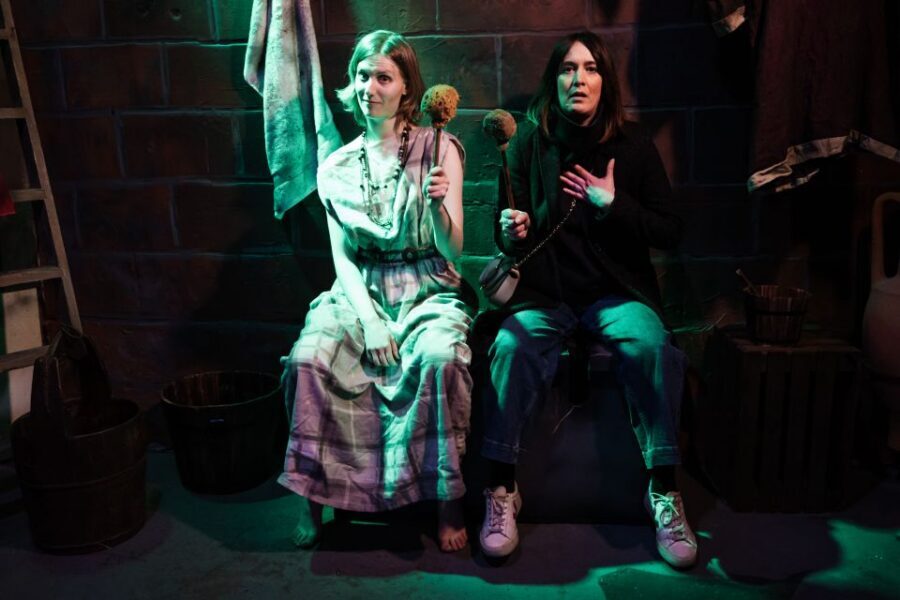
The heart of the experience is the day-in-the-life feeling. You move through a Roman bath house and then into a market street environment where the vibe is trade, talk, and Roman routine. This is where the experience is most “practical” for your understanding, because these are the kinds of places Romans actually used every day.
Why it matters: most Roman sites can feel abstract if you only see ruins. Bathing and marketplaces give you a mental model for how people lived—how they spent time, where social life happened, and what public spaces did for the community. You’re not just learning dates; you’re building a picture of routine.
These stops are also a nice speed match for kids. The attraction uses visuals and sound cues to keep attention. And since it’s structured like a journey, it doesn’t dump everything on you at once. You get a clear sequence: bath house, market street, then the amphitheatre segment.
One note to keep your expectations aligned: this is still an experience built around staged scenes. So if you want to linger in one area for a long quiet read, the timing may not let you do that.
The amphitheatre moment: gladiators, drama, and projections

Then comes the headline: the amphitheatre and the gladiator fight. The description doesn’t hold back—gladiators fight it out to the death, and the amphitheatre portion uses special effects and projection mapping to sell the drama.
If your group enjoys live theatre energy, you’ll likely love this part. The amphitheatre segment is built to be the emotional peak—loud, visual, and memorable. One review-style takeaway you should consider: the gladiator moment works particularly well with younger kids because it’s clear, action-based, and hard to miss.
There’s also a detail that popped up in feedback: there can be a boat scene and other props woven into the storytelling. I can’t confirm every prop on every run, but it signals that this isn’t just “watch from seats.” It’s designed for interaction and attention.
What projection mapping adds here is context. Rather than only showing you figures and costumes, the projections help communicate the scale and look of the world you’re stepping into. It makes the amphitheatre feel like a Roman stage set with more depth than you’d get from props alone.
Real archaeology on site: why it’s more than theatre

Here’s the part I appreciate most: this isn’t only special effects. The experience explicitly includes real archaeology on site alongside the theatrical elements. That’s a big deal for your trust level, because you’re not being asked to accept everything as fiction.
So how should you think about it? Treat the show as the wrapper and the archaeology as the anchor. The drama gives you emotional understanding—who Romans were and what they did. The archaeology gives you a concrete connection to the actual place.
You also get an end segment that’s a bit more hands-on. Feedback highlights interactive museum/dig displays at the end. That kind of stop is valuable because it bridges the gap between “cool story” and “okay, now I understand what I’m looking at.”
What the “voyage” format means for your visit
The experience frames itself as a voyage back through time to Roman Britannia—specifically the fortress world of DEVA Victrix. You join the legion and help expand the Roman empire. It sounds grand, but in practice the format matters because it shapes how you move through the spaces.
This means you’ll likely spend less time wondering where to go next. The experience is built like a guided pathway: bath house, market street, amphitheatre, then the interactive archaeology/museum-style section.
You also get a live tour guide in English, which is helpful if you want the story connected to the place. Since language is listed as English, it’s a clear fit for English-speaking groups. If you’re hoping for multilingual interpretation, you may want to check options before you book.
Timing is also part of the design. The attraction runs on a schedule tied to your chosen start time, and it’s described as valid for 1 day with starting times available based on availability. Plan to arrive with enough margin so you can start without stress.




Price and value: what $10.78 buys you

At $10.78 per person, this is priced like a budget-friendly ticket compared with many full-day attractions. The real value is in what you get for that money: entry plus a guided, character-led experience with multiple Roman-themed environments and a big amphitheatre show.
You’re not paying for transport, meals, or extra add-ons in the information provided. The entrance ticket is the included item, so your spending is mostly just the ticket cost.
Is it “worth it” for adults? I think so, especially if you like experiential learning. You’ll get a sequence of set pieces and some real archaeological connection, plus projection mapping that makes the spaces visually clearer.
Is it worth it for families? Based on the overall tone of feedback, it tends to land well because it has action, clear scenes, and interactive dig-style moments. Even if you don’t love gladiator drama, the bath house and market street stops give you variation.
The biggest value test: do you enjoy guided performance-style history? If yes, this ticket makes sense. If you prefer a quiet site visit where you can wander freely with minimal staging, you may feel like you’re being carried through at a faster pace.
Logistics that matter on the ground

This experience is straightforward to access. Your visit starts by presenting your voucher at reception. It ends back at the same meeting point, so there’s no mystery “final drop” at the end of your day.
It also lists wheelchair accessibility, which is a major practical point. If your group has mobility needs, this at least signals you should be able to access the experience without needing to rearrange your plans around stairs and tricky entrances.
Because it’s a timed activity with starting times, don’t plan a tight schedule with another must-do immediately after. Give yourself buffer time so you’re not rushing out of the amphitheatre segment and into your next stop.
Who should book the Deva Roman Experience?
Book this if you want Roman Chester to feel physical and story-driven. It’s a strong fit for:
- Families looking for a history attraction that mixes action with learning
- Adults who learn better through guided scenes than through labels
- Anyone who likes Roman spectacle but also wants a bit of real archaeological grounding
Skip it—or at least think twice—if you want:
- A quiet, self-paced ruin-and-interpretation walk
- A purely academic lecture format with minimal theatrical elements
Should you book? My practical take
If your ideal day includes Roman baths, market street life, and an amphitheatre show, this is an easy yes. The combination of projection mapping, special effects, and real archaeology on site is a smart way to connect entertainment with place-based learning. And with an entrance ticket around $10.78, the cost risk is low compared with many day activities.
If you’re bringing kids, especially, it’s a good bet because the format is built for attention—there’s action, characters, and interactive dig-style displays at the end. Just make sure your group is okay with the gladiator fight tone, since that’s central to the experience.
In short: book it for the experience energy, and go in expecting a guided performance that also takes the archaeology seriously.
FAQ
FAQ
Where do I start for the DEVA Roman Experience?
You start by presenting your voucher at reception. The activity ends back at the meeting point.
How long is the DEVA Roman Experience?
It’s described as valid for 1 day. Starting times depend on availability.
What’s included with my ticket?
Your ticket includes entrance to the experience.
Is there a live guide?
Yes. A live tour guide is included, and it’s in English.
What language is the tour in?
The tour language is listed as English.
Is the experience wheelchair accessible?
Yes, it’s listed as wheelchair accessible.
How much does it cost?
The price is listed as $10.78 per person.
Does it include Roman bath house and market street areas?
Yes. The experience includes a Roman bath house and a market street as part of the scenes.
Is there an amphitheatre and gladiator scene?
Yes. The amphitheatre portion includes a gladiator fight to the death.
Does it use special effects or projection mapping?
Yes. The description mentions special effects and cutting-edge projection mapping.
Can I cancel if my plans change?
Cancellation is listed as free up to 24 hours in advance for a full refund.