REVIEW · LONDON
Greenwich Highlights Private Half Day Tour
Book on GetYourGuide →Operated by Greenwich Royal Tours · Bookable on GetYourGuide
Greenwich is where oceans, clocks, and empires meet in one walk. This private half day packs the big hitters: the Prime Meridian, Cutty Sark, and two of Greenwich’s top museums—handled by a live guide who ties the science and sea stories together.
I especially like how the itinerary flows from the River Thames up to the Royal Observatory, then back down into the National Maritime Museum. You’ll also get time for Queen’s House, including Elizabeth’s Armada portrait, which adds an art-and-power layer that most Greenwich visits skip. The only real drawback to consider is the walking: it’s a moderate guided stroll, so comfortable shoes matter.
In This Review
- Key Highlights You’ll Actually Care About
- Greenwich Works So Well in 3.5 Hours
- Meeting at Sir Walter Raleigh and Finding Your Tempo
- Walking the Thames to Old Royal Naval College (Sir Christopher Wren’s Legacy)
- Royal Observatory and the Prime Meridian: More Than a Photo Spot
- National Maritime Museum: Britain at Sea, With a Break Built In
- Queen’s House: The Art Museum Angle That Completes the Story
- Cutty Sark: A Restored Clipper That Still Feels Fast
- Greenwich Market Finish: Street Food, Antiques, and an Easy Exit
- Price and Value: What You’re Paying For
- Who This Private Tour Fits Best (and Who Might Want a Plan B)
- Guide Quality: The Human Difference
- Should You Book It?
- FAQ
- How long is the Greenwich Highlights Private Half Day Tour?
- Is this tour private?
- What’s included in the ticket price?
- Is food included?
- Where do we meet the guide?
- Do children get a discount or free entry?
Key Highlights You’ll Actually Care About
- Prime Meridian at the Royal Observatory: stand by the line that separates east and west and connect it to Greenwich Mean Time.
- John Harrison’s problem solved, in clock form: the observatory’s timepieces explain why accurate time mattered for navigation.
- National Maritime Museum pace with a reset: you get a break to sit with tea or coffee after the big exhibits.
- Cutty Sark in restored glory: the restored clipper ship reopened May 1, 2012.
- Queen’s House adds the human story: Elizabeth’s Armada portrait makes the political stakes feel real.
- Private guide, private rhythm: it’s just you and your group, not a cattle-herd schedule.
Greenwich Works So Well in 3.5 Hours
For many people, Greenwich can feel like a “someday” place because there’s a lot to do. This tour fixes that. In just 3.5 hours, you hit the main anchors that explain why Greenwich became famous: the science of timekeeping, Britain’s maritime power, and the art and politics that shaped empire.
You’ll also appreciate the private setup. Instead of rushing through rooms and hoping for the best, you get a guide who can slow down where you’re curious and speed up where you’re not. It’s a small thing, but it changes the whole feel of a historic district.
One more practical note: you’ll start near the Greenwich riverfront and cover sights that are close enough to do on foot, which means you spend your time looking out instead of checking transit connections. Greenwich is also easy to reach by cruise boat, rail, or the DLR, so this half-day fits neatly into a longer London plan.
You can also read our reviews of more private tours in London

Meeting at Sir Walter Raleigh and Finding Your Tempo
The meeting point is specific for a reason. You’ll meet at the Sir Walter Raleigh statue just outside the northern entrance to the Greenwich Tourist Information Centre, across from Greenwich Pier.
That’s handy because you can usually picture where you are: Thames water, pier area, and a clear landmark statue. If you’re coming by boat or DLR, it’s also a quick way to get your bearings fast—then you’re off on foot.
Since this is a walking tour with moderate fitness, I’d plan like you’re doing a focused neighborhood walk, not a sit-and-sip museum day. Wear shoes you’d wear for a couple of hours of city walking. The route is designed to be do-able, but your legs will notice if you show up in flimsy sneakers or dress shoes.
Walking the Thames to Old Royal Naval College (Sir Christopher Wren’s Legacy)
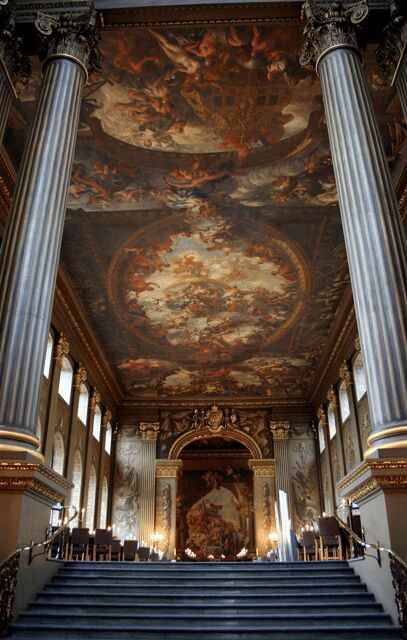
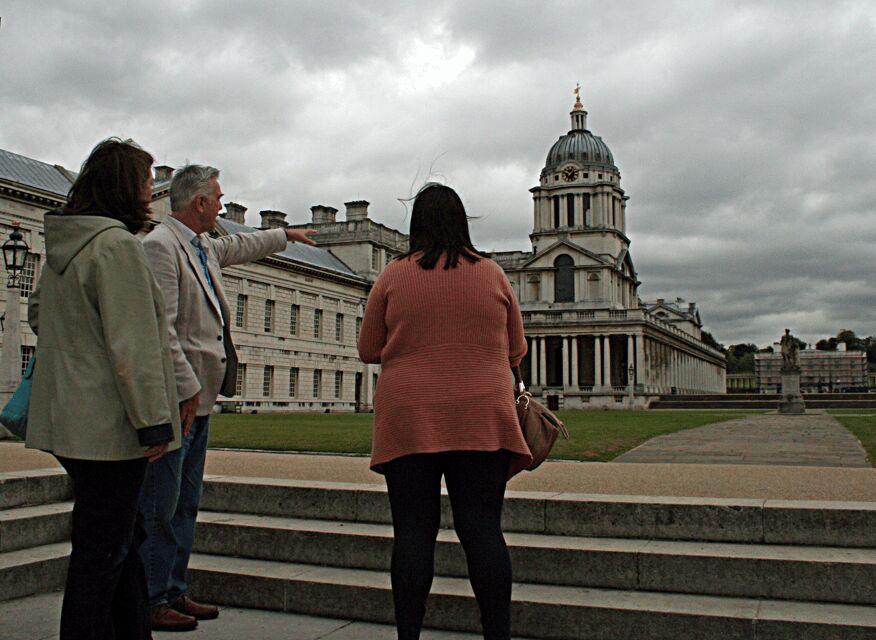
Your morning starts with a stroll along the River Thames toward the nearby Old Royal Naval College, designed by Sir Christopher Wren. This is one of those areas where the setting does half the storytelling. The river reminds you these weren’t abstract ideas—this was a working world of ships, supply lines, and training.
At the Old Royal Naval College, you’ll see how the Royal Navy used the site as a training college up until the Millennium. That time frame matters. You’re not just looking at a beautiful old building; you’re watching how naval education and the modern era overlap in the same place.
A private guide helps here, because the architecture alone can feel like “pretty stone.” With context, you start noticing what the buildings were built to do and why Greenwich became a naval brain trust.
Royal Observatory and the Prime Meridian: More Than a Photo Spot
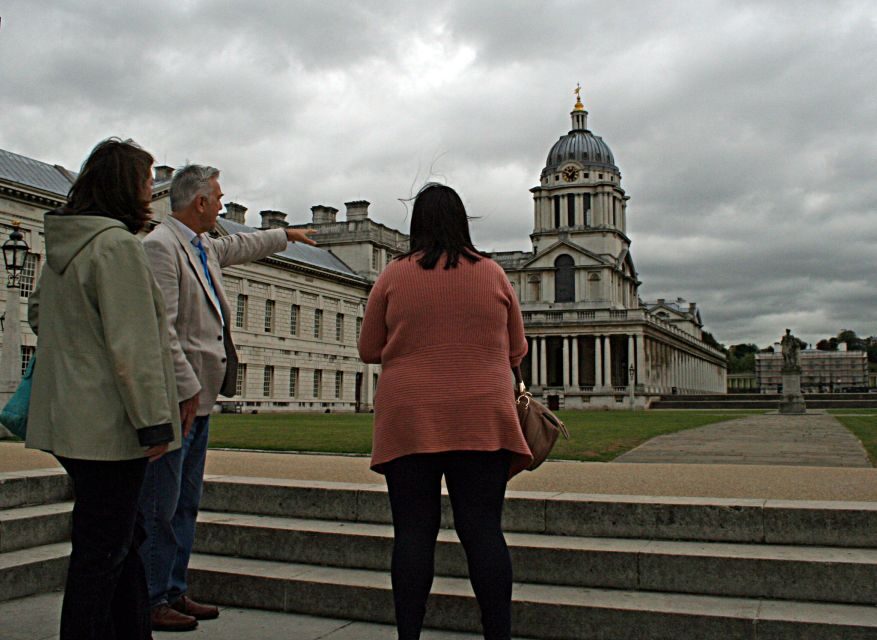
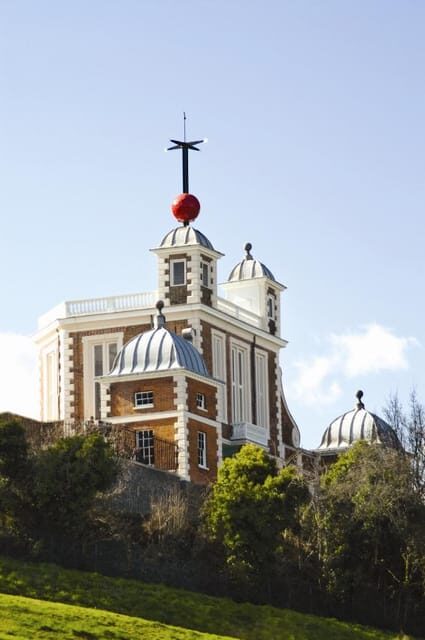
Then the tour climbs to the Royal Observatory, the home of the Prime Meridian—zero degrees longitude—and the foundation for Greenwich Mean Time. If you’ve only seen the Prime Meridian line in pictures, you’ll likely be surprised by how real the geography feels on site. Standing by the dividing line, you can actually connect east and west to the way ships and countries planned routes and schedules.
What makes this stop special is the way time becomes a practical tool. You’ll also visit the observatory museum and see the unique clocks associated with John Harrison, the figure tied to solving the longitude problem for seafarers. Longitude is one of those big historical topics that often gets explained like a trivia question. Here, it’s connected back to navigation—the difference between arriving safely and getting hopelessly lost.
This is also a great moment to ask your guide questions, because timekeeping science can lead to the good stuff: how precise measurements changed navigation, and why one invention could affect every voyage that depended on reliable position.
National Maritime Museum: Britain at Sea, With a Break Built In
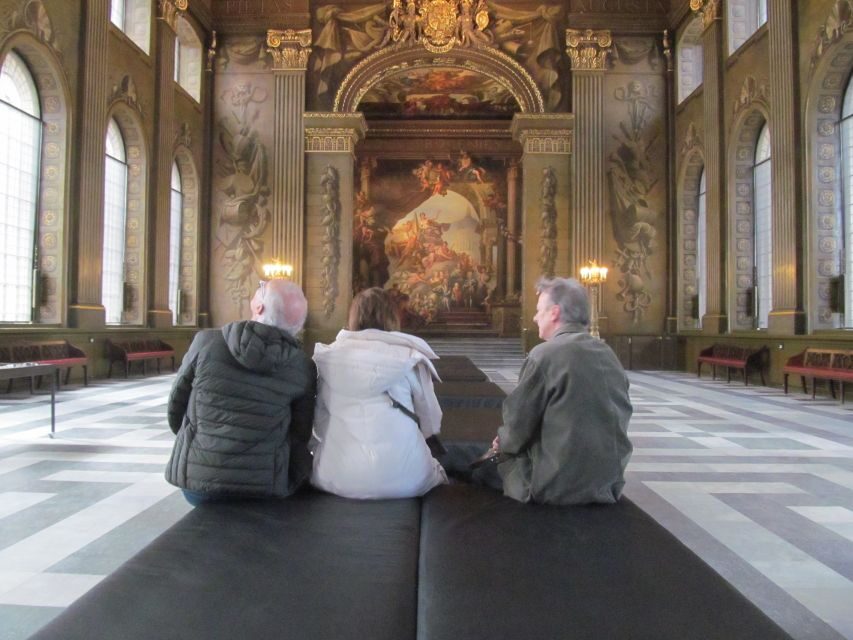
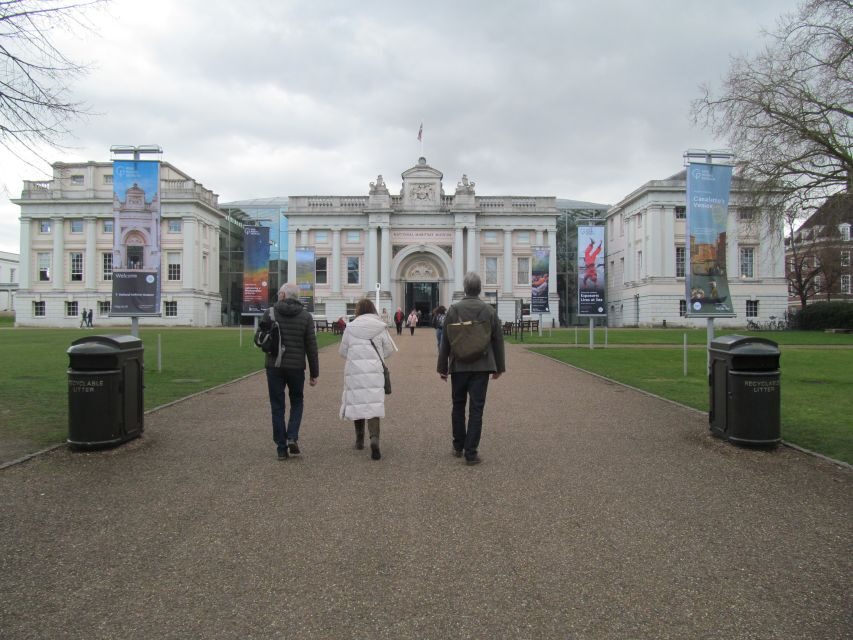
After the Royal Observatory, you’ll head down to the National Maritime Museum, described as the world’s largest maritime museum. It’s a lot of galleries, and it can be easy to get lost if you’re just wandering on your own.
This is where the private format shines again. Instead of taking in everything at full speed, you’ll get a guided path through the highlights that matter: Britain’s seafaring past and its naval power. Your guide can also help you connect the museum objects to what you’ve just learned at the observatory—time and navigation go together.
There’s also time to rest your feet. The tour specifically includes the chance to enjoy tea or coffee here, which is smart. Maritime museums are dense, and a short sit-down keeps you from burning out halfway through.


Queen’s House: The Art Museum Angle That Completes the Story
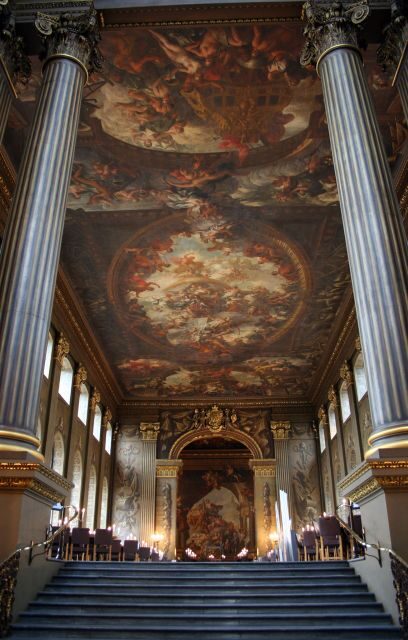
Most Greenwich visits stop at the science and ships. This one also includes Queen’s House, the art museum of Greenwich. One reason I like including it is that it broadens the theme from technology and empire logistics into the human side of power.
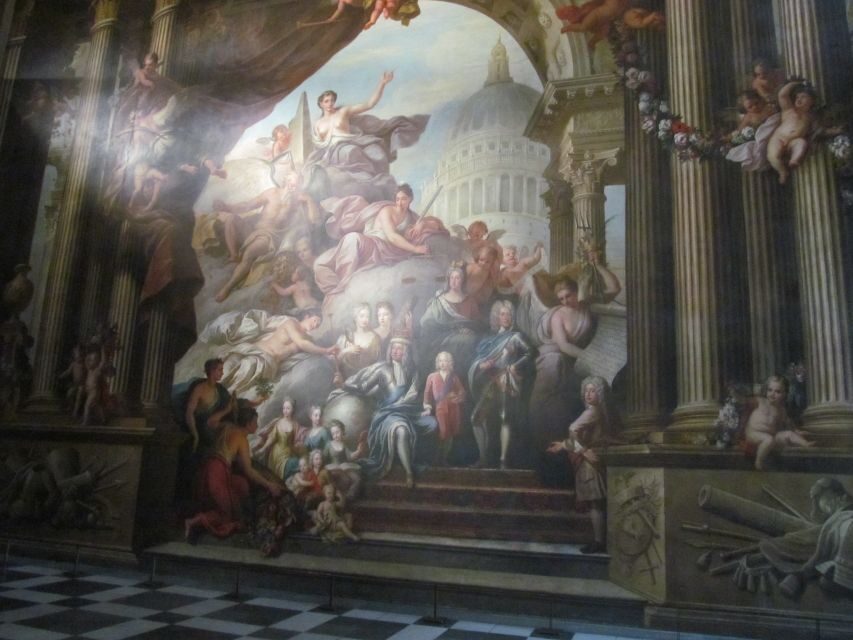
Queen’s House includes Elizabeth’s Armada portrait, and seeing it during a tour about maritime history helps you connect the dots. The Armada story wasn’t only about ships; it was about strategy, national identity, and leadership. Even if you don’t consider yourself an art person, the historical context makes the painting feel like evidence, not decoration.
If you want a balanced morning—some science, some navigation, some naval power, and some political imagery—Queen’s House earns its place.
Cutty Sark: A Restored Clipper That Still Feels Fast
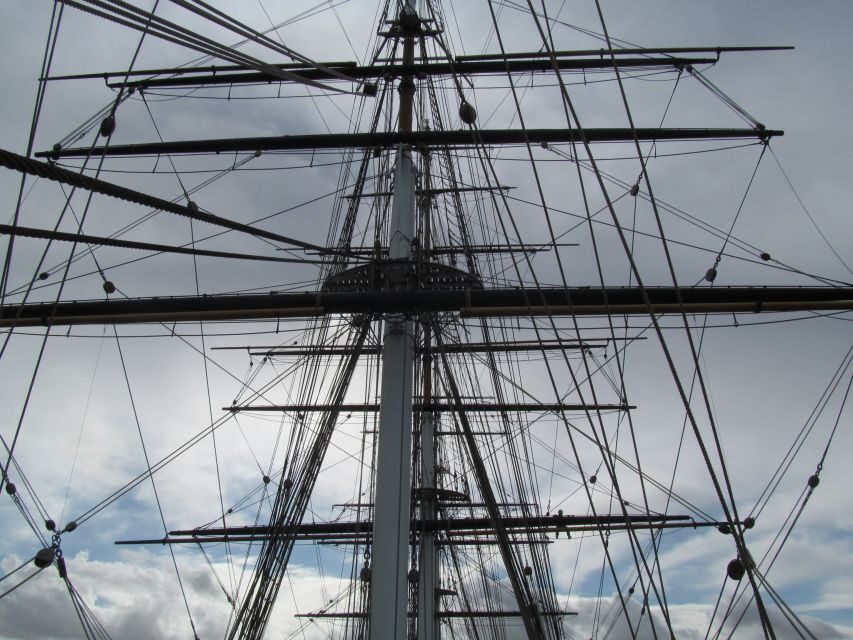
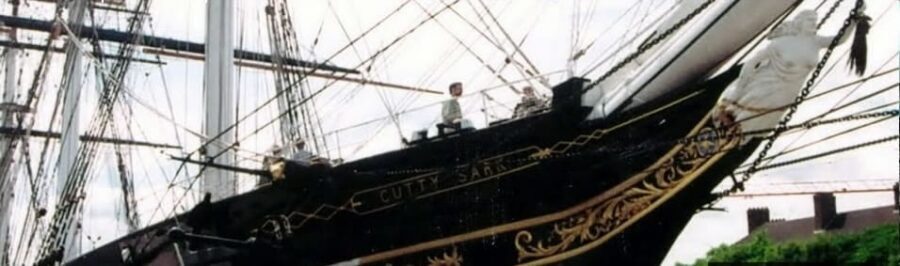
Then comes the star ship: Cutty Sark. You’ll get to go aboard the world-famous clipper ship. In its day at the very end of the Age of Sail, it was the fastest ship on water. That’s a big claim, and the ship helps you understand why it mattered so much.
The ship was newly restored for 50 million pounds and reopened to the public on May 1st, 2012. That restoration timing matters because it explains why Cutty Sark feels polished and visitor-friendly while still being an authentic vessel. You get the “wow, this is real” factor without feeling like you’re peering into a dead exhibit.
Even with limited time, Cutty Sark gives you a vivid link between the earlier stops and the real world of sailing. You learned how timekeeping helped navigation. Now you’re standing on a ship designed for speed, built for the last era when sail could still compete aggressively.
Greenwich Market Finish: Street Food, Antiques, and an Easy Exit
The tour ends at Greenwich Market, which is a solid finish point because it lets you choose your own pace after the structured part. You’ll find art galleries, antiques, and plenty of street food options.
I like ending here because it prevents the “okay, that’s it, now what?” feeling. If you want a quick snack, you can do that right away. If you want souvenirs, you’re in the right zone. And if you still have energy, you can wander without feeling like you have to hit more major attractions before closing time.
Price and Value: What You’re Paying For
This is not a cheap, casual walk. The information you provided lists a price around $398 per person, and it also mentions pricing of £245 per person for a couple, with reductions when you add more people. That tells me the cost likely depends on group size and how you book.
So is it worth it?
For me, the value comes from four things you don’t get on typical self-guided itineraries:
1) Admissions are included, so you aren’t doing math at each door.
2) You get a live guide who can connect the museums and the observatory into one storyline.
3) It’s private, which means fewer waiting moments and more flexibility if you’re the curious type.
4) The itinerary hits the three “why Greenwich matters” pillars: time/navigation (Royal Observatory), maritime power (National Maritime Museum), and seafaring life/technology (Cutty Sark), plus Queen’s House for the political art layer.
Food isn’t included, so plan for a snack or tea at your own pace outside what’s built into the museum stop. Transportation also isn’t included, but the area is easy to access via DLR, rail, or a cruise boat, which helps keep the day smooth.
If you’re traveling solo or as a couple and want one high-quality guided morning rather than a bundle of ticketed attractions done by yourself, this pricing can make sense.
Who This Private Tour Fits Best (and Who Might Want a Plan B)
This tour is ideal if you:
- want a focused Greenwich overview without spending half a day figuring routes
- enjoy guided storytelling that connects science, history, and artifacts
- like the idea of seeing the Prime Meridian and Harrison’s clocks with context instead of just reading placards
- prefer a private pace rather than a group schedule
It may be less ideal if you:
- have very limited mobility or don’t enjoy walking on a guided route, since it’s described as moderate fitness and you’ll be moving between several sites
- want a fully self-paced museum day with lots of free time in each gallery
- are hoping for lots of included meals (it includes admissions and tea/coffee time, but not full food)
Guide Quality: The Human Difference
The biggest strength people highlight is the guide quality—especially the way they tell stories so the sites feel alive. Past guides mentioned include Nathan, Victoria, and Steven, with praise for making the history feel understandable and for communicating clearly.
That said, a tour like this depends on people showing up on time. One booking noted a late instructor, and another described a no-show situation that led to a refund being processed quickly after communication. Those cases are rare, but they’re a reminder: if a schedule matters to you, arrive early to the meeting point and stay aware of start time.
In other words, plan as if the tour will be perfect—and also act like a traveler who knows that punctuality sometimes hiccups anywhere in the world.
Should You Book It?
If you’re deciding between a casual Greenwich day and a guided one, I’d lean guided. This tour makes the key sites work together: Prime Meridian + John Harrison’s clocks + maritime museum context + Cutty Sark + Queen’s House. You finish with an easy transition into Greenwich Market, so the day doesn’t end the moment the last ticket gets scanned.
I’d book if you want clarity, good pacing, and a guide who can connect the dots across timekeeping, navigation, and Britain’s sea story. I’d think twice if walking is an issue for you or if you’re allergic to paying for private guiding.
FAQ
How long is the Greenwich Highlights Private Half Day Tour?
It lasts 3.5 hours.
Is this tour private?
Yes, it’s a private group tour with a live English-speaking guide.
What’s included in the ticket price?
All admissions are included. The tour also includes the chance for tea or coffee during the National Maritime Museum stop.
Is food included?
No full meals are included. Food isn’t listed as included (tea/coffee time is mentioned).
Where do we meet the guide?
Meet at the Sir Walter Raleigh statue outside the northern entrance to the Greenwich Tourist Information Centre, across from Greenwich Pier.
Do children get a discount or free entry?
Children 5 and under go free.