REVIEW · LONDON
Lights, Camera, London! Movie Locations Walking Tour
Book on GetYourGuide →Operated by Where Now Tours · Bookable on GetYourGuide
London has a movie scene around every corner.
This Lights, Camera, London walk turns famous landmarks into real filming locations, then backs it up with clips from big screen franchises like Mission: Impossible, Harry Potter, Fast & Furious, James Bond, Marvel, Disney, and more. You’ll also get the film-industry angle—where British film really started—while seeing both major squares and smaller, older streets tucked into the city.
What I like most is the way the tour uses on-the-spot film clips to connect the story to the exact street you’re standing on. The second big win is the route balance: you get classics like Piccadilly Circus and Trafalgar Square, plus quieter stops such as Cecil Court and the area around Scotland Yard. One thing to consider: it’s about 90 minutes of brisk walking, with Underground travel along the way, so it’s not the best pick if you want a slow, sit-down pace or need wheelchair-friendly routes.
If you’re ready for a quick sprint through film London with a guide who answers questions (and keeps the context clear), this one’s great value for a short visit.
In This Review
- Key Things That Make This Tour Work
- Lights, Camera, London: What This 2-Hour Walk Really Does
- Starting at Piccadilly Circus: The Fast Route Into “Film London”
- A practical tip
- Cecil Court and Trafalgar Square: Big Names and Film’s Earlier Roots
- Possible drawback to keep in mind
- Great Scotland Yard and The Blackfriar: Where Crime Stories Feel Earned
- Tube Transfer and St Paul’s to Millennium Bridge: Big-Scene London on Foot
- A note on expectations
- Shakespeare’s Globe and Borough Market Finale: Where the Tour Lands
- What you should plan
- Price and Value: Is $18 Worth It?
- Pace, Group Mood, and Who This Suits Best
- Accessibility reality check
- Who will love it
- Who might not
- Should You Book This Tour
- FAQ
- FAQ
- How long is the Lights, Camera, London! Movie Locations Walking Tour?
- Where is the meeting point?
- What’s the walking pace like?
- What movies and franchises are featured?
- Are food and drink included?
- Do I need an Oyster card or contactless payment for the Underground?
- Is the tour suitable for children?
- What should I bring?
- Are there any rules about what’s not allowed?
- Can I get a refund if plans change?
Key Things That Make This Tour Work
- Film clips at the exact locations: you’re not just told stories, you see short scenes tied to each stop
- Real London history, not just movie trivia: you’ll hear where British film got its start and how the industry formed in the city
- Iconic landmarks plus under-the-radar streets: Piccadilly Circus, Trafalgar Square, and Millennium Bridge alongside places like Cecil Court
- Action-movie-friendly walk: you’ll hit recognizable settings used across major franchises (Bond, Marvel, etc.)
- Borough Market as the finish line: a satisfying end point with food stalls nearby if you want to keep exploring
- Guides who keep it moving and interactive: on this route, guides such as Ryan or Jamie have a reputation for answering questions and using the clips to keep everyone on the same page
Lights, Camera, London: What This 2-Hour Walk Really Does
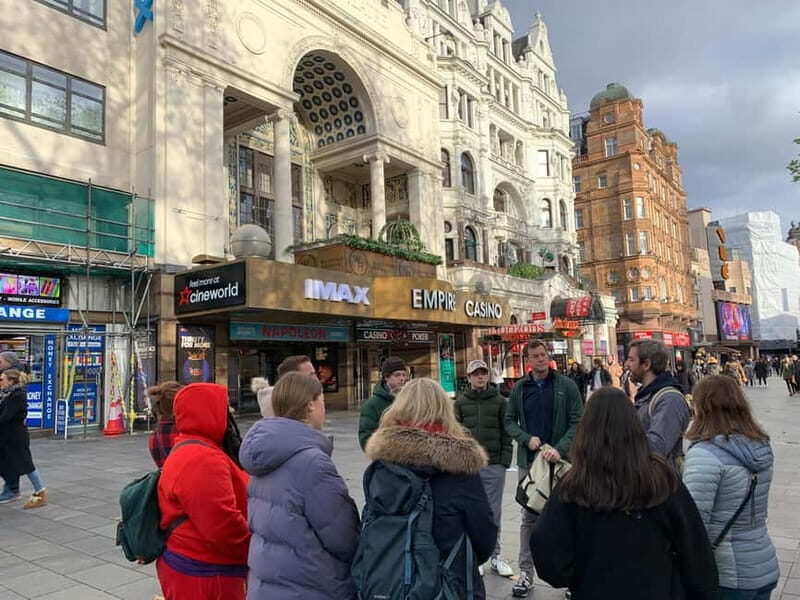
This is a short, focused movie-location walking tour that treats London like a film set you can actually walk around. Your guide leads you from place to place, and at each stop you get clips that match what you’re seeing. Instead of vague “they filmed here once,” you get the scene context tied to the street corner, building frontage, or nearby landmark.
It also does something a lot of movie tours forget: it includes the history of film in London and explains where the British film industry started. That matters because otherwise these locations feel like random postcard backdrops. With the background, you start noticing how London’s streets and neighborhoods shaped filmmaking styles and production life.
The format is simple: photo stops, brief walking segments, and short guided explanations. The trade-off is pace. This isn’t slow sightseeing with lots of time to browse. The tour includes about 90 minutes of brisk walking, plus Underground travel for part of the route, so plan your day around it.
You can also read our reviews of more walking tours in London


Starting at Piccadilly Circus: The Fast Route Into “Film London”
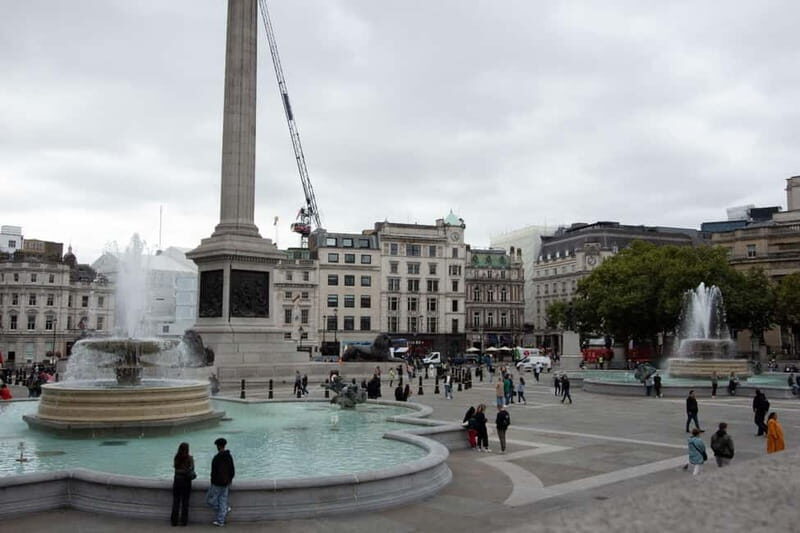
You begin by the Shaftesbury Memorial (Eros Fountain), with your guide holding an orange umbrella. That’s a nice touch in a city where meeting points can get confusing fast.
From there, the tour kicks off at Piccadilly Circus for a photo stop and guided time. This is a smart first pick. It’s instantly recognizable, and it gives your guide a clean “stage” to set the movie theme early. You’re not yet deep into Central London; you’re getting oriented while the guide connects the city’s look to famous film moments.
You’ll also have quick photo stops along the way shortly after Piccadilly. Think of these as small pauses where you reset your bearings, grab a picture, and keep the film-story thread going before the tour settles into its more specific locations.
A practical tip
Bring your charged smartphone because you’ll want to keep track of what you see, and the tour leans on you paying attention to details. If you like to rewatch scenes later, you’ll thank yourself.
Cecil Court and Trafalgar Square: Big Names and Film’s Earlier Roots
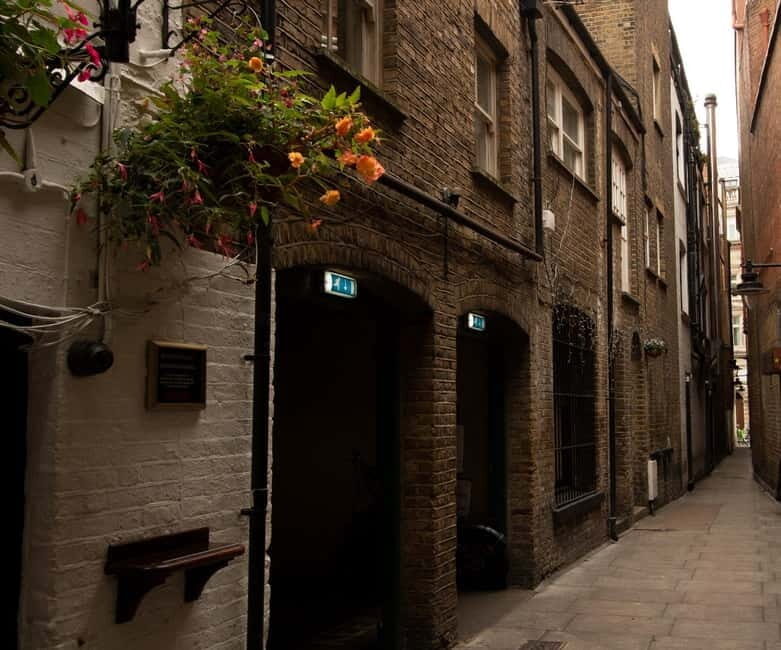
One of the tour’s best moves is stepping away from only “headline” landmarks. At Cecil Court, you get a photo stop and guided time that pulls you toward something more characterful than the main tourist circuit.
Cecil Court is one of those streets that rewards slow attention, and it’s the kind of place where film-location knowledge feels real rather than scripted. A guide can point out details you’d miss walking by, and Cecil Court is also described as among the older streets in London—exactly the kind of contrast that makes a movie-location tour click.
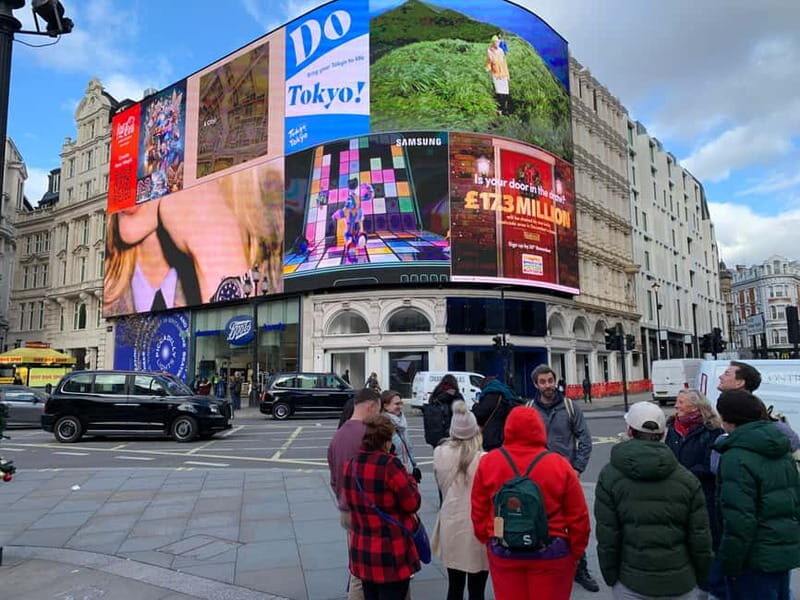
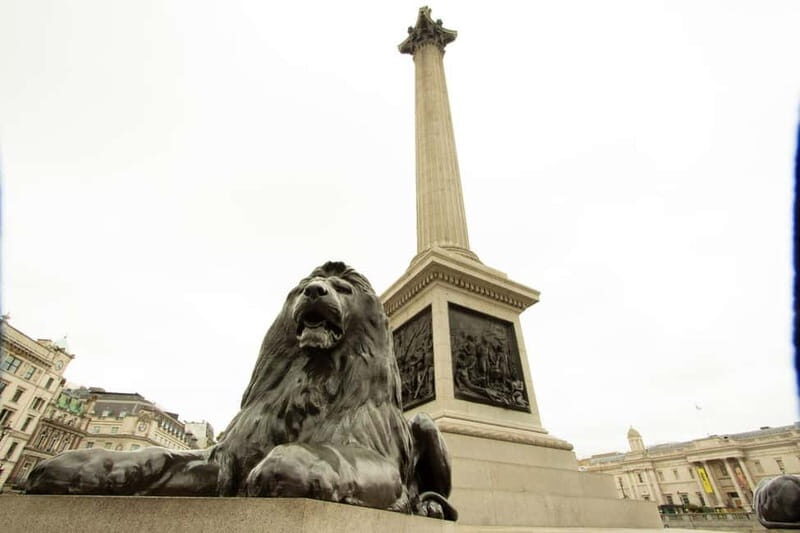
Then the tour moves to Trafalgar Square, one of London’s major civic spaces. This is where you start seeing how cinematic framing borrows from public architecture and open sightlines. Even if you don’t recognize a particular filming moment instantly, you’ll understand why directors like places with strong symmetry and obvious landmarks.
Trafalgar Square is also a pause point where you can regroup. You’ll have time for photos and a guided explanation, so it’s not just a quick drive-by.
Possible drawback to keep in mind
These stops are iconic, which means they can be crowded. The tour keeps moving, so if you want long photo sessions with no people in the frame, you may feel rushed. You still get time, but it’s scheduled.



Great Scotland Yard and The Blackfriar: Where Crime Stories Feel Earned
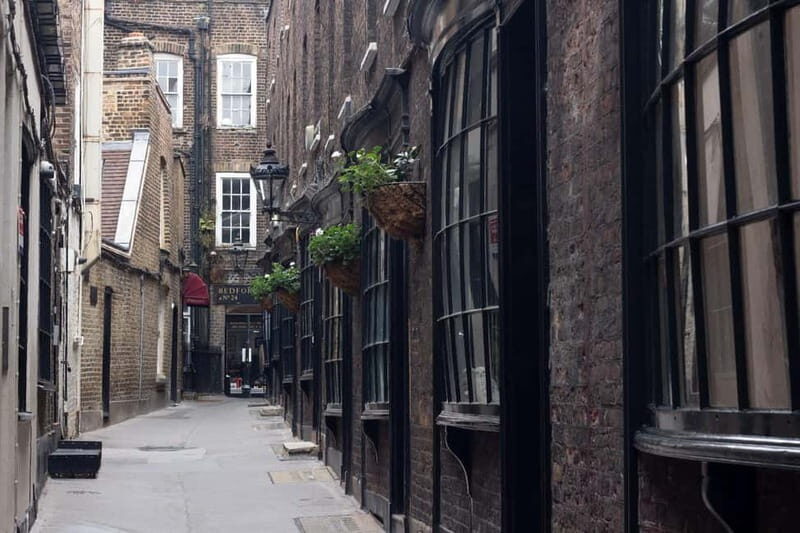
Next up is Great Scotland Yard. This stop is especially fun if you like film that mixes official institutions with tension. The guided part here turns the setting into something more than a name on a map. You’ll get historical context and why the area keeps showing up in crime-related storytelling.
From there, the tour includes a stop at The Blackfriar. This is a “more London, less postcard” moment. Pubs around here feel like social history, and they help balance the tour. The route isn’t only about global blockbuster titles; it also gives you local texture while the guide keeps linking film scenes to places you can actually picture in your head.
If you’re the type who thinks movie locations are only cool when they look like real neighborhoods, you’ll probably enjoy this stretch the most.
Tube Transfer and St Paul’s to Millennium Bridge: Big-Scene London on Foot
The tour then includes a Subway/metro segment (about five minutes). This matters because London’s geography works fast. The Underground is the practical bridge between the “movie look” of different zones without losing your whole day to transfers.
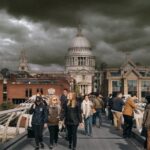
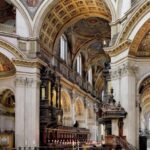
After the metro segment, you get a short stop at St Paul’s Cathedral. Even with limited time, this is a powerful visual anchor. Many action and drama scenes rely on landmarks that read clearly on screen, and St Paul’s does that job effortlessly in real life too.
Then comes Millennium Bridge, with a longer photo stop and guided time. If you’re picturing cinematic city-crossings, this is the kind of location that fits. The bridge’s lines and the surrounding river-area context make it easy for your guide to connect how films use movement and framing.
This part of the tour is also where the “film clips at the location” approach shines most. When you see a clip and then look up at the real structure, it’s suddenly obvious why the scene works. You’re not learning in theory—you’re watching the street become the screen.
A note on expectations
The stops are not long viewings. You’ll get just enough time to connect the scene to the setting, take a few photos, and move on.
Shakespeare’s Globe and Borough Market Finale: Where the Tour Lands
After Millennium Bridge, the tour heads to Shakespeare’s Globe Theatre for a photo stop and guided time. This is a nice pivot: you’re not only living in modern franchises. You get a sense of how London storytelling has long borrowed its energy from specific performance spaces and iconic cultural institutions.
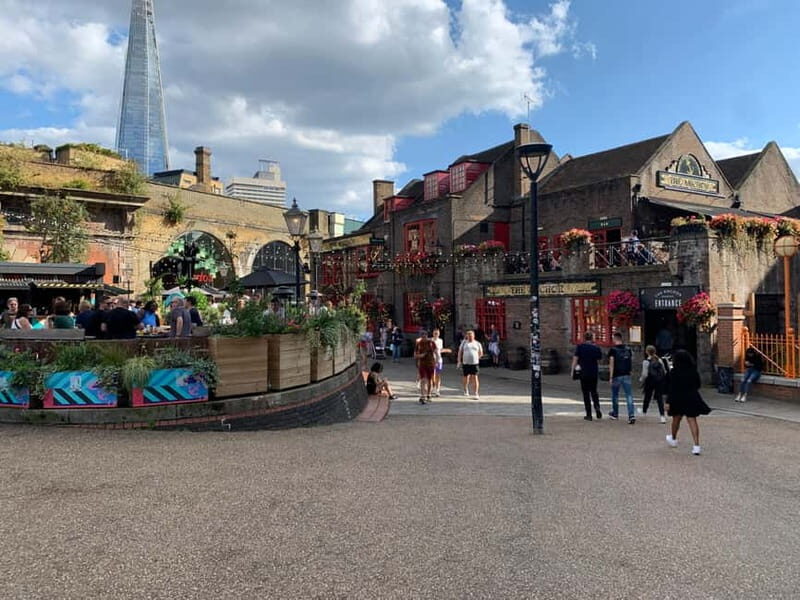
Then the tour includes a couple of additional quick photo stops, followed by the finish at Borough Market. Borough Market is a smart ending point for two reasons. First, it gives you an easy place to decompress after brisk walking. Second, it’s a natural next step if you want food afterward—though food and drink are not included on the tour.
Even if you don’t eat right away, finishing in Borough Market gives your day a payoff that feels distinctly London. It’s one of those “now what” places—vendors, smells, and the sense that the city keeps living after the tour story ends.
What you should plan
If you want lunch or snacks, plan your timing so you’re ready to eat at the market after the tour. The tour itself doesn’t include food, so budget for it separately.
Price and Value: Is $18 Worth It?
At about $18 per person for a 2-hour experience, this tour is priced like a solid entry-level guided walk—especially because the guide includes film clips and film-history context, not only a list of filming spots.
The main cost add-on is the London Underground fare. You’ll need an Oyster card or contactless with enough balance for the Zone 1 ride (the notes you’re given include figures around £2.20 and also £2.40, so I’d top up with the higher number to avoid last-minute stress). Under 11s require a paying adult accompaniment, and you’ll want to bring the right payment method so you don’t get stuck at the barriers.
So is it good value? In my opinion: yes, if you like structured sightseeing and you want the connection between movie and place explained clearly. If you already know a ton of London movie lore, you might get less novelty—but the film-clips approach still tends to refresh what you think you know.
Pace, Group Mood, and Who This Suits Best
This tour is built for people who like a guide-led pace and short “scene-to-street” explanations. You’ll stand for photo stops, listen for context, then walk again. The tour includes about 90 minutes of brisk walking, and it uses the Underground, so you should wear comfortable shoes.
Accessibility reality check
The experience is described as wheelchair accessible, but it’s also labeled as not suitable for wheelchair users and for people with mobility impairments. Because those two statements conflict, I’d treat this as a “confirm with the operator” situation if you need mobility accommodations. The Underground element and the brisk walking are the key reasons to ask.
Who will love it
- You’re a movie fan who likes connecting screen moments to real streets
- You want a short Central London day activity with clear stops
- You enjoy history that’s practical, not just dates
Who might not
- You need a slow pace or lots of sitting breaks
- You don’t want Underground travel during a walking tour
- You’re sensitive to crowds at major landmarks like Piccadilly Circus and Trafalgar Square
Should You Book This Tour
Book it if you want a tight, guided London movie experience that does more than name-drop. The film clips at each stop and the film-industry history are exactly the combo that turns a walk into a story you can see.
Skip it if you’re looking for a long, relaxed sightseeing day, or if you can’t handle brisk walking and Underground stairs/queues. And if mobility needs are part of your plan, verify the practical route details before you commit.
If your London style is “show me the real places behind the screen,” this tour is a strong bet, and it ends in a place where you can keep enjoying the city after the last scene.
FAQ
FAQ
How long is the Lights, Camera, London! Movie Locations Walking Tour?
The tour lasts about 2 hours.
Where is the meeting point?
You meet by the Shaftesbury Memorial (Eros Fountain). The guide will be holding an orange umbrella.
What’s the walking pace like?
The tour includes about 90 minutes of brisk walking.
What movies and franchises are featured?
The tour includes clips and locations related to Mission: Impossible, Harry Potter, Fast & Furious, Bridget Jones Diary, Marvel Cinematic Universe, James Bond, and Disney, among others.
Are food and drink included?
No. Food and drink are not included. The tour finishes at Borough Market, which is great for grabbing something afterward.
Do I need an Oyster card or contactless payment for the Underground?
Yes. The tour uses the London Underground, and each person over 11 needs an Oyster card or contactless payment with at least £2.20 (with another note mentioning £2.40), or a Zone 1 paper ticket.
Is the tour suitable for children?
Under 18s must be accompanied by a paying adult.
What should I bring?
Bring comfortable shoes and a camera or charged smartphone.
Are there any rules about what’s not allowed?
Smoking is not allowed, and alcoholic drinks in the vehicle are not allowed.
Can I get a refund if plans change?
Yes. There’s free cancellation up to 24 hours in advance for a full refund.