REVIEW · LIVERPOOL
Liverpool: Haunted History Guided City Tour
Book on GetYourGuide →Operated by Shiverpool · Bookable on GetYourGuide
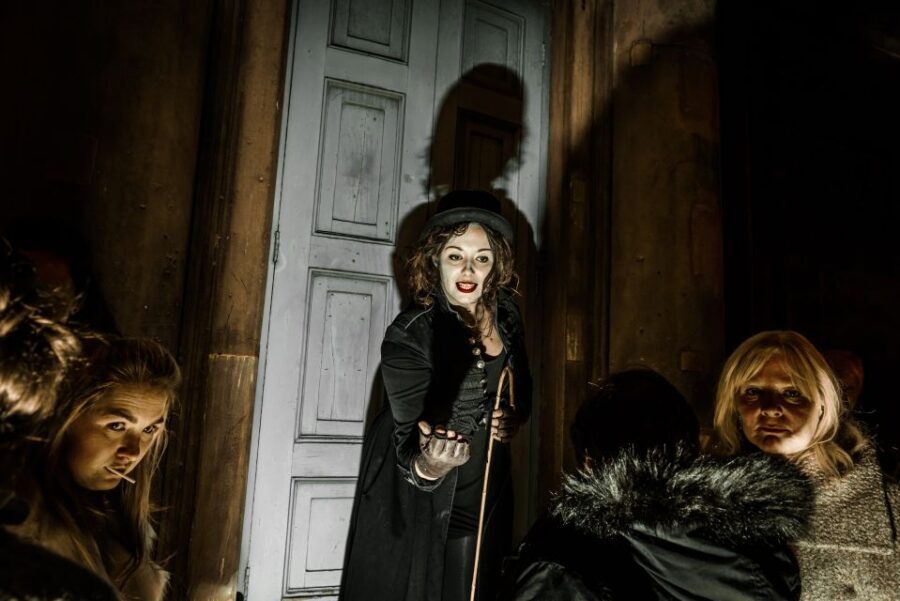
Few streets in Liverpool feel this alive at night. On this Hope Street haunted history guided tour, you walk past famous landmarks and swap the daytime Liverpool glow for plague whispers, cemetery legends, and big Gothic cathedral drama. The format is part street performance, part city history, and it moves at a lively pace.
I especially like the way the guides turn local lore into something you can actually follow—props like coffins and personalized headstones help the stories land fast. I also like the stop in St James’ burial ground, where the tour points you toward the scale of loss: 58,000 souls remembered in the cemetery atmosphere. One thing to consider: it’s a 90-minute outdoor walk, and it can be wet, so you’ll want solid shoes and weather gear.
In This Review
- Key Highlights You’ll Feel During the Walk
- Hope Street Meets the Dark Side at the Philharmonic
- Liverpool Cathedrals: Not Just Pretty Buildings, Story Machines
- Rodney Street, Conservation Charm, and the Lennon-Era Streetscape
- Wellington Rooms and Hope Street: Where the Stories Find Their Beat
- The Ghost Story Material and Why the Acting Works
- St James Memorial Cemetery: 58,000 Souls and the Plague-Type Weight
- Price and Value: Why Around $26 Feels Fair
- Who This Hope Street Haunted History Tour Suits Best
- Should You Book This Haunted History Tour on Hope Street?
- FAQ
- How long is the Liverpool Haunted History Guided City Tour?
- Where do I meet the guide?
- What’s included in the tour?
- What cathedrals will we visit?
- Is the tour scary?
- What should I wear or bring?
- Can I bring pets?
- Is it wheelchair accessible?
- What are the rules about alcohol or drugs?
- Is there free cancellation or pay-later booking?
Key Highlights You’ll Feel During the Walk
- Meet outside the Philharmonic Pub on Hope Street, right where the evening energy starts
- Two cathedrals in 90 minutes: Liverpool Metropolitan Cathedral and Liverpool Cathedral
- The Hope Street ghost stories you hear in the dark, including Liverpool’s most famous tale
- Landmark passes that anchor the history, like Everyman Theatre and John Lennon’s old neighborhood
- St James Memorial Cemetery and its 58,000 buried-souls story set the mood for the finale
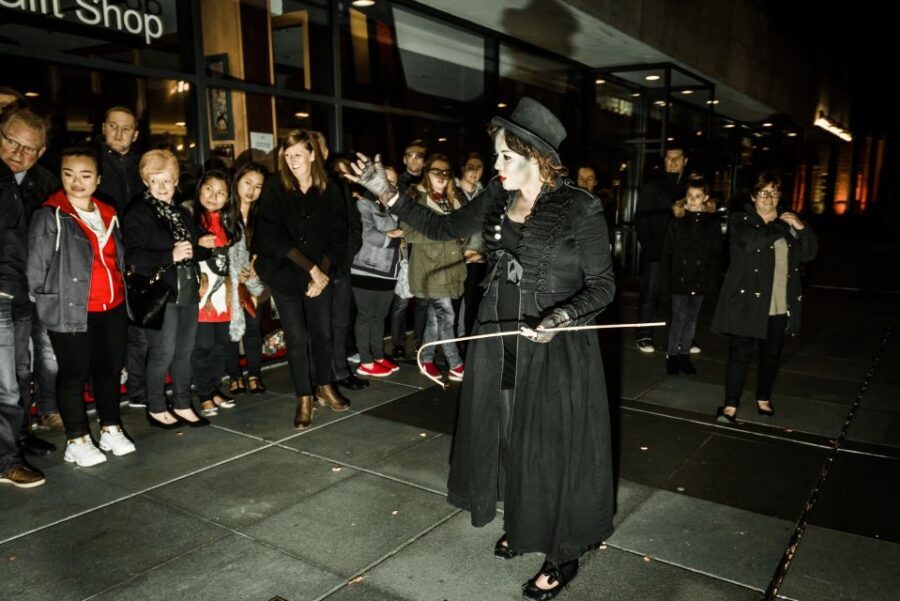
- Full character acting, with guide performances including Chilla Black and Meryl Creep in recent tours
Hope Street Meets the Dark Side at the Philharmonic
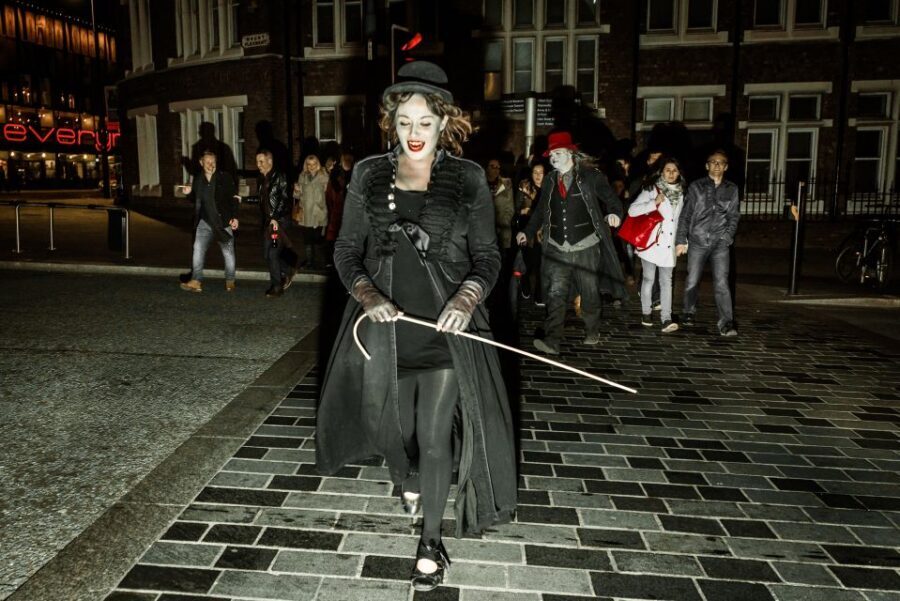
If you’re picturing a sit-down “spooky” tour, this one is more like a night out with a purpose. You start on Hope Street outside the Philharmonic Pub (the Philharmonic Dining Rooms area is the spot to look for), and the guides set the tone immediately: performance first, then history. The whole thing is designed for evening walking, with story beats that match the turning points of the street.
I like that the starting point is easy to find. Hope Street is where you can get your bearings quickly, and you’re already among the places you’d notice on a first Liverpool stroll: pubs, theatres, and those sharp city corners that make you want to keep looking around.
The walking time is short—1.5 hours—so you’re not signing up for a marathon. You’re signing up for a concentrated “Liverpool at night” experience where the guide keeps the group moving and the attention on what’s in front of you.
Practical note: this is a dressed-for-the-elements kind of tour. Reviews include plenty of rain, and the tour still runs. Bring a waterproof layer and comfortable shoes, because you’ll be standing and walking on uneven sidewalks.
You can also read our reviews of more guided tours in Liverpool


Liverpool Cathedrals: Not Just Pretty Buildings, Story Machines
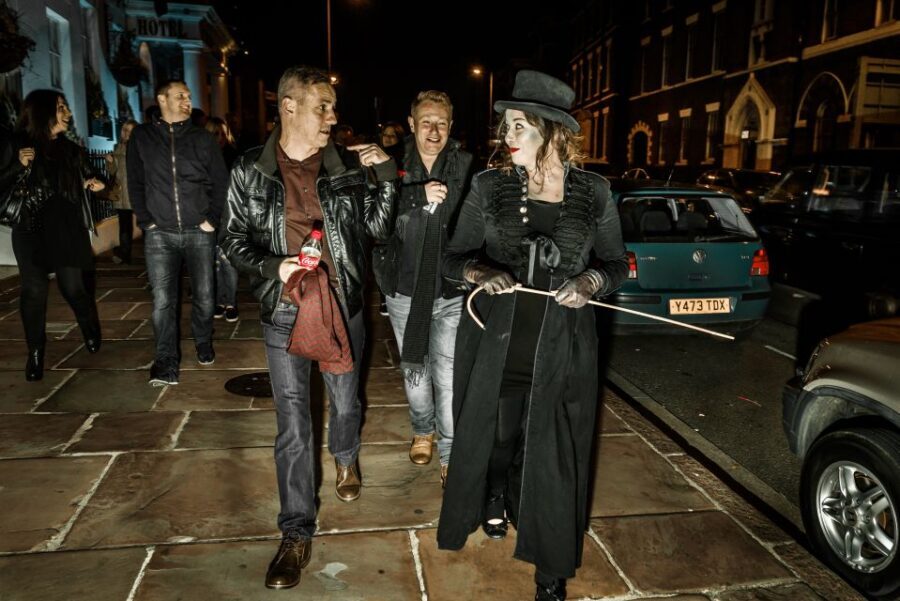
One of the smartest choices in this tour is that it gives you two cathedrals rather than just one. You see the difference between styles and scale, and each stop becomes a setup for a different kind of story tone.
At Liverpool Metropolitan Cathedral, you’re seeing a major city landmark that feels bold and angular against the streets. It works well as an early stop: the guide can shift you from the everyday street level into the bigger, heavier feeling of religion, memorials, and “what the city remembers.”
Then later you move into Liverpool Cathedral, which is where the evening’s mood tends to tighten. The cathedral stop is paired with the ending cemetery atmosphere, so you don’t just admire it—you understand why that space matters to the tour’s haunting theme. This is also why the “90 minutes” feel like more than a standard guided walk. You’re stacking meaning onto the visuals you’re already seeing.
If your goal is photo time, you’ll get it. If your goal is atmosphere, you’ll get that too. Either way, cathedrals here aren’t just architecture stops—they’re stage lighting for the story.
Rodney Street, Conservation Charm, and the Lennon-Era Streetscape
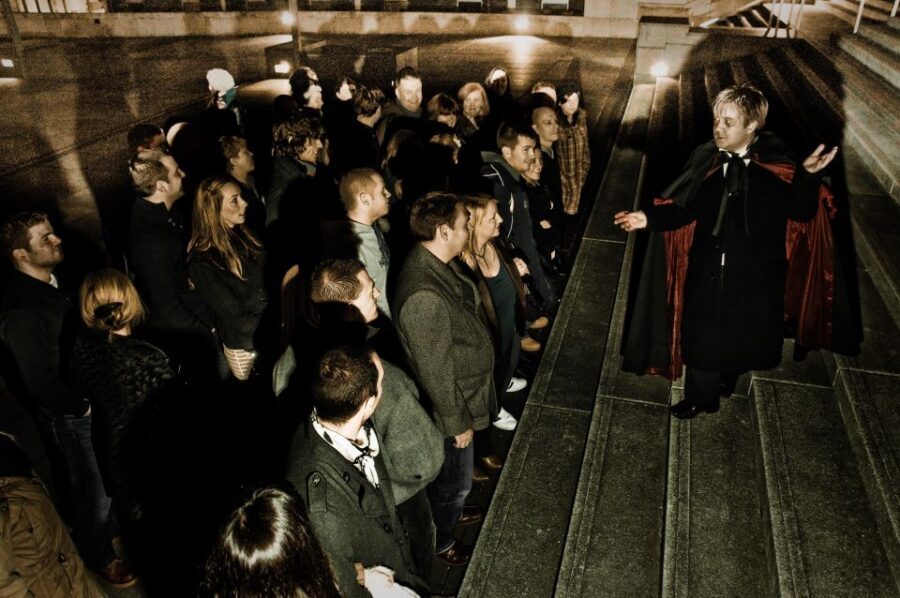
After the first cathedral moment, the tour settles into a street-level rhythm. You pass through key pockets of central Liverpool, including the Rodney Street Conservation Area, and you get those small “wait, really?” history connections that are hard to spot on your own.
One of the standout passes is the building where John Lennon lived for three years. This matters because it turns a famous name into a real address you can point at. Instead of treating music history like a museum label, you’re walking through the city where that life played out.
You’ll also see Everyman Theatre as you go. The theatre isn’t just a landmark; it’s part of why the whole experience works. A performance-led tour plus a theatre building makes the city feel like it’s already in character.
Then comes Rodney Street itself, a street that’s famous for its preserved feel and strong visual identity. The guide uses it as a transition point—moving from the bigger “cathedral story” energy into the narrower, more personal ghost-story mode.
A nice bonus: you’re not rushed through. The walk is paced so you can look up, read the street details, and still stay with the guide’s narrative.
Wellington Rooms and Hope Street: Where the Stories Find Their Beat
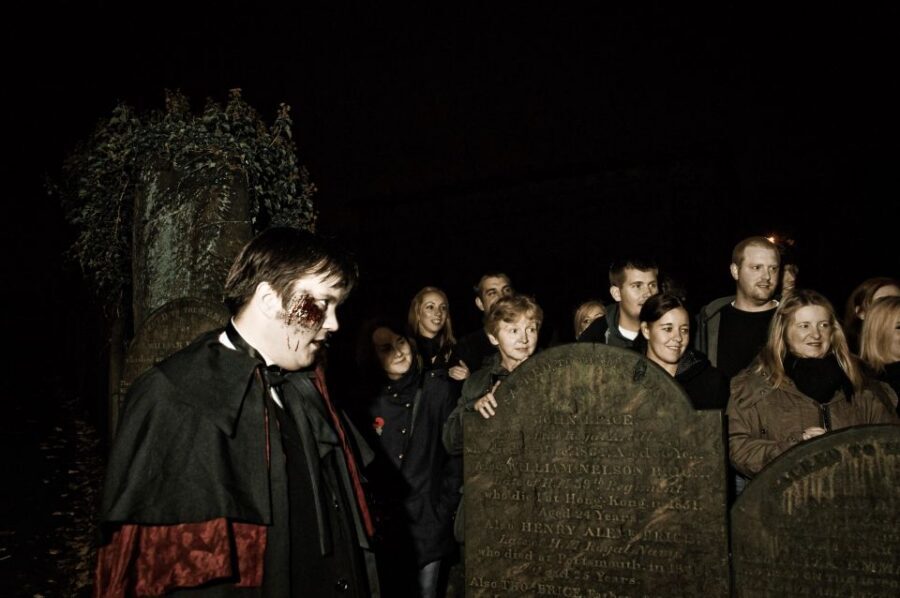
Between the bigger landmarks, you hit stops that act like chapters. Wellington Rooms is one of those. You may not know it on day one, but that’s the point. The tour uses it as a thread in the bigger pattern of Hope Street’s reputation—how certain buildings and corners become associated with fear, rumor, and survival.
Then you’re back on Hope Street, the street the tour frames as Liverpool’s most haunted stretch in the wider Northwest England story-world. That framing can sound dramatic until you’re actually walking it at night. Street light, narrow views between buildings, and the pause before a guide points out the next location all work together. You start seeing Hope Street less like a street and more like a timeline.
A practical tip here: if you’re the kind of person who likes to check Google Maps while walking, keep it light. This tour is built around following the guide’s words as you move. If you keep stopping to look at your phone, you’ll lose story momentum.
The Ghost Story Material and Why the Acting Works
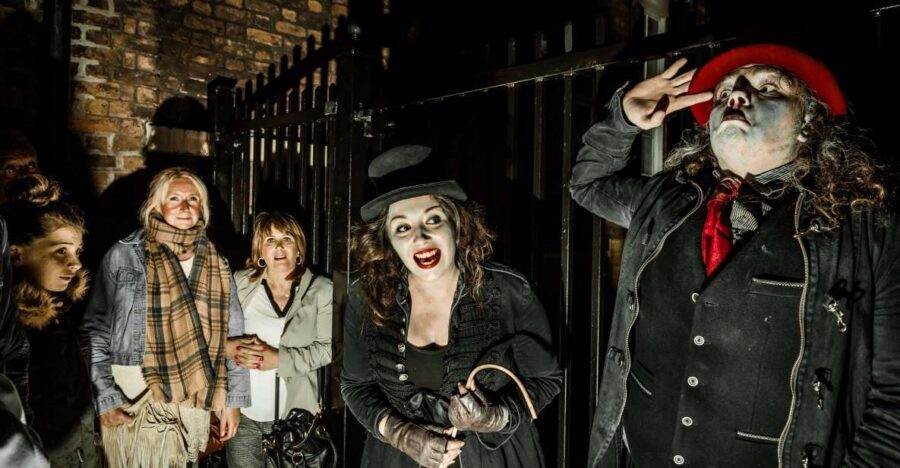
This is where the tour earns its reputation. The guide performance isn’t just costume; it’s timing, voice work, and group control.
In recent tours, guides have appeared in character with names like Chilla Black and Meryl Creep, and you’ll also hear references to performers such as Chiller Black (and in some cases the show includes other character energy). If you’re worried about a tour that feels stiff, don’t. People describe the guides staying in full acting mode, while also checking in with the group so you don’t feel left behind.
You’ll hear the tour’s headline ghost material as the evening reaches its climax—guides lead you toward the final cemetery feel and tell Liverpool’s most famous ghost story in that build-up structure. Along the way, the stories mix big historical themes (like the black plague) with local legends. The result is less “campfire horror” and more “this could plausibly have happened,” told with theatrical punch.
Another thing I like: the tour’s tone often lands as funny without turning the past into a joke. Several accounts note a strong comedy edge, including characters that make sure everyone is included. One review even mentioned a silent ghost presence—small odd details like that are the kind of touches that make the walk feel special and not just informational.
Is it terrifying? It’s spooky, but it’s not built as a fear-factory. Expect chills and jumpy moments, plus humor.
You can also read our reviews of more city tours in Liverpool


St James Memorial Cemetery: 58,000 Souls and the Plague-Type Weight
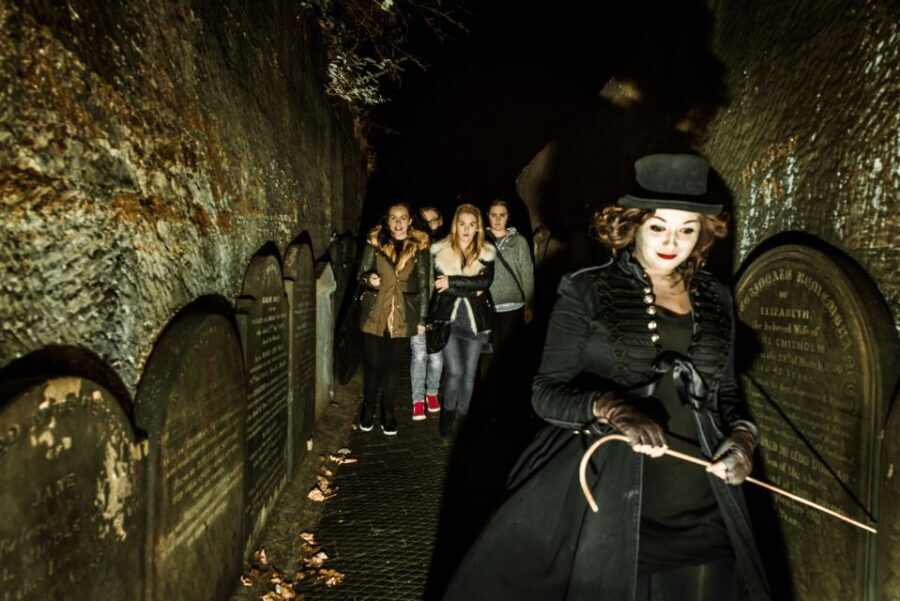
The ending is what makes this tour stick in your mind after you leave the streets. You move into the St James Memorial Cemetery area, where the tour frames the setting with the line about 58,000 souls buried. That number is the anchor. Even if you don’t fully picture it at first, the guide brings the scale forward through story.
The cemetery stop also ties into the tour’s theme of disease, death, and survival—again with the black plague stories showing up as a key part of the narrative. You’re not just hearing a ghost story in a vacuum. You’re hearing it attached to a city that had to deal with real loss, real fear, and real memory.
The Gothic feel here does the heavy lifting too. The tour’s final stretch gives you that angular, memorial-cold atmosphere you can’t recreate just by reading about the place. This is also where the “haunted history” brand becomes more literal: the guide doesn’t just point at headstones and move on. They build toward the cemetery so the last minutes feel like the closing scene of a play.
When the tour ends, you’re still in the cathedral gravity area. That matters because you can keep looking at the architecture, not just leaving the moment behind.
Price and Value: Why Around $26 Feels Fair
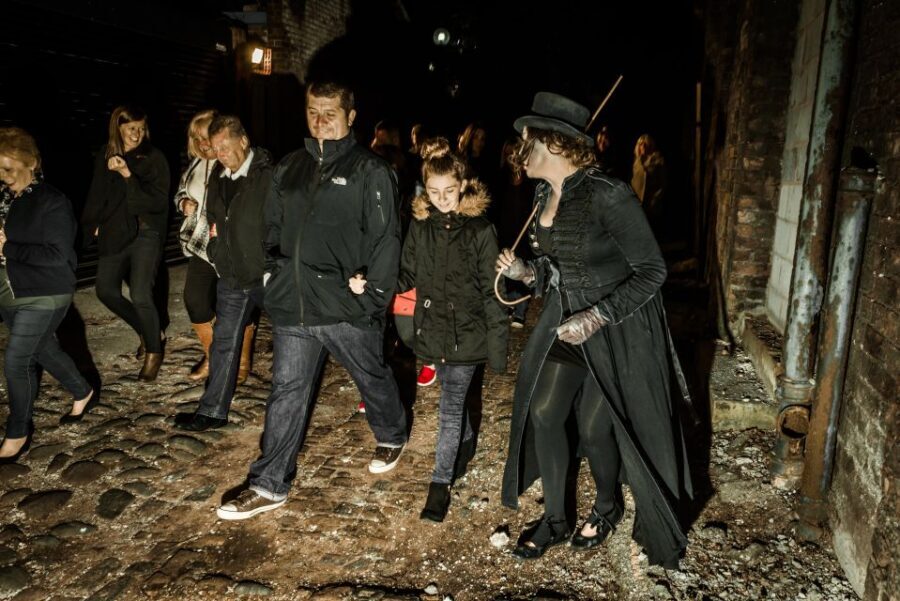
At $26 per person for a 1.5-hour theatrical guided tour, you’re paying for two things: performance and place-based storytelling. You’re not just buying a route. You’re buying a show that uses real streets and major monuments as the stage.
The “included” touches—coffins and personalized headstones—signal that the tour leans theatrical, not purely lecture-style. And the guides appear to put real effort into character work and crowd interaction, including humor and moments designed to keep everyone part of the experience.
Is it premium? No. It’s priced like something meant to be repeatable. That’s why many people describe doing multiple tours with the same provider. If you like history but also like being entertained, this price feels like a reasonable trade.
Who cares most about value here? You if you:
- want a night activity that’s not just a pub crawl
- like history told with voice, acting, and pacing
- enjoy “tell me a story at the place it happened” tours
Who This Hope Street Haunted History Tour Suits Best
This is best for people who enjoy story-driven walking tours and don’t mind a theatrical tone. It also suits you if you’ve visited Liverpool once and want a different angle than museums and basic sightseeing.
It’s a strong pick for:
- first-time visitors who want a compact “Liverpool after dark” experience
- people who know Liverpool a bit and still want new connections (like Lennon’s building and conservation streets)
- groups who enjoy humor mixed with spooky history
It’s less ideal if you:
- need wheelchair access (this tour is not suitable for wheelchair users)
- prefer very quiet, purely informational tours (acting and interaction are core)
- want zero walking on uneven pavement (you’ll be on foot for 90 minutes)
Should You Book This Haunted History Tour on Hope Street?
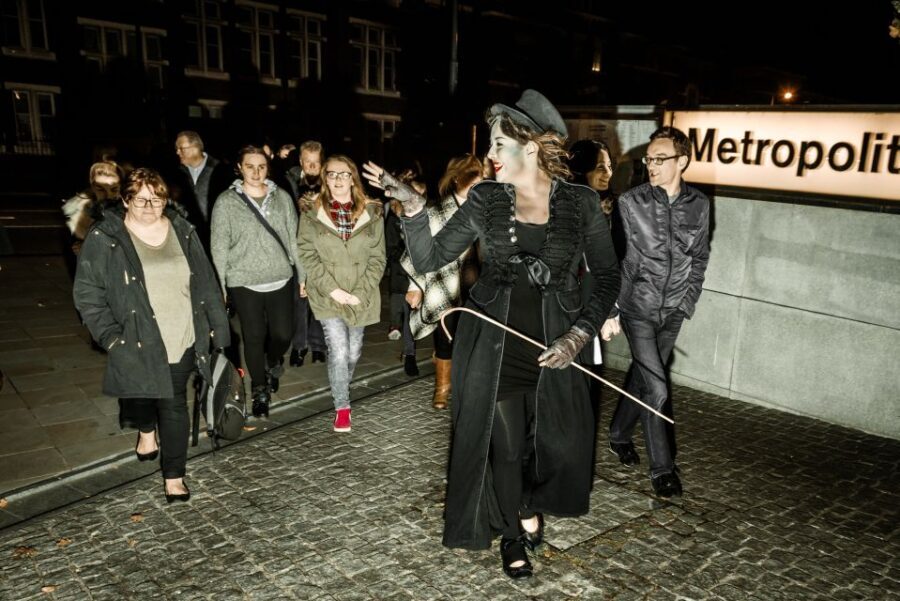
I’d book it if you want a short, high-impact evening activity that combines Liverpool landmarks with a performance-led ghost story. The two-cathedral structure is a smart use of time, and the St James cemetery finale gives the tour a memorable emotional weight that isn’t typical for a quick haunted walk.
Skip it if you hate outdoor walking or if you only want purely academic history. This tour is built as entertainment with real historical anchors, not a textbook lecture.
If you’re deciding, think about your ideal night in Liverpool: Hope Street, a guided story in character, and cathedrals at night. That’s exactly what this one delivers.
FAQ
How long is the Liverpool Haunted History Guided City Tour?
The tour runs for 1.5 hours.
Where do I meet the guide?
Meet your guide outside the Philharmonic Pub on Hope Street.
What’s included in the tour?
You get a theatrical guided tour for 1.5 hours, with coffins and personalized headstones included.
What cathedrals will we visit?
You’ll visit Liverpool Metropolitan Cathedral and Liverpool Cathedral.
Is the tour scary?
It’s described as an eerie haunted history walk, with spooky moments and character performances, but it’s also frequently enjoyed for its fun and humor.
What should I wear or bring?
Bring comfortable shoes and weather-appropriate clothing since you’ll be walking outdoors.
Can I bring pets?
Pets are not allowed, though assistance dogs are allowed.
Is it wheelchair accessible?
No. The tour is not suitable for wheelchair users.
What are the rules about alcohol or drugs?
Alcohol and drugs are not allowed on the tour.
Is there free cancellation or pay-later booking?
Yes. You can cancel up to 24 hours in advance for a full refund, and you can reserve now and pay later.