REVIEW · LIVERPOOL
Liverpool: Theatrical History Tour and The Dead House
Book on GetYourGuide →Operated by Shiverpool · Bookable on GetYourGuide
Underground Liverpool changes your sense of time. This theatrical history tour links street-level storytelling with an unforgettable finale inside the city’s long-shut underground morgue. You start at Queen Victoria Monument and wind through historic streets, landmark stops, and narrow lanes before stepping down through a trapdoor.
I especially like two things here. First, you get exclusive access to the subterranean mortuary area tied to Liverpool’s so-called Dead House, a place that has stayed closed to the public for over a century. Second, the guides use street theatre techniques and audience call-outs to make the “original streets of Liverpool” feel like a lived-in show, not a lecture.
One caution: you’ll need to bring your own torch, and the underground section involves steps and is not recommended for limited mobility, the visually impaired, or anyone with a delicate disposition.
Key tour takeaways
- Exclusive subterranean morgue access at The Dead House, entered through a trapdoor setting
- Original Liverpool street route with street theatre techniques and audience participation
- Landmark contrasts from Town Hall and Castle Street banking halls to crooked back alleys
- A dark, specific storyline tied to Hermann Melville’s Liverpool Dead House name
- Bring your own torch and expect a true underground, at-your-own-risk moment
In This Review
- From Queen Victoria Monument to 5 Old Churchyard: how this 90-minute walk moves
- Seven streets brought to life: street theatre that actually feels like Liverpool
- Castle Street banking halls and the Town Hall opulence stop
- Nelson Monument and the rhythm change from public grandeur to back alleys
- Church of Our Lady and St Nicholas: the Dead House setting under a Gothic spire
- What the underground morgue teaches: WWII police use and iron-grate viewing
- The guides, the humour, and the double-act feel
- Price and value: about $26 for a live show plus exclusive access
- Practical notes that make or break your night (torch, stairs, photos)
- Who should book, and who should skip
- Should you book the Liverpool Theatrical History Tour and The Dead House?
- FAQ
- Is the Dead House open to the general public?
- How long is the tour?
- What should I bring?
- Is the tour suitable for wheelchair users?
- Are unaccompanied minors allowed?
- What language is the tour in?
- Are guide dogs allowed?
From Queen Victoria Monument to 5 Old Churchyard: how this 90-minute walk moves
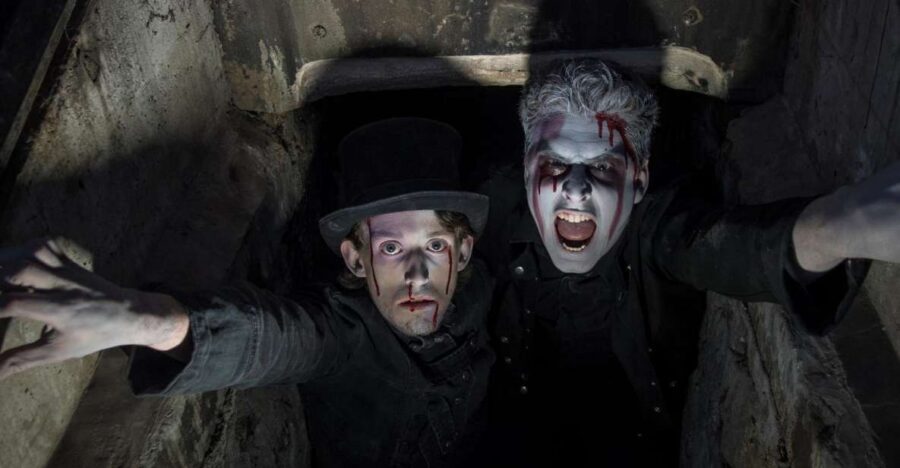
The Liverpool Theatrical History Tour and The Dead House is built like a short night out: start with a dramatic welcome in the open, then shift into tighter streets, and finally drop underground for the main event. It runs about 1.5 hours, so you’ll feel the pace stay brisk rather than slow and meandering.
Your meeting point is the Queen Victoria Monument at Derby Square. From there, the tour guides you on foot in segments, with short walking stretches that keep the energy up and the attention on the story beats.
It ends at 5 Old Churchyard, Liverpool L2 8GW, which matters because the Dead House setting connects to the area around the Church of Our Lady and St. Nicholas. In other words, the finale isn’t just an add-on. It’s placed where the atmosphere makes sense.
Seven streets brought to life: street theatre that actually feels like Liverpool
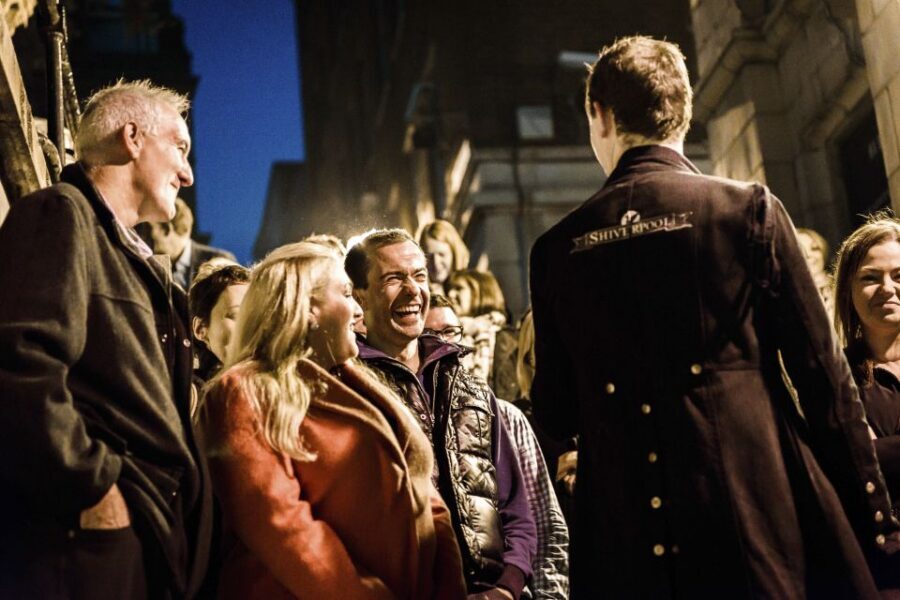
This isn’t a stiff walking tour where you quietly follow a speaker. The concept is theatrical street history, using performance tools to animate the “original 7 streets of Liverpool” as you pass them. You’ll likely recognize Liverpool’s major faces, but the show focuses on the side streets that most people don’t linger in.
A big part of what makes this work is how the guides pull the group into the moment. Several past visitors praised the guides’ humour, theatrical humour, and audience participation—so expect a performance rhythm, not just facts on parade.
You’ll also get a sense of Liverpool as a working city: you move through spaces tied to commerce, then pivot toward darker corners. The tour uses that shift on purpose, turning “normal streets” into the lead-in for the grim finale.
You can also read our reviews of more historical tours in Liverpool


Castle Street banking halls and the Town Hall opulence stop
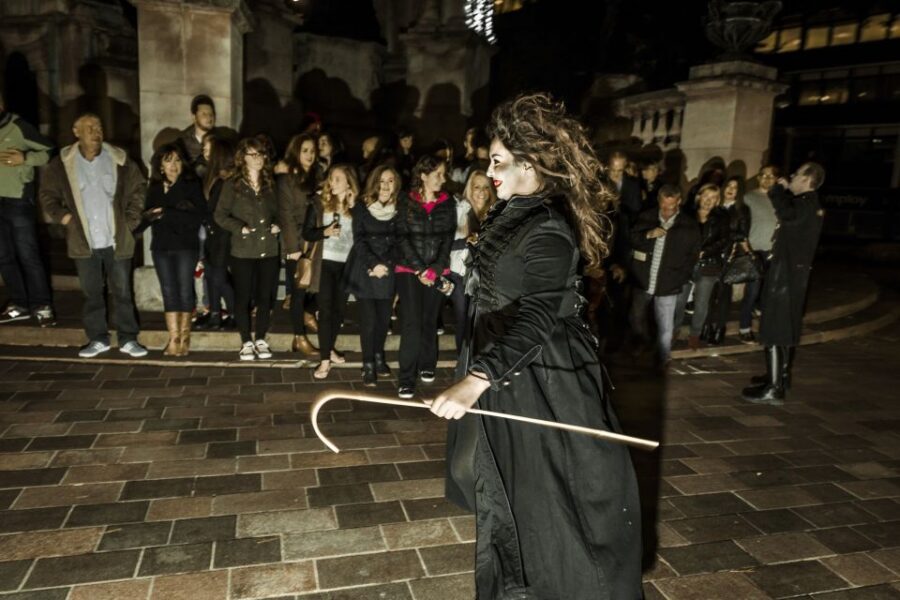
One of the most effective contrasts on this route is that you start getting your eyes on grand civic buildings before the mood darkens.
You’ll visit Liverpool Town Hall, and the tour frames it as regal and opulent. It’s a clever choice for the story structure. A place like the Town Hall gives you scale—this is a city that built confidence—before you head into the cracks and alleys where the darker human side comes through.
You’ll also be pointed toward Castle Street, including the lofty banking halls feel of that area. For me, this is one of the better ways to learn Liverpool: you see the money and the power on the surface, then you follow the same city into the places people tried to forget.
Nelson Monument and the rhythm change from public grandeur to back alleys
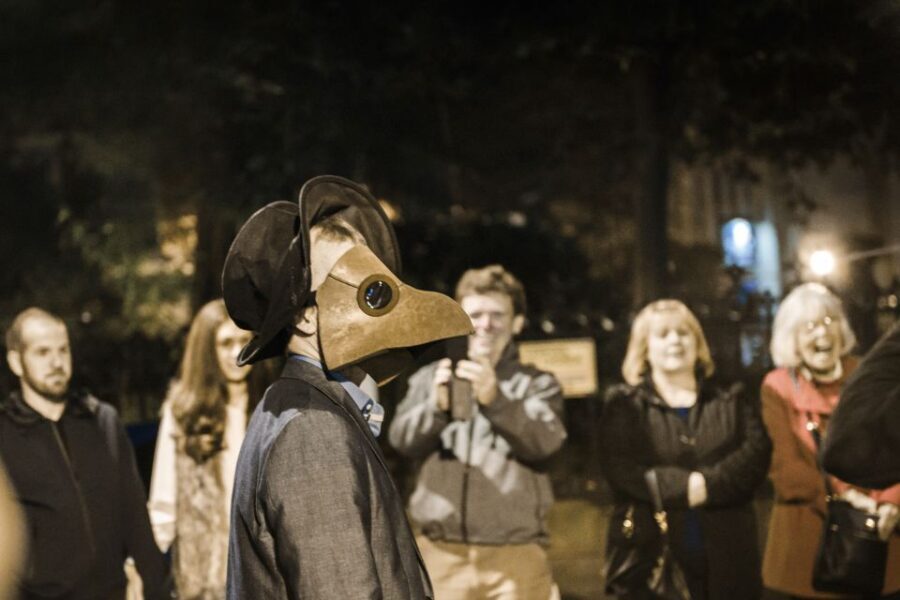
After the major civic landmarks, the walk tightens. The tour includes Nelson Monument, then uses short hops to keep you moving into smaller lanes—think crooked back alleys and lamp-lit lanes in the commercial district.
This matters because the Dead House finale lands harder when the setting has been slowly “steered” toward it. You’re not just walking from point A to point B. You’re getting a slow mood adjustment: open spaces, then narrower streets, then the sense that something unseen is under your feet.
If you want a straightforward ghost-story experience, this route might feel more “theatrical city storytelling” than straight-up scares. But if you like how performance adds texture to place, this pacing is exactly the right kind of tension.
Church of Our Lady and St Nicholas: the Dead House setting under a Gothic spire
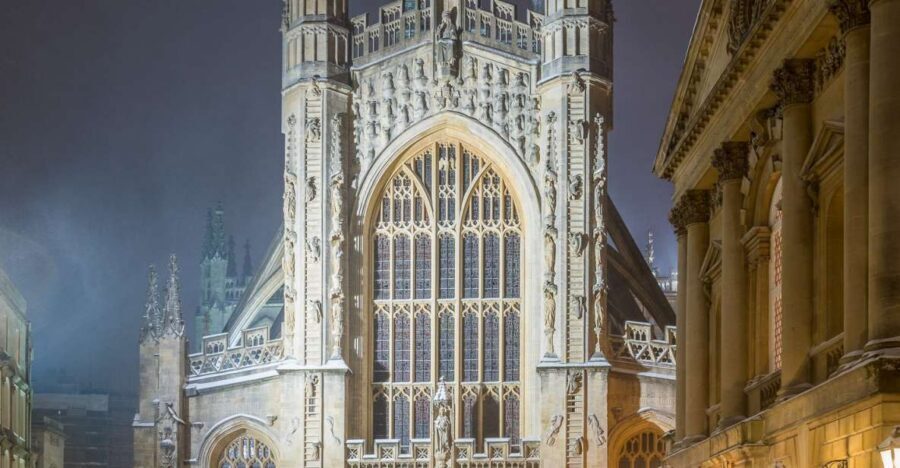
The Dead House connection runs through the Church of Our Lady and St. Nicholas. The morgue area is described as under quieter surroundings, with the underground location entered through a trapdoor beneath a Gothic spire, inside the boundary of a medieval garden.
This is one of the most important practical ideas to keep in mind: the morgue location is not open to the public, and participants enter at their own risk. That means you should treat it like a performance space with restricted access, not like a museum you wander through at leisure.
The story line also links literature to place. The site was named the Liverpool Dead House by American author Hermann Melville, which gives the whole thing an unexpected literary hook before you ever step down.
What the underground morgue teaches: WWII police use and iron-grate viewing
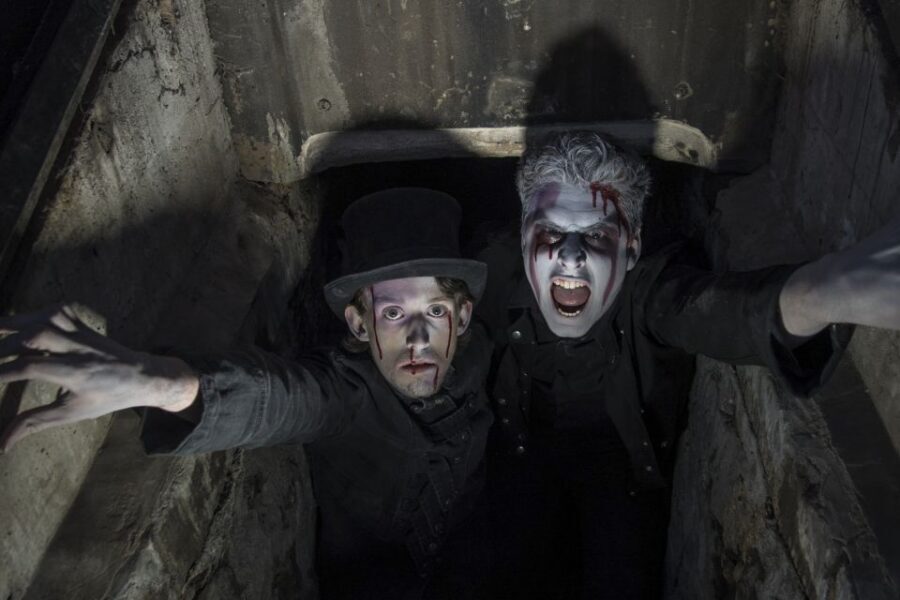
The Dead House section isn’t random gloom. It comes with a clear, specific background that helps the theatrics land.
You’ll learn how the site was used as a temporary police station during World War II. That detail shifts the tone from “spooky legend” to “this happened in real working times,” even if the tour delivers it through performance.
The tour also explains that in the 18th and 19th centuries, locals would come to peer through grim iron grates and look upon the faces of the deceased. That’s the part that gives the whole concept its edge. It’s not just about death imagery—it’s about how people in past Liverpool handled grief and the official side of death.
And yes, there’s a documented long closure too: the undergound morgue has remained closed to the public for over a century. So when you go, you’re stepping into something that feels rare, even if you know what to expect from a theatrical tour.



The guides, the humour, and the double-act feel
The tone here is consistently described as theatrical and fun, with humour woven into the darker material. Many people singled out how the guides were funny, friendly, and professional, and how the two-person performance keeps the group entertained without losing the historical thread.
One standout detail from visitor notes is the shout-out to a guide named Jo. That kind of repeated mention usually means the cast connects with the group and stays in character.
Another recurring theme: the show includes audience engagement and call-outs, so you’re not just watching. You’re participating in the story beats, whether that’s a moment of interaction or just the way the actors work the room with energy and timing.
If you’re worried this will be too tame, it’s not. Some past visitors even mentioned a few scary moments. If you want full-on terror, temper expectations. But if you want a theatrical history night with laughs and drama, this format delivers.
Price and value: about $26 for a live show plus exclusive access
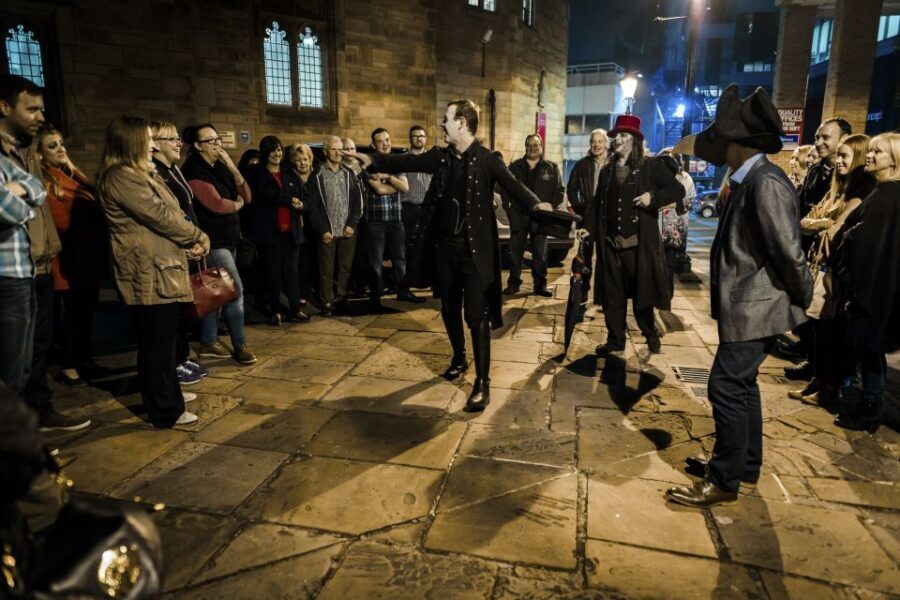
At around $26 per person, the value comes from two places: live performance and access. You’re paying for a guided walk plus the privilege of entering an underground site that’s otherwise off-limits.
That matters because most “ghost tours” stop at storytelling outside. Here, the key moment is physical—the steps down into the Dead House and the underground experience tied to the location. Even the practical items reinforce that: torches are not included, so you’re expected to prepare for the real conditions underground.
Also, it’s only about 90 minutes. You’re not spending half a day for a single event. For a night in Liverpool, that’s a reasonable trade: fit it in, then carry on with your plans after.
Practical notes that make or break your night (torch, stairs, photos)
Before you go, remember three practical points.
First, you must bring your own torch. The tour information is clear that torches are not included. If you show up unprepared, you’ll reduce your ability to see and enjoy the underground part.
Second, the underground location involves entry at your own risk, and it’s not recommended for limited mobility, the visually impaired, or anyone sensitive to gruesome themes. The tour is also not wheelchair accessible, so plan accordingly.
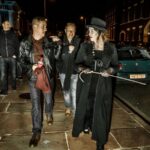
Third, the show has a visual payoff. One review mentioned picture opportunities with ghoulish characters and a view of the Mersey and the Liver Building in the mix of the dramatic finale. Even if you don’t care about photos, that kind of scenic moment usually helps the finale feel like a complete scene.
If you like the idea of turning this into a full night, there’s an extra note from past visitors: some groups mentioned ending near Ma Boyle’s hostelry for live music. Even if your experience runs slightly differently, you’ll be finishing in a lively part of town.
Who should book, and who should skip
This tour fits best if you like a blend of theatre and local place history. It’s also a solid pick if you enjoy stories with humour, guided by performers who seem comfortable with audience participation.
It’s family-friendly in the sense that it can work for families, but children must be accompanied by an adult, and unaccompanied minors aren’t allowed. So if you’re bringing kids, treat it like a night activity with adult supervision rather than a drop-off event.
Who should skip it? If you use a wheelchair, this one is not wheelchair accessible. If you have limited mobility, visual limitations, or you’re cautious about gruesome themes, you may find the Dead House portion too much. The tour explicitly warns against a delicate disposition.
Also, keep your expectations aligned: this is not a quiet, purely factual walk. It’s a performance. If you want a silent “museum tour” style experience, this probably won’t satisfy you.
Should you book the Liverpool Theatrical History Tour and The Dead House?
Book it if you want a fun, theatrical Liverpool night with a real payoff underground: exclusive access to the Dead House setting, delivered through street theatre and guided performance. The price makes sense for what you get—especially because this isn’t open public access.
Skip it if you can’t handle stairs, low-light conditions, or the idea of a gruesome mortuary-themed story. And if you forget your torch, you’ll feel that mistake immediately.
If you’re ready for humour + history + a very specific dark setting, this one is a strong choice for Liverpool.
FAQ
Is the Dead House open to the general public?
No. The underground location is not open to the public, and participants enter as part of the tour experience at their own risk.
How long is the tour?
The tour runs about 1.5 hours.
What should I bring?
You must bring your own torch. Refreshments are not included.
Is the tour suitable for wheelchair users?
No. The tour is not wheelchair accessible.
Are unaccompanied minors allowed?
No. Unaccompanied minors are not allowed, and children must be accompanied by an adult.
What language is the tour in?
The live guide speaks English.
Are guide dogs allowed?
Only guide dogs are allowed.