REVIEW · LIVERPOOL
Liverpool: Heritage, History & Culture Guided Walking Tour
Book on GetYourGuide →Operated by Liverpool Famous Walking Tours- Purple Tours · Bookable on GetYourGuide
Liverpool tells its story on foot. This 2-hour guided walk connects Liverpool’s maritime past to today, with stops like Royal Albert Dock, the Three Graces, and Beatles landmarks along Mathew Street—plus stories that stretch from King John’s era to modern Liverpool.
I love how the guides bring the details to life, with clear explanations and quick answers as you go (I’ve heard everything from Colleen’s entertaining delivery to Mike’s big-energy storytelling). One consideration: the route includes cobbles and busy city areas, and while it’s listed as wheelchair accessible, it’s also marked not suitable for wheelchair users—so if mobility is a concern, think carefully.
In This Review
- Key highlights worth your 2 hours
- Where the walk starts: The Bluecoat, the city’s creative doorway
- Derby Square to the Queen Victoria monument: history with a layer cake
- Liverpool One quick hit: a modern shift you can feel
- Royal Albert Dock and the first dry dock site: where the waterfront owns the story
- The Beatles Statue and the Cavern Quarter: music history that’s easy to picture
- The Three Graces and Exchange Flags: Liverpool’s signature skyline, explained
- Town Hall origins and the layers beneath your feet
- Finishing at the Eleanor Rigby Statue: a closing beat to remember
- Price and value: is $31 a fair deal for two hours?
- Pace, comfort, and what to bring (so the walk stays fun)
- Who should book this Liverpool heritage walk?
- Should you book this tour?
- FAQ
- FAQ
- How much is the Liverpool Heritage, History & Culture Guided Walking Tour?
- How long is the tour?
- Where do I meet for the tour?
- What’s included in the price?
- Is food or drink included?
- What should I bring?
- Is the tour wheelchair accessible?
- What language is the guide?
- Where does the tour finish?
- Can I cancel for a refund or pay later?
Key highlights worth your 2 hours
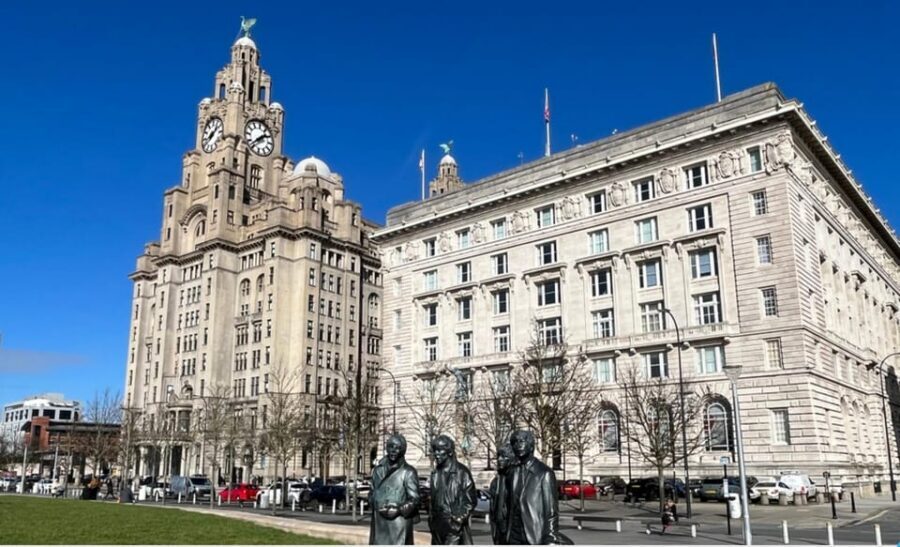
- Royal Albert Dock photo stops with dockside history and the Titanic link woven into the city’s maritime story
- Derby Square and Queen Victoria: you’ll learn what used to be here and why the monument matters
- The Three Graces + Exchange Flags: classic dock architecture side-by-side with civic power around Town Hall
- Mathew Street and the Cavern Quarter: walk in the orbit of The Fab Four and the Cavern Club vibe
- The Beatles Statue selfie moment with the sculpture attributed to Andrew Edwards
- A human guide-led pace: many people praise the steady speed and lots of room for questions
Where the walk starts: The Bluecoat, the city’s creative doorway
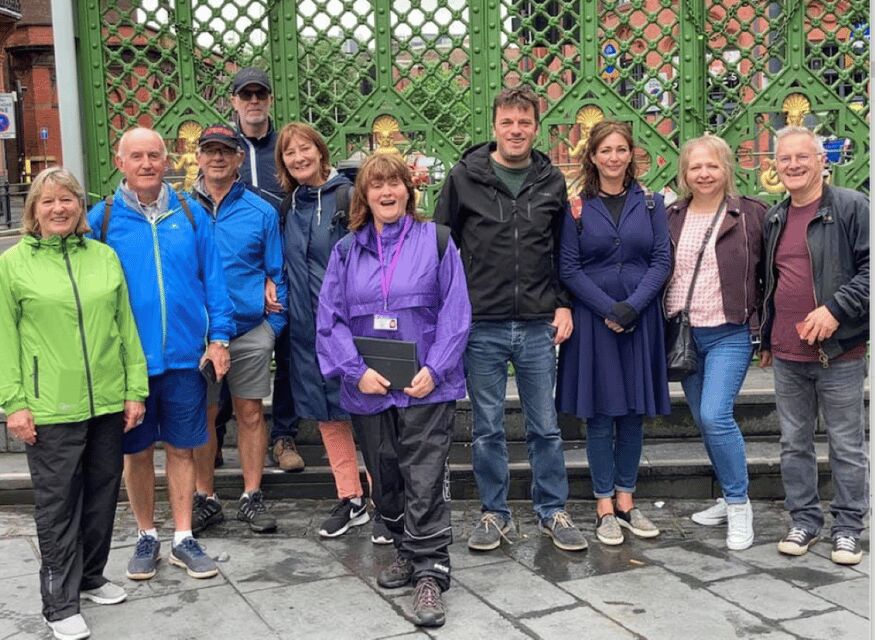
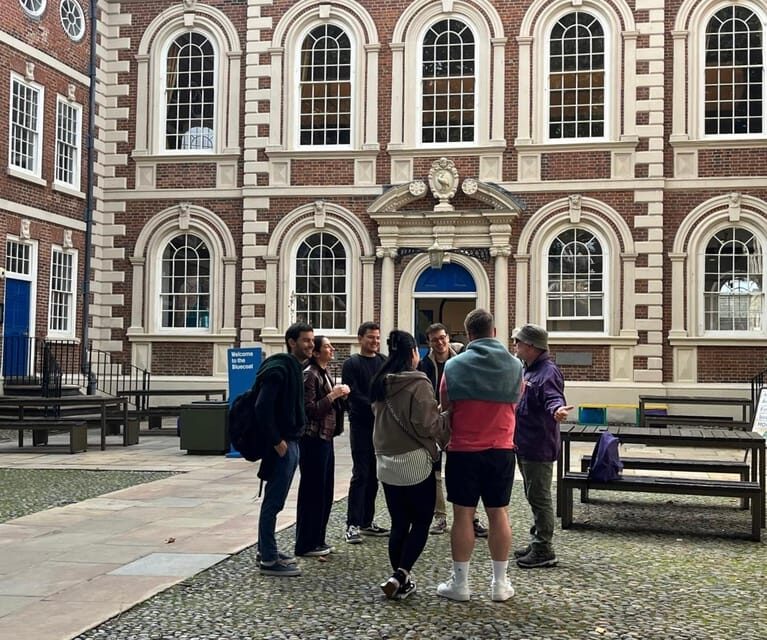
You begin at The Bluecoat on School Lane, outside the black metal railings/gate at the main front entrance to the Bluecoat Chambers building (8 School Lane, Liverpool L1 3BX). The tour leaves from there, and Castle Fine Art is opposite—an easy landmark to find if you’re arriving early.
This first stop matters more than it looks. The Bluecoat is a strong signal that Liverpool isn’t just docks and industry. It’s also arts, education, and reinvention—exactly the mix you’ll see throughout the walk as the route moves from older city chapters into the waterfront and then back toward famous modern Liverpool icons.
If you arrive on Tuesday to Saturday, the building is open from 10am, with a café and toilets inside. Even if you don’t go in, it’s nice to know you’re starting somewhere with real-world basics nearby—useful before a city-center walk.
You can also read our reviews of more walking tours in Liverpool
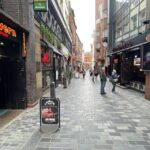

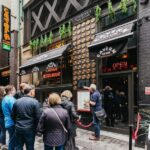
Derby Square to the Queen Victoria monument: history with a layer cake
Early on, you’ll pass through Derby Square, and that’s where the tour starts playing a neat trick: showing you how one place can hold multiple time periods. The story centers on Liverpool Castle—what once stood here—and how the area is now dominated by an imposing Queen Victoria monument.
This stop is worth your attention because it’s the walk’s theme in miniature. Liverpool’s story isn’t just buildings that remain. It’s also places that were replaced, rebuilt, and reinterpreted. The guide’s job is to connect those changes so you stop seeing the city as random sights and start seeing it as a pattern.
Practical note: Derby Square is in the city core, so expect a crowd. Keep your camera ready, but also keep your eyes on where you’re stepping—city pavements can be tricky, especially around cobbles.
Liverpool One quick hit: a modern shift you can feel
You’ll also get a short, guided look near Liverpool One, which is a reminder that Liverpool’s evolution didn’t stop with maritime glory or music fame. Even in a quick stop, the point is clear: the city keeps reshaping itself, and you can see that shift in how neighborhoods and foot traffic flow.
Think of Liverpool One as a “present tense” waypoint. It sets you up for what comes next—Royal Albert Dock and the waterfront—where the city’s past is written in stone, steel, and water.
Royal Albert Dock and the first dry dock site: where the waterfront owns the story
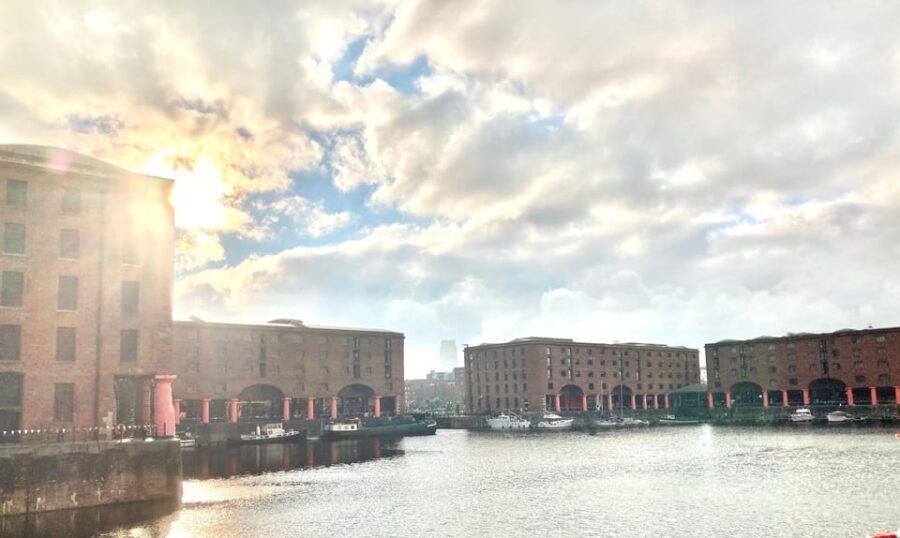
The biggest architecture and photo moment arrives at Royal Albert Dock, with about a 30-minute block that includes a photo stop and guided touring. This is where the tour earns its time.
You’ll learn how Liverpool’s waterfront history helped shape the city’s development, and you’ll also hear about the darker chapters tied to the maritime world, including Liverpool’s role in the slave trade. The guide doesn’t treat it like a side note. It’s presented as part of understanding why Liverpool became what it became.
A few specific details help the story stick:
- The tour points to the site of Liverpool’s first dry dock, tied to a large water fountain capturing that setting.
- You’ll see an oversized LIVERPOOL selfie sign, with colors that change depending on the season or events. It’s touristy, yes—but it’s also part of how Liverpool turns history into something you can experience in the present.
The Titanic thread is handled in a way that feels practical: the guide explains how the Titanic story became intertwined with Liverpool’s maritime identity, rather than treating it like a standalone museum topic.
One more reason to like this stop: Royal Albert Dock is one of the rare places where you can look around and feel the scale. Ships, warehouses, dockside structures—this isn’t “history in a room.” It’s history in the geography.
The Beatles Statue and the Cavern Quarter: music history that’s easy to picture
After the docks, you head toward the Beatles Statue for a photo stop. This one has a built-in party trick: you get a chance to get your selfie with the Beatles figure. The sculpture is attributed to Andrew Edwards, and the vibe here is straightforward—music, fame, and Liverpool as a worldwide symbol.
Then the walk continues into the Cavern Quarter area. Along the way, you’ll walk down Mathew Street, and the guide connects it to the Cavern Club and The Beatles’ cultural shadow. Mathew Street is one of those places where even if you’re not a hardcore fan, you’ll still understand why the street became a landmark. The guide’s stories make it feel less like a themed shopping corridor and more like a lived-in stage for musical history.
A fun detail: this part of the tour is where a lot of the guides’ personalities shine. People tend to praise guides for being entertaining and for answering lots of questions, and you’ll feel that more here because the music stories invite curiosity. If you’re traveling with friends who aren’t totally sure what they’ll get out of a history tour, this section is your peace treaty.
You can also read our reviews of more guided tours in Liverpool





The Three Graces and Exchange Flags: Liverpool’s signature skyline, explained
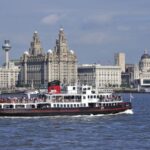
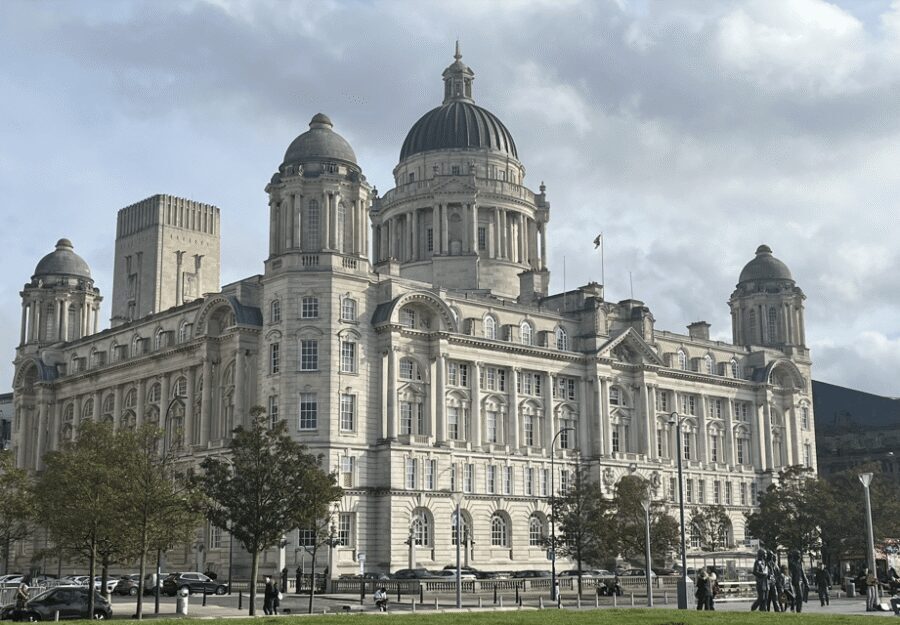
Next comes one of the most famous waterfront architecture groupings in the city: the Three Graces. You’ll have a photo stop while the guide brings out what makes these buildings important—especially as listed buildings with distinct identities.
The Three Graces covered here are:
- The Cunard Building
- The Port of Liverpool Building
- The Liver Building
They’re introduced as a combined set, often called The Three Graces, and the guide ties them back to the city’s heritage and the dockside economy that shaped Liverpool’s rise.
From there, you also get Exchange Flags, which is Grade II listed. The tour highlights how the buildings form a courtyard facing the Town Hall. It’s a useful framing. Instead of just photographing a skyline, you learn how the city’s commercial power, maritime wealth, and civic identity are visually linked.
If you care about architecture, this section gives you a reason to slow down. The buildings aren’t just pretty. They represent how Liverpool organized itself around trade, shipping, and administration.
Town Hall origins and the layers beneath your feet
As the route continues, the walk heads toward the current Town Hall, which is Grade I listed and described as one of the finest surviving 18th-century town halls in England. What’s smart is that the guide doesn’t stop at the building you see today.
You’ll hear about predecessors that date back to the 1500s, which helps you understand Liverpool as an ongoing project—not a single “moment” in time. This is where the tour starts to feel like a guided timeline rather than separate photo stops.
It also matters that the guide keeps connecting scenes. You go from dock history to music landmarks to the civic center, and you begin to see how Liverpool’s story spans labor, trade, art, and governance.
Finishing at the Eleanor Rigby Statue: a closing beat to remember
The tour ends at the Eleanor Rigby Statue. If you’ve followed the music thread earlier, this ending lands like a final note.
It’s a practical finish point too. You’re not stuck halfway back toward nowhere—you finish near another Beatles-related landmark, which makes it easy to continue your day with coffee, shopping, or another self-guided walk.
Price and value: is $31 a fair deal for two hours?
At $31 per person for 2 hours, this is the kind of price that works best when you want a guided orientation fast. You’re paying for:
- A live English guide
- A city-center walking format with multiple landmark stops
- Context that ties together maritime trade (including slavery-era history), dock architecture, and Beatles-era cultural identity
It’s also not a “sit and listen” experience. You’re out in the street, moving between major sites like Royal Albert Dock, the Three Graces, Mathew Street, and Town Hall. For many first-time visitors, that makes the cost easier to justify because you leave with a mental map of where to explore next.
Main trade-off: no food or drink is included, so plan to buy something after. Bring water and don’t wait until you feel thirsty.
Pace, comfort, and what to bring (so the walk stays fun)
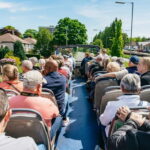
This is an easy walking tour in the sense that it’s designed as a 2-hour sightseeing walk. Still, it’s not a smooth indoor stroll. The route includes uneven surfaces such as cobbles, and it can get crowded around major sights.
Bring:
- Comfortable shoes
- Camera
- Water
Dogs are allowed if they’re well behaved, but you’ll still be in a group in busy areas, so it’s smart to keep expectations realistic.
Also, double-check mobility needs. The activity information lists wheelchair accessibility, but it also states it’s not suitable for wheelchair users and people with mobility impairments. If you need a more step-free route, you’ll want to plan accordingly.
Who should book this Liverpool heritage walk?
Book it if you want a guided introduction that mixes hard history with iconic Liverpool imagery—without turning it into a lecture. This tour is especially good for:
- First-time Liverpool visits when you want a fast orientation
- People who like walking between recognizable landmarks with a story attached
- Anyone who wants to see Royal Albert Dock and the Three Graces explained in plain language
- Beatles fans who also care about how Liverpool’s streets shaped the music story
You might skip it if you:
- Can’t handle cobbles or crowds
- Want a longer, more in-depth museum-style experience instead of a 2-hour walking overview
Should you book this tour?
I think it’s a solid choice if you’re short on time and you want Liverpool to make sense quickly. The best reason to book is the guide-led mix: dockside architecture, maritime and slavery-era context, and Beatles-era stops all in one connected circuit.
If you can handle city walking and uneven surfaces, you’ll likely love how the day flows—especially the Royal Albert Dock stretch and the Three Graces explanation, followed by the Mathew Street and Cavern Quarter music chapter.
FAQ
FAQ
How much is the Liverpool Heritage, History & Culture Guided Walking Tour?
It’s priced at $31 per person.
How long is the tour?
The tour lasts 2 hours.
Where do I meet for the tour?
Meet outside the black metal railings/gate of the main front entrance to the grounds of the Bluecoat Chambers building, 8 School Lane, Liverpool L1 3BX. It’s not the Blue Coat School, and there’s an art gallery-shop called Castle Fine Art opposite you.
What’s included in the price?
The tour includes local Liverpool guides and an easy walking tour format, with a live English guide.
Is food or drink included?
No. Food and drink are not included, so plan to purchase elsewhere.
What should I bring?
Bring comfortable shoes, a camera, and water.
Is the tour wheelchair accessible?
The activity information lists it as wheelchair accessible, but it also states it is not suitable for wheelchair users and people with mobility impairments. If you use a wheelchair or have mobility needs, check carefully before booking.
What language is the guide?
The live guide provides the tour in English.
Where does the tour finish?
The tour finishes at the Eleanor Rigby Statue.
Can I cancel for a refund or pay later?
Yes. There is free cancellation up to 24 hours in advance for a full refund, and you can use reserve now & pay later to keep your plans flexible.