REVIEW · LONDON
London: British Museum Family-Friendly Private Guided Tour
Book on GetYourGuide →Operated by UTG EXPERIENCE · Bookable on GetYourGuide
Kids and ancient history fit together.
This British Museum family-friendly private guided tour turns a giant, intimidating museum into a short, focused adventure with a children’s guide style that still works for adults. I like that the experience is tailored to ages and interests, so it doesn’t feel like one long lecture for everyone.
I also like the way the guide steers you to crowd magnets while keeping the story clear. You’ll get guided context around famous pieces such as the Rosetta Stone and the Elgin Marbles, with time to ask questions and see prized objects up close when the route allows.
One thing to think about before booking: price value depends on your group size. At $412 for a group of up to 5, it can be a bargain if you’ve got a full party, and steep if you don’t. And I did see a serious complaint about a guide not showing at the meeting point, so I recommend planning for a smooth check-in and arriving right on time.
In This Review
- Key things I’d bet on before you go
- How a private family tour changes the British Museum flow
- Meeting point after security: the part you should not wing
- The highlights: Rosetta Stone storytelling that makes decoding feel possible
- Elgin Marbles and world cultures: context over name-dropping
- What the children’s guide style actually does (and why adults still like it)
- Price and value: $412 for up to 5 people
- Languages and communication: English and Italian
- Accessibility: wheelchair accessible routing
- Reality check: the rare but serious meeting-point risk
- Who this tour is best for
- Should you book this British Museum family tour?
- FAQ
- Where do I meet the guide?
- How long is the tour?
- Is it a private group?
- What languages are available for the guide?
- Is a headset included?
- Is the tour wheelchair accessible?
Key things I’d bet on before you go
- Private group, up to 5: you can actually ask questions and set the pace for kids.
- A kids-friendly guide approach: family-friendly activities that keep attention moving.
- Top highlights included in the story: Rosetta Stone and Elgin Marbles get explained with context.
- Route planning based on your interests: tell the guide what you want, and expect a route to match.
- No headset included: you’ll want to stay close so you don’t miss details.
- Short tour window (1.5–2 hours): good for families who don’t want a whole-day museum marathon.
How a private family tour changes the British Museum flow
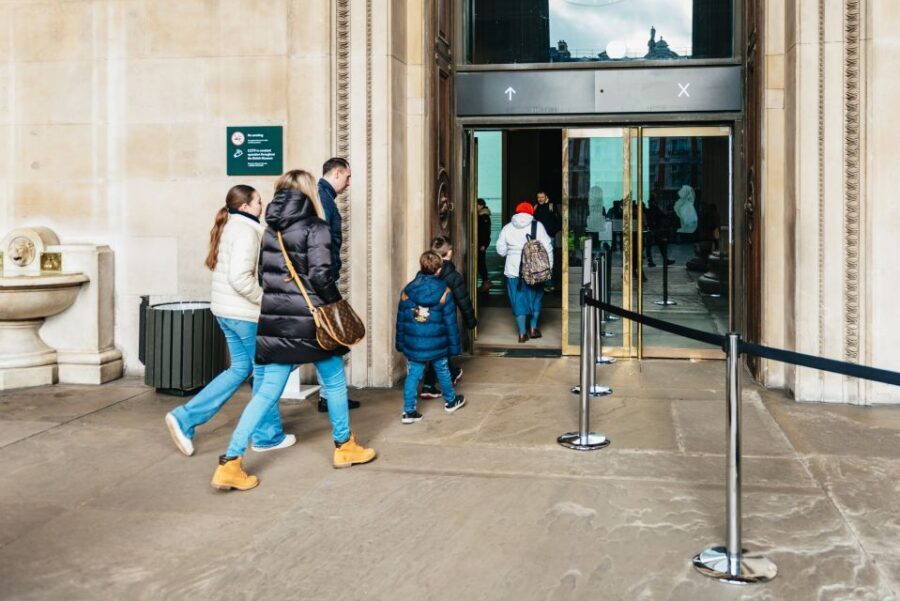
The British Museum can feel like a maze at kid speed. With this tour, you skip the problem of deciding what matters first. It’s private, and it’s built to be flexible, so the guide can adjust the route to what your group cares about.
The tour runs 1.5 to 2 hours, which is a sweet spot for families. Long enough to feel like you learned something real, short enough that kids usually don’t start bargaining for snacks before the first gallery ends.
The “private group” part matters more than it sounds. When you’re walking as a group of five or fewer, you’re not stuck following the slowest person in a large crowd. You can ask why something mattered, not just what it is. That’s the difference between seeing artifacts and understanding them.
You can also read our reviews of more guided tours in London



Meeting point after security: the part you should not wing
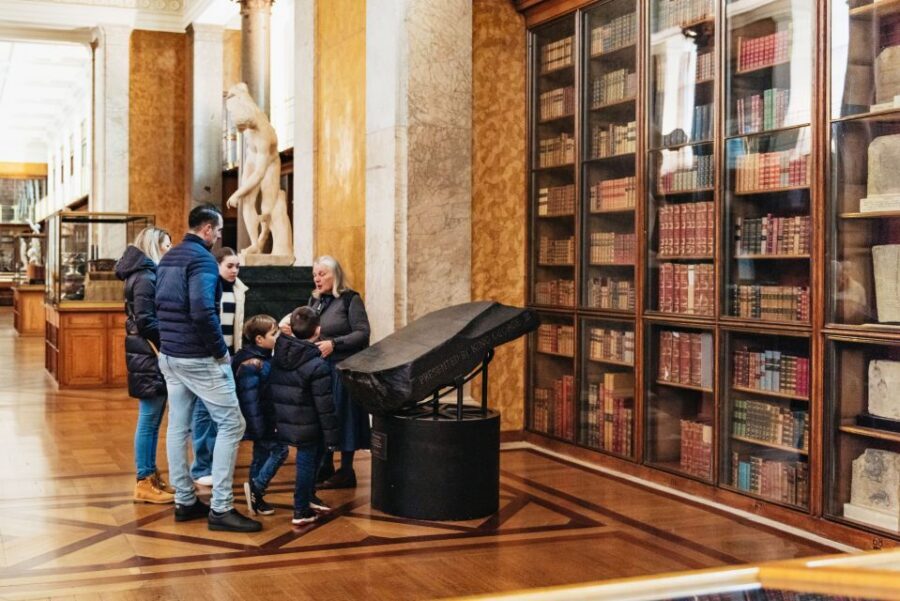
You meet your guide at the main entrance of the museum after the security check, on the stairs. That detail sounds minor, but it’s exactly the kind of place where mix-ups happen if everyone arrives at slightly different times.
Here’s how I’d handle it in real life:
- Show up a bit early, not right on the minute.
- Have your booking confirmation ready on your phone or printed.
- Plan to regroup quickly if you don’t see your guide right away.
Why the stress about this? I saw one serious report about arriving and waiting more than an hour with no guide. It’s not what you want, and it’s rare, but it’s enough to justify being prompt and ready to clarify things fast.
The highlights: Rosetta Stone storytelling that makes decoding feel possible
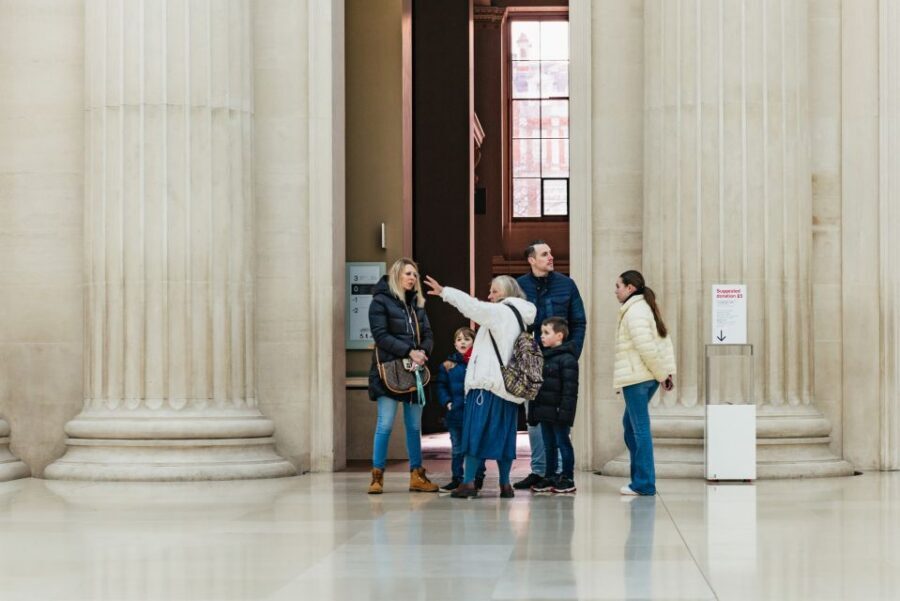
The British Museum’s star artifacts can be hard for kids to “feel,” because they’re old and they’re behind glass. This tour counters that by focusing on the stories behind the objects, not just the objects themselves.
One highlight you can expect is guided interpretation around the Rosetta Stone. The key value here isn’t that you’ll hear big-name trivia. It’s that you’ll connect the artifact to the wider idea of cultures communicating, recording language, and preserving knowledge.
A good guide also helps you look differently. Instead of speed-reading labels, you start noticing patterns, materials, and why this piece matters to more than one topic. In a place like the British Museum, that changes everything. You stop feeling like you’re “passing through” and start feeling like you’re following a thread.
And because it’s private, your guide can adjust the level. If you’ve got younger kids, explanations can be shorter and more visual. If you’ve got older kids or adults in the group, the guide can give more detail without losing everyone else.
Elgin Marbles and world cultures: context over name-dropping
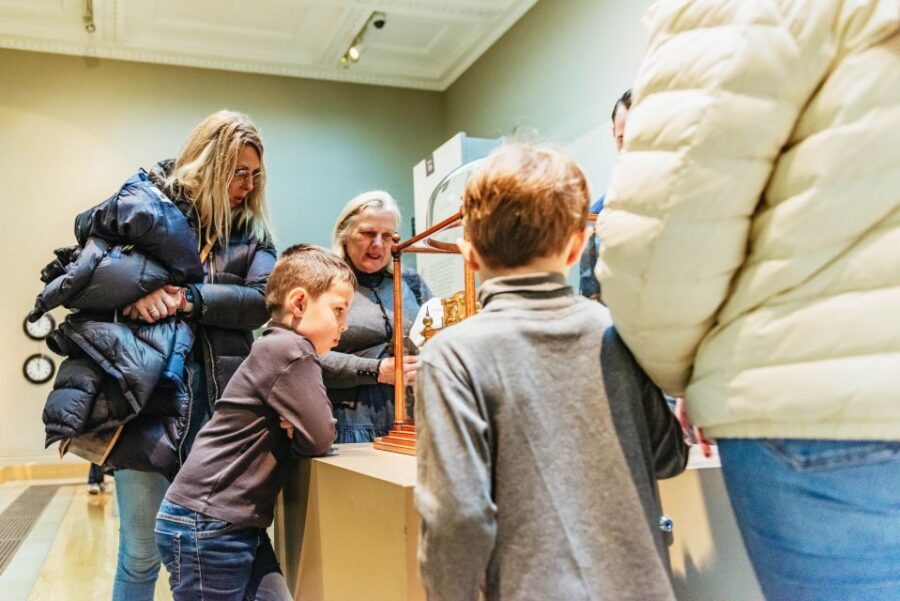
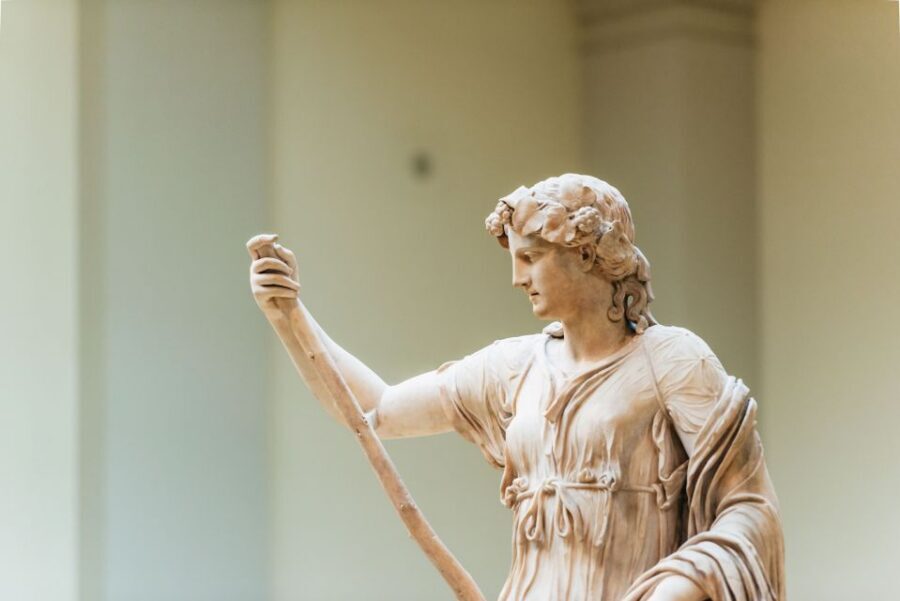
Another major highlight is the chance to explore Elgin Marbles as part of the bigger picture of world cultures. The tour is framed around diverse cultures and the stories behind ancient artifacts, and that’s where you get real value.
If you’ve ever stood in front of a museum masterpiece and felt like you needed a decoder ring, this is the fix. The guide’s job is to translate. Not by watering things down, but by making connections:
- what people made
- what they believed
- how those objects traveled through time
- why the museum’s display matters today
The museum is full of famous objects, but the danger is treating them like separate islands. A guided approach helps you keep them in conversation. That can be especially useful for kids, who tend to remember a story arc more than an inventory list.
What the children’s guide style actually does (and why adults still like it)
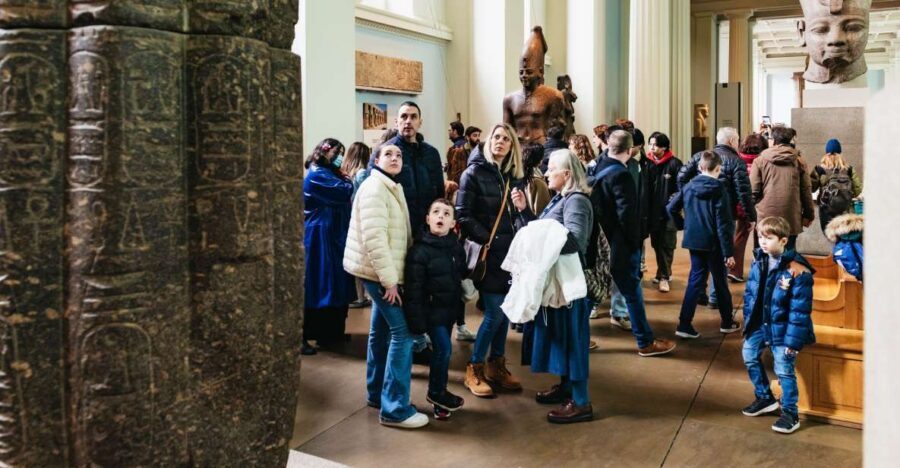
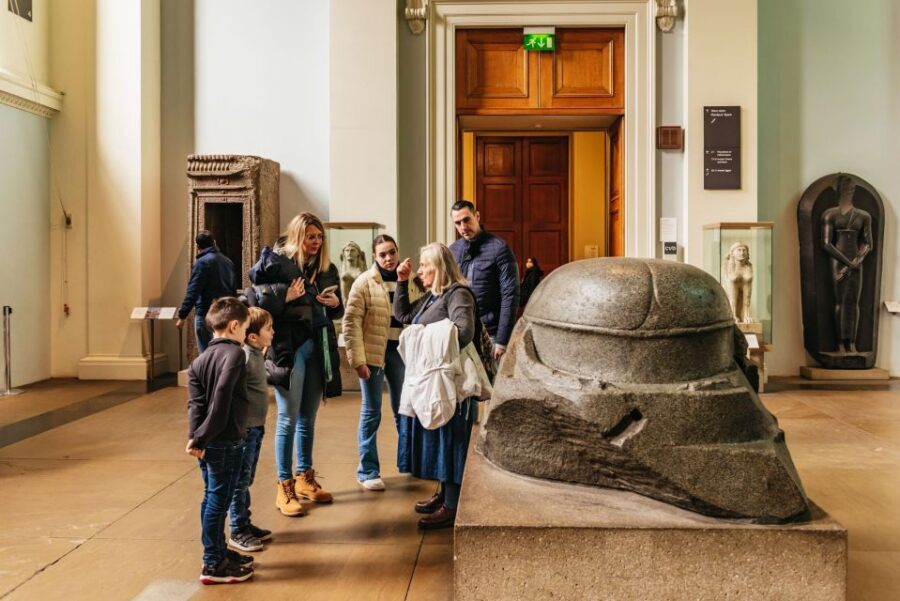
This isn’t a “kids only” tour. It’s designed for adults and children, with family-friendly activities and a guide who can tailor the experience to your group’s ages and interests.
In practice, that usually means:
- more interaction and Q&A (not just a monologue)
- explanations that match your kids’ attention span
- built-in moments where the guide turns curiosity into learning
One booking highlighted the idea that when you tell the guide what you want to see, they quickly build a route and share lots of exciting knowledge along the way. That’s exactly the kind of flexibility that makes museums work for families.
For adults, the payoff is not just entertainment. It’s better use of time. Instead of guessing which rooms will be most meaningful, you’re guided toward key items and given context that helps you recognize what you’re seeing. You still get the classic British Museum wow factor, but you’re not stuck wandering.
You can also read our reviews of more private tours in London





Price and value: $412 for up to 5 people

Let’s talk value honestly, because $412 is not small change.
This tour costs $412 per group up to 5, for 1.5–2 hours. The math is simple:
- If you fill the group with 5 people: $412 ÷ 5 = about $82 per person
- If you’re only 2 people: $412 ÷ 2 = $206 per person
So the main value driver is whether you can bring a full group. For families with two adults and up to three kids, this can start to look reasonable compared with the cost of buying multiple standalone experiences separately.
The other value driver is the “private guide” part. You’re paying for someone to solve problems you’d otherwise solve yourself: picking what to see, explaining it, keeping kids moving, and answering questions on the spot.
One downside angle shows up in feedback I saw: a guide can be pleasant and still feel overpriced if the group size is small or if expectations were set for a longer, more intensive plan than the 1.5–2 hour window. That’s why it helps to go in with a clear goal: highlights and stories, not a full museum tour.
Languages and communication: English and Italian
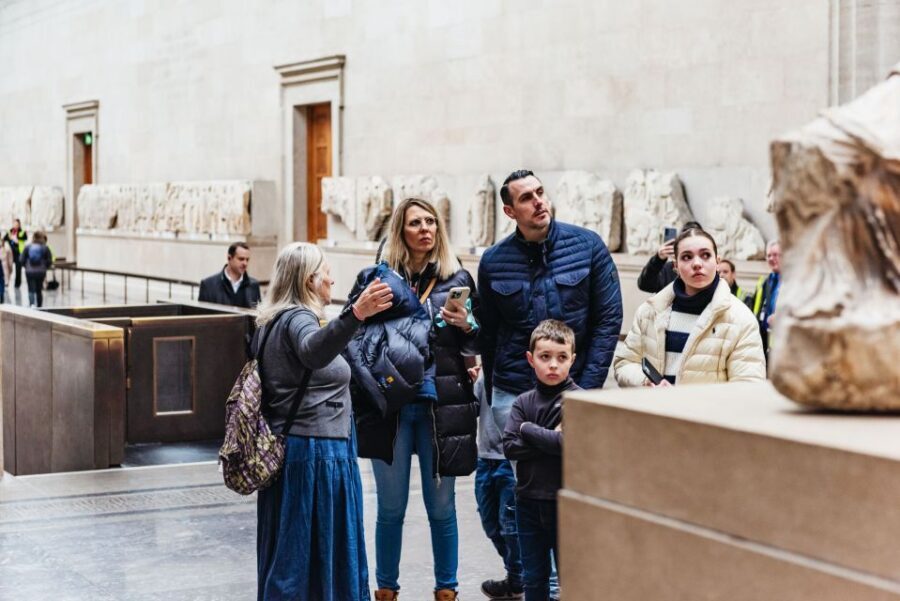
The live guide is available in English and Italian. That’s useful if you want the explanations in a language your whole group can follow easily.
Also, a practical note: the tour does not include a headset. That means you’ll hear best when you stay close to the guide, especially inside busy galleries where voices carry and crowds can get noisy. It’s not a deal-breaker, just something to plan for.
Accessibility: wheelchair accessible routing
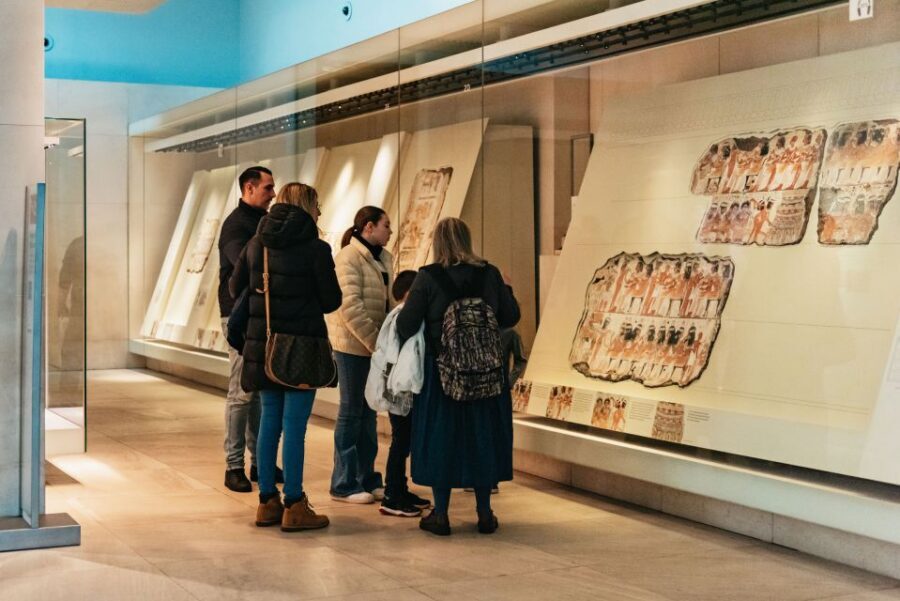
The tour is listed as wheelchair accessible. That matters in a museum with lots of moving between spaces. A guided route is generally easier than trying to chart a path yourself with a mobility device and kids in tow.
That said, the tour doesn’t mention specific details about accessibility adaptations beyond the general label. If accessibility is a major factor for your group, you’ll feel safest confirming the practical logistics with the provider before you go.
Reality check: the rare but serious meeting-point risk
Most tours like this run smoothly. Still, I did see one very negative report about arriving at the meeting point and not finding the guide for over an hour, with no assistance available in that moment.
I can’t predict whether that will happen to you. But you can reduce your risk by being ready:
- arrive early enough to handle a brief delay
- keep your confirmation accessible
- be patient for a short window, then take action if nothing changes
If you’re traveling with kids, this “plan for the worst, hope for the best” approach keeps the day from falling apart.
Who this tour is best for
This experience fits best when you want structure without a rigid, boring script.
It’s a great match if:
- you’re traveling with kids (and you want them learning without losing them)
- your group has mixed ages, and you need a guide who can adjust
- you care about key artifacts like the Rosetta Stone and Elgin Marbles, but you don’t want to spend hours researching first
- you’d rather pay for time-saving guidance than gamble with a self-guided plan
It might be less ideal if:
- you’re looking for a full-day museum immersion (this is 1.5–2 hours)
- your group is very small and you’re trying to squeeze value out of the price
- you strongly prefer total independence with no guided pacing
Should you book this British Museum family tour?
If you can bring a group of up to five (or you’re a family that can justify guide time), I’d lean toward booking. The format is built for exactly what families struggle with in big museums: focus, context, and keeping kids engaged while adults still get meaning.
The main “don’t ignore” point is the meeting-point risk I saw in feedback. It’s rare, but it’s real enough to take seriously. If you arrive early and you’re ready to confirm details quickly, you stack the odds in your favor.
If your goal is highlights plus stories in a manageable time window, this tour has a strong purpose. And if your group wants to learn about world cultures through the museum’s best-known artifacts, you’ll likely come away feeling like the time was well spent.
FAQ
Where do I meet the guide?
Meet your guide at the main entrance of the museum after the security check, on the stairs.
How long is the tour?
The tour lasts 1.5 to 2 hours.
Is it a private group?
Yes. It’s a private group (priced per group up to 5).
What languages are available for the guide?
The live guide is available in English and Italian.
Is a headset included?
No. A headset is not included.
Is the tour wheelchair accessible?
Yes, the tour is wheelchair accessible.