REVIEW · LONDON
London: British Museum Guided Tour with Entrance Tickets
Book on GetYourGuide →Operated by BEST TOURS LONDON LTD · Bookable on GetYourGuide
Two hours, and London history snaps into focus. This British Museum tour is a tight, expert-run route through some of the collection’s biggest crowd-pleasers: the Great Court glass roof and the Parthenon sculptures (Elgin Marbles). I like that the guide keeps it story-driven instead of fact-dumping. The only real drawback is the time limit: you’ll get a best-of tour, not a full museum sweep, so if you want certain areas in depth (like sections not featured in this route), you’ll need extra time on your own.
I also really liked the pacing. On our stop-and-start, you actually pause to look, and the guide ties artifacts together so they make sense as you walk. Guides I saw mentioned by name include Giovanni, Daniel, Joey, James, Tony, and Rebekka, and several reviews call out how smoothly they managed the two-hour schedule, even with a busy museum crowd.
If this is your first visit, you’ll likely leave with a clear sense of where to go next. If it’s your second or third visit, you may still appreciate the focused picks and the extra context, but again, it’s built around highlights, not comprehensive coverage of every gallery.
In This Review
- Key things I’d prioritize on this tour
- Entering the British Museum with priority timeslots (and a yellow flag)
- Great Court: the glass roof stop that changes how you see the building
- The Parthenon Sculptures (Elgin Marbles): why the story is bigger than the stones
- Ancient Egypt in 2 hours: mummies, the Book of the Dead, and Ramesses II
- The Enlightenment Room and world collections: turning one museum into many connections
- Sutton Hoo ship burial: Anglo-Saxon power you can see in the details
- Price and value: is $39 worth it?
- What makes the tour work in real life: guide style, headsets, and pacing
- Who should book this tour (and who might not)
- Should you book this British Museum guided tour?
- FAQ
- How long is the British Museum guided tour?
- What’s included in the ticket price?
- Where do I meet the guide inside the museum?
- Can I skip the line?
- What languages are available for the guide?
- What if my plans change?
Key things I’d prioritize on this tour
- Great Court glass roof views: a chance to take in the museum’s architectural centerpiece before you lose the thread in the galleries
- Elgin Marbles context: you’ll hear what these sculptures meant, and why they became so politically and culturally loaded
- Egyptian mummies and Ramesses II: the tour uses major names to explain burial beliefs, not just to point at bodies
- Rosetta Stone story: you’ll get the script-and-science angle that makes ancient Egypt feel more readable
- Sutton Hoo ship burial artifacts: helmets and shields that show craftsmanship, status, and early medieval identity
- Small-group energy and optional headsets: it’s easier to hear your guide in a noisy, high-traffic museum
Entering the British Museum with priority timeslots (and a yellow flag)
At the British Museum, the first battle is simple: crowds. This tour helps by pairing your guide with main entrance priority timeslots and a separate entrance to reduce your waiting time.
Your meeting point is inside the museum, on the right side of the information desk, next to a column. Look for your guide holding a YELLOW FLAG, and plan to arrive a few minutes early so you can find them without stress.
One practical tip: the museum can be slow moving at entry points. A review I read recommended budgeting extra time to get in, even with timed access, so I’d treat the tour start time as firm but not magical.
A few more London tours and experiences worth a look


Great Court: the glass roof stop that changes how you see the building
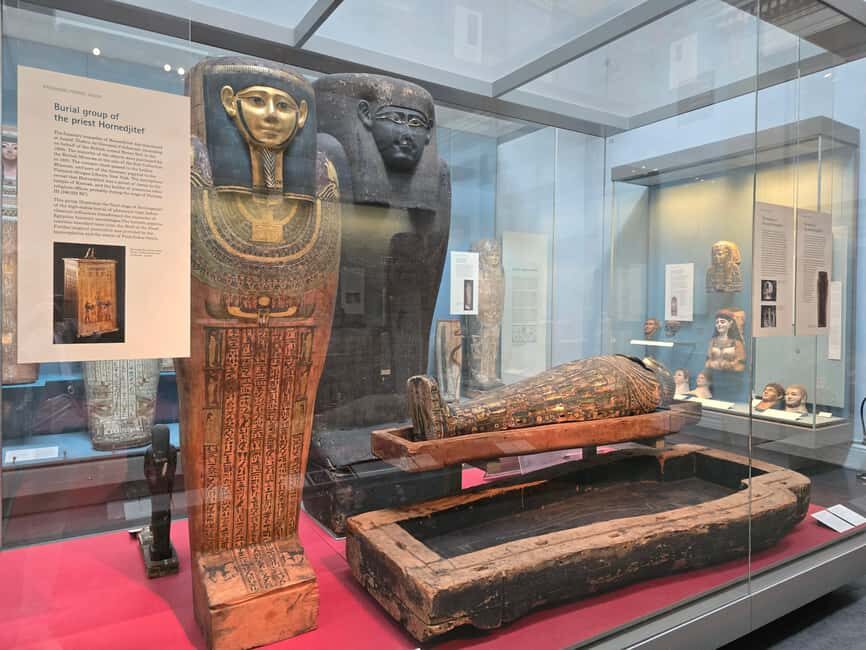
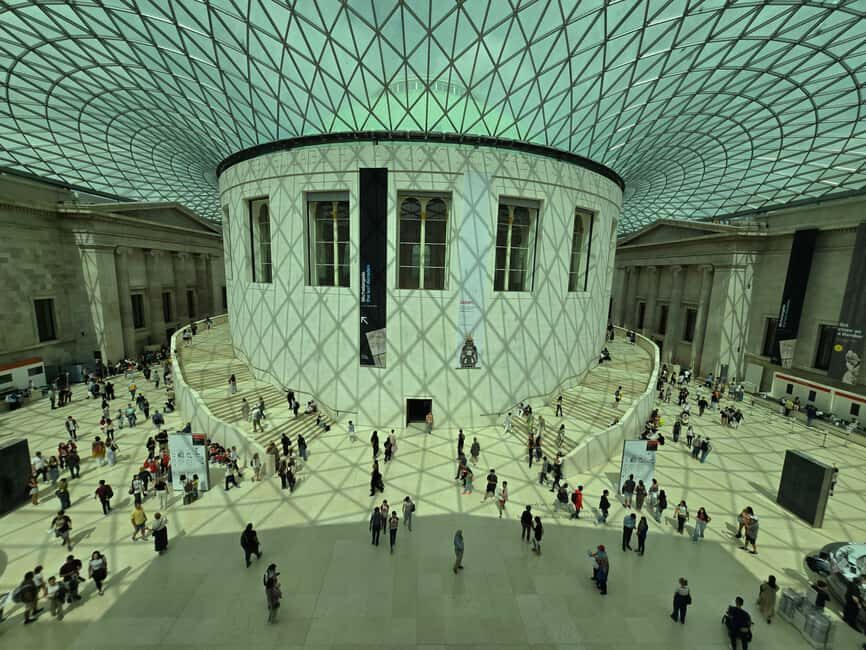
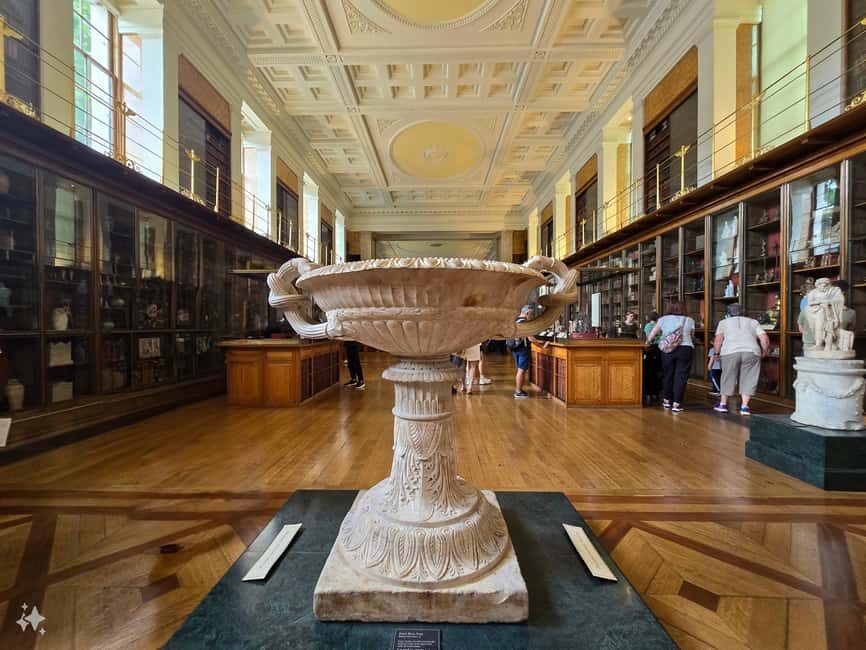
The British Museum is huge, with over 8 million artifacts spread across 70+ galleries, so you can walk for an hour and still feel like you’re chasing your tail. The tour solves that by beginning with a landmark you can orient around: the Great Court.
This is where you pause for something more than a photo. The spectacular glass roof is basically a sky you can walk around. When you look up and then look back down at the galleries feeding into the central space, you start to understand how the museum is arranged—so the route ahead feels less random.
I like that this isn’t just an architecture flex. A good guide uses this moment to set expectations: what you’re about to see, how long you’ll spend, and how the tour connects different civilizations through themes like power, belief, and craft.
The Parthenon Sculptures (Elgin Marbles): why the story is bigger than the stones
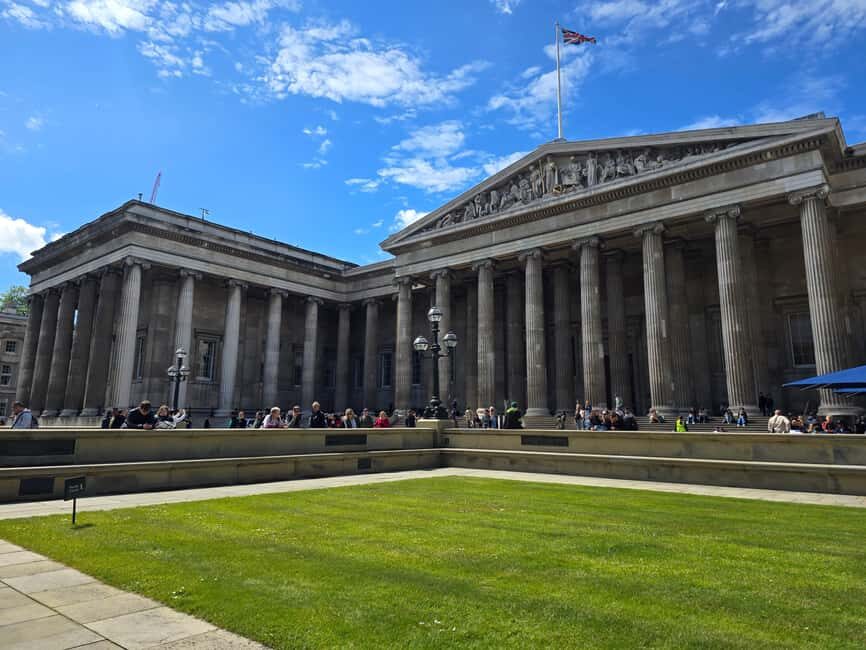
Next comes one of the British Museum’s headline attractions: the Parthenon Sculptures, often called the Elgin Marbles. These aren’t just famous objects. They’re famous because they sit at the intersection of art, empire, and modern debate.
Your guide’s job here is to make them legible. Instead of treating the sculptures as isolated masterpieces, the tour frames them in terms of how ancient Greece used art to project ideas—who had authority, what myths mattered, and how stories were carved for public life.
This stop is also a good reality check for expectations. The crowd can be thick, and the viewing spots can be tight, so the guided approach matters: you’ll understand what to notice first and why, and you won’t waste time hunting for the “point” of each piece.
Ancient Egypt in 2 hours: mummies, the Book of the Dead, and Ramesses II
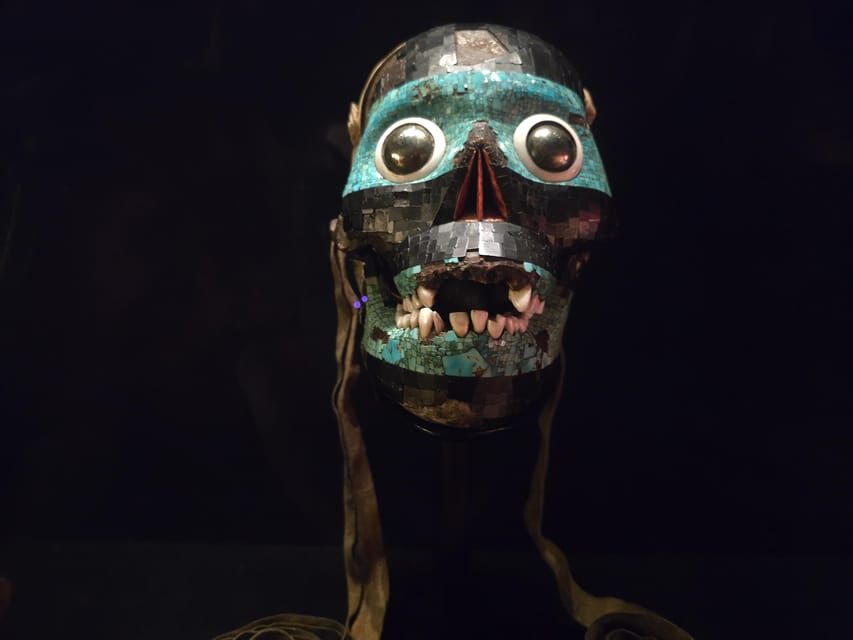
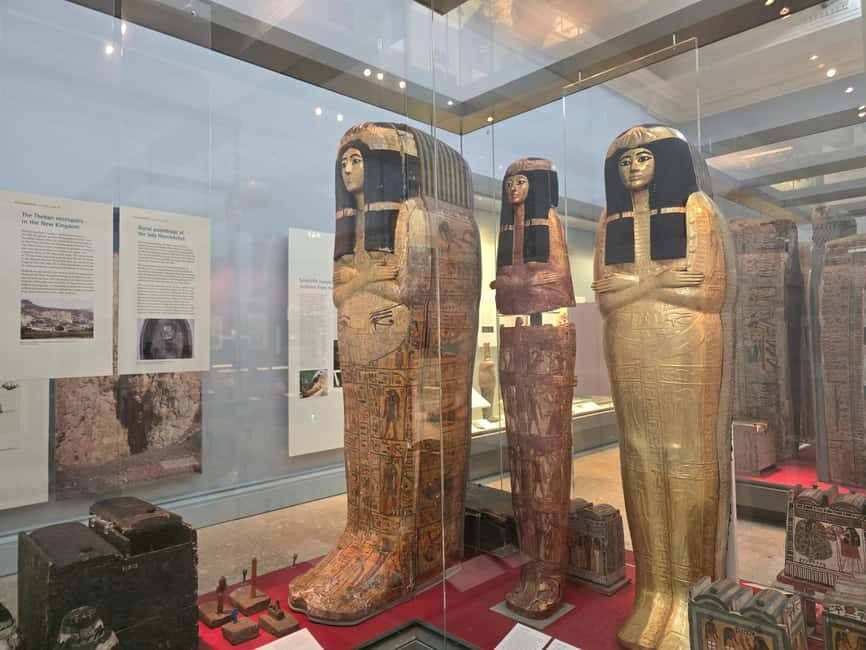
Then the tour shifts gears into Egypt, and it does it with major anchors. You’ll see the Egyptian mummies and hear about burial practices, plus references to the Book of the Dead.
One of the best things about this portion is that it uses Egypt’s most dramatic imagery to explain everyday beliefs: how people prepared for the afterlife, what roles written texts played, and why certain objects mattered in the burial process. It’s not just, here’s a mummy, look at it. It’s, here’s what this person’s final journey was supposed to achieve.
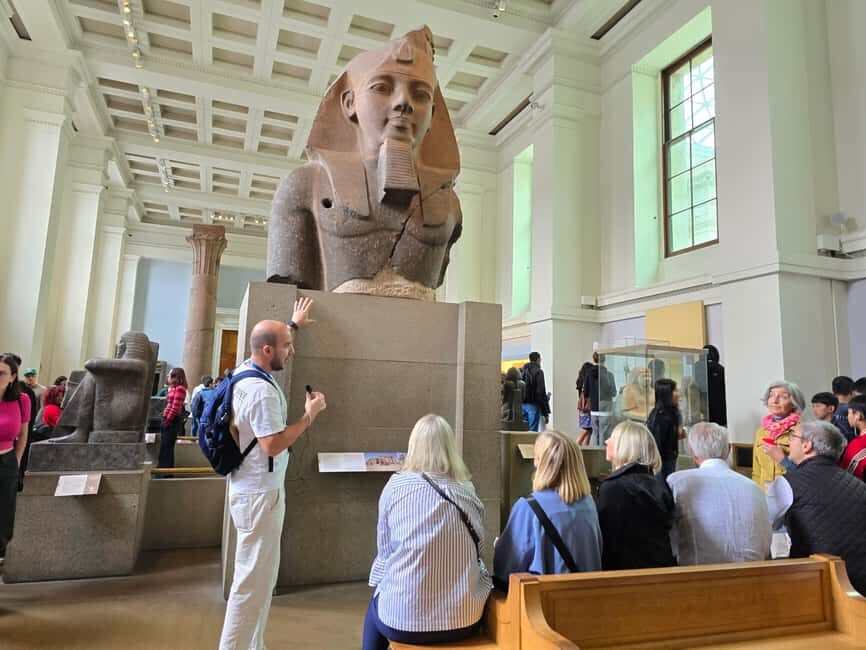
The highlights also include an awe-inspiring bust of Ramesses II. For many first-time visitors, a name like Ramesses II helps Egypt feel less like a distant timeline and more like a real political world with rulers, resources, and ritual.
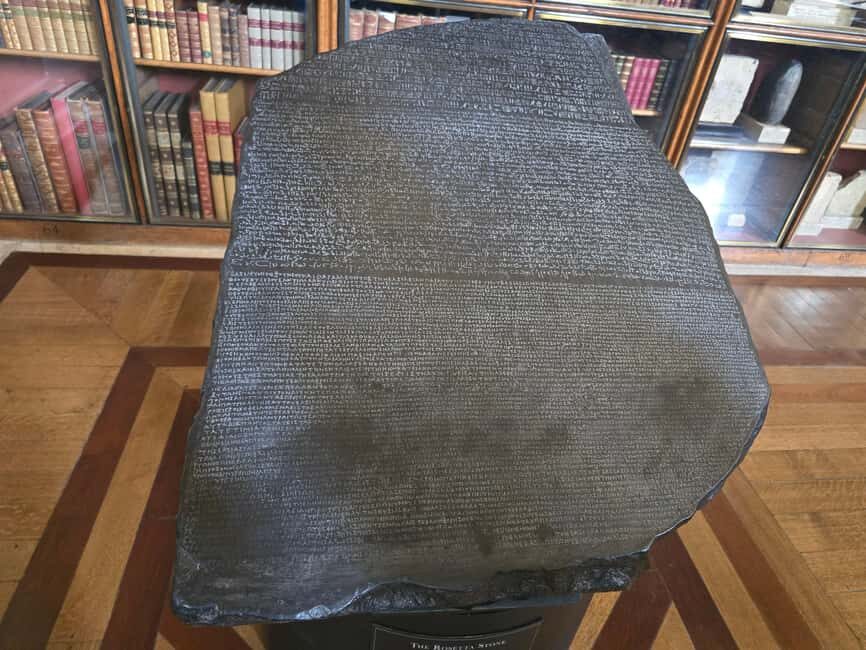
And yes, you’ll get the Rosetta Stone angle too. That’s a huge deal in the museum context because it’s the classic bridge between ancient languages and modern understanding, turning hieroglyphs from symbols into readable information.
The Enlightenment Room and world collections: turning one museum into many connections
The route doesn’t stop at ancient civilizations. You also get time in the Enlightenment Room, an area built around the 18th-century spirit of investigation—where objects reflect curiosity, science, and intellectual life.
This matters because it changes the emotional tone. After Egypt and Greece, you start to think like a museum visitor from a more recent era: people collecting, classifying, comparing, and trying to explain the world.
From there, the tour includes curated time with Chinese collections and crafted pieces from Southeast Asia. This is one of those “small time, big impact” segments, because it forces a broader lens. The British Museum can feel Europe-tilted if you only look at the famous classics, so this stop helps you see how global the collection really is.
You can also read our reviews of more guided tours in London






Sutton Hoo ship burial: Anglo-Saxon power you can see in the details
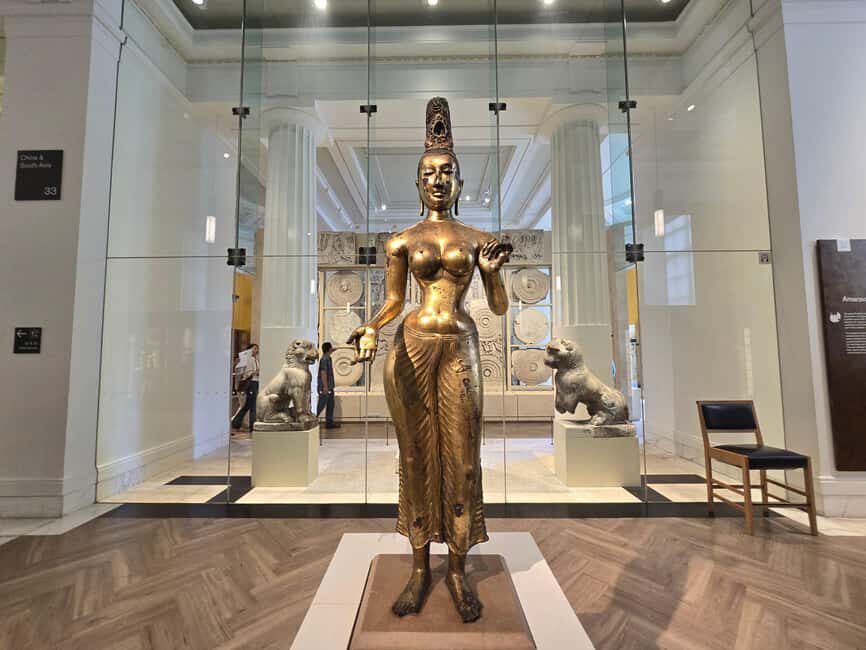
The last major highlight is early medieval England’s Sutton Hoo ship burial. If you’re used to thinking of the medieval period as “dark” or faceless, this stop punches holes in that assumption.
You’ll focus on richly crafted objects like the helmet and shield, plus other items from the burial. Your guide’s interpretation is key here: these artifacts aren’t just impressive materials. They’re evidence of status, skill, and how communities shaped identity through display.
I like that this ending point gives you a different kind of story. You go from myth and empire art to artifacts that feel intimate—handwork you can almost imagine in the making.
And as a practical note, this is also a good way to make the museum feel connected across time. It’s one museum, but you’re moving across centuries and beliefs in a way that doesn’t feel random.
Price and value: is $39 worth it?
At $39 per person for a 2-hour guided tour with entrance tickets and priority timeslots, this is the kind of deal that makes sense if you want a smart first pass.
Here’s why it’s good value, in plain terms:
- The British Museum is vast. Without guidance, you risk spending your limited time “wandering to nowhere.” A guide helps you focus on the artifacts that connect to bigger ideas.
- You’re paying for interpretation. The best part of a museum guide isn’t the object count. It’s the explanation that makes you understand what you’re seeing.
- You get help with the entry crowd through priority access and a separate entrance.
I’d treat it as a good purchase if you’re on a tight London schedule, or if it’s your first time at the museum. If you have a whole day and you love going gallery-by-gallery at your own speed, you might not need the guide. But if you’re trying to do “most important highlights” in a short window, the price feels fair for what you get.
What makes the tour work in real life: guide style, headsets, and pacing
This tour is designed around listening. The listing includes a live guide and notes headsets are available, which matters because the British Museum can be loud even when you’re standing still. A review specifically called out that headsets were useful with large noisy crowds, and I agree with the logic: you want your attention on artifacts, not on deciphering every sentence through chatter.
Another theme across reviews is that guides didn’t just recite facts. People said the guide made time fly, used clear narration, and spent enough time in the big galleries without rushing past everything. One reviewer noted that the guide chose key areas instead of trying to stuff in every detail. That’s exactly the approach I’d want for a 2-hour museum visit.
Group size also helps. The activity notes private or small groups available, which generally means you can hear the guide better and ask questions without feeling like you’re shouting into a crowd.
Who should book this tour (and who might not)
This tour fits best if you:
- want a first-time orientation to the British Museum
- like big-name highlights with clear context (Egypt, Greece, Anglo-Saxon England)
- prefer hearing stories in English/Italian (and potentially other listed guide languages like Greek or Chinese, depending on what you book)
You might want a different plan if:
- your top priority is a specific gallery not included in these highlights
- you dislike tours that focus on a set route, because you’d rather spend a full day choosing your own path
Given the route emphasis, one review mentioned wanting more coverage variety. That’s a fair consideration. In 2 hours, the tour has to pick. It chooses the pieces that most people recognize and that most easily communicate big themes.
Should you book this British Museum guided tour?
Book it if you want a focused, high-impact tour that helps you understand what you’re seeing without spending the day lost in 70 galleries. The combination of priority entry, a Great Court orientation, and expert storytelling around the museum’s headline civilizations makes the $39 feel practical rather than pricey.
Skip—or at least pair with extra self-guided time—if you already know the museum well and you’re chasing deep, niche interests outside this highlight mix. In that case, the tour can still be a helpful backbone, but you’ll want additional hours to chase your own priorities.
If you’re trying to do the British Museum in one smart block, this is a strong option. Plan to arrive on time, bring your curiosity, and let the guide do what guides do best: translate artifacts into stories you can actually remember later.
FAQ
How long is the British Museum guided tour?
It lasts 2 hours.
What’s included in the ticket price?
You get a guided tour with commentary in English/Italian, entrance tickets to the British Museum with priority timeslots (main entrance), and the option to use headsets.
Where do I meet the guide inside the museum?
The meeting point is inside the museum, on the right side of the information desk, next to a column. The guide will be there 5–10 minutes early holding a YELLOW FLAG.
Can I skip the line?
Yes. The tour includes skip-the-line access using a separate entrance.
What languages are available for the guide?
The activity lists live guide options in English, Italian, Greek, and Chinese.
What if my plans change?
You can cancel up to 24 hours in advance for a full refund. The experience also offers a reserve now & pay later option.