REVIEW · LONDON
London: Changing of the Guard Guided Tour Experience
Book on GetYourGuide →Operated by BEST TOURS LONDON LTD · Bookable on GetYourGuide
Royal pageantry meets a smart crowd plan. This Changing of the Guard tour helps you see the ceremony clearly and photograph the royal landmarks without getting stuck behind the wrong group.
I love the crowd-smart route that takes you through the Changing of the Guard from start to end, instead of forcing you to wait in the usual outside-the-palace crush. I also like how the walk stacks iconic stops together—St James’s Palace, Clarence House, Whitehall, Westminster Abbey, and your Big Ben finish—so you get a proper London royal circuit in just 2 hours.
One catch: the Changing of the Guard runs on select days, so you’ll want to check the schedule ahead. If it’s not running that day, you still get the Horse Guards Parade daily.
In This Review
- Key highlights you should care about
- Meeting at Green Park’s Diana Fountain: how the day starts
- Green Park to St James’s Palace: the royal area comes into focus
- Buckingham Palace viewpoints: how the tour avoids the blocked view trap
- Clarence House and St James’s Park: buildings, stories, and calm for photos
- Whitehall to Westminster Abbey: when the walk turns into context
- Horse Guards Parade plus marching precision: what to watch for
- Big Ben finish near Westminster Station and Parliament Square: last photos, then off
- Price and value for $20: what you get in 2 hours
- Who this tour is best for (and who should think twice)
- Should you book this Changing of the Guard guided tour?
- FAQ
- What is the duration of the London Changing of the Guard guided tour?
- Where do we meet for the tour?
- Is the Changing of the Guard ceremony guaranteed every day?
- What royal events are included?
- What should I wear for this experience?
- Is the tour wheelchair accessible?
- How do cancellations and refunds work?
- What languages is the live guide available in?
Key highlights you should care about
- Best-view ceremony strategy that keeps you watching the full routine instead of only the last seconds
- Horse Guards Parade daily, so the “royal show” still happens even on off-ceremony days
- Prime palace stroll through Green Park, St James’s Palace, Buckingham Palace area, Clarence House, St James’s Park, and Whitehall
- Photo-friendly stops that set you up for pictures around Big Ben and Westminster Abbey
- A real history guide, with clear explanations of what you’re seeing in uniforms and marching
- Fast 2-hour pacing that ends near Westminster Underground and Parliament Square
Meeting at Green Park’s Diana Fountain: how the day starts
This tour kicks off at the Constance Fund fountain of Diana, right outside Green Park Underground (use the Green Park exit). It’s a good starting point because it’s central enough to reach the palace area fast, but not so far inside the crowds that you feel like you’re already in the traffic jam.
You’ll begin with a guided walk that builds toward the ceremony and the royal precinct. The key is that your guide isn’t just walking you to famous places. They’re timing the flow of people and steering you to viewing points where you can actually see what matters. That sounds basic, but with London crowd behavior, it’s the whole game.
Also, this is a walking tour—so the moment you step out, think comfort first. If your shoes aren’t up to a brisk stroll, the “iconic” parts can start to feel like chores.
You can also read our reviews of more guided tours in London



Green Park to St James’s Palace: the royal area comes into focus
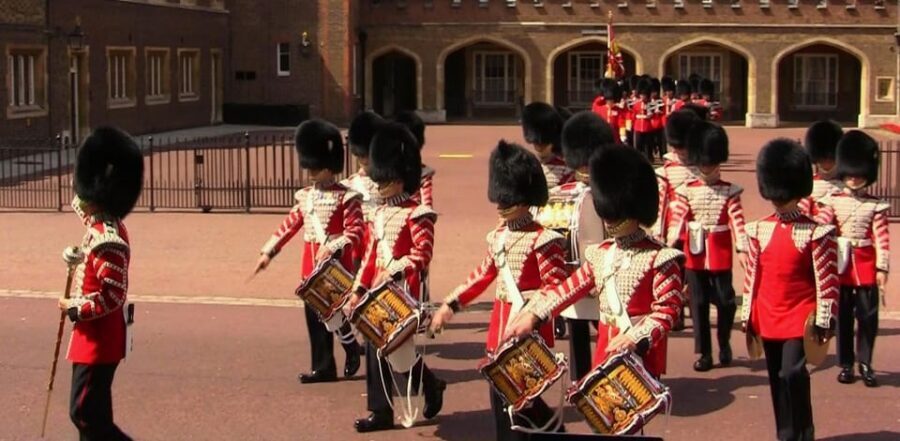
After Green Park, the route leads you toward St James’s Palace and the surrounding royal grounds. This stretch matters because it’s where you start understanding the layout: where the movement happens, where the ceremonial staging feels logical, and why certain corners are better for watching than others.
St James’s Palace is one of those stops that works even if you aren’t a monarchy superfan. The area gives you context for the Guard and the larger ceremonial world around it. And because your guide is guiding the “when” and “where,” you aren’t just looking at buildings—you’re watching a system at work.
This is also where I’d focus on attention. Keep your eyes up and ahead. The ceremony is physical and precise, and the people around you can’t always see each other. A guide who’s alert to timing helps you avoid the classic moment where you finally get a good view and then the crowd blocks it in seconds.
Buckingham Palace viewpoints: how the tour avoids the blocked view trap
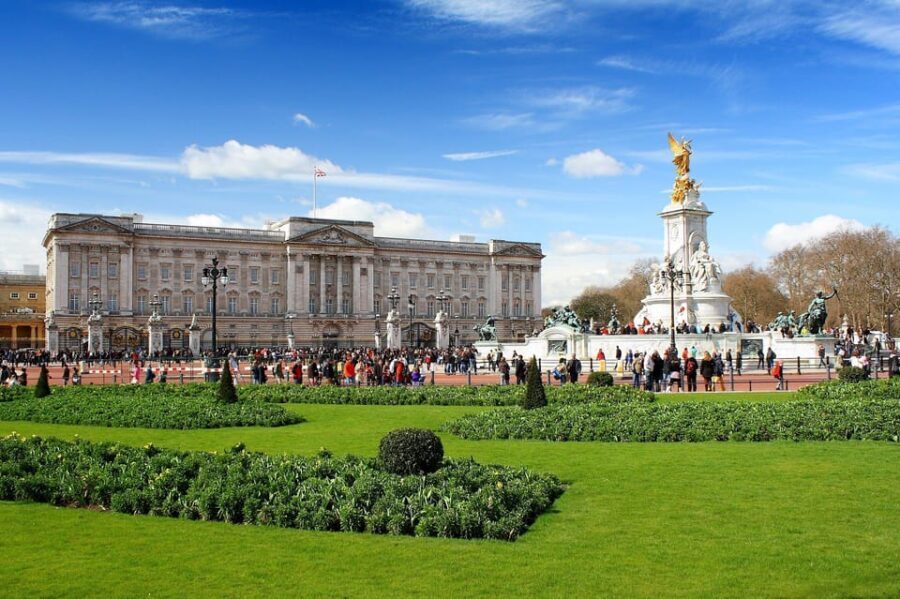
Yes, Buckingham Palace is the obvious magnet. But the tour’s real value is pushing you away from the typical outside-the-palace waiting strategy that often turns into disappointment. Waiting for hours for a tiny slice of the action is the fastest way to end up frustrated.
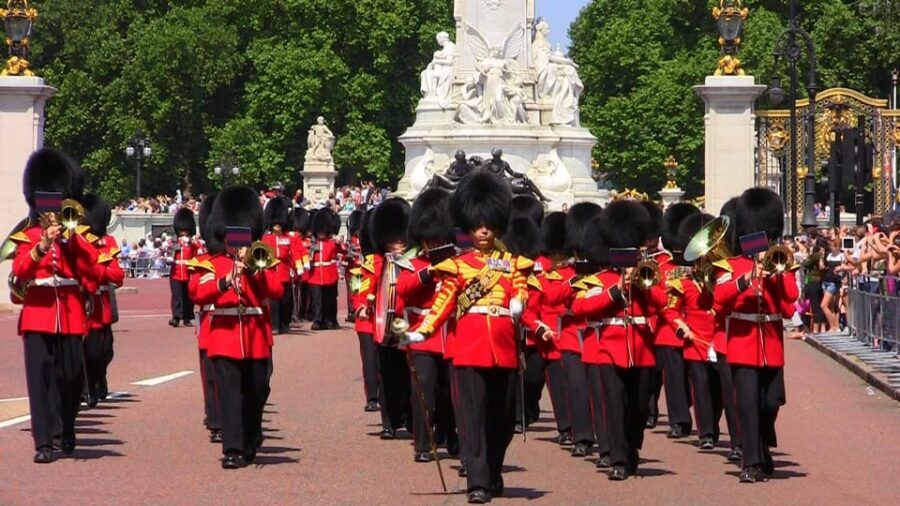
Here, you’ll get taken through the Changing of the Guard so you’re not stuck watching only the last portion. That means you’re more likely to catch the full arc of the ceremony, with more opportunities to view guard formations and movements.
Your guide also helps with photo timing—so you’re not just holding your camera at random points. If you’ve ever tried to photograph marching guards while crowds shift in every direction, you already know why this matters.
If you’re lucky enough to get a guide like Adrian (a name that pops up in strong feedback), you’ll likely appreciate the approach: friendly, approachable, and very focused on keeping the timing right. There’s even a reported moment of surprisingly good luck with royal timing—proof that timing, route choice, and paying attention can turn a cold day into something memorable.
Clarence House and St James’s Park: buildings, stories, and calm for photos
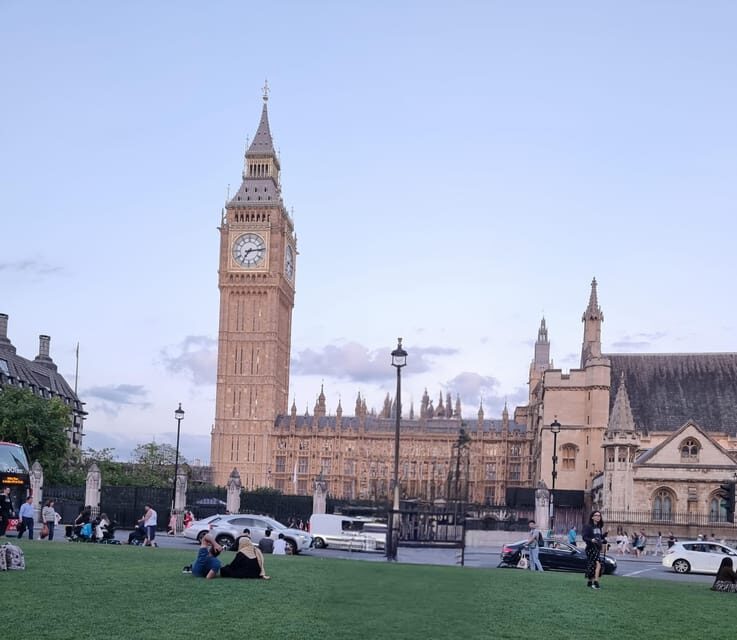
Next comes a walk past Clarence House and through St James’s Park. This section is where the tour stops feeling like a single performance and starts feeling like a guided walk through the monarchy’s everyday backdrop.
Clarence House is the official residence of King Charles III, and knowing that changes how you read the space. It’s still just a building from the sidewalk, but it’s a building with a real role. Your guide’s explanations help connect the dots between the ceremony you’re watching and the residences you’re passing.
St James’s Park also helps you breathe a bit. It’s not quiet like a countryside garden, but it offers pauses—moments where you can reset your feet, check your camera settings, and plan the next shot before the crowd density spikes again.
For photographers, this is a useful part of the walk. You’ll often find better sight lines and calmer group positioning closer to park spaces than right on the busiest ceremonial path.
Whitehall to Westminster Abbey: when the walk turns into context
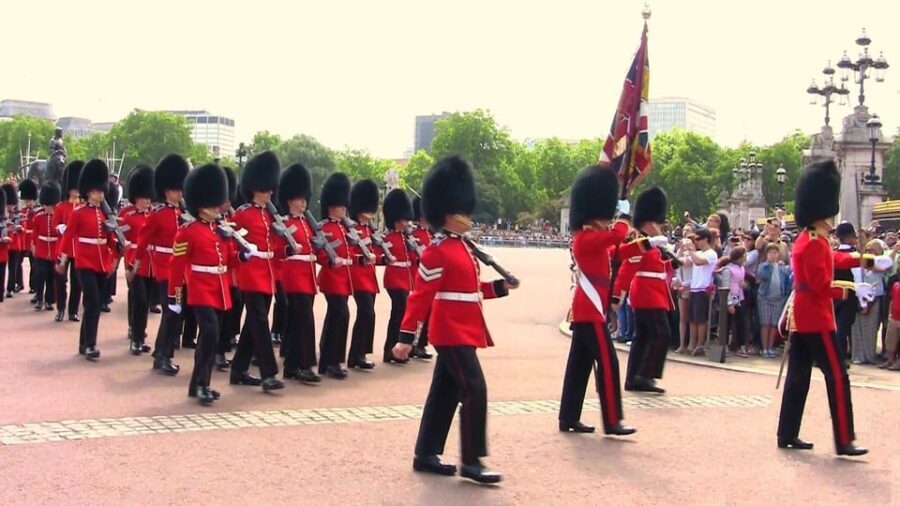
As the tour continues, you move through Whitehall. This stretch gives you that classic London feeling of wide streets, government buildings, and long sight lines. It’s also where the guide’s historical explanations become practical, not just trivia.
You’ll learn how the ceremony fits into British monarchy traditions and what you’re actually seeing in the drill and uniform details. That matters because the Guard isn’t only pageantry—it’s organized precision, with signals, timing, and disciplined formation changes.
Then comes Westminster Abbey. Even if you don’t go inside, seeing it from the outside adds weight to the whole experience. It’s one of those landmarks that makes the royal story feel bigger than one ceremony. Pair that with the later Big Ben moment, and the day lands as a true “London highlights” loop.



Horse Guards Parade plus marching precision: what to watch for
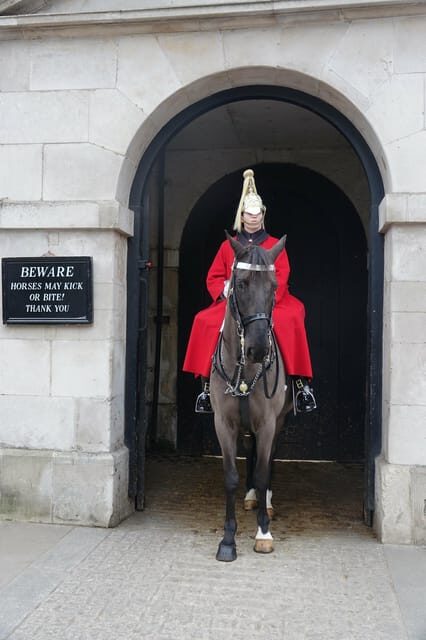
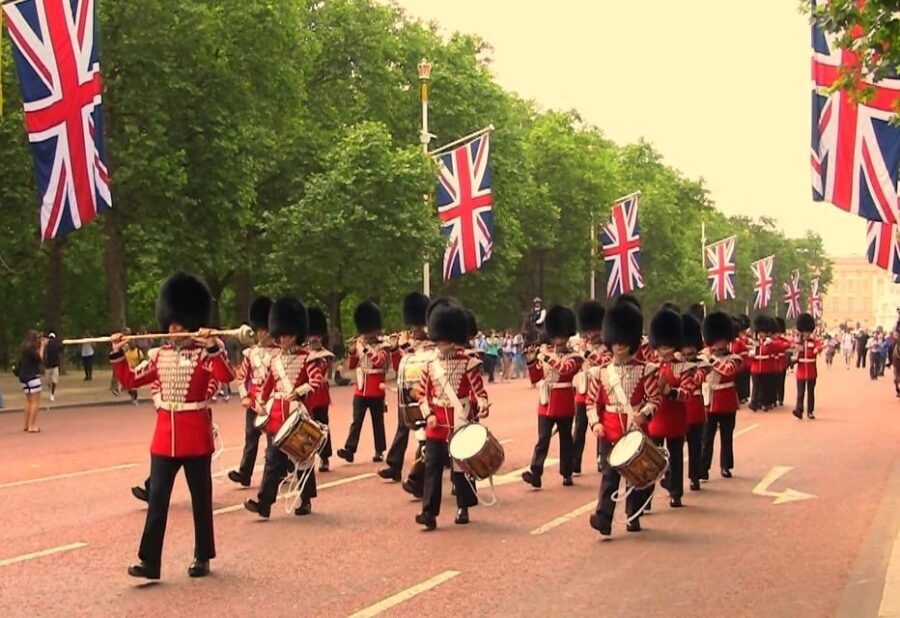
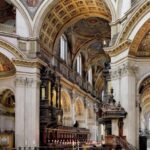
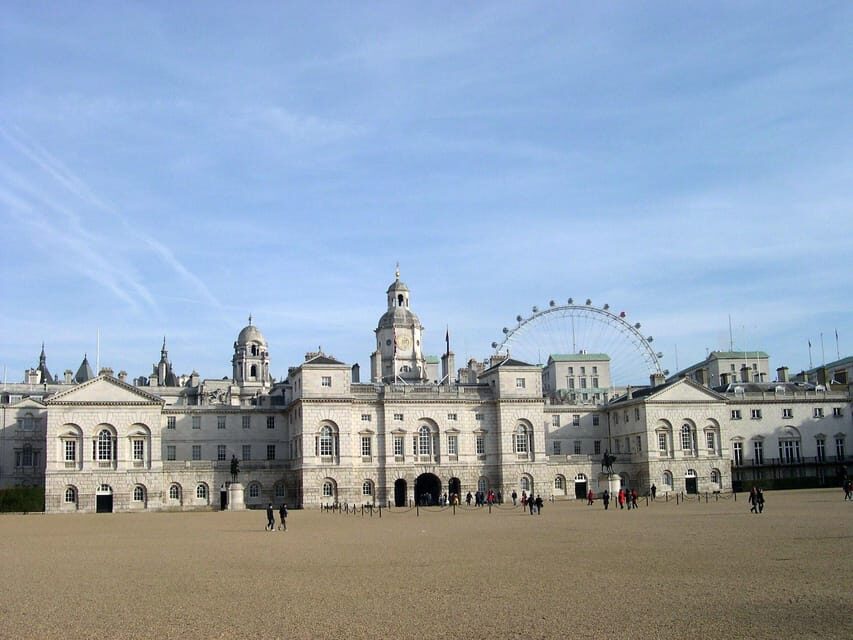
One of the most helpful things about this tour is that it includes Horse Guard Parade, which takes place daily. The Changing of the Guard is on select days, so this daily element helps you avoid a total letdown if you’re in London on a day when the ceremony isn’t running.
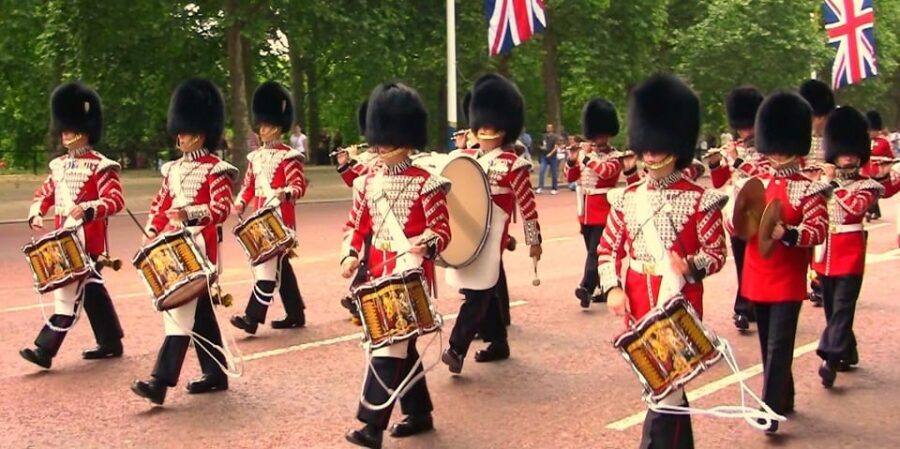
So what should you watch for? Focus on movement and order. The King’s Foot Guards march in a disciplined way, with uniforms that are instantly recognizable—red tunics and bearskin hats. Your guide will point out details like what makes the march precise and how the formations and timing come together.
This is where a guide earns their fee. If you only watch the surface, you might miss why the ceremony looks so synchronized. With explanations, you understand the structure behind the drama, and the whole thing stops being just a spectacle and becomes a tradition with mechanics.
Big Ben finish near Westminster Station and Parliament Square: last photos, then off
The tour ends near Westminster Underground Station, across from Big Ben, finishing at Parliament Square. This is a smart finish because you’re dropping right into the most photo-friendly and transit-friendly part of the area.
Plan for the last stretch as your sprint moment. You’ll want a couple of photos around Big Ben and the nearby views. The guide’s pacing helps here, too, because you’re not wandering around after everything happens—you’re finishing while the landmarks are still in front of you.
If you’re heading onward to another part of London the same day, this location is convenient. Westminster is a major hub, so you’re not stuck trying to reverse your path or find distant transport.
Price and value for $20: what you get in 2 hours
At about $20 per person for 2 hours, this tour is good value if you care about the how and not only the where. For that money, you’re paying for an expert guide and a route plan built around crowd behavior and ceremony timing.
You’re not paying for transportation or food, so you’ll want to handle those separately. The trade-off is that the tour is short and focused. It’s not a half-day bus tour. It’s a concentrated walk aimed at one ceremonial goal plus a tight lineup of royal landmarks.
The best value comes from avoiding the common mistake: camping outside Buckingham Palace and hoping you get the right view at the right moment. When the route is crowd-smart, you spend your time watching the Guard instead of staring at heads.
Who this tour is best for (and who should think twice)
This guided walk fits first-time London sightseeing well—especially if you want a meaningful look at the monarchy tradition without hours of self-guided wandering.
It’s also a good match if you like structure. The route takes you past several royal locations—Green Park, St James’s Palace, Buckingham Palace area, Clarence House, St James’s Park, Whitehall, and then into the Westminster zone. You’ll come away with a clearer sense of where everything sits relative to each other.
Think twice if you’re relying on wheelchair access. The tour is not suitable for wheelchair users, and it’s a walking-focused itinerary.
Finally, dress for weather and pace. In winter, you’ll appreciate comfortable shoes even more. One strong theme in feedback is that the guide keeps the day enjoyable even when it’s cold, wet, and windy—so show up ready to walk.
Should you book this Changing of the Guard guided tour?
If your main goal is to actually see the Changing of the Guard clearly and get good photos without wasting time in the most chaotic viewing spots, I think this is an easy yes. The daily Horse Guards Parade option adds safety, especially since the Guard ceremony runs only on select days.
Book it if you want a guided plan, short walking time, and history that explains what’s in front of you. Skip it or adjust expectations if you only want one landmark shot and you plan to roam freely on your own—you’ll get less from the “crowd strategy” part.
If you’re going for the full London royal vibe in a tight window, this is a solid way to do it.
FAQ
What is the duration of the London Changing of the Guard guided tour?
The tour lasts 2 hours.
Where do we meet for the tour?
You meet outside Green Park Underground station, using the Green Park exit, next to the Constance Fund fountain of Diana.
Is the Changing of the Guard ceremony guaranteed every day?
No. The Changing of the Guard takes place on select days, so it’s important to check the schedule in advance.
What royal events are included?
You’ll see the Changing of the Guard on select days and also the Horse Guard Parade, which takes place daily.
What should I wear for this experience?
Wear comfortable shoes, since it’s a walking tour.
Is the tour wheelchair accessible?
No. The tour is not suitable for wheelchair users.
How do cancellations and refunds work?
You can cancel up to 24 hours in advance for a full refund.
What languages is the live guide available in?
The tour guide is English.