REVIEW · LONDON
London: David Bowie Walking Tour
Book on GetYourGuide →Operated by Brit Music Tours · Bookable on GetYourGuide
A Bowie walk through two London scenes.
This London David Bowie walking tour turns street corners into plot points, moving from Brixton’s early days to Soho’s music-industry grind. I like how it mixes real-world locations with the bigger-than-life Bowie moments, so you’re not just staring at plaques. You’ll also get a strong sense of the fan shock and public attention that followed his death.
What I especially like is the guided storytelling quality. You’ll hear about Bowie’s classic songs and the headlines he made in London, including where he announced he was gay, plus the kind of legend that grew around him, like the claim he lived in a campervan. The route also includes places that are easy to miss on your own, such as inconspicuous recording studios, and that’s where the tour earns its keep. One possible drawback: it’s a 2.5-hour walking tour with a lot of street time, and it’s not suitable for people with mobility impairments.
In This Review
- Key things you’ll notice on this Bowie walk
- Your Starting Line: Brixton’s David Bowie Memorial on Tunstall Road
- Brixton Childhood Stops: Why Early Places Matter
- Recording Studios You’d Miss Without a Guide
- The Tube Thread to Soho: From Local Dream to Industry Machine
- Teenage Bowie in Soho: Boxes, Publishers, and Big Dreams
- Pubs and Pockets of the Same Old London
- Carnaby Street Fashion and the Bowie Look
- Album Cover Photo Spots: Ziggy Stardust in Real Space
- The Telephone Box Moment: A Small Detail That Feels Big
- The Headlines Section: Where Bowie Announced He Was Gay
- The Campervan Story: Legend, Rumor, and Character
- Thousands of Fans, One Public Moment
- Guides Make the Difference: Names You Might Hear On Tour
- Price and Value: Why $22 Can Work in London
- Practical Tips Before You Go
- Who Should Book This Bowie Tour
- Should You Book It or Skip It?
- FAQ
- How long is the London David Bowie walking tour?
- How much does it cost?
- Where does the tour start?
- Is the tour guided?
- What language is the tour offered in?
- What should I bring or wear?
- Is the tour suitable for people with mobility impairments?
- Can I cancel for a refund?
Key things you’ll notice on this Bowie walk
- Brixton beginnings, from birthplace to first school: You’ll see childhood spots that explain how a star got made.
- Soho ambition and the music trade: Expect stories about teenage Bowie packing boxes for music publishers.
- Carnaby Street fashion moments: The tour connects neighborhoods with Bowie outfits and style.
- Photo stops from The Rise and Fall of Ziggy Stardust and the Spiders from Mars: Stand where the album cover vibe started.
- The telephone box from the Ziggy Stardust back cover: A small detail, but a memorable one.
- Fan mourning locations: You’ll pass where thousands gathered after Bowie’s passing.
Your Starting Line: Brixton’s David Bowie Memorial on Tunstall Road
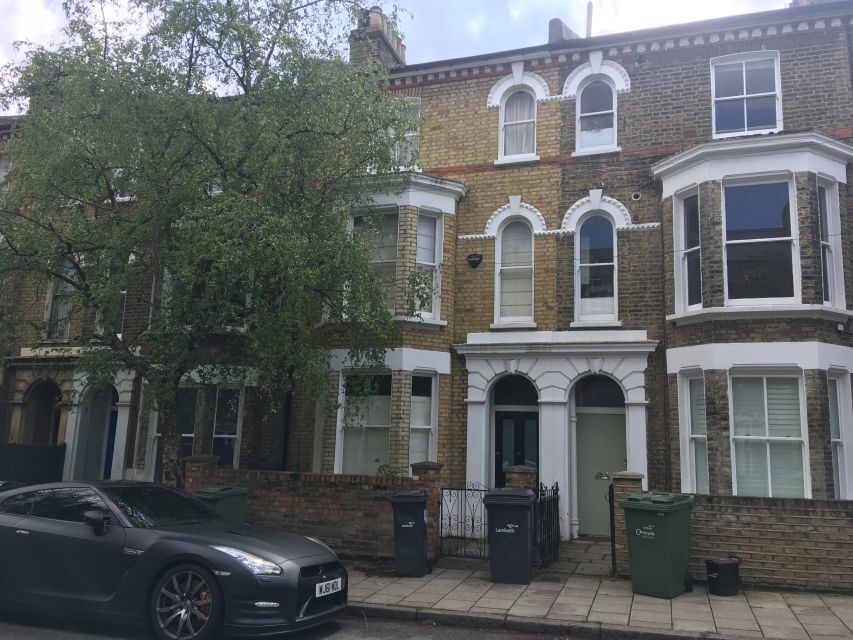
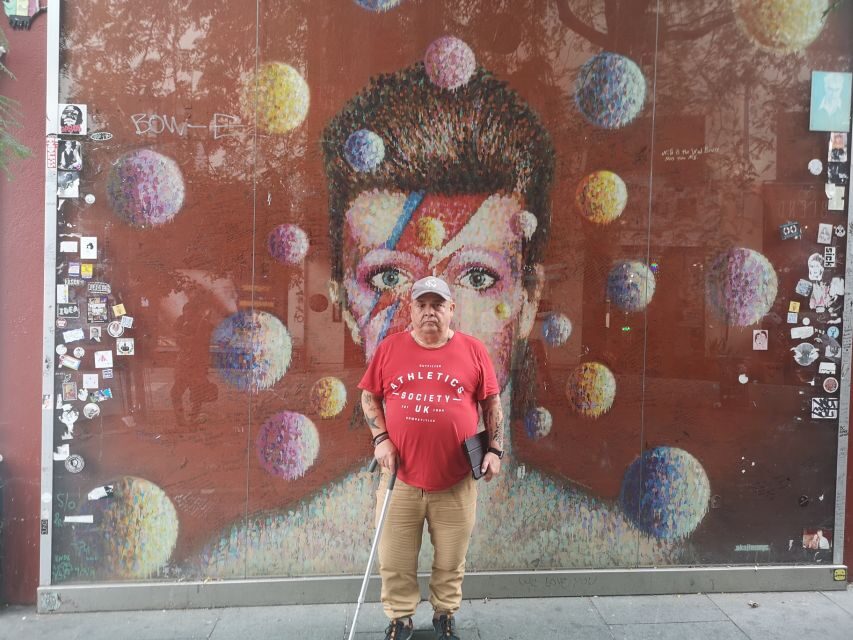
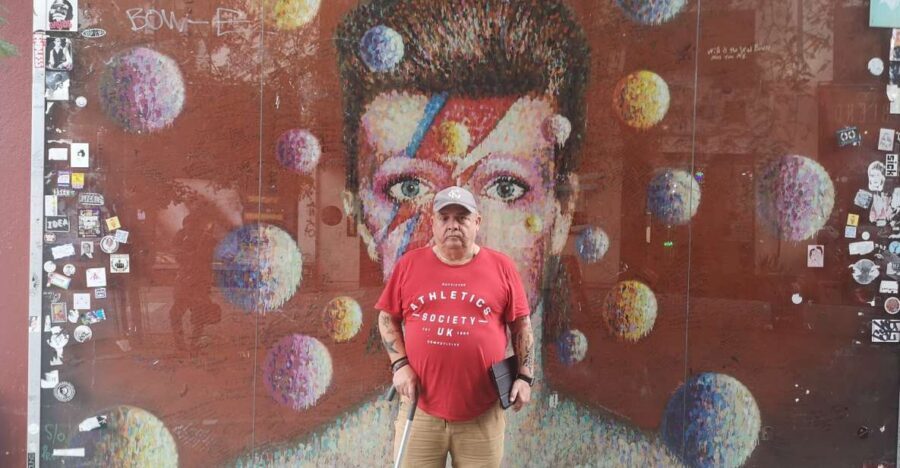
The tour starts in South London in Brixton, meeting your guide about 10 minutes early in front of the David Bowie memorial in Tunstall Road, directly opposite the exit of Brixton Underground Station. This is a good spot because you can get there fast, and you’re already in the area where Bowie’s story feels grounded.
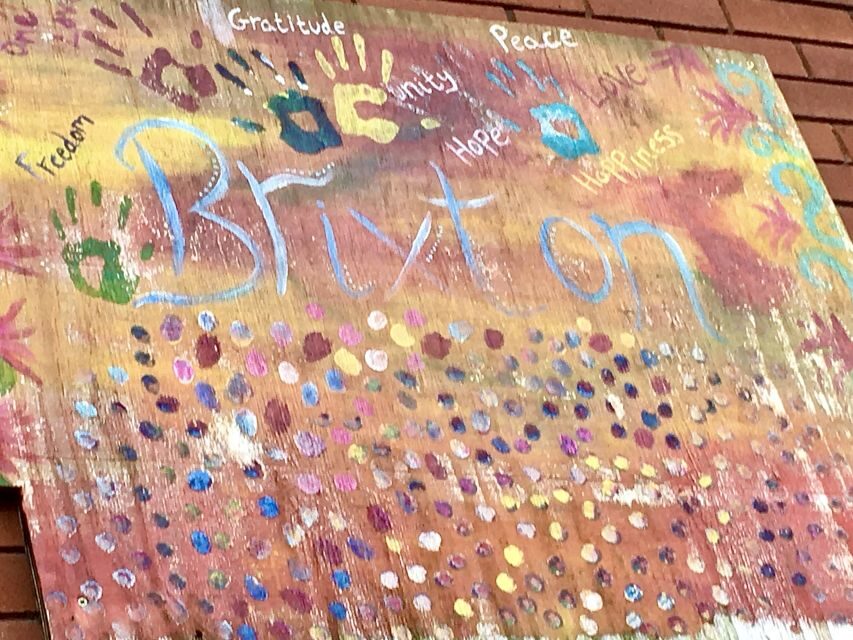
Brixton is also a great “first chapter” for this kind of walking tour. You’re not wandering through a polished museum street. You’re in an everyday neighborhood where street art, quirky local spots, and the general creative energy help the biography land as something human, not myth. Even if you’re not a London expert, you’ll get your bearings quickly.
You can also read our reviews of more walking tours in London



Brixton Childhood Stops: Why Early Places Matter
The first stretch is about origin. You’ll pass spots tied to Bowie’s early life, including the house where he was born and his first school. These stops matter because they shift the focus from fame to formation. Bowie didn’t just “arrive” as a star; his talent and style grew alongside a specific time and place.
Here’s the practical value: when you understand the Brixton beginning, the later Soho climb makes more sense. You’ll also be in the right mood. Seeing these locations up front sets expectations for the rest of the walk, so the tour feels like a timeline rather than a scatter of cool facts.
If you’re a hardcore fan, you’ll likely enjoy the details that make Bowie feel close to the ground. If you’re newer to his music, these first stops are a friendly entry point, because they connect the big songs to the person behind them.
Recording Studios You’d Miss Without a Guide
One of the standout parts is the way the tour points out recording studios used by Bowie. Some of these places can be surprisingly inconspicuous from the sidewalk. That’s exactly why a guide helps. You’re not only learning what happened there—you’re also learning where to look next time you’re in London.
This section works best if you’re willing to slow down for a moment and listen. Guides on this tour (and the reviews back this up) tend to keep the stories clear and personable, instead of turning everything into a lecture. You’ll hear about Bowie’s life through the lens of how songs get made, not just the lyrics people already know by heart.
The Tube Thread to Soho: From Local Dream to Industry Machine
After Brixton, the route includes a short ride on the Tube to Soho. That transit piece is more than a convenience. It’s a symbolic change: you’re moving from the neighborhood that shaped young Bowie to the district linked with his push toward stardom.
Soho is where you’ll feel the pressure of the music business—the practical grind of getting gigs, hustling, and trying to be seen. This is where the tour gets particularly fun if you like the behind-the-scenes side of pop history.
Teenage Bowie in Soho: Boxes, Publishers, and Big Dreams

In Soho, you’ll learn about teenage Bowie working in a way tied to the music publishing world—packing boxes for music publishers and dreaming of breaking into the music industry. That might sound like a small detail, but it’s the kind of detail that makes the bigger story believable.
I like how this portion doesn’t treat Bowie as a supernatural figure. It frames him as someone navigating work, ambition, and the slow climb toward bigger opportunities. You’ll also pass music venues connected to his performances, which helps you picture how a career grows step by step.





Pubs and Pockets of the Same Old London
The tour also includes stops outside pubs Bowie used to frequent. These aren’t just name-drops. They give you a sense of where people built routines—where you’d meet, talk, plan, and decompress. London pubs are part of the city’s social backbone, and linking them to Bowie makes the story feel lived-in.
There’s a useful planning tip here: if you’re the type who wants a pint as part of your sightseeing, keep in mind the tour timing is set for walking and guiding. One guide-led day may not leave you enough slack for a full stop at every pub you notice. You can always grab a drink after the tour instead.
Carnaby Street Fashion and the Bowie Look
Carnaby Street is the fashion artery you’ll walk along during the Soho segment, and the tour ties that street-level glamour to Bowie’s more distinctive outfits. This part is a strong match for anyone who thinks style is part of the music.
Bowie’s clothing and presentation weren’t accessories. They were communication. When you walk past the fashion district while hearing how outfits fit the era, you get a better sense of why his image hit so hard. You’re not just seeing what he wore—you’re seeing how London’s style ecosystem helped amplify it.
Album Cover Photo Spots: Ziggy Stardust in Real Space
A big draw is the chance to take photos in spots connected to The Rise and Fall of Ziggy Stardust and the Spiders from Mars. The tour includes a moment where you can snap a picture standing in the same spot as Bowie on the album cover.
That’s genuinely fun even if you’re traveling solo. It gives you an “I’m here” marker that’s tied to an artwork, not just a landmark sign. And it’s also a quick way to make the walk feel celebratory, not just informational.
The Telephone Box Moment: A Small Detail That Feels Big
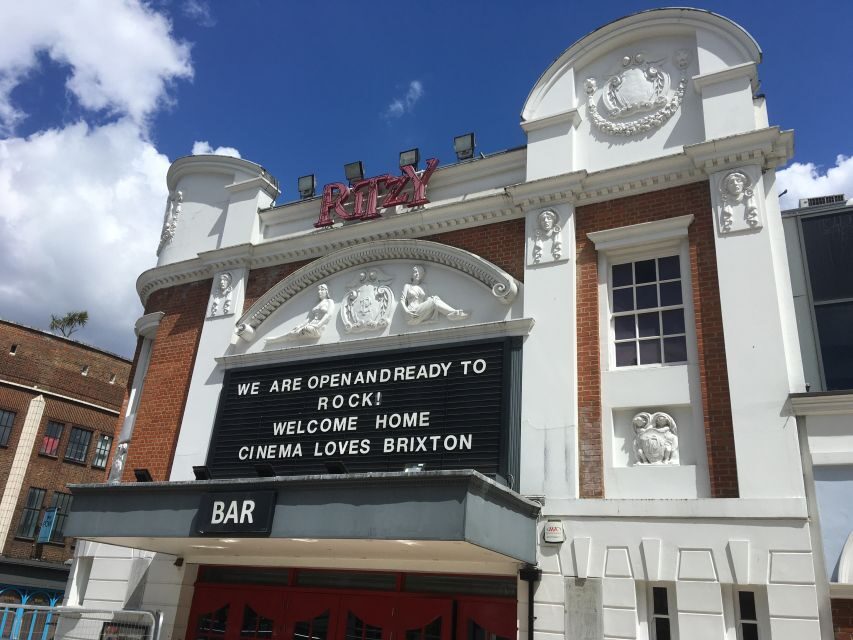
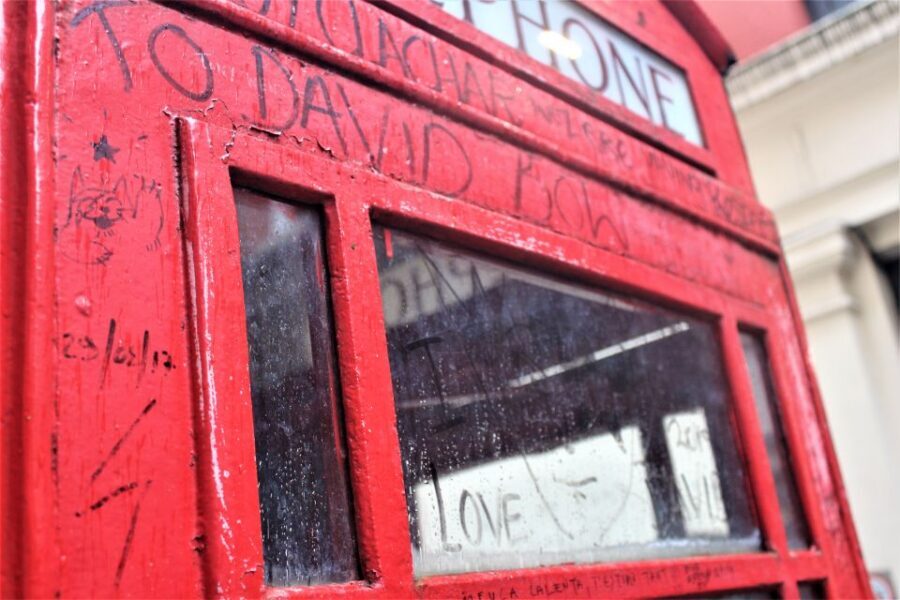
You’ll also look out for the telephone box from the back cover of the album. This one works because it’s specific. It’s not a broad “there’s a street connected to Bowie.” It’s a precise pop-culture object you can point at, photograph, and remember.
These small points are what often turn a tour from educational to memorable. In London, lots of things are iconic, but lots of things are also easy to miss. The guide helps you clock the right details without you having to research every block before you arrive.
The Headlines Section: Where Bowie Announced He Was Gay
One of the highlights of the tour is learning where Bowie announced he was gay and made headlines. This matters for two reasons.
First, it explains why Bowie wasn’t only an artist, but also a public figure whose identity and openness changed conversations. Second, it shows how his life played out in public space—this is not a story confined to music history books.
I like that the tour includes this topic as part of the London setting. It keeps you anchored in the fact that Bowie’s personal life intersected with the city’s media moment, not just with fan culture.
The Campervan Story: Legend, Rumor, and Character
You’ll also hear about where Bowie allegedly lived in a campervan. This is the kind of story that fans love because it adds texture—quirk, edge, and the sense that Bowie lived with his own rules.
A quick note on how to treat it: the tour frames it as an allegation/legend. In other words, it adds color, but it’s still worth listening with the mindset of storymaking around the artist rather than expecting court-level proof.
Thousands of Fans, One Public Moment
Another key stop is where thousands of fans congregated to mourn Bowie’s passing. This shifts the mood from biography to collective memory. It’s a reminder that Bowie’s impact is not only measurable in chart history. It’s visible in public space, in the way people gather and grieve.
This part hits best if you’ve listened to Bowie for years or if his music is part of your own story. Even if you’re a casual fan, you’ll feel the significance. The tour doesn’t pretend it’s a quiet stroll through nostalgia. It acknowledges that something massive happened in London when he died.
Guides Make the Difference: Names You Might Hear On Tour
From the reviews, one thing shows up again and again: the guides bring personality and care to the tour. People highlighted guides like Jess, Tim, Jenny, Catherine, and Rob for being personable, attentive, and able to handle London foot traffic without losing the thread.
That matters because walking tours live or die by flow. London streets can be noisy, crowded, and slow to cross. When a guide is calm and funny and keeps explanations organized, you’ll get more out of every block.
So if you’re choosing between dates, I’d look at the guide lineup when you can. And even if you don’t pick based on names, you can still expect this tour to rely on strong storytelling rather than just reciting facts.
Price and Value: Why $22 Can Work in London
At about $22 per person for 2.5 hours, this tour is priced in the zone many travelers expect for a focused themed walk. The value is in what you get for that time: a guided route that links early life, industry years, iconic pop-culture imagery, and public moments of impact.
You’re paying for:
- Access to the “why” behind the places, not just the names
- The ability to notice sites you’d likely miss on your own
- A structured path from Brixton to Soho instead of a self-made scavenger hunt
If you like Bowie, this is a cost-effective way to get a coherent narrative in one afternoon. If you’re mostly in it for album cover photos and a few landmarks, you might feel like you could DIY a lighter route. But the tour’s strongest asset is the storytelling thread connecting everything.
Practical Tips Before You Go
A few simple things will make the walk more enjoyable.
Wear comfortable shoes and plan for lots of street-level time. Even if the Tube is included, you’ll still be moving on sidewalks, crossing roads, and stopping for photos. Dress for London weather as you normally would, and keep your phone charged for the album cover and telephone box moments.
Also, be aware it’s not suitable for people with mobility impairments, since it’s a walking-focused tour with city streets and likely some stairs/terrain challenges. If that’s you, you’ll want a different format.
Who Should Book This Bowie Tour
This tour is a strong match if:
- You’re a Bowie fan who wants more than surface-level trivia
- You want Brixton and Soho in one go, with story context
- You like photo stops tied to music history, especially Ziggy Stardust
It’s also a good choice for a friend who likes cities and style history, since Carnaby Street and outfit stories are part of the walk.
If you only want a quick glance at famous names, you might prefer a shorter stop-by-stop plan. But if you enjoy walking while learning, this is built for you.
Should You Book It or Skip It?
I’d book this London David Bowie walking tour if you want a well-paced, story-driven route that connects childhood in Brixton to the Soho climb, with photo moments that feel genuinely tied to pop culture. The price is reasonable for London, and the guide quality in the reviews suggests you’ll get clear, lively explanations.
Skip it if you can’t handle a long outdoor walk or if you’re looking for a museum-style, indoor experience. Otherwise, this tour is one of the easiest ways to turn Bowie fandom into real-world sightseeing without feeling lost.
FAQ
How long is the London David Bowie walking tour?
It lasts 2.5 hours.
How much does it cost?
It costs $22 per person.
Where does the tour start?
Meet your guide 10 minutes before the start in front of the David Bowie memorial in Tunstall Road, directly opposite the exit of Brixton Underground Station.
Is the tour guided?
Yes, it includes a live English-speaking guide.
What language is the tour offered in?
The tour is in English.
What should I bring or wear?
Wear comfortable shoes and comfortable clothes.
Is the tour suitable for people with mobility impairments?
No, it is not suitable for people with mobility impairments.
Can I cancel for a refund?
Yes, free cancellation is offered up to 24 hours in advance for a full refund.