REVIEW · LONDON
London: Guided Tour of the Natural History Museum
Book on GetYourGuide →Operated by Golden Tours - Gray Line London · Bookable on GetYourGuide
A museum full of bones, rocks, and big questions is a good use of time. This 2-hour Natural History Museum guided tour focuses on the galleries that tell the story of life on Earth, from dinosaurs to human evolution, with quick hits on geology and marine life. I like that the route is shaped for first-timers who want the right rooms without getting lost in the huge museum.
I also like the small, memorable details that make science feel human: the terracotta hall decor that nods to Sir Richard Owen’s rivalry with Charles Darwin, and the spectacle of a suspended blue whale skeleton that really sells the scale of ocean life. One thing to think about, though: this is run by Golden Tours, not the museum itself, and there are some reports of guide hiccups—so build in a safety buffer and double-check you’ve found the guide.
In This Review
- Key Things to Know Before You Go
- Entering the Natural History Museum: The Part That Sets the Tone
- Finding the Guide at Cromwell Road (and Staying Calm if You’re Early)
- Bag Check to Dinosaur Gallery: Getting Oriented Without Feeling Rushed
- The Human Evolution Gallery: Fossils and Life-Size Clues
- Marine Life: The Blue Whale Skeleton That Changes Your Sense of Scale
- Earth Sciences and the Volcanoes & Earthquakes Gallery: Rocks With a Story
- Wildlife Garden: A Quick Reset Between Galleries
- Museum Café and Gift Shop: What “Finish” Really Looks Like
- Price and Value: Is $40 Worth a Guided 2-Hour Run?
- Who This Tour Suits Best (and Who Might Want Another Option)
- Should You Book This Guided Natural History Museum Tour?
- FAQ
- Where is the meeting point for the tour?
- How can I identify the Golden Tours guide?
- How long is the guided tour?
- Is the tour wheelchair accessible?
- Is the tour in English?
- What is included in the price?
- What is not included?
- What is the cancellation policy?
Key Things to Know Before You Go
- Golden meeting spot in Evolution Garden: you’re looking for the bronze long-necked dinosaur statue, then the guide opposite with a blue and white Golden Tours umbrella
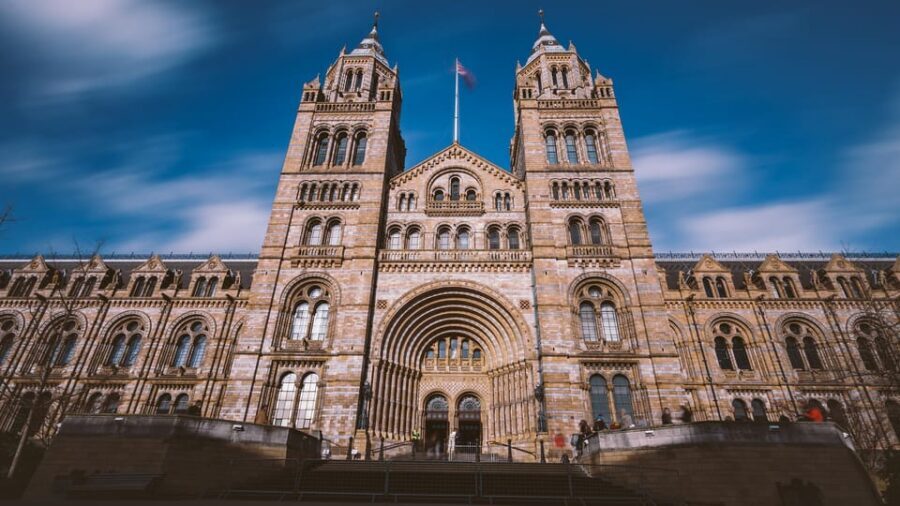
- Terracotta Owen vs Darwin moments: the museum’s entrance hall has playful terracotta monkeys tied to the Owen/Darwin story
- Dinosaur-to-human flow: the tour moves from Dinosaur and Mammals galleries into Human Evolution, so themes don’t get scattered
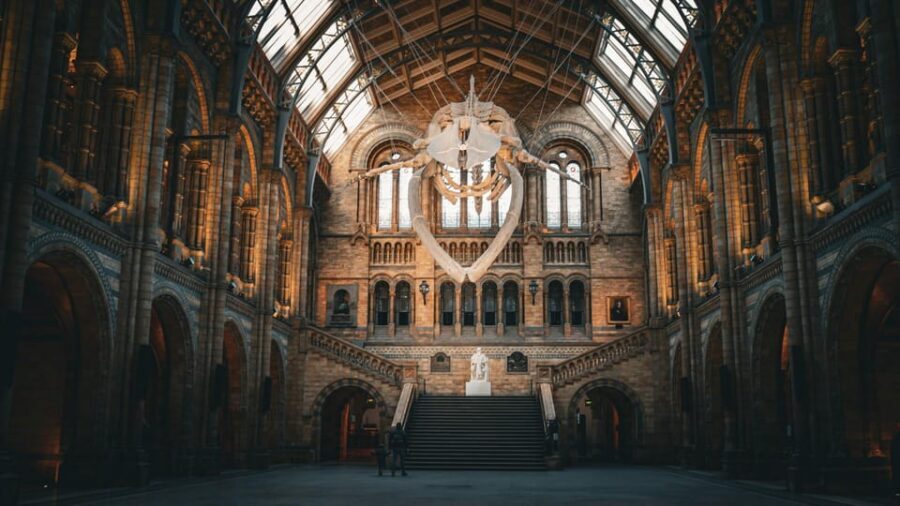
- Marine Life highlights real scale: you’ll see the suspended blue whale skeleton in the Marine Life section
- Geology in the last third: the Volcanoes and Earthquakes gallery plus Earth Sciences rooms keep it practical and visual
- Wildlife Garden is part of the mix: expect a bird-and-bee-friendly break near the end, not just indoor exhibits
Entering the Natural History Museum: The Part That Sets the Tone
Your tour starts right away with the museum’s visitor process. You’ll go through bag check and the contactless donations queue before you even hit the main galleries. That early step matters because it shapes your timing—by the time you’re inside, you want to be ready to walk, not searching for your rhythm.
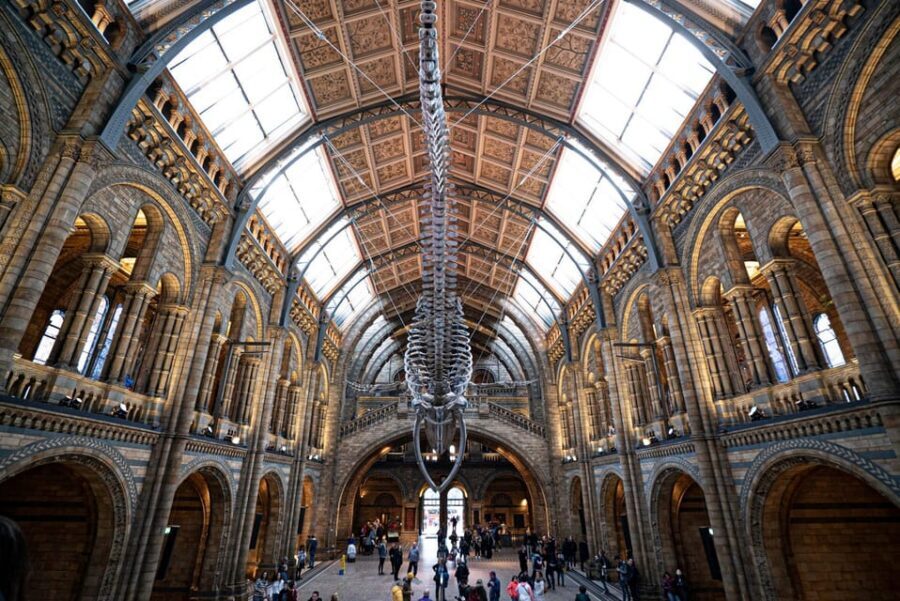
Then comes the grand hall: terracotta arches and columns, plus terracotta monkeys climbing the walls. It’s not just decoration. Those playful touches point at the Owen vs Darwin rivalry, a reminder that science here is also about people, ideas, and debate.
If you like museums that feel theatrical but still factual, this entrance works. It’s a smart opening because it gives you a story lens: even before the first skeleton, you’re being nudged toward how science is built.
You can also read our reviews of more guided tours in London



Finding the Guide at Cromwell Road (and Staying Calm if You’re Early)
This tour’s meeting setup is specific, and that’s a good thing. Meet at the Main Entrance doors at the top of the sloping ramp on Cromwell Road, South Kensington (SW7 5BD). From there, the key visual cue is in Evolution Garden: look for the large bronze skeleton statue of a long-necked dinosaur.
Your Golden Tours guide should be located opposite that bronze dinosaur statue, holding a blue and white Golden Tours umbrella. Aim to arrive 15 minutes early. It’s not just polite; it’s the easiest way to avoid the stress that comes with a crowded museum and unclear foot traffic.
One practical note: this is organized by Golden Tours (and not the museum’s official guided experience). That doesn’t make it bad. It just means your best bet is to locate the guide fast and confirm you’re in the right group before the tour time window passes.
Bag Check to Dinosaur Gallery: Getting Oriented Without Feeling Rushed
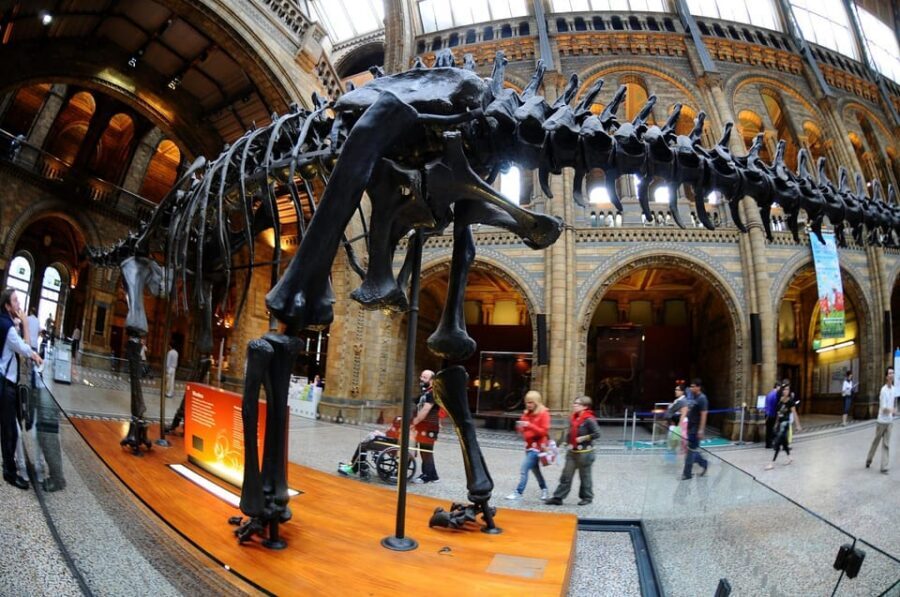
Once you’re past entry, the tour launches into its most famous entry point: the Dinosaur Gallery. This is where you’ll see prehistoric skeletons, including the iconic Diplodocus. Even if you’ve seen photos before, it lands differently in person. It gives you an immediate sense of scale—what “giant” really means when the proportions are for real bone.
What makes this stop valuable in a guided format is sequence. Many people wander the museum randomly and miss the way exhibits relate to each other. Here, starting with dinosaurs gives you a timeline anchor, and it prepares you for what comes next: mammals and the bigger story of how life evolved.
Then you move into the Mammals Gallery, where taxidermy specimens and skeletons span animals like African elephants and cheetahs. This is the bridge from ancient life to the living world. It also helps you understand something important about natural history museums: they’re not only about the past. They’re about comparing the past to the present.
The Human Evolution Gallery: Fossils and Life-Size Clues
After the dinosaur-to-mammals progression, the tour shifts into Human Evolution. Here you’ll see life-sized models and fossil remains that trace a path through our evolutionary story.
This gallery is a good match for a guided format because it’s easy to stare at individual items without connecting them. With a guide steering the flow, you can focus on what the exhibit is trying to teach: that evolution is a process with evidence points, not a single moment.
If you’re the type who likes to ask why things look the way they do, this stop is for you. The fossils and models are visual “data,” and the room encourages you to compare structure and form, not just memorize facts.
Marine Life: The Blue Whale Skeleton That Changes Your Sense of Scale
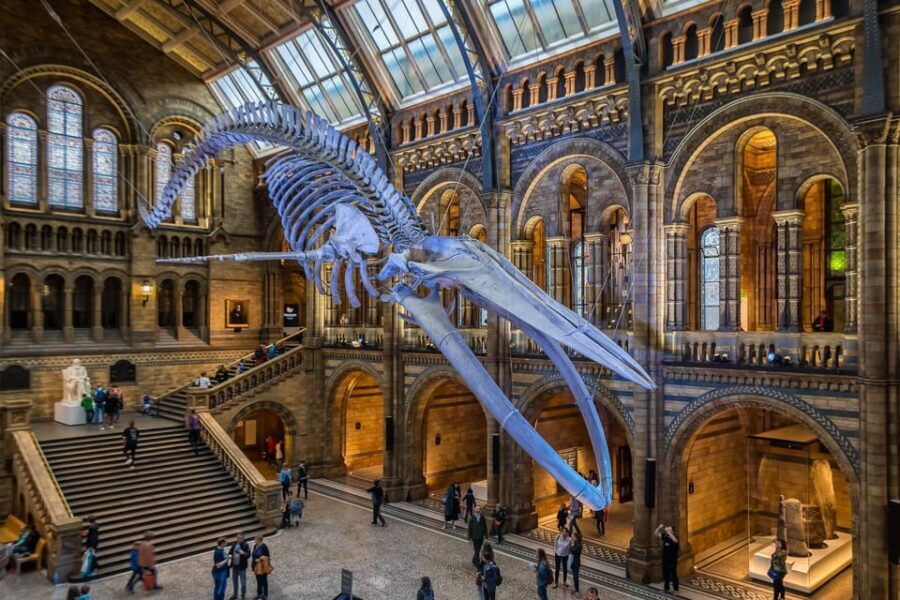
The Marine Life section is one of the most memorable parts of this tour. You’ll see a suspended blue whale skeleton, hanging from the ceiling. It’s hard to overstate how different the experience feels when a creature that huge is literally above you.
This stop does two useful things. First, it pulls you out of the land-only mindset. Second, it gives you a quick lesson in biodiversity through scale: oceans don’t just have more species; they have life forms that are dramatically different from what we’re used to seeing on land.
If you want a museum highlight that’s genuinely cinematic, this is it. Even when you’re short on time, it’s the kind of exhibit that sticks in your brain long after you leave the building.
You can also read our reviews of more historical tours in London


Earth Sciences and the Volcanoes & Earthquakes Gallery: Rocks With a Story
Late in the tour, you shift to Earth sciences. You’ll cover geological wonders like gemstones and volcanic rocks, plus a stop at the Volcanoes and Earthquakes Gallery.
This is where the tour’s value increases if you pay attention to how the exhibits explain cause and effect. Volcanoes and earthquakes are not random destruction; they’re part of Earth’s physical system. The gallery format helps you connect what you see—rock types, textures, models—to real processes.
Even if geology isn’t your favorite subject, this section is designed to be visual and grounded. You’ll leave with better context for why certain landscapes exist, and why scientists take rocks seriously as records of Earth’s behavior.
Wildlife Garden: A Quick Reset Between Galleries
The Wildlife Garden is included as a highlight, and it’s a welcome change from indoor halls. This area is described as a haven for birds, bees, and other animals—basically a mini nature break inside the museum grounds.
Why it matters: after time spent under skeletons and in glass-fronted displays, you get a chance to look at living movement and sound. It also makes the tour feel less like a sprint through rooms and more like a sequence of Earth themes, from fossils to living creatures to the natural world around you.
If you can, take a few moments here even beyond whatever the guide’s timing allows. It’s one of the few spots where the museum experience becomes more sensory and less strictly display-based.
Museum Café and Gift Shop: What “Finish” Really Looks Like
The tour wraps at the museum’s café and gift shop, which is practical. It gives you an easy next step without forcing you back into the street right away.
This matters if you’re pairing the museum with the rest of a London day. You can grab a snack, think through what you just saw, and shop if you want a souvenir that actually matches your interests—things like fossils, replicas, or science-themed items.
Also, don’t rush out immediately. When you leave, it helps to look back at the architecture and wall carvings that reflect both extinct and living species. Those details are part of the museum’s personality, and they add value if you’re the kind of traveler who enjoys atmosphere.
Price and Value: Is $40 Worth a Guided 2-Hour Run?
At about $40 per person for a 2-hour guided tour, you’re paying for direction and time-saving. What you’re not paying for (based on what’s listed) is transportation or food and drink, so plan those separately.
Here’s the value math I think you should use: if you’re the type who would otherwise spend 2 hours wandering and only catch a few big rooms, a guide helps you hit the galleries with the strongest story arc—dinosaur to mammals to human evolution to marine life to geology.
On the other hand, you’re not booking the museum’s own official guiding. Plus, this experience is rated around 2.7 with 46 reviews, including reports of guides not arriving on time. That doesn’t mean the tour is always terrible. It does mean you should be realistic: you’re buying a guided service, and service quality matters.
My practical advice: if you book, treat it like a museum tour plus a logistics element. Get there early, locate the umbrella cue, and keep your confirmation details ready.
Who This Tour Suits Best (and Who Might Want Another Option)
This tour is a strong fit for:
- First-time Natural History Museum visitors who want a focused route
- People who like evolution, fossils, and big scientific themes explained in a clear order
- Travelers who want geology and marine life in the same short visit
It may be less ideal for:
- Anyone who needs a perfectly timed experience with zero wiggle room
- People who prefer fully independent exploring and deep reading in each gallery without guided pacing
If your goal is to see the museum’s biggest hits but still understand the connections, this route makes sense. If your goal is maximum flexibility or you dislike any chance of guide delays, you’ll want to weigh that risk.
Should You Book This Guided Natural History Museum Tour?
I’d book if you want a guided overview that hits the highlights fast: Diplodocus, the mammal lineup, a blue whale skeleton moment, human evolution fossils, and geology like volcanoes and earthquakes—then a quick break in the Wildlife Garden.
I would not book blindly if you’re highly dependent on schedule precision. The overall service feedback includes accounts of guides not showing up or leaving early, and when that happens, it can cut your visit value fast.
If you do book, give yourself margin. Arrive early enough to find the guide by the Evolution Garden bronze dinosaur statue and the blue and white umbrella cue. Keep your booking confirmation accessible. And if the guide isn’t visible by the start time, don’t shrug—take action right away.
FAQ
Where is the meeting point for the tour?
Meet at the Main Entrance doors at the top of the sloping ramp on Cromwell Road, South Kensington (SW7 5BD). In Evolution Garden, look for the bronze skeleton statue of a long-necked dinosaur, and the Golden Tours guide should be opposite it.
How can I identify the Golden Tours guide?
The guide is located opposite the bronze long-necked dinosaur statue in Evolution Garden and should be holding a blue and white Golden Tours umbrella.
How long is the guided tour?
The tour lasts 2 hours.
Is the tour wheelchair accessible?
Yes, it is wheelchair accessible.
Is the tour in English?
Yes, the live tour guide speaks English.
What is included in the price?
The guided tour is included.
What is not included?
Transportation and food and drink are not included.
What is the cancellation policy?
Free cancellation is available up to 24 hours in advance for a full refund.