REVIEW · LONDON
London: Natural History Museum Guided Tour w/ Priority Entry
Book on GetYourGuide →Operated by Strabo · Bookable on GetYourGuide
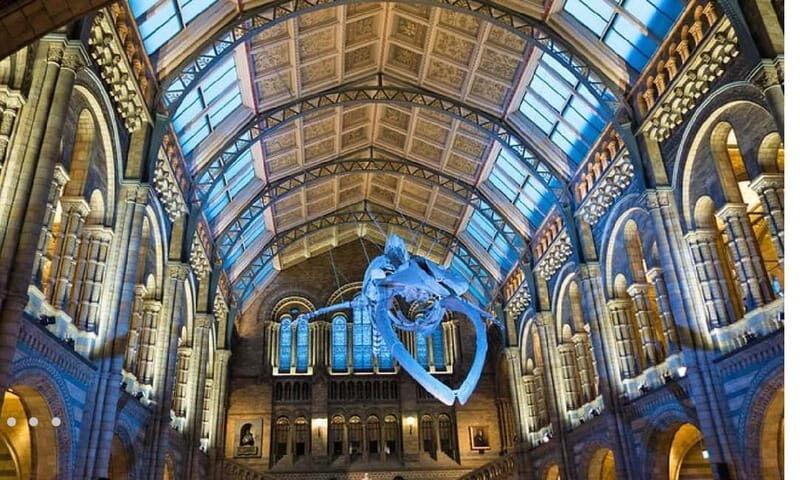
A blue whale hangs overhead.
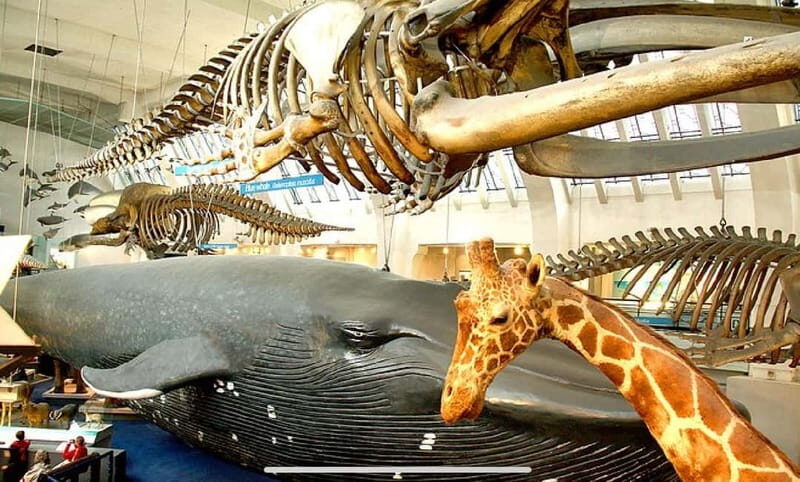
That moment sums up this Natural History Museum guided tour: fast entry, a focused 90-minute route, and a guide who helps you notice the big ideas behind the displays. I especially loved starting in Hintze Hall (that blue whale skeleton is instant wow) and the way the Darwin Centre connects what you see to real scientific work.
One thing to plan for: 90 minutes is tight in a museum this size. If you want to linger in every gallery, you may feel a bit rushed, and the museum can be noisy—so bring patience and aim to keep your group close.
Striking fast highlights (the parts most people talk about)
- Hintze Hall blue whale: the museum’s signature welcome, front and center.
- Dinosaur-focused route: including a life-sized animatronic T. rex feel.
- Earth science galleries: geology, volcanoes, and rare gemstones in one sweep.
- Darwin Centre behind-the-scenes: views into scientific research plus preserved specimens.
- Hands-on extras: interactive displays and an earthquake simulator.
- Guides who keep it clear: Strabo and other guides were repeatedly praised for friendly, easy-to-follow explanations.
In This Review
- Getting In Fast at the Natural History Museum in South Kensington
- Hintze Hall: The Blue Whale Skeleton Moment
- Dinosaurs and Early Humans: T. rex Energy Without the Wandering
- Earth Science Galleries: Volcanoes, Rocks, and Gemstones in One Route
- The Darwin Centre: Research Views and Preserved Specimens
- Earthquakes and Interactive Fun for All Ages
- A Realistic 90-Minute Plan: What You Will (and Won’t) Get
- Price and Value: Is $33 Worth It?
- Practical Tips That Make the Tour Smoother
- Who This Tour Suits Best
- Should You Book This Natural History Museum Priority-Entry Tour?
- FAQ
- How long is the Natural History Museum guided tour?
- Where do we meet for the tour?
- Is priority entry included?
- Are special exhibitions included in the ticket price?
- Can I take photos with flash?
- Is the tour wheelchair accessible?
Getting In Fast at the Natural History Museum in South Kensington
This tour is designed for one main advantage: priority entry. The Natural History Museum is busy, and without a guide you can lose a chunk of time just sorting out where to go. With priority entry, you get moving sooner, and that matters because you’ve only got 90 minutes to work with.
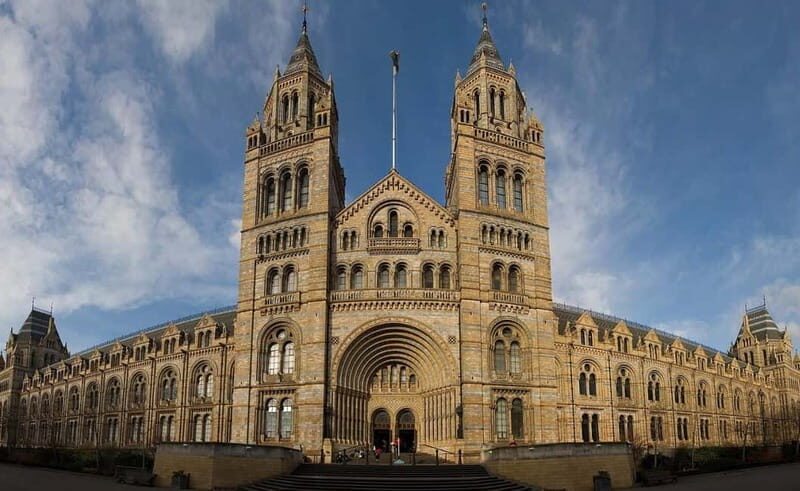
You meet outside the Embassy of Venezuela at 1 Cromwell Rd, South Kensington, London SW7 2JB. From there, you head toward the museum together. One practical tip: use the street address (not just a pin on a map). In a past booking, the map link for the meeting point was reported as incorrect, so don’t trust a faulty dot blindly.
The guide is English-speaking, and the experience includes museum entrance and access to permanent exhibitions. You’ll also have a live guide during the tour, which is the difference between seeing facts and understanding what you’re looking at.
Hintze Hall: The Blue Whale Skeleton Moment
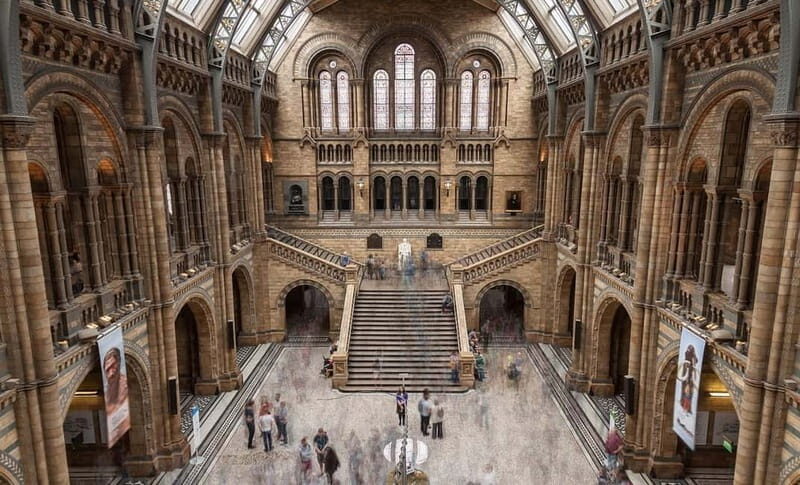
You start where most people wish they had started: in Hintze Hall, with the iconic blue whale skeleton hanging from the ceiling. It’s the kind of view that makes you stop even if you swear you’ll keep walking.
Why this first stop works: it sets the museum’s tone. You get a living-scale sense of natural history—big, weird, and scientifically precise—before the tour splits into dinosaurs, geology, and human evolution.
Also, it helps that the guide points out the right details early. Even when the museum is noisy, guides were described as easy to hear and understandable. If you’re traveling with kids, this is a strong hook. If you’re traveling solo, it’s a visual anchor that keeps the rest of the route from feeling random.
You can also read our reviews of more guided tours in London



Dinosaurs and Early Humans: T. rex Energy Without the Wandering

After Hintze Hall, you move into themed galleries—especially the dinosaur section. You’ll see dinosaurs with a standout life-sized animatronic T. rex moment. For many visitors, that’s the gallery that turns a museum visit into a story you’ll remember later.
Then you shift toward early humans and evolution. The museum’s Human Evolution storyline is built around scientifically accurate models and a clear narrative arc—so you’re not just watching individual displays. You’re being guided through a timeline.
A quick reality check: because the tour is only 90 minutes, you won’t cover everything. Some bookings noted that the group visited only a few parts. So if your dream is to see every dinosaur and every fossil case, pair this tour with a separate self-guided wander afterward. But if your dream is a smart highlight reel with context, this section hits the sweet spot.
Earth Science Galleries: Volcanoes, Rocks, and Gemstones in One Route
One of the smartest parts of this tour is that it doesn’t treat Earth science as an afterthought. You’ll spend time on geology, volcanoes, and rare gemstones.
Here’s the value for you: those topics are easy to skim past on your own. A guide helps you connect the dots—how Earth’s materials are formed, why volcanoes matter, and what you’re actually looking at when you see rock and mineral displays. You also get the feeling that the museum is showing cause and effect, not just pretty objects.
If you like hands-on thinking, you’ll probably appreciate the way this tour balances spectacle (skeletons, dinosaurs) with the more practical “how the planet works” side. It’s also a good move if you’re traveling as a mixed group—some people love big animals, others want rocks and science.
The Darwin Centre: Research Views and Preserved Specimens
A major reason this tour earns strong marks is the stop at the Darwin Centre. You get behind-the-scenes views of scientific research, along with preserved specimens.
This is the portion that changes the way you look at the rest of the museum. Instead of seeing it only as display cases, you start to see it as an active research institution. The “how they study it” angle makes the exhibits feel more current, even though the collections are often ancient.
If you’re the type of traveler who likes explanations you can repeat later, you’re in luck. Guides were praised for being friendly, funny, and clear. One review even mentioned a guide with a philosophical touch (named Mr. Newman in that account). If that style shows up in your group, expect the science to connect to bigger ideas about time, change, and evidence.
Earthquakes and Interactive Fun for All Ages
This tour includes interactive displays, and one standout is the earthquake simulator. That kind of hands-on element is perfect for families and also for adults who feel a little museum fatigue coming on.
Why it’s worth including: interactive exhibits give your brain a break. You’re not just reading labels; you’re doing something. And because the tour covers big themes—evolution, geology, Earth processes—an interactive physics moment helps it all feel connected.
You can also expect a museum that’s built for different energy levels. Some people want to stand close and watch, others want to move through quickly, and the earthquake simulator plus other interactive parts help keep the momentum.
You can also read our reviews of more historical tours in London





A Realistic 90-Minute Plan: What You Will (and Won’t) Get
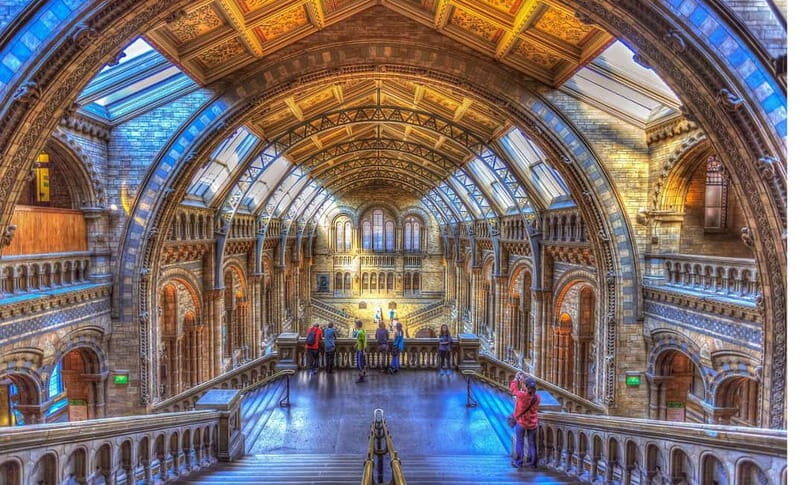
The tour duration—90 minutes—is the key constraint that shapes everything. In a museum with multiple wings, that’s not long. So this isn’t a deep seminar or a full museum takeover.
Instead, it’s a structured route through the “you’ll remember this” areas:
- Start with the blue whale in Hintze Hall
- Hit dinosaur and early human themes
- Move into Earth science (geology, volcanoes, gemstones)
- Finish with Darwin Centre and hands-on elements like the earthquake simulator
Some visitors felt the tour was more like a walk with a friend than a strict guided script. That can be a positive if you like conversation and questions. It can be frustrating if you want every minute packed with formal explanation. Either way, the guide helps you avoid aimless wandering and makes the highlights make sense.
If you’re traveling with kids, this timing is often a win. For everyone else, it’s worth treating this tour as a fast “map with meaning.” Then you can return later, when you have time to slow down.
Price and Value: Is $33 Worth It?
At $33 per person, this tour prices itself as a solid way to turn a big museum visit into a guided highlight session. Here’s how I think about value:
You’re paying for three things:
- Priority entry (less waiting time)
- A guide (interpretation and direction)
- Access to permanent exhibitions (so you’re not paying extra for the core museum content)
If you were to enter the museum without a guide, you can still see a lot—but you’ll likely spend time figuring out what matters most. In a place as large as this, that time has a cost of its own. So for first-timers, or for anyone who wants to leave with stories and connections instead of just photos, the guided approach looks like good value.
The one clear “not included” note: special exhibition tickets are not included. If you’re specifically hoping for a temporary show, you’ll need to budget extra.
Practical Tips That Make the Tour Smoother
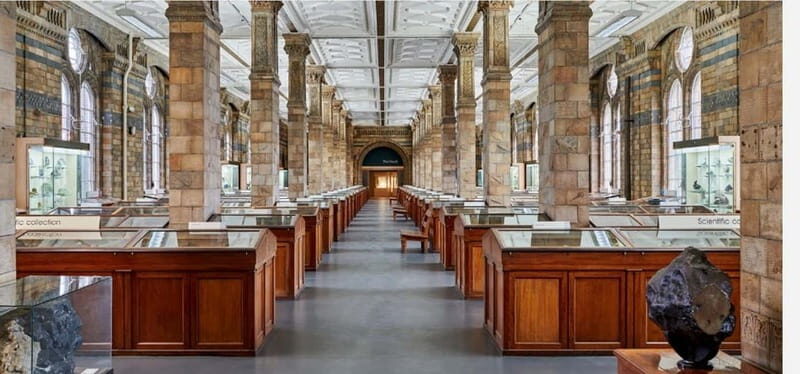
A few small things will save you stress:
- Wear comfortable shoes. You’ll be walking through multiple areas.
- Bring a camera (and check your settings so you can handle indoor lighting).
- Bring water. Even a 90-minute tour can feel longer when you’re stopping for big displays.
- No flash photography. Indoor museum rules are strict here, so skip flash.
- Expect noise. One review noted it can get loud, but the guide was still easy to understand—use that as reassurance, not permission to tune out.
If you hate last-minute confusion, arrive a bit early at the meeting point. And if you rely on your phone for directions, consider saving the address to your notes. That incorrect map link issue is rare, but it’s the kind of problem that wastes time.
Who This Tour Suits Best
This is a good fit if:
- you want a highlight route through the museum’s strongest themes
- you’d rather have a guide explain connections than read every label yourself
- you’re bringing kids and want a fun, interactive moment like the earthquake simulator
- you don’t want to spend your limited time in London negotiating a big museum layout
It may not be ideal if:
- you’re a museum power-user who plans to linger in every gallery
- you’re hoping for a complete museum circuit in 90 minutes
One additional caution: the provided info includes wheelchair accessibility but also notes not suitable for wheelchair users. That contradiction means you should confirm details with the operator before you book, especially if mobility needs are central to your plan.
Should You Book This Natural History Museum Priority-Entry Tour?
Book it if you want a fast, focused introduction with context. The best parts—Hintze Hall’s blue whale, the dinosaur highlights, and the Darwin Centre research stop—are exactly the kind of “big anchors” that make a museum visit feel purposeful.
Skip it (or plan extra self-guided time) if you’re the type who needs hours to slow down and read everything. The tour can only cover a handful of areas in 90 minutes, so you’ll want your expectations to match the timeframe.
My bottom line: for most first-time visitors, the mix of priority entry + guided interpretation + interactive science is a strong value. For $33, you’re buying time saved and meaning added.
FAQ
How long is the Natural History Museum guided tour?
The tour lasts 90 minutes.
Where do we meet for the tour?
You meet outside the Embassy of Venezuela at 1 Cromwell Rd, South Kensington, London SW7 2JB, and then the group walks to the Natural History Museum.
Is priority entry included?
Yes. The tour is specifically listed as having priority entry.
Are special exhibitions included in the ticket price?
No. Entrance and permanent exhibitions are included, but special exhibition tickets are not included.
Can I take photos with flash?
No, flash photography is not allowed.
Is the tour wheelchair accessible?
The information provided includes that it is wheelchair accessible, but it also says not suitable for wheelchair users. It’s best to confirm the exact accessibility details with the operator before booking.