REVIEW · LONDON
London: Natural History Museum Guided Tour
Book on GetYourGuide →Operated by Babylon Tours London · Bookable on GetYourGuide
Dinosaurs, humans, and evolution in one route. This Natural History Museum guided tour is built for speed and context, walking you through the museum’s big science stories in just 2.5 hours.
I especially like how the guide steers you to the museum’s key showpieces, from Iguanodon teeth fossils to the Dodo skeleton, instead of leaving you to wander blind. I also love the “connect-the-dots” feel: evolution, deep time, and even strange human artifacts all tie back to how we interpret the natural world.
One drawback to plan around: you’ll do a small amount of walking, and the museum security rules mean no large bags inside.
In This Review
- Key highlights worth aiming for
- Why this 2.5-hour Natural History Museum tour is a smart way to do London
- Entering the museum’s fossil labyrinth with a plan
- Fossils that feel personal: Iguanodon teeth and dinosaur evidence
- Pompeii casts: when natural history stops being abstract
- Dodo and Archaeopteryx: two fossils that explain evolution
- Darwin’s On the Origin of Species: the science behind the exhibits
- Cursed Amethyst and the Giant Sequoia slice: why weird objects matter
- How the guides bring it to life (and why it matters)
- Price and logistics: does $112 feel fair?
- Who this tour suits best (and who might want a different plan)
- Should you book this Natural History Museum guided tour?
- FAQ
- How long is the Natural History Museum guided tour?
- Does the tour skip the ticket line?
- What’s included in the tour?
- What should I bring with me?
- What’s not allowed inside the museum?
- Is this tour wheelchair accessible?
Key highlights worth aiming for
- Iguanodon teeth fossils: a close-up look at how scientists build whole worlds from tiny evidence
- Pompeii casts: human stories frozen in volcanic time
- Dodo skeleton: a rare chance to get really close to a legend of extinction
- Archaeopteryx moment: why this fossil is treated like a bridge in the dinosaur-to-bird conversation
- Darwin’s On the Origin of Species (first edition): the paper trail behind modern biology
- Cursed Amethyst and Giant Sequoia slice: the museum’s mood swings from science to mythology
Why this 2.5-hour Natural History Museum tour is a smart way to do London
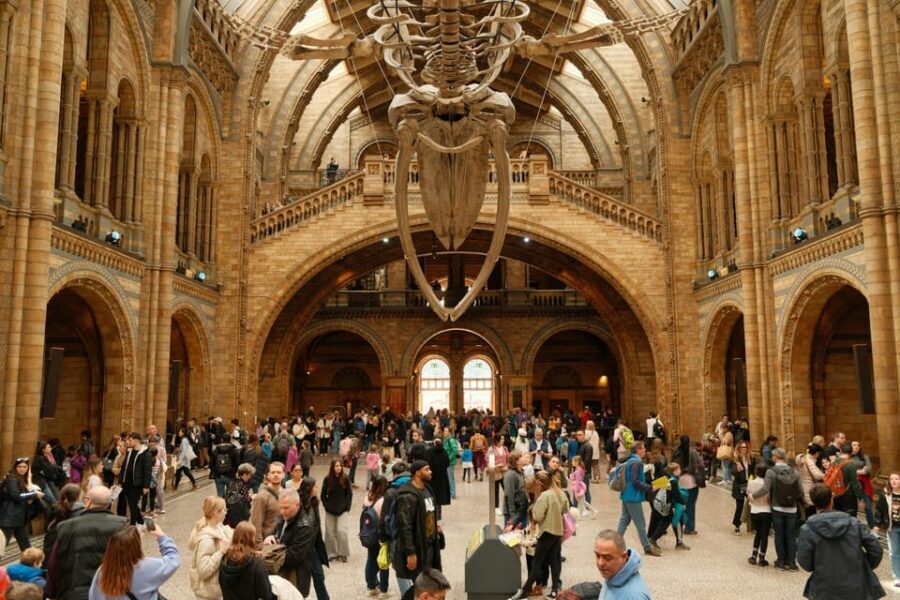
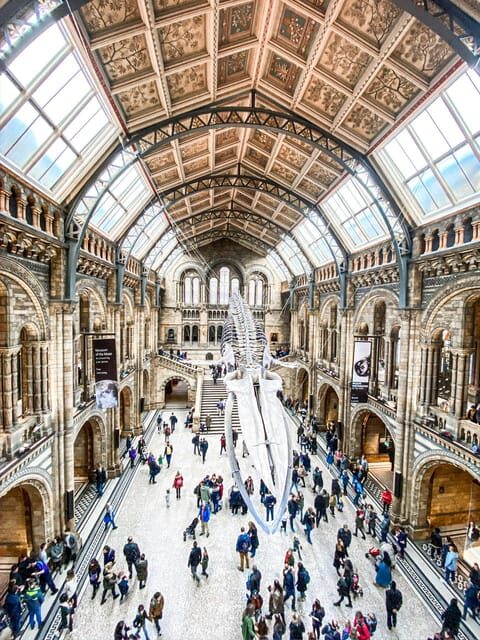
The Natural History Museum is enormous. Even if you love museums, trying to do it solo can feel like chasing shiny objects across dozens of rooms. This guided format solves that problem with a tight route and a clear storyline, starting from Earth’s earliest scenes and pushing all the way toward humans and evolution.
At 2.5 hours, you get a guided hit of the museum’s best-known specimens without turning your day into a full-time research project. The focus is also practical: you see major fossils and famous objects, but you’re also coached on what you’re looking at, why it matters, and what questions to ask as you move.
The other big win is the guide style. The tour is led by a professional art historian guide, and that shows in the way objects are explained. You don’t just get facts; you get context about how the museum presents them and why those particular displays become the ones people remember.
Value note: at $112 per person, it isn’t a budget add-on. But for London, you’re paying for time saved, a guided route, and access to the museum’s most meaningful artifacts in one go. If you’re visiting once, this price can actually feel efficient.
You can also read our reviews of more guided tours in London



Entering the museum’s fossil labyrinth with a plan
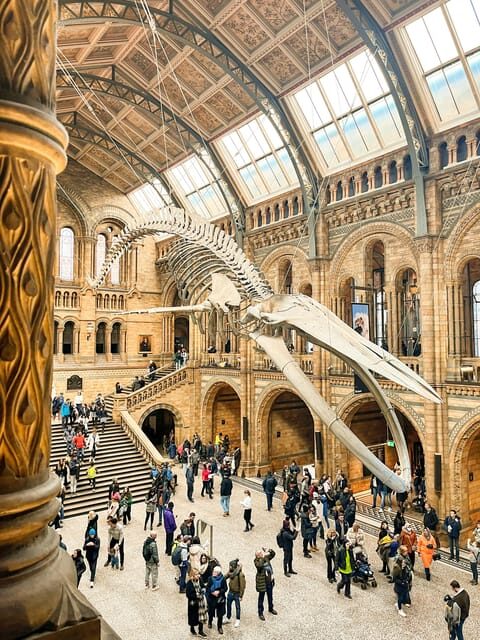
You start the experience inside a maze of galleries filled with an estimated 80 million specimens. That number sounds wild because it is. The museum can overwhelm your brain if you’re just trying to locate the next “must-see.”
That’s where having a guide helps. A good guide helps you read the museum like a storybook: what to look at first, what details matter, and which objects connect to the bigger theme. From the beginning, the tour frames the visit as a journey from the planet’s beginnings toward the dawn of our species.
You’ll also get an organized sense of pace. The route is designed so you’re not constantly doubling back to find a room you missed. Instead, you move through the collection in a way that builds momentum—science first, then the fossil evidence, then the human angle.
Practical tip: bring passport or ID and plan on security lines. Even with skip-the-ticket-line access, some lines can form because of increased security at attractions.
Fossils that feel personal: Iguanodon teeth and dinosaur evidence
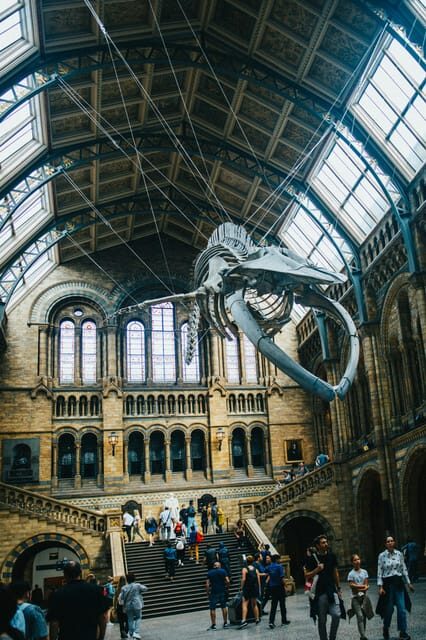
One of the tour’s best strengths is that it makes fossils feel concrete. You’re not stuck only with huge dinosaur bones on display. You also get the smaller, stranger evidence—like Iguanodon teeth fossils.
Teeth can be some of the most useful clues in paleontology. They’re durable, often easier to identify than fragmentary limb bones, and they can help scientists reason about diet and species differences. Seeing teeth as the starting point makes the museum feel less like a fantasy theme park and more like a working lab—just housed in a beautiful building.
Along the way, you’ll also run into the museum’s character-like dinosaur approach, including Sophie the Stegosaurus. Even if you’ve seen dinosaur mascots online, seeing Sophie in person is different because you also see how the museum turns scientific interpretation into a display people can stand in front of for a long time.
Why it’s valuable: this part trains you to look with purpose. You start noticing what you’re actually seeing—shape, scale, and what the exhibit wants you to infer.
Pompeii casts: when natural history stops being abstract
Then the tone shifts. The tour includes the Pompeii casts, which are displayed as molds of victims from the volcanic disaster. It’s one of those stops that changes your sense of what “history” means inside a natural history museum.
Natural history can feel like distant time—dinosaurs, minerals, climate, extinction. Pompeii forces the present into the picture. You’re looking at the results of a natural event, yes, but through human bodies and human stories. The impact comes from scale and stillness: people frozen at the moment nature changed everything.
This stop also tends to stick because it’s a reminder that museums aren’t just about objects. They’re about interpretation. Even when the story is tragic, the exhibit is built to help you understand how we learn—through evidence, through careful preservation, and through storytelling in display form.
There’s also material connected to historical interpretations of human remains, including human skulls used as drinking glasses. That detail can be uncomfortable, but it’s historically meaningful in the way people once treated remains as curiosities. With a guide, you don’t just see the artifact—you get help placing it in its time and mindset.
Possible drawback to consider: this segment is emotionally heavier than the dinosaur and fossil parts. If you want a lighter, purely kid-focused museum visit, you may need a quick mental reset between stops.
Dodo and Archaeopteryx: two fossils that explain evolution
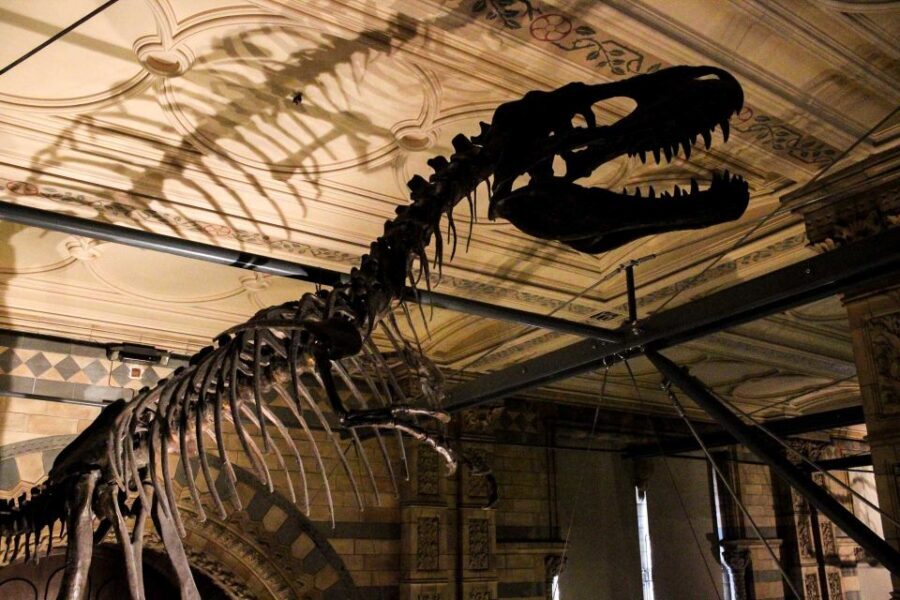
Two highlights that anchor the evolution storyline are a Dodo skeleton and a glimpse of the Archaeopteryx, often discussed as a key fossil in the dinosaur-to-bird debate.
The Dodo is powerful because it represents more than a single animal. It represents the fragility of ecosystems and the reality of extinction. Seeing the skeleton up close is different from reading about it. You can’t help but notice how small and specific the animal is, and that physical presence helps the extinction story feel real.
Archaeopteryx plays a different role. This fossil is treated as an alleged missing link in the conversation between dinosaurs and birds. Whether you think of it as a bridge, a clue, or a snapshot, it gives you something concrete to talk about: mixed traits, transitional features, and the way scientists use fossils to test evolutionary hypotheses.
How the guide makes it work: you don’t just stop and stare. You’re given enough background to understand why these fossils matter, and enough framing to know what to look for while you’re there.
You can also read our reviews of more historical tours in London



Darwin’s On the Origin of Species: the science behind the exhibits
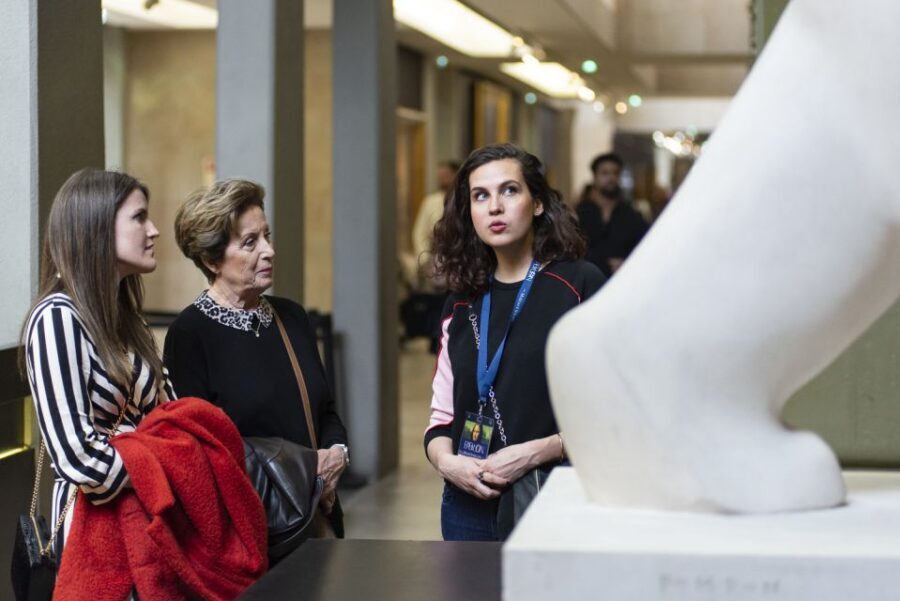
One of the most “wow, this is real” museum moments is seeing a first edition of On the Origin of Species. It’s one thing to know Darwin’s ideas as a school memory. It’s another to stand near a physical object that represents how radical questions turned into arguments you can read.
This stop helps you connect museum displays to the intellectual history that shaped them. Fossils and specimens are the evidence. Darwin’s work is the lens many people used to interpret that evidence.
If you like thinking about how ideas spread, this part is surprisingly energizing. It turns the museum from a collection of artifacts into a timeline of scientific thinking.
Cursed Amethyst and the Giant Sequoia slice: why weird objects matter
Not every stop is strictly fossil science. The tour includes the Cursed Amethyst, which people often remember because of the name and the mood it adds to the visit. The fact that something can sound like a story but sit inside a scientific institution is part of the Natural History Museum’s charm.
Then there’s a huge slice of a Giant Sequoia tree. A tree cross-section isn’t just pretty. It gives you a way to think about age, growth, and time—especially when you’re already traveling through deep time themes.
These “style and mood” stops might look like side quests, but they do real work. They break the density of fossils and help you reset your attention, so the later heavy hitters land harder.
How the guides bring it to life (and why it matters)
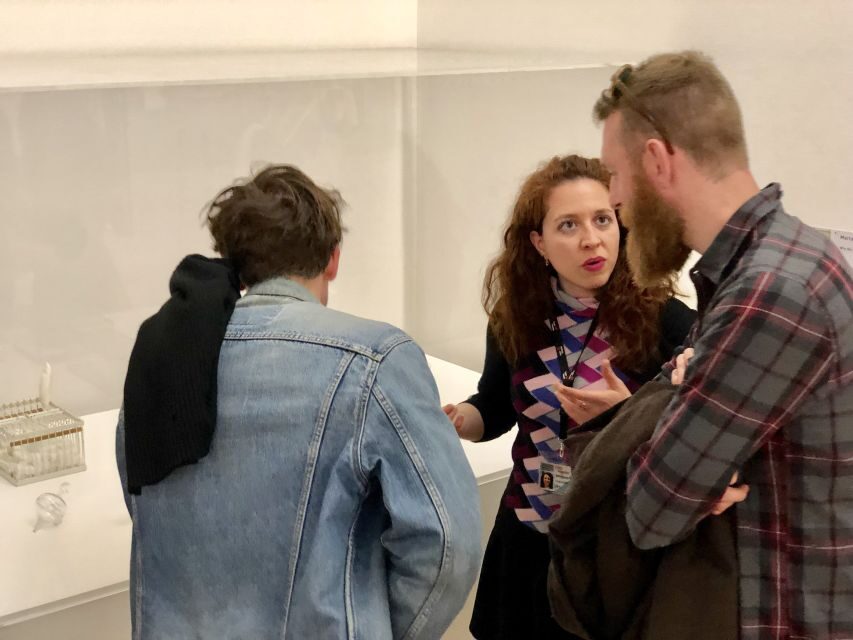
This tour’s quality seems tied to its guides. In the feedback, I’m seeing repeated praise for guides who can explain the big picture while still handling the details. Names that come up a lot include Ivo, Guy V., Matilda, Laurence, Sacha, Luis, Becky, Anthony, and Craig.
You’ll want that kind of guide if:
- you’re visiting with kids (several comments describe getting children engaged without losing adults)
- you don’t know much biology and want clear explanations
- you want a museum tour that feels like an organized lesson, not a list of plaques
Also, groups are kept small. Group tours cap at 8 guests, and there’s a private option too. Smaller groups usually mean less waiting, more questions, and a smoother pace through tight spaces.
Price and logistics: does $112 feel fair?
Let’s talk value honestly. $112 for 2.5 hours is a “pay for focus” price. This isn’t the cheapest way to see the museum. You’re paying for:
- a guided route through the museum’s most meaningful objects
- a professional guide with an academic framing (art historian background)
- time savings versus trying to pick your own path through a huge building
If you were planning to wander on your own, you’d still see some highlights—but you’d likely miss connections and you might lose time deciding where to go next. For first-timers who want maximum meaning in limited hours, that’s where the cost starts to make sense.
A few logistics points that affect comfort:
- meeting point may vary by option
- you should expect a small amount of walking
- skip-the-ticket-line helps, but security can still create lines
- no luggage or large bags; only handbags or small thin bag packs through security
- temporary exhibits aren’t included, so don’t build your expectations around those
One more scheduling reality: museums in London can have occasional closures. If the museum opening time is delayed by more than 1 hour from the tour start time, you’ll get an alternative. In that case, a refund isn’t offered.
Who this tour suits best (and who might want a different plan)
This tour is ideal if you want a guided “greatest hits” route with deeper context. It’s also a strong fit for families, because the tour length is short enough that kids can stay engaged, and the guide approach is described as attentive to different ages.
It’s also good for:
- anyone who likes evolution as a story, not just a set of facts
- visitors who want fossil highlights plus human history elements in the same outing
- first-time museum visitors who don’t want to spend half the day planning rooms
Fitness and logistics considerations:
- there’s a small amount of walking
- it isn’t suitable for wheelchair users as stated, but there is a note that wheelchair tours are available upon request only and only as a private tour. If you need that option, ask when booking.
Should you book this Natural History Museum guided tour?
I’d book it if you want the Natural History Museum to feel like a guided narrative instead of a maze. With the included lineup—Iguanodon teeth, Dodo skeleton, Archaeopteryx, Darwin’s first edition, Pompeii casts, and stops like the Cursed Amethyst and Giant Sequoia slice—you’ll leave with a connected view of how deep time, evolution, and human stories fit together.
Skip the guided tour only if you’re the kind of visitor who already knows exactly which rooms you want, and you’re happy spending time getting there. Otherwise, for the price, the best part is simple: you get to see the museum’s most memorable objects with a clear thread tying them into one smooth 2.5-hour experience.
FAQ
How long is the Natural History Museum guided tour?
The tour lasts 2.5 hours.
Does the tour skip the ticket line?
Yes, it includes skip the ticket line access. Some security lines may still form due to increased security measures.
What’s included in the tour?
The tour includes a professional art historian guide and offers private and semi-private options.
What should I bring with me?
Bring a passport or ID card.
What’s not allowed inside the museum?
You can’t bring luggage or large bags. Only handbags or small thin bag packs are allowed through security.
Is this tour wheelchair accessible?
It is stated as not suitable for wheelchair users, but it also says wheelchair tours are available upon request only and only as a private tour.