REVIEW · LONDON
London: The Beatles Walking Tour of Soho and Mayfair
Book on GetYourGuide →Operated by Brit Music Tours · Bookable on GetYourGuide
Walking these streets makes the Beatles feel close-up, not postcard far away. This London Beatles tour threads together key moments from John, Paul, George, and Ringo, then adds the money side of the story—royalties, spin-off companies, and why the fanbase still drives big numbers.
Two things I really like: you spend time looking up at a rooftop tied to the band’s last shared performance, and you hear how their fame turned into serious pop-industry power. The tour also takes you through music-world landmarks like Carnaby Street and Ronnie Scott’s, which helps you picture the 1960s scene around the band.
One consideration: it’s a walking tour in a central area and it’s not suitable for people with mobility impairments, so plan around that if you need step-free routes. Also, it does not include Abbey Road Studios—so if that’s your must-see, you’ll want a separate visit.
In This Review
- Key things you’ll notice on this Beatles walking tour
- Why Soho and Mayfair fits the Beatles story so well
- Starting at Hard Rock Cafe: setting you up fast
- Rooftop look-up moment: when the Beatles performed together for the last time
- Yoko’s art exhibition stop: John and Yoko’s first meeting
- Royal Variety Performance: how pop history got made
- Carnaby Street in Soho: fashion, music, and the 1960s feedback loop
- Ronnie Scott’s jazz club: why the music scene mattered
- Recording-studio connection: the rock-gods angle (without Abbey Road)
- The business side stop: royalties and Beatles spin-offs
- Duration and walking reality: what 2 hours feels like
- Price and value: $22 for guided Beatles storytelling
- Who this tour is best for (and who should choose something else)
- Should you book the London Beatles Walking Tour of Soho and Mayfair?
- FAQ
- How long is the London: The Beatles Walking Tour of Soho and Mayfair?
- How much does it cost?
- Where does the tour start?
- Does this tour include a visit to Abbey Road Studios?
- What language is the live guide?
- Is the tour suitable for people with mobility impairments?
- Can I get a refund if I cancel?
Key things you’ll notice on this Beatles walking tour
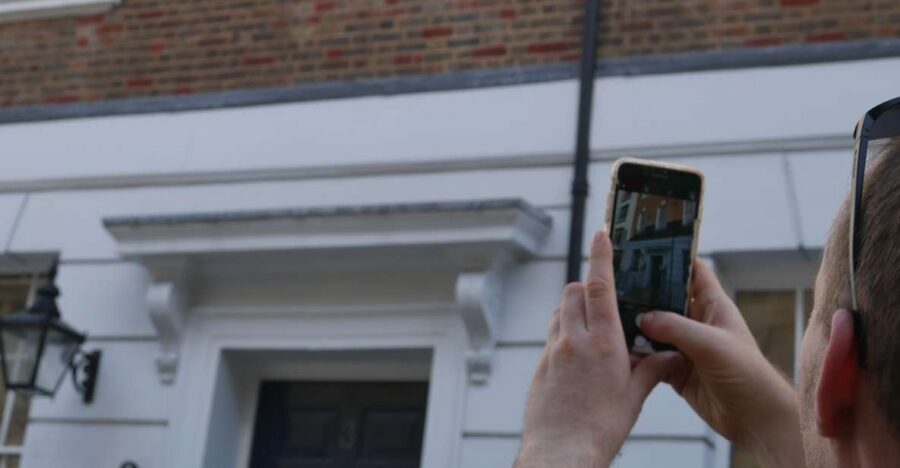
- The rooftop moment tied to the last time the Beatles performed together
- John and Yoko’s first meeting at Yoko’s art exhibition stop
- Royal Variety Performance context showing how they changed pop history
- Carnaby Street fashion walk in the middle of Soho’s 1960s scene
- Ronnie Scott’s jazz-club connection for the music culture around the band
- The business behind the Beatles: royalties and long-running spin-offs
Why Soho and Mayfair fits the Beatles story so well
Soho and Mayfair weren’t just scenery for the Beatles—they were the machine room. You’re not only seeing famous streets and theaters. You’re seeing the overlap between creative life and the places where careers got turned into TV appearances, media buzz, and long-term revenue.
In just two hours, the tour keeps snapping the story back into focus: performance moments, media moments, and the “how did this become an empire?” angle. That mix is what makes this more useful than a basic hit-list walk.
You can also read our reviews of more walking tours in London



Starting at Hard Rock Cafe: setting you up fast
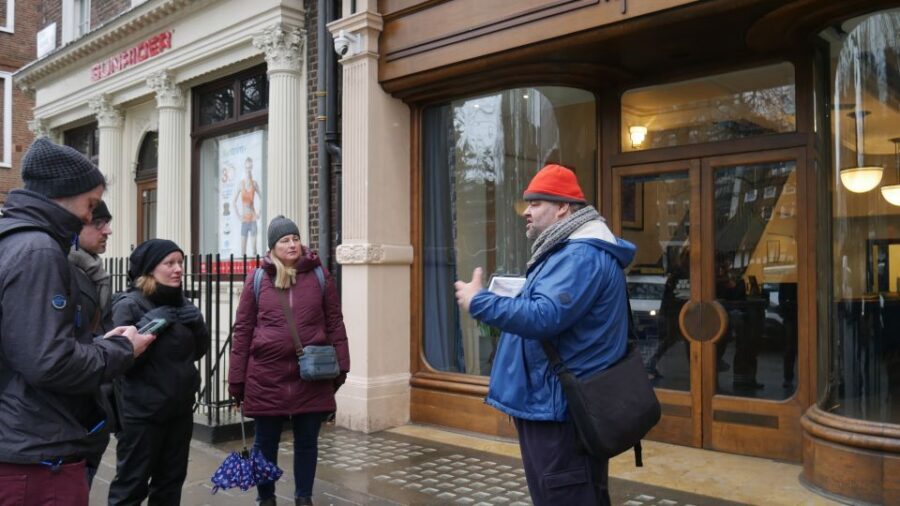
Your tour begins outside the Hard Rock Cafe at 225–229 Piccadilly (Criterion Building), near Piccadilly Circus. It’s a good meeting point because it’s central, easy to find, and the area is already packed with the kind of landmarks you’ll keep encountering.
From the start, the guide’s approach matters. The experience is led by an English-speaking live guide (and the tour is run by Brit Music Tours). In particular, the guides named in past feedback—Michael and Spencer—stand out for being both funny and enthusiastic, with clear explanations tied directly to the locations.
If you’re coming from a hotel in central London, plan to arrive a few minutes early. You want your bearings set before you start looking up at rooftops and narrowing in on places connected to photoshoots and videos.
Rooftop look-up moment: when the Beatles performed together for the last time
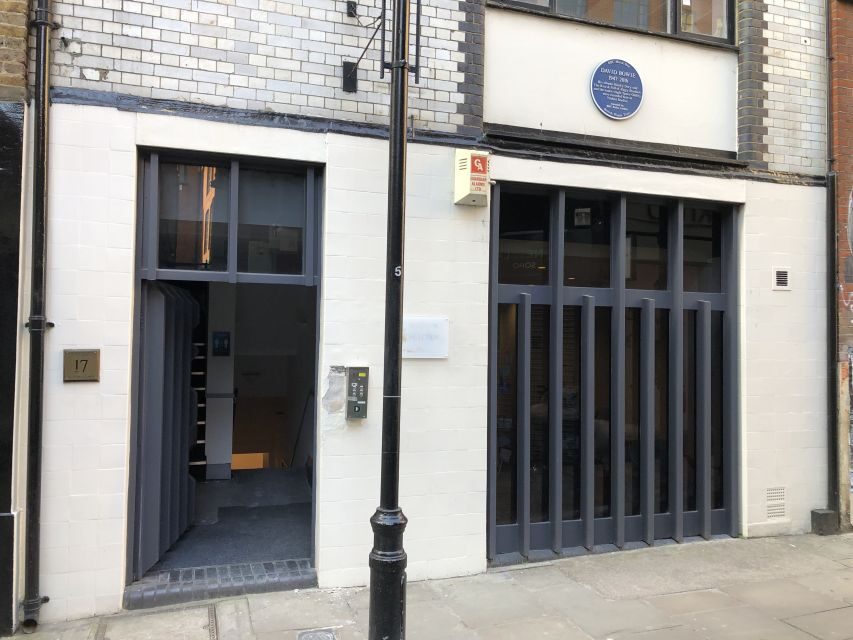
One of the most memorable parts is also the simplest: you gaze up at the roof where the Beatles performed together for the last time. This is the kind of stop that benefits from a guide who can translate “famous fact” into “visual memory.”
Why this matters: rooftops are not just details in Beatles lore. They’re evidence. They connect the myth to a specific building, specific angle, and a specific time. When you look up, the story stops being abstract and becomes physical.
Practical tip: bring a phone or camera ready to aim upward. Also, slow down here. This is the kind of moment you’ll want to actually see, not just pass through while scrolling.
Yoko’s art exhibition stop: John and Yoko’s first meeting
Then the tour shifts from band milestones to a turning-point meeting: John and Yoko’s first meeting at Yoko’s art exhibition. This stop adds a different flavor to the Beatles narrative. It’s not only about music releases and performances; it’s about ideas, art spaces, and how cultural circles intersect.
For me, the value is the cause-and-effect feeling. You start to understand that the Beatles didn’t evolve in a vacuum. London’s creative world—art galleries, exhibition spaces, and scene-driven conversations—helped shape the moments that changed the band’s story.
If you enjoy “what led to what,” this is one of the stops that pays off.
Royal Variety Performance: how pop history got made
Next comes a big one: the Royal Variety Performance, where you learn how the Beatles made pop history. The key here is not just that it happened—it’s the explanation of what it meant in public, on stage, and for the way popular music got taken seriously.
Royal Variety is useful context because it sits at a crossroads: mainstream entertainment meets cultural shift. You’re watching a band move from charts into something more national, more institution-shaped. That’s a different kind of fame than the club circuit alone.
You’ll leave this stop with a better sense of why “Beatles as a phenomenon” is more than fan storytelling. It’s also about big audience visibility and high-profile venues.



Carnaby Street in Soho: fashion, music, and the 1960s feedback loop
Walking down Carnaby Street—Soho’s fashion center—helps ground the Beatles in the style and scene that surrounded them. This is where you can feel the connection between clothing, media attention, and youth culture.
Even if you only know the Beatles through songs, Carnaby Street gives the missing layer: how music fandom was tied to identity. It’s the look of the era, not just the sound.
If you like people-watching, you’ll appreciate this stop more because it’s easier to imagine 1960s crowds when you’re standing in the same kind of shopping-street geography. Keep your pace steady; this is still part of a tight two-hour route.
Ronnie Scott’s jazz club: why the music scene mattered
The tour also includes a stop connected to Ronnie Scott’s jazz club, one of the most famous music spaces in the area. The Beatles didn’t grow up in a bubble, and jazz culture in London is one of those influences people forget to place on the map.
This stop is valuable because it widens your view. You see how rock and pop culture didn’t just happen in isolation—it fed off older styles, musicians, and nightlife ecosystems.
If you’re the type who likes understanding influences instead of just memorizing facts, this is a strong point of the walk.
Recording-studio connection: the rock-gods angle (without Abbey Road)
The tour also mentions a recording studio, described as being used by other rock stars as well. That detail matters because it frames the Beatles as part of a wider professional network.
However, there’s an important boundary: Abbey Road Studios isn’t part of this experience. If Abbey Road is your main target, you’ll need to add it separately.
Still, this tour can be the right choice if you want something different from the Abbey Road checklist. You get the broader spread across theaters, venues, photoshoot/video-linked locations, and the way the band’s story moved around London—not only one famous studio address.
The business side stop: royalties and Beatles spin-offs
A standout element is the “how it all worked” segment: music royalties and how the Beatles generated major revenue over decades through spin-off companies and a worldwide fanbase of millions.
This part is surprisingly useful if you’ve ever wondered why the Beatles remain everywhere, long after the original band era. You’re not being asked to memorize numbers; you’re being shown the structure behind long-term cultural ownership—who profits, how rights keep paying, and why the brand never went away.
I like this because it keeps the tour from being only emotional nostalgia. It gives you a practical understanding of how music turns into a durable business.
Duration and walking reality: what 2 hours feels like
The tour runs 2 hours and is guided in English. In central London, that’s a reasonable window for seeing several locations without turning into a marathon.
Because it’s a walking route, wear shoes you can handle on pavement and be ready for quick turns through crowded streets. There’s no promise of long seated breaks—so keep snacks/water in mind if you’re doing this during a busy sightseeing day.
The tour ends near Green Park Station, which is convenient if you’re continuing on to nearby attractions or want an easy tube connection out of the area.
Price and value: $22 for guided Beatles storytelling
At about $22 per person for a guided two-hour walk, the value comes from concentration. You’re paying for interpretation, not just directions.
The tour’s “value equation” looks good if you want:
- a guide to connect locations to specific moments (rooftop last performance, John and Yoko’s first meeting)
- venue context (Royal Variety, Ronnie Scott’s)
- a reality check on the Beatles as a business (royalties, spin-offs, long-term fan-driven revenue)
- a compact route across Soho and Mayfair instead of a scattered self-guided plan
You may feel it’s less worthwhile if your only goal is Abbey Road, studio access, or museum-style indoor time. But if you want a guided London map of Beatles culture, $22 is in the realm of sensible pricing for what you get.
Who this tour is best for (and who should choose something else)
This is a great fit if you:
- love the Beatles and want location-based context fast
- enjoy the mix of music and real-world business explanation
- like Soho and Mayfair and want the streets tied to stories, not just landmarks
It may not be the best choice if:
- you need step-free accommodations (it’s not suitable for people with mobility impairments)
- you’re only interested in Abbey Road Studios and want that included
If you’re a solo traveler, a couple, or a group that prefers walking-and-learning over sitting in a museum, this one usually works well.
Should you book the London Beatles Walking Tour of Soho and Mayfair?
I’d book it if you want a tight, story-forward walk that connects the Beatles to Soho and Mayfair’s key locations, plus you appreciate the extra angle about royalties and Beatles spin-offs. The rooftop moment and John-and-Yoko meeting stop are the kind of details that make a guided tour feel worth it.
Skip it (or pair it) if Abbey Road Studios is your top priority, since it isn’t included here. And if mobility is an issue for you, choose another format that matches your needs.
If your ideal London day is “walk, look up, and leave with smarter Beatles context,” this tour fits that plan nicely.
FAQ
How long is the London: The Beatles Walking Tour of Soho and Mayfair?
The tour lasts 2 hours.
How much does it cost?
The price is $22 per person.
Where does the tour start?
The meeting point is outside Hard Rock Cafe, 225–229 Piccadilly, Criterion Building, London W1J 9HR. The nearest Tube is Piccadilly Circus (Bakerloo and Piccadilly lines), and you should leave the station by the exit for the statue of Eros.
Does this tour include a visit to Abbey Road Studios?
No. Abbey Road Studios is not included.
What language is the live guide?
The tour is guided in English.
Is the tour suitable for people with mobility impairments?
No, it is not suitable for people with mobility impairments.
Can I get a refund if I cancel?
Yes. You can cancel up to 24 hours in advance for a full refund.