REVIEW · OXFORD
Oxford: Official University and City Walking Tour
Book on GetYourGuide →Operated by Experience Oxfordshire · Bookable on GetYourGuide
Oxford’s spires have a hidden script. This 2-hour walking tour threads together the University of Oxford, old city lanes, and story-rich sights—so the place starts to make sense fast.
I especially like how it pairs gargoyle-and-great-stone architecture with the people behind it. I also like the practical focus on Oxford’s modern mythology: the Inklings pub haunts, Inspector Morse filming spots, and Harry Potter locations seen from outside.
One watch-out: the planned college visit depends on availability, and some colleges may be closed on the day you go.
In This Review
- Key things I’d circle before you book
- Starting at Broad Street: getting your Oxford bearings fast
- Martyrs Memorial and St Michael of Northgate: Oxford’s layers in walking form
- The University heart and Hogwarts inspiration: seeing the classics from the best angle
- Pubs, Inklings talk, and Inspector Morse filming streets
- Literary Oxford on foot: Tolkien, Lewis, Pullman, Dexter, and the characters
- Radcliffe Square and the Bridge of Sighs: the photo stop with a purpose
- Museums you can picture: Science, ethnography, and a museum pioneer
- Christ Church Meadows: the pastoral bonus if you have the time
- What you’ll learn from the best guides (and why it matters)
- Price for $40: what makes it feel worth it in two hours
- Who should book this Oxford tour (and who might skip it)
- So, should you book? My straight recommendation
- FAQ
- How long is the Oxford official university and city walking tour?
- Where is the meeting point?
- Is a college visit included?
- Will I see the main University and library buildings?
- Does the tour run in bad weather?
- Is this tour wheelchair accessible?
- Are pets allowed?
Key things I’d circle before you book

- Broad Street start: you begin at the grand old gateway point, Broad Street, with context that helps you orient.
- Medieval-to-Saxon to University: the route moves through layers of Oxford time, from religious memorials to Saxon-era remains.
- Harry Potter spots without rushing inside: you see the Hogwarts inspiration and major college fronts from the outside.
- Literary Oxford on foot: Tolkien, C. S. Lewis, Philip Pullman, and Colin Dexter show up as real-world anchors.
- Small-group pacing: groups are kept small for comfort, and guides frequently stop to regroup and answer questions.
Starting at Broad Street: getting your Oxford bearings fast
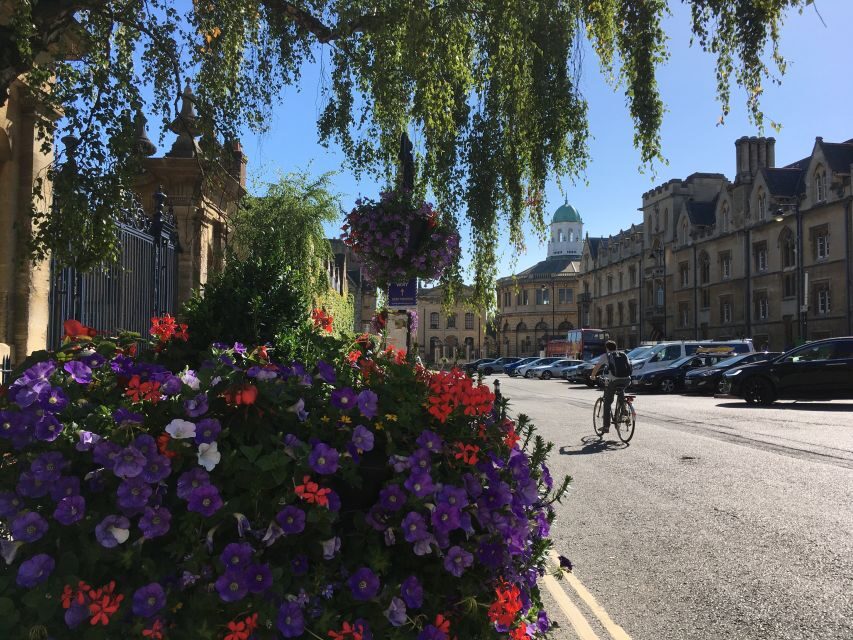
Oxford walking tours live or die by where they begin. Here, you meet on Broad Street, a spot with serious history—once tied to a ditch—and it’s a smart launch point because it gives you a reference line for the rest of the day. Meeting details can vary by the option you book, so check your exact pickup instructions, but broadly speaking, you’re starting in the center of Oxford’s story.
The opening moments matter more than you’d think. Your guide will set expectations and can tailor the walk a bit if you share what you care about most—whether that’s Harry Potter, literary connections, university life, or film locations. That small bit of two-way communication turns the walk from a list of sights into a guided experience you can actually follow.
If you’re coming in from a busy day (or you’re tired of jumping between buses and trains), this is also a gentle reset. Two hours is short enough to feel doable, but long enough that your feet start to read the city layout instead of just following it.
You can also read our reviews of more walking tours in Oxford



Martyrs Memorial and St Michael of Northgate: Oxford’s layers in walking form

The tour builds momentum by moving backward in time. Early on, you’ll reach Martyrs’ Memorial, a place connected to harsh medieval religious retributions. This isn’t just a “look at the monument” stop. It gives you a lens for understanding how Oxford’s institutions grew alongside intense conflict and power—important context when you later see colleges that look peaceful and permanent.
From there you head to St Michael of the Northgate, which includes the oldest tower on the route and traces back to Saxon times. Seeing (and hearing about) the age of the structure changes how you read Oxford’s skyline. The city starts to feel like a palimpsest: stone built over earlier stone, beliefs changing over centuries, and the University becoming the dominant character in the story.
Two practical notes for this section:
- Comfortable shoes are a must. The route is on foot and you’ll want grip.
- The guide’s pacing helps. Even when the walk hits dense sight clusters, it’s designed to keep you oriented, not just swept along.
The University heart and Hogwarts inspiration: seeing the classics from the best angle

Oxford University can feel like a maze at street level. That’s why I like that this tour takes you toward the “heart” of the institution and focuses on the big-name exteriors. Many key buildings are viewed from outside, so you’re not stuck waiting in lines all day or trying to guess which doorway matters.
At some point, you’ll hit the inspiration behind Harry Potter’s Hogwarts School—again, from the outside. This works well even if you’re not a hardcore film-location hunter. You get the vibe and the visual cues that made the story feel real, without turning your day into a sprint to collect plaques.
You also pass by the Old Schools Quadrangle to see the Bodleian Libraries from outside. The Bodleian is one of those Oxford names that sounds legendary even before you see it. From the outside, you still catch the scale and the “Oxford seriousness” in the stonework, and the guide can connect that look to what made the University a knowledge machine for centuries.
And yes, there’s a college element too. A college visit is included on the 1pm & 2pm tours, but it’s subject to availability. The tour also flags that some colleges have been closed since the pandemic, and closures can happen on the day. Plan your expectations around the fact that the exterior architecture will still be delivered; interiors are a bonus when they’re possible.
Pubs, Inklings talk, and Inspector Morse filming streets

Oxford doesn’t just do history. It does storytelling, and pubs are part of that. As you walk, you’ll go past the favorite watering holes tied to Inspector Morse, and you’ll also see places connected to the Inklings, the group associated with C. S. Lewis and J. R. R. Tolkien.
This is where the walking tour becomes more than scenery. A college frontage looks impressive, sure. But a pub stop makes you picture a real routine: debates, arguments, scribbled notes, and the kind of ideas that only show up when people sit down together and talk too long.
The Morse connections are particularly fun if you’re a TV viewer who likes turning set locations into street reality. You’ll also pass popular student drinking holes from older days, which helps you understand Oxford’s social rhythm rather than just its academic one.
If you’re thinking about what to do after the tour, this section is a handy roadmap. Even without going inside, you’ll leave with a clearer sense of where “the action” historically sat, and which streets feel right for a later wander.
Literary Oxford on foot: Tolkien, Lewis, Pullman, Dexter, and the characters
Oxford has always been a magnet for writers, and this tour makes that connection concrete. You’ll hear about literary figures and the creations they helped shape. The names mentioned include J. R. R. Tolkien, C. S. Lewis, Philip Pullman, and Colin Dexter.
Then the guide links those authors to their iconic works and themes—like Lyra and Will—and to the fictional world of Inspector Morse. That may sound like “book trivia,” but on the street it becomes a way to understand why Oxford’s settings feel like they belong in literature. You aren’t just memorizing names; you’re seeing where the social and educational structures that shaped those minds lived.
I also like that this section doesn’t treat fiction as separate from reality. It keeps reminding you that these stories came from a place with real rules, real status systems, and real people trying to make careers, reputations, and friendships.
You can also read our reviews of more city tours in Oxford






Radcliffe Square and the Bridge of Sighs: the photo stop with a purpose
Not every tour stop earns its postcard status. Radcliffe Square does. The architecture and the open space make it a natural pause point: you can look around, catch the scale, and reposition your mind after the tighter street sections.
From there, you cross the Bridge of Sighs, described as whimsical and similar in spirit to famous bridges in Venice and Cambridge. Calling it “like” is the right move: this isn’t about identical design. It’s about shared European academic symbolism—beauty meant to make institutions feel timeless, and tradition meant to make students feel part of something bigger.
This is also a good spot for a quick reset if the weather turns. The tour runs rain or shine, so having moments like this—open, visible, and close to the next leg—keeps the walk from feeling like a continuous shuffle in bad conditions.
Museums you can picture: Science, ethnography, and a museum pioneer
One of the better values on this tour is how it treats museums like part of the route, not separate ticket missions. If you’ve only got two hours in Oxford, you won’t want to pay and queue for everything. So this walk gives you context so you can decide later.
You’ll learn about:
- Museum of the History of Science, including Einstein’s blackboard
- Pitt Rivers, known here for its display history (including items described as shrunken heads)
- Ashmolean, noted as one of the earliest museums in the world
A word to the wise: if the Pitt Rivers material sounds intense, you’ll still hear about it responsibly here, but it’s not a stop for those who want gentle content. Still, as an Oxford experience, it makes the city feel real. Oxford museums show the University’s scientific and collecting mindset—how knowledge was built through observation, classification, and display.
Also, while the tour includes skip-the-ticket-line, that doesn’t automatically mean every museum admission is included. The tour focus is the guided walk and exterior sights, with the college visit as the main “included” interior component when available. If you want to go inside museums afterward, expect that you may need separate ticket costs.
Christ Church Meadows: the pastoral bonus if you have the time
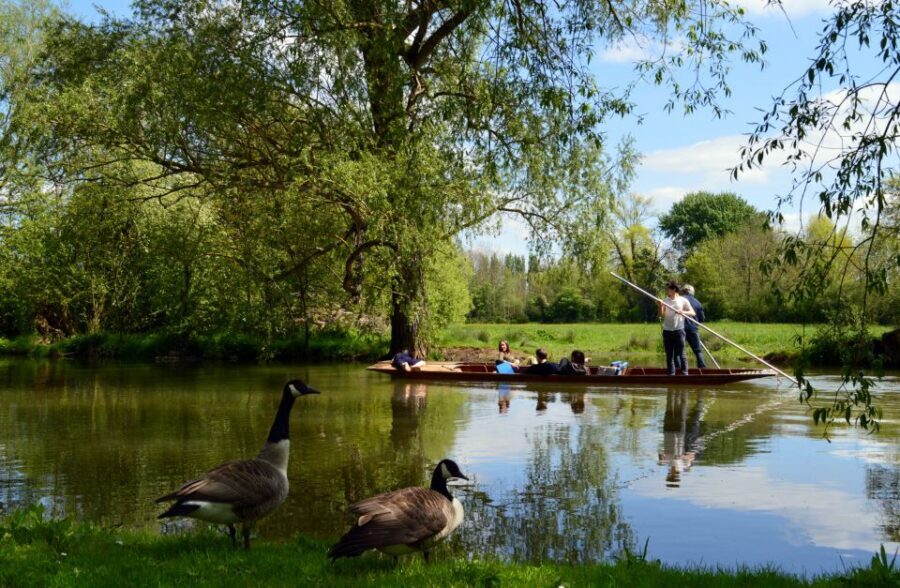
If time allows, you’ll walk as far as Christ Church Meadows, an easy change of pace after the stone and squares. This area is described as pastoral, with punting and cattle grazing. It’s the kind of scene that makes Oxford feel less like a museum and more like a living place where people still do ordinary, relaxing things.
This is the section I’d call ideal if you want a breath of fresh air and a gentler end to the tour. Even if you’re not a punting fan, the open meadows provide a contrast that makes the previous architecture feel even more dramatic.
The tour’s core promise stays intact either way: you’ll still get the major university and city story points even if the meadow leg is shortened.
What you’ll learn from the best guides (and why it matters)

A two-hour walking tour is a tight format. So the guide’s storytelling style becomes crucial. In the strong examples of this experience, guides handle the details with humor and clarity, while also making space for questions.
Some guide names that have stood out in the past include James, Heather, Alan, Richard, Harvey, and Matthew. You’ll often see the same pattern: they explain what you’re looking at, then connect it back to Oxford’s institutions and characters—real and fictional. That’s what turns a sight list into an actual understanding of why Oxford became Oxford.
If you’re worried about getting dragged through facts with no breathing room, you can breathe easy. The tour is designed with small group sizes, and the pacing includes frequent regroup moments, not just constant forward motion.
Price for $40: what makes it feel worth it in two hours
At $40 per person for about 2 hours, this tour prices in the middle ground for major-city guide walks—especially in a place like Oxford where the architecture is dense and easy to get lost in without help. Here’s the value logic I’d use when deciding:
- You’re paying for a guide to connect the dots between history, institutions, and storytelling.
- You’re getting major landmarks without needing to plan multiple separate visits.
- You also get the possibility of an included college visit on the right departures, which can add real payoff if the college is open.
The only place the value could feel thinner is if you arrive expecting nonstop interior access. This tour is largely exterior-focused, and some “extra” access (like college interiors) depends on availability. But if you want a well-structured “Oxford orientation plus story stops” tour, two hours is exactly the sweet spot.
Who should book this Oxford tour (and who might skip it)
This is a great fit if you:
- Want an Oxford University introduction without spending all day inside ticketed buildings
- Like walking tours that mix architecture + literature + film locations
- Prefer small-group pacing where you can ask questions and keep up
You might consider a different option if you:
- Want lots of guaranteed interior time regardless of closures
- Have zero interest in literary or film connections and only want strict architectural history
Either way, go in with the right mindset. Think: short, story-driven orientation through the center of Oxford, with a few iconic exterior “must-see” hits and a couple of surprises.
So, should you book? My straight recommendation
If Oxford is on your UK itinerary and you only have a limited window, I think this is an easy booking. You’ll leave with a clearer mental map: where the University’s power shows up in stone, where writers and fictional heroes feel tied to real streets, and how iconic Oxford landmarks connect into one walkable story.
The main decision point is the college visit. If it happens, it’s a bonus. If it doesn’t, you still get the big architecture, the guided context, and the outside views that make Oxford instantly recognizable.
FAQ
How long is the Oxford official university and city walking tour?
The tour runs for 2 hours.
Where is the meeting point?
The meeting point can vary depending on the option booked, but it’s associated with Broad Street.
Is a college visit included?
A college visit is included on the 1pm and 2pm tours, but it’s subject to availability.
Will I see the main University and library buildings?
You’ll see the key buildings from the outside, and you may also have a college visit when available.
Does the tour run in bad weather?
Yes. The tour takes place rain or shine.
Is this tour wheelchair accessible?
Yes, it is wheelchair accessible.
Are pets allowed?
Pets are not allowed, but assistance dogs are allowed.