
REVIEW · OXFORD
Oxford: Twilight Ghost Tour
Book on GetYourGuide →Operated by Oxford Walking Tours · Bookable on GetYourGuide
Oxford turns into a different city after dark. This twilight ghost walk threads medieval Oxford streets with real persecution-era moments, then swaps in spine-tingly characters like a soldier on Dead Man’s Walk.
I like that the tour keeps moving at a pace that fits a 75-minute schedule, so you get a full story arc without feeling stuck. I also love the way guides use humour and drama to bring the places alive, from Alle and Eli’s storytelling to Simon’s easy flow. One drawback to keep in mind: this tour normally doesn’t go into colleges, since they’re closed in the evening.
In This Review
- Key things that make this tour worth your time
- Walking Oxford’s darkest lanes at dusk, from Martyr’s Cross to Dead Man’s Walk
- Why Martyr’s Cross sets the right tone (and the right kind of story)
- The route down shadowy alleys: how the city’s shape drives the scares
- Dead Man’s Walk: the soldier-story and the feeling of walking the old edge
- Magpie Lane and the poltergeist effect
- Oxford as a literary haunting: from Hamlet to Harry Potter (plus the Tolkien and Lewis angle)
- What the best guides do: storytelling with humour, timing, and clarity
- The college question: what you will and won’t see at night
- How to get the most out of a 75-minute walking tour
- Price and value: is $29 worth it for Oxford at night?
- Who this tour is best for
- Should you book Oxford’s Twilight Ghost Tour?
- FAQ
- How long is the Oxford Twilight Ghost Tour?
- Where does the tour start?
- How much does it cost?
- What language is the tour guide?
- Does the tour go inside Oxford colleges?
- Is the tour wheelchair accessible?
- Is there an option for private or small groups?
- Can I get a refund if plans change?
- Can I reserve now and pay later?
- Is this activity only for one time slot?
Key things that make this tour worth your time
- Martyr’s Cross to Bloody Mary-era tragedy: learn why this spot matters and how Oxford’s grim past still echoes in the street layout
- Dead Man’s Walk with a spectral sentinel: walk the boundary-style vibe along the old walls and hear the “sentinel” legend take shape
- Magpie Lane and the poltergeist mood: a small street that feels bigger once the story starts
- Literary Oxford connections: prompts linking Oxford architecture and atmosphere to authors like J.R.R. Tolkien and C.S. Lewis, plus pop-culture echoes
- Storytellers who pace the room: names like Simon, Jeremy, Sophie, Tom, and Jonathan show up in the guide line-up, and people consistently mention strong performance timing
Walking Oxford’s darkest lanes at dusk, from Martyr’s Cross to Dead Man’s Walk
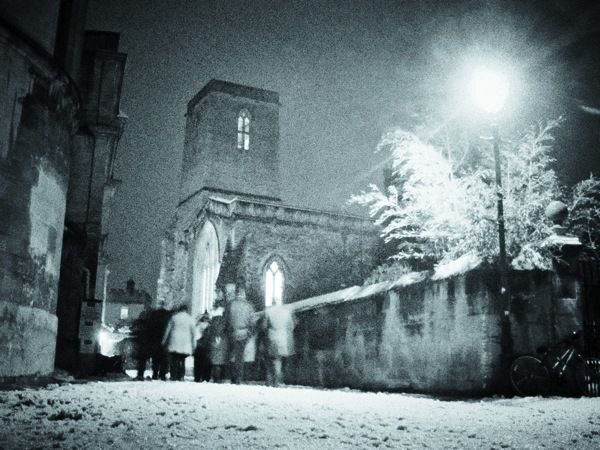
Oxford at night has a special rhythm. The streets tighten, the stone looks older, and every alleyway feels like it could hold one more secret than daylight will admit. This tour is built for that mood: a short, guided walk where the city’s medieval layout becomes the stage for ghost stories with a historical spine.
I like that the format is simple. You start at a central, story-heavy location (Martyr’s Cross), then follow a route through the older parts of the city toward a boundary-like stretch known for legend: Dead Man’s Walk. At each stop, the guide connects what you’re seeing—walls, street angles, architecture—with the darker tales tied to the place.
And because it’s only 75 minutes, you get a satisfying dose of atmosphere without losing your evening to endless walking. It’s the kind of outing that works well when you still want dinner plans afterward, or when Oxford weather turns cold and you want something that finishes on schedule.
You can also read our reviews of more tours and experiences in Oxford.



Why Martyr’s Cross sets the right tone (and the right kind of story)
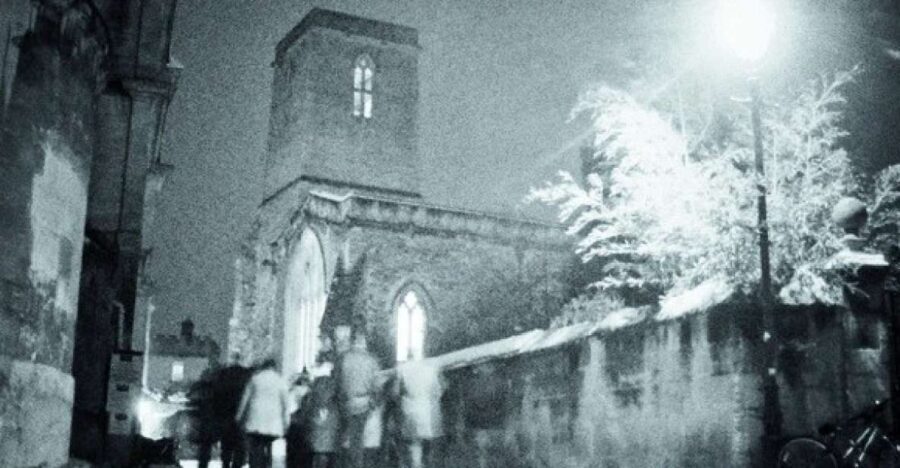
Martyr’s Cross isn’t just a dramatic name. It signals a moment in English history tied to religious persecution under Bloody Mary. On this tour, that location becomes your opening “anchor,” where the guide’s storytelling style matters as much as the facts.
What you’ll take from this first stop is how Oxford’s past isn’t only medieval-legend spooky. It’s political and human. The story frames bishops burned at the stake, and then turns that real severity into a sense of place: why the streets here feel like they’re built for people to watch, judge, and remember.
This is also where you learn the tour’s balance. The guide doesn’t just throw jump-scares at you. They give context, then layer the ghostly elements on top—so the atmosphere feels earned rather than tacked on.
One more practical note: because you’re starting here, you’ll want to arrive a touch early so you’re not hunting the group in the dusk dark. The meeting point can vary by option, so check your exact start location before you head out.
The route down shadowy alleys: how the city’s shape drives the scares
After the opening history, the tour shifts into street-walking mode. You move through narrow lanes and older thoroughfares where you can’t help noticing how Oxford was designed to funnel people. That matters for ghost stories. When streets pinch and sightlines break, a guide can use the environment like stage lighting.
This is one reason the tour feels different from generic “haunted buildings” lists. You’re not only learning that something supernatural happened somewhere. You’re learning how the geometry of the area supports the legends—why certain corners feel heavier, why the spacing between landmarks makes you imagine a watchful presence.
Along the way, you’ll hear about murders and executions, and you’ll also get references to unsolved mysteries. Guides typically connect those tales to what’s around you, then bring it back to Oxford’s physical character: older stone, older street lines, and older civic spaces.
Dead Man’s Walk: the soldier-story and the feeling of walking the old edge
Dead Man’s Walk is the tour’s centerpiece in both mood and legend. The highlights describe a spectral soldier who guards the city walls for eternity, and once you’re on that stretch, the story clicks into place.
This is the kind of stop where the guide performance matters. If the guide leans too hard on theatrics, it can turn silly. If they don’t lean enough, it can feel like a history walk with a spooky label. Here, the guides on this route tend to hit a steady middle: enough drama to make you listen, enough context to keep you oriented.
What I like about this section is that it turns the idea of a “boundary” into a lived experience. Walls change how you imagine movement—where people could be cornered, where patrols could pass, where a warning might linger. The soldier tale makes the wall line feel alive, even when you’re looking at plain stone.
If you’re sensitive to very scary content, you can still enjoy this stop. The experience leans more toward eerie storytelling than frantic horror. That said, it does deal with grim themes, so keep that in mind if you’re coming with kids or anyone who hates violence in stories.
Magpie Lane and the poltergeist effect
Then comes Magpie Lane, the tour’s “street-level” legend stop. The highlight mentions treading carefully, with an anguished poltergeist waiting to be provoked. This is where the tour gets more playful and less formal.
You’ll hear how everyday streets became stages for ghost stories—how a place small enough to miss in daylight can feel like a magnet for supernatural rumors after dusk. Poltergeist tales also tend to be very human in shape: anger, fear, a feeling something is off. It’s not only about dead bodies. It’s about emotion that lingers.
If you like ghost tours that feel like theatre instead of a lecture, this is often the part that lands best. The lane gives the guide a chance to slow down, heighten the mood, and let the story echo in the space between buildings.





Oxford as a literary haunting: from Hamlet to Harry Potter (plus the Tolkien and Lewis angle)
One of the smartest parts of this tour is how it links Oxford’s “real” haunting to its role as an imagination engine. The walk doesn’t stop at ghosts. It also talks about how centuries of stories formed in the dreaming setting of moonlit spires—then points you toward the authors and characters who used Oxford-like mood as creative fuel.
Based on the tour description, you’ll hear connections to writers such as J.R.R. Tolkien and C.S. Lewis, plus references that range toward Oscar Wilde and even fictional worlds like Hamlet and Harry Potter. That might sound like a marketing mash-up, but it actually works if the guide uses Oxford architecture as the bridge.
Here’s the practical value: you start seeing Oxford like a writer sees it. You notice how a courtyard frame can feel stage-like. You notice how stone turns light dramatic. And you start to understand why filmmakers and authors keep reaching for places with that medieval gravity.
Some guides also point to specific pop-culture filming and author-life links, and the guide examples in the feedback highlight that this part can be fun even if you don’t know Oxford’s literary map already. It’s a great fit if you’re a book person who wants the “where” behind the “who.”
What the best guides do: storytelling with humour, timing, and clarity
The consistent stand-out across the guide names is performance quality. You’ll meet different guides—people like Alle, Eli, Simon, Jeremy, Magnus, Sophie, Tom, Ajai, and Jonathan show up in the guide history you have here—and the pattern is similar: guides keep the group engaged with story flow, humour, and clear delivery.
A few examples of what that can look like on the street:
- Your guide might dramatise scenes in a way that helps you track the story like a movie.
- You might get little “extra” beats, like a street-light moment tied to a legend (for example, one person notes a street light flickering and dimming by the ghost of Prodent).
- You may hear about places and connections beyond the obvious college-front landmarks, such as pub settings and views that inspired major fantasy storytelling.
That doesn’t mean every tour feels identical. Different guides will have their own voice. But when the overall style is strong, the tour becomes more than spooky scenery. It becomes a quick, memorable way to learn Oxford without opening a guidebook.
The college question: what you will and won’t see at night
Here’s a key planning point: the tour normally doesn’t go inside colleges, since they’re closed in the evening. That shapes what your camera will capture too. You’ll still see university buildings and Oxford’s medieval city core, but you shouldn’t expect nighttime entry into college courtyards.
This matters for expectations. If your dream Oxford evening includes a formal inside look at college interiors, you may need a different type of evening tour. If your dream is darker street stories and the literary mood that comes from Oxford’s exterior architecture, this tour is very much in the right lane.
Also, the tour description is set up as a walking experience through the oldest parts of the city. So even without interior access, it can feel like you’re getting the heart of Oxford—just from the street side.
How to get the most out of a 75-minute walking tour
A short ghost tour can either feel satisfying or rushed. Here, you want to treat it like a sprint with story stops, not a long stroll.
To get the best value, do two things:
- Bring your attention to the route, not just the “ghost moments.” The best parts tend to come when you notice what the guide points at—walls, street bends, and landmark zones.
- Ask yourself what you’re hoping for: are you here for history tied to Bloody Mary-era events, or are you here for ghost theatre and literary links? Most people enjoy both, but knowing your priority helps you enjoy the pace.
Also, dress for nighttime walking. Oxford dusk can feel colder than you expect, and your “comfort buffer” will help you stay engaged. Since this is mostly outdoors, good shoes matter more than you might think for a compact 75-minute route.
Price and value: is $29 worth it for Oxford at night?
$29 per person may sound like a splurge until you break down what you’re paying for. You’re buying a guide who can connect a specific route to multiple layers: persecution-era history, legend stops like Dead Man’s Walk and Magpie Lane, and literary Oxford references. You’re also buying a timed experience, not an open-ended wandering session where you might miss the best bits.
So the value question comes down to guide quality and your tolerance for walking. If you enjoy city storytelling and like learning through places, this is strong value for a night in Oxford. If you only want major museum-style content or insist on interior college access after dark, you’ll likely feel the gap.
One more value angle: the tour includes a live guide and has options for private or small groups. If you’re visiting with friends who want a more tailored pace, that can make the overall cost feel easier to justify.
Who this tour is best for
This is a good match if you:
- Want a short evening activity that covers multiple parts of Oxford’s older core.
- Like ghost stories that come with context, not only vague spooky talk.
- Enjoy the Oxford-literature angle—Tolkien and C.S. Lewis fans especially will likely appreciate the bridges between place and fiction.
- Prefer an experience that balances humour and eerie moments rather than nonstop terror.
It might be a weaker fit if you:
- Need college interiors after dark.
- Want a purely light, non-gloomy story set. The tour involves violent historical themes.
- Dislike walking at dusk or have mobility issues that make uneven old-street paths hard, even though it is wheelchair accessible.
Should you book Oxford’s Twilight Ghost Tour?
I’d book it if you want your Oxford evening to feel purposeful. This tour gives you a concentrated hit of medieval street atmosphere, Bloody Mary-era lore at Martyr’s Cross, and a legend-driven walk along Dead Man’s Walk—then tops it off with the literary threads that help Oxford feel like more than just buildings.
Skip it if your top priority is nighttime access inside colleges, or if you want a very “kid-friendly” ghost vibe with no dark themes. Otherwise, it’s an excellent way to see Oxford from the street side and let the city’s shadows do the heavy lifting.
If you do book, choose the guide option that fits your group size. And when you start, lean into the story: let the route guide your imagination, and you’ll finish the walk with Oxford feeling sharper, stranger, and more human than it did at check-in.
FAQ
How long is the Oxford Twilight Ghost Tour?
The tour lasts 75 minutes.
Where does the tour start?
The meeting point may vary depending on the option you booked, so you’ll want to confirm the exact location for your selected start.
How much does it cost?
It’s priced at $29 per person.
What language is the tour guide?
The tour is led by a live English-speaking guide.
Does the tour go inside Oxford colleges?
It does not normally go inside colleges, since they are closed in the evening.
Is the tour wheelchair accessible?
Yes, it is wheelchair accessible.
Is there an option for private or small groups?
Yes, private or small groups are available.
Can I get a refund if plans change?
Yes. Free cancellation is available up to 24 hours in advance for a full refund.
Can I reserve now and pay later?
Yes. You can reserve now and pay later.
Is this activity only for one time slot?
It’s offered at starting times based on availability for the 75-minute duration.