REVIEW · LONDON
Royal London: Tudors & Stuarts Walking Tour
Book on GetYourGuide →Operated by Reign of London · Bookable on GetYourGuide
London’s royal stories play out best on foot. This Tudors & Stuarts Walking Tour threads together monarchy headlines from Henry VIII to Charles I, with stops tied to court weddings, executions, and the famous legends that refuse to stay buried. I especially liked the way it connects big political moments to real addresses in central London, and how the guide’s storytelling keeps even the messy parts fun. One thing to consider: there’s no entry to landmarks, so you’ll be viewing places from the outside while relying on the guide for the key details.
You’ll be walking with a small group of up to 6, which means questions don’t get lost in the crowd. The guide I met in the run-up to this review era has been named Natalie in past tours, and she’s noted for being friendly, patient with history beginners, and generous with extra context when you ask.
Plan for weather and street time. The tour runs about 2 hours and goes rain or shine, with a meet-up at the gates of St James’ Palace, so you’ll want comfortable shoes and an umbrella ready.
In This Review
- Key things I think you’ll enjoy most
- Where Tudor power meets real London streets
- Meeting at St James’ Palace: how to start without stress
- The once-largest royal palace site: seeing scale in the middle of London
- Henry VIII and Anne Boleyn: court change you can almost feel
- The Stuart gem tied to Shakespeare: where performance met politics
- Charles I’s doomed footsteps: walking the route to an execution
- Glorious Revolution and palace legends: fact, rumor, and why it matters
- Pocahontas and the royal residence she visited
- Queen Anne, royal weddings, and who became monarchs together
- Price and time: why $29 for 2 hours can feel fair
- What to bring and how to handle London weather
- Who this tour suits best
- Should you book it?
- FAQ
- Where does the tour meet?
- How long is the tour?
- What is the price?
- Is the tour included with a guide?
- Are landmark tickets included?
- What language is the tour guide?
- What group size is it?
- Does the tour run in bad weather?
- Where can you find restrooms during the tour?
- What should I bring?
- Is it suitable for children or wheelchair users?
Key things I think you’ll enjoy most
- St James’ Palace start: you get oriented right where Tudor and Stuart power routines were set in motion.
- The once-largest royal palace site: you’ll learn what made it such a gravitational center for the court.
- Shakespeare + James I connection: you’ll see a Stuart-era highlight tied to royal performances.
- Charles I’s final chapter: you’ll follow the route where the love-torn king met his end.
- Court rumors with answers: warming-pan and Royal Brothel stories are treated as questions, not just gossip.
Where Tudor power meets real London streets
This tour is built for people who like the monarchy, but also for people who want the background that makes the stories make sense. You’re not just hearing dates. You’re getting a sense of how the court moved, who lived where, and how a few key events—births, weddings, deaths, and political shocks—changed the direction of the whole country.
What works especially well is that it covers around 200+ years in a compact 2-hour walking loop through central royal territory. That time window forces the guide to choose what matters: the places linked to major Tudor and Stuart moments, plus the entertaining legends that people keep repeating. If you’ve watched royal-period drama like The Tudors, Wolf Hall, Gunpowder, To Kill a King, or Mary & George, you’ll recognize the names and themes quickly, but you’ll still get practical context you can carry forward.
You should also know the tone: it’s story-driven, sometimes funny, and you’ll likely ask follow-up questions as you go. With only a handful of people, the pace feels like a guided history walk rather than a lecture.
You can also read our reviews of more walking tours in London



Meeting at St James’ Palace: how to start without stress
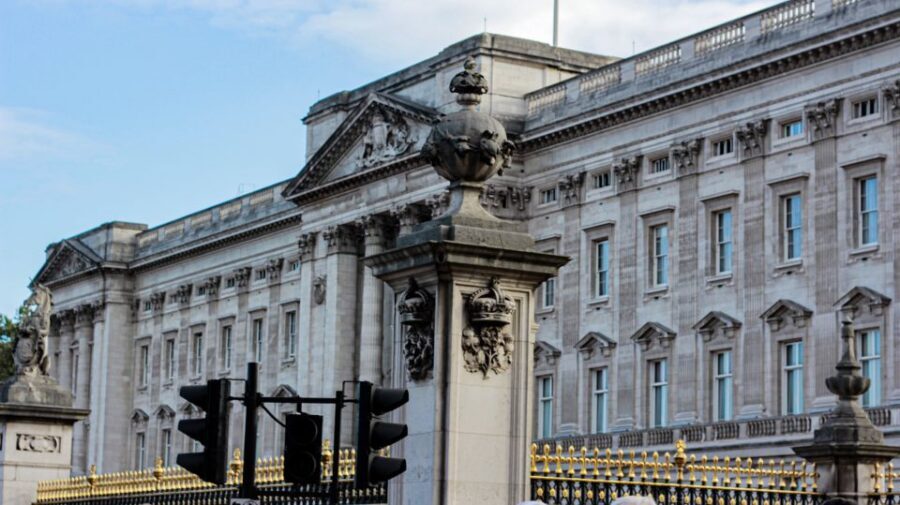
You start at the gates of St James’ Palace, at the bottom of St James’ Street (Cleveland Row / Pall Mall). The meeting point matters because the tour is anchored in a palace that people still associate with the royal world today—even if you’re learning it as a Tudor and Stuart-era setting.
The guide is described as a quirky short lady at the meet-up, so arrive a bit early. In London, that extra 10 minutes saves you from the classic scramble. Once everyone is together, you’ll begin tracing the footsteps of Henry VIII and learning how royal palaces were used day-to-day—birthplace, wedding stage, political hub, and final resting place all in one.
If you like to take photos, bring a phone strap or small crossbody bag. This is a walk through streets where you’ll want both mobility and hands-free time for pictures.
The once-largest royal palace site: seeing scale in the middle of London
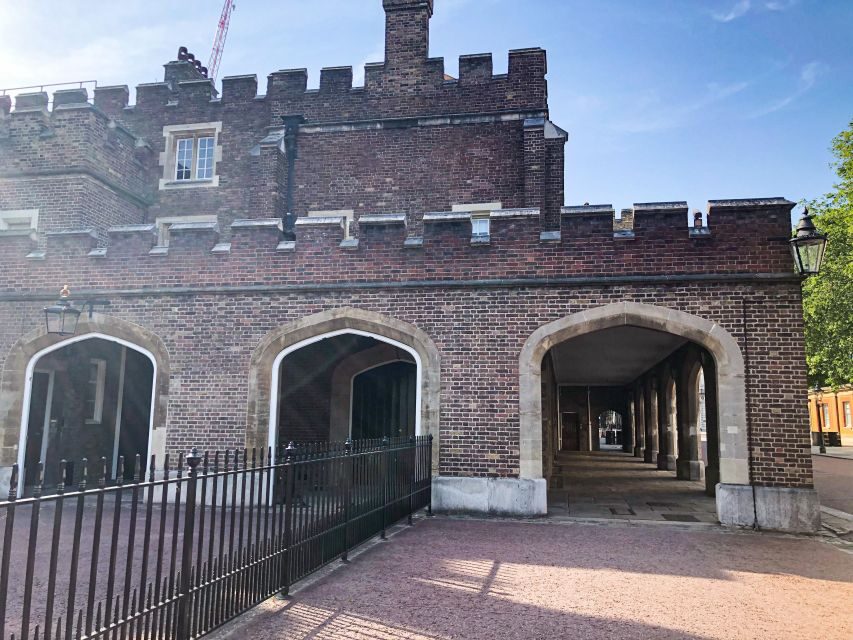
One highlight is the site where the largest royal palace once stood. Even if the grand buildings are gone, the location still tells a story. The court didn’t just govern from a castle; it operated from a center built to hold people, events, officials, and spectacle.
On this part of the tour, I like the emphasis on scale. You start to grasp why everyone competed for proximity to power. In a place like this, access wasn’t abstract. It was physical—who could get an audience, who could attend a ceremony, who could influence decisions, and who ended up on the wrong side of royal politics.
This is also a strong segment for history beginners. You don’t need to know architecture or genealogy first. You just need to pay attention to what the guide points out and why the site mattered.
Henry VIII and Anne Boleyn: court change you can almost feel
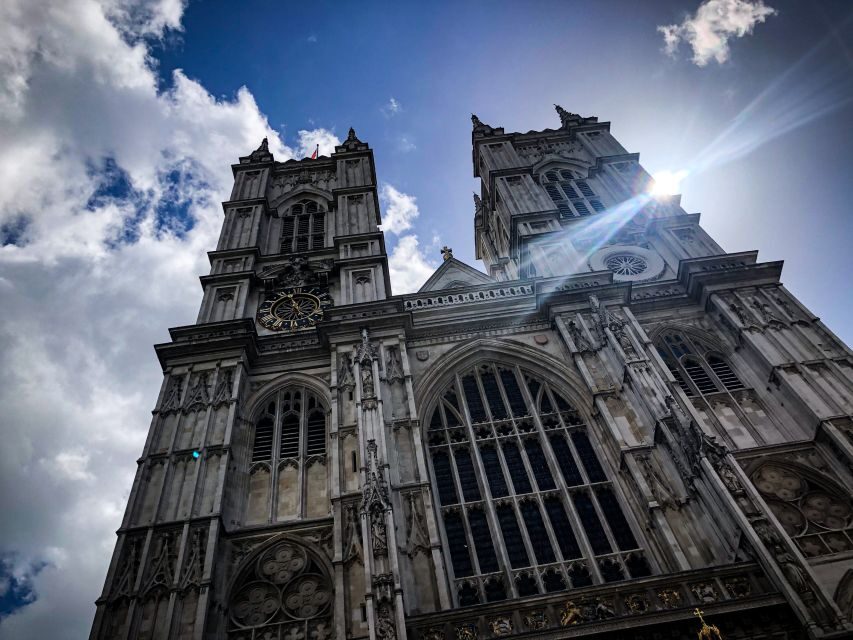
The tour follows major Tudor milestones, including where Henry VIII married Anne Boleyn. That’s not just a romance story—it’s a government story. Marriages at court weren’t private. They were public events with religious and political consequences that rippled outward.
As you walk, you’ll connect the way the Tudor court functioned with the emotional language people often use around this era: love, loyalty, betrayal, and survival. And the guide doesn’t treat these events like sealed-off textbook facts. You’ll hear how Tudor decisions shaped what came next for the Stuart period.
There’s also a moment to admire the beautiful exterior of a historic Tudor palace. Even if you can’t go inside (entry to landmarks isn’t included), the exterior details help you visualize the kind of “royal stage” these buildings were. You’ll see how the architecture supported the court’s image—serious, permanent, and meant to impress.
The Stuart gem tied to Shakespeare: where performance met politics
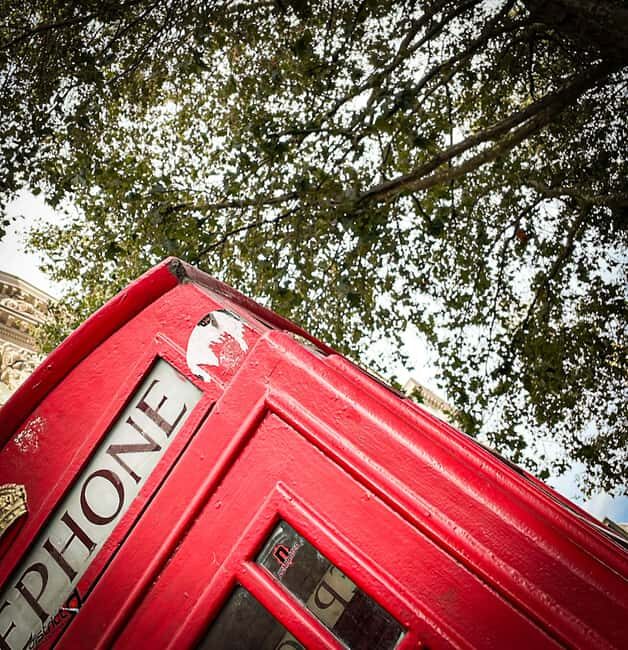
Another standout is a Stuart-era highlight connected to Shakespeare premiering plays. This is where royal history gets fun fast, because it reminds you that power didn’t only show up in law and war. It also showed up in entertainment—at court, in front of influential people.
With James I referenced throughout the tour experience, the focus shifts toward the Stuart court’s cultural role. A “gem” stop like this works because the guide can explain how royal patronage and staged works weren’t separate from politics. They were part of the same environment.
If you’ve ever wondered why certain playwrights were able to thrive at certain moments, this is a helpful answer. You’ll see how the monarchy served as an attention-granting machine. When the court mattered, art mattered.
And because the group stays small, it’s easy to ask questions like: why these plays, why then, and how court taste shaped what audiences saw.





Charles I’s doomed footsteps: walking the route to an execution
This tour follows the footsteps of the love-torn king doomed to be executed—Charles I. This segment is emotionally heavier than the Tudor romance beats, and that contrast is part of the value. You get the court as spectacle earlier, then you see how quickly the same system could turn into something brutal and irreversible.
The guide places this within the broader arc of Stuart rule and crisis, so you’re not just learning the headline. You’re learning how it fit into the chain of events that made the execution possible in the first place.
Even though you’re outdoors and can’t enter buildings for this stop, the guide’s framing makes the location feel purposeful. You’ll learn what to look for, what the event changed, and how the story of a single reign connects to a larger political shift.
If you like your history with human stakes—fear, pressure, power struggles—this part delivers.
Glorious Revolution and palace legends: fact, rumor, and why it matters
One of the tour’s more intriguing aspects is how it treats rumor like a clue. You’ll hear about where the Glorious Revolution was enacted, plus a set of stories that sound like gossip until a guide puts them in context.
There are specific legends highlighted here, including why St James’ Palace was once referred to as the Royal Brothel, whether there really was a palace built for Royal children, and the story about smuggling a Royal heir inside a warming pan. You’ll also hear the guide address who married where (including Queen Anne) and other royal “firsts” that people love to argue about.
Here’s why I think this section works: it teaches you how to read history stories responsibly. Instead of accepting legends at face value, you’re encouraged to understand what the stories try to explain—how people saw the court, what the court did to its own public image, and how rumor fills in gaps when records are complicated.
You’ll leave this section with better instincts about separating what a building represents from what a myth claims.
Pocahontas and the royal residence she visited

If you only associate Pocahontas with early American history, this stop is a reminder that her England story is tied to the same royal world the tour covers. The experience includes finding out which royal residence she visited during her time in London.
This is a good segment for perspective. You’re used to thinking of Tudor and Stuart England as closed in on itself. Seeing how an international figure connected to that court environment broadens the story without needing a separate trip.
It also keeps the tour varied. After executions, revolutionary politics, and palace rumors, this kind of cultural crossover feels like a breath of fresh air.
Queen Anne, royal weddings, and who became monarchs together
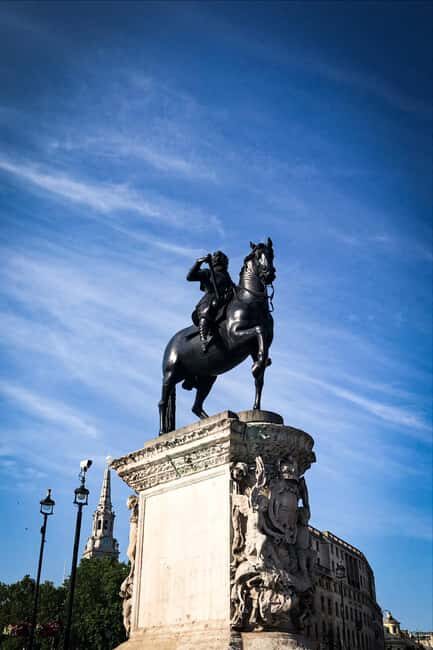
The tour also circles through royal marriage questions, including where Queen Anne married her prince and other notable “who was first” stories about royal couples who both ruled.
Even if you don’t memorize every name and date, these beats help you understand the monarchy as a network of alliances. Marriages weren’t just personal. They were tools that shifted power, legitimacy, and inheritance.
I like the way this tour uses the walking format to keep those ideas concrete. Instead of bouncing between eras in your head, you’re anchored to a specific geographic rhythm. You may not remember every detail immediately, but your mental map of the court becomes clearer.
That matters because royal history is full of similar-sounding names. A good geographic frame makes it easier to keep things straight later on your own.
Price and time: why $29 for 2 hours can feel fair
At about $29 per person for a 2-hour guided walk, this tour is priced for value rather than luxury. The big trade-off is also clear: you’re not paying for landmark entry, so you’re paying for interpretation.
For the money, what you’re buying is:
- a guided sequence of Tudor and Stuart sites,
- a story-led explanation connecting marriages, births, deaths, and political shocks,
- and a small-group format that encourages questions.
If you normally pay more for a walking tour, this one is a bargain—especially for people who like humor and context. If you only care about inside-the-building sightseeing, you might feel constrained because entry isn’t included. But if you’re happy to learn from the streets, the price-to-time ratio makes sense.
Also, with a group size limited to 6, the guide can adjust the tempo based on interest. That’s where cheap can still feel high value.
What to bring and how to handle London weather
The tour runs rain or shine, so don’t plan around perfect weather. Bring:
- comfortable shoes,
- an umbrella,
- a reusable water bottle.
Sunglasses are recommended because London sunlight can swing quickly, and you’ll be out under open sky more than you might expect.
Restrooms are in Trafalgar Square, but opening hours can change. That means if you’re the type who hates last-minute searches, take the stop opportunity earlier rather than later.
If you’re traveling with a daypack, keep it light. You’re not trying to “do London” in one hour. You’re doing a focused, royal-themed walk at a human pace.
Who this tour suits best
This is ideal if you like Tudor and Stuart drama—especially if you’ve watched shows like The Tudors, Wolf Hall, and Gunpowder (names on the tour’s inspiration list). It’s also a good fit for history beginners, because the guide is noted for being patient with people who ask questions as they go.
It’s less ideal if you need children-focused content. This experience is not suitable for children under 13. And there’s a bit of mixed messaging on wheelchair access: the activity info lists wheelchair accessible, but it also includes a note that it’s not suitable for wheelchair users. If you’re using a wheelchair, I’d treat that as a signal to check with the provider directly before you book.
Should you book it?
I’d book this tour if you want a smart way to connect royal headlines to the streets where they happened. The small group size, the guide’s humor and willingness to answer questions (including a guide named Natalie in past tours), and the mix of major events with palace legends make it feel lively instead of heavy.
I’d pass if you’re mostly chasing interior visits or you hate outdoor walking in unpredictable London weather. Since landmark entry isn’t included, you’ll be relying on the guide for the “inside story,” not tickets.
If your goal is understanding—how power worked, how stories spread, and why the Tudor-Stuart era still feels dramatic when you stand in the right place—this tour is a solid pick.
FAQ
Where does the tour meet?
Meet at the gates of St James’ Palace at the bottom of St James’ Street (Cleveland Row / Pall Mall).
How long is the tour?
The tour lasts about 2 hours.
What is the price?
The price is $29 per person.
Is the tour included with a guide?
Yes. It includes a walking tour and a live guide.
Are landmark tickets included?
No. Entry to landmarks is not included.
What language is the tour guide?
The tour guide provides the tour in English.
What group size is it?
It’s a small group limited to 6 participants.
Does the tour run in bad weather?
Yes. It takes place rain or shine.
Where can you find restrooms during the tour?
Restrooms are available in Trafalgar Square, though opening hours can change.
What should I bring?
Bring comfortable shoes, an umbrella, and a reusable water bottle. Sunglasses are also recommended.
Is it suitable for children or wheelchair users?
It’s not suitable for children under 13. The info also notes both wheelchair accessibility and that it is not suitable for wheelchair users, so you should confirm before booking if this applies to you.