REVIEW · LONDON
Secrets of Central London Walking Tour
Book on GetYourGuide →Operated by London Transport Museum · Bookable on GetYourGuide
London’s transport secrets hide in plain sight.
This 2-hour guided walk pulls threads from 1500s London to today, using stories drawn from London Transport Museum archives to show how streets, tunnels, and lines shaped the city.
I especially love how the tour ties big names you know to the places you walk past—think the Thames as London’s first public transport thoroughfare, plus the transport engineering around the Piccadilly line and the Kingsway Tram Tunnel.
One thing to watch: the tour is in English and can move fast while you’re walking through busy areas and crossing roads, so if you prefer slower pacing, plan to ask for clarification.
In This Review
- Key things to know before you go
- Starting outside London Transport Museum in Covent Garden
- Theatreland and Covent Garden: how old street names carry transit clues
- Kingsway Tram Tunnel and Piccadilly line: street-level clues to big engineering
- The Thames as the first public transport thoroughfare
- Holborn tunnels: why the underground feels crowded there
- Crossrail and modern changes: the 2010s still shape today
- Embankment Gardens: why you hear trains in a quiet pocket
- What you get for the price (and what you don’t)
- Pace, walking conditions, and who this tour fits best
- Practical tips to make the tour smoother
- Should you book the Secrets of Central London Walking Tour?
- FAQ
- What is the duration of the Secrets of Central London Walking Tour?
- Where do I meet the tour guide?
- Does the tour include entry to the London Transport Museum?
- What areas does the walking tour cover?
- Does the tour visit disused tube stations or underground spaces?
- What language is the guided tour in?
- What should I bring?
- Is there a cloakroom for bags?
- Are luggage or large bags allowed?
- Is it suitable for kids?
- Final thought: Is it fully wheelchair-friendly?
Key things to know before you go

- London Transport Museum archives energy: the guide uses archive stories, not just general facts.
- 1500s to modern transit: you get a timeline feel, not a random set of stops.
- Transport stories in everyday streets: Kingsway, Covent Garden, Theatreland, and Embankment are treated like real clues.
- Holborn tunnel talk: you’ll hear why there are so many tunnels underground in that area.
- Thames as transport spine: you’ll learn why the river mattered from early days onward.
- Engineering that connects to now: Crossrail work in the 2010s is part of the story, too.
Starting outside London Transport Museum in Covent Garden

Your tour begins outside the main entrance of the London Transport Museum at Covent Garden Piazza (WC2E 7BB). Plan to show up about 15 minutes early so you’re settled before the guide starts regrouping everyone. It helps that the meeting point is easy to recognize: you’ll be in the heart of Covent Garden, right where lots of people are already walking, eating, and heading to shows.
I like that this tour is its own experience, even though the museum is nearby. Entry to the museum is not included, so you’re not stuck with long indoor exhibits before the walk. Instead, the guide uses the museum’s archive material as the backbone of what you learn while you’re outside, moving through the streets.
Do bring a passport or ID card, and do not bring luggage or large bags. There’s no cloakroom, so traveling light really matters here. If you’ve got a daypack, keep it small—this is a “walk and learn” format, not a “stop-and-potter” one.
You can also read our reviews of more walking tours in London



Theatreland and Covent Garden: how old street names carry transit clues
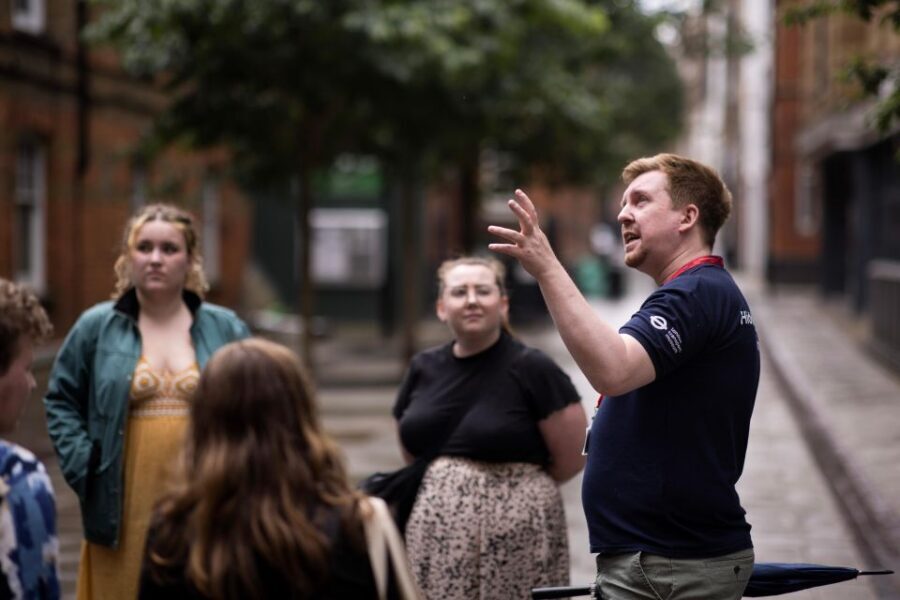
Once you start moving, the tour focuses on Theatreland and the Covent Garden area. This is where the walking part feels most useful. You’re not just hearing about the past; you’re standing in the same general neighborhoods that helped shape how people moved, gathered, and traveled.
One highlight is the story of Convent Garden as it was originally known. Even if you’ve visited Covent Garden before, it’s a great reminder that place names evolve, and those changes often track shifts in how an area developed. The guide also brings in the early theatres that opened in the area—exactly the kind of detail that makes you look at a familiar place with new eyes.
And here’s a practical reason I like this section: you’ll start noticing how “major streets” aren’t just where you go—they’re where infrastructure forms. Streets become routes. Routes create patterns of movement. Those patterns influence later transport decisions, from lines and tunnels to how crowds flow.
Expect the guide to point out well-known streets and how they shaped London’s transport systems. If you enjoy connections—how a street you can name links to a transit feature you’ve heard of—this part usually clicks quickly.
Kingsway Tram Tunnel and Piccadilly line: street-level clues to big engineering

As you shift toward Kingsway, the tour turns more technical, in a way that still stays human. Kingsway isn’t just an address you pass through; it’s part of the story of how London built modern transport in layers.
You’ll hear about the Kingsway Tram Tunnel—one of those facts that sounds like it belongs in an engineering book, but it’s rooted in the reality of city planning. The tour frames it as part of a larger idea: transit choices don’t appear out of nowhere. They grow from where streets already exist, where traffic already flows, and what planners need to solve.
The Piccadilly line construction story is another big anchor here. The point isn’t to memorize dates. It’s to understand why major lines end up where they do. When you learn the “why” while walking the “where,” those famous routes feel less abstract.
I also like that this section connects well-known streets to transport systems. It gives you a mental map you can keep after the tour—so when you ride the Tube later, you’re not just traveling. You’re recognizing the earlier decisions you learned about.
The Thames as the first public transport thoroughfare

One of the tour’s strongest themes is how London’s transport story starts with the river. You’ll learn about the Thames as the first public transport thoroughfare of London. That matters because it’s an early lesson in how cities move before they build rail.
Instead of treating the river as scenery, the guide uses it as infrastructure. Once you hear it framed this way, you’ll likely start thinking about how the Thames shaped movement patterns—who could travel, how quickly goods and people could move, and why later transport networks had to connect back to that existing spine.
This is also where the tour helps you connect transport history to geography. London’s layout is old, and its newer systems had to work with what was already there. The Thames story makes the later underground and street-level decisions feel more logical.
Holborn tunnels: why the underground feels crowded there
The Holborn area gets its own attention, and the subject is great if you like practical weirdness: you’ll hear about the multitude of tunnels underground in that area.
What makes this part interesting is that it flips your instincts. Most people think of the London Underground as the main underground story. This walk reminds you that London is full of other under-the-street spaces—tunnels, passages, and infrastructure that don’t always announce themselves.
Even if you don’t see a “tunnel entrance” in a dramatic way, the explanation changes how you interpret the city above you. Roads, building basements, and utility corridors are more connected than you might assume. Holborn becomes a case study in the density of city engineering.
If you’re the type who loves looking at a street and wondering what’s happening under it, you’ll probably rate this section very highly.






Crossrail and modern changes: the 2010s still shape today
A good walking tour doesn’t just talk about old London. This one also brings in the works to build Crossrail in the 2010s. That’s useful because it shows London’s transport story is still being written.
You don’t need to be a transit nerd to appreciate this. It helps you see transport as continuous: what’s built in one era affects what gets easier or harder later. Crossrail represents a modern layer, and placing it in the same conversation as earlier lines and tunnels makes the city feel like one long, evolving system.
This also gives you a grounded way to think about what you might notice on your own later—construction barriers, access changes, and station upgrades are not random disruptions. They’re part of the larger pattern.
Embankment Gardens: why you hear trains in a quiet pocket
By the time you reach the Embankment area—specifically Embankment Gardens—the tour tackles a question many people have but rarely explain: why you hear trains running when walking in tranquil gardens.
The answer, in concept, is that quiet doesn’t always mean far away. London is compact. Transit routes run in places that can feel serene on the surface. Standing in the gardens and hearing trains reminds you that you’re never truly separated from the city’s movement system.
I like this kind of moment because it turns the tour from “information” into “observation.” You’re not just being told. You’re listening to what’s happening around you in real time and learning how it fits the bigger map.
What you get for the price (and what you don’t)
The price is $26 per person for about 2 hours. For Central London, that’s solid value—especially because you’re getting a guided story focused on transport history and engineering, not just general sightseeing.
The main tradeoff is what’s not included. Entry to London Transport Museum is not included, and the tour does not visit disused tube stations or any disused spaces. So you’re paying for a guided walk and the archive-driven storytelling, not for museum admission and not for behind-the-scenes “closed-off” station visits.
Is that a problem? Only if you’re expecting a museum walkthrough or underground access. If you want context before you visit the museum later, this tour can actually make that museum time richer because you’ll recognize themes like tunnels, line construction, and how streets connect to transit systems.
Pace, walking conditions, and who this tour fits best
This is a lot of walking—up to two hours—with uneven ground in parts, plus crossing roads and passing through busy areas. Wear sturdy footwear and suitable clothing. There’s no cloakroom, so plan for what you’ll carry.
Also note the practical mismatch in the info: it says wheelchair accessible, but it also says it’s not suitable for people with mobility impairments. My advice is to treat this as a sign that the route may be workable only for certain mobility situations. Because the tour involves uneven ground and road crossings, you should consider whether you’ll comfortably manage those parts for the full duration.
Age-wise, it’s not suitable for children under 9. For families with older kids, it might work if the child enjoys history and transport details, but the tour is still built for a walking pace and explanation style.
Language is English. One of the lessons from real experience is that the guide may speak quickly, especially while moving through crowds. If your English comfort level is limited, don’t be shy about leaning in, asking for repetition, or stopping the guide for a quick clarification when possible.
Practical tips to make the tour smoother
Here’s how to set yourself up for a better time:
- Wear shoes you trust on uneven sidewalk patches and curb crossings.
- Keep your bag small since luggage or large bags aren’t allowed and there’s no cloakroom.
- Bring ID (passport or ID card).
- Arrive a bit early at the London Transport Museum entrance so you can start calmly.
- If you want to catch every detail, keep your focus while crossing roads—then reset as soon as you’re back on the sidewalk.
This is the kind of tour where good attention pays off. The facts connect: Thames history links to transport routes; street design links to line placement; tunnels in Holborn link to the larger idea of London’s underground density.
Should you book the Secrets of Central London Walking Tour?
Book it if you want Central London with explanations that make you look smarter when you walk. I’d pick this tour if you like transport as a story—how the city’s streets and engineering shaped real movement from the Thames era to modern Crossrail work.
Skip it if you’re hoping for a museum ticket included, a trip into disused Tube stations, or a relaxed walk with lots of long stops. This is active. You’ll cover ground and you’ll learn as you go.
If you’re on the fence, think of it this way: $26 buys you a focused guided lens on how London’s transport systems became what they are. For many people, that lens turns ordinary landmarks into clues.
FAQ
What is the duration of the Secrets of Central London Walking Tour?
The tour lasts about 2 hours.
Where do I meet the tour guide?
Meet outside the main entrance of London Transport Museum, Covent Garden Piazza, WC2E 7BB.
Does the tour include entry to the London Transport Museum?
No. Entry to the museum is not included.
What areas does the walking tour cover?
You’ll walk through Theatreland, Covent Garden, Kingsway, and the Embankment area.
Does the tour visit disused tube stations or underground spaces?
No. This tour does not visit disused tube stations or disused spaces.
What language is the guided tour in?
The live tour guide speaks English.
What should I bring?
Bring a passport or an ID card.
Is there a cloakroom for bags?
No. There is no cloakroom.
Are luggage or large bags allowed?
No. Luggage or large bags are not allowed.
Is it suitable for kids?
It is not suitable for children under 9 years old.
Final thought: Is it fully wheelchair-friendly?
It is listed as wheelchair accessible, but the tour involves a lot of walking, uneven ground, and road crossings, and it is also noted as not suitable for people with mobility impairments—so you’ll want to judge your own comfort with those conditions.