
REVIEW · STRATFORD UPON AVON
Shakespeare’s Schoolroom and Guildhall Entrance Tickets
Book on GetYourGuide →Operated by Shakespeare's Schoolroom & Guildhall · Bookable on GetYourGuide
A schoolroom can feel like time travel. In Shakespeare’s hometown, this 1-hour ticketed visit puts you in a restored space tied to his early education and youth—complete with a Tudor lesson, quill writing, and a medieval Guildhall you rarely get to see.
I like that you don’t just hear about Shakespeare. You sit in the kind of room where a young pupil would have studied in the 1570s, and the guides connect it to the missing chapter of his time in Stratford. I also love the hands-on part: the Tudor lesson with Master Thomas Jenkins, plus dressing up and playing Tudor games, which makes the whole story feel playable rather than lecture-only.
One thing to keep in mind: the site is compact. You move between spaces (the Guildhall below and the schoolroom above), so if you’re looking for lots of room to wander at your own pace, plan for a guided, tightly packed experience.
In This Review
- Key highlights you’ll care about
- From Church Street to Shakespeare’s Desk: What You See in 60 Minutes
- Sitting Where a Young Shakespeare Sat in Stratford’s Schoolroom
- Tudor Lesson With Master Thomas Jenkins and the Quill Writing Moment
- Medieval Guildhall Spaces, the Priest’s Chapel, and Wall Paintings
- The Michael Wood Film: Fast Context Without the Lull
- Dressing Up, Tudor Games, and How Fun Supports Learning
- Price and Value: Is $20 for 1 Hour Worth It?
- Who Should Book This Tour (and Who Might Prefer Something Else)
- Should You Book Shakespeare’s Schoolroom & Guildhall Tickets?
- FAQ
- Where is Shakespeare’s Schoolroom & Guildhall located?
- How long is the visit?
- What does the ticket include?
- Is there a lesson included, and who teaches it?
- Do you get to do quill writing?
- Is there a film included during the visit?
- Can you dress up or play games?
- What language is the tour delivered in?
- Is the attraction wheelchair accessible?
- What should I know about cancellation and booking payment?
Key highlights you’ll care about
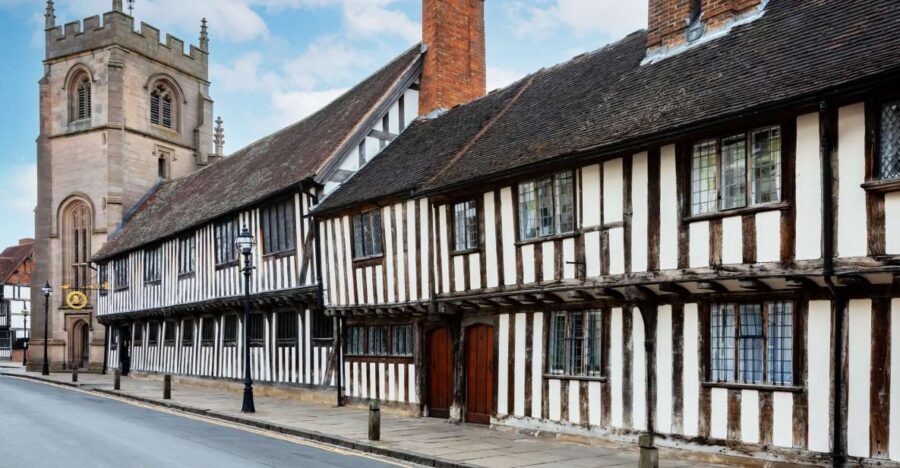
- Sit in the schoolroom setting tied to Shakespeare’s pupil days in the 1570s
- Tudor instruction with Master Thomas Jenkins, including a costumed schoolmaster style lesson
- Quill writing practice at desks where handwriting lessons are part of the activity
- A rarely seen medieval priest’s chapel with conserved wall paintings
- A short film featuring Michael Wood, giving you history context fast
- Dress-up and Tudor games so the experience isn’t just looking and listening
From Church Street to Shakespeare’s Desk: What You See in 60 Minutes
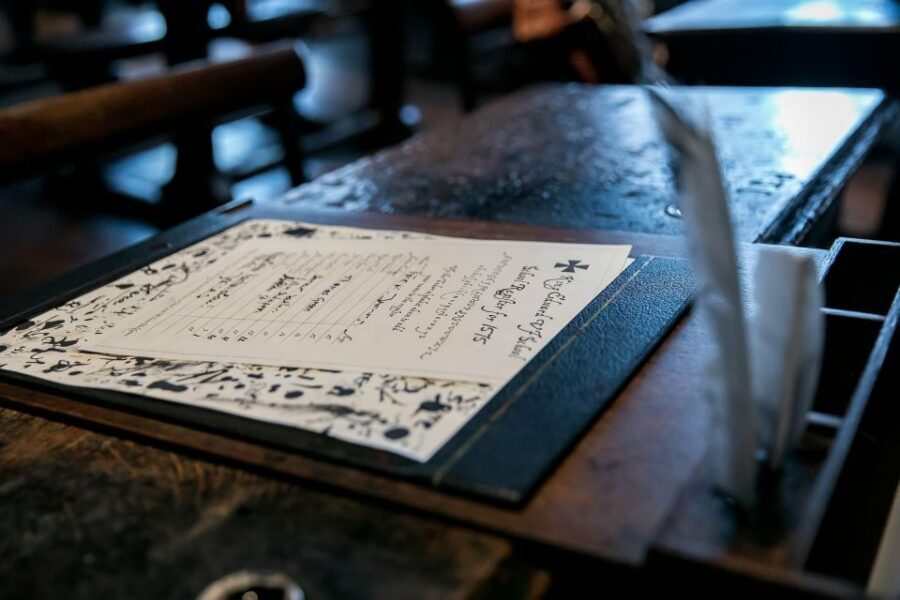
This is a straightforward, one-hour guided visit based at Shakespeare’s Schoolroom & Guildhall on Church Street (CV37 6HB). It’s designed as a concentrated experience: you’ll tour the buildings, watch a short film, and take part in a lesson that involves writing and role-play.
The value here is how much “doing” you get in a short time. A lot of Stratford attractions lean heavily on exhibits you read at your own pace. This one has you moving, participating, and getting guided context that helps the physical spaces make sense.
Before you go in, set your expectations for a guided experience, not a museum stroll. The format is structured and theatrical, with costuming and lesson moments built in. That can be great for families and for travelers who like experiences that feel like a living script.
And yes—because it’s a relatively compact building—your time will be efficient. You’ll see the major rooms the experience wants you to see, rather than wandering until you discover them by accident.
A few more Stratford Upon Avon tours and experiences worth a look


Sitting Where a Young Shakespeare Sat in Stratford’s Schoolroom
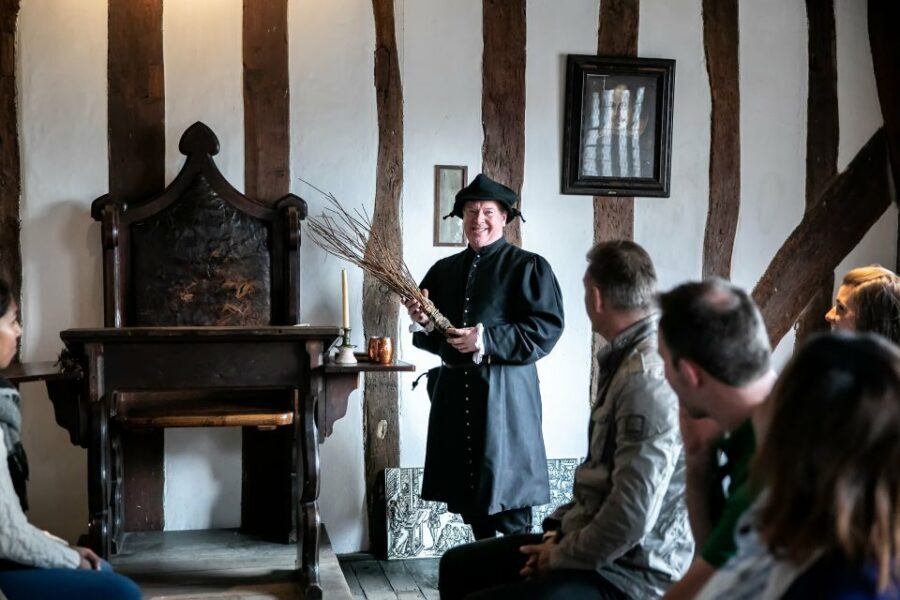
The centerpiece is the schoolroom experience—especially the chance to sit in the room presented as the place where Shakespeare sat as a pupil in the 1570s. That detail matters. When you’re in a classroom setting, your brain stops imagining and starts understanding daily routine: where a pupil might sit, how desks are arranged, how learning would have felt.
The guides don’t only paint a broad picture. They explain the subjects Shakespeare would have studied and how teaching worked in the period. You also get the story thread that connects a student’s classroom life to Shakespeare’s later pull toward classical literature and theatre.
Why this works for you: it turns “Shakespeare the playwright” into “Shakespeare the student.” Once you understand education methods and what lessons were actually like, the bigger narrative of his later work feels less like a jump and more like a path.
Practical note: since the experience is timeboxed to about an hour, you’ll want to stay with the group and follow the guide cues. Trying to step off to read everything slowly may steal time from the lesson and writing parts.
Tudor Lesson With Master Thomas Jenkins and the Quill Writing Moment
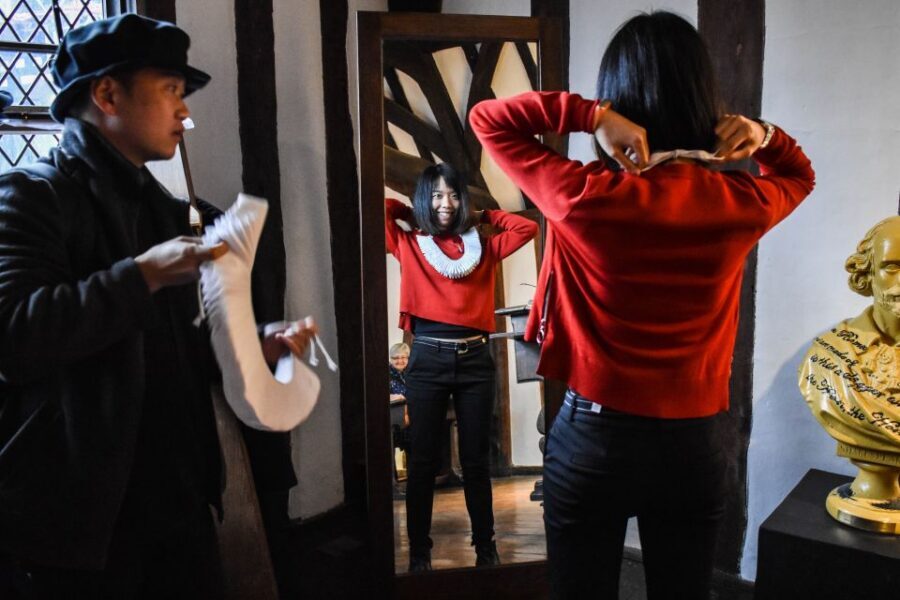
The lesson with Master Thomas Jenkins is one of the main reasons people enjoy this tour. It’s not just a costumed character moment. You’re meant to take part in the rhythm of the lesson and understand how a schoolmaster taught.
The activity that really brings it home is the quill writing practice. The desks you use are presented as desks that would have been occupied by young William Shakespeare, and you get to practice calligraphy-style writing with a quill. Even if you’ve never held one before, the experience is structured enough that you’re not left floundering.
A costumed Latin teacher-style vibe also shows up as part of the lesson feel. That matters if you’ve ever wondered what “Latin school” meant in real life. Here, it becomes something you can see in motion: speaking, copying, practicing—learning as a repeated action.
Why you’ll likely find it memorable: you’re not just receiving information about education; you’re reenacting a key learning skill—writing by hand with purpose. For many visitors, that’s the moment where the buildings stop being “historic rooms” and start being classrooms with rules.
Potential drawback to consider: handwriting lessons take time, and the whole visit is only about an hour. If you’re the type who wants slow, careful practice, you may wish for more minutes. Still, the time limit helps keep the experience moving and prevents the lesson from dragging.
Medieval Guildhall Spaces, the Priest’s Chapel, and Wall Paintings
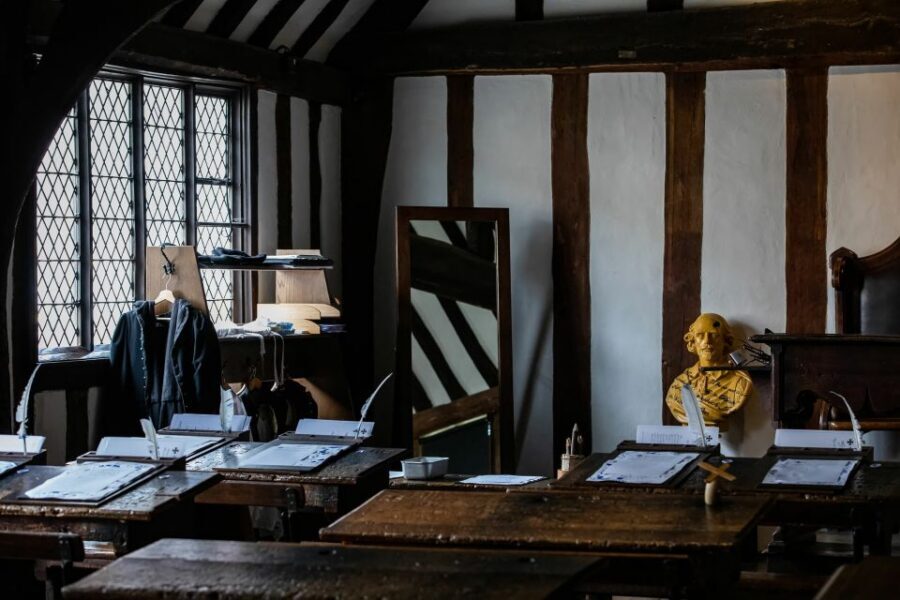
After the schoolroom moments, the Guildhall side adds a different kind of atmosphere. Stratford’s Guildhall dates to 1420 and is described as one of only a few remaining medieval guildhalls in the country. That longevity matters: it’s a space that outlasted fashions and centuries of change, so it feels like a serious survivor, not a recreated set.
One of the most intriguing stops is the late medieval priest’s chapel, where visitors can see rare and recently conserved wall paintings. The fact that these paintings have been conserved recently is important to your experience because it means you’re viewing something that hasn’t been left behind or faded into irrelevance.
In the Guildhall, the guides also explain the building’s role as a medieval provincial guildhall. This helps you connect what you’re seeing—gathering spaces, religious space, civic-administrative function—to the social life of the town in the medieval period.
Why it’s worth your time: Shakespeare’s story is usually framed as literature and theatre. Adding the Guildhall gives you the town’s “day-to-day structure.” It’s easier to imagine the society a young Shakespeare grew up in when you see both his schooling space and the broader community spaces nearby.
Also, there’s an atmosphere shift as you move between levels of the building. Reviews and general visitor experience point out that the site is split so you’ll get Guildhall context downstairs and the schoolroom learning upstairs. Going in with that mindset helps you feel less like you’re missing parts.
The Michael Wood Film: Fast Context Without the Lull
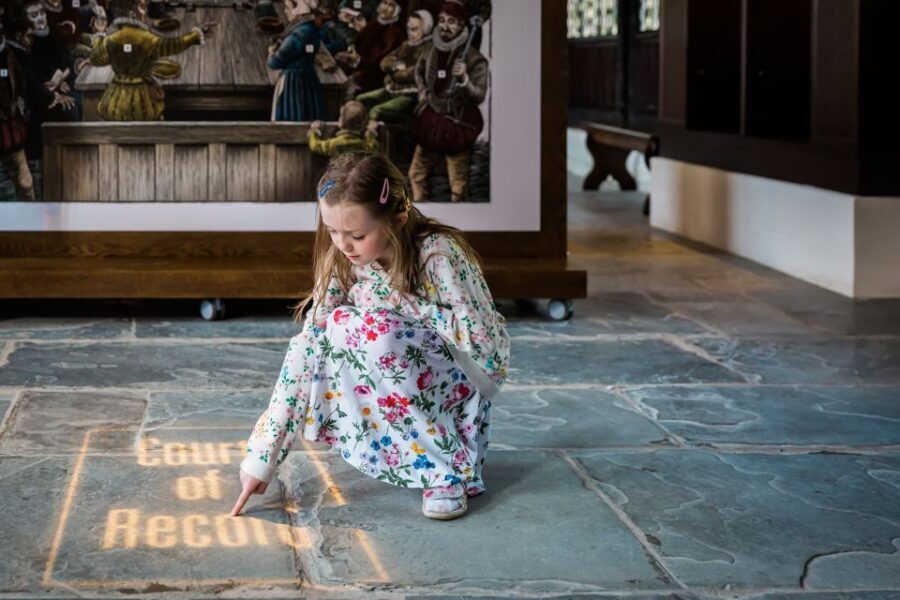
The tour includes a short film by historian and broadcaster Michael Wood. This part is one of those “good use of time” elements: you get context quickly without needing to read long interpretive panels before the lesson and room visits.
A short film is also helpful for keeping the tone consistent. It ties the Guildhall’s history and the schoolroom setting back to Shakespeare’s time in Stratford, so the experience feels like one story rather than separate exhibits.
If you prefer learning with a mix of seeing and listening, this film slot usually works well. It also helps you orient yourself before the costumed lesson and quill writing, so you understand what the guide is building toward.


Dressing Up, Tudor Games, and How Fun Supports Learning
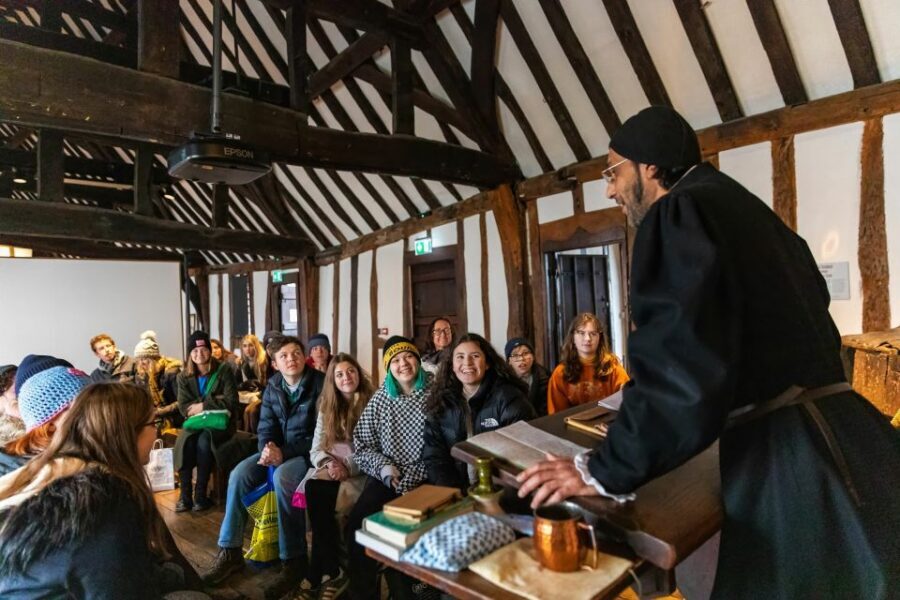
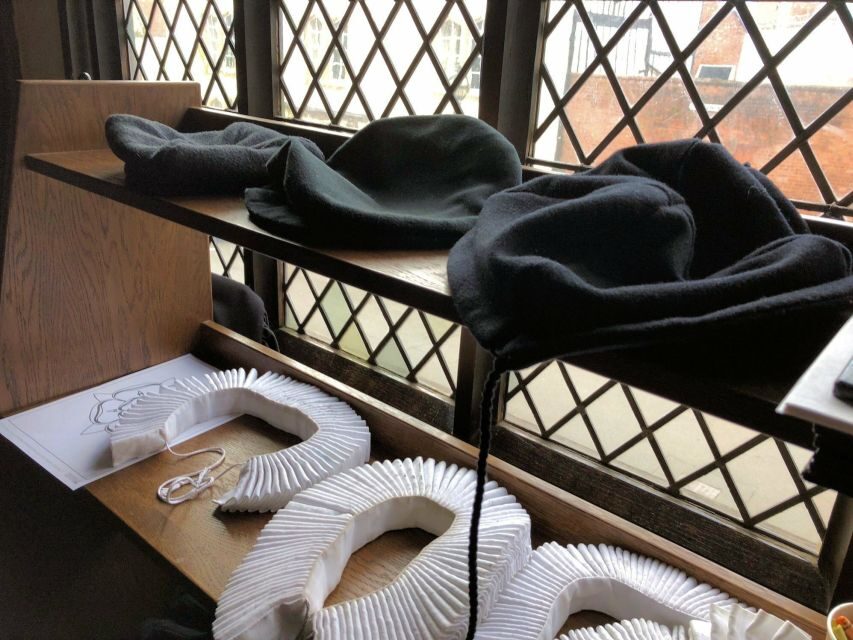
This tour isn’t shy about the theatrical side. You get to dress in Tudor-style clothing and play Tudor games. It might sound like a gimmick if you usually prefer purely historical presentations—but here, it supports the main goal: making the learning environment feel real.
The dress-up piece is a quick way to change your mindset. When you’re wearing period-style clothes, you naturally pay closer attention to how the lesson is framed and how the guide speaks and cues actions. It’s hard to remain mentally in modern time when you’re literally in costume.
The Tudor games also help break up the visit’s pacing. A one-hour experience can feel intense if it’s all instruction and observation. Adding play keeps you engaged and helps the story land with people of different ages and attention styles.
Who this is especially good for: families, students, and anyone who wants Shakespeare in an experiential format rather than a silent-walk format.
Price and Value: Is $20 for 1 Hour Worth It?

At around $20 per person for a one-hour ticketed visit, this sits in the category of “paid attraction, not a free stop,” so you’ll want to feel what’s included and what you’re paying for.
Here’s what you actually get for that price:
- Guided tour through the schoolroom and Guildhall spaces
- A lesson with Master Thomas Jenkins
- Quill writing practice and Tudor-style learning activities
- Dress up and Tudor games
The value comes from the combination. If this were only a room you walk through, it might be hard to justify the cost versus other Stratford sites. But because the ticket includes active participation—writing practice and a teacher-led lesson—you’re paying for a guided performance + educational activity in a single hour.
Also, $20 for a one-hour immersive experience in a central UK heritage setting is usually a fair deal when the activity is genuinely hands-on. Here it is: you’re not just watching; you’re participating.
If you’re traveling on a tight schedule, this can also be a win. One hour is long enough to feel complete, but short enough to fit alongside other Stratford stops without eating your entire day.
Who Should Book This Tour (and Who Might Prefer Something Else)
This experience is presented as perfect for all ages, and it shows in the mix of content: history (Guildhall, chapel, wall paintings), literature and theatre connections (Shakespeare’s education and classical influence), plus hands-on tasks (quill writing) and play (Tudor games).
Book it if:
- You want Shakespeare beyond the birthplace-and-plays circuit
- You like interactive learning, even if you’re an adult
- You enjoy costumed historical interpretation when it includes real activities
- You’re happy with a guided, compact format rather than lots of wandering time
Consider a different option if:
- You prefer large museum spaces and self-paced reading time
- You hate handwriting activities or fear you’ll be forced into them
- You want a longer, more detailed architectural walk (this is built to be short and structured)
The best part is that the experience balances multiple layers of interest—education, community life, and medieval art—without requiring you to be a Shakespeare expert before you arrive.
Should You Book Shakespeare’s Schoolroom & Guildhall Tickets?

If you want a single Stratford ticket that combines story, hands-on learning, and a rare medieval setting, I’d book it. The strongest reasons are practical: you get to sit in a schoolroom tied to Shakespeare’s pupil days, and you do a Tudor lesson with Master Thomas Jenkins that includes quill writing and dress-up play. Add in the conserved wall paintings in the priest’s chapel and the short film by Michael Wood, and you get a tour that feels like more than a quick stop.
If you’re unsure, use this simple test: do you enjoy guided reenactment-style learning where you participate? If yes, this fits. If you want only quiet exhibits and slow independent pacing, you might feel the compressed layout is too structured.
FAQ
Where is Shakespeare’s Schoolroom & Guildhall located?
It’s on Church Street in Stratford-upon-Avon, Warwickshire, with the meeting point listed at CV37 6HB.
How long is the visit?
The experience lasts about 1 hour.
What does the ticket include?
Your ticket includes entrance to Shakespeare’s Schoolroom and Guildhall, a guided tour, and a lesson with Master Thomas Jenkins.
Is there a lesson included, and who teaches it?
Yes. The tour includes a lesson with Master Thomas Jenkins.
Do you get to do quill writing?
Yes. The experience includes a quill writing practice as part of the learning activities.
Is there a film included during the visit?
Yes. You’ll watch a short film by historian and broadcaster Michael Wood about the Guildhall’s history.
Can you dress up or play games?
Yes. The experience includes Tudor-style clothing dress-up and Tudor games.
What language is the tour delivered in?
The tour is in English.
Is the attraction wheelchair accessible?
Yes, it’s listed as wheelchair accessible.
What should I know about cancellation and booking payment?
Free cancellation is offered up to 24 hours in advance for a full refund, and you can reserve now and pay later.