REVIEW · STRATFORD UPON AVON
Stratford-Upon-Avon: The Famous Walk Talk Show
Book on GetYourGuide →Operated by WalkTalkShow.co.uk · Bookable on GetYourGuide
Shakespeare’s Stratford on foot. This WalkTalkShow is a 90-minute guided walk that threads 1400 years of Stratford’s story through the buildings and corners you can actually see today. You start by the Royal Shakespeare Theatre, then work your way through places linked to the Bard’s life and the Tudor forces that reshaped England.
I love two things most. First, the tour connects big historical change—Henry VIII through Elizabeth I—to the everyday streets of the town, so it doesn’t feel like memorizing dates. Second, the guide style shines: people single out guides like Marcus and Kate for making the walk feel relaxed, funny, and easy to follow, even when the pace is quick and the facts keep coming.
One possible drawback: this is a guided walking format, so if you prefer long, slow breaks or lots of inside time in museums, you may want to add extra free time afterward.
In This Review
- Key highlights you’ll notice fast
- Shakespeare’s Stratford, 1.4 km at a time
- The Royal Shakespeare Theatre makes the whole walk click
- Tudor England and the “iconoclastic forces” you can’t ignore
- A stop-by-stop walk: Theatre, markets, Birthplace, and New Place
- Market Hall at Market Cross and the town’s commercial pulse
- Shakespeare’s Birthplace: the human start
- Rother Street Market and Bell Court: street-life texture
- Town Hall and History Corner: where civic power shows up
- Shakespeare’s New Place: where fame meets disappearance and memory
- The Guild Chapel dated 1269: power you can measure in stone
- Schoolroom links, KES, the Swan Theatre area, and the church of christening and burial
- Pace, timing, and how to get value in 90 minutes
- Is it worth $16.16: who should book and who might not
- Should you book the Stratford-Upon-Avon WalkTalkShow?
- FAQ
- How long is the Stratford-Upon-Avon WalkTalkShow?
- What does the tour cost?
- Where do I meet the guide?
- Where does the tour end?
- Is the tour in English?
- Is it wheelchair accessible?
- What should I bring?
- Does the tour run in bad weather?
- Are food and drinks included?
- What if I need to cancel or change plans?
Key highlights you’ll notice fast
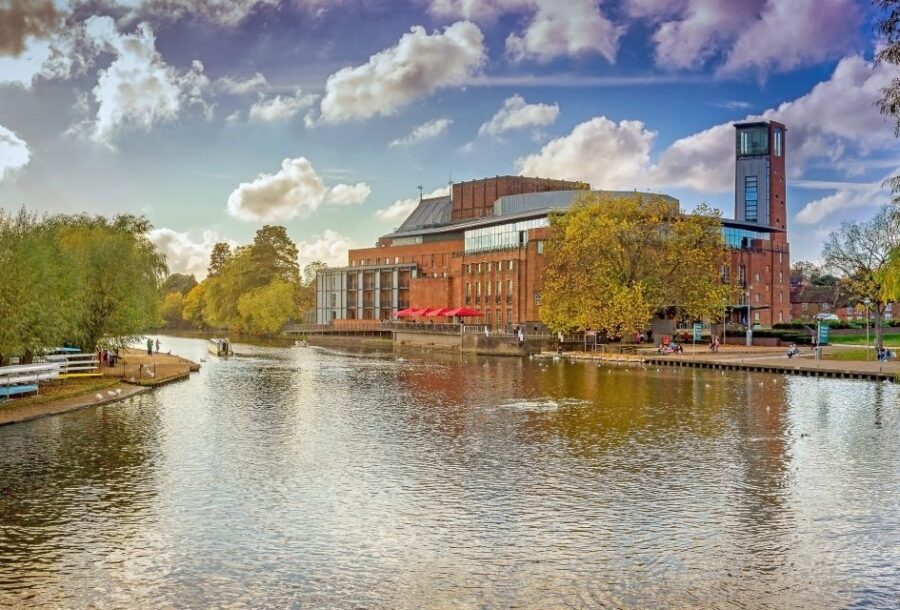
- Royal Shakespeare Theatre start: you begin at the town’s Shakespeare hub and walk outward from there.
- 14 centuries in one loop: the route covers around just under 1.4 km with about a dozen stops.
- Tudor England focus: Henry VIII to Elizabeth I and the iconoclastic forces that changed religion, culture, and writing.
- Shakespeare’s life markers: birthplace, his home area (New Place), school-related links, and the church connected to christening and burial.
- 1269 Guild Chapel power: you get a sense of medieval governance and what survived after major upheavals.
- Markets and performance spaces: you pass through the town’s commercial heart and the Swan Theatre area.
Shakespeare’s Stratford, 1.4 km at a time
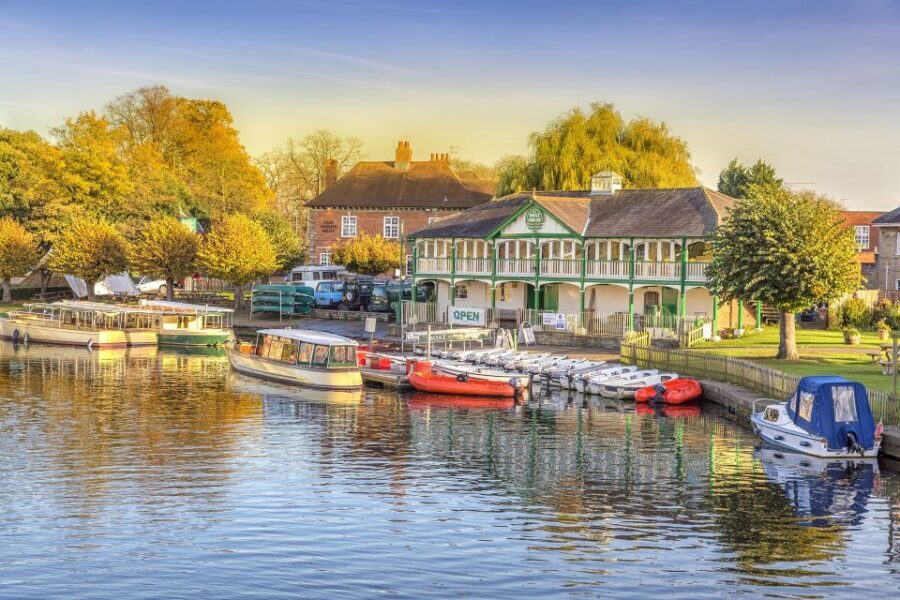
Stratford-upon-Avon can feel like two towns at once. There’s the scenic River Avon setting and the theater crowds. Then there’s the older Stratford—built up, rebuilt, and remade—where medieval chapel power and Tudor-era religion still leave marks on street layouts and surviving buildings. This tour is designed to let you see that layering while you walk.
The route is compact. It’s a circular loop with about a dozen stops and a total distance of just under 1.4 km, so you’re not committing your whole day. That matters in Stratford because you’ll likely want time after the walk for a show, a stroll by the river, or a pub lunch. The tour also starts right where most people end up anyway: the Royal Shakespeare Theatre area, so you can fit it cleanly into a first visit.
Price is also part of the value equation. At about $16.16 per person for a live guide over roughly 90 minutes, you’re paying for interpretation: someone to connect the buildings to the stories of Shakespeare and the political-religious shifts of the Tudor period. It’s not a ticket to a museum or a big attraction with separate entry fees—it’s more like a smart orientation that makes the rest of your day click.
You can also read our reviews of more walking tours in Stratford Upon Avon



The Royal Shakespeare Theatre makes the whole walk click
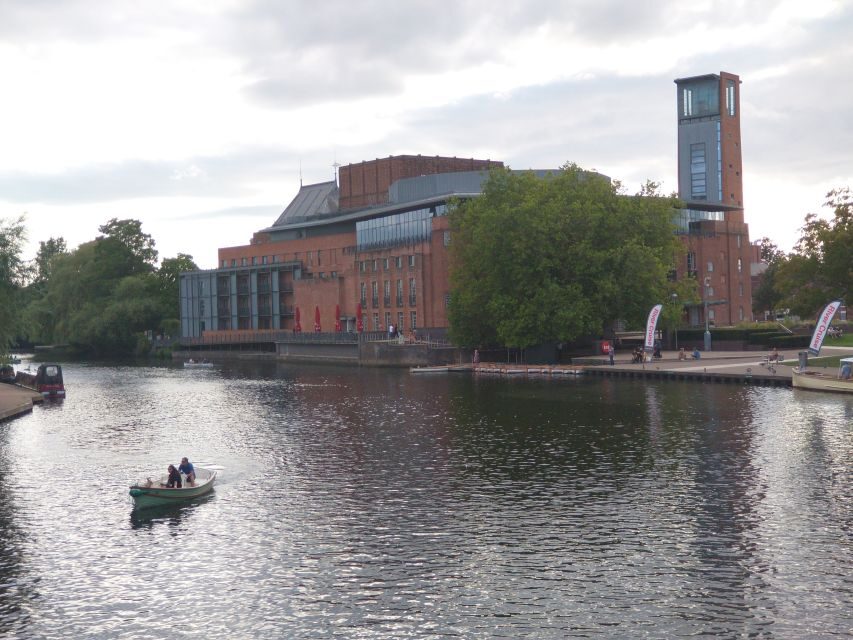
Meeting point choices tell you a lot about how a tour will feel. Starting outside the Royal Shakespeare Theatre—specifically by the main entrance near the large viewing Tower—is a practical win. It means you don’t waste time hunting for a meetup spot, and it keeps the Shakespeare frame front and center from minute one.
From that starting point, the tour sets a tone: Stratford isn’t just a backdrop for plays. It’s a town shaped by power, commerce, and religion. And once you’ve got that lens, the stops start making sense fast. You’ll connect the theater world to the streets outside it—markets, guild buildings, and the domestic spaces tied to Shakespeare’s life.
A small detail that came through in guide feedback is that the start is organized. You’ll get a quick rundown before you head out, then you move. That helps if you’re juggling questions while walking, or if you want to take photos without feeling lost. And because the tour returns to the meeting point, you end where you likely want to be anyway—near the theaters and the center of town.
Tudor England and the “iconoclastic forces” you can’t ignore
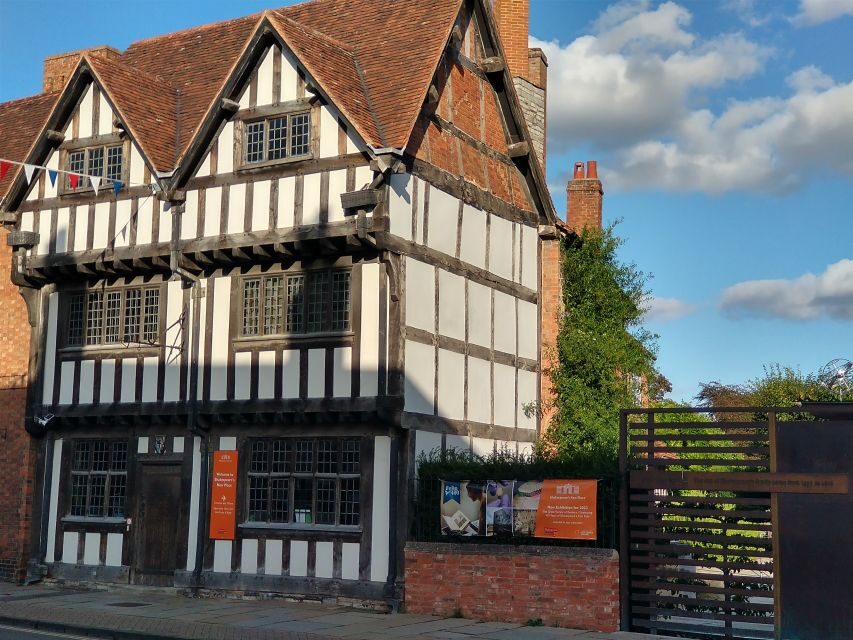
If you’re expecting Shakespeare trivia only, this walk won’t stop at the literary surface. It explicitly frames the Tudor era as a turning point: from Henry VIII to Elizabeth I, you’ll hear how religious and political shifts fed into culture—and into literature.
That’s where the tour earns its historical weight. Instead of treating Shakespeare as a floating genius, you learn what kind of world he wrote in: one where authority mattered, where religious change was not gentle, and where the fortunes of towns and institutions could flip over time. The phrase iconoclastic forces may sound abstract, but the point is concrete: when belief systems and power structures change, public life changes too, and you can feel that in buildings and institutions that survived—or didn’t.
You’ll also notice how Stratford’s identity keeps rewriting itself. Medieval guild power, Tudor religious pressure, and later cultural fame all sit on top of older layers. This is why a guided walk helps. On your own, you can admire a façade. On the tour, you learn what the façade meant in its own time.
A stop-by-stop walk: Theatre, markets, Birthplace, and New Place
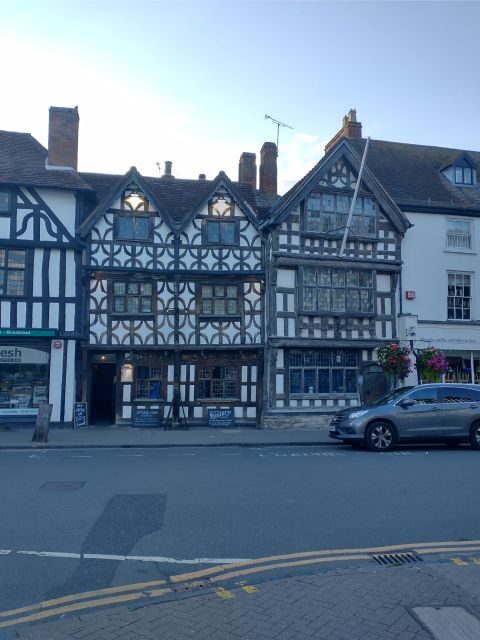
The walk is built around a smart mix: performance landmarks, town-center commerce, and Shakespeare’s personal and family connections. Here’s how the major moments tend to land, and what to watch for.
Market Hall at Market Cross and the town’s commercial pulse
You’ll hit the Market Hall at Market Cross early. This isn’t random. Markets explain why Stratford mattered beyond its famous resident. Even when you’re focused on Shakespeare, it helps to see the town as a working place—traders, visitors, goods moving in and out.
Look out for how the town center concentrates attention: the market area makes a strong base for understanding later stops like Shakespeare’s birthplace and the town’s municipal buildings.




Shakespeare’s Birthplace: the human start
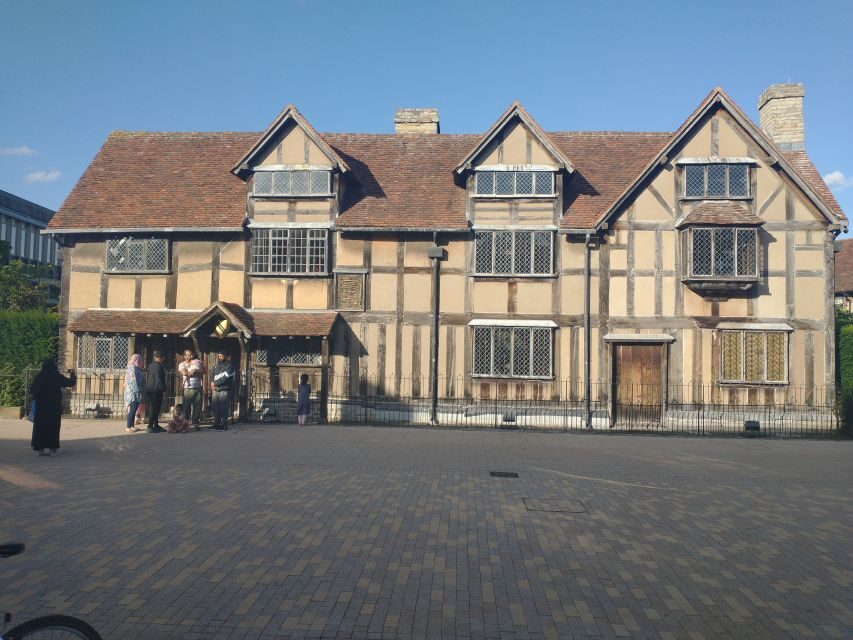
Then you’re into the most immediate Shakespeare stop on the emotional scale: Shakespeare’s Birthplace. This is where you connect the author to a specific location, rather than just imagining him as a name in a book.
Even if you’ve visited other literary sites, this one lands differently because Stratford is small and walkable. The experience feels close-up. You also get the historical context around the time period, so the birthplace doesn’t feel like a postcard—it feels like the starting point for a life shaped by the Tudor world.
Rother Street Market and Bell Court: street-life texture
Along the way you’ll pass spots like Rother Street Market and Bell Court. These stops add texture. They turn the walk from a set of big-ticket highlights into a sense of daily movement—where people would go, where commerce met culture, and how the town’s layout supported social life.
If you like street-level detail, slow down for photos here. These are the moments that make Stratford feel lived-in, not staged.
Town Hall and History Corner: where civic power shows up
Next comes Town Hall and History Corner. This is a good reminder that Shakespeare’s England wasn’t just theaters and manuscripts. It was towns governed by civic decisions, shaped by national religious politics, and affected by the power of institutions.
This stop also tends to help you reorient your timeline. By the time you reach the next Shakespeare-linked sites, you’ll be better able to place what you heard about Tudor shifts.
Shakespeare’s New Place: where fame meets disappearance and memory
Later you’ll see Shakespeare’s New Place. The name alone pulls you toward the personal side of his story, but the value here is context: you’re learning how Stratford held onto Shakespeare’s legacy, while the landscape of power and institutions kept changing.
A good way to use this stop is to ask yourself what it meant for local identity. In a town like Stratford, fame can become part of civic memory—yet the physical town keeps evolving.
The Guild Chapel dated 1269: power you can measure in stone
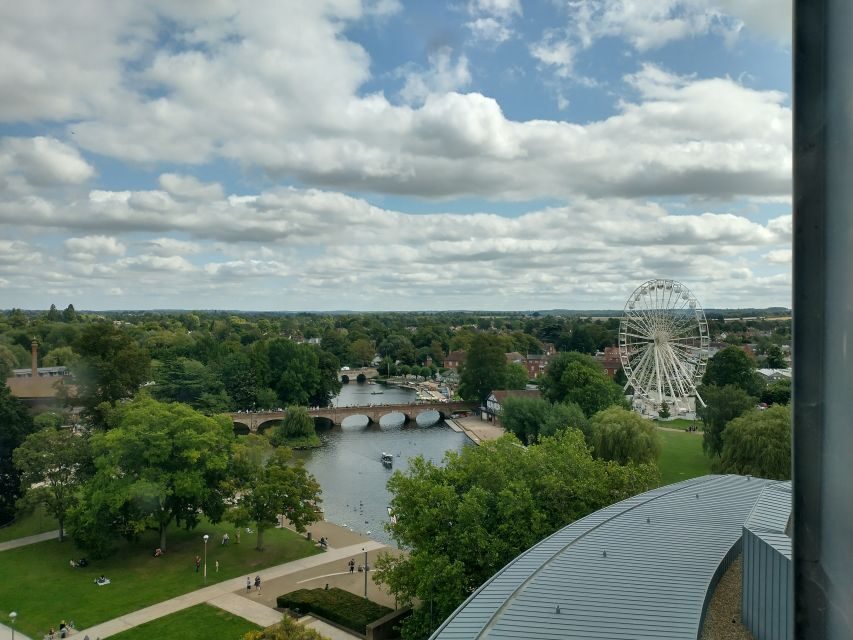
One of the most powerful stops is the Guild Chapel, tied to the Guild of the Holy Cross, with a chapel dating from 1269. Medieval Stratford wasn’t just picturesque. It was controlled by institutions with real authority, and this chapel represents that.
The tour also makes a key point: the chapel could fall foul of the changing political and religious landscape, and yet it remains part of what you can see today. That’s the tour’s magic trick. It shows you that history isn’t only in books—it’s in the physical survival of buildings and the scars of upheaval.
When you’re there, don’t treat it as a quick photo op. Spend a moment mentally linking what you learned about Henry VIII and the Tudor era to what you’re looking at now. This is one of the best places on the walk to understand why the tour calls out iconoclastic forces. Those shifts weren’t distant. They reached into local institutions.
Schoolroom links, KES, the Swan Theatre area, and the church of christening and burial
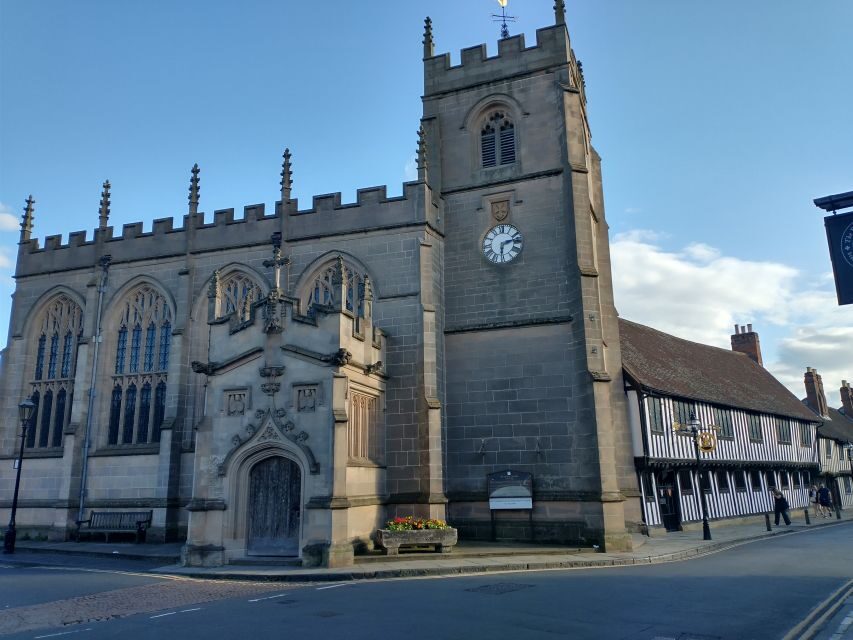
After the guild power stop, the walk shifts toward the education and community side of Shakespeare’s world.
You’ll see Shakespeare’s Schoolroom and the early-institution connections tied to the guild complex. Then there’s KES as it is now, a modern name that helps you bridge past and present. Even with limited time, you’ll come away with the sense that Stratford built its identity around institutions—schools, chapels, markets—then Shakespeare became a permanent part of that story.
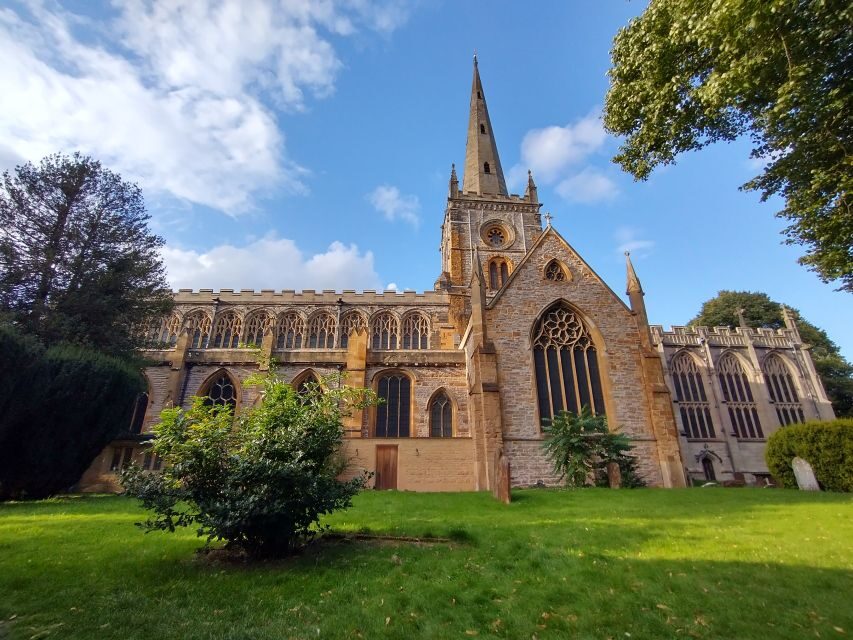
The tour also includes the church connection: the site where Shakespeare was both christened and is buried. That’s a huge emotional anchor because it ties the Bard to Stratford beyond his writing. You’re not just seeing career milestones; you’re hearing about life events that happened in the town itself.
Finally, the walk reaches the Swan Theatre area. Stratford had a performance ecosystem long before our current theater buildings. Seeing the Swan Theatre reference helps you connect Shakespeare’s era to the performance culture that grew around it. One of the standout guide moments in feedback was how guides made later cultural landmarks part of the storyline, so the theater context didn’t feel tacked on.
If you love performances, plan your next step right after the tour. It pairs naturally with seeing a show at the Royal Shakespeare Theatre, because you’ll understand the town’s history as the stage beneath the plays.
Pace, timing, and how to get value in 90 minutes
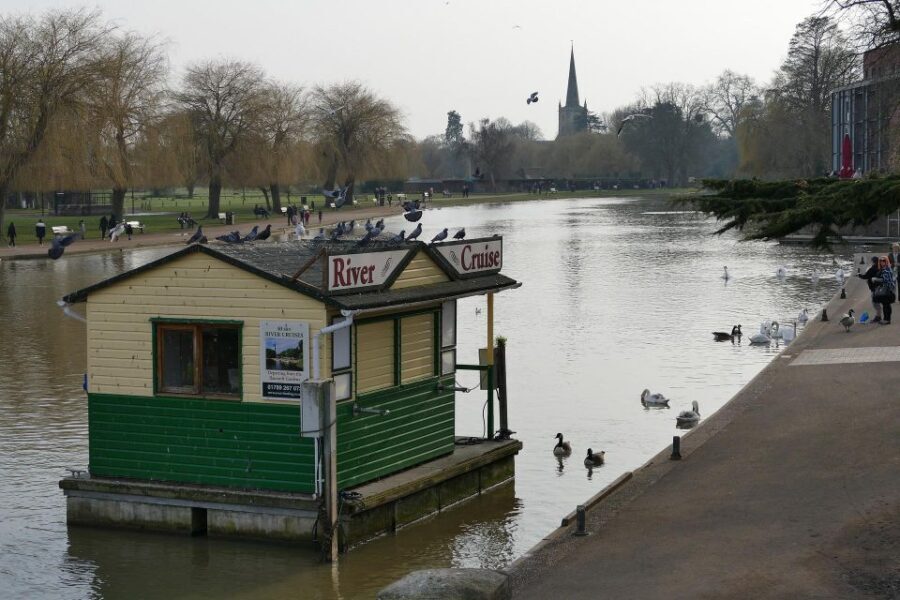
You should treat this as a first-visit orienter. Ninety minutes sounds short, but the walk is built so it covers major anchor points without feeling like a sprint. The distance is modest, yet there are enough stops that you’ll feel the story building step by step.
In practice, you’ll likely get a few things that make the time feel efficient:
- Clear stop-by-stop explanations rather than one long lecture
- Humor mixed in with facts (including corny jokes, if you’re into that kind of thing)
- A chance to ask questions, since guides answer them during the walk
- Enough flexibility that the group doesn’t feel herded
One thing to plan for: you’ll still be outside. Bring comfortable shoes and weather-appropriate clothing, because the tour runs rain or shine. The only reason it cancels is extreme weather for safety. That’s practical, but it also means you should dress for the conditions, not the forecast headline.
If you want the best value, do this walk early in your Stratford stay. Then you can use it to choose what to revisit on your own, and what to leave for your second day.
Is it worth $16.16: who should book and who might not
This tour is a strong fit if you:
- Want a first-time Stratford overview that links Shakespeare to specific streets and buildings
- Like history that connects to real places (chapels, markets, town buildings)
- Enjoy guided humor and storytelling rather than just reading plaques
- Need an efficient day activity that won’t swallow your whole schedule
It might be less ideal if you:
- Prefer museum-only time over outdoor walking
- Want deep indoor interpretation or long stops inside churches/buildings
- Hate being on the move and would rather browse at your own rhythm the whole time
In terms of value, the price makes sense because you’re paying for interpretation across multiple eras—14 centuries—without extra entry tickets listed here. You’re also getting a route that’s compact, so it doesn’t demand full-day commitment.
If you’re doing Stratford as a day trip from London, this style works well because you get orientation quickly and can spend the rest of your time choosing your own pace.
Should you book the Stratford-Upon-Avon WalkTalkShow?
Yes—if you want Shakespeare in a way that feels grounded, not generic. This is the kind of walking tour that turns Stratford from a postcard town into a place with named buildings, specific time periods, and political-religious context. It’s also a good use of time: 90 minutes, a short route, and a guide-led narrative that helps you connect the town’s layers.
I’d book it if you can handle a steady walk outdoors and you enjoy being told the stories behind what you see. It’s not just about Shakespeare quotes. It’s about the town that shaped the writer—and the forces that kept reshaping it long after his lifetime.
FAQ
How long is the Stratford-Upon-Avon WalkTalkShow?
The tour lasts about 1.5 hours (around 90 minutes).
What does the tour cost?
The price is listed as $16.16 per person.
Where do I meet the guide?
Meet outside the main entrance to The Royal Shakespeare Theatre (RSC), just before your ticket time, near the base of the large viewing Tower.
Where does the tour end?
The tour ends back at the same meeting point near the Royal Shakespeare Theatre.
Is the tour in English?
Yes, the live guide conducts the tour in English.
Is it wheelchair accessible?
It is wheelchair accessible and mobility scooter-friendly.
What should I bring?
Wear comfortable shoes and bring weather-appropriate clothing.
Does the tour run in bad weather?
The tour runs in rain or shine, and it will only cancel if extreme weather affects safety.
Are food and drinks included?
No, food and drinks are not included.
What if I need to cancel or change plans?
You can cancel up to 24 hours in advance for a full refund, and you can reserve now and pay later.