REVIEW · ST ANDREWS
St Andrews: Town, Golf, and Old Course History Tour
Book on GetYourGuide →Operated by St Andrews Tours · Bookable on GetYourGuide
Golf history, in full stride. This St Andrews town-and-Old Course history tour ties the graves and ruins to the evolution of the game, and ends with family photos on the Swilkan Bridge. I especially like the guide-led storytelling (Richard comes up a lot) and how it stays fun for both golfers and non-golfers. The main drawback is that it’s strict and physical: you need steady walking, fluent English, and you must be on time.
You’ll cover the town on foot, with stops at major sites that explain why St Andrews is called the Home of Golf. Expect a real mix: university buildings, royal student details, cathedral ruins, and then the Old Course holes where golf history feels close enough to touch.
At $27 for about 105 minutes, this is good value if you want a guided “greatest hits” route with context. If you hate walking, or you need extra time at each stop, you may find the pace a bit demanding.
In This Review
- Key highlights in 5 minutes
- Entering St Andrews on Foot, Not by Bus
- Meeting at T-Squared Social and Why Being Early Matters
- St Salvator’s College and the University Side of the Story
- Cathedrals, Graves, and Why Golf Figures Matter Here
- William and Kate, The Crown, and a Little Nike Marketing Insight
- The Scores Walk and the University Buildings You’ll Actually Notice
- Castle Pass-By Views and the Building Blocks to the Old Course
- Walking by the Old Course: 18th Green, 1st Tee, and Live Play Awareness
- Swilkan Bridge Photo Stop: The Classic Ending
- Price and Value: What $27 Buys in 105 Minutes
- Who This Tour Suits Best (and Who Should Skip It)
- Practical Tips So You Don’t Lose the Best Parts
- Should You Book This St Andrews Golf History Tour?
Key highlights in 5 minutes
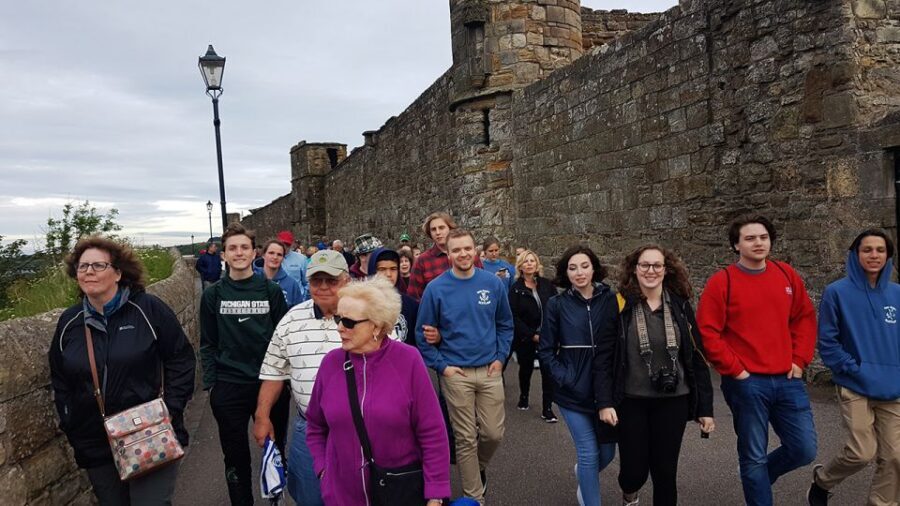
- Cathedral ruins plus golfing pioneers’ graves: marked names tied directly to the roots of the sport
- University and student-life stories: including William and Kate and how St Andrews’ campus shapes the town
- The Scores walk: classic university frontage with Victorian-era charm
- Old Course access for photos and viewing: walking past key spots like the 18th green and 1st tee
- Swilkan Bridge photo stop: the iconic, must-do snapshot at tour end
- Strict timing and active walking: arrive early, speak English confidently, and expect some uneven pace
Entering St Andrews on Foot, Not by Bus
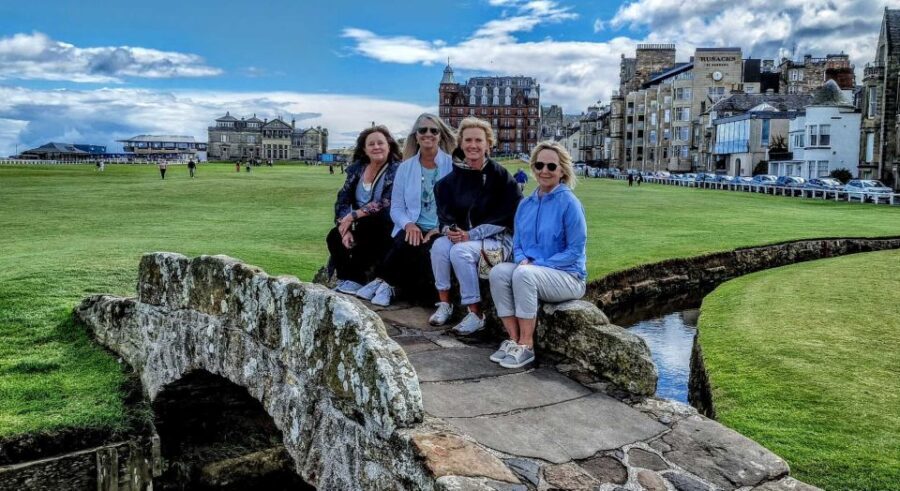
This tour works because it keeps you moving through the parts of St Andrews that actually explain the golf story. You start in town and build toward the Old Course step by step, so the history doesn’t feel like a list. Instead, you see how the university, the churchyard, and the town layout all orbit the game.
I like the way it balances big names with everyday places. You’ll hear about major golf figures and also get the sense of what the town feels like on a normal day. Even if you’re not into golf, you’re still walking through a place that shaped centuries of student life and famous visitors.
A note on pace: the tour is scheduled tightly and runs to time. If you’re late—by even a minute—you won’t be able to join once it departs, so plan for a buffer.
You can also read our reviews of more historical tours in St Andrews

Meeting at T-Squared Social and Why Being Early Matters

You meet your guide outside T-Squared Social at 117 North St, St Andrews (KY16 9AD). The start is firm, and they won’t wait around if you’re stuck in a café line or trying to find the exact entrance.
That sounds obvious, but it matters more here than on a relaxed walking tour. This route includes a photo stop at the Old Course area and passes through active golf terrain, so the guide keeps things moving.
Also, this tour is not language-friendly in the slow way. A fluent command of English is essential, and they don’t accommodate by speaking very slowly or translating. If English is comfortable for you, you’ll get the full effect of the guide’s humor and story flow.
St Salvator’s College and the University Side of the Story
One of the tour’s smartest choices is how early it brings you into the university world. You’ll see St Salvator’s College—famous for its quadrangle—and hear how Scotland’s oldest university helps explain St Andrews’ identity.
This isn’t just “here’s a building.” The guide ties the campus to the town’s pull: why people come, how students feed the local energy, and why St Andrews feels like a living classroom even centuries later. It’s the kind of context that makes the rest of the walk click.
You’ll also get a look at St Salvator’s Chapel and more university-area sights along the way, including Victorian-era frontage on the route commonly known as the Scores. If you like architecture and street-level atmosphere, these sections add real texture to the golf-focused parts.
Cathedrals, Graves, and Why Golf Figures Matter Here
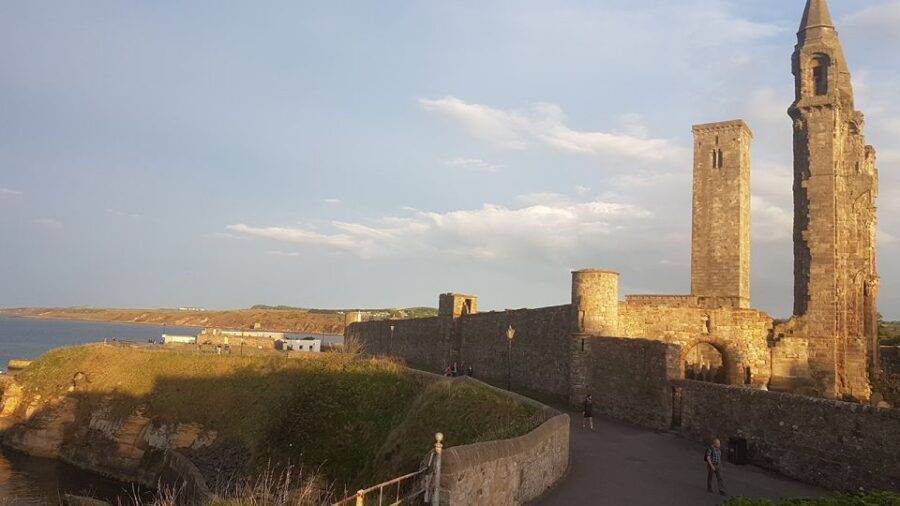
The heart of the tour is the cathedral ruins area and the memorial graves. You’re not just looking at old stone—you’re reading the sport’s origin story on the ground.
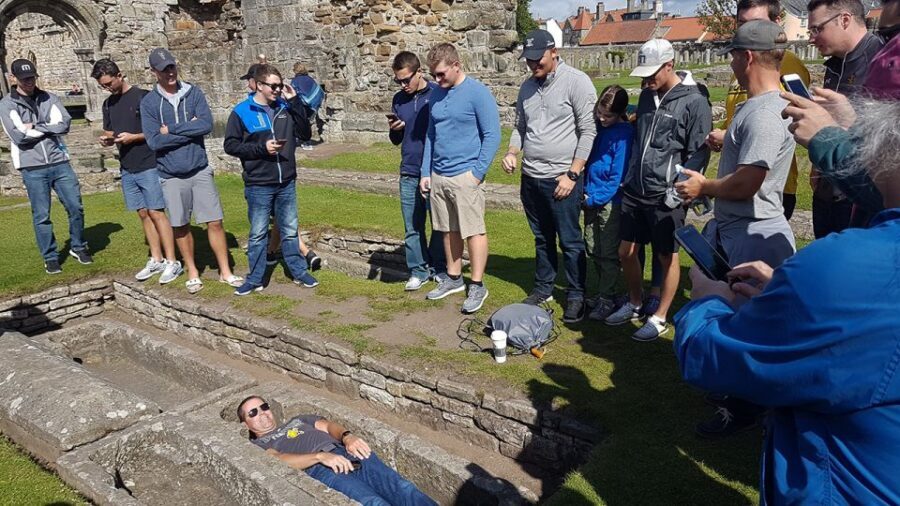
At the ruins, you’ll be told about the noted golfers buried there—124 is the figure you’ll hear. The guide also points you toward the graves of major golfing pioneers like Old and Young Tom Morris, Allan Robertson, and Jamie Anderson. Standing where these names are honored changes how you think about golf history. It stops feeling abstract.
You’ll also hear about the Bishop’s Palace ruins, a reminder of former Catholic wealth and power in Scotland. That matters because it shows you the bigger social stage St Andrews sat on—where religion, education, and sport all occupied the same town.
One practical detail: this part of the walk can feel crowded with other visitors at times, so keep your eyes on your guide and stay aware of your footing. Even without stairs, the ground around ruins can be uneven.
William and Kate, The Crown, and a Little Nike Marketing Insight
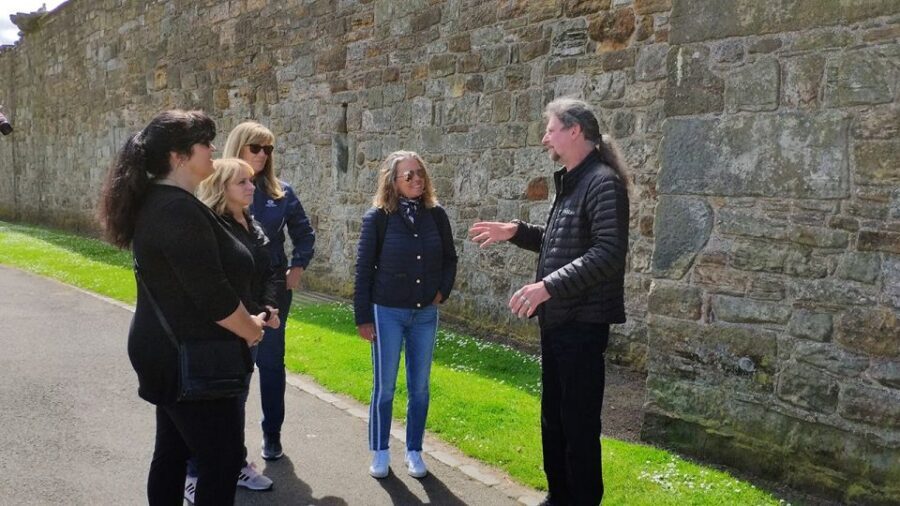
A fun twist in this tour is how it mixes modern celebrity touchpoints into older roots. You’ll hear about William and Kate and even references to Netflix’s The Crown being filmed or coming to town. That adds a pop-culture layer that keeps non-golfers engaged.
You’ll also hear about Nike’s marketing genius and how golf stayed culturally relevant beyond its traditional fan base. The tour uses these stories to show that golf history isn’t frozen in time.
This is one of those moments where the guide’s storytelling style matters. In the accounts I’ve gathered, Richard is repeatedly singled out for bringing humor and clarity to these jumps across eras—without turning it into a lecture.




The Scores Walk and the University Buildings You’ll Actually Notice
As you head along the Scores, you’ll pass beautiful Victorian buildings tied to the university. You’ll learn about the Principals House and the residence where Prince William and Kate spent their first year as students.
This is where the tour starts to feel like a proper stroll through real St Andrews life. The street-level details help you understand why people romanticize the town: it’s compact, pretty, and built around ideas.
If you like photos, this is also a strong section. The buildings frame the walk, and you get good sightlines before you reach the Old Course.
Castle Pass-By Views and the Building Blocks to the Old Course
You’ll also get a scenic pass near St Andrews Castle, with photo opportunities along the way. It’s not a long detour, but it gives your eyes a breather before the golf centerpiece.
At this stage, the tour shifts from town history into how golf developed in St Andrews into something called the Home of Golf. You’ll hear about the early development of the Open Championship and why the game’s evolution is tied to this particular coastline and links layout.
The guide explains how the Links came to have 18 holes, plus the quirks of the course that shaped play and tradition. If you’re a golfer, you’ll likely enjoy the cause-and-effect angle—how the land and rules became identity.
Even if you’re not, you’ll get a clearer sense of what makes St Andrews feel different from a generic course. It’s the setting and the history built into the route itself.
Walking by the Old Course: 18th Green, 1st Tee, and Live Play Awareness
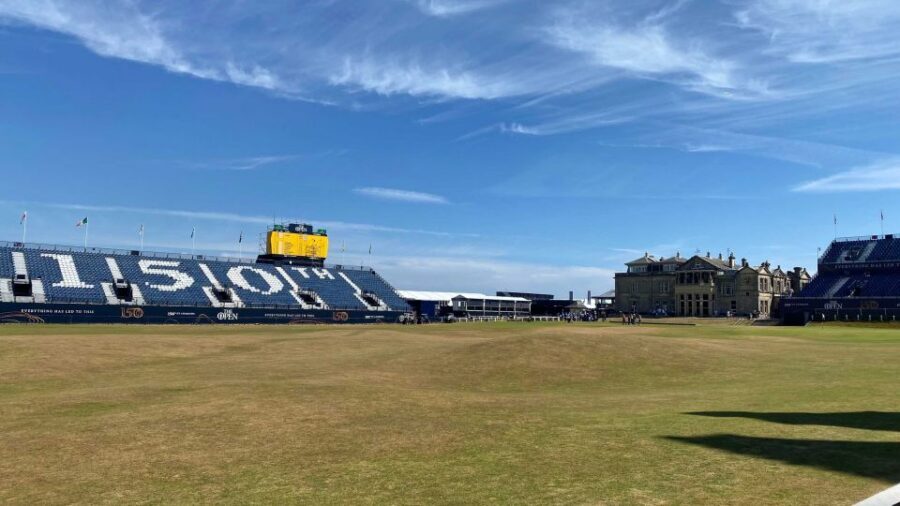
This is the part most people came for, and the tour handles it well: you walk near major Old Course landmarks, including the 18th green and the 1st tee and first fairway. You’ll hear about memorable golfing moments tied to the positions you pass.
One key reality check: you’ll walk by and across the 1st/18th fairway while golf may be in progress. You’re doing this at your own risk, and you need to keep an eye out for golf balls during live play.
That means your job is simple: watch the ground paths, look around constantly, and stay alert. Don’t daydream. It’s still a sightseeing walk, but it’s happening inside an operating golf course.
For golfers, it feels like stepping into a timeline. For non-golfers, it’s a chance to see the drama of the course layout and why people treat St Andrews like pilgrimage.
Swilkan Bridge Photo Stop: The Classic Ending
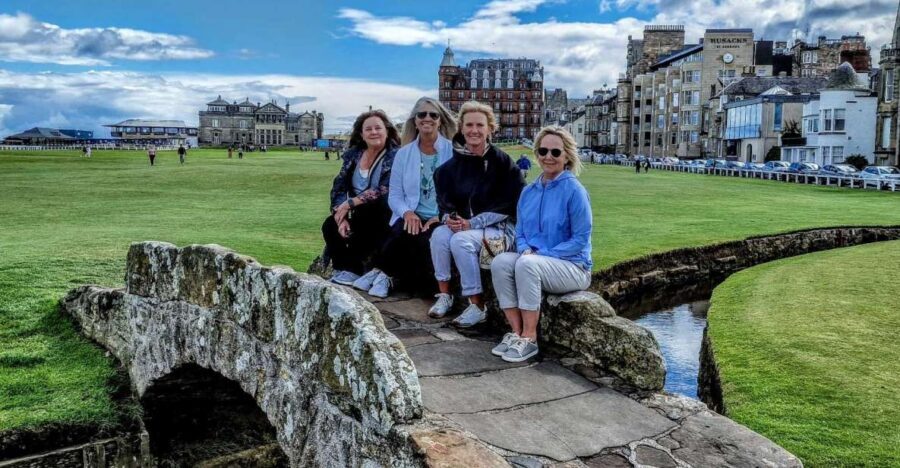
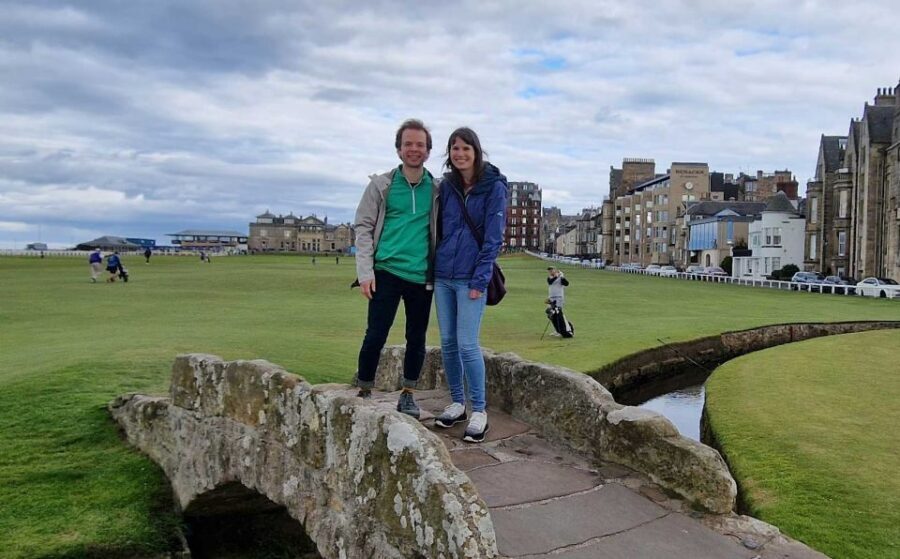
The tour ends at Swilkan Bridge, where you get time for a photo. This is the iconic final scene people recognize immediately.
There’s one important limitation: the tour notes that the photo stop excludes tournament days. So if you’re visiting during an event week, you may not get the same photo conditions. If you’re planning around a tournament, it’s worth checking the exact date impact when you book.
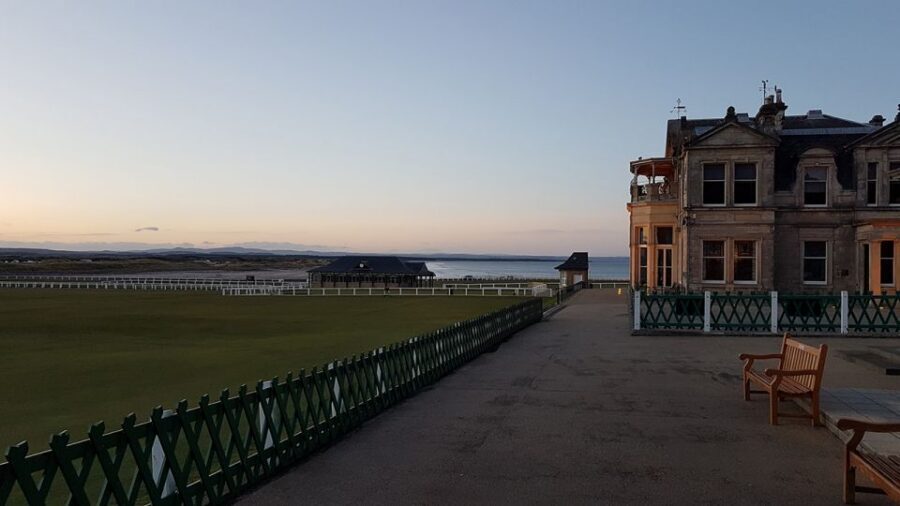
After the tour, many people like to linger. The Old Course Hotel area and nearby spots like the Jigger Inn are close, and the views help you stretch the experience past the 105-minute mark. If your guide gives practical tips, one detail that often comes up is the possibility of grabbing coffee in the upstairs bar at the Old Course Hotel after your walk.
Price and Value: What $27 Buys in 105 Minutes
For $27 per person, you’re buying structure and context. This isn’t a ticket to an attraction with fixed walls. It’s guided walking time that links the town, university, cathedral ruins, and golf landmarks into one story.
The best value shows up if you want the highlights without needing to research for hours. You get a professional historian guide and a tight route that hits the biggest interpretive points: how St Andrews became the world’s golf reference.
It’s also value for mixed groups. The tour is designed to work even if one person loves golf and the other is more into history, architecture, or royal-student stories.
The trade-off is that it’s still a walking tour. If you need frequent pauses, longer time at one graveyard, or a slow pace to absorb everything, you may feel slightly rushed.
Who This Tour Suits Best (and Who Should Skip It)
This is a strong match if you:
- enjoy history tied to specific places and people
- like golf but also want town context
- want a short, memorable walk instead of a full-day itinerary
It’s trickier if you:
- have mobility difficulties, use a wheelchair, or struggle with active walking
- need extra time at each stop to take in details without a moving group
- rely on translation or need slow speaking
Strollers aren’t allowed, and the tour is not set up for scooters or other mobility aids. Pets aren’t allowed either (assistance dogs are the exception).
You also shouldn’t plan this tour if you’re coming down with something like a cold, since it’s listed as not suitable for people with a cold.
Practical Tips So You Don’t Lose the Best Parts
Here’s how to make this tour feel smooth instead of stressful:
- Wear comfortable shoes with grip. The tour is mostly walking and includes outdoor surfaces around ruins and course areas.
- Dress for weather. St Andrews can shift fast, so bring layers and a rain-ready outer layer.
- Arrive early at T-Squared Social. Late means missed tour, with no waiting.
- Bring patience for pace. The group moves, and you’ll get the story in a tight timeline.
- Stay alert on the course. When walking by and across fairways, look out for golf balls during live play.
- Keep your English comfortable. The guide’s style relies on clear, quick communication.
In the tour feel, it’s also worth noting that guides like Richard (and sometimes Jim) are often praised for clarity and humor. Still, if you’re in a group with more traffic noise, you may want to stand close and keep your head up to catch every detail.
Should You Book This St Andrews Golf History Tour?
Book it if you want a smart, short walk that connects St Andrews town history to the Old Course in a way that makes sense fast. The ending at Swilkan Bridge is a real payoff, and the cathedral ruins and grave stops give the golf story weight.
Skip it if walking is a challenge, if you need translation support, or if you’re hoping for lots of quiet time sitting in one spot. This tour is built for movement—105 minutes that pack a lot into the places you’ll remember later.
If your trip includes even a small interest in golf, this is one of the best ways to understand why St Andrews feels different.