REVIEW · STRATFORD UPON AVON
Stratford-Upon-Avon: Private Walking Tour with Local Guide
Book on GetYourGuide →Operated by Walking Tours In · Bookable on GetYourGuide
Shakespeare’s Stratford is best on foot. I love how this tour strings together Shakespeare landmarks and canal-side swans into one easy walking loop, so you get the town’s feel fast. The one catch is timing: at just 1.5 hours, it’s more “guided highlights with context” than a deep, slow study of every building detail.
What makes it work is the pace is yours. You’re not squeezed into a crowd schedule, and you can linger near the spots that click for you while your guide keeps the story moving. You also get centuries of layers, from early origins and Viking invasions to the rise of the Royal Shakespeare Company—explained in plain language with a private group setup.
I especially like the guide-to-you format. When I’ve seen this run, the guide can be friendly and entertaining—one guide named Peter even brought real pride for his town—so the walk feels more personal than like a recited script. Just come ready for weather; it runs rain or shine, so pack accordingly.
In This Review
- Key things I’d bet you’ll enjoy
- Stratford-upon-Avon shines when you have a local to point things out
- Meeting at Gower Memorial in Bancroft Gardens
- Shakespeare’s Birthplace and Henley Street: where the story starts
- Old Town Hall and the Shakespeare Memorial Fountain
- Shakespeare’s New Place, Almshouses, and Hall’s Croft: seeing “home” through a local lens
- Holy Trinity Church: the stop that adds weight to the town
- Theatres on one walk: Swan Theatre, The Other Place, and the Royal Shakespeare Theatre
- Canal Basin stroll and the oldest pub in town: the break that makes it feel real
- Price and value: $197 per group up to 6 for 1.5 hours
- Who this tour suits—and who should rethink it
- Should you book this Stratford private walking tour?
- FAQ
- How long is the Stratford-upon-Avon private walking tour?
- Where do we meet the guide?
- Is this a private tour or a group tour?
- What’s included in the price?
- Does the tour run in bad weather?
- Is the tour wheelchair accessible, and what should I bring?
Key things I’d bet you’ll enjoy
- A true private walk (up to 6): enough room to ask questions and move at your pace.
- Canal Basin views with swans: a calm break between Shakespeare sites and theatre facades.
- Three theatre stops in one route: you’ll see the Swan Theatre, The Other Place, and end at the Royal Shakespeare Theatre.
- Old Stratford streets you can actually feel: preserved buildings and story-focused stops that help you picture the era.
- A local-guide narrative style: history tied to what you’re looking at, not a lecture.
Stratford-upon-Avon shines when you have a local to point things out
Stratford-upon-Avon is one of those places where you can “see a lot” on your own—and still miss what makes it matter. This private walking tour helps you connect the dots. Your guide turns famous names into real locations you can stand on, look at, and understand in context.
I like that the experience is built around walking—not buses, not rushed transfers. You start with an easy orientation in the town center, then you move through the old streets in an order that naturally builds from early connections to Shakespeare into the theatre world that carries his legacy today.
The other big win is control. You can pause for photos, ask what a place is, or ask how one stop links to the next. That’s especially helpful in Stratford, where everything is near enough to walk, but it’s easy to lose the thread if you’re wandering with no plan.
And yes, you’ll get plenty of Shakespeare. But it’s not only about quoting lines. The tour is structured to explain why these sites exist, how the town evolved, and how the Royal Shakespeare Company became a major cultural force.
You can also read our reviews of more walking tours in Stratford Upon Avon



Meeting at Gower Memorial in Bancroft Gardens
You meet outside the Gower Memorial in Bancroft Gardens, and the guide wears a bright orange jacket and/or lanyard. That detail matters more than it sounds—Stratford can be busy near the center, and you don’t want your first five minutes spent playing “where’s the guide?”
From there, the tour quickly settles into walking mode. You’ll be given enough direction to get your bearings, then you’re off into Stratford’s core with a dedicated guide. This is also where you’ll get the tone of the day: story-forward, practical, and focused on what you’re seeing right now.
Because the tour is private, you’re not forced into someone else’s pace. If you’re someone who likes to read plaques, you’ll likely enjoy that freedom. If you’re more of a “show me where and what to look at” person, the guide’s pacing will feel comfortable too.
One small consideration: this is a short outing. Even with a private format, you won’t have hours to linger at every doorway. If you’re the type who wants to exhaustively inspect every architectural feature, keep expectations on the “guided highlights” side.
Shakespeare’s Birthplace and Henley Street: where the story starts
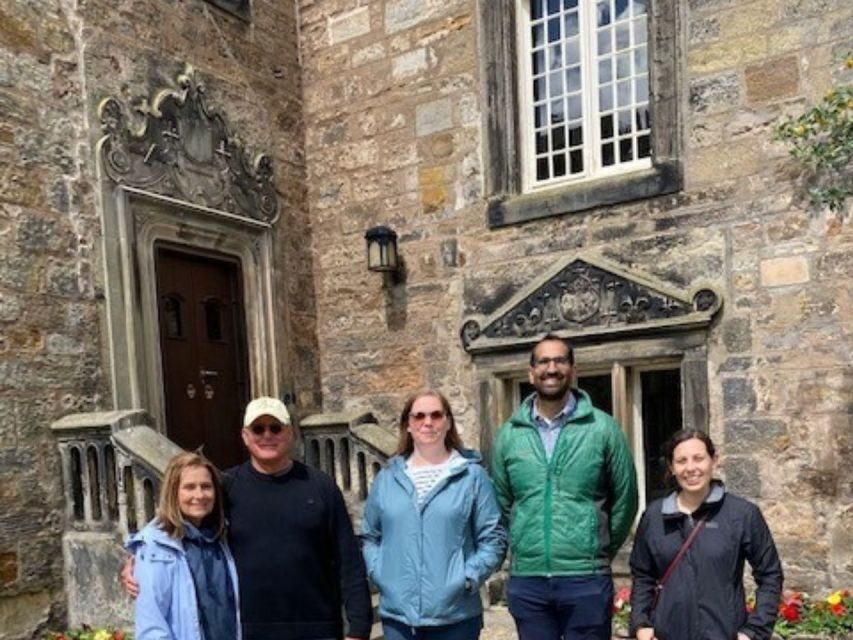
The walk picks up early with Shakespeare’s Birthplace, which is the obvious anchor point. What makes this stop valuable on a guided walk is not just that it’s famous—it’s that your guide helps you connect the birthplace to the rest of what you’ll see. You’re not only looking at a name; you’re understanding why it sits here and why it matters to the town’s identity.
After that, you head along Henley Street. Streets like this are where Stratford really starts to feel lived-in. The tour frames these preserved buildings as part of what was standing during Shakespeare’s time (or at least the kind of built fabric the town is known for). That’s a great trick: when the guide points out what to notice, you start spotting details instead of just snapping photos.
This is also a good stretch for people who like “transition moments.” You’re moving from a landmark tied to Shakespeare’s early story into the more general town setting—where you can see how the place functioned day to day.
If you’re visiting in a rush, Henley Street is one of those roads that can get swallowed in the background. With a guide, it becomes part of the narrative spine.
Old Town Hall and the Shakespeare Memorial Fountain
Next up are the Old Town Hall and the Shakespeare Memorial Fountain. These stops add variety to the tour. Birthplace sites can be one-note if you’ve been reading Shakespeare-related content all morning. Town-center civic landmarks and memorials give you a different angle: how the town commemorated Shakespeare and how public spaces helped shape the town’s public identity.
At the Old Town Hall, you’re essentially stepping into Stratford’s communal heart. Even if your interest leans more toward theatre than politics, a stop like this helps you understand why Stratford developed as a destination and why it continued to celebrate Shakespeare long after his lifetime.
Then the Shakespeare Memorial Fountain is a pause that feels more open-air and visual. It’s a good place to slow down, take in the surroundings, and let the guide’s story land.
A practical tip: this section is where you’ll likely want comfortable footwear energy. You’ll be walking steadily, and there’s nothing worse than feeling stiff just as the tour hits the most photo-friendly spots.
Shakespeare’s New Place, Almshouses, and Hall’s Croft: seeing “home” through a local lens
One of the more interesting parts of this walk is how it moves from big-name Shakespeare sites into quieter, personal-scale locations like Shakespeare’s New Place, Almshouses, and Hall’s Croft.
These stops matter because they shift the focus. You’re not only chasing the headline “birthplace” moment. Instead, you get a sense of domestic life, community spaces, and the kinds of places that tell you how people lived around Shakespeare’s world.
Shakespeare’s New Place is one of those names you may have heard before, but seeing it in a guided sequence gives it more weight. The guide’s job here is to help you understand why it belongs in the story of Stratford’s evolution and how it connects to the legacy people came later to protect and honor.
Then you move into Almshouses and Hall’s Croft. Even without getting technical, these are the kinds of stops that remind you the town wasn’t built only for fame. It was built for everyday life, social care, and family routines—things that make the Shakespeare story feel less like a museum exhibit and more like a real town.
Possible drawback to consider: because the tour is short, these stops are likely not “spend 30 minutes reading every surface” moments. If you want extra time, bring a note for your guide early: ask which stop you should spend a little longer on.




Holy Trinity Church: the stop that adds weight to the town
Holy Trinity Church is a key part of the route. It gives the walk a different tone—more solemn, more rooted in the place itself. When you arrive here on a guided walk, you’re better able to understand how the town’s major sites connect to Shakespeare’s legacy, because your guide has already laid groundwork by this point.
This is the kind of stop where you’ll likely want to look slowly. Even if you’re not a religious architecture specialist, churches often hold the emotional center of a town. They’re where the story of a community gets anchored.
One practical consideration: churches can have specific viewing rules and tighter spaces than the streets. Wear shoes that are stable and comfortable, and give yourself a bit of time for respectful movement.
Theatres on one walk: Swan Theatre, The Other Place, and the Royal Shakespeare Theatre
Stratford’s theatre side is not an afterthought—it’s a major part of why people visit at all. This tour includes multiple theatre stops, which is great because you’re seeing the evolution of the Shakespeare world in real space.
You’ll visit The Other Place and the Swan Theatre, then you finish at the Royal Shakespeare Theatre. That ending matters. Finishing where the Royal Shakespeare Company performs helps your brain connect the earlier historical stops to the modern cultural engine.
The Swan Theatre is often the more approachable theatre stop in a walking sequence because it feels visually connected to the historic center. The Other Place adds variety, making the theatre segment feel like more than just “walk past famous buildings.”
And then there’s the Royal Shakespeare Theatre to close the loop. Even if you don’t attend a performance the day you walk, stepping inside or standing near it (depending on tour flow and access) helps you understand why Stratford became a world-recognized name in theatre.
Canal Basin stroll and the oldest pub in town: the break that makes it feel real
A highlight of the tour is the canal area, including the Canal Basin and the chance to see swans. This part is more than scenic filler. It gives your pace a reset. After a string of Shakespeare landmarks and historic stops, the canal section feels like breathing room.
You also get an “old town” feel here—water, footpaths, and the calm rhythm you don’t always notice when you’re only focused on famous buildings.
The tour also includes the idea of the oldest pub in town as part of what you’ll discover. Even if you don’t plan to stop for a drink, it’s a fun waypoint because it connects Shakespeare Stratford to the everyday places where history kept happening between the major moments.
If you’re planning a post-walk pint or tea, this is exactly where you’ll likely want to keep your energy.
Price and value: $197 per group up to 6 for 1.5 hours
At $197 per group up to 6, this isn’t priced like a budget group tour. But it can still be good value if you’re splitting the cost among friends or family.
Here’s the simple math: if you fill the group of six, that’s about $33 per person for a private guide for 1.5 hours. Even if you have fewer people, you’re paying for the advantage of a dedicated guide who can match your pace, not a one-size-fits-all script.
Is it worth it? For me, the deciding factors are:
- You want a guided route that connects key sites logically.
- You care about interpretation, not just checking boxes.
- You prefer walking with freedom over crowd schedules.
If your group is just one or two people and you love long, self-guided wandering, you might compare this with other ways to explore. But for a family, a couple who wants help navigating, or a small group that wants a focused hit of Stratford highlights, the per-person cost can feel reasonable fast.
Who this tour suits—and who should rethink it
This tour is ideal if you:
- Want Shakespeare sites plus town context without drowning in details.
- Like a guided explanation you can ask questions about.
- Prefer walking routes that cover the important “must-sees” efficiently.
It may be less ideal if you:
- Expect heavy architecture analysis and long technical explanations at every stop.
- Want a slow, full-day deep study rather than a short narrative walk.
One helpful clue comes from guide experience you might encounter. In one account, a guide named Peter was described as entertaining and proud of his town, with a good balance of history and Shakespeare info without getting overly granular. That style tends to suit visitors who want understanding, not homework.
On the flip side, one review flagged that the guide didn’t provide much depth on architecture or history beyond what you could find online. So if that’s what you’re after, go in with questions. Ask your guide what they focus on before committing to a follow-up walk or booking more time.
Should you book this Stratford private walking tour?
I’d book it if you want a smart, time-efficient way to experience Stratford-upon-Avon with a guide who can explain what you’re seeing while still letting you set the pace. The route covers the core Shakespeare landmarks, the canal with swans, and the theatre trio, all in a manageable 1.5-hour window.
I’d hold off if you’re chasing very technical, architecture-heavy detail or you expect a slow, deeply academic tour. Stratford can reward that kind of attention, but this format is built for a guided story with practical stops, not an hour-by-hour seminar.
If you do book: wear comfortable shoes, bring weather gear, and be ready to ask questions early—especially about which stop matters most to you (church, birthplace, New Place, or the theatres). That’s the easiest way to make a short tour feel personal.
FAQ
How long is the Stratford-upon-Avon private walking tour?
It lasts 1.5 hours.
Where do we meet the guide?
Meet outside the Gower Memorial in Bancroft Gardens. The guide will be wearing a bright orange jacket and/or lanyard.
Is this a private tour or a group tour?
It’s a private group experience.
What’s included in the price?
The included item is the private guide fee.
Does the tour run in bad weather?
Yes, it takes place rain or shine.
Is the tour wheelchair accessible, and what should I bring?
The tour is listed as wheelchair accessible. Bring comfortable shoes and weather-appropriate clothing.