REVIEW · LONDON
Changing of the Guard at Buckingham Palace Walking Tour
Book on GetYourGuide →Operated by Urban Saunters Ltd · Bookable on GetYourGuide
The Changing of the Guard is pure theater. This walk turns that spectacle into something you can actually understand, from regiments and uniforms to the rhythm behind the march and drills. I like that you get a small-group guide to point out the details many people miss, and I also like that the route keeps you moving to the good sight lines.
One thing to consider: Buckingham Palace crowds can be intense, and this tour avoids the forecourt so you see more than you fight for. It’s also at the British Army’s discretion to change or cancel the ceremony elements, so music may not happen the same way every day.
In This Review
- Key things to know before you go
- Why this Changing of the Guard walk feels different
- Finding the meeting point at Waterloo Place (and getting oriented fast)
- The Mall stop: where the ceremony gains momentum
- St James’s Palace: the ceremony’s background, explained clearly
- Clarence House and St James’s Park: spotting the details that change everything
- Buckingham Palace viewing: close enough for photos, not close enough to be miserable
- Regiments, uniforms, drums, drill: what the guide helps you notice
- Timing reality: what happens if music changes or the ceremony is altered
- Price and value: why $26 can make sense for this area
- Who this tour suits best (and who might want another plan)
- Booking advice: should you book this Buckingham Palace Changing of the Guard walk?
- FAQ
- FAQ
- How long is the Changing of the Guard walking tour?
- Where do I meet the guide?
- Is hotel pickup or drop-off included?
- What’s included in the price?
- Are food and drinks provided?
- What language is the guide?
- What should I bring?
- Can I bring luggage or large bags?
- Will the ceremony definitely include music?
- Is the tour wheelchair accessible?
- Is video recording allowed?
Key things to know before you go
- Edward VII to Buckingham Palace: Start at the equestrian statue of Edward VII and walk a smart route through the palace district.
- Uniform decoding: Learn what different regiments are, and why their look matters.
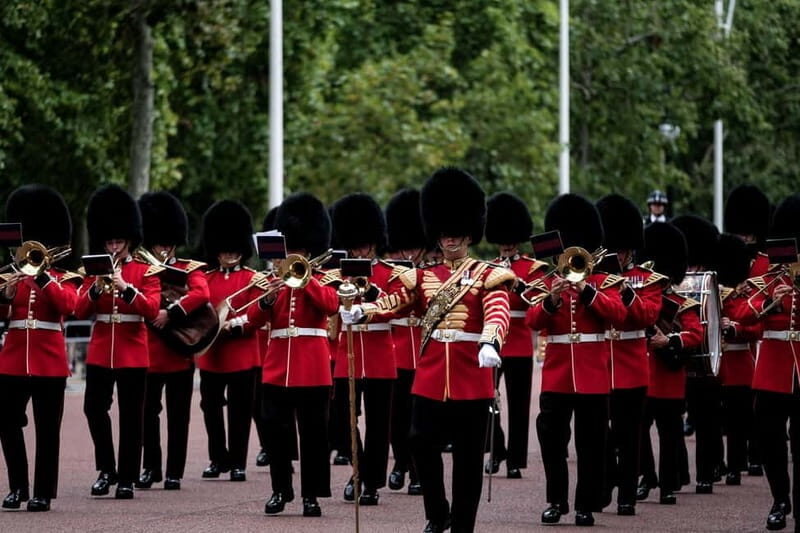
- Drums-led march viewing: You’ll watch the guards move to the palace to the beat.
- Drill and music moments: You’ll catch the drill movements and the music that goes with them when it’s on.
- Photo-friendly plan: You won’t crowd into the forecourt, because it reduces what you can actually see.
- Guides matter: Past leaders like Paul and Chris are praised for making the ceremony click.
Why this Changing of the Guard walk feels different
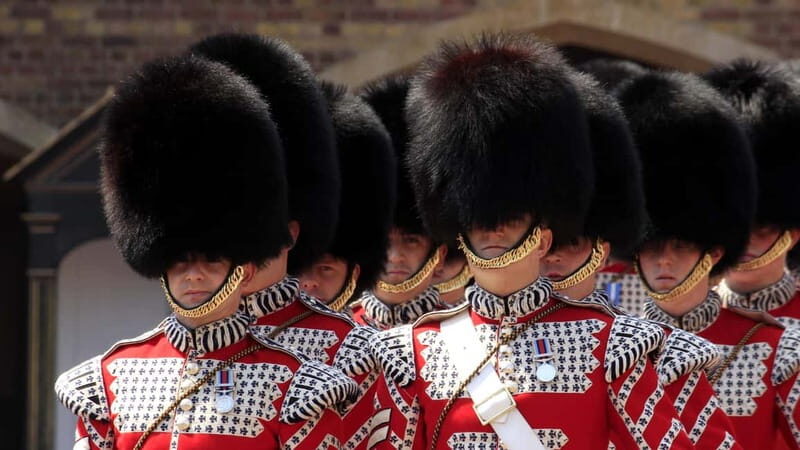
If you’ve only seen the Changing of the Guard from a distance, you probably remember the noise and the hats. After this kind of guided walk, you’ll remember the meaning behind the hats, the buttons, the badges, and the order of movements.
I like that the tour is built around the idea that the ceremony is more than parade footage. Your guide helps you connect what you’re seeing to the institutions behind it: which regiments are involved, what their uniforms signal, and why the drill movements are done in that specific way.
And you get something very practical: a plan that keeps you close to the action without turning your morning into a crowd-management exercise. For £/$-for-time value, that matters.
You can also read our reviews of more walking tours in London



Finding the meeting point at Waterloo Place (and getting oriented fast)
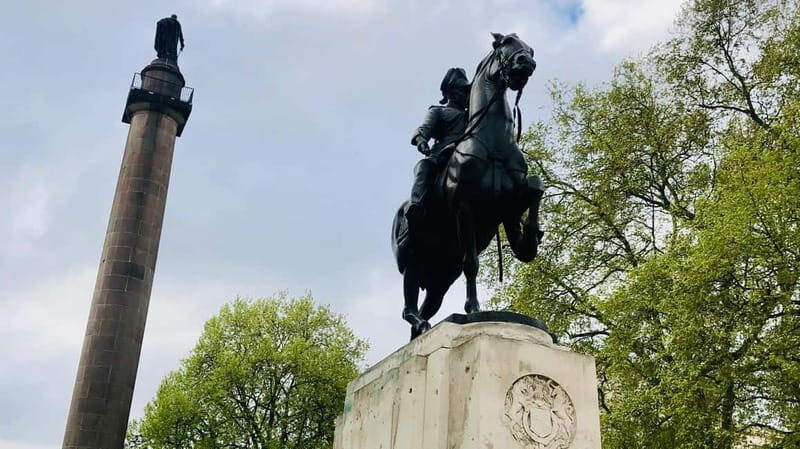
The tour starts by the equestrian statue of Edward VII at Waterloo Place, St. James’s (SW1Y 5ER). When you arrive, look for a sign that says Urban Saunters.
This start is deliberate. Edward VII is right in the thick of the palace area, so you’re already positioned to understand the geography as you walk. That’s the key: the ceremony makes more sense when you’re seeing the route the guards take, not just waiting for a single moment.
Quick practical notes you should follow:
- Bring comfortable shoes. You’re walking around central London.
- Bring water, since you’ll want it once you’re standing and watching for a while.
- Plan for all weather. This is a London outdoor experience.
The Mall stop: where the ceremony gains momentum
After meeting at Waterloo Place, you move into The Mall for a short guided segment (about 15 minutes). This is a good time to get your bearings. The Mall isn’t just a postcard corridor; it’s part of how ceremonial movement is staged and perceived.
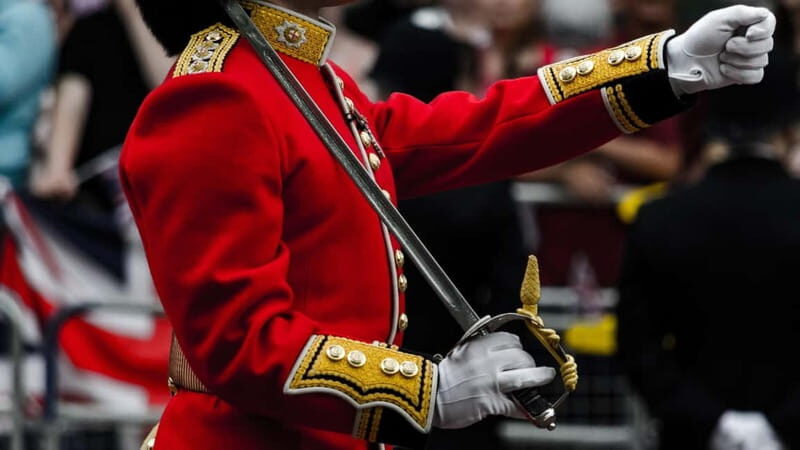
Your guide uses this stretch to set up what you’ll be watching next: how the regiments show up, what to look for in the uniforms, and how to tell the major differences you’ll see when the guards march and form up.
A small drawback here: if it’s raining, you’ll be outdoors. The tour is built to continue rain or shine, but you’ll still want weather-appropriate clothing.
St James’s Palace: the ceremony’s background, explained clearly
Next up is St James’s Palace with a guided stop of about 20 minutes. This is where the talk turns from “what’s happening” into “why it exists.” You’ll learn about the history and significance of the ceremony, including the origins behind the spectacle.
Why this matters for your experience: if you understand the purpose, the uniforms stop being just costumes. You start noticing symbols and details because your guide tells you what they represent and why they’re there.
It’s also a good mental reset. The Changing of the Guard can feel confusing at first glance—lots of movement, lots of uniform variation. A guided explanation here helps you follow the sequence rather than just reacting.
Clarence House and St James’s Park: spotting the details that change everything
You then head to Clarence House for about 15 minutes and then walk through St James’s Park for sightseeing (about 15 minutes).
These stops are valuable because they broaden your view beyond the single moment at the palace gates. You’ll have time to look, compare uniform features, and understand how the ceremony unfolds as the guards move through the area.
At this stage, your guide’s uniform commentary becomes the difference between a “cool show” and a “now I get it.” You’ll learn to tell regiments apart and understand the significance of elements like colors and symbols—plus why those fuzzy bearskin hats have become such a recognizable part of the look.
If you’re sensitive to crowds, this part helps because you’re not stuck in one spot the whole time. You’re watching, learning, then shifting position as the ceremony progresses.



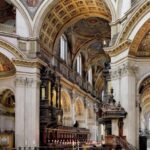


Buckingham Palace viewing: close enough for photos, not close enough to be miserable
The tour finishes at Buckingham Palace for a guided stop and sightseeing/ walking (about 20 minutes). This is the heart of it, and the tour is designed so you still get a strong view without being trapped in the thickest forecourt crowd.
The tour intentionally does not stand at the forecourt of Buckingham Palace because crowds can block your view and make the experience far less enjoyable. That’s a very smart trade-off. You gain visibility and a calmer sense of space, which is exactly what you want when you’re watching fast-moving guards and drum-led marching.
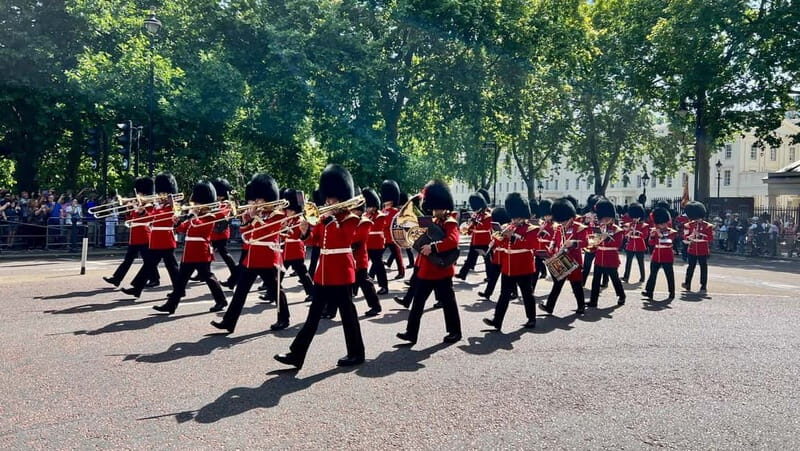
When the timing lines up, you’ll watch the guards march toward Buckingham Palace to the beat of their drums. You’ll also catch drill movements and the music they play as part of the ceremony. Some days the exact music experience can vary (more on that below), but the structure is there for you to witness the core action.
Regiments, uniforms, drums, drill: what the guide helps you notice
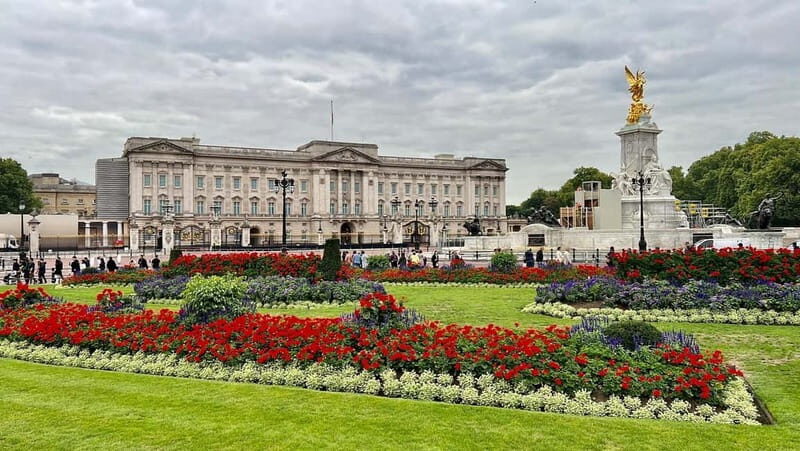
This is the part that turns a standard sighting into a meaningful one. The ceremony is loaded with visual cues, but most people don’t know what to look for.
With an English-speaking expert guide, you’ll learn:
- how different regiments are identified
- why uniforms and their features matter
- what the drill movements are meant to communicate
- how the music and drum rhythms shape the march and timing
I also like that you’re not just watching from a distance. The route includes several palace-side landmarks so your eyes can track the ceremony as it develops. When guards change formation or shift through steps, you’ll have the context to notice what’s happening and why.
And yes, it really helps to learn the terminology. Once you know the basic distinctions (like which regiment is which), the hats stop being the only story.
Timing reality: what happens if music changes or the ceremony is altered
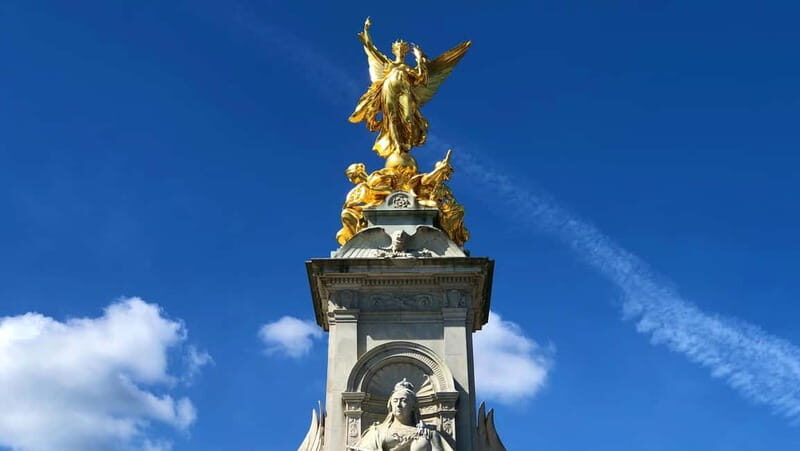
One honest thing to know: the British Army can change or cancel parts of the ceremony. The announcement won’t come until after 10:30 AM.
What does that mean for you? Come rain or shine, the walk is still set up so you’ll have the chance to see the guards marching. If the full ceremony is canceled, you may still watch the guards move, but without the music.
So you should book with the mindset of witnessing the ceremonial movement and formation, with music as an extra bonus when it’s happening. That’s the safest way to enjoy the day without getting disappointed by one variable.
Price and value: why $26 can make sense for this area
At about $26 per person for a 105-minute guided walk, the value is less about luxury and more about saving your time and confusion.
Central London’s top sights can be chaotic and expensive when you’re paying for “stand and watch” with no context. Here, you’re paying for:
- an expert guide who explains what you’re seeing
- a planned route that gets you to multiple landmark viewpoints
- a practical approach to staying close without getting jammed into the forecourt crush
If you enjoy history that you can actually see—uniform details, drill sequences, and the logic of the march—this is the kind of guided experience that makes your ticket feel worth it.
If you only want the simplest possible photo with zero walking or explanation, you might decide it’s not for you. But for most people, the guided clarity is the payoff.
Who this tour suits best (and who might want another plan)
This Changing of the Guard walking tour is a solid fit if you:
- want a small-group experience with an English-speaking guide
- like structured sightseeing where you learn as you walk
- care about understanding regiments, uniforms, and ceremonial drill
It’s not suitable for wheelchair users, based on the tour’s stated limitations.
Also, keep your expectations aligned with the format. This isn’t a long museum-style session. It’s a focused, outdoors-forward experience built around watching and learning in real time.
And one more practical note: avoid bringing luggage or large bags, since they’re not allowed. Pack light, wear sturdy shoes, and bring water.
Booking advice: should you book this Buckingham Palace Changing of the Guard walk?
I’d book it if you want more than a quick glance. The guided emphasis on regiments, uniforms, symbols, and drill movements gives the ceremony a real framework, so you leave with understanding, not just images.
I’d also book it if you prefer being close to the action without fighting the biggest crowd pressure at the forecourt. That approach protects your enjoyment, which is a rare win in London palace-area sightseeing.
If you’re the type who hates standing in the cold rain, keep in mind it’s still an outdoor walk, though it’s designed to proceed in all weather. And if you’re extremely dependent on music happening exactly as usual, know that ceremony elements can vary at the British Army’s discretion.
FAQ
FAQ
How long is the Changing of the Guard walking tour?
The tour lasts 105 minutes.
Where do I meet the guide?
Meet at the equestrian statue of Edward VII, Waterloo Place, St. James’s, London SW1Y 5ER. Look for a sign that says Urban Saunters.
Is hotel pickup or drop-off included?
No. Hotel pickup and drop-off are not included.
What’s included in the price?
You get a guided Changing of the Guard experience with an English-speaking expert guide.
Are food and drinks provided?
No, food and drinks are not included.
What language is the guide?
The guide is English-speaking.
What should I bring?
Bring comfortable shoes and water, and wear weather-appropriate clothing.
Can I bring luggage or large bags?
No. Luggage or large bags are not allowed.
Will the ceremony definitely include music?
The British Army can change or cancel parts of the ceremony. The announcement happens after 10:30 AM, and if the full ceremony is canceled, you may still see the guards marching but without the music.
Is the tour wheelchair accessible?
It is not suitable for wheelchair users.
Is video recording allowed?
Taking a video of the guide is not permitted unless you’ve been given permission.