REVIEW · LONDON
City of London Mystical and Dragons Walking Tour
Book on GetYourGuide →Operated by Dragon Lore Tours · Bookable on GetYourGuide
London hides dragon symbols in plain sight. This 2.5-hour City of London walk turns ordinary landmarks into a readable map of myth, symbolism, and sacred space. You’ll move through places tied to ancient belief, Christian worship, and the city’s later power centers, all linked by a guide who tells the story with care and clear themes.
What I love most is the way the tour connects sites that normally feel unrelated, using iconography as your clue. I also like the small-group feel, capped at just 8 people, which makes it easier to ask questions and keep the story flowing (no rushing, no lost listeners).
The only drawback to consider: this is mythology-and-symbolism first, not a strict, hands-on archaeology lecture. If you want stone-by-stone historical proof only, you might find the dragon and ley line ideas more “interpretation” than “academic certainty.”
In This Review
- Key moments that make this dragon walk worth your time
- Where the dragon story starts: London Stone and the first sacred notes
- From Bloomberg Arcade to the hidden undercurrent: forgotten streams and the city’s “lost” water
- The London Mithraeum: mythology meets stonework
- Bank of England: reading power through symbolism
- St Mary-le-Bow and the language of church symbols
- The oldest tree in the City: a living marker
- St Paul’s Cathedral: why the story ends up at a symbol of England
- St Martin Ludgate and Ludgate Circus: boundaries, movement, and myth
- St Bride’s Church and Fleet Street: sacred space in the noise
- St Dunstan-in-the-West and Temple Church: from spiritual anchors to guarded orders
- Temple Bar Memorial: the last stop that ties the map together
- Price and pacing: is $25 worth your 2.5 hours?
- Who this tour is for (and who should skip it)
- The guide matters: Arjun’s approach to myth and meaning
- Should you book the City of London Mystical and Dragons walking tour?
- FAQ
- Where does the tour start?
- How long is the City of London Mystical and Dragons tour?
- How many people are in the group?
- Is the tour available in English?
- Is the tour wheelchair accessible?
- What does the tour include?
- What is the tour price?
- Is free cancellation available?
- Can I reserve without paying right away?
- What should I look for at the meeting point?
Key moments that make this dragon walk worth your time
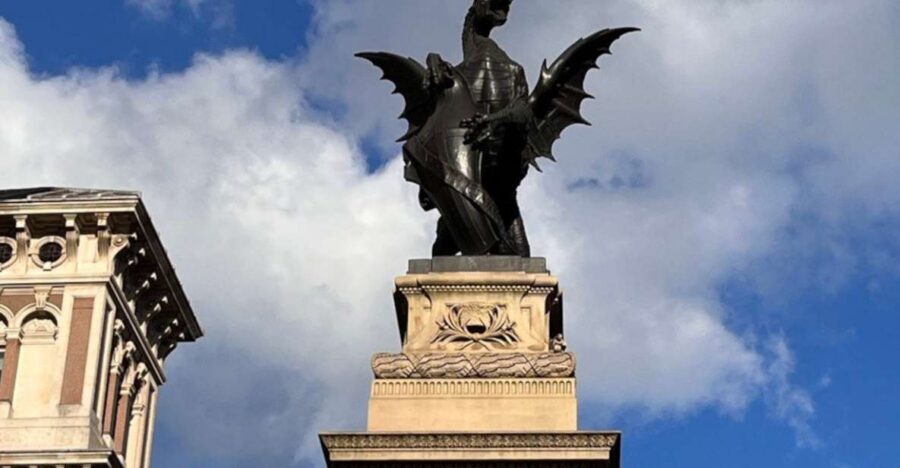
- Small group of up to 8 keeps the experience personal and question-friendly
- Ley lines, mounds, and sacred waterways give you a framework for seeing the city differently
- Iconography spotting helps you read buildings instead of just passing them
- A guided story arc that runs from early belief to St Paul’s and beyond
- Temple Church and Temple Bar Memorial land the tour with a strong finale
Where the dragon story starts: London Stone and the first sacred notes
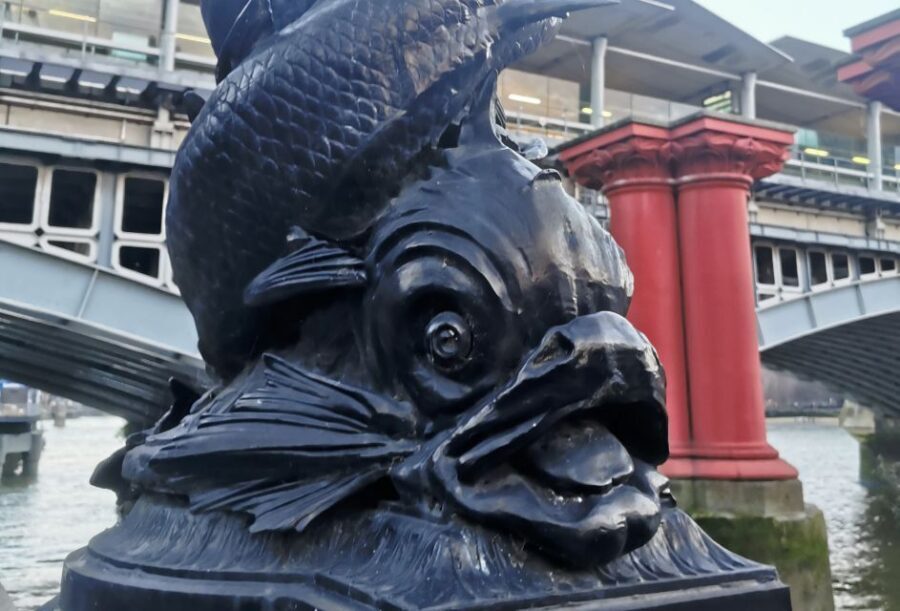
Most City walking tours start with big, obvious sights. This one starts with something older and more puzzling: London Stone, with the remaining piece you can still see today. It’s the kind of location that makes you pause, because it feels less like a statue and more like a marker—an old anchor point in a city that has never stopped rebuilding itself.
What helps on this tour is how the guide frames London as layered. You’re not just looking at a stone; you’re being taught a habit of mind: when you see a landmark, ask what earlier people might have marked there—religion, protection, boundaries, power. That mindset matters later when you’re staring at churches and civic buildings that look “plain” until symbolism gets explained.
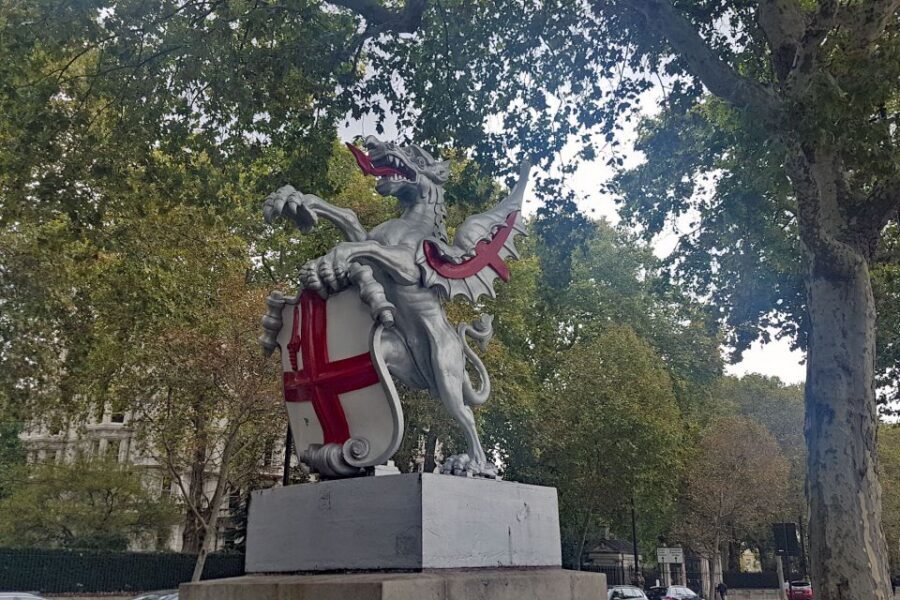
You’ll also get the tour’s core idea early: dragons here aren’t only fantasy decoration. They’re part of London’s long-running folklore language—an old way to talk about protection, danger, and hidden forces. The guide ties that theme to later architectural choices, so you don’t just hear a story; you start spotting connections.
You can also read our reviews of more walking tours in London



From Bloomberg Arcade to the hidden undercurrent: forgotten streams and the city’s “lost” water
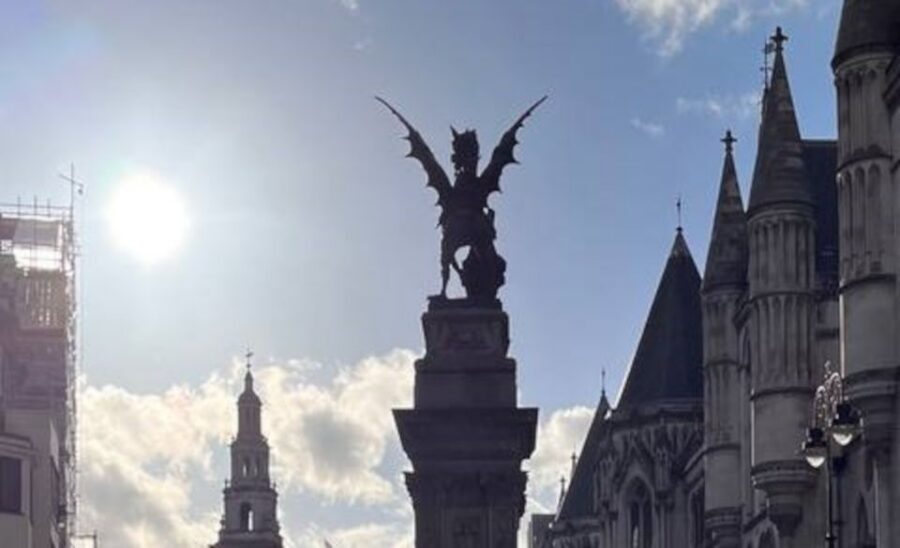
Then you slip into one of London’s most useful lessons: water remembers. You’ll spend time around the Bloomberg Arcade area, where forgotten streams enter the story. Even if you’ve visited London before, this part can reset your map in your head.
Here’s why it’s valuable: the City’s geography isn’t only about streets. It’s also about what used to flow beneath them—waterways, channels, drains, and borders that shaped settlement. When the guide links old water with later sacred choices, it becomes easier to understand why certain sites cluster the way they do.
And yes, the dragon theme still stays in play. In myth-based tours like this, dragons often act as “story glue.” They’re a way to connect practical city facts (like boundaries and terrain) with human meaning (protection, danger, sacred ground). When the guide explains symbolism, you’ll notice that the dragon lore isn’t random; it’s used to interpret patterns you can actually see.
The London Mithraeum: mythology meets stonework
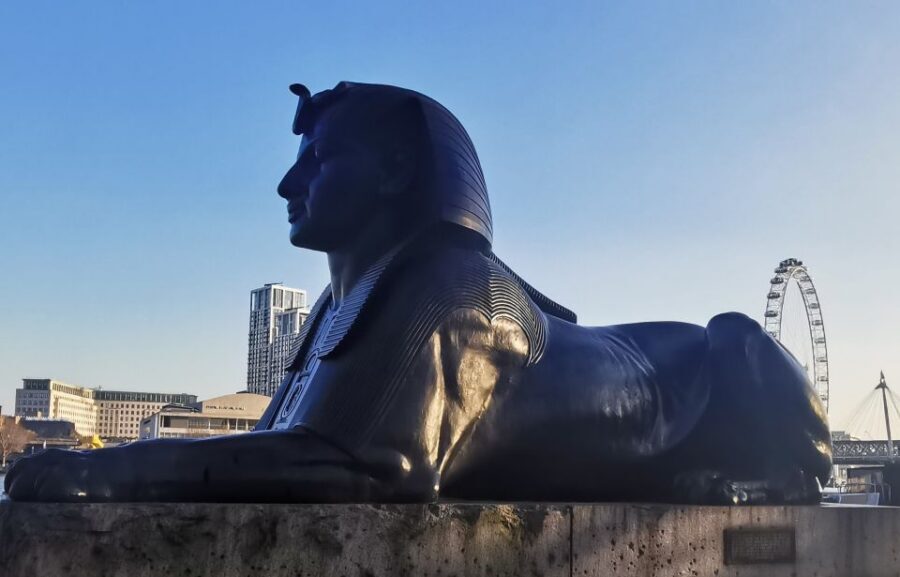
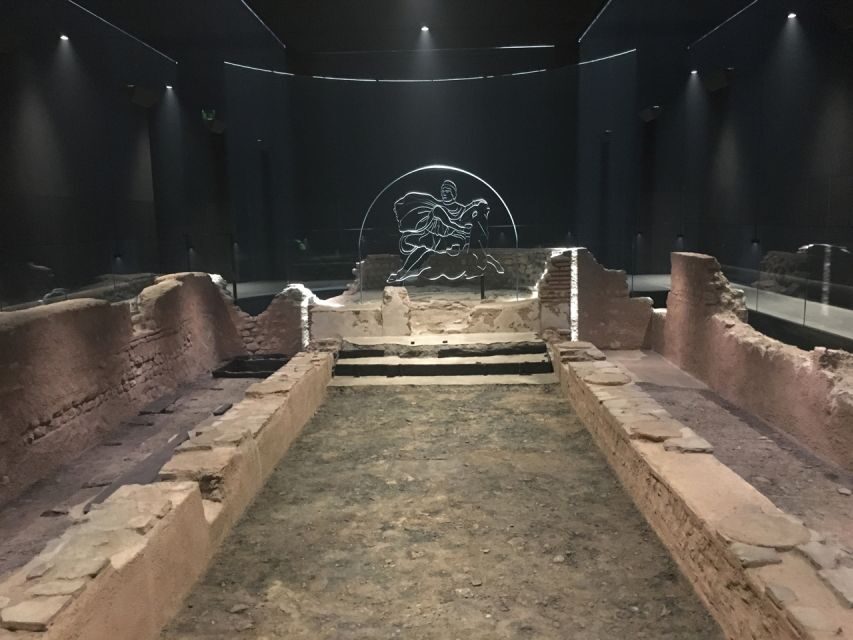
Next comes the London Mithraeum at Bloomberg SPACE, one of the most striking “wait, this is under the city” stops. You’re stepping into a preserved space tied to Mithraic worship—meaning the tour moves from folklore into actual ancient religious material.
This matters because it grounds the mystical angle. Even if you don’t take every ley-line claim literally, you can still appreciate the human impulse to create sacred places. Stone layouts, icon-like references, and dedicated religious sites are real. They show that people have always treated certain spaces as special.
The guide’s approach is what makes this section land. You’re not just told that mythology existed; you’re shown how symbols can keep traveling through time. That’s where the dragon idea helps. Dragons become part of the symbolic ecosystem—names and images shifting, but the impulse to mark sacred ground staying consistent.
Bank of England: reading power through symbolism

From ancient worship, you move into a modern power machine: the Bank of England. This is a smart choice for a mystical tour, because it forces a comparison.
You’ll look at authority differently. The idea here isn’t that the Bank has secret dragons carved into every corner. It’s that civic and financial power often borrows older visual languages: permanence, protection, legitimacy. When the guide ties this into London’s longer mythology thread, you start noticing how the city communicates strength—sometimes through design choices, sometimes through locations that feel “inevitable.”
If you like architecture as a form of messaging, you’ll enjoy this stop. Even in short explanations, you’ll learn to ask: what does the building insist on? What does it suggest about order? Those questions make the City’s maze of streets feel less chaotic.
St Mary-le-Bow and the language of church symbols
St Mary-le-Bow is where the tour becomes more visibly spiritual. You’ll spend time here long enough to notice that churches aren’t only worship spaces; they’re also message boards in stone and design.
This stop is a highlight because it brings iconography into sharper focus. The guide connects architectural symbolism to older ideas of protection and sacred alignment, and you start seeing how the “myth layer” can sit beside the religious layer rather than competing with it.
A practical tip for this section: don’t rush your gaze. Let the guide point out symbols, then take 30 seconds on your own to confirm where your eye lands. You’ll learn faster that way, and it makes the later church stops feel like a continuing sentence rather than separate chapters.
You can also read our reviews of more city tours in London






The oldest tree in the City: a living marker
Then there’s the Oldest tree in the City of London. It’s a small moment on paper, but it’s the kind of stop that sticks, because it shifts you from stone to living time.
The guide uses it to keep the theme of “time layering” active. The dragon lore here isn’t only about legends written down; it’s also about what communities keep treating as meaningful across centuries. A tree can become a marker—sometimes literally, sometimes culturally—because people return to it.
You’ll probably find this stop soothing if you’ve been walking briskly. It gives your mind a break from reading buildings and lets you feel the idea of continuity.
St Paul’s Cathedral: why the story ends up at a symbol of England
St Paul’s Cathedral is one of those places where most people come for views or photos. On this tour, it’s used differently: as a climax of sorts.
You’ll get a sense of how the city evolved from earlier belief systems into dominant Christian architecture and how sacred symbolism can change outfit while keeping its role: protecting, centering, and defining identity. The tour frames St Paul’s as a later anchor in a long chain of meaning.
Even if you’ve seen St Paul’s before, you’ll likely notice how you’re guided to think in layers. The cathedral doesn’t erase earlier ideas. It reorganizes them, turns older concepts into new forms, and keeps London’s habit of “myth as meaning” going.
St Martin Ludgate and Ludgate Circus: boundaries, movement, and myth
St Martin Ludgate follows, and it’s an important step because it connects you to the idea of edges. Ludgate itself has long meant gateway and crossing, and the tour treats that boundary energy as part of how people framed danger and protection.
Ludgate Circus then adds a street-level twist. Circles and junctions are where myths often like to live—more transitions, more ambiguity, more places where old routes and meanings overlap. The guide uses these urban shapes to keep the dragon-and-ley-lines theme feeling practical instead of abstract.
This is also a good moment to ask yourself what you’ve been learning: Are you seeing the City as a collection of stops? Or as a system of routes, old boundaries, and symbolic “pressure points”? That shift is the real value.
St Bride’s Church and Fleet Street: sacred space in the noise
St Bride’s Church in Fleet Street brings the tour into a part of London that moves fast and sounds loud. That contrast is useful. Sacred doesn’t always mean quiet. Sometimes sacred is placed right where life happens.
You’ll learn how the guide links churches along the route to older patterns of worship and remembrance, and you’ll also hear how forgotten waterways and shifting land use can affect where people build and why.
Fleet Street also helps you feel the “city evolution” theme. The City changes jobs, faces, and industries, but sacred places remain as reference points. That makes the dragon lore feel less like a novelty and more like a narrative method for tracking continuity.
St Dunstan-in-the-West and Temple Church: from spiritual anchors to guarded orders
St Dunstan-in-the-West is another church stop where symbolism gets treated as a language you can start decoding. You’ll likely notice repeating motifs: protection themes, sacred ordering, and the way architecture can represent more than function.
Then comes Temple Church, tied to the Knights Templars. This is where the tour’s “mystical” side feels especially aligned with history. The Templars represent a real medieval thread of guardianship, ritual life, and myth-making. Even if you’re not a deep medieval scholar, you’ll feel the shift from general sacred architecture to a more specific guarded storyline.
The guide’s style helps here. Instead of handing you random facts, the guide connects earlier “sacred ground” ideas to later “guarded knowledge” ideas. That makes Temple Church a logical payoff rather than a sudden topic change.
Temple Bar Memorial: the last stop that ties the map together
The final stop is the Temple Bar Memorial. It’s a fitting ending because it’s about thresholds—literal and symbolic. Temple Bar historically marked a kind of boundary, and memorials like this often carry an almost narrative function: they tell you that something old once stood here and still matters.
By the time you reach Temple Bar, the tour’s message is clearer. The dragon lore isn’t presented like a single secret fact you either believe or don’t. It’s presented as a way London repeatedly tells itself stories about power, protection, danger, and the unseen forces people think shape everyday life.
You’ll leave with a new habit: looking at a building’s placement and details as clues, not decoration. And if you catch yourself thinking about ley lines, ancient mounds, and forgotten streams while you’re walking after the tour, that’s probably the point.
Price and pacing: is $25 worth your 2.5 hours?
At about $25 per person for a 2.5-hour walking tour, this is strong value—especially because the group is limited to 8 people. You’re paying for a guided interpretation of a compact area where many of the sites are connected by story logic.
The pacing is also worth noting. Several stops are short (a few minutes), but that’s not a negative if you like momentum and clear signposting. You’re not stuck at one location trying to absorb everything at once. Instead, you get repeated “pattern recognition” moments—spot a symbol, hear the meaning, move on, then compare at the next site.
Who gets the best value? People who like walking, can handle city crowds without stress, and enjoy mythology as a lens for seeing architecture. If you prefer long time in museums or deep, technical archaeology, you might want to pair this with something more academic later.
Who this tour is for (and who should skip it)
This tour is a great fit if you:
- Enjoy mythology and want it tied to real locations
- Like architecture explanations, especially when symbols get translated into plain language
- Want a small-group guide who can answer questions and keep the thread coherent
It may be less satisfying if you:
- Want only verified, strictly chronological history with minimal interpretation
- Dislike “spooky” or myth-adjacent storytelling
- Prefer self-guided wandering over structured stops
Based on how the tour is described and the consistent praise for the guide’s ability to connect story, myth, and iconography, you’ll probably feel best if you’re open to interpretive history and enjoy hearing how symbols can be read.
The guide matters: Arjun’s approach to myth and meaning
One reason this experience stands out is the guide. In particular, Arjun is repeatedly described as kind, interesting, and highly capable at weaving multiple sites into one flowing explanation. That matters because a tour like this can easily turn into a list of spooky facts.
Instead, the guide treats dragon lore like a narrative tool. You connect London Stone to later religious buildings and then to major landmarks like St Paul’s. Along the way, iconography and symbolism act like your thread, so the tour feels like it has a spine.
That’s also why the small group size helps. When you’re not buried in a crowd, you can actually follow the logic and ask questions when something clicks.
Should you book the City of London Mystical and Dragons walking tour?
Yes, if you want a fresh way to see the City of London in just a couple hours. The route is practical, the group size is small, and the guide’s storytelling method makes symbolism feel understandable instead of random. You’ll walk away with new eyes for churches, civic landmarks, and the way old meanings survive inside modern streets.
I’d think twice only if you’re the type who needs history without interpretation, or if you’re hoping for a long indoor museum-style experience. This is a walking tour built for story, pattern-spotting, and atmosphere—then it leaves you thinking while you keep walking.
FAQ
Where does the tour start?
The tour meets outside Joe and the Juice.
How long is the City of London Mystical and Dragons tour?
It lasts about 2.5 hours.
How many people are in the group?
It’s a small group limited to 8 participants.
Is the tour available in English?
Yes, the live tour guide speaks English.
Is the tour wheelchair accessible?
Yes, it’s listed as wheelchair accessible.
What does the tour include?
You get a post-tour PDF with an overview of the tour locations and themes.
What is the tour price?
It’s priced at $25 per person.
Is free cancellation available?
Yes, you can cancel up to 24 hours in advance for a full refund.
Can I reserve without paying right away?
Yes, it offers reserve now & pay later.
What should I look for at the meeting point?
You’ll recognize the guide by longish hair and a beard, and a felt image of a green dragon on a backpack.