REVIEW · BRISTOL
From Bristol: 4-Day Cornwall, Devon & Stonehenge Tour
Book on GetYourGuide →Operated by Rabbie's Small Group Tours · Bookable on GetYourGuide
Jurassic cliffs and Stonehenge in four days. I like how the small-group tour links Cornwall legends to Dorset’s coast without feeling like a nonstop bus ride, and I love the driver-guide stories that turn each stop into something you can explain. One possible snag: Day 3 can feel like a lot of driving and not enough time in the middle of it, and the Cornwall/Devon B&B quality can vary.
Logistics are pretty straightforward from Bristol at the DoubleTree by Hilton, then you’re on a 16-seat Mercedes mini-coach with an English-speaking guide who keeps checking in during the day. You’ll get 3 nights in en suite B&B rooms with breakfast, but meals, drinks, and extra admissions are on you.
In This Review
- Key highlights worth planning around
- The route makes sense: Cornwall, Devon, then back for Stonehenge
- Day 1: Exmoor villages, Dunster Castle views, and Tintagel’s cliff-edge myths
- Day 2: St Ives fishing town, Land’s End views, Minack Theatre odds, then St Michael’s Mount
- Day 3: Tavistock + Dartmoor tors at Haytor, then Exeter for the night
- Day 4: Durdle Door and Lulworth Cove, then Stonehenge in awe-mode
- How the 16-seat Mercedes mini-coach keeps the trip comfortable
- B&B nights in Falmouth and Exeter: en suite, but not cookie-cutter rooms
- Price and value: what you’re really paying for at $876
- Who should book this (and who should think twice)
- Should you book this Cornwall, Devon & Stonehenge tour?
- FAQ
- Where is the meeting point in Bristol?
- What does the tour price include?
- Are meals included?
- Can I count on visiting Minack Theatre?
- How big is the group?
- How much luggage can I bring?
Key highlights worth planning around
- Tintagel Castle’s Arthur legend: clifftop ruins with real atmosphere
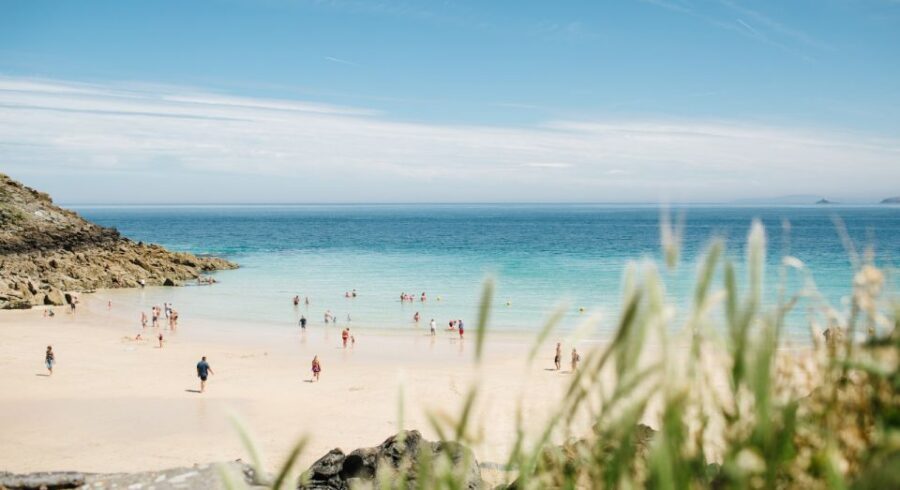
- St Ives time to wander: harbour views and an easy seaside reset
- Durdle Door + Lulworth Cove: Jurassic Coast scenery in two hits
- Stonehenge admission included: you get the stop, not just the drive-by
- Minack Theatre depends on availability: go in with flexibility
- Dartmoor tors at Haytor: big granite views before you reach Exeter
The route makes sense: Cornwall, Devon, then back for Stonehenge
This is the kind of trip where the geography does half the work for you. You start in the south-west of England and gradually swing north, so you’re not constantly backtracking. The pacing is designed for variety: medieval clifftops (Tintagel), a classic seaside town (St Ives), tin-mining Devon towns (Tavistock), granite moors (Dartmoor), then Jurassic Coast icons (Durdle Door and Lulworth Cove), ending with Stonehenge.
The value angle is solid because the big-name entrances are part of the package. You get admission to Tintagel Castle and Stonehenge, plus transportation on a Mercedes mini-coach limited to 16 people, with an English-speaking driver-guide handling the storytelling and logistics.
You can also read our reviews of more tours and experiences in Bristol.



Day 1: Exmoor villages, Dunster Castle views, and Tintagel’s cliff-edge myths
Your morning starts with a scenic drive down through Exmoor National Park, where you’ll see a mix of moorland, woodland, coast, and rivers. It’s the kind of route that makes the bus feel less like transit and more like part of the experience. The guide also keeps things flexible and touchpoints with you throughout the day, which matters on a tour like this where small timing changes can affect photo stops.
Next up is Dunster, a medieval village dominated by a Norman Castle. Even when you’re mostly viewing it while walking the village streets, you get that sense of a place built for defense—thick walls, steep grades, and a town center that feels made for wandering.
Then comes the main event of the day: Tintagel Castle ruins. Perched on the North Cornwall cliffs, this 13th-century site is strongly linked to the legend of King Arthur, and that legend adds a layer that’s hard to get from a museum ticket alone. You’re not just looking at stones; you’re looking at a cliffside setting that makes the story feel plausible. Plan for steps and uneven ground, since clifftop sites aren’t built for mobility scooters and they’re rarely flat.
After Tintagel, you head to Falmouth for two nights, your coastal base. This is a practical choice: Falmouth is close enough to reach St Ives and Land’s End without an all-day grind, while still giving you a real sense of Cornwall.
Day 2: St Ives fishing town, Land’s End views, Minack Theatre odds, then St Michael’s Mount
Day 2 begins with St Ives, a fishing town that’s beloved for a reason. You get free time to wander the harbour area and soak up the seaside vibe at your own pace. This is one of the days where you can slow down and do the classic stuff: viewpoint walks, coffee stops, and photo angles down by the water.
From there you head to Land’s End, the legendary “Place of the Sun” area that has been part of western imagination since ancient Greek times. Even if you’ve seen photos before, standing near the coast makes it feel bigger than the images—wind, cliffs, and the sense that you really are at the edge of the country.
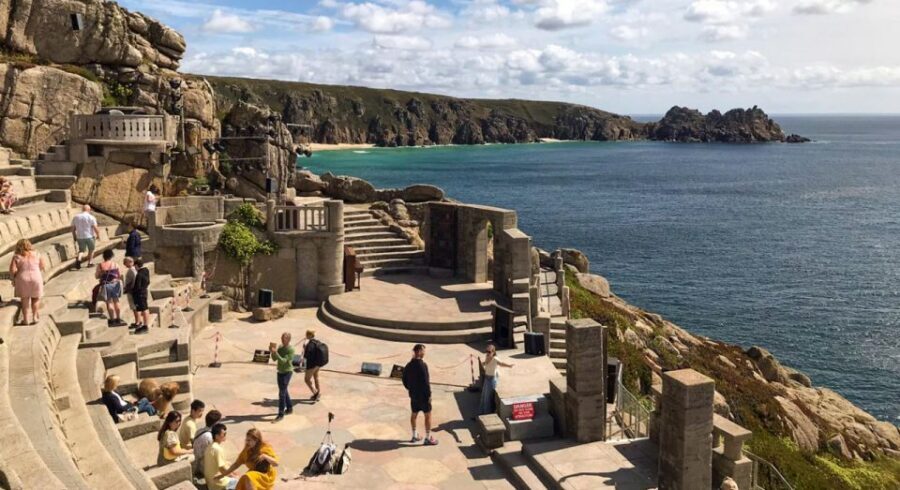
Lunch is planned around a stop at an open-air theatre perched on cliffs: Minack Theatre. Here’s the key planning note: it may be unavailable due to availability. If it works, it’s a very Cornwall kind of place—performance space carved into rock and framed by sea. If it doesn’t, don’t assume you’ll have a long wasted gap; your guide will adjust so the day still hits the big sights.
The last stop of the day is Marazion for a chance to photograph St Michael’s Mount. This is England’s answer to Mont Saint-Michel: a rocky island with a medieval church and castle. Even if you’re only photographing from the shore, the composition is strong and it’s one of those places that always looks good from multiple angles.
Day 3: Tavistock + Dartmoor tors at Haytor, then Exeter for the night
Day 3 starts with flexibility again as you head north. That’s not a small detail on a four-day tour; it’s how the route stays workable even with weather, road timing, or shifting daylight.
First you arrive in Tavistock, an ancient stannary market town with deep roots in tin mining. What makes Tavistock valuable is that it isn’t just a drive-through stop. You get free time to explore, and since this is the only town in Devon to hold world heritage status, the area has a specific industrial story worth catching—especially if you like your “England” beyond castles and coast.
Then the tour pushes into Dartmoor National Park. Dartmoor is the real mood shift of the trip: forests, rivers, wetlands, and tors that look like they’ve been placed on purpose. You stop in Widecombe-in-the-Moor, a picturesque village where the folk song “Widecombe Fair” has been immortalized. It’s one of those cultural touchpoints that gives the day more than scenery.
Haytor is the payoff: rocky granite outcrops that let you feel the scale of Dartmoor. This is the moment where the walk and the views help justify all that earlier driving. After Haytor, you head to Exeter for the evening—an easy finish point with a nicer-feeling city base than staying in a tiny village for the night.
One caution based on experience: this is the day where some people feel the time can run tight. If you’re the type who likes long, unstructured wandering, you might want to keep expectations realistic about how much you can do once you factor in stops, photos, and coach time.
Day 4: Durdle Door and Lulworth Cove, then Stonehenge in awe-mode
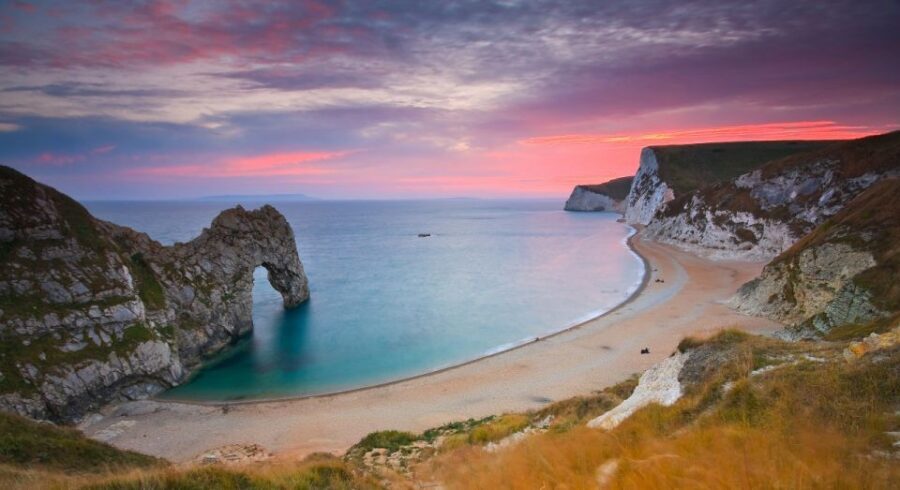
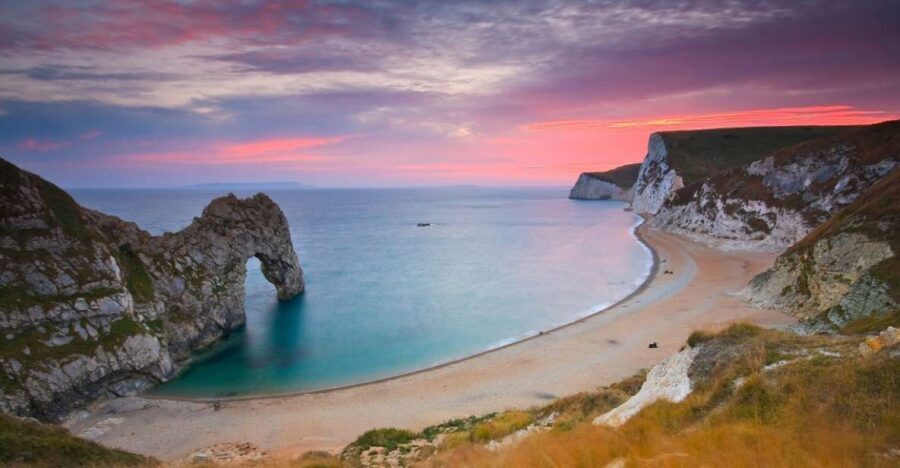
The last day is built around a classic coast-to-ancient-monument hit. You stop first at Durdle Door, Dorset’s most photographed landmark on the Jurassic Coast. Even with photos in your head, the shape of the limestone arch and the feeling of standing at the sea’s edge land differently in person.
After that you’ll see Lulworth Cove, known for its unique curved coastal shape. If the weather is clear, this is a day that feels like it was designed for photos. If the weather is moody, it still works—the coast looks dramatic either way.
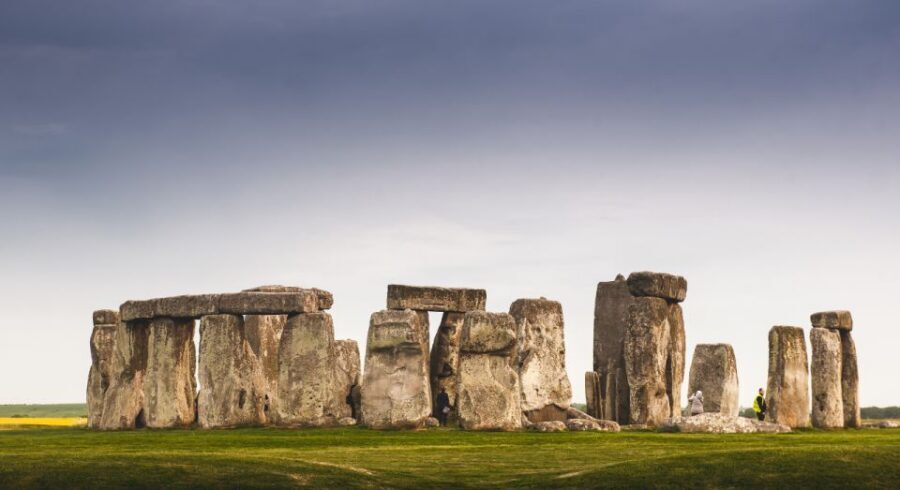
Then you go to Stonehenge. It’s been around for about 5,000 years, and you can feel why people come: you’re looking at something that still doesn’t fully “explain itself.” The tour adds the stories—legends about how the stones got there, with ideas stretching from alien theories to Merlin. You don’t have to choose a belief system to appreciate the mystery. You just have to be standing there long enough to let it sink in.
The tour ends with a return drive back toward Bristol, arriving around 18:45.




How the 16-seat Mercedes mini-coach keeps the trip comfortable
A 16-seat coach matters more than it sounds. It tends to mean fewer people fighting over window views, quicker loading, and a more human rhythm with your guide. The driver-guide role is important here: they’re not only driving; they’re also managing timing, sharing stories, and keeping you moving through each stop.
Also, the tour mentions that the driver-guide will touch base throughout the day. That’s practical. On a trip like this—where you may have short free times in towns—being clear about meeting points and timing keeps you from feeling stressed.
I’d treat the coach time as part of the experience, not wasted time. You’ll be moving through Exmoor, Cornwall, Devon, and Dorset—big distances where the views from the road are part of what you came to see.
B&B nights in Falmouth and Exeter: en suite, but not cookie-cutter rooms
Accommodation is 3 nights B&B with breakfast, and rooms are en suite. That’s good news if you don’t want to hunt for shared bathrooms in old buildings.
The tradeoff: B&Bs are typically on the outskirts of towns, so you may face a 20–30 minute walk to reach pubs and restaurants. Some properties also involve stairs, and lifts aren’t available. If stairs or long walks are a problem for you, let your operator know ahead of time so you can plan around it.
Quality can vary. One day of the review record criticized a Falmouth accommodation with issues like broken cabinet doors/windows and what sounded like hygiene concerns in the bathroom. That doesn’t mean every room is like that, but it’s a good reason to pack a bit of patience—and, if you’re picky, to do a careful room check early.
On the brighter side, Exeter’s B&B option in the record sounded like it landed better for at least one visitor. So the second half of the trip might feel like a relief if you’ve had a rough first night.
Price and value: what you’re really paying for at $876
At $876 per person for a 4-day tour, you’re paying for three things:
- Transportation: a Mercedes mini-coach sized for small-group touring
- Time-saving logistics: your guide handles the route and the stop sequencing
- Access: admission to Tintagel Castle and Stonehenge is included
You’re not getting meals and refreshments included, so you should budget for lunches and dinners on your own. That’s normal for this style of tour, but it does affect how “cheap” the trip feels day-to-day.
What makes this good value is the mix. You get a serious set of “anchor” stops (Tintagel and Stonehenge are the big ones) plus the softer experiences that make the days enjoyable: St Ives wandering time, Minack theatre timing uncertainty, and the Dartmoor tors at Haytor.
If you were trying to do all of this independently—especially with entrance tickets plus a car—you’d likely spend more or end up with a more rushed version of the route. Here, the coach and guide do the heavy lifting.
Who should book this (and who should think twice)
This is a good fit if you:
- want a packed, guided way to see Cornwall, Devon, Dorset, and Stonehenge in just four days
- like the mix of legends and real places—Arthur at Tintagel, folk song tie-ins at Widecombe, and Stonehenge mystery
- appreciate having free time slots in towns (St Ives, Tavistock) rather than being stuck in a constant lecture mode
Think twice if you:
- hate tight timing or have a “one stop, long linger” travel style—Day 3 can feel compressed
- need consistent accommodation standards without surprises; B&Bs on outskirts can also mean extra walking
- travel with very young kids; the tour doesn’t carry children under 5
Should you book this Cornwall, Devon & Stonehenge tour?
If your dream is a four-day circuit that hits the headline sights and still leaves you time to walk around towns, this tour is a strong choice. The included entrances at Tintagel and Stonehenge, plus the small-group size, are the main reasons it’s worth considering.
Before you book, go in with two smart expectations: Minack Theatre might not happen, and Day 3 is the day most likely to feel “tight.” If that sounds fine—and you’re comfortable with a few hours of coach time tied to short, well-chosen stops—then you’ll likely find this one does a lot of Britain in a short window.
FAQ
Where is the meeting point in Bristol?
Please meet your Rabbie’s guide at the DoubleTree by Hilton, Redcliffe Way, Bristol, BS16NJ.
What does the tour price include?
It includes admission to Tintagel Castle and Stonehenge, 3 nights B&B accommodation with breakfast, transportation by a 16 seat Mercedes mini-coach, and an English-speaking driver-guide who provides the stories and services.
Are meals included?
No. Meals and refreshments are not included.
Can I count on visiting Minack Theatre?
Not always. Minack Theatre depends on availability, so you may be unable to visit it. Your guide will let you know as you go.
How big is the group?
The group is limited to 16 participants.
How much luggage can I bring?
You’re restricted to 20 kilograms (44 lbs) of luggage per person: one piece of luggage similar to an airline carry-on bag, plus a small bag for onboard personal items.