REVIEW · GLASGOW
Glasgow, city of arts and history
Book on GetYourGuide →Operated by Heritage Alley · Bookable on GetYourGuide
Glasgow has more stories than you expect. This is a relaxed, small-group walk that helps you read the city like a local, with stops that go from Glasgow Cathedral to the Victorian and neo-classical streets you’ll see all over town. I like the way the guide ties architecture to everyday life, so the past feels usable, not dusty.
Two things stand out: first, you get a clear route through the city’s main layers (ecclesiastical, university, merchant port, industrial-era Glasgow). Second, the guide keeps the pace friendly and conversational in French, with plenty of time for questions at the end. The only real drawback is physical: it’s a walking tour, so you’ll want comfortable shoes and rain gear, since the tour runs in rain.
You finish back in the center, at Buchanan Street, which is a smart setup for the rest of your day. And because the guide gives personalized advice for what to do next, you leave with a plan instead of just photos.
In This Review
- Key highlights I’d mark on your map
- Entering Glasgow at Glasgow Cathedral’s Big-Door Moment
- Glasgow Necropolis: Seeing Victorian Ambition Up Close
- Trongate and the Streets Where Guilds Left Footprints
- Merchant City and the Gallery of Modern Art: Past Meets Creative Power
- George Square and the Walk to Buchanan Street: Finish With Perspective
- The Guide Makes the Difference: French Narration, Real City Love
- Price and time: Why $33 for 2.5 hours can be good value
- Who should book this Glasgow city-center walk?
- Should you book Heritage Alley’s Glasgow Walk?
- FAQ
- What language is the tour in?
- How long is the Glasgow walking tour?
- Where do we meet for the tour?
- What stops are included on the route?
- How many people are in the group?
- Is the tour wheelchair accessible?
- What should I bring?
- Is it okay if it rains?
Key highlights I’d mark on your map
- Glasgow Cathedral to the Necropolis: learn why religious power and later civic pride both show up in stone
- Merchant and artisan guild impact: street-level economics explained without getting boring
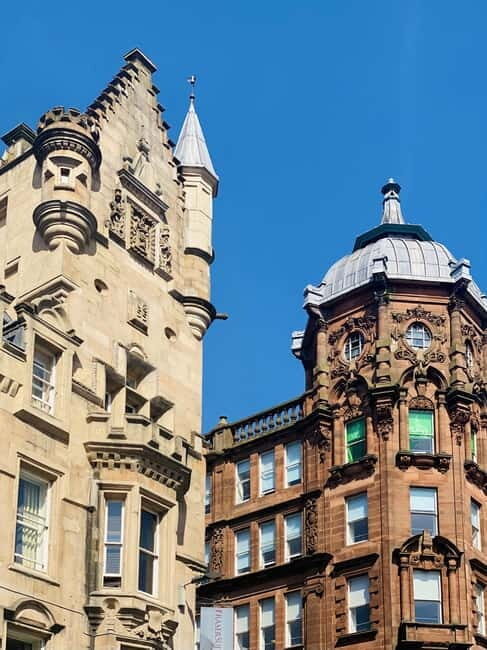
- Glasgow architecture “reading skills”: you start spotting styles and motives as you walk
- The Duke construction cone story: a modern Glaswegian detail with a past behind it
- Stops for real contrast: medieval remains next to Victorian and neo-classical façades and newer designer buildings
- Small group (max 8) + Q&A time: better conversation, not a lecture with a microphone
Entering Glasgow at Glasgow Cathedral’s Big-Door Moment

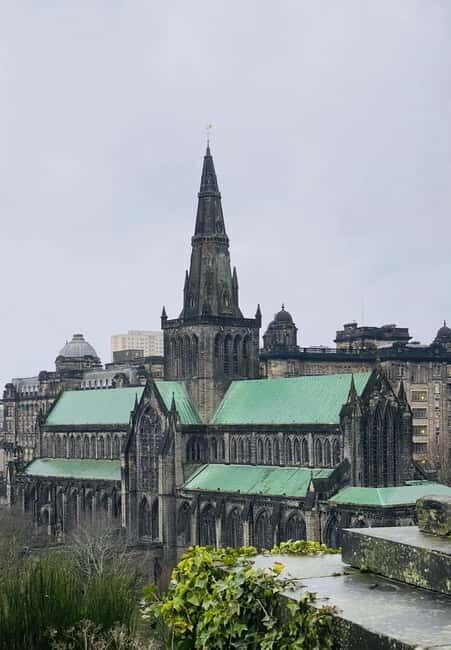
Your tour begins right at Glasgow Cathedral, in front of the big doors. That first step matters. Glasgow can feel like a patchwork when you arrive—several eras stacked together in a compact center. Starting at the cathedral gives you a solid anchor point, because it’s one of the clearest ways to understand the city’s early role as an ecclesiastical center.
What I like about this opening is that it sets up a simple timeline you’ll keep using as you walk. Glasgow wasn’t always the industrial, city-center powerhouse most people associate with Scotland. You’ll hear how it evolved from a fishing village into an ecclesiastical center, then a university town, then a merchant port, and later an industrial city on the cutting edge. Even if you only remember bits, it changes how you see the buildings around you.
Your guide—French-speaking, and described as friendly and very engaging—doesn’t just point. You’ll get help “deciphering” what you’re looking at: what the buildings are trying to say, what the city wanted to project, and how different communities shaped the street scene. One standout from guide praise is how the narration blends monuments with stories about local economy and life, not just dates.
Practical note: the tour is designed to keep moving. You should expect a good chunk of time on your feet, even though the pace is relaxed. Bring rain gear, because the tour takes place even if it’s wet.
You can also read our reviews of more city tours in Glasgow

Glasgow Necropolis: Seeing Victorian Ambition Up Close
Next comes the Glasgow Necropolis, where you’ll get a guided look that feels like a history lesson with steps and viewpoints. This is where Glasgow’s identity gets more than symbolic. The Necropolis shows how the city’s wealth, social structures, and beliefs expressed themselves outwardly—especially in Victorian era planning and funerary architecture.
Here’s the trick: by the time you reach the Necropolis, you’re no longer only looking at “pretty buildings.” You’re learning to ask better questions: who built this, why this location, and what does it reflect about how Glasgow’s citizens saw status and memory?
I also like that the tour frames this stop in the wider story of Glasgow’s growth. As the city moved from earlier roles into commerce and industry, the people funding public and private spaces weren’t random. Merchant and artisan power left a visible imprint across the center. The Necropolis helps you connect those dots before you head into the commercial districts.
One more thing: this stop can feel emotional if you let it, but the guide’s role is to keep it grounded and informative. You’re not forced into heavy storytelling. You’re given context so the structures make sense.
Trongate and the Streets Where Guilds Left Footprints
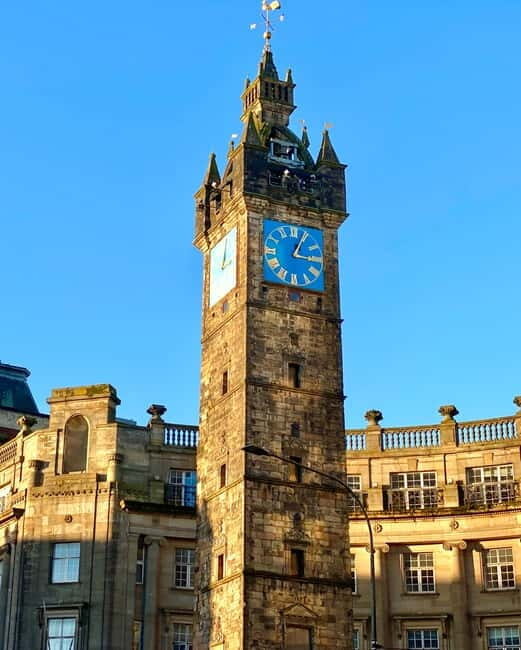
After the Necropolis, you’ll head to Trongate. This is the part of the walk where Glasgow starts to feel like a working city again—less like “heritage tourism,” more like streets that explain trade and daily life.
The program highlights the impact of merchant and artisan guilds. That’s a big deal, because guilds weren’t just fancy clubs. They shaped who could practice certain trades, how goods moved through the city, and which neighborhoods had the most influence. When you’re walking, it’s easy to treat a street as scenery. With this tour, you learn to treat it as evidence.
Trongate also helps you understand why Glasgow’s streets can look both historic and functional at the same time. You see medieval remains, but you’re also watching how later styles took over. That blend—older bones plus later growth—is one of Glasgow’s defining characteristics. And it’s why a guided walk is so useful here. Without guidance, you may just notice aesthetics. With guidance, you start noticing intention.
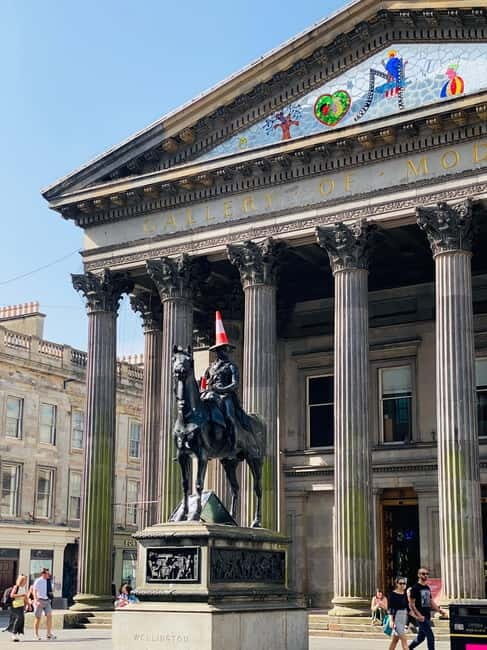
This is also the zone where you’ll likely hear the story behind the famous Duke construction cone. It’s the kind of small, modern detail that locals recognize immediately, but visitors often miss. Learning the story is fun, and it also reinforces a core theme of the tour: Glasgow keeps its own sense of humor and identity, even while it changes.
Merchant City and the Gallery of Modern Art: Past Meets Creative Power
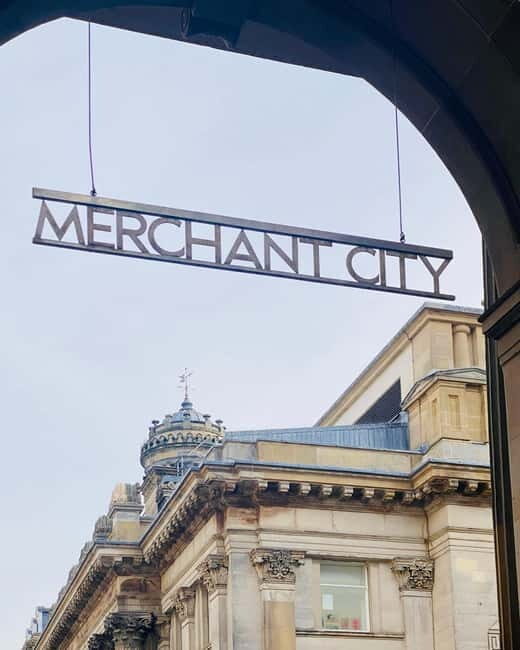
Then you move into the Merchant City, one of Glasgow’s key areas for understanding the city’s commercial era. This is where you’ll connect guild influence, wealth, and the way the city visually presented itself. The Merchant City stop isn’t just a photo opportunity. You’ll be walking streets while learning what different façades are telling you about eras of prosperity and ambition.
From there, the walk continues to the Gallery of Modern Art. This stop gives you a useful contrast: the city isn’t only about older stone and Victorian planning. Glasgow also projects modern creative energy. Even if you’re not a museum person, I think this works because it supports the tour’s bigger message—Glasgow constantly reinvented itself.
And it makes your follow-up choices easier. If you’ve got a museum stop in mind later, seeing it through the tour context helps you decide what matters to you. You also get practice learning how Glasgow mixes old and new without feeling like two different cities.
If you’re worried about museum fatigue, don’t. The tour is timed for a short visit here, not a long sit-down. The goal is interpretation and orientation, not making you do everything.
George Square and the Walk to Buchanan Street: Finish With Perspective
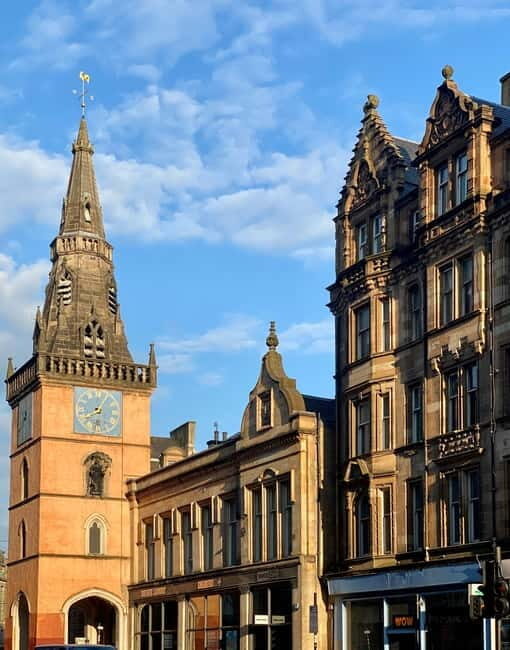
George Square is next, followed by a finish at Buchanan Street. This is a smart way to end, because you end where your onward plans are easiest: central shopping streets, transport links, and lots of options for food.
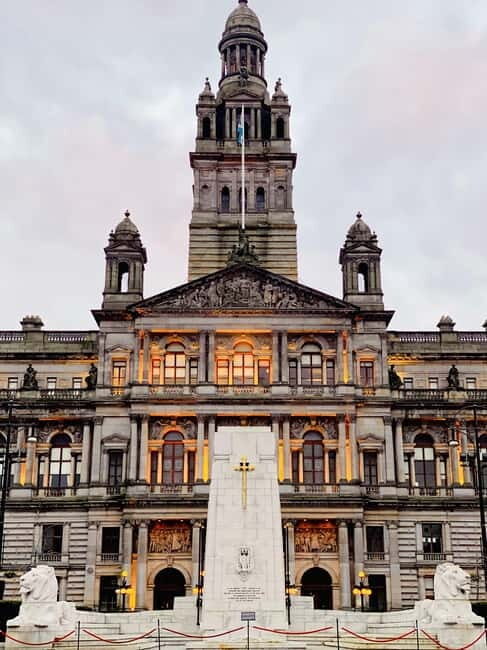
George Square works well on a guided tour because it lets you zoom out. You’ve already walked through the cathedral, the Necropolis, and the Merchant City feel of Glasgow’s economic chapters. At George Square, you can see how civic planning and public symbolism fit into the story.
As you return toward Buchanan Street, you’ll start to notice patterns you didn’t expect at the beginning. Glasgow’s identity isn’t just “old versus new.” It’s how each era left a physical argument behind: spiritual power, mercantile influence, industrial ambition, and modern creative confidence.
I also appreciate the built-in time for your questions at the end. That Q&A isn’t an afterthought. It’s useful because you’ll usually arrive with half-formed ideas like Why does Glasgow look this way? or What should I prioritize tomorrow? The guide can steer you toward smart next steps based on what you liked most.
You can also read our reviews of more historical tours in Glasgow

The Guide Makes the Difference: French Narration, Real City Love
This is a French-language walking tour with a local guide who clearly cares about the city. In the praise you can see a theme: the guide keeps people’s attention for the full 2.5 hours by mixing monuments with anecdotes and by bringing the present into the conversation, not just reciting dates.
One named example you’ll want to note is Marine, who’s singled out as a top guide. Another name that appears in the tour description is Maryne. Either way, the role stays consistent: help you decode heritage, architecture, and cultural life in a relaxed atmosphere.
For you, that matters because Glasgow’s styles can be tricky to sort out when you’re on your own. During the tour, you get a mental checklist: what features to look for, why certain buildings were built the way they were, and how different city roles influenced design choices.
The small group format also helps. With a group limited to 8, you’re more likely to ask questions and actually get an answer that fits your interests. And if you have mobility needs, the tour is listed as wheelchair accessible, which is another practical plus.
Price and time: Why $33 for 2.5 hours can be good value
At $33 per person for about 2.5 hours, this tour sits in the category of affordable guided orientation, especially because you’re not only getting a walk. You’re getting interpretation and a personalized plan for the rest of your visit.
Here’s how to think about value: you’re paying for someone to translate Glasgow’s built environment into something you can use. If you try to DIY, you might still see great architecture—but you may not understand why it looks the way it does, or how guild life, merchant power, and industrial-era growth connect to specific streets and buildings.
The small group size also supports value. More attention per person usually means less time waiting for a group voice to catch up to your curiosity.
Bottom line: if you want a clear starter map and you enjoy learning how cities work through their architecture and public spaces, this is a strong deal.
Who should book this Glasgow city-center walk?
This tour is a great fit if you want a first taste of Glasgow that isn’t superficial. It suits you if you like architecture, want a guided explanation that connects the dots across centuries, and appreciate a relaxed pace with Q&A time.
It also fits well for people who like museums and galleries but don’t want a heavy day. You get a short visit to the Gallery of Modern Art, plus walking time through the neighborhoods where the city’s economic story is visible.
A couple of practical considerations: it’s not suitable for children under 6, and it’s a walking itinerary, so plan for time on your feet. The good news is that the tour runs even in rain, so you’re less likely to have a disrupted day. If you’re sensitive to weather, do bring proper rain gear.
If you want to maximize Glasgow in one day, consider pairing this tour with a follow-up self-guided stroll. The guide’s personalized advice is meant to help you build that next step without guessing.
Should you book Heritage Alley’s Glasgow Walk?
I’d book it if you’re arriving in Glasgow and you want to understand what you’re seeing fast. This tour is best when you care about interpretation: why Glasgow grew, how different eras left their mark, and how Glaswegians still hold onto the city’s identity.
I would skip it if you already feel confident about Glasgow’s architectural and civic history and you mainly want an unstructured walk. Also skip or reconsider if walking for 2.5 hours is hard for you, since it’s still a walking format even with wheelchair accessibility listed.
If you’re on the fence, here’s the simplest decision rule: if you want a guide to turn buildings into meaning, not just scenery, this is the kind of tour that makes your next hours in Glasgow feel smarter.
FAQ
What language is the tour in?
The tour is in French.
How long is the Glasgow walking tour?
It lasts 2.5 hours.
Where do we meet for the tour?
You meet in front of Glasgow Cathedral’s big doors. You’ll have a booklet with the Heritage Alley logo.
What stops are included on the route?
You visit Glasgow Cathedral, the Glasgow Necropolis, Trongate, the Merchant City, the Gallery of Modern Art, George Square, and you finish at Buchanan Street.
How many people are in the group?
The group is limited to 8 participants.
Is the tour wheelchair accessible?
Yes, it is listed as wheelchair accessible.
What should I bring?
Bring comfortable shoes and rain gear.
Is it okay if it rains?
Yes. The tour would take place even if it rained.