REVIEW · SCOTLAND
Lewis Historical Tour
Book on Viator →Operated by Hebridean Life Tours · Bookable on Viator
Stones, sea, and a castle in one day. This Lewis tour packs big ideas into a half-day drive, linking Neolithic stone sites, the Lews Castle museum, and a lighthouse point where the Atlantic does its loudest work. It’s the kind of route that feels efficient, but not rushed.
I love how it gives you both Callanish (the famous stone circle) and the lesser-seen Clach an Trushal in the same morning, so your “ancient Scotland” story actually connects. I also like the human side: guides such as Marisa, Murdo, and Alan are local to the core and good at answering questions on the spot.
One caution: wind can be intense at the lighthouse and standing stones, so dress for weather. And while most sites are free, there’s a note about an extra admission of about £6.50 for the Gearrannan Blackhouse Village (or Bosta Iron Age House), so confirm what you’ll be charged.
In This Review
- Key highlights
- A private Lewis route that actually makes history click
- Price and logistics for a 4–6 hour island loop
- Getting to the first stop: Clach an Trushal’s Stone of Compassion
- Butt of Lewis Lighthouse: David Stevenson, record gusts, and sea life
- Gearrannan Blackhouse Village: 1800s life, Harris Tweed, and peat stacks
- Callanish Standing Stones and the visitor centre tea stop
- Lews Castle museum: from 1840s luxury to Lewis Chessmen
- What makes the guide matter on this route
- Food, timing, and what to bring so the day stays easy
- Should you book this Lewis Historical Tour?
- FAQ
- How long is the Lewis Historical Tour?
- Where does the tour start and end?
- Is pickup available?
- What language is the tour offered in?
- Is this a private tour?
- Are there admission fees at the stops?
- What’s included in the price?
- What should I bring for the day?
- Can I cancel for free?
Key highlights
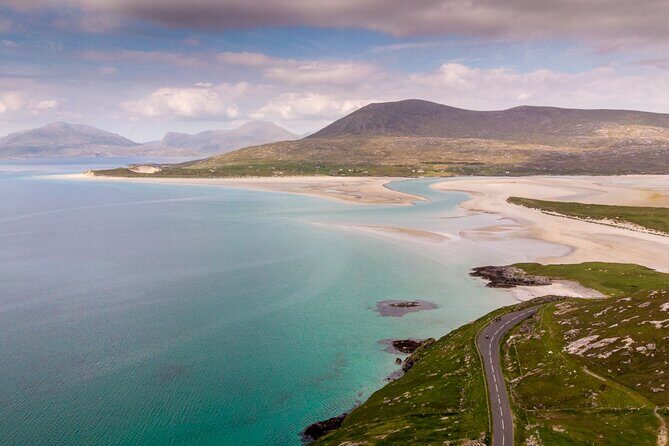
- Neolithic-to-modern storytelling: from standing stones to Lews Castle’s museum
- David Stevenson’s lighthouse point with wildlife-viewing potential
- Gearrannan Blackhouse Village for 1800s island life, including a Harris Tweed weaver
- Callanish visitor centre breaks up the outdoors with tea, cake, and an exhibition
- Lewis Chessmen context at Lews Castle, including the walrus ivory Vikings story
- Private transportation with a relaxed pace for small groups
A private Lewis route that actually makes history click
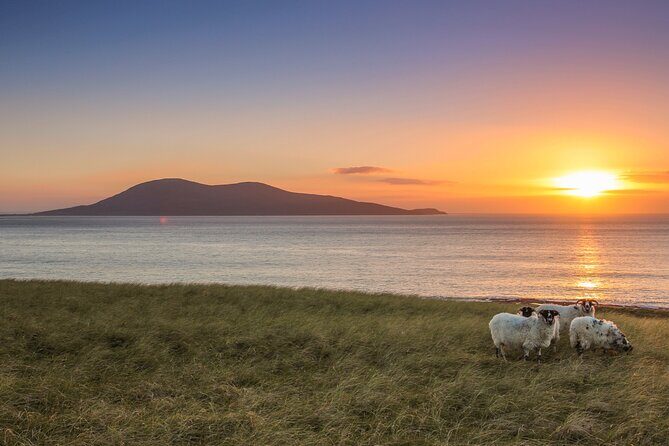
This isn’t a “check the boxes” loop. The best part is how the day builds a storyline: ancient ceremony sites, then everyday island living, then power, trade, and museum-grade local pride. You’ll see famous names (Callanish) plus quieter anchors (Clach an Trushal) that help the whole chapter feel less like random tourism and more like a lived-in place.
It’s also a smart format for first-time visitors. You only have a few hours, and Lewis can feel big and spread out. This tour keeps your day focused, with scheduled stops and enough time inside key places (like visitor centres and the castle museum) that the outdoor sites don’t turn into a blur.
You can also read our reviews of more historical tours in Scotland
Price and logistics for a 4–6 hour island loop
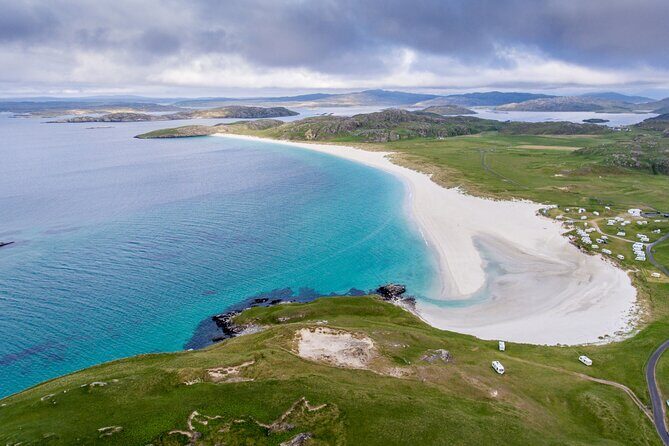
The price is $493.61 per person for a private tour, with private transportation included. That matters because driving around Lewis on your own means more time planning, more stops you might skip, and more “why is this busier than I thought” moments. Here, you’re paying for someone else to do the driving and sequencing.
Timing is built around a 9:00 am start in Stornoway, returning back to the meeting point. You can also get picked up from Stornoway Airport, Stornoway town centre, or the deep water port. If you’re arriving or leaving by ferry or flight, this kind of pickup can save you stress.
The tour runs about 4 to 6 hours. The individual stop times add up to roughly a couple hours of on-site exploring, but that doesn’t include drive time, restroom breaks, wind pauses, and the kind of short conversations that happen when your guide is local.
One practical note: it’s offered in English and it’s private, so you won’t be shuffled into a large crowd. That’s a real comfort perk on remote sites.
Getting to the first stop: Clach an Trushal’s Stone of Compassion
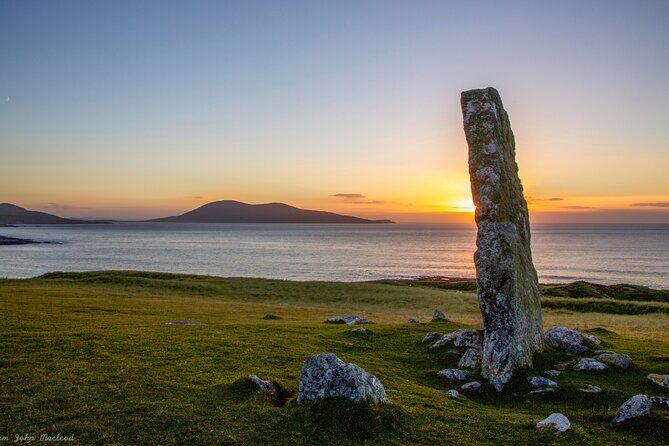
Your morning starts at Clach an Trushal, often called the Stone of Compassion. It’s believed to be the tallest standing stone in Scotland, sitting at about 5.8 metres above ground, with a thick, sturdy shape (around 1.5 metres at its thickest).
This stop is short, about 5 minutes, but that’s part of the point. Standing stones can be easier to understand if you keep momentum and pair them with the next site (which you’ll do). If you take a moment to look at scale, you’ll feel the difference between a stone that’s “in a field” and a stone that was clearly meant to be seen and respected.
What I’d do here: take one minute to read the stone as a structure, not a selfie backdrop. Notice how the width and thickness look from different angles. That’s how you start thinking like a builder, not like a visitor.
Butt of Lewis Lighthouse: David Stevenson, record gusts, and sea life
Next up is the Butt of Lewis Lighthouse, at the most north-westerly point in the British Isles. The lighthouse was built by David Stevenson, father of Robert Louis Stevenson (the Treasure Island author). That family connection is a nice bonus because it links this remote corner to wider Scottish literary culture.
This is also where the day leans into nature and weather. The area is good for viewing basking sharks and porpoises, and there’s a small beach nearby. You may not see wildlife on every visit, but if you’re the type who enjoys scanning the sea from a fixed spot, this is one of the best places to do it during this route.
There’s an extra bit of trivia worth knowing: the area holds a Guinness Book of Records mark for the highest gust recorded in the British Isles at 133.6 miles per hour (in 1962). So yes, bring layers you can trust. Even if the forecast looks calm, this coastline can be deceptive.
Plan for wind and spray. Keep your hat secured, your phone protected, and your expectations realistic. This stop is about atmosphere as much as it is about photos.
Gearrannan Blackhouse Village: 1800s life, Harris Tweed, and peat stacks
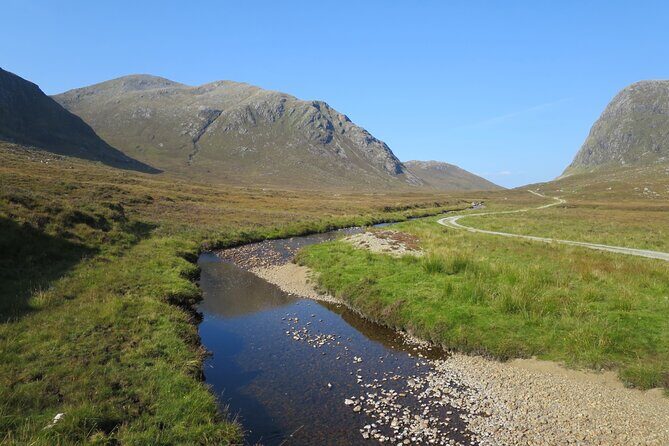
You get a longer stop here, around 45 minutes, at Gearrannan Blackhouse Village. This restored blackhouse village is set up as a museum showing how people lived on Lewis in the 1800s.
What makes this worthwhile isn’t just seeing buildings. You’ll watch a video on community life and culture, then get hands-on style sights: a Harris Tweed weaver at work and a real peat stack. Those details pull you out of “old stuff” and into practical daily life.
If you like craft history, the Harris Tweed element is a highlight. You can stand back and observe, then connect the textile to the island economy and the climate-driven need for warm, durable clothing.
Possible drawback: it’s an indoors/outdoors mix depending on the exhibits, and your time window is set. So if you’re the type who wants to read every panel slowly, set yourself a pace before you get there.
And about cost: one part of the information says admission for Gearrannan is included, while another part notes an admission fee of £6.50 per person for Gearrannan Blackhouse Village (or Bosta Iron Age House). I’d confirm the total you’ll pay at booking so there are no surprises.


Callanish Standing Stones and the visitor centre tea stop
Now you hit the headline site: Callanish Standing Stones. These stones are often described as aging with the Pyramids and being older than Stonehenge. Even if you don’t feel like you can solve the mystery of why they were arranged, the experience is still worth it because the visitor centre gives you context, and the outdoor site gives you the feeling.
You’ll have about 30 minutes here, plus time for the exhibition. There’s also tea and cake at the visitor centre, and because that’s built into the experience, it helps you warm up and reset before the last stop.
A practical way to “make sense of the stones” is to treat this as two different jobs:
- Outdoors: look for placement, sightlines, and the scale of the circle.
- Indoors: use the exhibition to understand competing ideas about purpose, not just one official answer.
If you’re traveling with friends who love mythology, archaeology, or simply standing in old places and thinking weird thoughts, this is the stop that keeps everyone happy.
Lews Castle museum: from 1840s luxury to Lewis Chessmen
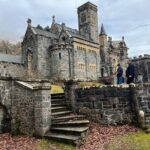
Your final stop is Lews Castle, a building with a story that spans Victorian luxury, modern community impact, and museum-level artifacts.
The castle was built between 1840 and 1860 by Lord and Lady Matheson. Later it was sold to Lord Leverhulme of Unilever. Then came a major turning point: the castle, grounds, Stornoway, and surrounding areas were left to the people of Stornoway in 1924, leading to the first land owning trust in Scotland being established. That local angle is key. This isn’t just a pretty building; it ties directly to how ownership and community shaped the island.
The redevelopment in 2015 brought the building back toward its original state and added a museum. That museum houses a lot of island history, including the Lewis Chessmen.
The Lewis Chessmen are among the most famous artifacts tied to Lewis. They were discovered in a sand dune in Uig in 1831. They’re carved from walrus ivory, and they’re believed to have been brought to Lewis by Vikings in the 12th century AD.
For many people, chess pieces are an easy hook: you can picture a game, you can imagine trade routes, and you can connect art to daily objects. Even if you don’t know the chess details, the material and the discovery story make this a strong finish.
Stop time is about 30 minutes. That’s enough to get the main themes without turning it into a museum marathon.
What makes the guide matter on this route
The stops are impressive on paper, but on a day like this the guide is the difference between seeing places and understanding them.
In past groups, guides like Marisa and Murdo have brought a deep, practical love for the island. In another group, Alan stood out for being professional, knowledgeable, and genuinely flexible, including the ability to answer a wide range of questions and adjust when something interesting pulled the group’s attention.
There’s also a practical benefit when a guide understands the rhythm of the island. In at least one case, Alan timed stops to help avoid large tour buses. That kind of small optimization makes a difference at tight sites like stone circles and visitor centres, where foot traffic can change your whole experience.
Food, timing, and what to bring so the day stays easy
Brunch and lunch are not included. So plan your food in a way that matches a windy, outdoor-heavy morning.
If you want a simple strategy:
- Eat before you go (unless your timing makes that hard).
- Bring a snack you can reach quickly during the drive.
- Use the tea and cake at the Callanish visitor centre as a built-in break.
Also, because two of the stops are likely to feel open and exposed (lighthouse and standing stones), pack like you’re going to a coastline: windproof layer, comfortable shoes, and something for sun even on cloudy days.
Since the tour has a moderate fitness level requirement, wear shoes that handle uneven ground and short walks. You’re not doing long hikes, but you are moving across outdoor spaces.
Should you book this Lewis Historical Tour?
If you want a focused Lewis day that covers ancient sites, island living, and a major museum stop without the hassle of planning your own drive, this is a strong pick. I especially like that you get a mix of outdoors and indoor interpretation, so the story isn’t all “stand and stare.”
It’s also a good fit for small groups who want to ask questions and keep the pace flexible. Private transportation helps a lot here.
Skip it if you’re the type who wants a full-day, slow-travel museum crawl or if you’re hoping for long, unstructured time at every site. This route is designed to be efficient, not endless.
My practical recommendation: book it if you’re comfortable with changing weather and you’re happy to spend a few hours seeing the big anchors of Lewis history in one loop. Do a quick confirmation on any potential £6.50 admission charge for Gearrannan (or Bosta), and then enjoy the day’s best feature: a coherent story across stone, sea, and castle walls.
FAQ
How long is the Lewis Historical Tour?
It runs for about 4 to 6 hours.
Where does the tour start and end?
It starts at South Beach, Stornoway HS1, UK and ends back at the same meeting point.
Is pickup available?
Yes. Pickup is listed from Stornoway Airport, Stornoway town centre, and Stornoway deep water port.
What language is the tour offered in?
The tour is offered in English.
Is this a private tour?
Yes. Only your group will participate.
Are there admission fees at the stops?
Clach an Trushal, Butt of Lewis Lighthouse, Callanish Standing Stones, and Lews Castle are listed as free with admission ticket free. Gearrannan Blackhouse Village is listed as admission ticket included, but there is also a note about an admission fee of £6.50 per person for Gearrannan Blackhouse Village or Bosta Iron Age House, so confirm what you’ll be charged.
What’s included in the price?
Private transportation is included.
What should I bring for the day?
You’ll want clothing suitable for wind, comfortable shoes for outdoor areas, and a plan for food since brunch and lunch are not included.
Can I cancel for free?
Yes, you can cancel for a full refund if you cancel up to 24 hours in advance of the experience’s start time.