REVIEW · LONDON
London: Jack the Ripper Tour
Book on GetYourGuide →Operated by See Your City · Bookable on GetYourGuide
Whitechapel turns history into street-level clues. This Jack the Ripper walking tour in East End London uses suspect cards and a Ripperologist guide to help you connect victims, places, and competing theories.
I love that it’s not just name-dropping: you’ll hear true-to-life stories tied to real locations around Whitechapel, including Spitalfields Market and the famous Ten Bells area. One thing to consider is the tour runs in Italian, and the experience can be less smooth if the guide’s Italian doesn’t land clearly for your group.
In This Review
- Key Things You’ll Notice on This Jack the Ripper Tour
- Whitechapel Is the Point: Why This Neighborhood Still Feels “Real”
- Price and Time: What You Get for About $26.94
- Meeting Point at Altab Ali Park: How to Start Without Stress
- The Investigation Format: Suspect Cards, Photo Evidence, and Competing Theories
- Stop 1: St Marys Whitechapel Church Memorial as Your Starting Clue
- Ten Bells Spitalfields: The Pub Stop That Becomes a Story Anchor
- Christ Church London and Mitre Square: Streets With a Sense of Time
- Brick Lane: A Famous Street, Explained Through Context
- Petticoat Lane and Spitalfields Market: The Markets That Make It Social, Not Just Criminal
- Sherlock Holmes Connection: How Victorian Crime Talk Shaped Popular Sleuthing
- Language Note: Italian Guides, Clarity, and the Perla Factor
- Outdoors, Weather, and the Practical Reality of Walking
- Who This Tour Fits Best
- Should You Book This Jack the Ripper Tour?
- FAQ
- What is the duration of the Jack the Ripper walking tour?
- Where do I meet the guide?
- Which Underground station is closest?
- What language is the tour guide?
- Is the tour wheelchair accessible?
- Does the tour include graphic content?
- How much does the tour cost?
Key Things You’ll Notice on This Jack the Ripper Tour
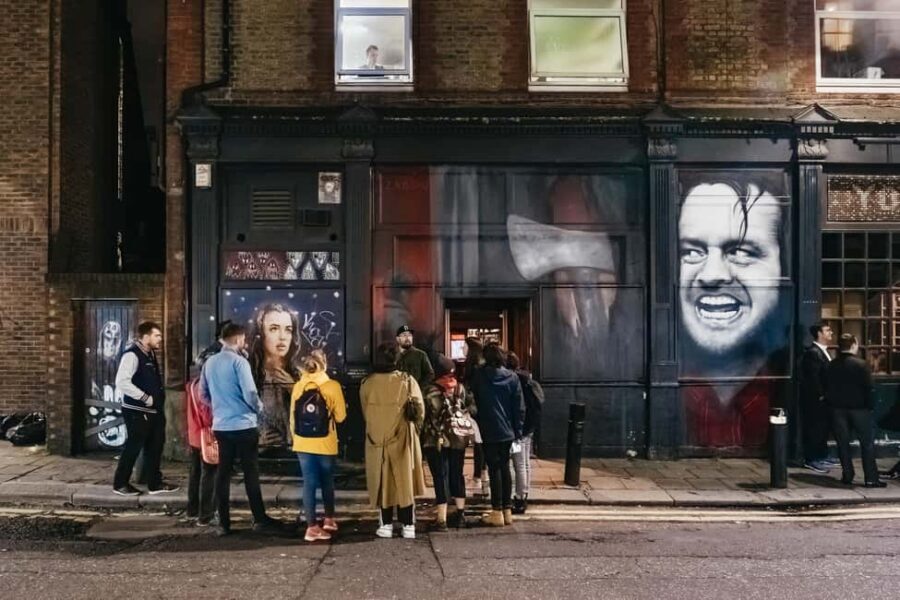
- Suspect cards and evidence-led storytelling to make the mystery feel like an investigation
- Whitechapel crime-scene landmarks around the East End, not staged “Ripper-style” attractions
- Ten Bells and Spitalfields Market connections that ground the story in everyday life
- Brick Lane and Petticoat Lane stops that show what the neighborhood was like beyond the killings
- Sherlock Holmes context: how Victorian crime talk shaped popular sleuthing
- Italian guide requirement that matters for comfort and clarity
Whitechapel Is the Point: Why This Neighborhood Still Feels “Real”
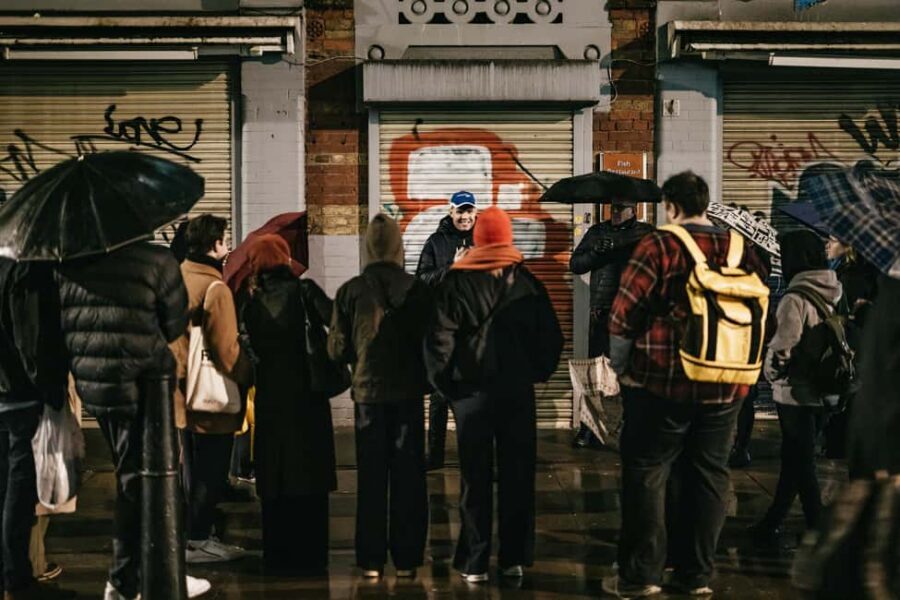
Jack the Ripper stories survive because they’re tied to ordinary streets and crowded markets. On this tour, you’re walking through the East End with explanations that focus on why Whitechapel mattered in 1888, and what day-to-day life looked like for people living there.
That matters because the Ripper legend isn’t only about one killer. It’s also about fear, poverty, and how investigators tried to make sense of evidence with the tools they had at the time.
You can also read our reviews of more tours and experiences in London.



Price and Time: What You Get for About $26.94
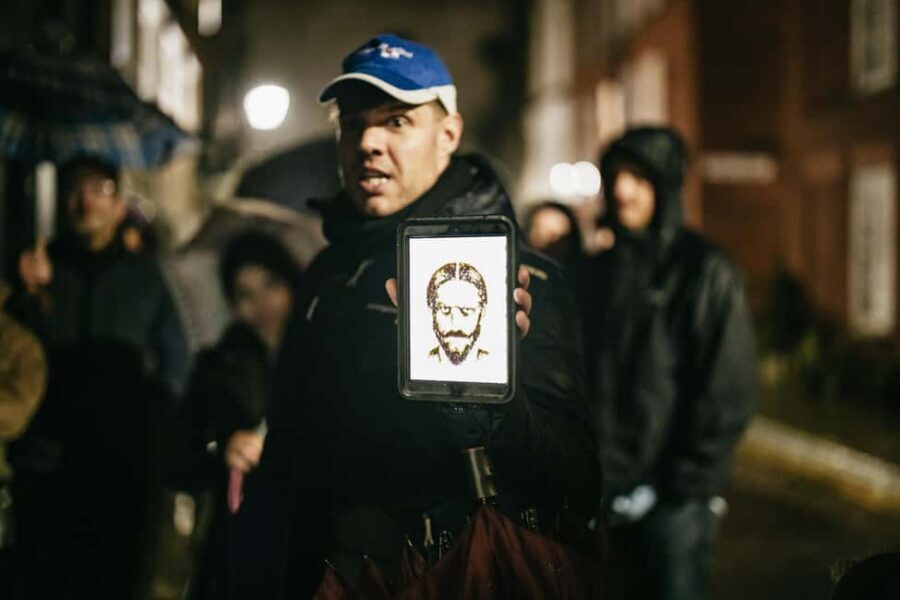
At about $26.94 per person for a 2-hour walk, this is positioned as a value-friendly history experience rather than a long, museum-style program. You’re paying for (1) a live Ripperologist guide, (2) a tight route through key Whitechapel-area sites, and (3) a story format that tries to help you weigh theories.
Also, you get something you can’t really replicate on your own: a structured “investigation” flow—suspects, victims, alleged evidence, and guided interpretation of what might have happened.
Meeting Point at Altab Ali Park: How to Start Without Stress
You’ll meet your guide at the west entrance to Altab Ali Park, by the large iron arch gate on the corner of White Church Lane and Whitechapel High Street. If you’re using public transit, the nearest Underground station is Aldgate East.
The tour ends back at the same meeting point, so you’re not left figuring out how to get out once the walking part is done. Since it’s fully outdoors, wear shoes you trust for pavement and curb crossings, and plan for weather.
The Investigation Format: Suspect Cards, Photo Evidence, and Competing Theories

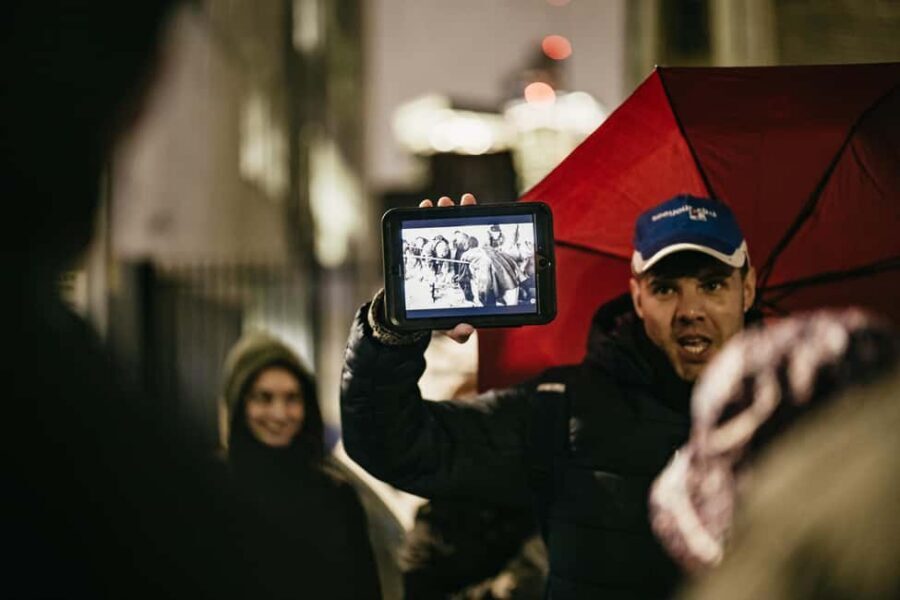
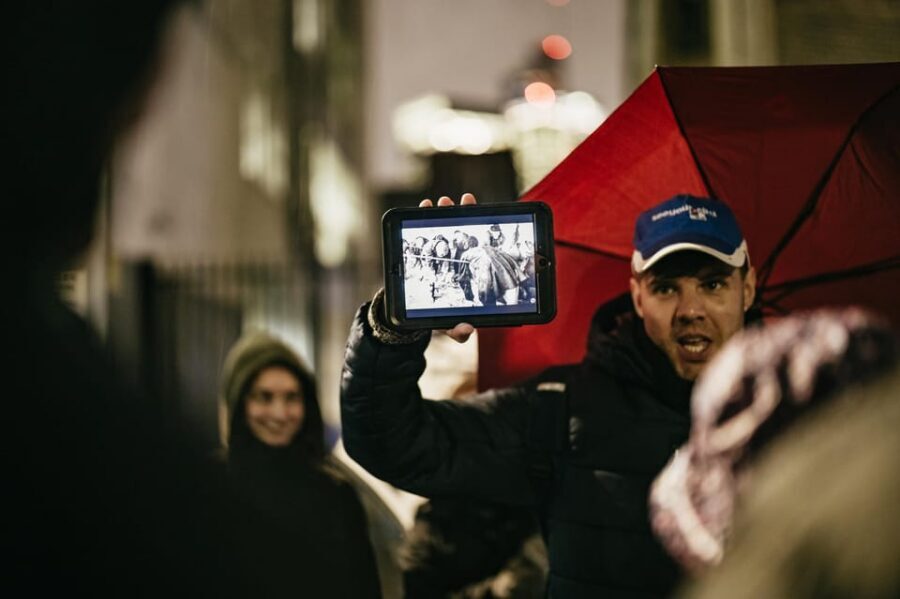
This isn’t set up like a lecture where you simply listen and move on. You’re encouraged to “investigate” as you go—using suspect cards and hearing how a Ripperologist frames the case. The tour includes discussion of the alleged perpetrators and the theories about who might have committed the crimes.
One of the most useful parts of the format is that it doesn’t pretend there’s one neat answer. You’ll hear talk about photographic evidence and how investigators (and later storytellers) tried to interpret what they could find. That’s what turns a tour into a thinking experience.
You should also know the content includes graphic details and visual content, and the instructions say participants under 18 must be accompanied by an adult. If you’re sensitive to that kind of material, treat the tour like you would a serious true-crime event.
Stop 1: St Marys Whitechapel Church Memorial as Your Starting Clue
Your walk begins at St Marys Whitechapel Church Memorial, which works well as a “before you go further” moment. It sets the tone: this is about real people and real fear, not a costume show.
From the first minutes, the story framing matters. Instead of rushing you into rumors, the guide helps connect the place to the surrounding context—Whitechapel in the Victorian era, when the neighborhood’s social conditions shaped everything around it.




Ten Bells Spitalfields: The Pub Stop That Becomes a Story Anchor

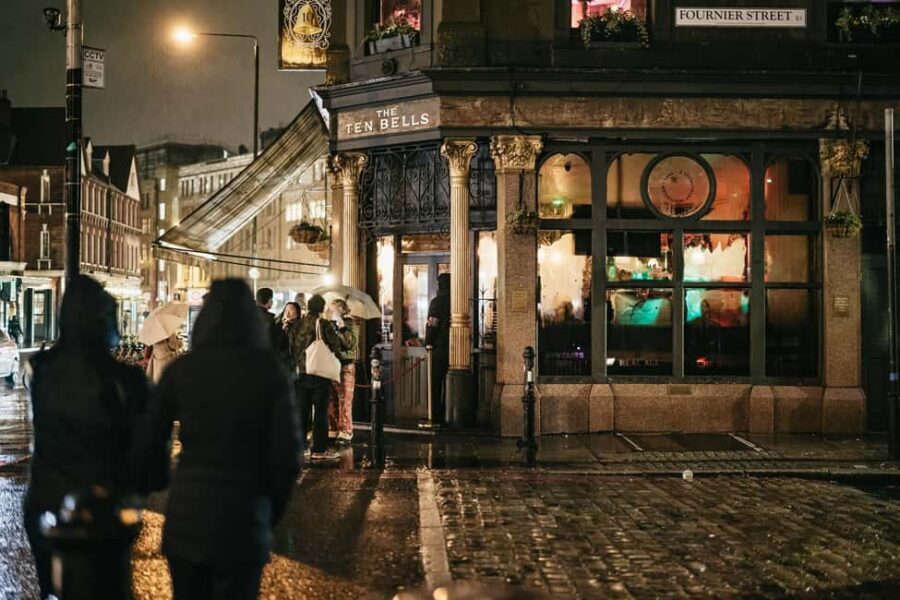
The tour passes The Ten Bells Spitalfields early on, and it also finishes there. That means you experience Ten Bells twice: first as a place you pass while listening, then again as a conclusion point where the guide ties themes together.
Ten Bells is one of those locations that helps the story stick in your head. Even if you’ve seen Ripper pop culture before, hearing the connection in a route like this makes the landmark feel like part of a map, not just a trivia fact.
Christ Church London and Mitre Square: Streets With a Sense of Time
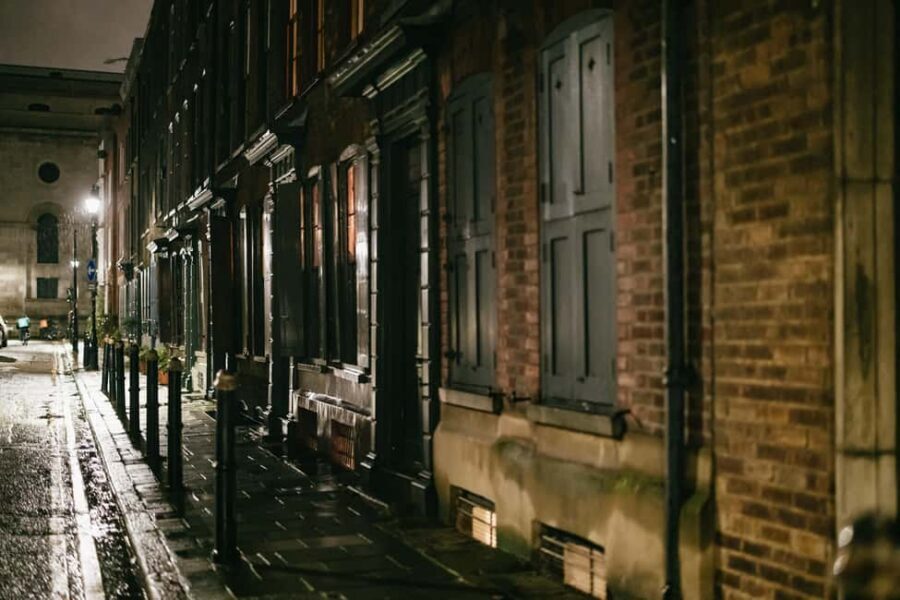
As you move through Whitechapel, you’ll pass Christ Church London and Mitre Square. These aren’t treated as random checkpoints. The guide uses them to keep the story anchored in Victorian streetscape and everyday public spaces.
I like how this kind of routing gives you two layers at once: the “crime story” layer and the “how the neighborhood actually worked” layer. The drawback is that, on a short two-hour tour, you’ll be moving fairly quickly—so if you want lingering photos or extra chatting at each spot, you’ll have to manage your expectations.
Brick Lane: A Famous Street, Explained Through Context
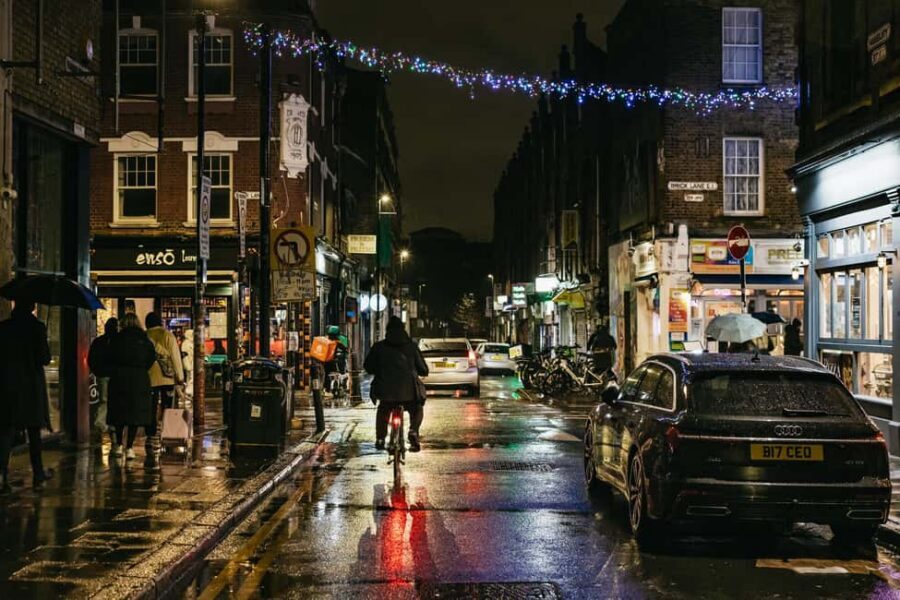
You’ll head to Brick Lane, which is well known today—but the tour’s value is in connecting the street to the era’s social reality. Hearing the case framed alongside the neighborhood’s character helps you avoid the common mistake of treating Whitechapel like a set that only exists for the Ripper story.
If you care about how places shape stories, Brick Lane is a good turning point. It helps you understand why the East End became central to these legends in the first place: dense streets, constant movement, and neighborhoods where people’s lives were tightly packed together.
Petticoat Lane and Spitalfields Market: The Markets That Make It Social, Not Just Criminal
Your highlights include Spitalfields Market and Petticoat Lane, and this part of the route is what brings the story into daily life. Whitechapel is described as an impoverished neighborhood at the time, and market areas are where you can imagine the friction between survival and public anxiety.
This is where the tour stops being only about suspects. It becomes about the everyday rhythm of the East End—what people saw, where conversations happened, and why “where did it happen?” matters as much as “who did it?”
Sherlock Holmes Connection: How Victorian Crime Talk Shaped Popular Sleuthing
One of the tour’s most interesting promised angles is the cultural context behind Sherlock Holmes. The guide frames how the kind of crime story circulating in Victorian London helped shape public fascination with detective work.
This is a smart add-on for anyone who loves Holmes or modern mystery fiction. Even if Holmes wasn’t born in the same moment as the Ripper case, you’ll get a clearer sense of how society learned to think about clues, evidence, and motives.
Language Note: Italian Guides, Clarity, and the Perla Factor
The tour is led by a live guide who speaks Italian. That’s a major practical point. If you don’t feel strong in Italian, the pace and “evidence talk” can become harder to follow, especially where the guide is explaining theories and details.
There’s also a real-world lesson from guide quality: one Italian guide named Perla was praised for enthusiasm and professionalism, with a recommendation specifically for Italian-language guests. On the flip side, one earlier experience had an issue where the guide didn’t communicate clearly enough and the result was confusion—so clarity depends on the specific guide and your comfort with Italian.
My advice: if you’re booking because you want the full mystery logic, make sure you’re okay with Italian being the main language. If that’s not your strength, consider a tour offered in your language instead.
Outdoors, Weather, and the Practical Reality of Walking
Because the tour takes place entirely outdoors, your biggest variable is weather. Dress for it, and bring layers if you’re going in colder months.
The activity is listed as wheelchair accessible, but the note also says public paths can vary. So while steep hills aren’t emphasized, uneven surfaces and changing sidewalk conditions are still possible—plan for that if mobility is a concern.
Who This Tour Fits Best
This tour is a great match if you:
- enjoy true-crime style storytelling with a sense of investigation
- want to walk through Whitechapel-area landmarks like Ten Bells, Spitalfields Market, Brick Lane, and Mitre Square
- like connecting Victorian conditions to modern pop culture, including the Sherlock Holmes angle
- can handle graphic details and visual content, or you’re bringing an adult who can support younger participants (under 18 requires an adult)
It’s less ideal if you:
- need the tour in English (since the guide is Italian)
- dislike true-crime material with graphic content
- want a long, slow sightseeing pace with lots of resting time at each location
Should You Book This Jack the Ripper Tour?
Book it if you want a short, guided, evidence-flavored walk through East End London. The combination of suspect cards, a live Ripperologist, and the route through real Whitechapel landmarks makes it feel like you’re following a trail, not just hearing facts.
Skip or rethink it if Italian language clarity is a deal-breaker for you, or if you’re not comfortable with graphic true-crime content. Also, if you crave long stops for photos and slow wandering, the two-hour timing may feel brisk.
FAQ
What is the duration of the Jack the Ripper walking tour?
The tour lasts about 2 hours.
Where do I meet the guide?
Meet at the west entrance to Altab Ali Park, at the large iron arch gate on the corner of White Church Lane and Whitechapel High Street.
Which Underground station is closest?
The nearest Underground station is Aldgate East.
What language is the tour guide?
The live tour guide speaks Italian.
Is the tour wheelchair accessible?
Yes, it’s listed as wheelchair accessible, but paths may have varying public surface conditions.
Does the tour include graphic content?
Yes. The activity contains graphic details and visual content, and participants under 18 must be accompanied by an adult.
How much does the tour cost?
It’s listed at $26.94 per person.