REVIEW · BELFAST
The Story of Belfast: walking tour with a local guide
Book on GetYourGuide →Operated by Odyssey Walking Tours · Bookable on GetYourGuide
Belfast has a story in every corner. This 3-hour small-group walk from Belfast City Hall is one of the best ways to learn how the city’s politics, culture, and architecture connect. I like the gentle pace and the fact it’s guided by a locally born pro who can answer real questions, not just recite facts.
My other favorite part is the tight group size (up to 9 or 10), which makes it easier to ask follow-ups as you pass major sites like the Grand Opera House and Ulster Hall. One consideration: you’ll be outside in all weathers, so bring proper layers and comfortable shoes—this is Belfast, after all.
In This Review
- Quick reasons to book
- Starting at Belfast City Hall and your green-jacket guide
- What this Belfast walking tour actually teaches (and why it works)
- A 3-hour, mostly easy walk through Belfast’s key landmarks
- Stop-by-stop: City Hall to Scottish Provident Building to Grand Opera House
- Belfast City Hall (start and anchor)
- Scottish Provident Building (quick look)
- Grand Opera House (brief but memorable)
- Europa Hotel, Crown Liquor Saloon, and Ulster Hall: where stories meet public life
- Europa Hotel (short stop)
- Crown Liquor Saloon (brief exterior pause)
- Ulster Hall (short look)
- The Linen Hall, Queen’s Arcade, and Castle Buildings: architecture as a map
- The Linen Hall (10 minutes)
- Queen’s Arcade (5 minutes)
- Castle Buildings (20 minutes)
- Crown Entry and 4 Corners: the streets that change the mood
- Churches and learning spaces: First Presbyterian, St Mary’s, and Kelly’s Cellars
- First Presbyterian Church (about 10 minutes)
- Kelly’s Cellars (about 5 minutes)
- St Mary’s Church, Belfast (about 15 minutes)
- The guide experience: why Martin’s style can make this tour special
- Practical tips: shoes, rain, and the pace that keeps it enjoyable
- Where this tour fits best in your Belfast trip
- Should you book The Story of Belfast walking tour?
- FAQ
- Where does the Story of Belfast tour start?
- How long is the walking tour?
- How big is the group?
- Is the tour wheelchair accessible?
- How much walking is involved?
- What language is the tour guide?
- What should I wear or bring?
Quick reasons to book
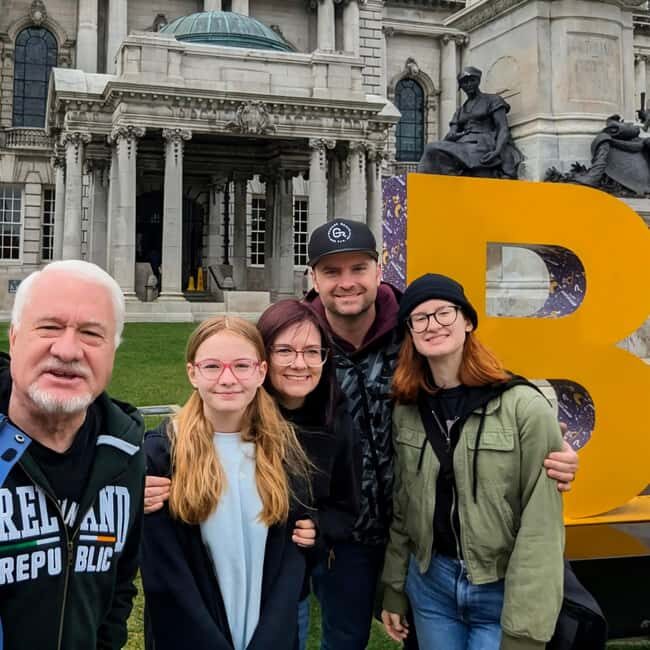
- City Hall as your launch point: Baroque revival style, and a perfect first clue to how power shows up in the city.
- Small-group limit: Up to 9/10 people, so the guide can keep it conversational.
- Politics, culture, and history stitched together: Not separate lectures—one story with many angles.
- A route that stays practical: Less than one hour of actual walking on mostly flat terrain.
- A guide who’s hard to stump: Martin-style enthusiasm and Q&A energy based on how he’s praised for answering anything.
- Photo-friendly stop cadence: Short pauses at key landmarks so you don’t feel rushed.
Starting at Belfast City Hall and your green-jacket guide
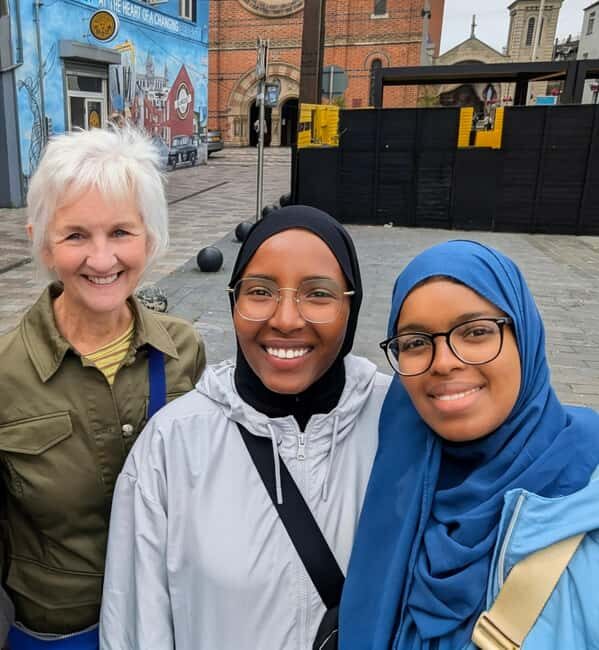
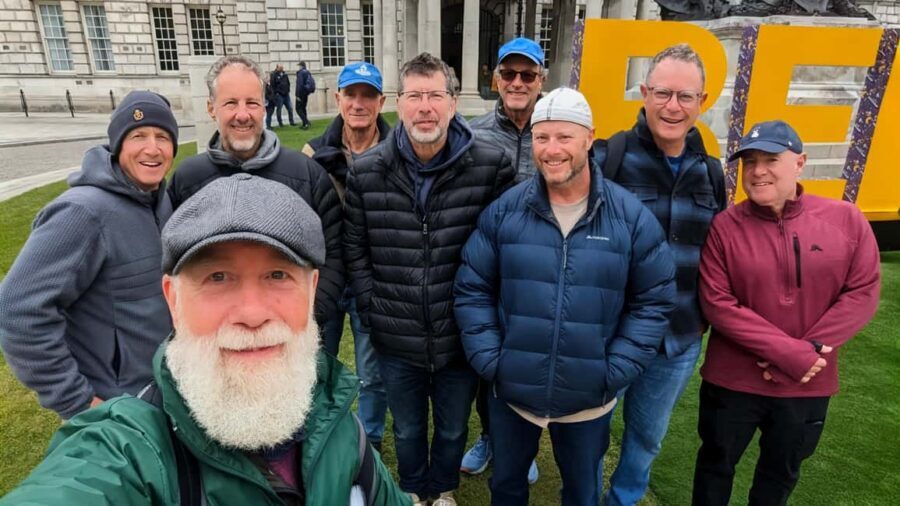
Your tour starts in a very specific spot: stand at the left side of the front gates facing Belfast City Hall. Your guide will be wearing a green Odyssey Tours jacket, so it’s easy to spot them and get going. If you’ve ever joined a tour that felt like a scavenger hunt, this is refreshingly straightforward.
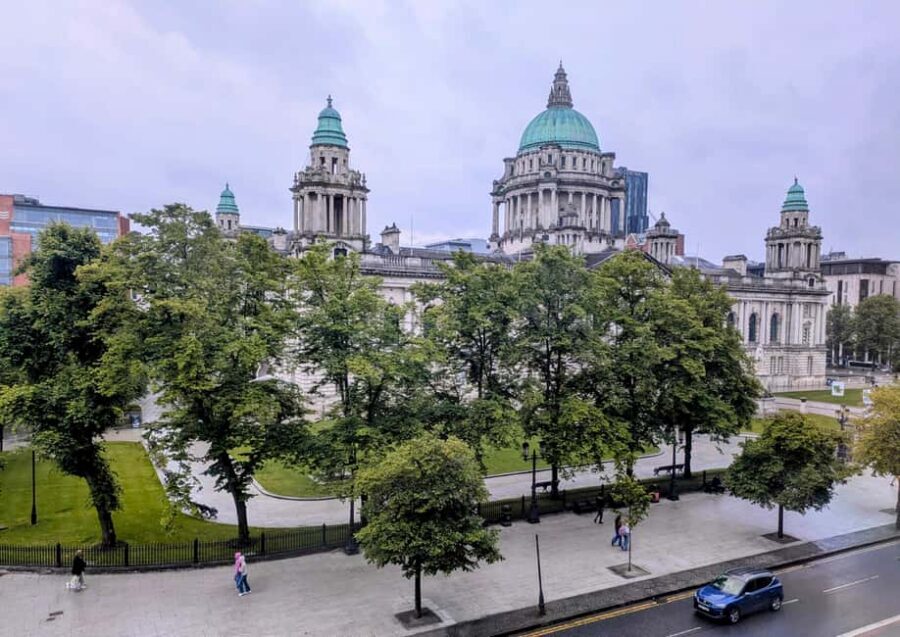
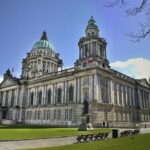
City Hall is not just a meetup point—it’s a signal. The description calls it a magnificent Baroque revival building, and that matters because Belfast likes to announce its identity through architecture. Even if you don’t know a single thing about the city yet, you’ll feel the difference between “ordinary streets” and places that carry civic weight.
The pace is also built for comfort. This is a gentle, mostly flat stroll, and the route is circular through the city centre. You’ll spend more time listening than marching.
You can also read our reviews of more walking tours in Belfast
What this Belfast walking tour actually teaches (and why it works)
This isn’t a generic highlights tour. The promise is clear: a cultural, historical, and political tour that tells the story of Belfast. The themes the guide brings up include turbulent past, division and peace, innovation and pioneers in education, rock stars, revolution, castles, and the era often referred to as the Troubles.
Here’s why that works well for you. Belfast can feel complicated from a distance—especially if you’re only seeing headlines or “two sides” narratives. On this walk, you get context as you move through the streets, so the city starts to make sense as a place that changed over time. Instead of treating events like trivia, the tour turns them into a timeline you can picture.
And the guide matters. In the feedback I’m using to shape what to expect, Martin comes across as extremely passionate and the kind of person who can handle whatever you ask. The tour is designed like a guided conversation: you’re walking through the city, but you’re also building a mental map of why things happened and what people were dealing with.
A 3-hour, mostly easy walk through Belfast’s key landmarks
You should think of the full experience as about 160 to 180 minutes in total, with a friendly split between short stops and narration. The total “actual walking” is less than an hour, so if you’re not keen on long distances, this tour is a smart choice.
It’s also wheelchair accessible. That doesn’t mean every street is perfect for every chair, but the tour is explicitly marked as accessible, and the route stays in the city centre.
One more practical note: you’re meeting up and ending back at City Hall. That’s convenient if you have a late lunch, a show, or just want to get your bearings fast without being dragged across the city.
Stop-by-stop: City Hall to Scottish Provident Building to Grand Opera House
Belfast City Hall (start and anchor)
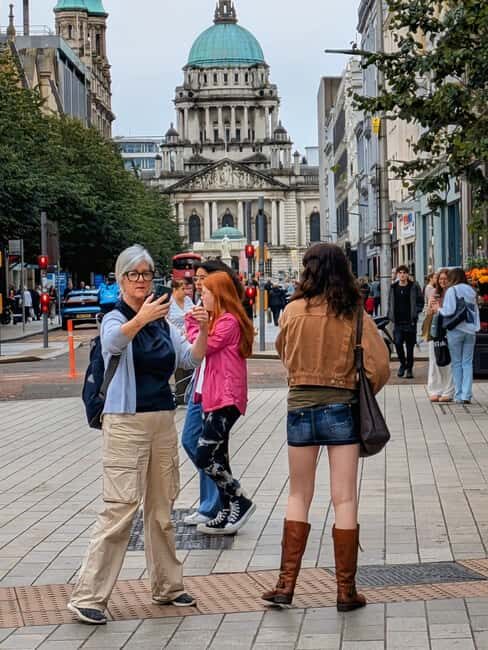
You’ll begin at the left side of the gates facing Belfast City Hall. Take a moment to look up. The building is described as Baroque revival, and that’s exactly the kind of structure that helps you understand what Belfast wanted to project at key moments in its civic life.
Even if you don’t care about architectural styles, it’s useful as an orientation point. You’ll repeatedly use the “starting square” in your head as you go.
You can also read our reviews of more guided tours in Belfast

Scottish Provident Building (quick look)
Next up is the Scottish Provident Building for about 20 minutes. This is the kind of stop that’s short but meaningful: you’re not just staring at stone; you’re getting story context that links what you see with how the city developed.
Tip for you: use this time to ask a question. If you’re the type who likes to understand before you photograph, this is a good moment.
Grand Opera House (brief but memorable)
Then you get a short pause at the Grand Opera House (around 10 minutes). Cultural venues matter in a political-history tour because they show what a city values publicly. Even without going inside, you’ll get enough context from the guide to connect the venue to the bigger Belfast story.
If you want ideas for later, this is one of the stops that often sparks them—because opera houses and theatres tend to point toward music, identity, and the way people gather.
Europa Hotel, Crown Liquor Saloon, and Ulster Hall: where stories meet public life
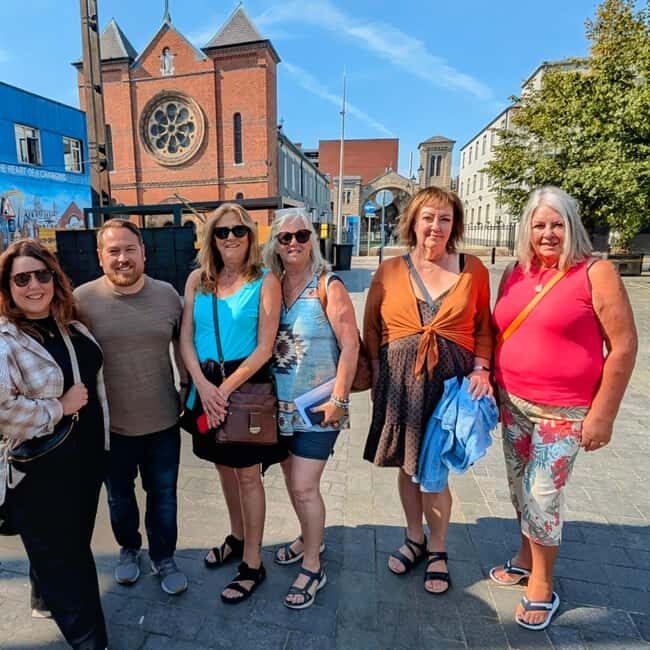
Europa Hotel (short stop)
The Europa Hotel is on the route for about 10 minutes. It’s another “see it and understand why it’s here” stop. Even if you’re not focused on hospitality, the hotel category is often tied to big public moments—gatherings, attention, and the flow of visitors. The guide will connect it to what was happening in Belfast at different times.
Crown Liquor Saloon (brief exterior pause)
You’ll also stop at Crown Liquor Saloon for about 15 minutes. This is a classic Belfast name, and the tour frames it as part of the city’s everyday culture. It’s the sort of location that helps you remember that history isn’t only in government buildings and churches—it also lives in how people socialize.
If you’re planning a drink later, ask your guide for direction. This walk is designed to point you toward places to eat, drink, listen to Irish music, and mix with locals.
Ulster Hall (short look)
Next is Ulster Hall (around 10 minutes). Like the Opera House, it’s a cultural anchor in the route. The value here is the connection between place and theme: education, performance, public life, and the way Belfast’s identity showed up in institutions.
You’ll find these short pauses work because they prevent fatigue. You keep moving, but you still get the storytelling beat.
The Linen Hall, Queen’s Arcade, and Castle Buildings: architecture as a map
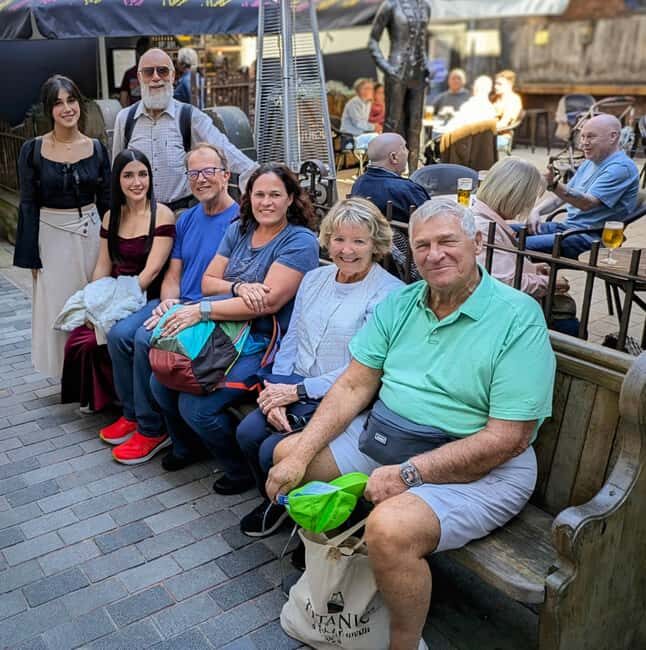
The Linen Hall (10 minutes)
The Linen Hall gets about 10 minutes. This is another “read the city” stop. The guide’s job is to give you context so the building doesn’t stay as a pretty facade. You’ll see how institutions and commerce reflect what people were building and who had influence.
Queen’s Arcade (5 minutes)
At Queen’s Arcade, expect about 5 minutes. This one is short on purpose. Think of it as a street-level checkpoint—use it to notice the scale of the city centre and how easily the tour can stitch together big-picture themes with compact spaces.
Castle Buildings (20 minutes)
Then you’ll spend about 20 minutes at Castle Buildings. Longer time here usually means the guide will talk more, and likely tie the architecture and location to power structures in Belfast’s story. It’s also one of those stops where you can feel how streets funnel attention.
If you’re a photo person, this is a good place to slow down and frame shots. You’re not trying to capture everything—just enough to remember what the guide connected to the larger narrative.
Crown Entry and 4 Corners: the streets that change the mood
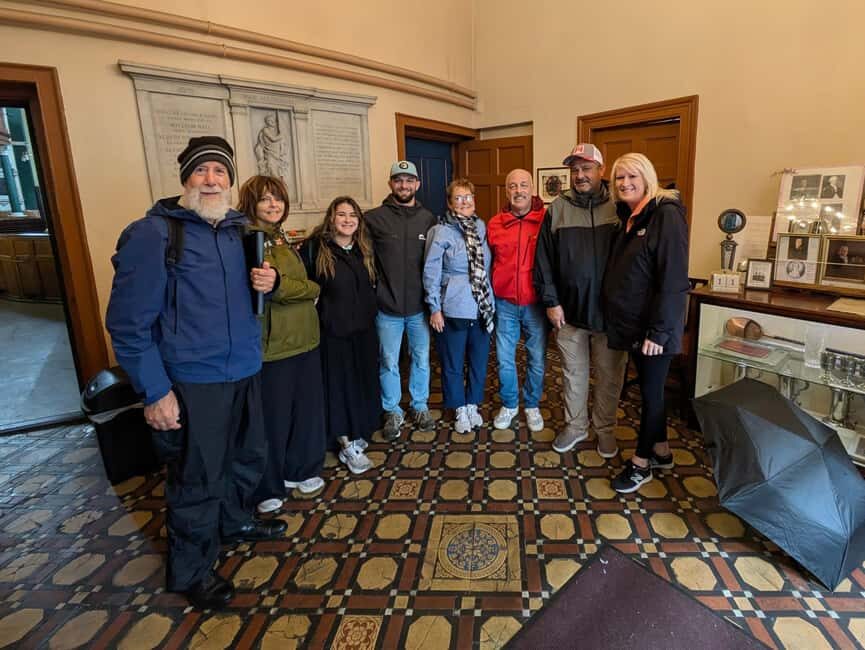
Two of the most atmospheric stops are Crown Entry (about 15 minutes) and 4 Corners (about 15 minutes). The tour’s themes—tribal conflicts and the Troubles—are referenced as part of the walk, and these spots tend to be useful because the city’s street layout can make the story feel immediate.
In plain terms: when you’re standing somewhere with history in the walls and the street angles make sense of movement, the past stops feeling abstract.
Here’s the balancing point. This is not presented as sensational. It’s framed as context—why division happened, how people lived with it, and how the story shifted toward peace and optimism for the future.
Churches and learning spaces: First Presbyterian, St Mary’s, and Kelly’s Cellars
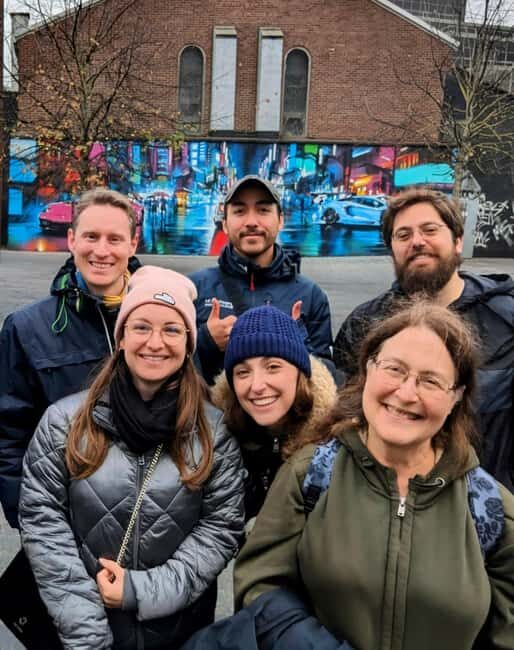
First Presbyterian Church (about 10 minutes)
You’ll visit First Presbyterian Church for about 10 minutes. Churches show up in Belfast’s story in a big way because community, identity, and belonging are not side details there. The stop is short, but it fits the tour’s broader structure: public institutions and community anchors are part of the same narrative.
Kelly’s Cellars (about 5 minutes)
Next is Kelly’s Cellars for about 5 minutes. This is a quick taste stop—fast, practical, and useful if you want a suggestion for where to go next. Even without long lingering, it helps break up the more formal-looking landmarks with a more everyday, social Belfast feeling.
St Mary’s Church, Belfast (about 15 minutes)
Finally, there’s St Mary’s Church, Belfast for about 15 minutes. A longer stop here gives you room to absorb the atmosphere and connect it back to the themes the guide is tracking. You’ll end the tour back at City Hall, so the route finishes with a sense of how community spaces fit into the city’s timeline.
The guide experience: why Martin’s style can make this tour special
The strongest praise in the info you gave is about the guide’s delivery. Martin is described as extremely knowledgeable and passionate, with huge depth on Belfast and Ireland’s history. One review also highlights the feeling of being with a human encyclopedia—plus the fact that he didn’t cancel even when the group size was tiny.
That matters for you because a history and politics tour lives or dies on explanations. You’ll get better value if the guide can handle questions and adjust the pace to your curiosity. This tour is small-group by design, which makes it more likely you’ll leave with answers you actually care about.
Also, the tour is led by a locally born professional guide. That background can change everything. It’s one thing to know facts; it’s another to know how stories are felt in daily life.
Practical tips: shoes, rain, and the pace that keeps it enjoyable
Bring comfortable shoes. The route is gentle and mostly flat, but you’re still walking between stops, and Belfast weather can turn quickly.
Expect some rain. The tour explicitly warns that Ireland gets a wee bit of rain sometimes, so come prepared as you go out in all weathers. Layers beat one heavy coat, especially if you’ll be inside and out of shade during the pauses.
Fitness level is another point. It’s noted as not suitable for people with a low level of fitness. That doesn’t mean it’s a tough hike, but it’s not designed for severe mobility limits. If you’re unsure, match your comfort with the “less than one hour actual walking” promise and use that as your reality check.
Where this tour fits best in your Belfast trip
If you’re trying to get oriented fast, I’d treat this as an early-day activity. It starts at City Hall, ends back there, and covers the main story threads—division, conflict, and a move toward peace. You’ll understand your later stops better, even if you never return to the exact same streets.
It also fits well if you like cities where history feels alive. Belfast is not a place where you can read a plaque and walk away. You need someone to connect the dots, and this tour is built for that.
If you’re coming for architecture, you’ll get plenty of that too. The tour calls out the splendor of Belfast’s amazing architecture, and the stop selection reinforces it: civic building, cultural buildings, and community landmarks.
Should you book The Story of Belfast walking tour?
Yes—if you want a guided story that connects politics and culture to real places. The small group size, the City Hall start, the short stop rhythm, and the guide’s ability to handle questions make this a strong value for your time.
Skip it (or at least think carefully) if you hate weather changes or if your fitness limitations make outdoor walking hard, even at an easy pace. This tour works best when you’re ready to listen, look up, and let the city explain itself through people and buildings.
FAQ
Where does the Story of Belfast tour start?
The tour meets on the left side of the outside of the front gates facing Belfast City Hall. The guide will be wearing a green Odyssey Tours jacket.
How long is the walking tour?
It runs for about 3 hours (listed as 160 to 180 minutes).
How big is the group?
It’s a small group limited to 10 participants.
Is the tour wheelchair accessible?
Yes. The tour is marked as wheelchair accessible.
How much walking is involved?
The route is circular in the city centre with less than one hour of actual walking on flat terrain.
What language is the tour guide?
The live tour guide speaks English.
What should I wear or bring?
Wear comfortable shoes. The tour goes out in all weathers, so come prepared for rain.