REVIEW · BELFAST
Belfast Walking Tour with a Local – History & Craic
Book on GetYourGuide →Operated by Belfast Dander Tours · Bookable on GetYourGuide
Belfast has a way of talking back. This walking tour turns the city into a story you can walk through, led by Corey, a native who mixes history with comedy and real local texture. I love the idea that it’s not a “one-topic” lecture, but a proper dander through the city’s old and new layers.
Two things I particularly like: Corey’s storytelling (full of humour and Belfast slang) and the smart add-on of an optional audio headset so you can actually hear him when the street noise gets going. One drawback to consider: it’s a moderate walking route, so you’ll want comfortable shoes and a weather-ready outfit.
In This Review
- Key Things I’d Plan Around
- How This Belfast Dander Really Works (History With Humour)
- Meeting Belfast City Hall the Right Way: Inside the Courtyard
- Cathedral Quarter: Street Stories and the Creative Side
- Albert Memorial Clock: A Landmark Anchor for the Whole Story
- Big Fish Belfast: When Local Whimsy Meets Real Place-Memory
- Titanic Belfast: Passing a Modern Magnet With Context
- Beacon of Hope, Joy’s Entry, and Spirit of Belfast: The Human Angle
- City Hall Again: Wrapping the Walk With Clear Next Steps
- Price and Value: Why $26 Can Actually Be a Smart Spend
- Who This Tour Suits Best (And Who Should Rethink It)
- Practical Tips to Get the Best Experience
- Should You Book This Belfast Walking Tour With Corey?
- FAQ
- Where does the tour meet?
- How long is the Belfast walking tour?
- How much does the tour cost?
- Is the tour guided in English?
- Can I book a private tour?
- Is an audio headset included?
- What should I bring or wear?
- Is the tour wheelchair accessible?
- Who is the tour not suitable for?
- What’s included in the price, and is there flexible booking?
Key Things I’d Plan Around
- Corey’s Belfast voice: local slang, jokes, and personal context, not just dates and plaques.
- A balanced route: big landmarks plus street-level culture, with Titanic and the Troubles included.
- Optional audio headset: makes a big difference on busy corners and rainy days.
- Photo stops built in: at major sights, with time to take pictures.
- Fast start, easy meeting: inside Belfast City Hall courtyard by the Queen Victoria statue.
How This Belfast Dander Really Works (History With Humour)
This isn’t the kind of tour where you get one big “theme” and then move on. The whole point is that Belfast is messy in the best way—ancient origins, grand buildings, street art, modern regeneration, and yes, the Troubles—then the story keeps rolling into today. Corey keeps it moving like a good chat, with history threaded through as you walk.
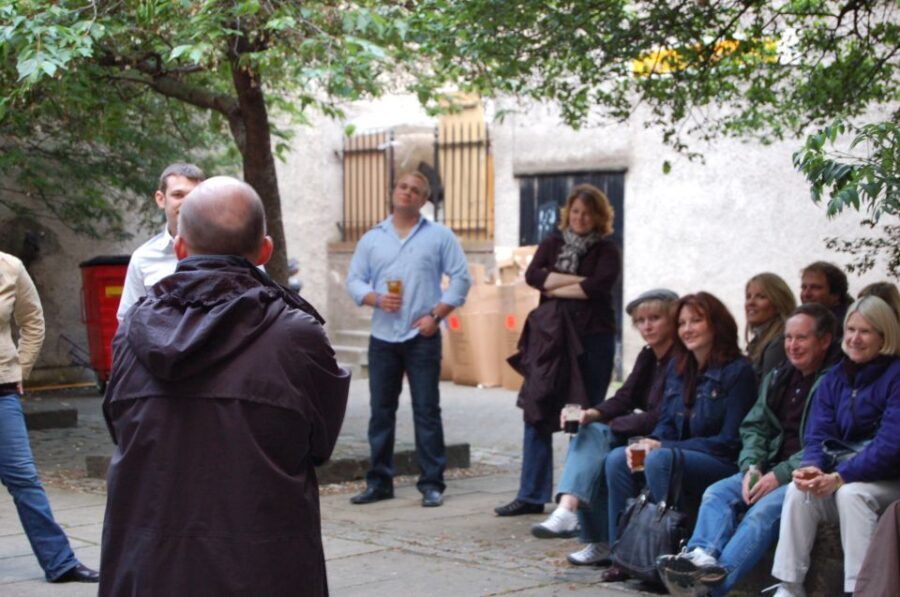
What makes the experience feel different is the tone. Corey talks like someone who actually lives here, with humour baked in. You’ll hear Belfast terms and local phrasing, and the tour has a “hold on, wait for this bit” rhythm. It keeps the city from feeling like a textbook.
Also, you’re not stuck in one deep lane. You’ll cover architecture, culture, and everyday Belfast life in the same walk. That’s a plus if you’re short on time and want a wide-angle view of what to notice later on your own.
You can also read our reviews of more walking tours in Belfast

Meeting Belfast City Hall the Right Way: Inside the Courtyard
You start at Belfast City Hall Courtyard, and that detail matters. Many tours line up outside gates where it’s crowded and confusing. Here, you meet inside the grounds, in the courtyard facing the main entrance, beside a Queen Victoria statue.
Corey also makes it easy to find him. He emails or texts beforehand, and he wears a bright blue school bag during every tour. If you like simple logistics (and who doesn’t on holiday), this is a good sign: you don’t waste your time hunting for a meeting spot.
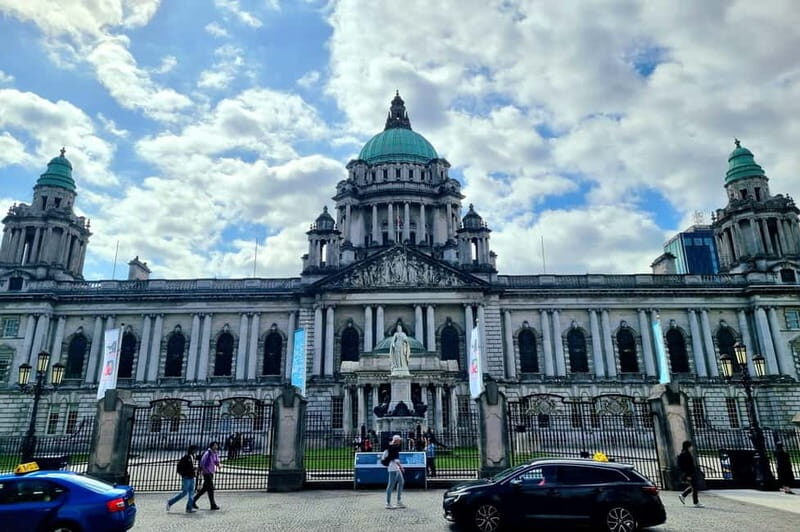
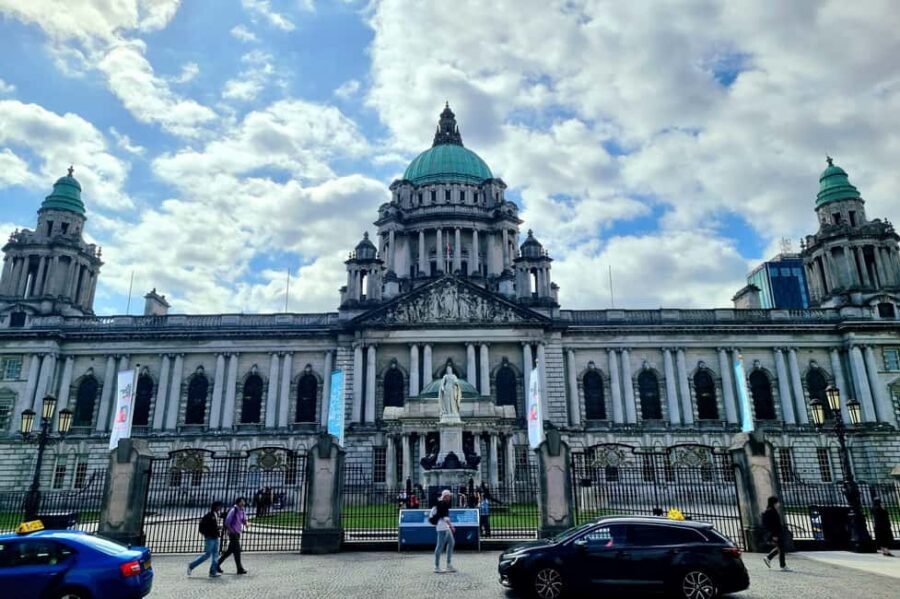
Once you’re there, City Hall itself sets the stage. It’s Baroque Revival style with those green copper domes, plus a courtyard atmosphere that feels historic before you even begin. It’s a strong “first scene” for a tour that’s really about how Belfast layers time on top of time.
Cathedral Quarter: Street Stories and the Creative Side
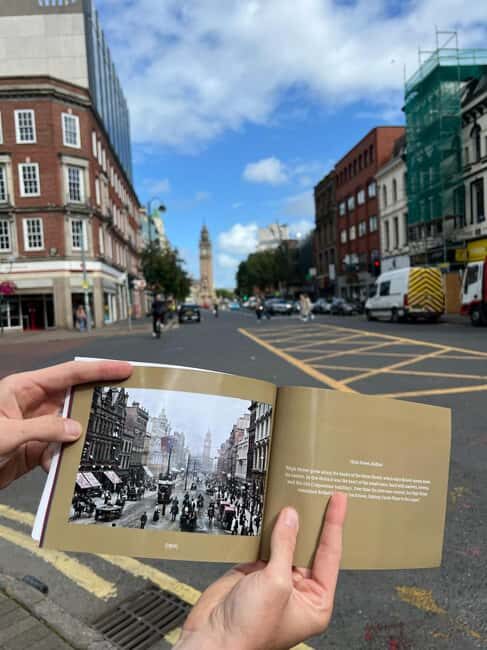
The walk moves into the Cathedral Quarter next, and this stop is more than a photo moment. You get a guided look around, plus Corey’s take on what the area represents in Belfast’s ongoing changes. Expect a mix of city feel—buildings and street-level character—plus discussion that ties the creative present back to the city’s older identity.
This is a good moment to pay attention with your camera ready, but also your ears open. The humour and slang show up here, and it’s the kind of stop where Corey can point out what’s easy to miss if you’re just walking through.
Potential drawback at this stage: if you’re visiting on a windy or rainy day, you’ll likely be moving quickly between points. Wear shoes that handle wet pavement, because you’ll be doing a real walk rather than standing still for long explanations.
Albert Memorial Clock: A Landmark Anchor for the Whole Story
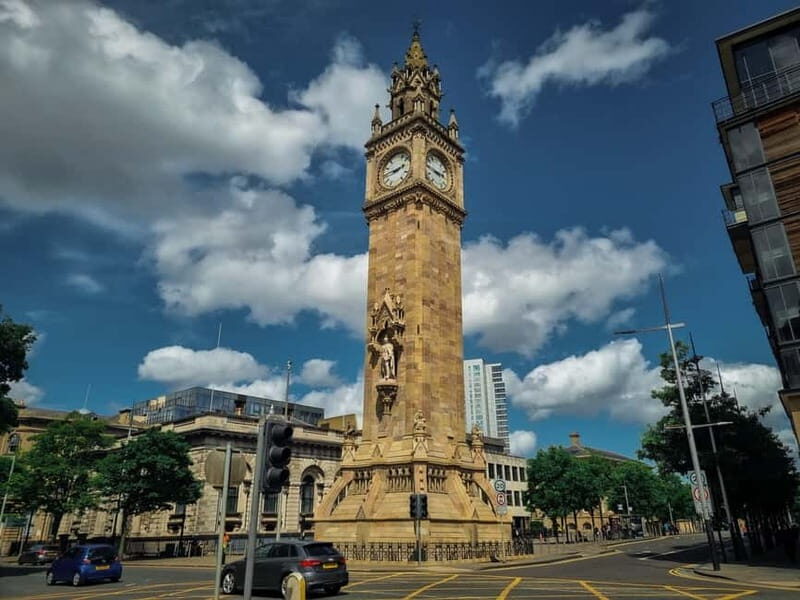
Next up is the Albert Memorial Clock—another photo stop with guided context. Landmarks like this work well on a short tour because they give you an anchor. Even if you don’t remember every date, you’ll remember where you were and how the guide framed what you saw.
Corey uses these points to connect the big-picture dots: Belfast’s past and present, and how different eras leave marks on streets, buildings, and public spaces. It’s not a “monument only” tour. The clock helps you orient, so the later stops land with more meaning.
If you like learning how cities “organize themselves” spatially, this is one of those steps that pays off later. You’ll start noticing how the story of Belfast is built into what’s placed where.
Big Fish Belfast: When Local Whimsy Meets Real Place-Memory
Then comes Big Fish Belfast, a stop that’s playful on the surface but useful in a tour that’s about local voice. Corey doesn’t treat this kind of landmark as decoration. He treats it like a signal: Belfast has always had humour, and modern Belfast keeps finding ways to express itself.
This is one of the spots that can be a relief if you’ve been dealing with heavy topics on other days. The tour is still honest, but it keeps shifting the emotional gear. You get humour, a photo opportunity, and then the story moves on.
One practical tip: if you want the best photos, let Corey do the first framing. He often knows where the light angles and where the best shot lines up. Even if the tour only gives short “photo stop” windows, the guide’s pacing helps.
You can also read our reviews of more historical tours in Belfast



Titanic Belfast: Passing a Modern Magnet With Context
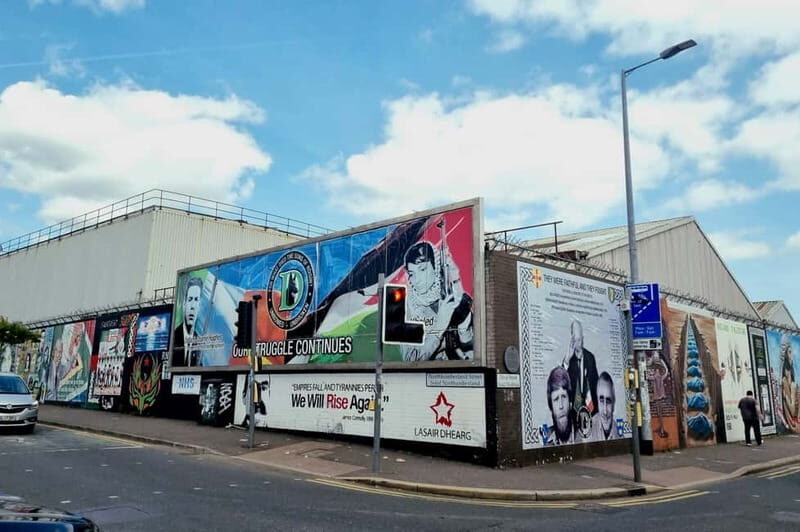
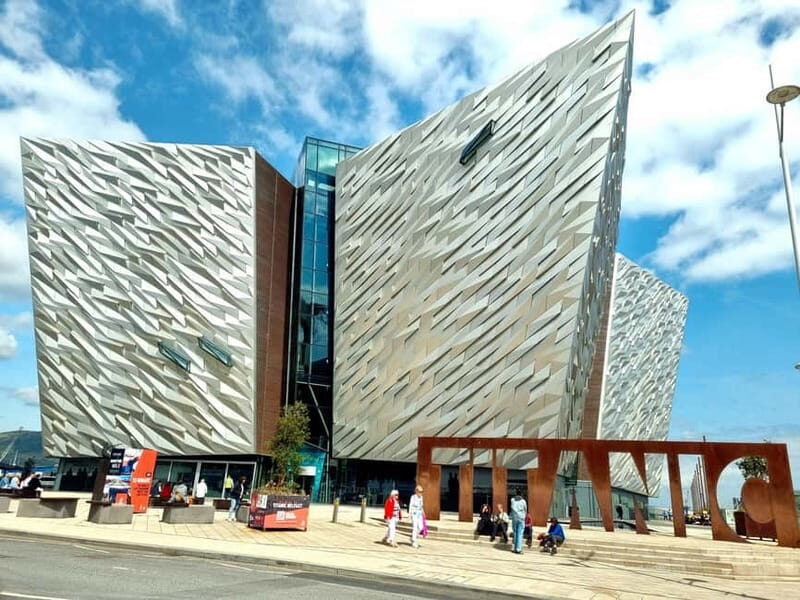
You’ll pass by and get a guided moment around Titanic Belfast. You won’t be stuck inside on this walk, but the tour doesn’t treat Titanic as a random stop either. It’s part of the city’s modern identity and regeneration story—how Belfast presents itself now, and how the city tells its own industrial chapter.
Corey ties Titanic into the wider pattern: Belfast’s layers don’t disappear when the future arrives. They get reframed, re-used in public memory, and turned into a way to look forward. If you plan to visit Titanic Belfast later, this walk can give you a “warm start” for what you’ll see.
If your priorities are strictly sightseeing photos, note that this stop is described as passing by and walking coverage. The tour is more about the feeling and context of the city than a museum-style checklist.
Beacon of Hope, Joy’s Entry, and Spirit of Belfast: The Human Angle
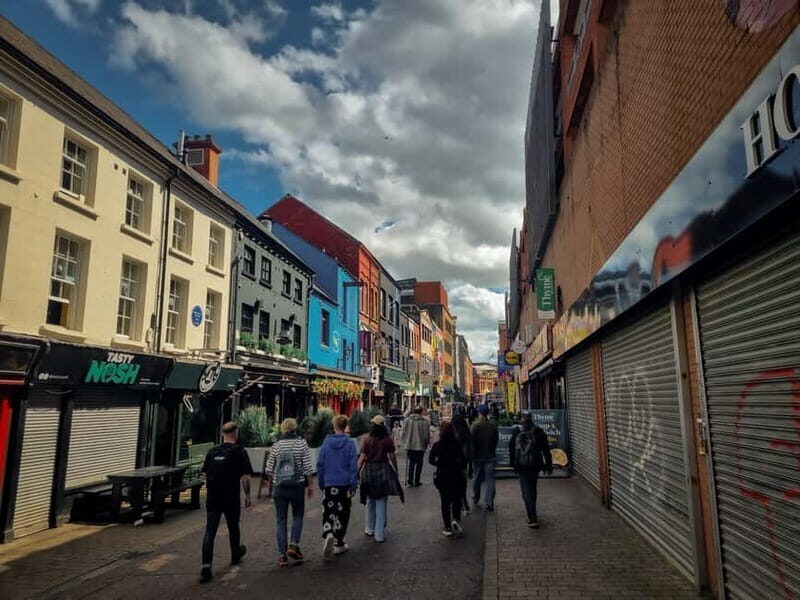
After Titanic, the tour shifts again. You’ll hit Beacon of Hope, then Joy’s Entry as a photo stop, and Spirit of Belfast as another stop where you’re likely to pass by.
These aren’t random “name drops.” Corey’s overall approach—story-packed but not exhausting—uses spots like these to highlight the city’s struggles and its forward motion. The Troubles are part of the conversation, and Belfast’s transformation is part of the conversation. These stops help you feel that, not just hear it.
Here’s why this matters for you: when a tour covers difficult history, you want balance. This one keeps moving, with humour as a pressure valve and modern landmarks as evidence that the story continues. It doesn’t freeze Belfast in one era.
Also, you’ll get some of the best “walk and talk” moments here—short pauses, quick framing, and then back on the street. It’s the right pace for absorbing a lot in two hours.
City Hall Again: Wrapping the Walk With Clear Next Steps
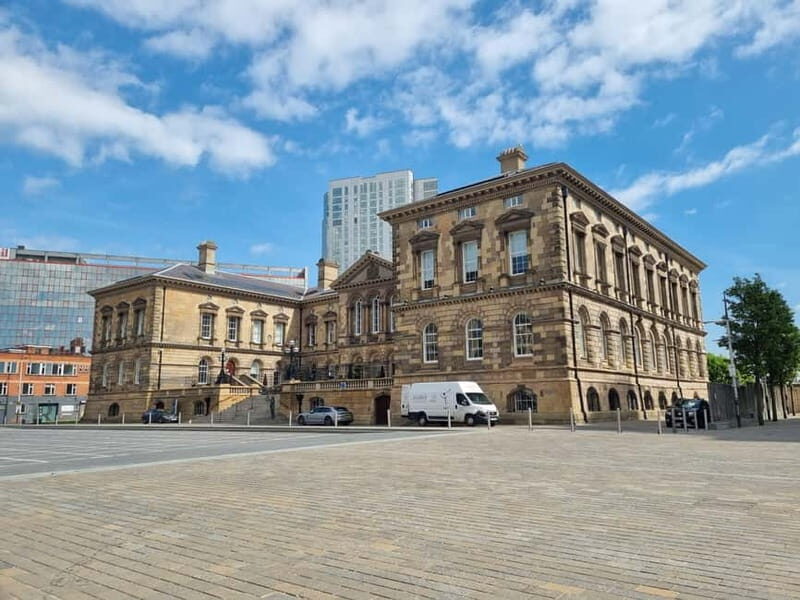
You finish back at City Hall. That’s a smart choice because you end where you started: a central, easy-to-navigate place. Even if you’re heading straight to a meal afterward, you’re not trapped at the far end of the city with no easy restart point.
Corey also provides recommendations for your visit. A tour like this is most useful when it doesn’t end when you end. In practice, Corey’s suggestions often include other Belfast sights you can do next, including Peace Walls, the Victoria Dome, the Botanical Gardens, and the Library.
That matters if you’re trying to plan like a local rather than just ticking off “top attractions.” After this, you’ll know what to choose and why.
Price and Value: Why $26 Can Actually Be a Smart Spend
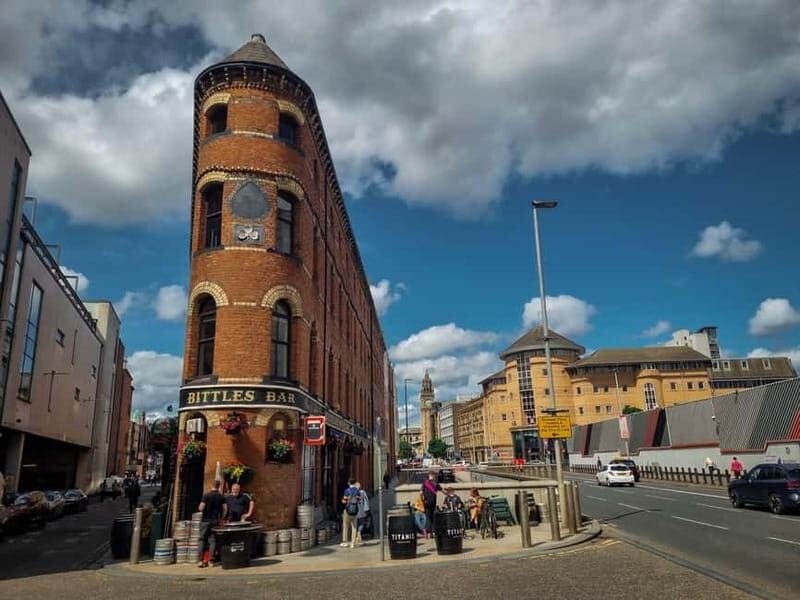
$26 per person for a 2-hour, 150-minute guided walk is a fair price—especially when the guide is clearly built around storytelling and local perspective. The real value isn’t just access to City Hall and a list of famous corners. It’s the combination of:
- Local context tied to multiple eras, including Titanic and the Troubles
- Humour and Belfast slang that makes the city feel personal
- Route coverage of major center points in a short time window
- Optional audio headset that improves the experience when streets are noisy
If you’re spending a few days in Belfast and want one “best first step” tour, this is the kind you can build the rest of your trip around. Pay once, get orientation, then explore the city with better instincts.
Who This Tour Suits Best (And Who Should Rethink It)
This is aimed at adults and older teens, and it’s designed for steady walking. It’s listed as wheelchair accessible, but it’s also noted as not suitable for people with mobility impairments—so if that applies to you, it’s worth asking before booking.
It’s also marked as not suitable for:
- children under 12
- pregnant women
- people with mobility impairments
If you’re comfortable walking on mixed terrain for about two hours, you’ll probably enjoy it a lot. The tour is conducted in English, and it’s a good fit for first-timers who want context fast, plus repeat visitors who want a different angle than typical “top 10 sights” tours.
You’ll especially like it if you enjoy humour, casual conversations, and explanations that connect landmarks to the way the city thinks and feels.
Practical Tips to Get the Best Experience
A few small choices will make your dander smoother.
- Wear comfortable shoes. The route involves various terrains and a moderate amount of walking.
- Dress for the weather. It’s Belfast; conditions can change quickly.
- If you can, consider the optional audio headset. It helps you keep up with Corey’s pace, especially at corners or in wind/rain.
- Bring your curiosity. Corey asks questions and keeps the walk conversational, so the tour works best when you’re game to talk back.
- Plan to take this earlier in your trip. The recommendations make more sense when you still have time to act on them.
One more tip: if you want photos, don’t rush the stop windows. The tour includes photo stops, and Corey will take photos too—then he’ll give you a chance to grab your own shots.
Should You Book This Belfast Walking Tour With Corey?
Yes—if you want a Belfast introduction that feels lived-in. Book it if you like humour alongside history, want a local voice instead of a script, and prefer learning through walking rather than sitting through lectures.
I’d skip it if you need a very low-walking, minimal-street-time experience, or if you fall into the not-suitable categories listed for age/pregnancy/mobility. And if you only want Titanic museum-level detail, you may find that this walk covers Titanic as context rather than a full interior visit.
But for most visitors, this is one of the best ways to get your bearings fast and leave with stories you can’t easily get from plaques. You’ll come away with a sense of Belfast’s soul—its struggles, its spirit, and its sense of humour—mapped onto real streets.
FAQ
Where does the tour meet?
You meet in the courtyard at Belfast City Hall Courtyard, inside the grounds and facing the main entrance. Corey waits beside the statue of Queen Victoria.
How long is the Belfast walking tour?
The duration is listed as 2 hours, or 150 minutes.
How much does the tour cost?
The price is $26 per person.
Is the tour guided in English?
Yes, the tour is conducted in English.
Can I book a private tour?
Yes. There’s a Private Tour option, and the tour is also available for private or small groups.
Is an audio headset included?
An optional audio headset is available to help you hear your guide clearly throughout the tour.
What should I bring or wear?
Bring comfortable shoes and dress for the weather with comfortable clothes.
Is the tour wheelchair accessible?
The tour is listed as wheelchair accessible, but it is also noted as not suitable for people with mobility impairments. If you have mobility needs, reach out prior to booking.
Who is the tour not suitable for?
It’s not suitable for children under 12 years, pregnant women, and people with mobility impairments.
What’s included in the price, and is there flexible booking?
Your ticket includes the guided walking tour and storytelling, and there are no hidden charges. If you’re interested in extra attractions, ticket prices are not included for those add-ons. You also get free cancellation up to 24 hours in advance for a full refund, and you can reserve now and pay later.