REVIEW · BELFAST
Belfast: Political Conflict 3-Hour Walking Tour
Book on GetYourGuide →Operated by Yellow Umbrella Tours · Bookable on GetYourGuide
The Peace Line is the street-level teacher here. I love that you get two perspectives from people who lived through The Troubles up close, often with different guides for each side. On some departures, you’ll hear voices such as Paul with a Falls Road walk and Jake with the Shankill side.
I also love the way the tour turns Belfast’s walls into lessons you can actually read. You’ll track the murals as public memory, then reach the Peace Wall where you can add your own message alongside notes left by Bill Clinton and the Dalai Lama.
The main drawback is that the stories can be emotionally heavy, and discussion of extreme violence may come up. Plan for mostly walking and a few limited breaks, so bring comfortable shoes and some mental stamina.
In This Review
- Key things that make this tour work
- Divis Tower to Lower Shankill: how the 3-hour route feels
- Walking the Falls Road with a Republican ex-political prisoner
- Crossing the Peace Line to Shankill Road and the Loyalist perspective
- Belfast murals: reading politics in public art on foot
- Peace Walls and signing messages near Clinton and the Dalai Lama
- What $35 gets you: value for a three-hour, two-perspective tour
- Who should book (and who might want to skip)
- Practical tips before you go: shoes, pace, and what to ask
- Should you book this Belfast Political Conflict walking tour?
- FAQ
- How long is the Belfast Political Conflict walking tour?
- How far do you walk during the tour?
- Where is the meeting point?
- Where does the tour end?
- Does the tour include perspectives from both sides?
- Who guides the walk?
- Is the tour wheelchair accessible?
- Is the tour suitable for children?
- What should I wear or bring?
- Can I cancel for a refund?
Key things that make this tour work
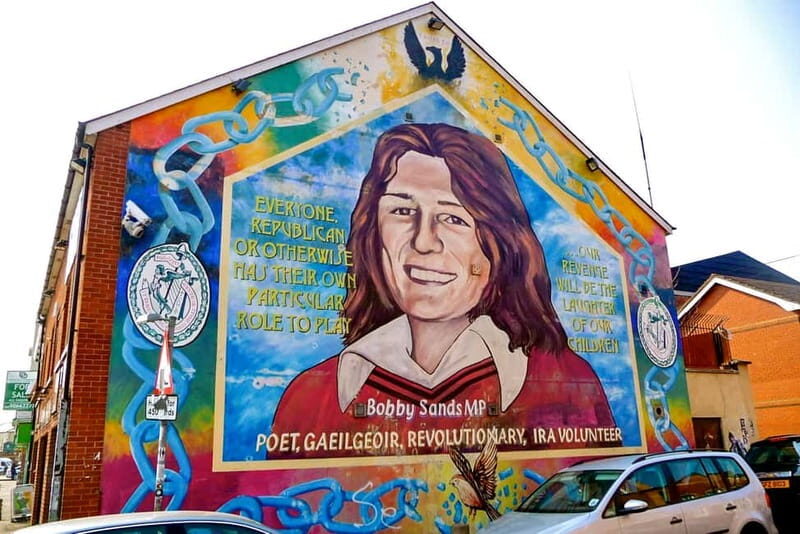
- Two guides, two sections: you start on the Falls Road with a Republican ex-political prisoner, then continue to the Shankill Road with a Loyalist ex-political prisoner or local security-force perspective.
- You walk the Peace Line, not just read about it: including the shock of passing through electronically-controlled gates.
- Murals as history lessons: you’ll see why Belfast’s street art is treated like a record of identity, loss, and politics.
- The Peace Wall adds a personal moment: you can sign and leave thoughts near messages already recorded there.
- First-hand storytelling drives the whole experience: the tour is built around people speaking from what they grew up with and what they lived through.
- Good value for a deep topic: three hours of real local context at a flat $35 price.
Divis Tower to Lower Shankill: how the 3-hour route feels
You start in front of Divis Tower on Divis Street, and that matters because you’re already in the geography of West Belfast. From there, the tour is about 3 hours on foot, covering roughly 4 kilometers (2.5 miles). You’ll finish on the Lower Shankill Road, about a 15-minute walk from where you started.
This pacing is important. You’re not bouncing around Belfast in a bus window, and you’re not stuck staring at a single “big sight.” Instead, you move through neighborhoods while you’re hearing the context that explains why those streets look the way they do.
The structure also helps your brain. The tour is designed as a shift in perspective—Republican first, then Loyalist—so you can compare what you hear without mixing everything into one confusing stream. And yes, it’s live and in English with a guide on the ground, with wheelchair access included.
If you’re doing Belfast on a tight schedule, keep this in one chunk. Don’t plan another major stop right after unless you’re ready to feel reflective (and possibly a bit unsettled).
You can also read our reviews of more walking tours in Belfast

Walking the Falls Road with a Republican ex-political prisoner
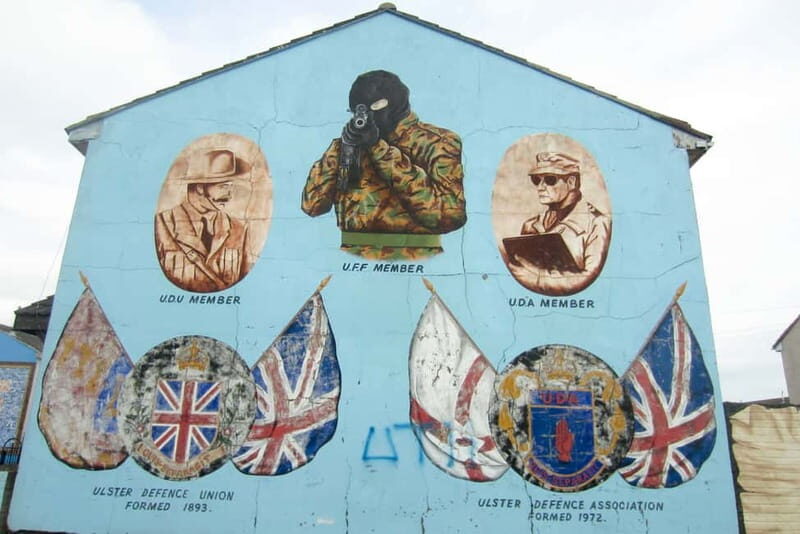
The Falls Road start is where the tour begins to feel real fast. You meet a Republican ex-political prisoner for the guided walk, and you’re introduced to visible signs of the community’s desire to be part of an Irish Republic. You’re not just told “this side believed X.” You’re hearing how those beliefs showed up in daily life and neighborhood identity.
As you go, you’ll also get a clearer sense of why “The Troubles” weren’t just political headlines. For many people, the conflict shaped friendships, family memories, and what felt safe or unsafe on a normal day. That’s the kind of context you only get when someone is explaining what it meant to grow up there.
The Stops on the Falls Road side tend to be about more than one event. You’re being guided through a chain of places where history, symbols, and community pride overlap—especially as they connect to why murals became such a powerful form of communication.
One practical note: the tour can include discussion of extreme violence. That doesn’t mean it’s all dark all the time, but you should go in knowing the conversation can get intense. If you prefer light, fast sightseeing, this isn’t that kind of walking tour.
Crossing the Peace Line to Shankill Road and the Loyalist perspective
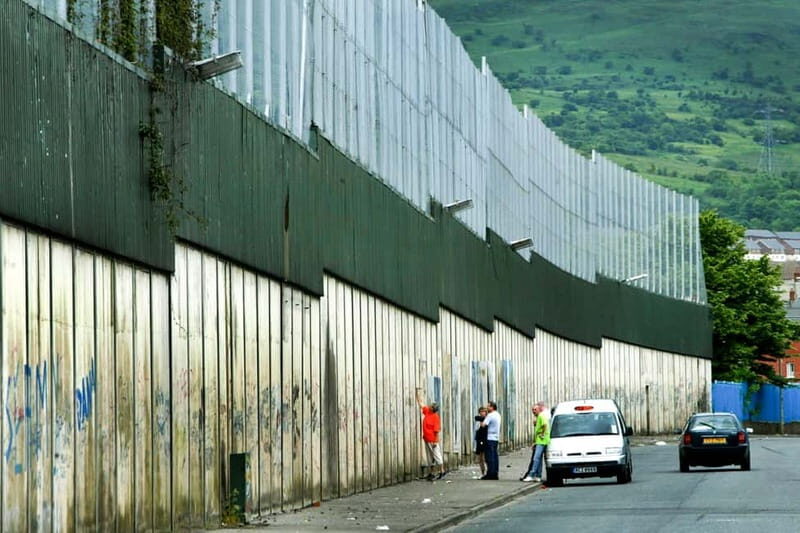
After the Falls Road section, you move through the area’s Peace Line and the change is physical as well as emotional. The description includes passing through electronically-controlled gates into the predominately Protestant area of Shankill Road, and that transition is a big part of why the tour sticks with you.
On the Shankill side, you meet with either a Loyalist ex-political prisoner or an ex-member of the security forces who is from the area. This is one of the tour’s defining strengths: you get a Loyalist framing of events, plus the local logic of why people wanted to remain part of the United Kingdom.
It’s also where you’ll notice how mistrust can linger even after formal violence slows down. The tour isn’t written like a tidy moral lesson. It’s more like hearing two people describe the same road—then realizing those roads aren’t the same in their minds.
You’ll be walking through streets that still function as living neighborhoods. That’s a key difference from “conflict tourism” that feels like museum viewing. Here, you’re meeting the ongoing reality of what those community lines mean now.
Belfast murals: reading politics in public art on foot
The tour’s mural component isn’t an add-on. It’s one of the main ways Belfast tells its own story, and you’ll see why people call it an outdoor art gallery.
You’ll explore murals in West Belfast with explanations about how the artwork connects to political history and local culture. These aren’t random designs. They’re visual messages—about allegiance, grief, resistance, and identity—that help people process what happened and what they think it means.
On top of that, the Peace Line neighborhoods have a way of keeping symbolism close. Murals become a kind of archive when official narratives feel incomplete to the people living there. That’s why hearing stories from people on both sides can help you understand what looks like “just paint” at first glance.
In the real world, public art also changes. Some murals reflect ongoing issues and broader struggles beyond Northern Ireland, so you’re not only looking backward. You’re seeing how later generations keep connecting the conflict to the present.
If you’re the kind of traveler who likes learning the language behind the visuals, this part is for you. If you want a strictly chronological history lecture, you might find the mural approach more emotional than academic. Either way, it’s memorable.
Peace Walls and signing messages near Clinton and the Dalai Lama
The Peace Walls section is where the tour becomes participatory. You’ll have the chance to sign the Peace Wall and leave your thoughts alongside messages left by prominent figures including Bill Clinton and the Dalai Lama.
That moment can feel surprisingly personal even if you arrived with zero connection to Belfast’s politics. It’s the physical act of adding your voice to a public space built for reflection and remembrance. You’re not just taking photos. You’re placing a written thought in a wall that already holds decades of meaning.
Also, the Peace Wall concept helps you understand why the tour insists on two perspectives. Peace in Belfast didn’t happen because everyone agreed overnight. It happened because people kept building ways to live side by side, even while disagreements stayed alive.
This doesn’t mean the tour sugarcoats anything. Expect the guides to connect the wall to what it costs to keep peace, and why community support matters. If you’re sensitive to heavy topics, give yourself a moment here to slow down and breathe. You’ll likely need it.


What $35 gets you: value for a three-hour, two-perspective tour
At $35 per person for a 3-hour walk, the value comes from structure and access—not from flashy extras. A big chunk of what you’re paying for is permission to hear firsthand accounts from people who were directly involved in The Troubles, plus the chance to get both Republican and Loyalist sides without turning it into a shouting match.
The split-format matters for value. Hearing one side alone often leaves visitors with an incomplete map. Here, you walk with one guide, then switch to the other side of the story. You’ll feel the contrast in real time because you’re physically moving through the neighborhoods.
The route is also efficient. You cover about 4 kilometers on foot—plenty of ground to experience neighborhood geography—but it doesn’t sprawl into an all-day itinerary. That’s practical for visitors who want meaningful context without sacrificing their evening.
If you’re budgeting your trip, this is a strong pick for people who want to understand Northern Ireland beyond a textbook summary. It’s not a substitute for every other museum or reading you might do. But it gives you the street-level context you can’t easily get any other way.
Who should book (and who might want to skip)
This tour is best for you if you want political history with human stakes attached. If you care about murals, public memory, and how communities use symbols to communicate, you’ll get a lot out of it. If you’d like to see the Peace Line from ground level, you’ll appreciate the way the walk is built around geography and storytelling.
You should also book if you’re curious about both communities rather than hunting for a single “correct” narrative. The tour’s whole design is built on two perspectives—Republican first, Loyalist second—so you can compare what you hear and form your own understanding.
It may not be for you if you want light sightseeing or if you’re traveling with kids. The tour may not be suitable for children under 15, largely because discussion of extreme violence may occur.
If you’re easily overwhelmed by grief and trauma narratives, consider whether you can handle an intense historical topic delivered by people speaking from lived experience. This isn’t a passive stroll; it’s active listening while walking through ongoing signs of a divided past.
Practical tips before you go: shoes, pace, and what to ask
Wear comfortable walking shoes. The tour is around 4 kilometers and lasts about 3 hours, and you’ll be moving enough that sore feet can derail the experience. It’s also worth bringing layers for Belfast weather because conditions can change fast on open streets.
Plan your expectations around breaks. The tour includes comfort stops, but it’s not described as a meal-focused experience. One review note specifically warned there aren’t programmed food or toilet stops on a 3-hour walk, while another mentioned opportunities for comfort breaks. The safe approach: go in prepared, and tell your guide if you need the restroom.
On questions: this is one of those tours where your curiosity should be specific. Ask how a mural choice connects to local events, or what “peace” looks like from each side today. You’ll get more useful answers than with broad questions like “why did this happen?” since the guides’ whole job is connecting belief, place, and memory.
Finally, keep the end point in mind. You finish on Lower Shankill Road, about a 15-minute walk from the start, so plan your next move with that in mind.
Should you book this Belfast Political Conflict walking tour?
Yes, I’d book it if your priority is real understanding over neat summaries. The strongest part of this tour is the two-guide structure—Republican then Loyalist—with first-hand context from people who were part of The Troubles era. Add in the murals and the Peace Wall signing, and you get more than a history lesson. You get a guided encounter with the city’s ongoing emotional geography.
Skip it only if you’re not comfortable with hard topics or you’re looking for something casual. The conversation can include extreme violence, and the experience asks you to stay present and listen carefully.
If you’re building a Belfast itinerary, this is one of the best ways to get your bearings about West Belfast—why the murals look the way they do, why the Peace Line exists, and why peace still feels fragile to many people.
FAQ
How long is the Belfast Political Conflict walking tour?
The tour runs for about 3 hours.
How far do you walk during the tour?
It covers approximately 4 kilometers (2.5 miles).
Where is the meeting point?
Meet in front of Divis Tower, Divis Street Belfast.
Where does the tour end?
The tour ends on the Lower Shankill Road, about a 15-minute walk from the starting point.
Does the tour include perspectives from both sides?
Yes. You’ll hear two different perspectives on The Troubles, starting with a Republican ex-political prisoner on the Falls Road and then moving to the Shankill Road with a Loyalist ex-political prisoner or someone from the security forces who is from the area.
Who guides the walk?
The tour is led by a live English-speaking guide, and the walkthrough includes meeting ex-political prisoners and/or an ex-member of the security forces from the area.
Is the tour wheelchair accessible?
Yes, the tour is listed as wheelchair accessible.
Is the tour suitable for children?
It may not be suitable for children under 15, since discussion of extreme violence may occur.
What should I wear or bring?
Bring comfortable walking shoes. It’s also a good idea to be prepared for limited programmed food and toilet stops on a 3-hour walk, and let your guide know if you need the restroom.
Can I cancel for a refund?
You can cancel up to 24 hours in advance for a full refund.