REVIEW · BELFAST
Belfast: The Troubles Walls & Bridges Guided Walking Tour
Book on GetYourGuide →Operated by Experience Belfast · Bookable on GetYourGuide
Belfast City Hall to the Peace Walls can feel like time travel. What makes this tour stand out is how it treats The Troubles as more than dates and slogans, using real lived stories to explain why the city is still shaped by division. I especially liked the way the route brings you right up to the murals and peace walls and the way guides such as Steve and Arthur keep the story balanced and human, even when it gets hard to hear.
One thing to plan for: this is not a casual sightseeing walk. The route is in working-class areas with limited facilities, it involves heavy security-gate architecture, and it includes detail that is not suitable for kids under 14.
In This Review
- Key highlights you’ll notice right away
- Why This Walk Feels Different Than Typical Belfast Sightseeing
- Belfast City Hall Start: Getting Oriented Before You Cross Into Tension
- The Route Through Belfast: What the Guide Uses to Tell the Whole Story
- Divis and Divis Tower: When the Conflict Turned Into Fire and Fear
- International Wall Murals: Art That Changes as the World Changes
- Crossing Toward the Shankill Area: Security Gates as a Physical Border
- Peace Walls: The Height You Feel in Your Neck and Your Thoughts
- The Walk Back to the Falls Road: Gates, Ballads, and What You Notice Twice
- Finishing Around Rosemary Street: A Belfast That Refuses Binary Thinking
- Price, Time, and Value: What You Get for $32
- Who Should Book This Tour (and Who Should Skip It)
- Should You Book Belfast: The Troubles Walls & Bridges Guided Walking Tour?
- FAQ
- How long is the Belfast Troubles Walls and Bridges tour?
- Where does the tour start and where does it end?
- What is included in the tour price?
- Is the tour suitable for children?
- Is food or drinks included?
- How much walking should I expect?
- Are there places to use facilities during the tour?
- What language is the tour delivered in?
- What should I bring?
- FAQ
- Is free cancellation available?
- Can I reserve now and pay later?
Key highlights you’ll notice right away
- Security gates as borders, not just scenery, and you’ll learn why they exist and how they affect daily life
- Murals that track identity and current events, including the International Wall where messages change
- Divis and the Falls Road route, built to show how conflict and community developed in parallel
- Peace Walls time for photos, with context on why they were built and why they still stand
- Headsets for larger groups, so you can hear the guide without walking half a block behind
- An ending that complicates stereotypes, finishing around Rosemary Street and a church at the center of Irish history
Why This Walk Feels Different Than Typical Belfast Sightseeing
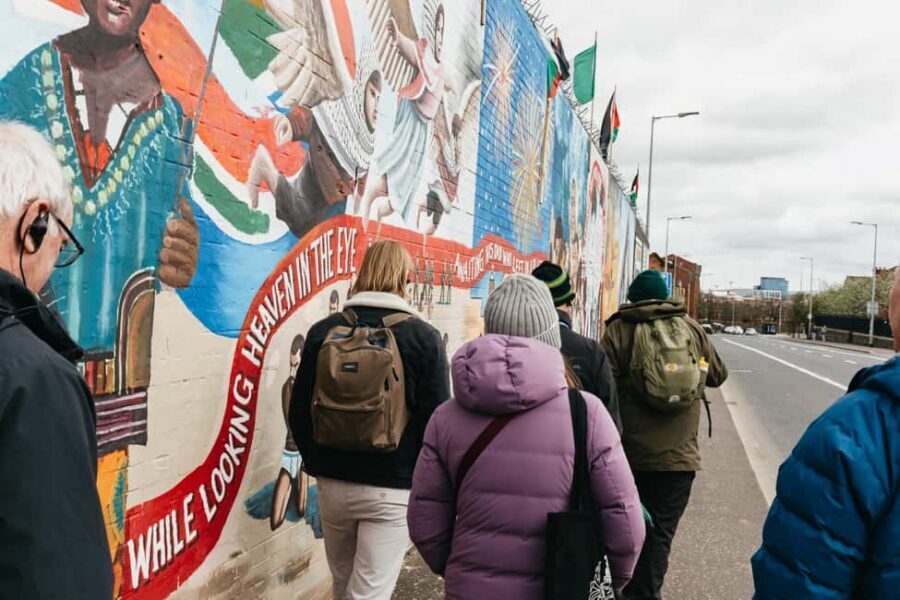
This tour doesn’t try to give you a greatest-hits tour of landmarks. It follows a route that was never designed for tourists, which is exactly the point. You’re walking through the physical reminders of political and cultural separation, and the guide explains what you’re seeing in plain language.
The best part is tone. Even when the story is bleak, the guide keeps you oriented: what happened, why it mattered, and how Belfast moved from open conflict toward a peace process. That matters because The Troubles are easy to misunderstand when you only see headlines or movie versions.
You’ll walk away with a clearer sense of what divides communities in everyday life, not just what happened during the worst years. And you’ll also notice the other side that shows up in surprising places: musicians, historians, boxers, bridge-building, and ordinary people doing their best to get along.
You can also read our reviews of more walking tours in Belfast
Belfast City Hall Start: Getting Oriented Before You Cross Into Tension
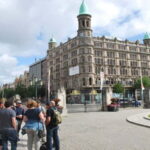
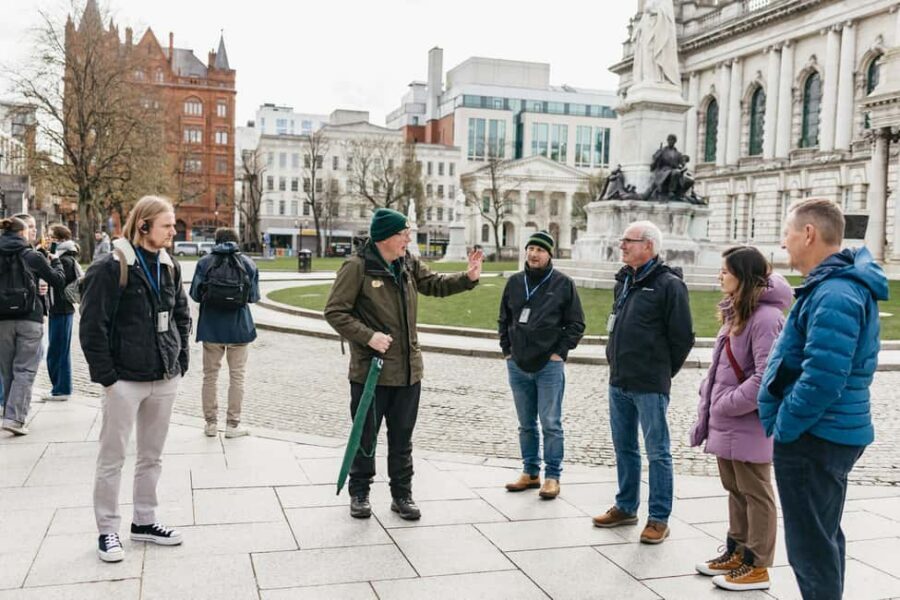
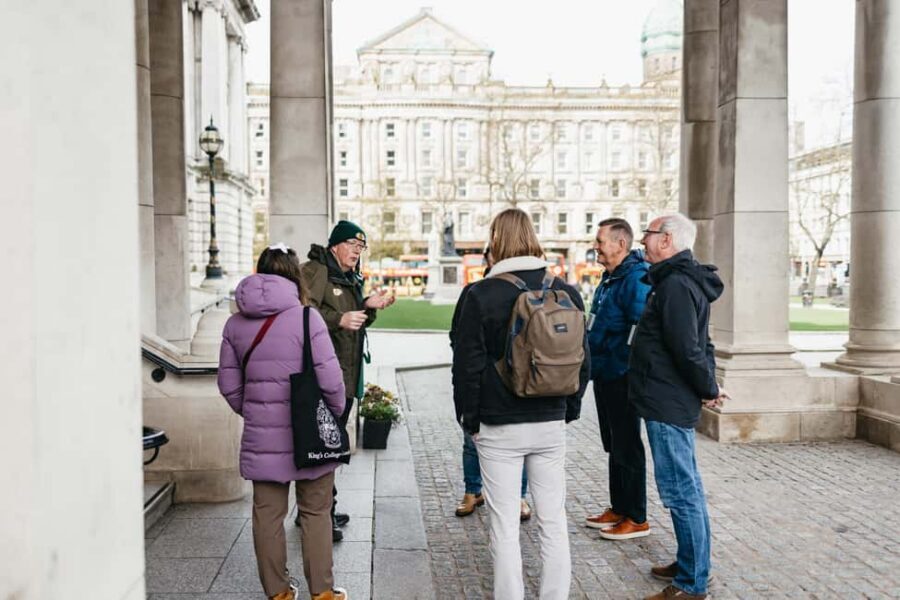
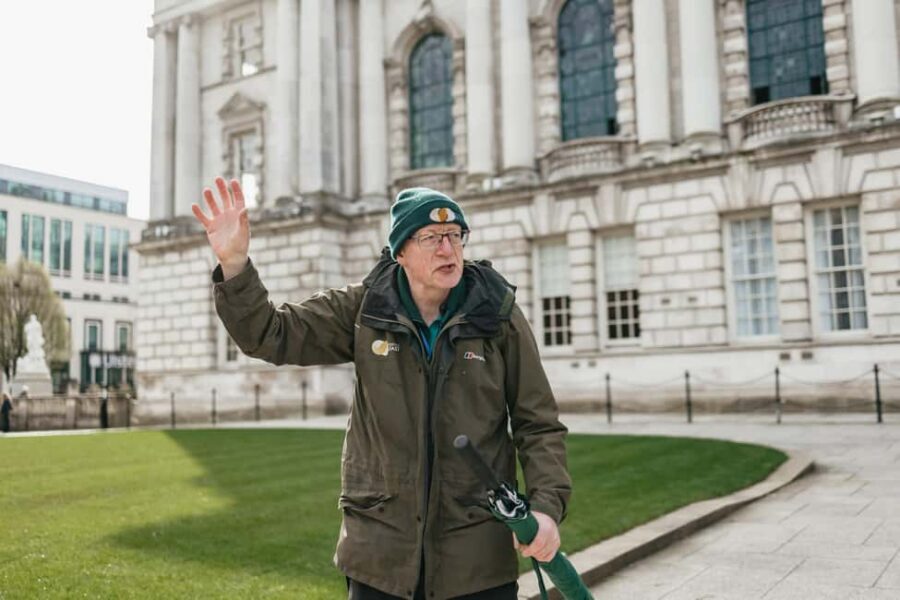
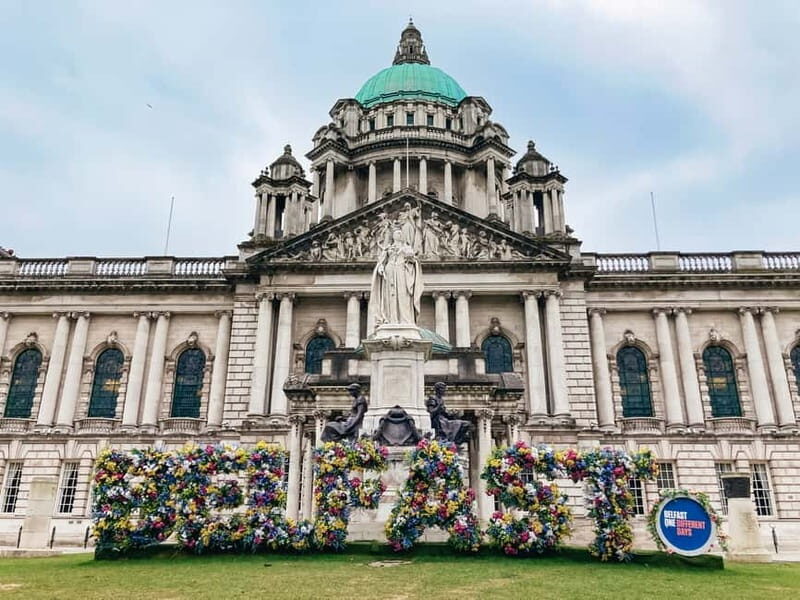
You meet outside the grounds of Belfast City Hall, on the pavement beside a blue information table. The meeting spot is between two large ornamental lamp posts, and the guide is easy to spot if you’re looking for a green outfit and a big green-and-white golf umbrella.
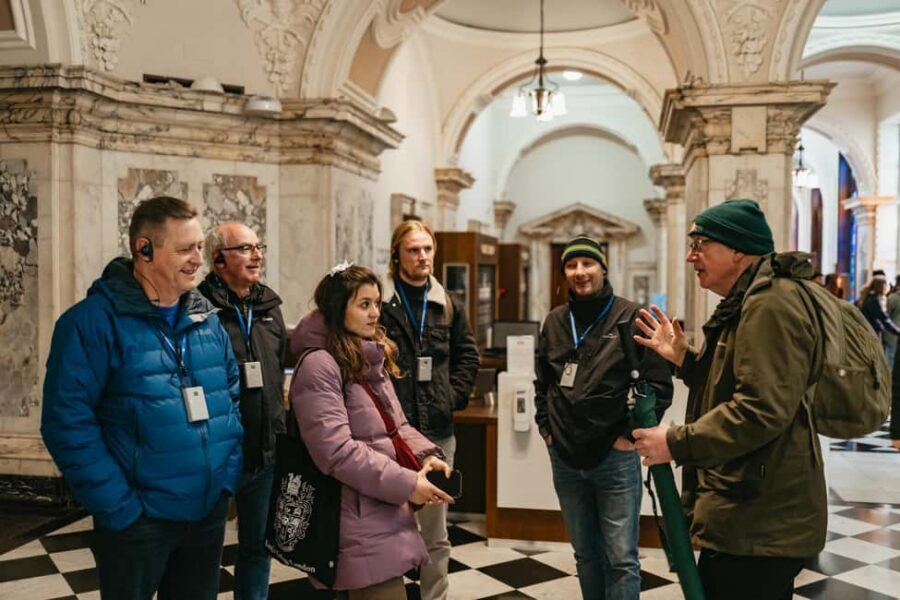
Before you move, there’s a safety briefing and you get a short photo stop. This is more than a formality. It’s the moment the guide teaches you how to watch the city: where power sits, how streets funnel you, and why certain buildings and spaces matter when you’re telling a story about conflict.
City Hall is a smart starting point because it’s central and symbolic. From there, the tour shifts from civic Belfast to the neighborhoods where the “two-community” reality became very physical.
If you’re even slightly confused by phone maps, don’t panic. Some directions can misdirect you, so it’s worth arriving early and double-checking that you’re actually at Belfast City Hall, not a bus-park area downtown.
The Route Through Belfast: What the Guide Uses to Tell the Whole Story
The walking route is set up to connect neighborhoods that feel different on the ground. You start toward Divis and the Falls Road, then work your way through places that show how political identities formed side by side.
Along the way, you’ll see the kinds of objects that outsiders usually miss because they don’t look like “attractions.” The tour includes stops where the guide points out things like a post box and a 24-hour garage, plus other details that help you understand how everyday life continued in places that also carried heavy political weight.
A key practical note: there aren’t rest stops built into the tour. Facilities are limited, and you can use a leisure centre near the Walls at about the two-hour mark. If you have a tight schedule after the tour, plan for extra time because the tour may run a bit longer than the scheduled 3 hours, and you’ll want breathing room for your next activity.
Divis and Divis Tower: When the Conflict Turned Into Fire and Fear
Walking toward Divis, you’re not just passing houses. You’re moving through a chapter of Belfast where tensions exploded and where the city’s housing and public life collided with street-level conflict.
At Divis, the guide explains how the conflict escalated with mobs and how housing set ablaze became part of the story. Hearing it from a local guide changes the way those details land. Instead of reading about an event in the past tense, you understand how trauma stays rooted in streets and memory.
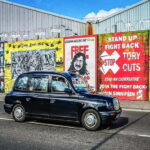
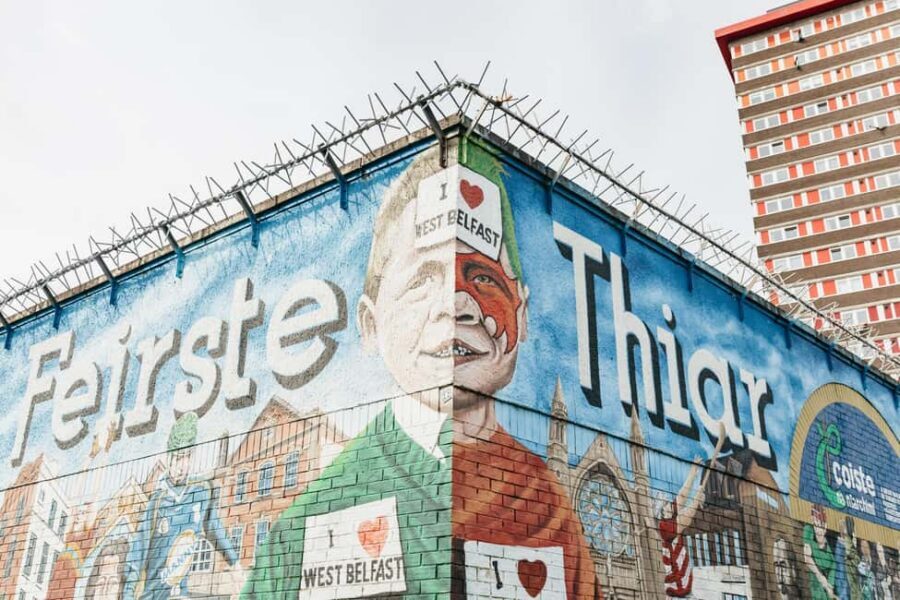
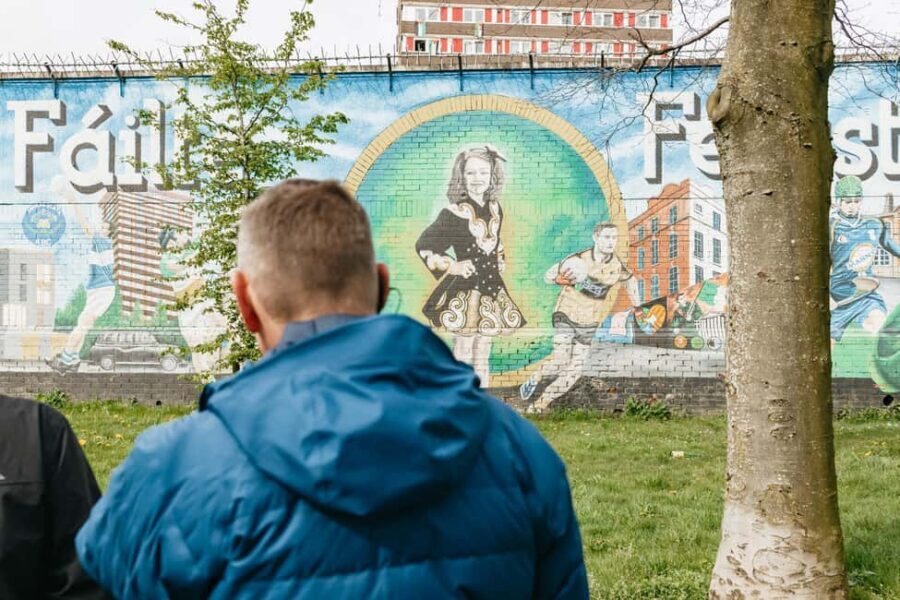
Divis Tower is also where you get your first major mural stop. The mural is described as a statement of pride in Irish and local identity, and that’s important to understand. In Belfast, murals aren’t just art on walls; they’re political language you can read at street level.
You’ll likely find that once you see that first mural framing, the rest of the route makes more sense. You start noticing how people communicate belonging, and how opposing identities are made visible.
International Wall Murals: Art That Changes as the World Changes
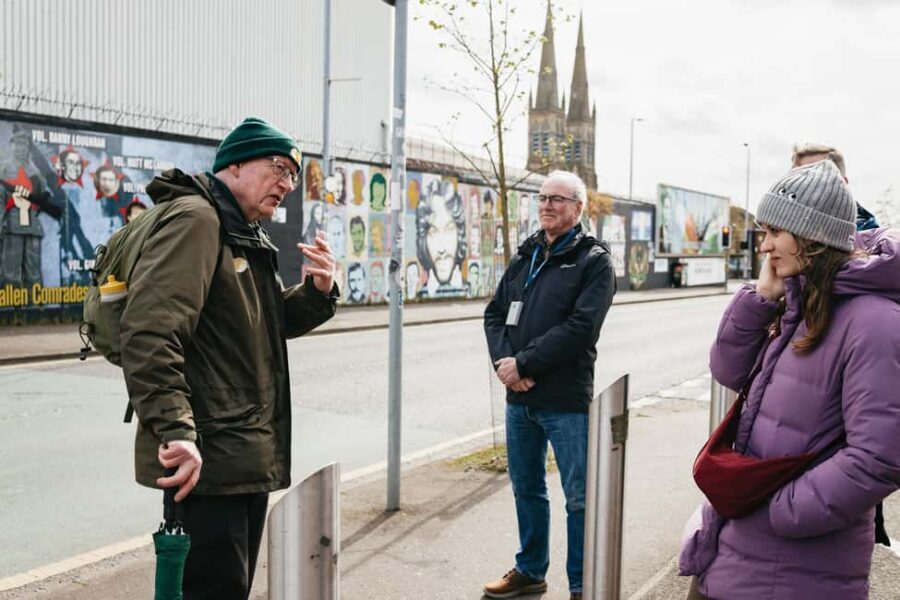
From Divis, the walk continues toward the International Wall, a key mural area. This is where you see how political murals adapt over time. The guide explains how mural themes can shift to reflect local and world events, which helps you connect Belfast to the wider news cycle.
This stop is powerful because it’s not frozen in the past. The guide treats murals as a living record. You can almost think of them as public bulletin boards where political feelings, local identity, and world events overlap.
You’ll also learn a subtle but useful concept: murals can educate outsiders, but they also harden boundaries. They can mean pride to some and threat to others. Watching that tension play out is part of why the tour is so memorable.
If you’re taking photos, give yourself time here. It’s a rare chance to capture murals clearly while the guide explains what you’re looking at, instead of trying to guess later.
You can also read our reviews of more guided tours in Belfast

Crossing Toward the Shankill Area: Security Gates as a Physical Border
Eventually the tour crosses into the British Shankill area. This is where the city stops feeling like a normal place you visit and starts feeling like a boundary you pass through.
You’ll move through heavily fortified security gates. The guide explains these gates as a border between Irish and British communities, not just a security feature. Once you hear that framing, you start seeing the city differently: the streets are shaped not only by geography, but by fear, policing, and social separation.
One of the most practical things the guide handles here is movement and safety. You’ll cross streets with care, listen through provided headsets for larger groups, and keep track of where the group is going. The walking route wasn’t designed as a tourist trail, so staying alert is part of the experience.
Also, this part of the route can feel emotionally intense. Even if you know the basic headline version of The Troubles, the physical gates make the stakes feel immediate. You’re learning how conflict can turn into architecture.
Peace Walls: The Height You Feel in Your Neck and Your Thoughts
At the Peace Walls, you get time for photographs, but the guide keeps you anchored in context. The Peace Walls weren’t built as a tourist attraction. You’ll hear how they were created, why they were built, and why they still exist.
This is a working-class area, and that matters. It means the walls aren’t just a symbol for visitors; they’re part of daily life for residents. The guide may also point out why they remain standing, which helps you understand that peace doesn’t always erase separation overnight.
The tour includes tragedies and some graphic detail, so it’s clearly marked as not suitable for children under 14. Even for adults, you should be prepared for moments that feel heavy. The best way to handle it is to treat it like serious history, not like a photo stop.
When you’re photographing, try to remember what you’re capturing. A wide shot looks like “street art plus walls.” Up close, you start seeing how the environment was engineered for distance—between windows, between blocks, and between lives.
The Walk Back to the Falls Road: Gates, Ballads, and What You Notice Twice
After the Peace Walls, you’ll head back toward the Irish Falls Road. The route includes more heavily fortified security gates, and the guide helps you understand what it means to live with those boundaries around you.
At one point, you’ll hear an Irish ballad as you walk. That audio detail sticks with people because it interrupts the wall-and-gate visual mood. It reminds you that music, identity, and emotion were never only expressed through conflict; they also showed up in culture and community.
As you look back, the guide encourages you to re-notice what towers over you. The gates and walls can feel like the city’s skyline, which is why this is such an effective walking format. A bus ride can show you architecture. A walking route teaches you scale, and scale changes your understanding.
And as you return toward Belfast City Centre, you start getting the story’s “why now” piece: the economic and political backdrop to the peace process. This is where the tour helps you connect past conflict to present conditions without pretending everything instantly became fine.
Finishing Around Rosemary Street: A Belfast That Refuses Binary Thinking
The tour ends in Belfast City Centre at Rosemary Street (BT1). The guide uses that ending area to show another side of the city—less about separation and more about the people who dedicated their lives to building bridges.
You’ll also notice a repurposed Victorian building used as an arts venue. The point isn’t the building style for its own sake. It’s the idea that Belfast is changing, with creativity and work in public life shaping the city’s present tone.
The tour finishes at a historical church that sits at the centre of Irish history and complicates simplistic stereotypes about Belfast and its people. It’s a fitting end because the whole tour has argued against easy binaries. Irish and British identities are real, but so are the overlaps: shared human concerns, shared hopes, and shared limits.
By the time you reach the finish, you’ve walked through the physical evidence of division—and then you get a reminder that people also build meaning beyond conflict.
Price, Time, and Value: What You Get for $32
At about $32 per person for a 3-hour guided walk, this isn’t cheap in the sense of a casual city stroll. But it’s strong value for what you’re buying: a local guide who can explain what you’re seeing, keep the story balanced, and handle a sensitive topic with care.
This price becomes easier to justify because the tour isn’t only about murals and walls. You’re also paying for the guide’s ability to connect architecture to lived experience, and past events to the present day. You’ll also get headsets for larger groups, which helps you follow the commentary without losing the group.
Time-wise, this is a real commitment: 3 hours of walking through areas that aren’t designed for tourism. Add weather, and plan extra time before your next appointment. If you’re the type who learns best by seeing places and hearing context at the same stop, this tour will feel worth every minute.
Who Should Book This Tour (and Who Should Skip It)
I think this tour is ideal if you want to understand Belfast beyond postcard landmarks. It’s for you if you care about causes, not just outcomes, and if you want to hear both perspectives with a guide who emphasizes factual context rather than tribal slogans.
It’s also a good fit if you’re comfortable with emotional history. People regularly leave with a mix of sadness and hope, and the guide’s tone aims for honesty with room for the peace that followed.
It’s not the right pick for kids under 14, and it may not be the best match if graphic detail will be hard for you to handle. If you have mobility issues, the route’s design matters since there are limited facilities and no rest stops.
And if your plan is only to hit a few icons quickly, you’ll likely prefer a shorter sightseeing tour. This one asks you to slow down and look closely.
Should You Book Belfast: The Troubles Walls & Bridges Guided Walking Tour?
Book it if you want a practical, on-the-ground explanation of why Belfast looks the way it does. This tour gives you context for the Peace Walls, security gates, and murals you’ll see in the city center and neighborhoods—without leaving you stuck at the surface level.
Skip it if you’re chasing a light, family-friendly outing or if you can’t handle difficult subject matter. Also skip it if you need lots of amenities and frequent breaks; this route is mostly walking with limited facilities.
If you do book, come prepared: comfortable shoes, weather-appropriate clothing, and a little extra buffer time afterward. And if you’re unsure what to expect, treat it like serious history on foot. The understanding you get is the whole point.
FAQ
How long is the Belfast Troubles Walls and Bridges tour?
The tour lasts 3 hours.
Where does the tour start and where does it end?
It starts at Belfast City Hall and finishes at Rosemary Street, Belfast BT1.
What is included in the tour price?
The tour includes a guided walking experience and headsets for larger groups, plus a live English guide.
Is the tour suitable for children?
No. The tour is not suitable for children under 14.
Is food or drinks included?
No. Food and drinks are not included.
How much walking should I expect?
This is a walking route along an area not designed as a tourist trail, with no rest stops, so you should expect a solid walk. The tour may also run longer than the scheduled time.
Are there places to use facilities during the tour?
Facilities are limited, but you can use a leisure centre near the Walls approximately 2 hours into the tour.
What language is the tour delivered in?
The tour is conducted in English.
What should I bring?
Bring comfortable shoes and weather-appropriate clothing.
FAQ
Is free cancellation available?
Free cancellation is available up to 24 hours in advance for a full refund.
Can I reserve now and pay later?
Yes, you can reserve now and pay nothing today.