REVIEW · BELFAST
Belfast: Peacewall and Political History Black Taxi Cab Tour
Book on GetYourGuide →Operated by Traditional Taxi Tours Belfast · Bookable on GetYourGuide
One road can feel like two different countries. This Belfast Peacewall and Political History taxi tour connects the murals, communities, and personal stories behind The Troubles in a tight, practical route.
I love that it’s taught by guides who can answer questions in plain language, and who often bring real-life perspective, not just dates. I also like the simple format: hotel pickup, a traditional cab ride, photo stops, and a clear drop-off back in town. One thing to consider: this is an emotional subject, so if you want only light sightseeing, you may find the stops on conflict history and the prison area heavy going.
In This Review
- Key highlights I’d plan around
- Why this Belfast cab tour works better than wandering
- Your 1.5-hour route: Shankill to Falls with Peace Wall in between
- Peace Wall: the 1969–1971 barrier you can still see
- Shankill Road: unionist identity, monarchy tributes, and Union Jack flags
- Passing Crumlin Road Gaol: why the conflict left scars
- Falls Road: Irish republican murals and Irish tricolors
- The guides are the real value: balanced, personal, and question-friendly
- Price and value: what $67 buys in 1.5 hours
- Who this tour is best for (and who should think twice)
- What to do before you go: a short checklist
- Should you book the Belfast Peacewall and Political History Taxi Tour?
- FAQ
- How long is the tour?
- Does the tour include hotel pickup and drop-off?
- Where does the tour go?
- Is transportation included?
- Are there photo stops?
- Is the tour private?
- What language is the tour guide?
- What should I bring?
- Will the tour run in bad weather?
Key highlights I’d plan around
- A focused 1.5-hour cab route linking the Shankill Road, Falls Road, and Peace Wall.
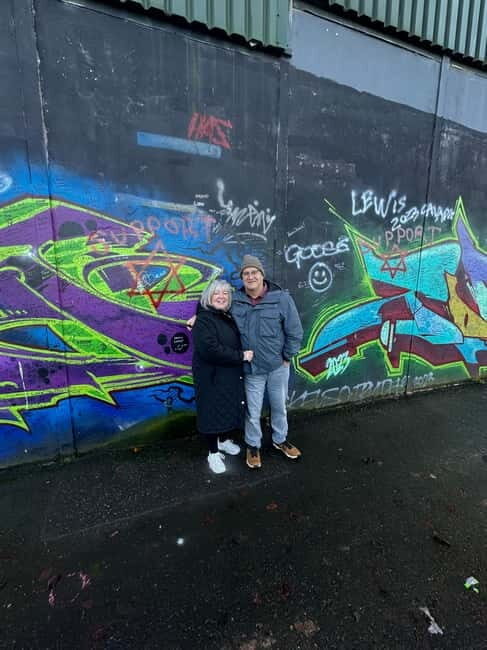
- Peace Wall photo stop tied to its construction era (built between 1969 and 1971).
- Shankill Road mural viewing with unionist and British symbolism like the Union Jack and monarchy tributes.
- Falls Road mural viewing featuring Irish republican imagery and Irish tricolors.
- Crumlin Road Gaol pass-by to understand the conflict’s human cost.
- Live English guide (often praised for balance and answering questions directly).
Why this Belfast cab tour works better than wandering
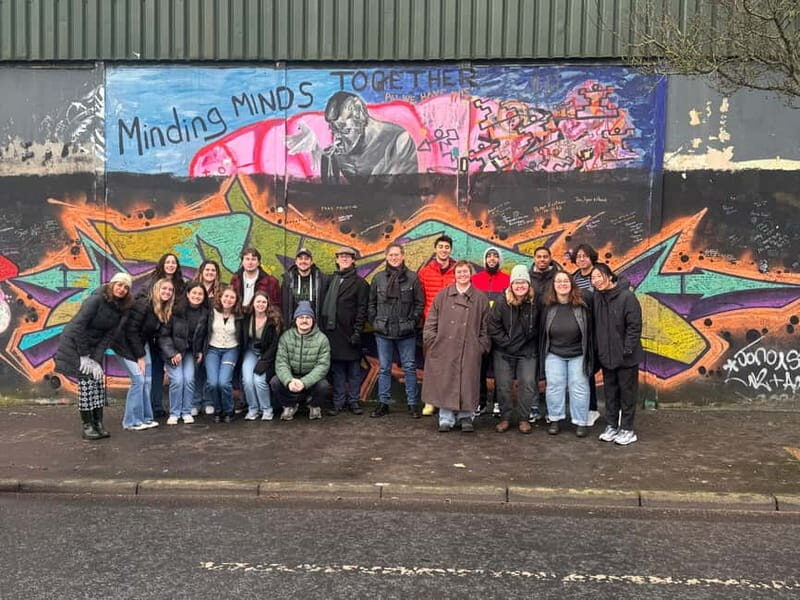
Belfast’s street art and political history aren’t museum-only material. On this tour, you see the murals in the neighborhoods that still live with their meaning, and you hear how people interpret them now.
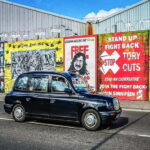
The cab format matters. Driving between the Shankill Road and Falls Road saves time, and it keeps the route logical when the streets and viewpoints feel crowded or confusing on foot. Plus, the pacing is built for photos: you get specific stops rather than hoping you’ll find the right wall at the right angle.
I also like that the tour is designed for understanding, not just “look at that.” The guide sets the scene on how The Troubles affected everyday life, then points you toward what to look for—flags, symbols, and the stories attached to them.
You can also read our reviews of more historical tours in Belfast
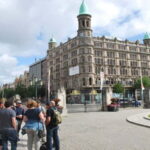
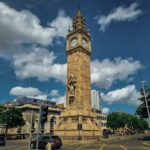
Your 1.5-hour route: Shankill to Falls with Peace Wall in between
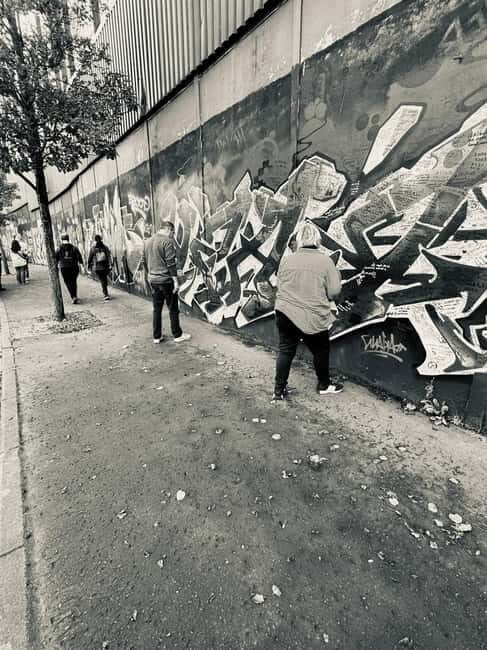
This tour is short on purpose. You’ll spend about 30 minutes at the Peace Wall, then about 30 minutes each on the Shankill Road and the Falls Road, with the rest of the time spent moving in the cab and getting dropped back where you started.
That structure is handy if you have limited time in Belfast—maybe you’re also doing the Titanic area or the city centre. You get a “greatest hits” version of the political geography without turning your day into a logistics puzzle.
You’ll also be dealing with real city timing. Your pickup happens in Belfast city centre, and there’s an expectation you’ll be ready in the lobby about 10 minutes before your scheduled time. The driver will hold a sign with your last name, and waiting after the pickup time is limited.
Peace Wall: the 1969–1971 barrier you can still see
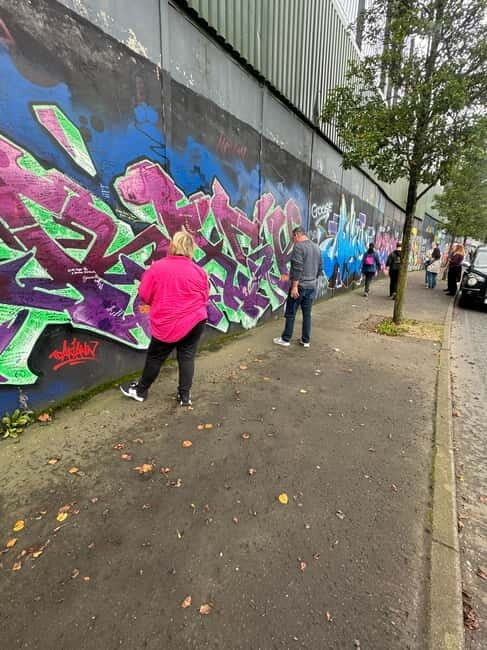
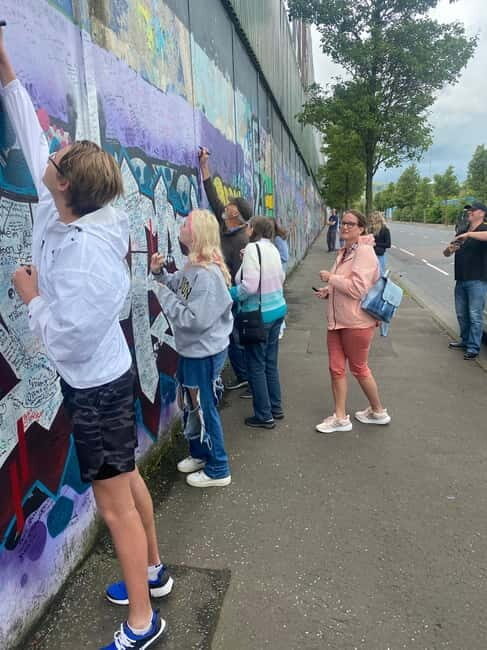
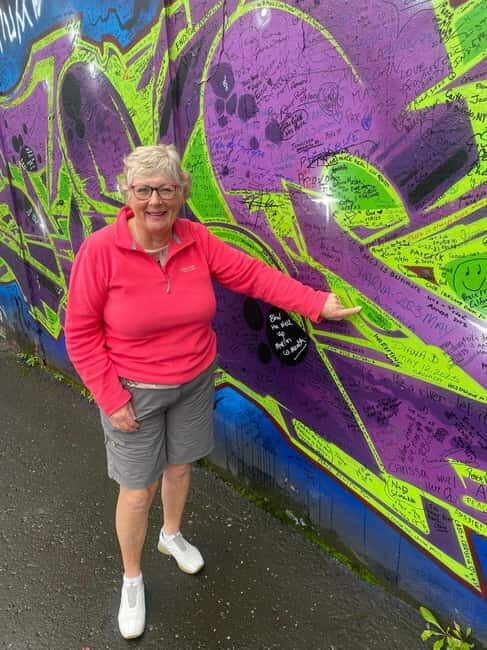
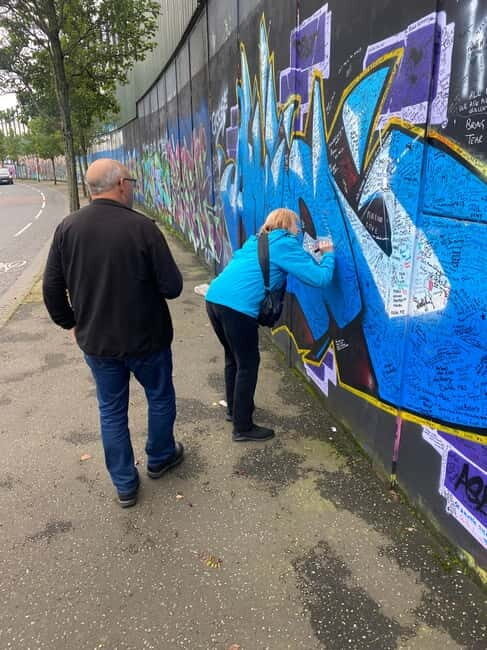
The tour’s emotional center is the Peace Wall. You’ll stop there for a photo stop and guided visit for about 30 minutes, and you’ll learn what it was meant to do when it was built between 1969 and 1971.
When you stand near it, you start noticing how something physical can also become a daily routine. The guide explains why the wall still matters to separation and how communities have continued living with the consequences.
Practical tip: bring your camera and be ready to pause longer than you expect. This stop is one of those places where people naturally slow down, because there’s a lot to read—visual symbolism, spacing, and the overall feel of how the neighborhood is carved.
Shankill Road: unionist identity, monarchy tributes, and Union Jack flags
Next up is the Shankill Road, often described as the heart of the unionist community in the city. The tour route takes you through streets where murals display tributes to the British monarchy and show plenty of Union Jack symbolism.
What I like about this stop is the contrast factor. You’re not just seeing images; you’re learning how different communities express identity through what’s painted on homes and businesses. It’s the kind of context that makes the murals stop being random decoration and start feeling like written culture.
You’ll also get photo time here, which is important because some murals look best from a specific angle. If you want clear shots, ask your guide where to position the cab or where to stand for pictures.
Passing Crumlin Road Gaol: why the conflict left scars
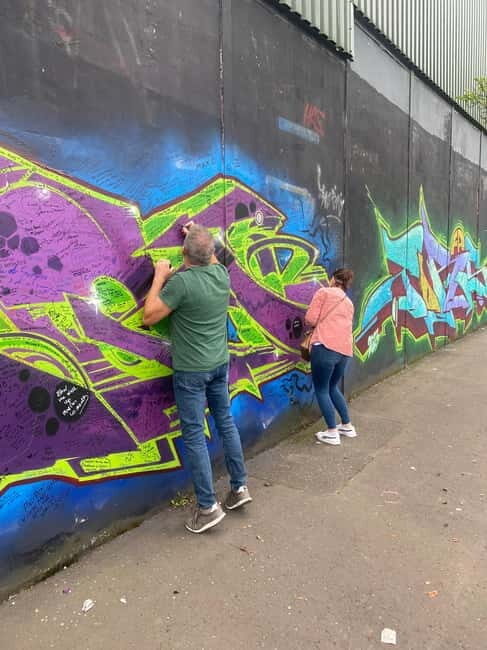
Between the neighborhood stops, you’ll pass by Crumlin Road Gaol. The key point you’ll take away is that it housed prisoners who were members of paramilitary organizations that characterized the conflict.
This is a reminder that political history isn’t abstract. The tour helps you connect murals and street symbols to the reality of detention, fear, and long-term consequences for families.
You won’t be doing a full museum visit here based on the tour design, but the guided context is the point. If you’re the kind of person who likes to understand what different symbols “stand for,” this stop gives you one concrete anchor.
Falls Road: Irish republican murals and Irish tricolors
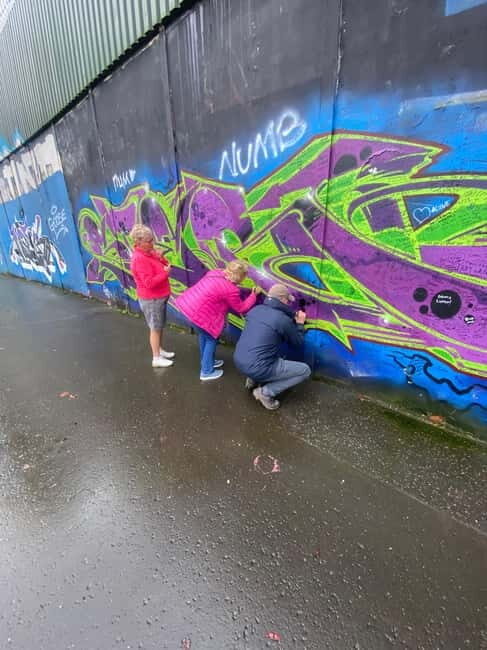
Then comes the Falls Road, only a short distance from the Shankill. Here the mood and imagery shift: you’ll see Irish republican murals and Irish tricolors on homes and businesses, reinforcing the distinctly Irish character of the area.
I like how the guide keeps the explanation tied to what you’re seeing. As the cab rolls past murals, you’re learning why certain themes show up, how communities tell their own stories, and what people mean when they point to a wall and say it matters.
This stop is also a good reality check. It shows you how a city can hold competing narratives side by side, and how those narratives still influence daily life in subtle ways.
The guides are the real value: balanced, personal, and question-friendly
The biggest reason this tour scores so highly is the guide experience. Many people highlight guides such as David and Matthew for being engaging, and for explaining The Troubles with a sense of balance while still taking the subject seriously.
Several reviews also emphasize that the guides share personal stories and lived perspective. That’s important because history taught only through talking points can feel distant. When the guide can connect the conflict to what people endured, the murals and streets stop feeling like a “theme tour” and start feeling like a place with memory.
You’ll also benefit from guides who are patient with questions. This is the kind of tour where you may want to ask follow-ups when you see a mural symbol you don’t recognize, or when a phrase like nationalist versus unionist needs plain, local explanation. The tone here is consistently described as approachable, with plenty of room for curiosity.
Price and value: what $67 buys in 1.5 hours
At $67 per person for a 1.5-hour private-group taxi tour, you’re paying for three things: time, expertise, and transport without hassle.
Time: the route is tight. You’re not piecing together multiple rides or trying to map out which murals are best from street level.
Expertise: you get live interpretation at each stop, including what the guide wants you to notice, and how the conflict affected people.
Transport: you’re riding in a traditional cab with hotel pickup and drop-off, plus photo stops that are built into the plan.
If you’re traveling with someone who wants context rather than just photos, this is usually good value. If your group is short on time and you’d otherwise spend hours researching and still might miss the bigger meaning, the cab tour becomes more economical than it looks at first glance.
Who this tour is best for (and who should think twice)
This tour suits you if you want Belfast to make sense. If you like political history that’s grounded in real neighborhoods—murals, symbols, and the way people express identity—this is a strong match.
It’s also a good fit if you enjoy guided conversations. The guide-led format, question-friendly style, and lived perspective points make it feel more like learning from a local than following a script.
Think twice if you want a purely relaxed sightseeing day. The subject matter is tied to violence, detention, and lasting division. Even with a balanced approach, it can feel heavy in the moment, especially at the Peace Wall and the Gaol area.
What to do before you go: a short checklist
Bring a camera. You’ll have multiple photo stops, and some murals are the main reason to be there in the first place.
Wear what works for rain or shine. The tour runs regardless of weather, so plan for it like a city walking day even though you’re in a cab much of the time.
Finally, base yourself in the city centre if you can. Pickup is included within the Belfast city centre zone; if you’re staying outside it, additional charges may apply.
Should you book the Belfast Peacewall and Political History Taxi Tour?
Yes—if your goal is to understand Belfast quickly and respectfully. This is the kind of tour that gives you a map for what you’re seeing: Shankill Road murals with British and unionist symbolism, Falls Road murals with Irish republican imagery, and the Peace Wall as a visible line drawn through the city.
I’d book it early in your Belfast stay. You’ll come back to the rest of the city with better context, and you’ll know what to notice when you spot murals off the route.
If you’re sensitive to difficult history, choose your timing carefully and be ready for a sobering hour or so. In that case, it’s even more reason to book with a guide style you can trust—especially because this tour is praised for balanced presentation and patient explanations.
FAQ
How long is the tour?
The tour lasts about 1.5 hours.
Does the tour include hotel pickup and drop-off?
Yes. You’ll get hotel pickup and drop-off within the Belfast city centre zone.
Where does the tour go?
You’ll see the Peace Wall, travel through the Shankill Road area, and then the Falls Road area, with a pass by Crumlin Road Gaol.
Is transportation included?
Yes. The tour includes transportation by a traditional cab.
Are there photo stops?
Yes. There are photo stops at multiple locations, including the Peace Wall.
Is the tour private?
Yes, it’s a private group experience.
What language is the tour guide?
The live tour guide provides the tour in English.
What should I bring?
Bring a camera, since you’ll have multiple chances to take photos.
Will the tour run in bad weather?
Yes. It takes place rain or shine.