REVIEW · LONDON
London: London Sightseeing Walking Tour with 30+ Sights
Book on GetYourGuide →Operated by See The Sights Tours · Bookable on GetYourGuide
London feels big until someone gives you a route. This 5-hour walk stitches together the best-known sights from the Square Mile to royal Westminster, with stops built for photos and quick context. I especially like how it packs in the City of London classics (think St Paul’s and the Bank area) and then pivots to the Westminster must-sees without making the day feel like a sprint.
Two things I really like: you get 30+ stops without ticket lines, and the guide skills tend to make the facts easy to follow (and funny when the group needs a laugh). The one drawback is also the most important one: entrances aren’t included, so you’ll be outside for most landmarks, not inside museums or churches.
You’ll start at St Paul’s and end at Buckingham Palace, with a short lunch break near Tower Hill and one Tube ride to reset you for the Westminster stretch. If you’ve got limited time and want a solid first-day overview you can build on later, this is a strong option.
Key highlights worth planning for
- 30+ iconic stops from St Paul’s to Buckingham Palace in one connected route
- Outside photo moments at places like Tower Bridge, the London Eye area, and Parliament Square
- A short Tube hop to Westminster that saves your legs for the big sights
- Guides like Matt, Carolina, Eric, Mike, and Adam get repeated praise for humor and answering questions
- A lunch break near Tower Hill with easy Thames views
- If timing lines up, you may catch the Big Ben chime around 2pm, which is a standout moment
In This Review
- Getting Oriented fast: St Paul’s and the Square Mile route
- Bank-to-Monument City photos: where London’s power shows up
- Tower Bridge to lunch near Tower Hill: the day’s best reset
- Westminster by street level: Downing Street to Westminster Abbey
- St James’s Park to Buckingham Palace: the royal finish
- Pace, walking load, and who should choose this
- Value check: what $25 buys you in London sight-seeing time
- What’s not included (and how to handle it)
- Photo strategy and timing: how to get the shots without the stress
- Should you book this London sights walking tour?
- FAQ
- Where does the tour start?
- How long is the tour?
- How many sights does the tour cover?
- Does the tour include entrance tickets?
- Is lunch provided?
- Do you ride the London Underground?
- What do I need to pay for the Tube ride?
- What language is the tour guide?
- Is the tour suitable for wheelchair users or mobility issues?
- What’s the cancellation policy?
Getting Oriented fast: St Paul’s and the Square Mile route
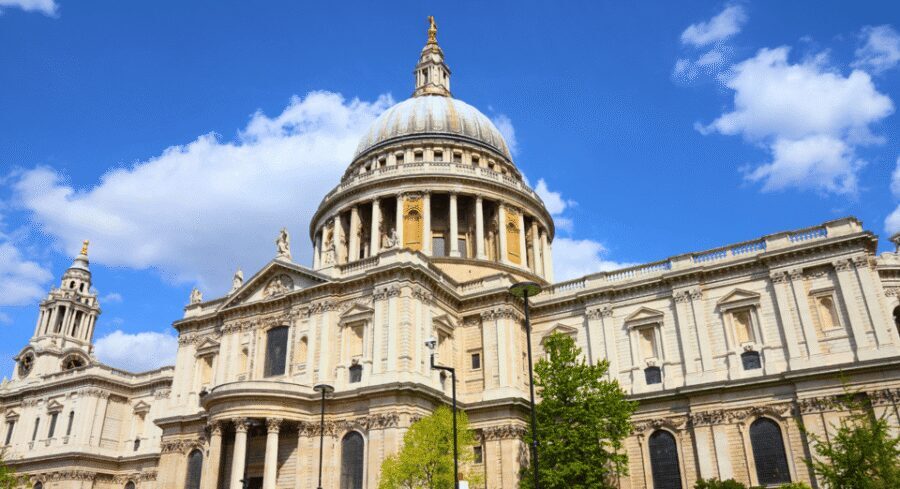
Your day starts at 30 Newgate St, right by St Paul’s Station (Exit 2)—look for your guide holding a yellow umbrella near Caffe Nero. This is a smart way to begin, because you’re starting in the historic core of London, where modern finance and old streets share the same sidewalks.
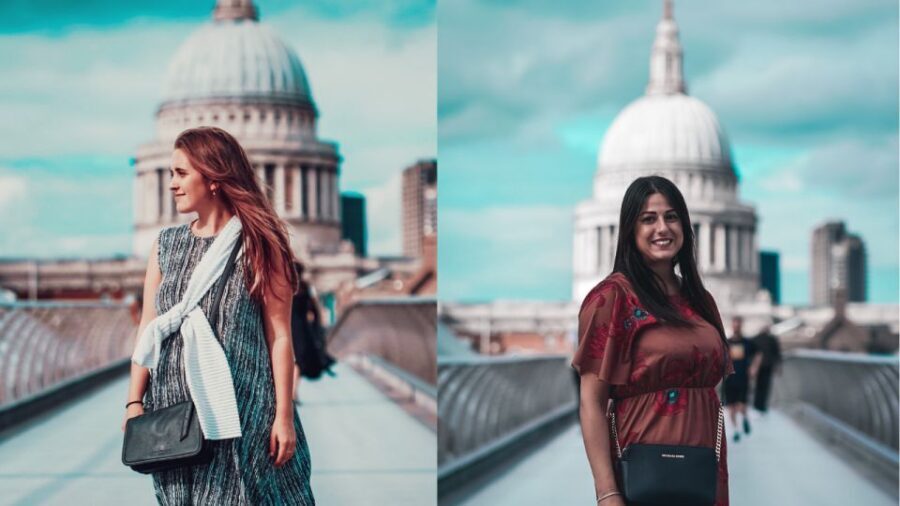
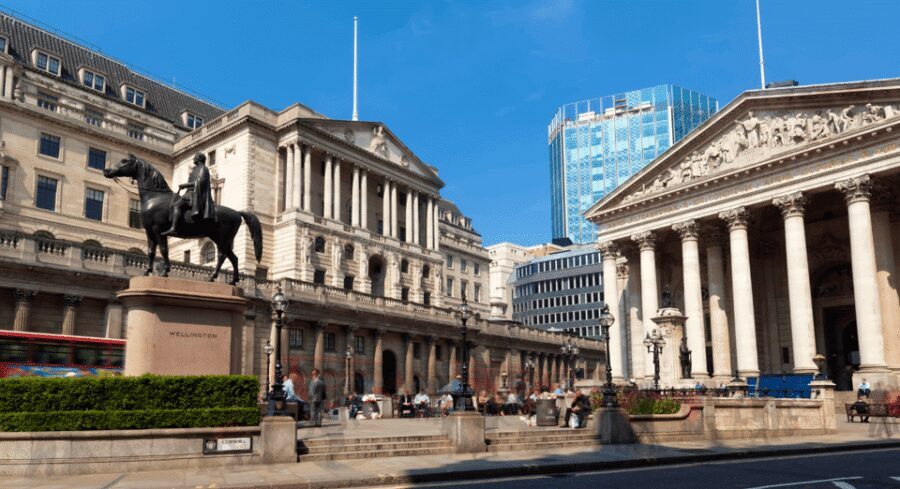
The first big stop is St Paul’s Cathedral, which you’ll see as both an architectural landmark and a spiritual anchor for the city. From there, you move through the City with a string of well-known names that feel like London’s business card: Blackfriars, Bank of England, Royal Exchange (London), and Mansion House.
Then the tour threads through the smaller markers that make the City feel real instead of just postcard-perfect. You’ll pass Bloomberg, Watling Street, Bracken House, and other markers that help explain how London grew from older trade routes into the global systems you still see today.
Why this opening part matters: if you’re new to London, you’ll spend less time guessing where things are. You’ll also learn the city logic—what sits where and why those buildings became important—so later, when you pick neighborhoods for dinner or a museum, it makes sense.
Bank-to-Monument City photos: where London’s power shows up
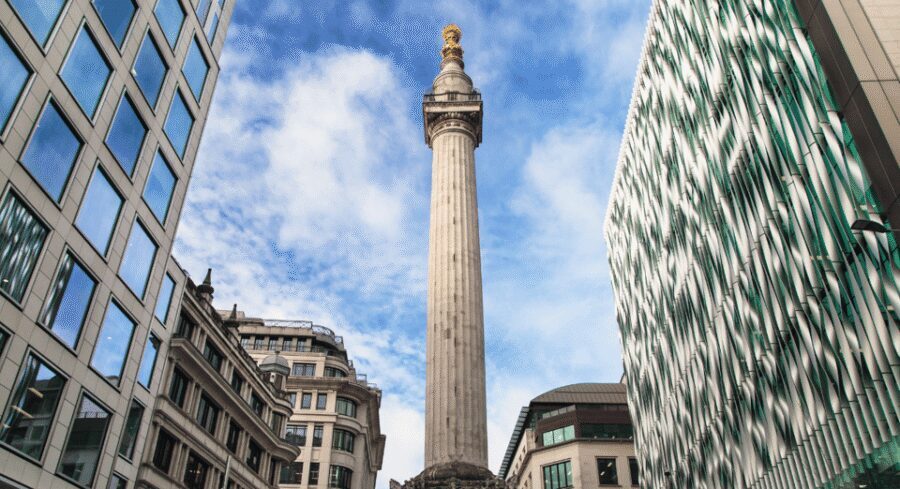
After St Paul’s and the Bank area, the route heads toward one of my favorite “instant understand” landmarks: Monument, London. It’s a quick visual pause that helps you connect London’s identity to major historic events, not just royal pages and museum rooms.
From there, you get your first broad sense of London’s layout with River Thames and London Bridge coming into view. This stretch is where the sidewalks feel busiest, but the guide’s pacing helps you stop often enough to take photos without feeling stuck.
Keep an eye out for the Tower Bridge angle later, but you’ll get early context first with London Bridge and the visual contrast of modern towers like The Shard. Even without going inside, it’s useful to see how these iconic shapes relate to each other in real space.
You’ll also spot HMS Belfast and City Hall, London along the way. These stops add a “London beyond the buildings” layer—government, public identity, and Britain’s maritime story—without turning the day into a checklist of museums.
Possible drawback to note: because you’re mostly outside, you don’t get the full depth you might want if you’re planning a deep museum day. This tour is built for breadth and orientation, not for ticketed exploration.
You can also read our reviews of more walking tours in London



Tower Bridge to lunch near Tower Hill: the day’s best reset
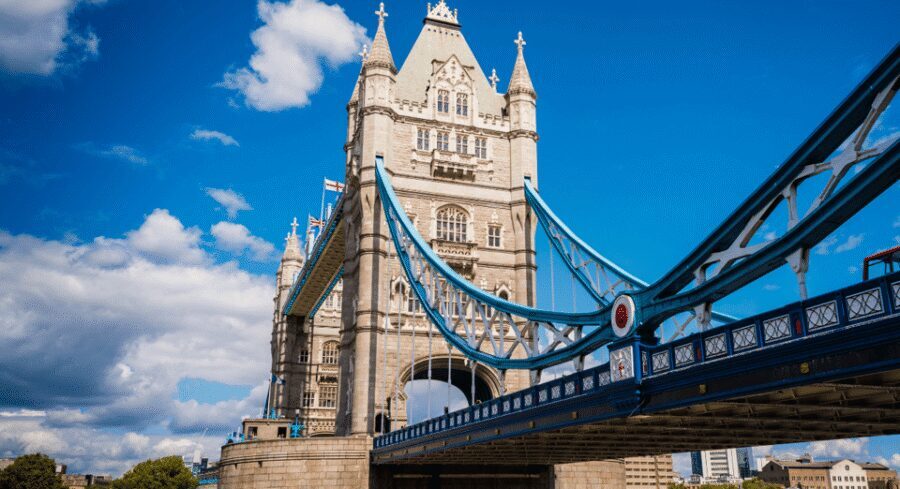
Once you reach Tower Bridge, it becomes one of those moments where you stop thinking and just look. It’s a huge photo set, and you’ll also understand why it’s often treated as a “gateway” between different London moods: finance-side intensity, river-side movement, and historic fortress energy.
Then you head for Tower of London, one of the easiest places in the city to recognize from postcards—but you’ll get a better understanding of what you’re looking at. You’re close enough to feel the scale, and your guide helps explain what made this location strategically important over time.
The tour includes a short lunch break near Tower Hill, with lunch at your own expense. Practically, this is a good setup: you’re tired enough to want food, but not so tired you can’t continue afterward. You’ll also be positioned in a great viewing area for quick Thames moments—an easy place to snack and then get back into the sightseeing rhythm.
After lunch, there’s a short train/Tube ride (about 10 minutes) that helps you shift from the City side of London to the Westminster side. This matters because it saves you from doing all the distance on foot when the landmarks on both sides are big and spaced out.
Westminster by street level: Downing Street to Westminster Abbey
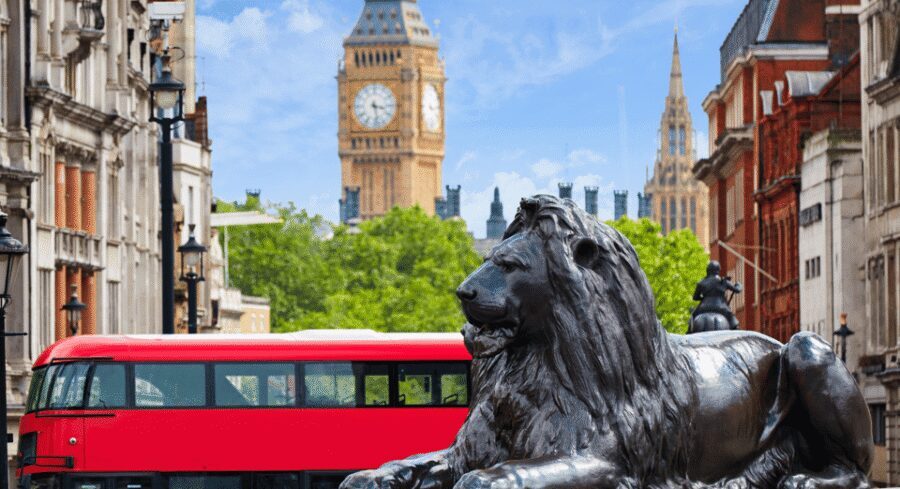
Once the Tube brings you into the Westminster zone, you’ll start seeing how everything becomes more political and ceremonial. The tour hits the London Eye area next, which is especially helpful if you’re trying to understand the river corridor and how the main sights line up along it.
Then it moves into the government core: Great Scotland Yard, the Ministry of Defence, and the Women of World War II memorial stop. These are meaningful stops because they don’t just show big buildings—they point you toward the human side of how history gets remembered in public spaces.
From there, you’ll walk through the memorial and civic axis, including the Cenotaph and Cabinet Office area. It’s the kind of stretch where you’ll appreciate having a guide: the landmarks are important, but they’re also easy to overlook if you’re rushing.
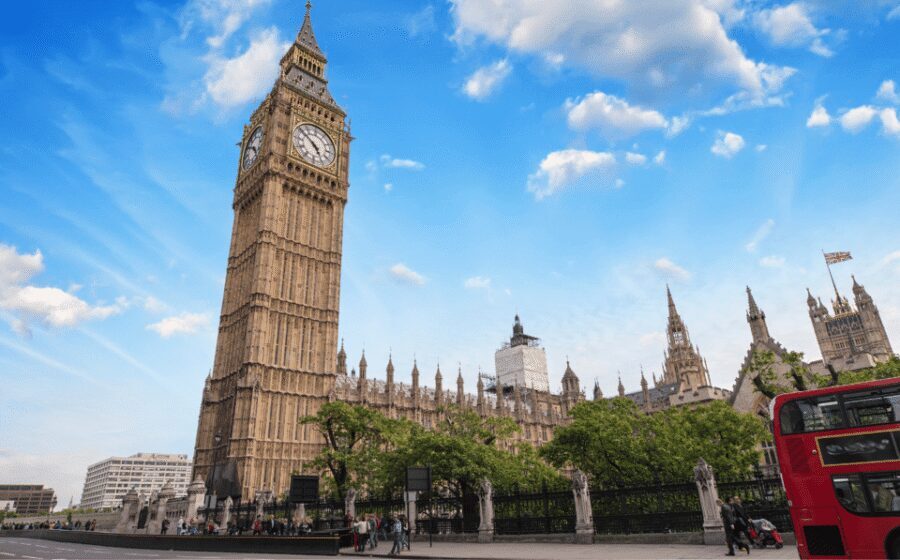
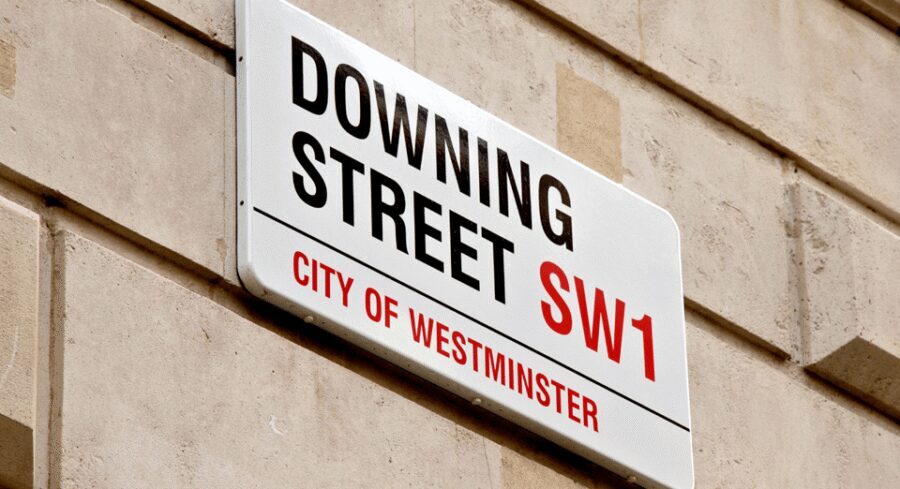
One of the biggest “London first-timer” moments is 10 Downing Street, followed by Big Ben and Houses of Parliament. You’ll see these at close range, and the guide will help you place what you’re looking at in the bigger story of the city and the country.
If your timing matches what some guides have managed before, you may even catch the Big Ben chime around 2pm. That moment is often the part people remember, because it’s both iconic and strangely satisfying even from outside.
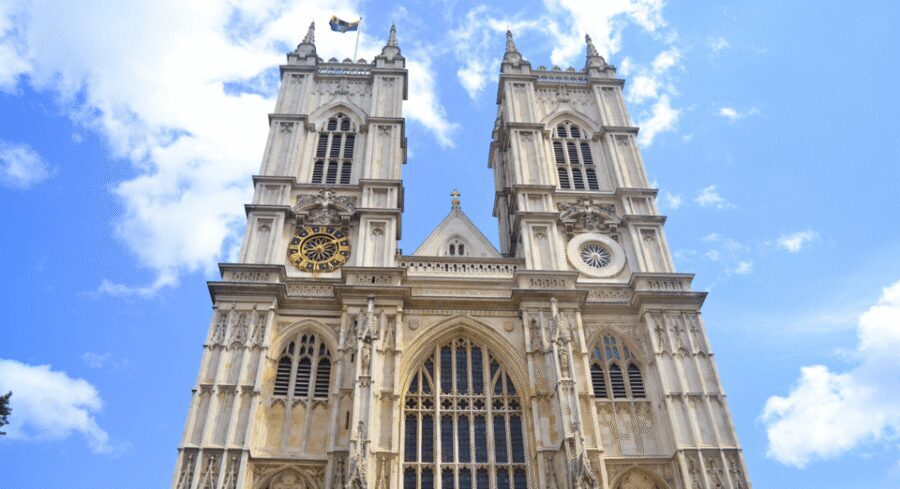
Then comes Westminster Abbey and St Margaret’s Church. Even without entrance tickets, seeing these landmarks up close helps you connect names you’ve heard for years with real street-scale geometry. It’s also a smooth transition into the parks and the royal approach.
St James’s Park to Buckingham Palace: the royal finish
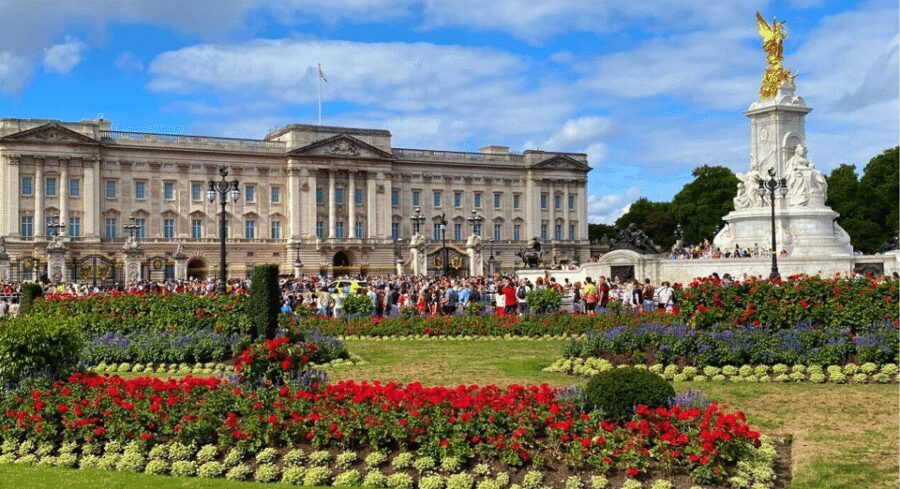
Once you’re past the Abbey area, the tour shifts into the calmer, more scenic part of central London. You’ll walk into St James’s Park, then continue toward The Mall, London—a classic ceremonial route that sets the mood for the finale.
From there you hit the royal cluster: St James’s Palace, Clarence House, and Lancaster House, plus Green Park. These stops matter because they help you understand that Buckingham Palace isn’t sitting alone—this is a whole royal neighborhood, with multiple residences and institutions in the same orbit.
Finally, the tour ends at Buckingham Palace. It’s a strong finish because you’ve built context along the way: you’re arriving not just to see the famous facade, but to understand how the surrounding streets, parks, and civic buildings connect into one of the city’s most recognizable zones.
Why this works at the end: after a day of streets and city power, the parks and approach roads give you breathing room. It also makes it easier to decide what you want to do next—walk the area more, photograph from different angles, or head toward dinner with a clearer map in your head.
Pace, walking load, and who should choose this
This is a 5-hour walking tour with no entrance tickets, and you’ll cover a lot of ground. The pace is generally described as easy and not tedious, with enough time for photos at each stop, but it still requires solid walking comfort.
It’s not suitable for wheelchair users and isn’t a great fit for people with mobility impairments or low fitness. If that’s you, it’s still worth considering a more accessible option so you can enjoy the sights without stress.
On the plus side, the tour structure is designed for flow. You get long sightseeing stretches, then you get a Tube reset, then you get lunch near Tower Hill, which helps the day stay manageable.



Value check: what $25 buys you in London sight-seeing time
At about $25 per person for a 5-hour route with 30+ stops, the value is in coverage and orientation. You’re paying for a guide, a planned route, and a curated set of high-recognition landmarks—without paying entrance fees for every stop.
That said, this isn’t a “ticket to everything” tour. If you’re the type who wants to enter major attractions for the full experience, you’ll probably treat this as the front-end of your planning: use it to find the sights you want to return to with tickets later.
Where the price really clicks is for first-time visitors. You’ll likely leave with a clear sense of where the major areas are—City vs Westminster—and you’ll know which places are worth a second visit. This also helps you avoid wasting your first days on inefficient zigzags through central London.
What’s not included (and how to handle it)
Food and drink aren’t included. You do get a short lunch break near Tower Hill, but lunch is on you.
Entrance tickets aren’t included, and the tour does not enter sights or attractions. So expect exterior views and street-level context more than museum-style exploration.
You’ll also take one London Underground journey, so plan to have a valid Oyster Card, Contactless credit/debit, or Apple/Google Pay ready. The practical tip here: make sure each guest has their own valid payment method, because the Tube requirement is per person.
Photo strategy and timing: how to get the shots without the stress
This tour is built around photo stops, and the guidance style seems to help a lot with group coordination. Several guides associated with this experience—Matt, Carolina, Eric, Mike, and Adam—are praised for keeping the group together while also making time for pictures.
One practical way to make your photos better: treat the first iconic view (St Paul’s, then the river) as your baseline, then adjust for later angles. Tower Bridge and Tower of London are where timing matters most, because you’ll want open sight lines and fewer interruptions.
Also, if your tour happens to line up with Big Ben’s chime around 2pm, that’s the type of moment you’ll want to be ready for. The best approach is simple: stay attentive when the guide says a landmark is coming up, because the tour is timed to major “recognition moments,” not just walking time.
Should you book this London sights walking tour?
Book it if you want to get oriented fast, see a wide range of iconic places in one go, and learn enough context to plan the rest of your trip with confidence. It’s especially good for a first day or first full day, because it’s an efficient way to map London’s big-name neighborhoods—City of London plus Westminster—without getting bogged down in tickets.
Skip it or switch to a different format if you need wheelchair access, have low walking tolerance, or you’re hoping to enter major attractions during the tour. This one is best viewed as a smart sightseeing framework: you’ll come away with the sights, the layout, and a shortlist of what to revisit later.
If you’re looking for a “best highlights of London” day with expert guidance, easy pacing, and frequent photo moments, this is a good bet.
FAQ
Where does the tour start?
The tour starts at 30 Newgate St, at the top of the steps of St Paul’s Station (Exit 2) next to Caffe Nero. Your guide will be holding a yellow umbrella.
How long is the tour?
The tour lasts 5 hours.
How many sights does the tour cover?
The tour covers 30+ London sights, landmarks, and attractions.
Does the tour include entrance tickets?
No. The tour does not enter sights or attractions, and entrance tickets are not included.
Is lunch provided?
No. There is a short lunch break near Tower Hill, but lunch is at your own expense.
Do you ride the London Underground?
Yes. The tour includes one London Underground journey.
What do I need to pay for the Tube ride?
You need a valid Oyster Card, contactless credit/debit card, or Apple/Google Pay for each guest.
What language is the tour guide?
The tour guide provides the tour in English.
Is the tour suitable for wheelchair users or mobility issues?
No. It is not suitable for people with mobility impairments and wheelchair users.
What’s the cancellation policy?
You can cancel up to 24 hours in advance for a full refund.