REVIEW · LONDON
London: Modern Architecture & Building Guided Walking Tour
Book on GetYourGuide →Operated by Ridge Trips Ltd · Bookable on GetYourGuide
Modern London has a way of surprising you. This walking tour turns the City of London skyline into a readable story, with street-level architecture, practical building talk, and a look at what’s planned next. I like that you get iconic towers up close and explanations that connect the design to what London has needed beneath the streets.
What I love most is the guide. Sam brings a construction management background from London and Sydney, and it shows in how he explains what you’re looking at without talking down to you. I also really liked the final stop at the NLA, where entry is free and you can linger over skyline scale models at your own pace.
One thing to keep in mind: this is a real walking tour, and it’s not designed for mobility issues. Also, you’ll see famous buildings from outside only—no interior visits—so bring a mindset for observing, not sightseeing indoors.
In This Review
- Key things you’ll notice on this modern architecture walk
- Where the tour starts: Sugar Quay Jetty and quick orientation
- City Hall and the Thames: seeing the skyline before you zoom in
- The Shard to the Walkie-Talkie: shapes, materials, and intent
- Lloyd’s of London and the Leadenhall Building: famous names, useful context
- 30 and 70 St Mary Axe (Gherkin and Can of Ham): why these towers work
- Liverpool Street Station and the Barbican: modern London beyond just towers
- Finishing at the NLA: scale models that make the city click
- Price and value: what $52 buys in real learning time
- Who this tour suits best (and who may not enjoy it)
- Practical tips to get the most from your 2-hour walk
- Should you book this modern architecture walking tour?
- FAQ
- Where is the meeting point?
- How long is the tour?
- What’s included in the price?
- Where does the tour finish?
- What days can you enter the NLA?
- Is the tour wheelchair accessible?
Key things you’ll notice on this modern architecture walk
- The skyline route starts at Sugar Quay Jetty near the Tower of London and works toward the Square Mile
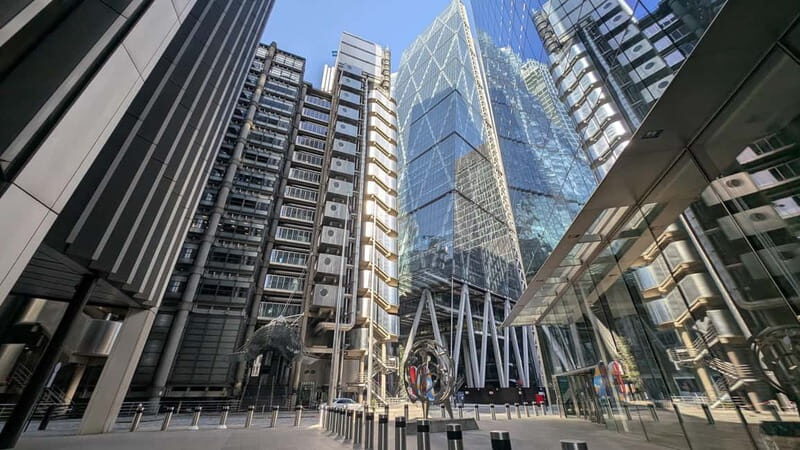
- Outside-only access to landmarks like the Shard, Walkie-Talkie, Gherkin, and Lloyd’s Building
- Construction-meets-story explanations focused on engineering and how London is built
- Future development context so the skyline feels like it’s still under construction
- NLA scale models at the end help you understand the city’s shape in a new way
- A friendly, question-friendly guide named Sam who clearly knows the technical side
Where the tour starts: Sugar Quay Jetty and quick orientation
The tour begins on the north side of the Thames at Sugar Quay Jetty, near the Tower of London. If you’re arriving by transit, this is one of those “good bones” meeting points: you’re already in the London context, with the river nearby and the City just ahead.
From the start, the pace feels set up for learning. You’re walking soon, but not rushed. The route makes it easy to connect each building to where you are in the skyline, instead of feeling like you’re bouncing between distant photos. I like this kind of structure because modern architecture can blur together when you don’t have a guide telling you what to notice.
Bring comfortable shoes and water, because this is time on your feet. Weather matters too. The tour goes ahead in most conditions, so dress for wind and rain if that’s in the forecast.
You can also read our reviews of more walking tours in London



City Hall and the Thames: seeing the skyline before you zoom in
One of the first stops is City Hall, London, which is a good choice early. It gives you a sense of how the Thames riverfront frames the city’s modern identity—how public institutions and corporate towers coexist along the same corridor.
Then you’ll spend time along the river as you move toward the financial district. This isn’t just for views (though you do get them). It’s also a helpful moment to understand perspective: standing by the Thames changes the scale of everything around you. A tower that looks dramatic in a photo can feel even more “designed” in person, because you see the geometry from multiple angles.
This part of the walk also sets up a theme the guide returns to later: London is shaped not only by what’s visible above ground, but by what’s been engineered below it. You’ll start hearing how deep infrastructure and monumental civil work affect what gets built where.
The Shard to the Walkie-Talkie: shapes, materials, and intent
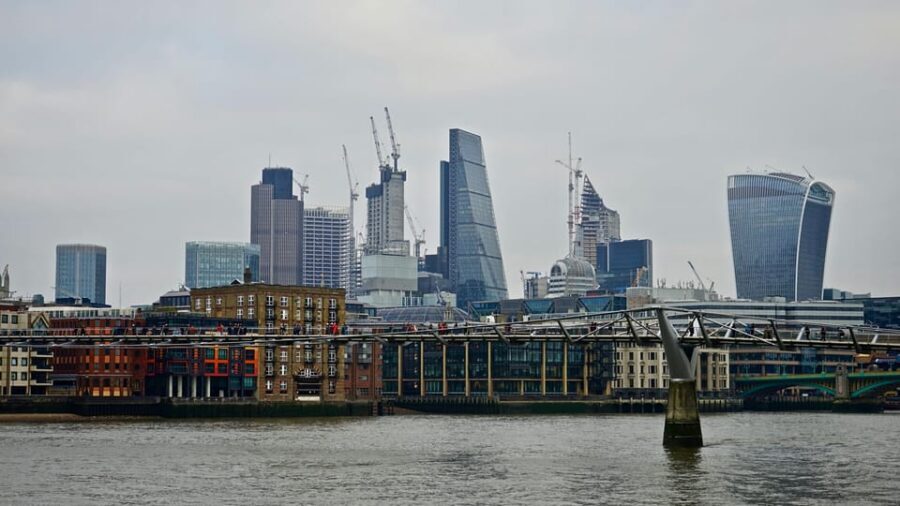
Seeing the Shard up close is a highlight for a reason. It’s one of those buildings that looks like it’s doing something in every direction—cutting through the sky, not just occupying it. On the street, you notice how the mass narrows and how the facade reads from different positions. The guide helps you make sense of that, rather than leaving you stuck with “tall and shiny.”
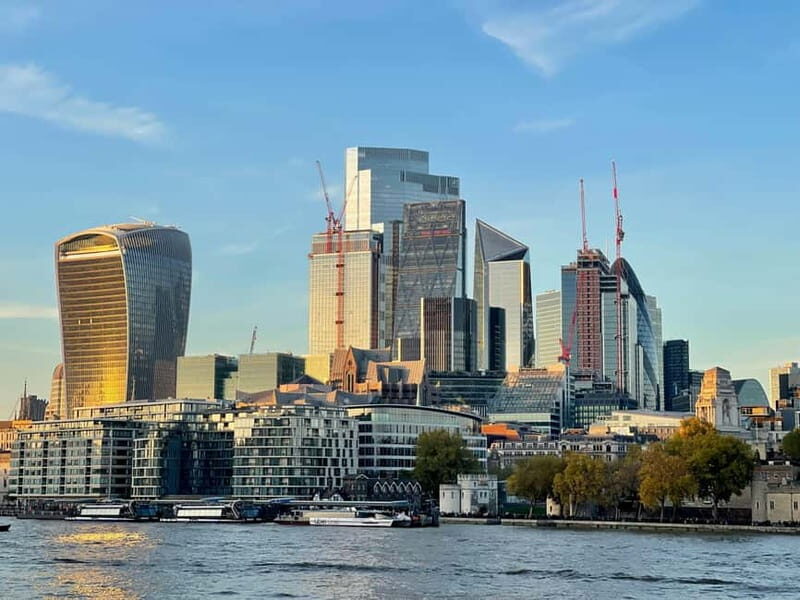
Next, you’ll head to The Fenchurch Building, the famous Walkie-Talkie shape. Up close, it’s a reminder that “modern architecture” isn’t one style. It’s a toolkit of ideas: curved surfaces, dramatic profiles, and exterior details that are meant to catch light in a specific way.
What I really appreciated here is that the explanations aren’t only aesthetic. Sam includes practical context that makes technical questions make sense—exactly the kind of detail you want if you’re curious about how buildings behave and get constructed. One review noted there was enough technical explanation, and you can feel that emphasis in how the tour is structured.
Lloyd’s of London and the Leadenhall Building: famous names, useful context

Two of the most recognizable stops are Lloyd’s of London and The Leadenhall Building. These aren’t random “pretty towers” on a list. They’re tied to how the City functions and how buildings support intense commercial life.
At Lloyd’s, you get a sense of how identity can be built into architecture. Even from outside, the building reads as a workplace designed for a specific industry—modern London doesn’t only grow upward; it also grows with purpose.
At the Leadenhall Building, the tone shifts slightly toward engineering personality. You’ll hear fun facts and stories that connect design choices to function, and the guide’s construction-management background helps these explanations land. If you like buildings where structure and form feel connected, this portion of the walk is a strong payoff.
30 and 70 St Mary Axe (Gherkin and Can of Ham): why these towers work
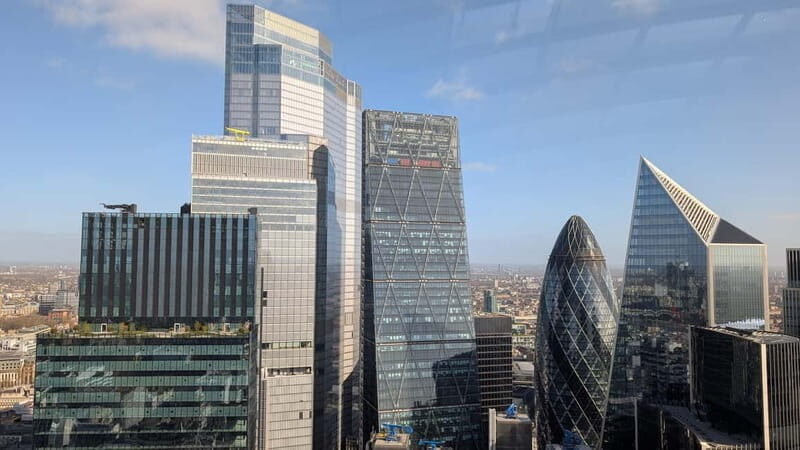
The tour focuses on both 30 St Mary Axe (The Gherkin) and 70 St Mary Axe (The Can of Ham). You’ll get the chance to compare them, and that comparison is the point. They share a street-level neighborhood, but they don’t try to look the same.
What I find helpful is that you’re not just told “what it is.” You’re guided to look at the shape and ask why it looks the way it does. The guide’s style is to point your attention to details that you might otherwise miss: how the building’s profile changes how it sits against the sky, and how its form connects to the idea of modern engineering solutions.
This is also where the tour becomes more than sightseeing. The walk includes discussion of major past and present engineering projects that lie beneath London, and why that matters for today’s construction decisions. If you’ve ever wondered how London keeps building while still functioning as a working city, you’ll understand the logic a bit better by the time you reach these towers.
You can also read our reviews of more guided tours in London





Liverpool Street Station and the Barbican: modern London beyond just towers
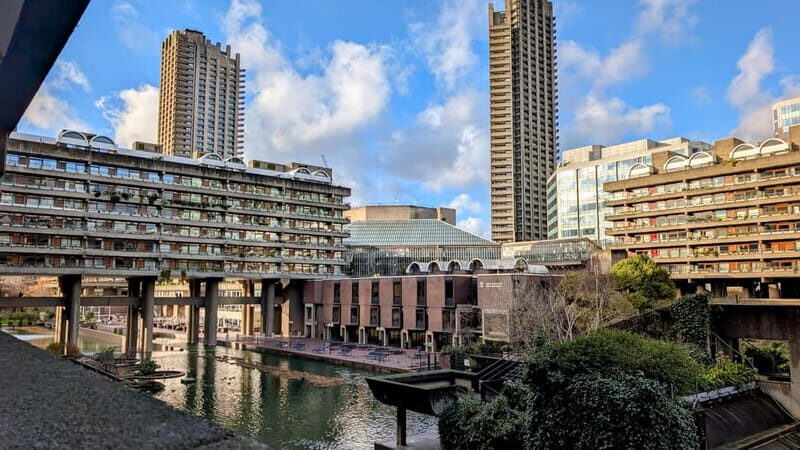
After the St Mary Axe pair, the route moves toward Liverpool Street Station and then on to the Barbican. This matters because London’s modern architecture isn’t only glass-and-steel skyscrapers. Some of the biggest “modern” statements come from planned city design and major developments that shape whole neighborhoods.
Liverpool Street gives you a moment to connect architecture to transit reality—how movement, commuting, and logistics are part of what makes the City tick. You’re seeing the machine behind the skyline, not just the face.
Then the Barbican adds contrast. The architecture feels different here: more sculptural and deliberately designed, rather than aiming for a single recognizable peak. From the street, it’s a reminder that modern architecture can be about massing, public space, and long-term planning, not just iconic silhouettes.
A nice touch is that the guide keeps the stories going. Reviews praise Sam’s engaging way of answering questions and pointing out hidden details. If you like asking “how does that work?” this is where your curiosity gets a workout—in a fun way.
Finishing at the NLA: scale models that make the city click

The tour ends at the NLA (within The London Centre), and you’ll likely want a little extra time—think 15 to 30 minutes—to take in the models. This is where the skyline stops being a list of buildings and turns into a coherent shape.
The NLA is open Tuesday to Saturday until 17:00, and that’s an important planning detail. If you’re traveling on a Sunday or Monday, you should know you won’t be able to enter the NLA for this tour. The architecture walk itself still makes sense, but the ending adds a real “ah, that’s how it fits together” layer.
I liked this finish because it changes how you look at what you’ve already seen. Walking among towers teaches you scale in pieces. The models teach you the whole. Even if you’re not a hardcore architecture person, it helps you remember what the City looks like when everything is considered at once.
Price and value: what $52 buys in real learning time

At $52 per person for about 2 hours, this is priced like an experience that trades speed for explanation. It’s not trying to sell you a long museum visit. Instead, you’re buying guided context for major landmarks and a construction-informed narrative that you can’t easily get from simply walking around and looking up.
Value here comes from three places:
- You get the outside views of multiple big-name buildings in one route.
- Sam’s background makes the technical side understandable, even if you’re not an architecture expert.
- The ending at the NLA adds an extra informational element without paid building entry.
Also, it’s a small tour format in practice: you’re out in the open, meeting at Sugar Quay, then finishing at NLA. That means you’re spending your money on instruction and observations, not on transport transfers or long sit-down time.
If you only want photos of famous towers, you might feel like you’re paying for talk. If you want to understand why these buildings look the way they do and how London keeps evolving, this price feels fair.
Who this tour suits best (and who may not enjoy it)
This tour is ideal if you:
- like architecture explanations that go past the obvious
- enjoy engineering stories about how cities function
- want iconic modern buildings in a tight walking route
- like asking questions and getting clear answers from a guide with real construction background
It may not be ideal if you:
- can’t do extended walking (it’s not suitable for mobility impairments or wheelchair users)
- strongly prefer entering buildings and touring interiors (this is outside viewing only)
- want a casual “grab a few highlights” stroll rather than a guided, structured route
If your group includes someone who’s less interested in architecture, it can still work. One review mentioned the tour was engaging for a mild-interest person and still answered technical questions for their partner—so Sam’s approach can meet different curiosity levels in the same group.
Practical tips to get the most from your 2-hour walk
A few small choices can make the difference between a good tour and a great one:
- Wear shoes you trust. You’ll be moving between stops and standing to look up.
- Bring a camera, but also take a minute to look without it. The guide’s pointing matters when you match it to the real view.
- Bring water, especially if you’re walking in warmer months.
- Dress for London weather. The tour continues in typical conditions unless conditions turn extreme.
And if you like learning, don’t be shy with questions. The guide’s explanations are structured enough that questions won’t throw off the tour, and reviews highlight his openness to questions.
Should you book this modern architecture walking tour?
Book it if you want an efficient route through the City of London’s most recognizable modern buildings, with a guide who connects design to construction realities. I think it’s especially good if you enjoy learning how the skyline is shaped—above ground and underneath it.
Skip it if you need building interiors, or if walking isn’t an option for you. In that case, you’d be happier with something less active or more indoor-focused.
If you’re on the fence, consider this: you’re paying for seeing fewer things more clearly. With Sam’s guidance and the NLA models at the end, it’s one of those rare city walks that actually changes how you understand what you’re looking at.
FAQ
Where is the meeting point?
Meet at Sugar Quay Jetty, near the Tower of London.
How long is the tour?
The tour takes about 2 hours, and I’d plan an extra 15–30 minutes to enjoy the NLA at the end.
What’s included in the price?
You get a guided walking tour of London’s iconic modern buildings. Entry into the buildings you see is not included.
Where does the tour finish?
It finishes at the NLA (within The London Centre).
What days can you enter the NLA?
The NLA is open Tuesday to Saturday until 17:00. That means Sunday, Monday, and evening tours won’t be able to enter.
Is the tour wheelchair accessible?
No. It’s not suitable for people with mobility impairments and not for wheelchair users.