REVIEW · LONDON
London: Natural History Museum Guided Tour
Book on GetYourGuide →Operated by The Great Weekender · Bookable on GetYourGuide
Dinosaurs and fossils meet big-city clarity. This guided tour turns the Natural History Museum’s huge collection into a focused hit list, with time built in to actually look. I especially like how it anchors you with Sophie the Stegosaurus and then follows up with the Archaeopteryx angle on the bird–dinosaur connection.
The main drawback? It’s not set up for wheelchair users, and if you already know a lot about volcanoes, gems, or dinosaur science, some parts may feel more like fast background than deep nerd mode.
In This Review
- Key Highlights You’ll Notice Fast
- Why This Natural History Museum Tour Works in 2.5 Hours
- Meeting Outside the Exhibition Road Entrance: A Simple Start, Real Time Savings
- Fossil-Focused Routing: Sophie the Stegosaurus, the Dodo, and “Okay, Wow” Moments
- The Archeopteryx “Missing Link” Stop That Actually Makes Sense
- Giant Sequoia Cross-Section: Tree Time You Can Stand Next To
- Darwin’s First Edition: Why One Book Still Matters
- Pompeii Plaster Casts and the Mount Vesuvius Story
- Gemstones, Earth’s Vault, and Even Moon-and-Mars Rocks
- Price and Value: Is $93 Worth It?
- Group Style: Private or Small Groups, and How Pacing Affects You
- What to Watch Out For: Flash, Mobility, and Day-of Reliability
- Who This Tour Fits Best
- Should You Book This London Natural History Museum Guided Tour?
- FAQ
- How long is the Natural History Museum guided tour?
- Where do I meet the guide?
- Does the tour include skip-the-line security?
- Is flash photography allowed?
- Is the tour wheelchair accessible?
- Can I cancel and get a refund?
Key Highlights You’ll Notice Fast
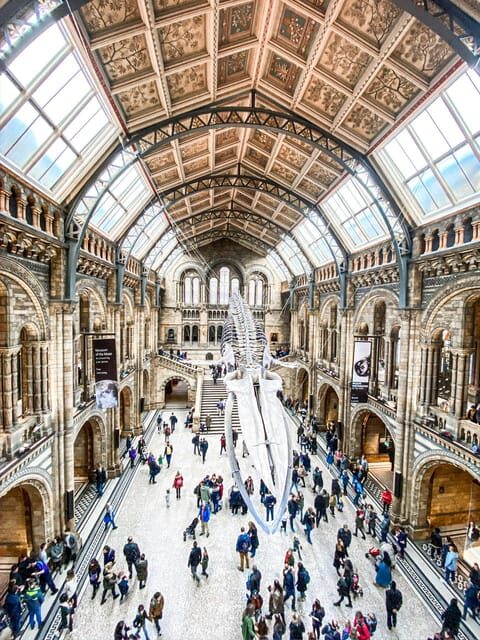
- Sophie the Stegosaurus: the museum’s most famous stegosaurus skeleton, plus a route that keeps you from wandering.
- Archaeopteryx and the missing-link story: an exhibit that ties birds and dinosaurs together in one clear thread.
- A 1300-year-old Giant Sequoia cross-section: you see tree time, not just tree species.
- Pompeii plaster casts: you get the Mount Vesuvius story through bodies preserved in cast form.
- Darwin’s On the Origin of Species (first edition): a scientific classic you can stand in front of, not just read about.
- Earth vault minerals plus Moon and Mars rocks: unusual comparisons that make the science feel practical.
Why This Natural History Museum Tour Works in 2.5 Hours
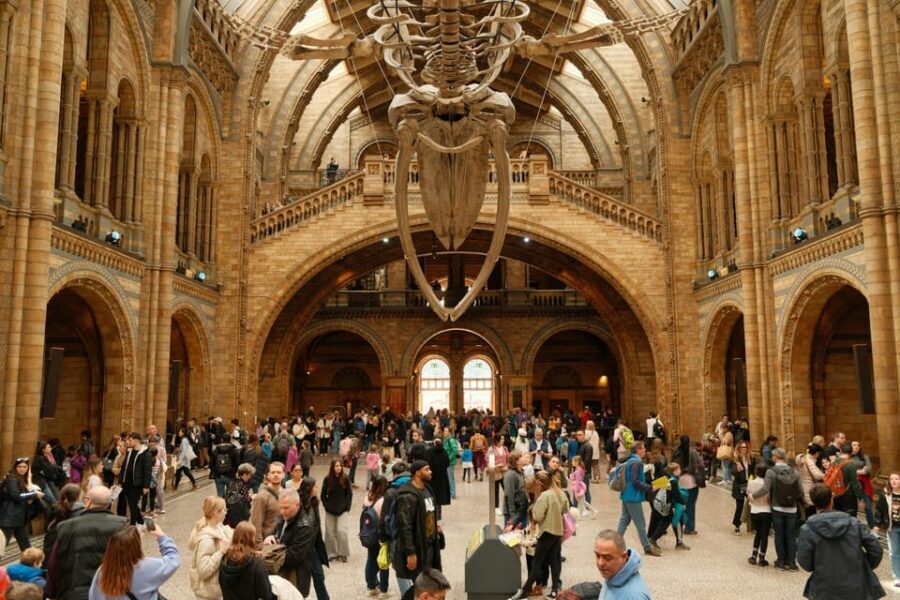
London’s Natural History Museum is big. Like, I-can-get-lost-for-hours big. This tour is built to stop that problem before it starts by steering you to the museum’s biggest “you’ll remember this” stops in a set window.
You also get a guide who decides what matters most, instead of you having to make a dozen decisions while you’re surrounded by 80 million specimens. That alone is a real value if your time in London is tight.
You can also read our reviews of more guided tours in London



Meeting Outside the Exhibition Road Entrance: A Simple Start, Real Time Savings
You’ll meet outside the red telephone box opposite the Exhibition Road entrance to the museum. It’s the kind of meeting point that’s easy to find, especially if you’re arriving by Tube and doing your own navigating.
One practical win: the tour includes an express security check. That matters because museum security lines can be unpredictable, and waiting doesn’t help you see fossils, trees, or Darwin’s first edition any faster. With express access, you spend more of your paid time inside where the exhibits are.
Fossil-Focused Routing: Sophie the Stegosaurus, the Dodo, and “Okay, Wow” Moments
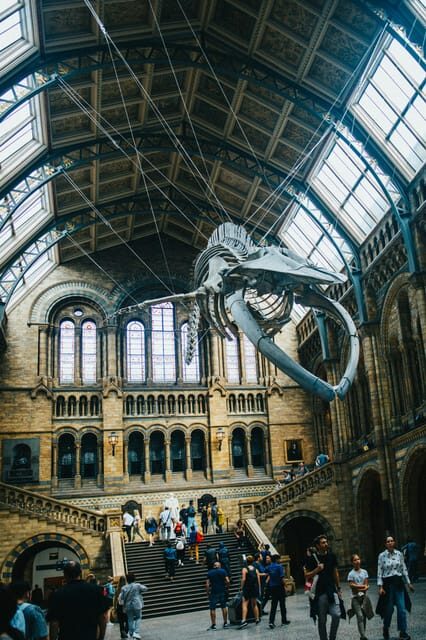
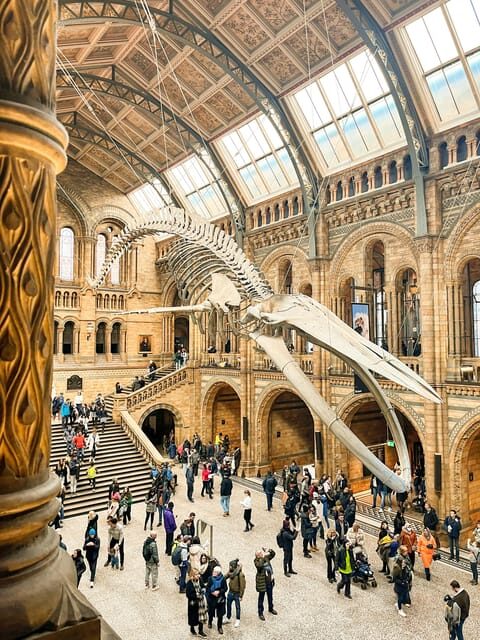
The tour’s fossil sequence is designed to get you oriented quickly and then keep you locked in. The first big magnet is Sophie the Stegosaurus—the museum’s most complete stegosaurus skeleton. Even if you think you’ve seen dinosaur bones in photos, seeing the full skeleton in person changes the scale.
Right around that area, you’ll also encounter the long-extinct Dodo. It’s a nice change of pace from reptiles—same theme of extinction, different kind of story. If you like your science grounded in real history, the Dodo helps connect the dots between species loss and human impact.
The way this tour keeps moving is useful. You’re not stuck in one gallery for too long, and you’re not forced to make your own path through crowded rooms.
The Archeopteryx “Missing Link” Stop That Actually Makes Sense
The star fossil for the bird–dinosaur connection here is Archaeopteryx. The tour frames it as the “missing link” between dinosaurs and birds, and that’s exactly how you should approach the stop: treat it like a clue, not a trivia fact.
What I like about this part of the tour is the way it gives the science a storyline. You’re not just looking at one specimen. You’re using it to understand how features evolve and why scientists compare bones across groups. That makes the exhibit easier to remember when you’re back home.
If you tend to zone out when museum labels get dense, this is one of the places a guide’s explanation can pull you back in.
Giant Sequoia Cross-Section: Tree Time You Can Stand Next To
Then comes one of the most visually impressive non-dinosaur stops: a cross-section of a Giant Sequoia. You’re looking at a tree that was already about 1300 years old when it was felled in the 19th century.
This exhibit is a smart break from fossils because it changes what you’re thinking about. Fossils push you toward deep time in geology and evolution. The sequoia does the same, but through age rings you can feel in your body. It turns the concept of time into something physical.
For families, this is usually a winner because kids can point at the scale right away. For adults, it’s a reminder that natural history is just as much about living things as about what used to be alive.
You can also read our reviews of more historical tours in London




Darwin’s First Edition: Why One Book Still Matters
Another key stop is Darwin’s On the Origin of Species (first edition). This isn’t just about the author’s name. It’s about seeing a scientific classic in physical form.
A good guide helps you connect the dots between museum objects and the big ideas behind them. You start noticing how specimens, comparisons, and careful observation feed the questions that Darwin’s work made central.
If you love reading, this stop also gives you a moment of perspective: history of science isn’t only in archives. It’s in the way museums organize evidence.
Pompeii Plaster Casts and the Mount Vesuvius Story
The tour moves from fossils and science classics to something emotionally heavier: plaster casts taken of the victims of the eruption of Mount Vesuvius in Pompeii.
This section works best when you slow down for a minute and actually look at what the casts show. You’re not just learning about a volcano. You’re seeing the human consequence—an uncomfortable but important part of the natural world story.
If you’re sensitive to tragic subjects, it’s still worth knowing this is included so you can pace yourself. A guide can also help you understand what you’re seeing without making it feel like a shock exhibit with no context.
Gemstones, Earth’s Vault, and Even Moon-and-Mars Rocks
After Pompeii, the tour swings into a different flavor of wonder. You’ll spend time around the museum’s finest gemstones from the earth’s vault, and you’ll also see rock samples from the Moon and Mars.
This combination is surprisingly effective. It helps you compare scale: minerals formed over deep time, space rocks that traveled the solar system, and scientific collection practices that let people study them. It turns “space stuff” from sci-fi into physical objects you can point at.
If you like STEM themes, you’ll probably appreciate how this tour links them under one roof—Earth, geology, and astronomy all in the same museum route.
Price and Value: Is $93 Worth It?
At $93 per person for about 2.5 hours, you’re paying for three things: a live English guide, access to the museum’s main highlights, and express security. You’re also paying for time saved.
That last part matters. Natural history museums can tempt you into spending hours without seeing the key “must-see” items. This tour does the opposite: it gives you a prioritized route so you actually leave with photos of the exhibits that made you buy the ticket in the first place.
Still, it’s fair to consider who it’s best for. If you already know a lot and love reading independently, you might find the pace a bit basic. On the other hand, if you want the highlights explained clearly without doing all the planning yourself, the value improves fast.
Group Style: Private or Small Groups, and How Pacing Affects You
This tour can run as private or small groups, which usually means you’re not swallowed by a huge crowd. That matters in a museum, where crowd flow can interrupt your ability to look closely at specimens and displays.
From the way guides are described on the service side, strong guides can keep families engaged without making it feel like only kid entertainment. Names like Sasha and Wesley show up as examples of guides who held attention and kept the pace moving with no boredom. If you get a guide like that, you’ll likely enjoy the tour a lot more than if you’re stuck with generic explanations.
What to Watch Out For: Flash, Mobility, and Day-of Reliability
Two practical rules are explicitly part of the experience: flash photography isn’t allowed, and the tour isn’t suitable for wheelchair users. If you need step-free access or full wheelchair routing, you’ll want to look for a different option.
Also, do a quick sanity check at the start. One booking report noted a guide absence, so it’s worth verifying the meeting point and ensuring a guide is actually present at the red telephone box before you wait too long. If anything feels off, address it right away.
Who This Tour Fits Best
This is a great fit if you:
- want the museum’s top hits—Sophie, Archaeopteryx, Darwin’s first edition—without spending your London day wandering
- like science topics that connect evolution, geology, and space
- prefer a guide to give you context at the right moments (especially for Pompeii and the “missing link” theme)
It might feel less satisfying if you:
- come in already knowing a lot and want deeper coverage than a highlights route can offer
- need wheelchair-friendly access
Should You Book This London Natural History Museum Guided Tour?
If you want a smart, time-efficient way to see the museum’s headline exhibitions, I’d book it. The combination of Sophie the Stegosaurus, Archaeopteryx, the Giant Sequoia cross-section, Darwin’s first edition, Pompeii plaster casts, plus gemstones and Moon-and-Mars rocks is a lot of variety for one guided block.
At $93, it’s not a cheap thrill. It’s more like paying for focus: the guide helps you turn a huge building into a clear route with meaningful context. If you’re traveling with family, or you want the highlights done right without overthinking, this one makes sense.
FAQ
How long is the Natural History Museum guided tour?
The tour is listed as 2.5 hours in total, with a 2-hour guided visit of the museum’s main highlights.
Where do I meet the guide?
Meet outside the red telephone box opposite the Exhibition Road entrance to the Natural History Museum.
Does the tour include skip-the-line security?
Yes. The experience includes access through an express security check.
Is flash photography allowed?
No. Flash photography is not allowed.
Is the tour wheelchair accessible?
No. It is not suitable for wheelchair users.
Can I cancel and get a refund?
Yes. Free cancellation is available up to 24 hours in advance for a full refund.