REVIEW · LONDON
London: Paradox Museum Entry Ticket
Book on GetYourGuide →Operated by Paradox Museum London · Bookable on GetYourGuide
Your brain will argue with you.
Paradox Museum London turns perception into play with 50+ interactive exhibits that use visual and tactile tricks to make you question what you feel and what you see. I especially like how the experience is hands-on: you’re not just looking at displays, you’re participating in them.
The photo-friendly rooms are another big win, from camouflage-style visual tricks to bigger-than-life illusion spaces like the Throne Room. One consideration: your visit may not stretch to the full 1.5 hours if a few exhibits are closed for refurbishment, or if the optional Zero Gravity Room isn’t available when you go.
Key points to know before you go
- 50+ interactive exhibits built around visual and tactile illusions for all ages
- Camera moments are part of the design, including tube-station-style gravity effects
- Specific themed areas like the Camouflage Room, Castle Room, and Throne Room guide the flow
- Expect sensory challenges that can feel surprising fast, even if you consider yourself not very “science-y”
- Some experiences may be closed or under repair, so plan for flexible expectations
- The Zero Gravity Room is optional and can affect the total value of your time
In This Review
- Paradox Museum London entry ticket: what the experience is really like
- How long should you plan?
- Location and timing near Harrods (90 Brompton Road)
- The “exit reality, enter fun” flow: how the rooms move you along
- Camouflage Room: tricks that make you question what you’re looking at
- Castle Room and the Paradox Sofa: when space starts arguing with you
- Throne Room: big, silly, and very photo-friendly
- Tube station ceiling and tunnel illusions: gravity in your pocket
- Interactive exhibits built for all five senses
- Staff help, queuing, and the guide question
- Zero Gravity Room: the optional add-on that can change your plans
- Price and value: is $36 worth it?
- Who should book Paradox Museum London, and who might not
- Should you book the Paradox Museum London entry ticket?
- FAQ
- How long does the Paradox Museum London visit take?
- Where is the Paradox Museum in London?
- Is a guide included with the ticket?
- Is the Zero Gravity Room included in the entry ticket?
- Is the museum wheelchair accessible?
- What language is the host or greeter?
- What’s the cancellation policy?
Paradox Museum London entry ticket: what the experience is really like
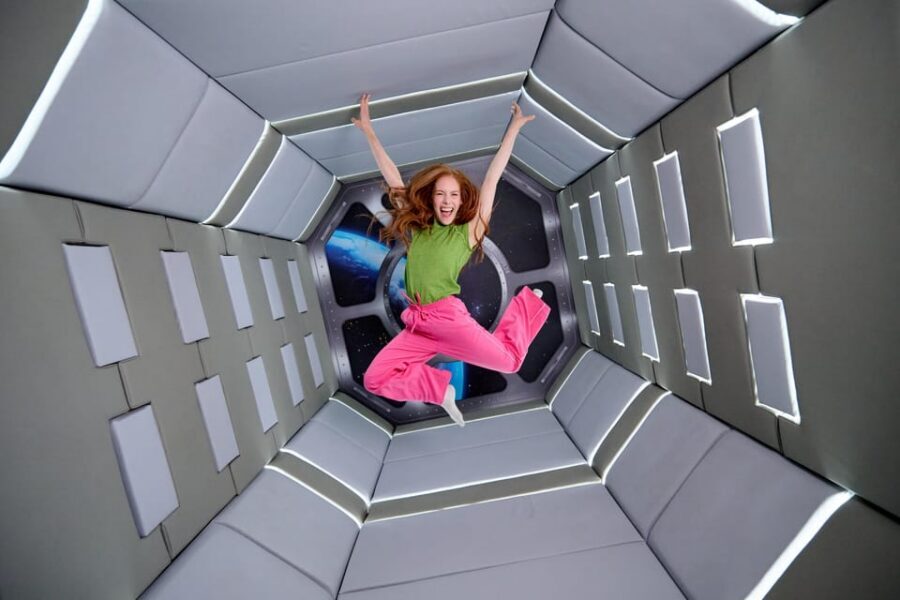
Paradox Museum London is basically a permission slip to be weird—in the best way. You step into a set of interactive rooms where your senses get tested. Your eyes might say one thing, your hands might insist on another, and your brain tries to reconcile the mismatch. It’s not scary. It’s more like mental gymnastics with props, lighting, and physical setups made to trick you.
What makes it enjoyable is that you’re always doing something. You’ll move room to room, try the next illusion, then look around to see how the space is designed to create the effect. It’s a strong fit if you like activities that don’t depend on reading a lot of text.
Also, the museum is built for photos. The illusions aren’t just for fun; they’re staged so you can create the kind of “how is that possible?” pictures you’d actually want to show later.
How long should you plan?
The ticket is timed for about 1.5 hours, but that doesn’t mean you’ll need it. Some visitors move through quickly, especially if you’re focused on photos and you don’t want to linger at every station. If you like to re-try illusions for better pictures, plan closer to the full window.
A few more London tours and experiences worth a look


Location and timing near Harrods (90 Brompton Road)
The museum’s address is 90 Brompton Road, Knightsbridge, right opposite Harrods. That location matters because it’s easy to combine with a day of central London sightseeing. It’s also convenient for families, since you won’t feel like you’re trudging to some far-out neighborhood just to squeeze in an hour.
In terms of timing, you’ll pick a starting time based on availability, and the visit runs for about 1.5 hours. If you’re arriving early, you may still be fine—just don’t count on extra time being added to your booked slot.
A practical tip: keep your schedule flexible. This isn’t a museum where every single station has to be running perfectly to have fun. The experience is intentionally playful, and if one feature is down, you can still get a lot out of the rest of the rooms.
The “exit reality, enter fun” flow: how the rooms move you along
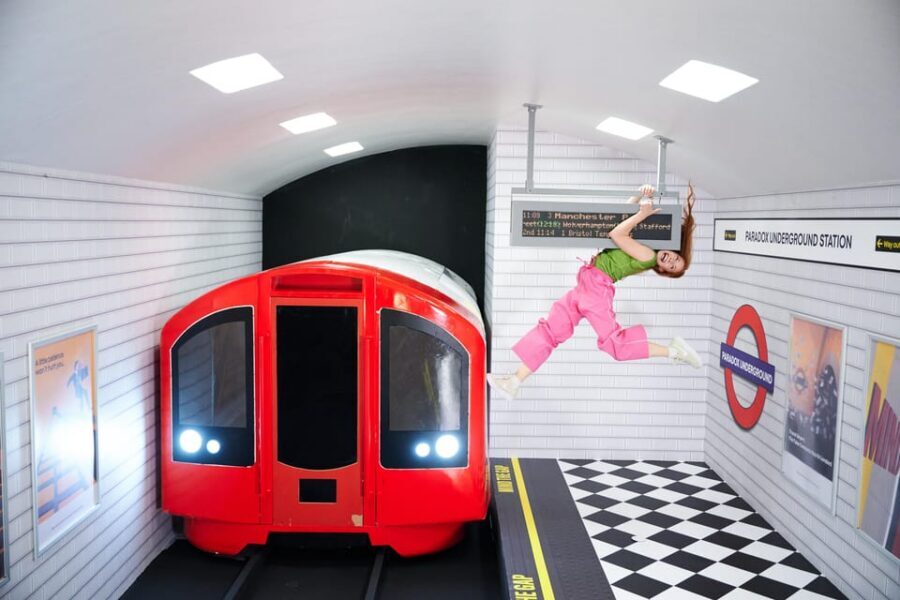
Paradox Museum London is designed like a sequence. You’ll start in rooms that get your brain warmed up with quick wins, then move into bigger, more theatrical areas. That matters for pacing. When the museum is working as intended, you’re never staring at a sign for long before something invites you to interact.
You can think of the flow in three layers:
- Photo setups that make it easy to jump in and get a clear result
- Tactile and visual traps that force you to test your assumptions
- Bigger themed spaces that give you room to react, pose, and watch how the illusion works in context
If you’re going with kids, this flow helps keep attention. If you’re going as adults, it prevents the experience from turning into a long slideshow. You’re always doing the next challenge.
Camouflage Room: tricks that make you question what you’re looking at
One of the most memorable themed areas is the Camouflage Room. The name is doing the heavy lifting: you’ll face visual setups that can make objects hard to pick out, even when they should be obvious.
Why this room works: camouflage illusions aren’t just about “spot the hidden thing.” They’re about testing your brain’s pattern-recognition shortcuts. Once you notice the trick, it’s satisfying—then you try again and it’s still tricky, because your brain keeps trying to fill in missing information automatically.
If you’re bringing a camera, this is a good room to take your first few photos—mainly because you’ll get a feel for how lighting and angles change what you think you’re seeing. Take a couple shots, then switch positions. Small changes can make the illusion more dramatic.
Castle Room and the Paradox Sofa: when space starts arguing with you
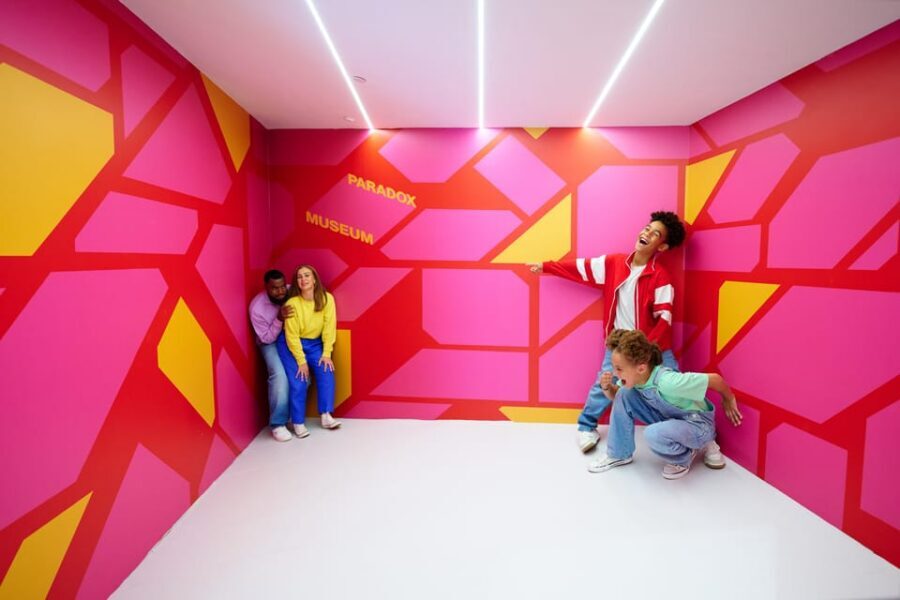
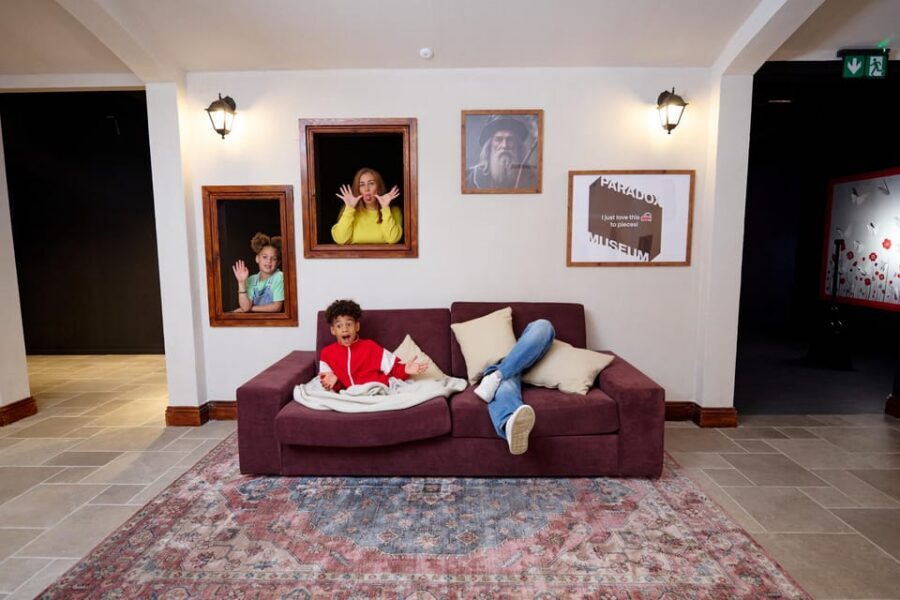
The Castle Room ups the oddness. It includes tricky hallways and a Paradox Sofa, which is exactly the kind of prop that turns a simple photo into a head-scratching moment.
Here’s what to look for: the museum doesn’t rely only on fake visuals. The space design plays a role too. Hallways and angles can make it feel like you’re moving through a world that doesn’t follow the rules your body expects.
The Paradox Sofa is a great example of how the museum mixes “look” and “feel.” You’ll sit, stand, or position yourself, and your brain has to reconcile what your senses report versus what the setup is showing you. That mismatch is the whole point, and it’s why this is one of the rooms people remember later.
You can also read our reviews of more museum experiences in London




Throne Room: big, silly, and very photo-friendly
If you want one room that feels like theatre, go for the Throne Room. It’s built for scale and reactions—think of it as the spot where you can lean into the fun and take pictures that look like you’ve been transformed into a monarch.
This room also helps break up the more technical illusion challenges. Some exhibits are very science-y in concept, even when they’re playful. Throne Room gives you a visual payoff and a change of pace, which is great if you’ve got a mix of ages in your group.
Practical idea: do a few photos here with different poses. The throne setup makes it easy to get strong compositions without needing fancy camera gear.
Tube station ceiling and tunnel illusions: gravity in your pocket
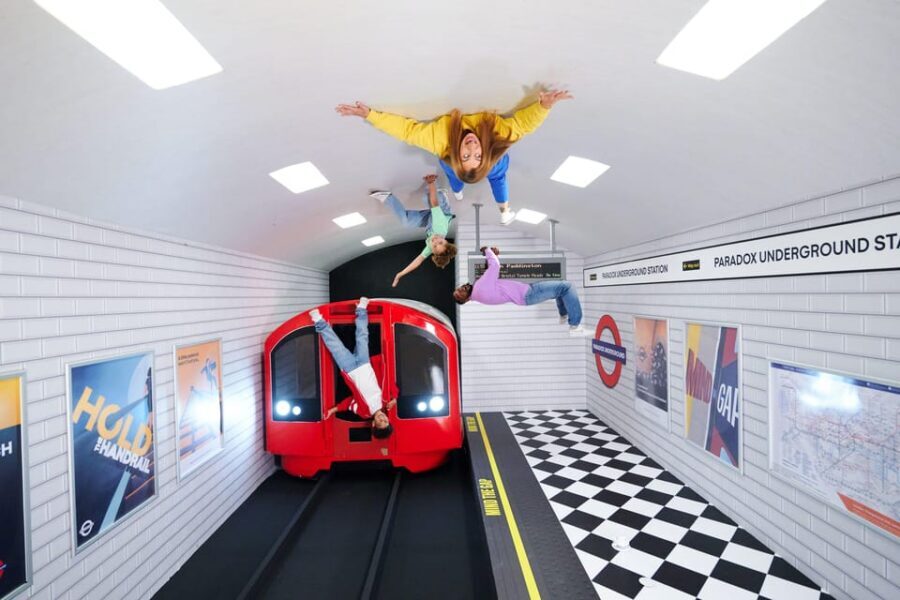
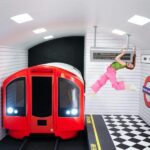
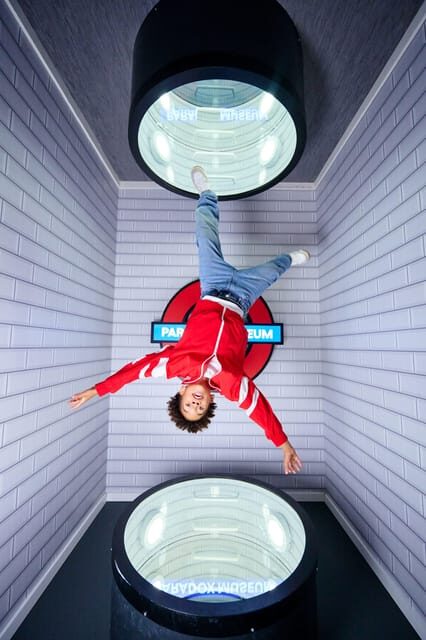
Paradox Museum London also includes tube-style illusions. You’ll be able to traverse a tube station ceiling for gravity-defying photos, and you can enter a tube tunnel that makes walking straight feel impossible.
These are the moments that turn the museum into a story you can tell later. They’re also why the museum is such a hit for groups. Even if only one person gets the “perfect” photo, everyone is still reacting and watching.
A tip for better results: when you’re doing gravity-defying photos, take one test shot first. Then adjust your stance and angle. The illusion works best when your position matches the setup, and your second attempt is usually where the magic shows.
Interactive exhibits built for all five senses

The museum is very clear about one thing: you won’t experience this passively. The exhibits are designed to engage all of your senses, using visual and tactile stimuli to create the paradox feeling.
What that means for you in real life:
- You’ll probably spend more time than you expect on the stations that involve hands and physical movement.
- Some parts can feel like a puzzle, but it doesn’t require prior knowledge.
- Adults often end up enjoying it more than they planned, because it’s clever without being complicated.
If you go in expecting only one type of illusion, you’ll be pleasantly surprised. The range—from camouflage-style effects to architectural weirdness—keeps it from getting repetitive.
Staff help, queuing, and the guide question

Paradox Museum London includes staff or a host who can help in English. You’ll find people on hand who can point you toward what to do next and help with family photo moments.
That said, there’s an important trade-off: a guide isn’t included with the entry ticket. Some visitors feel like they need more direction at certain stations. If you’re the kind of person who prefers a walkthrough for best results, you might feel slightly under-supported compared with a guided tour.
Then there’s the practical crowd reality. At popular illusion stations, you may hit over-crowding or queuing while waiting for a turn. The museum layout helps, but when multiple groups want the same interactive setup at once, it slows things down.
If you want to reduce the hassle:
- Arrive on time for your slot so you don’t get stuck behind latecomers
- Keep moving when a station is busy, then come back if you still have energy
Zero Gravity Room: the optional add-on that can change your plans

The Zero Gravity Room is an optional add-on on site, so it’s not part of the standard entry ticket. Because of that, your overall experience value depends on whether you can access it and whether it matches your expectations.
Some visitors have been disappointed by missing out when the area wasn’t available, and others felt the extra cost wasn’t worth it. One review specifically noted the add-on price as £3.50. If Zero Gravity is a big reason you booked, treat it as a bonus, not a guarantee.
What I’d do: go in with a full understanding that you’re already buying a lot of interactive exhibits, and only add Zero Gravity if you still have time (and if it’s running).
Price and value: is $36 worth it?
At $36 per person, Paradox Museum London is priced for an experience where you’re actively participating, not just paying entry to look around. You’re essentially buying:
- time in multiple themed illusion rooms,
- a chance at photo moments built into the setups,
- and hands-on learning about perception and sensory tricks.
Whether it feels like a bargain depends on two things: how much you enjoy interactive activities, and how long you stay engaged. Some people finish quickly; others slow down to re-try stations for photos and to understand what’s happening.
The best way to judge value before you book is to ask yourself:
- Do you like doing short activities back-to-back?
- Do you enjoy being silly on camera?
- Are you okay with the fact that a few exhibits could be temporarily closed for repair?
If you’re fine with that, the price usually works out well for what you get.
Who should book Paradox Museum London, and who might not
This is a smart choice if you’re traveling with kids, because the museum is built for hands-on participation and quick satisfaction. It’s also a strong fit for mixed-age groups where adults want fun without needing to act like strict museum-goers.
It can be a good choice for adults too, especially if you like science concepts presented through play. You don’t need a background in anything. The museum is designed to make the idea of perception feel real.
You might want to reconsider if:
- you hate waiting in lines for interactive stations,
- you want a highly guided, lecture-style explanation,
- or you’re only interested in the Zero Gravity experience and don’t care about the rest.
Should you book the Paradox Museum London entry ticket?
I think Paradox Museum London is worth booking if you want an hour-ish of interactive, camera-friendly fun that still has a learning angle. The rooms are built around sensory and visual tricks, and that structure makes it easy to enjoy even if you’re not sure you’ll care about “science” beforehand.
Book it now if:
- you want a group-friendly activity near central London,
- you like doing hands-on challenges,
- and you’re excited for themed spaces like the Camouflage Room, Castle Room, Throne Room, and tube illusions.
Hold off or plan for flexibility if Zero Gravity is your main reason for going, because it’s optional and access isn’t guaranteed. Also, if you’re very time-sensitive, know that the experience can sometimes feel quicker than expected, especially if some exhibits are under refurbishment.
If you’re looking for a fun, slightly surreal change of pace from typical London sightseeing, this is a solid pick.
FAQ
How long does the Paradox Museum London visit take?
The entry ticket is listed with a duration of about 1.5 hours. You’ll check availability to see starting times.
Where is the Paradox Museum in London?
It’s at 90 Brompton Road, Knightsbridge London, opposite Harrods.
Is a guide included with the ticket?
No. The ticket includes Paradox Museum London entry only. A guide is not included.
Is the Zero Gravity Room included in the entry ticket?
No. The Zero Gravity Room is an optional add-on on site.
Is the museum wheelchair accessible?
Yes. Paradox Museum London is listed as wheelchair accessible.
What language is the host or greeter?
The host or greeter is listed as English, and the languages are listed as English.
What’s the cancellation policy?
There’s free cancellation up to 24 hours in advance for a full refund.