REVIEW · LONDON
London: Tate Britain Turner and Constable Exhibition
Book on GetYourGuide →Operated by Tate · Bookable on GetYourGuide
Two rivals, one sky of paintings. The Turner and Constable exhibition at Tate Britain is a sharp, human look at two painters who pushed the same subject in opposite directions—light on air, fire on water.
I especially love how the show pairs their work so you can feel the rivalry without reading a textbook first. I also love the extra layer of sketchbooks and personal items, which helps you understand the artists as people, not just names on labels.
One drawback to plan around: with only 1 hour, you’ll need to skim with purpose. If you want to sit with every single work, you may feel a little rushed.
In This Review
- Key things you will notice
- Tate Britain’s Turner and Constable setup: why side-by-side changes everything
- The 1-hour flow: where to spend your time for maximum payoff
- Your first stop: exchanging tickets at the Manton ticket desk
- Turner in this show: later paintings that hit like weather
- Constable in this show: cloud sketches that teach you to look
- The intertwined lives angle: it’s not just paintings, it’s decisions
- Sketchbooks and personal items: the most human part
- Price and value: what you’re really paying for
- Who should book this exhibition?
- Should you book the Turner and Constable exhibition at Tate Britain?
- FAQ
- How long is the Turner and Constable exhibition visit?
- What is included with the $32 price?
- Do I need to pay for Tate Britain entry itself?
- Where do I pick up my exhibition ticket?
- How early should I arrive before my entry time?
- Is the exhibition wheelchair accessible?
- Can I cancel for a refund?
- Can I reserve now and pay later?
- What is the theme of the exhibition?
Key things you will notice
- Turner and Constable side-by-side so you can compare styles fast and clearly
- Later Turner paintings described as shocking to critics of his day
- Constable cloud sketches that capture changing light in an English sky
- Sketchbooks and personal items that add real personality to the story
- Curatorial focus from Amy Concannon and Nicole Cochrane on Historic British Art (1790–1850)
- A practical visit setup with time for ticket exchange at the Manton desk
Tate Britain’s Turner and Constable setup: why side-by-side changes everything
This exhibition works because it does the hard thing early: it puts J.M.W. Turner and John Constable in the same viewing rhythm. You’re not bouncing between separate shows or trying to remember what you saw an hour earlier. Your brain starts doing the comparison instantly—how they handle weather, movement, and mood.
Turner’s approach is often loud and electric, especially in his later work. Constable’s is different: it’s patient, observant, and tied to specific places he kept returning to while still trying to make each scene feel newly seen. Seeing them together makes the famous comparison of fire and water feel practical, not just poetic.
The curators behind the exhibition—Amy Concannon (Manton Senior Curator, Historic British Art) and Nicole Cochrane (Assistant Curator, Historic British Art 1790–1850)—keep the focus on the artists’ choices, not just their fame. That’s what makes this feel like an experience you can actually use when you leave the museum.
You can also read our reviews of more museum experiences in London

The 1-hour flow: where to spend your time for maximum payoff
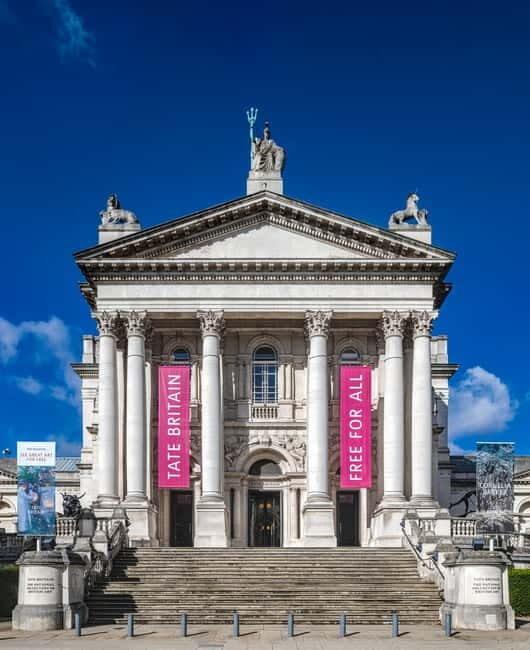
You’re scheduled for a 1-hour visit, which is a blessing and a trap. It’s a blessing because it forces focus. It’s a trap if you treat it like a slow museum day with unlimited time to stare.
Here’s the flow I’d recommend you follow once you’re in:
1) Start with the big comparison areas where Turner and Constable’s work is shown in relation to each other. This sets your mental “map” fast.
2) Then pick one Turner section that highlights his later, powerful paintings. Spend your first deep moment here.
3) Follow that with one Constable section centered on sky and clouds. His pencil-and-paper energy is easy to miss if you rush.
4) End with sketchbooks and personal items, where you’ll get the most human surprises.
If you do it in that order, you’ll finish with a clear takeaway: Turner and Constable weren’t just painting nature. They were arguing with nature, trying different tools, and insisting that the sky could say something new.
Your first stop: exchanging tickets at the Manton ticket desk
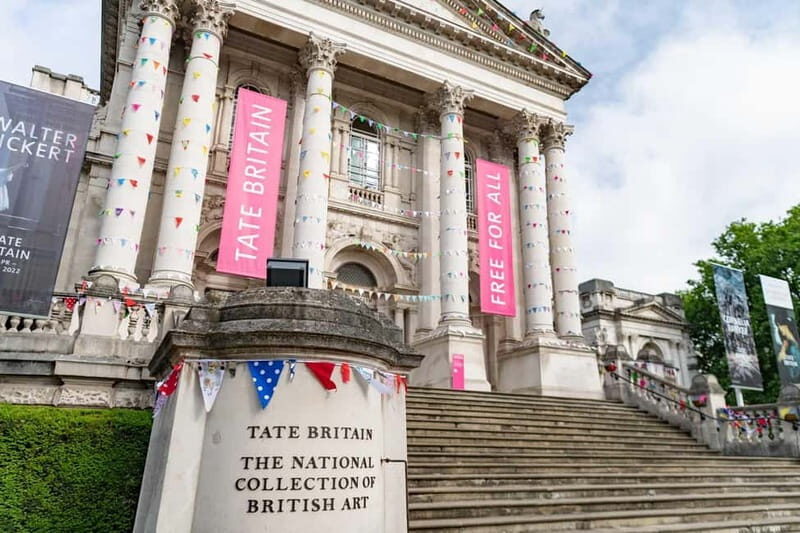
Before you even see a painting, there’s a useful practical step: bring your booking confirmation to the Manton ticket desk to exchange for your exhibition ticket. You’re advised to arrive at least 15 minutes before your entry time.
This matters more than it sounds. It keeps your visit calm, and it prevents that stressed scramble that makes you move too fast through the rooms. If you want to actually enjoy the paintings instead of just getting to them, arrive early enough to settle in.
Also, Tate tends to feel more practical than fussy. One review highlighted that people were allowed into the premises with coats on, backpacks on a shoulder, and even an umbrella in hand. I take that as a sign you don’t need to travel ultra-light just to be comfortable. Still, you’ll want to keep things manageable so you can move close to artworks.
Turner in this show: later paintings that hit like weather
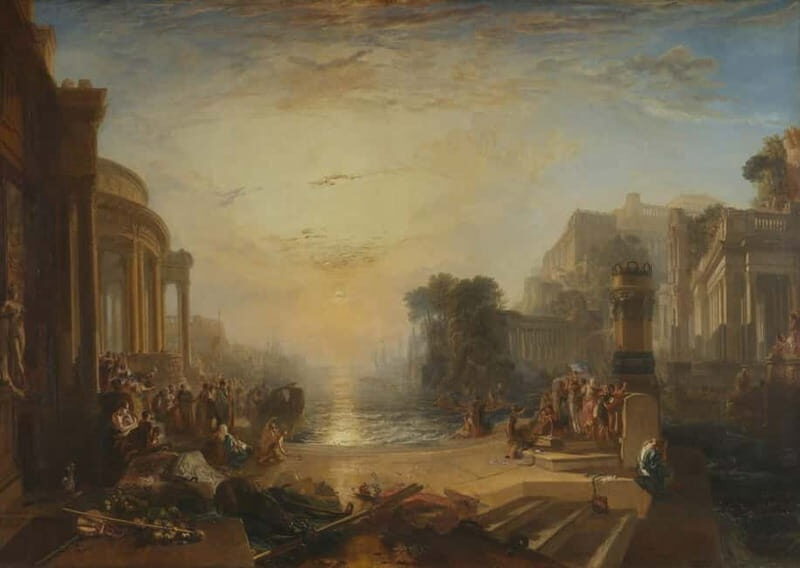
One of the strongest reasons to book is the attention given to Turner’s later paintings—the ones that shocked critics in his era and later helped inspire Claude Monet. Even if you think you already know Turner, seeing his later power framed inside this rivalry makes his changes feel more intentional.
Turner’s late style is about motion and transformation. You often feel like the scene is still happening—like the sky is actively reorganizing itself in front of you. The show’s focus on this part of his career gives you a chance to notice what he’s doing to paint, light, and perspective to create emotion rather than a straightforward view.
For you, that means you don’t have to be an expert to enjoy it. You can respond the way you respond to a storm: you feel it first, then you look closer. If you love art that feels like it has energy under the surface, this section is built for you.
Constable in this show: cloud sketches that teach you to look
Constable might feel quieter than Turner, but this exhibition treats him as essential, not second place. The standout element here is expressive cloud sketches that capture changing light in an English sky.
What I like about putting these sketches in the middle of a bigger Turner comparison is that you start to understand Constable’s method. He’s not only presenting a finished scene. He’s building a record of atmosphere—how clouds alter the world, how daylight shifts the mood, how weather can turn ordinary places into something emotionally specific.
If you tend to rush past paper drawings in museums, slow down here. Pencil studies can look simple until you realize they’re doing something tricky: translating time into lines. His clouds feel alive because they’re tied to observation, not decoration.
And if you’re a Turner-first person, you may still leave appreciating Constable more. Even the rivalry ends up as a lesson: Turner shows you the sky as drama, and Constable shows it as a careful, shifting event you can track.





The intertwined lives angle: it’s not just paintings, it’s decisions
This exhibition isn’t trying to separate art from life. It highlights how their backgrounds shaped their paths: Turner rose quickly despite humble beginnings, while Constable—born the son of a wealthy Suffolk merchant—still had a more uneven climb to acclaim.
You can feel that tension in how each artist approaches scenery. Turner often leans toward dramatic effects, including the influence of travel scenes. Constable, by contrast, often returns to familiar places and tries to keep them fresh and authentic, as if he’s proving that repetition can still contain discovery.
Both are shown as driven by a shared connection to nature, but with different strategies for changing what people expect from landscape painting. That’s why the exhibition works even if you don’t love either artist equally right now.
Sketchbooks and personal items: the most human part
The most emotionally satisfying part of the show for me is the opportunity to see sketchbooks and personal items. This is where the artists stop being museum-famous figures and start looking like working people.
Sketchbooks reveal the messy middle: practice marks, quick studies, and the small evidence of how an idea grows. Personal items add another kind of reality check. You’re not just studying finished paintings—you’re witnessing process.
If you’re the type who likes to understand how artists think, this section pays off. It also helps you see why rivalry matters here. It’s not rivalry as gossip. It’s rivalry as experimentation: Turner and Constable pushing each other toward new ways to show light, air, and feeling.
Price and value: what you’re really paying for
The price is $32 per person, and that can feel like a lot if you assume Tate Britain itself costs money. The key is that Tate Britain has no entrance fee, but some exhibitions have an additional charge. So your payment is basically for the special exhibition access.
For value, ask yourself one question: do you want a guided comparison of Turner and Constable in the same sitting? If yes, $32 starts to make sense because you’re buying time, organization, and context—not just a doorway into a room of paintings.
Also, the show is built around high-demand topics: Turner’s later breakthroughs and Constable’s cloud studies. You’re not guessing what matters most; the exhibition structure points you toward it.
If you’re only mildly interested in one of the two artists, you might feel like you’re paying to learn more about the other. But if you like art history that helps you see how styles evolve, this pairing is exactly the kind of smart value museums can offer.
Who should book this exhibition?
Book it if:
- You want a fast, focused way to compare Turner and Constable without bouncing around multiple sites
- You love sky and weather themes, especially cloud studies and later Turner’s dramatic power
- You’re curious about how artists’ backgrounds shape their artistic choices
- You enjoy seeing process via sketchbooks, not only polished finished works
Skip it if:
- You want a slow, sit-and-stare museum day. The 1-hour timeframe means you’ll have to choose your favorites.
- You only care about one artist and don’t want to spend time with the other’s approach.
Should you book the Turner and Constable exhibition at Tate Britain?
Yes, if you like art that makes you look harder at the sky. The pairing is the point: it turns two famous artists into a clear story about experimentation, rivalry, and how changing light can become emotion. The strongest reasons to go are the later Turner works, the Constable cloud sketches, and the human touch of sketchbooks and personal items.
If you’re on the fence, think practical. Arrive about 15 minutes early for the Manton ticket desk exchange. Go in with one focus question: how do they each make the same world feel different? With only an hour, that mindset will help you squeeze real understanding out of the visit.
FAQ
How long is the Turner and Constable exhibition visit?
The experience is scheduled for 1 hour.
What is included with the $32 price?
You get entrance to the Turner and Constable exhibition.
Do I need to pay for Tate Britain entry itself?
Tate Britain itself has no entrance fee, though some exhibitions have an additional charge.
Where do I pick up my exhibition ticket?
Bring your booking confirmation to the Manton ticket desk to exchange it for your exhibition ticket.
How early should I arrive before my entry time?
You’re recommended to arrive at least 15 minutes before your entry time for the ticket exchange.
Is the exhibition wheelchair accessible?
Yes, the experience is wheelchair accessible.
Can I cancel for a refund?
Yes. You can cancel up to 24 hours in advance for a full refund.
Can I reserve now and pay later?
Yes. The option is Reserve now & pay later, so you can book your spot and pay nothing today.
What is the theme of the exhibition?
It explores the intertwined lives and legacies of J.M.W. Turner and John Constable, including Turner’s later powerful paintings and Constable’s cloud sketches, plus insights from sketchbooks and personal items.