REVIEW · MANCHESTER
Manchester: Canal & River Cruise
Book on GetYourGuide →Operated by Irwell & Mersey Packet Company · Bookable on GetYourGuide
Manchester from the water changes everything. This one-hour cruise stacks big city sights with real industrial context, from the Ship Canal’s locks to the football and rail icons along the way. I especially like the chance to spot Stephenson’s 1830 railway bridge and the Ordsall Chord from a viewpoint you just don’t get from street level. I also like the onboard commentary, which connects what you see to why Manchester’s canals shaped its 19th-century power.
One thing to think about: this cruise is not wheelchair accessible, with a one-step up and four steps down to board the vessel.
In This Review
- Key highlights worth planning for
- Entering Salford Quays: the easiest start point in Manchester
- One hour of Manchester Ship Canal and River Irwell views
- MediaCityUK and the TV studios: modern Manchester from the deck
- Old Trafford and the football-watching angle
- Stephenson’s 1830 railway bridge and the Ordsall Chord contrast
- Hulme Lock and the railway arches over the canal
- Imperial War Museum and Pomona Docks: industrial-era landmarks in context
- The first locks and what 120-metre locks mean in real life
- Wildlife along the canal and river edges
- Inside vs outside: where you’ll hear the narration best
- How to make the most of your 60 minutes
- Who this cruise is perfect for
- Who should skip it or adjust plans
- Price value: why $16 can feel like more than an hour
- Should you book the Manchester: Canal & River Cruise?
- FAQ
- How long is the Manchester Canal & River Cruise?
- Where do I meet the boat for the cruise?
- Is the cruise wheelchair accessible?
- Are food and drinks included with the ticket?
- Can I bring a stroller?
- Is there boarding in the city centre?
Key highlights worth planning for
- Stephenson’s 1830 railway bridge and the contrasting Ordsall Chord in the same run of views
- Old Trafford and the Manchester United home-ground vibe, seen from the water
- MediaCityUK passing the BBC area and the ITV home of Coronation Street
- Manchester Ship Canal landmarks including Hulme Lock sights, Imperial War Museum, and Pomona Docks
- Wildlife along the canal and river edges, often including birds like swans, cormorants, and ducks
Entering Salford Quays: the easiest start point in Manchester
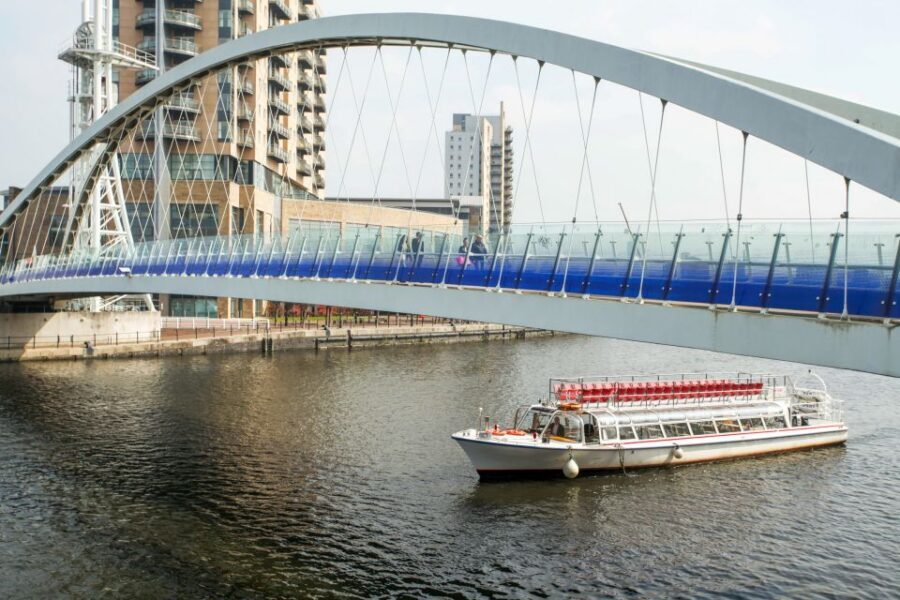
If you want a quick orientation to Greater Manchester without wrestling traffic or parking, this is a strong pick. You meet at Salford Quays, under the Millennium Lift bridge (blue and white) by the Lowry Theatre. If you’re driving, Quayside Mall is the closest parking option, and for trams the stops at Media City or the Imperial War Museum area tend to work well.
Boarding happens from Salford Quays only, and the city centre pickup is no longer operating on these trips. That actually helps—your trip begins in a place that’s easy to reach, then moves outward and back with a clear one-hour arc.
Two vessels run these cruises, the Princess Katherine and Isabella. Either way, you get the same core experience: narrated views, river-and-canal sightseeing, and a relaxed pace.
You can also read our reviews of more boat tours in Manchester
One hour of Manchester Ship Canal and River Irwell views
The timing is the whole point here. A full day in Manchester can turn into a blur of trams, lines, and changing plans. This cruise keeps it simple: you’re on the water for 60 minutes, then back off again with your bearings.
The route follows the Manchester Ship Canal and the River Irwell, so you’re not just looking at famous buildings. You’re traveling through the working waterways that shaped the city’s fortunes. The onboard commentary is built around the Ship Canal’s history, the industries that made Manchester a European powerhouse in the 19th century, and the future projects being built along the same corridors.
That “history + what’s happening now” angle is what makes the hour feel fuller than it is on the clock.
MediaCityUK and the TV studios: modern Manchester from the deck
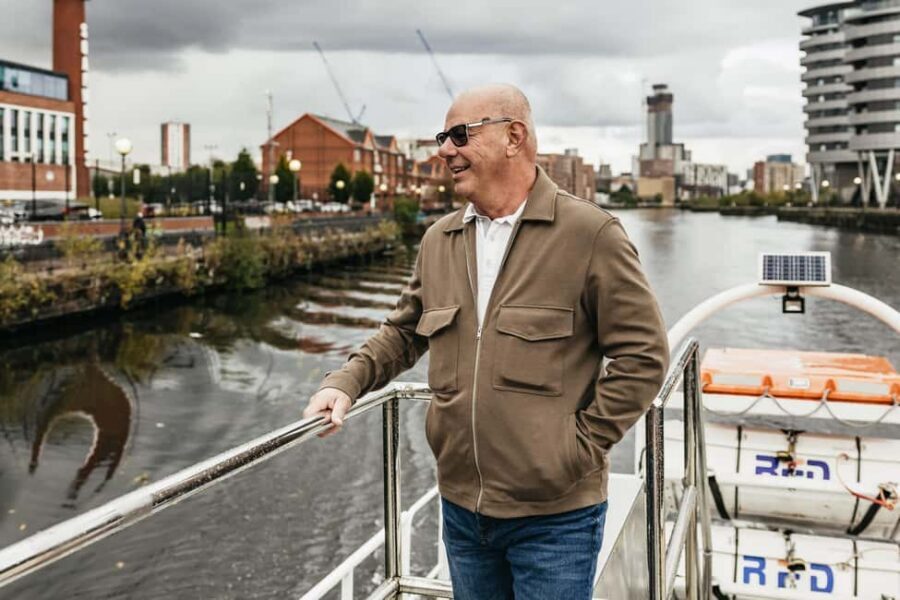
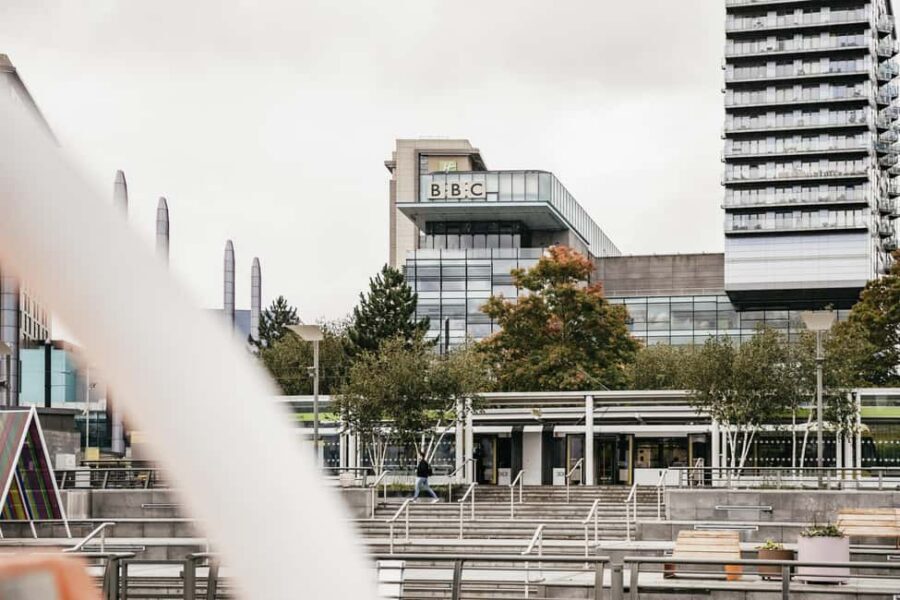
Right after you start from Salford Quays, you roll past MediaCityUK, one of the area’s biggest proof-of-life signs for what Manchester can build today. You’ll see the BBC area and the modern media campus, and you’ll also pass the ITV home of Coronation Street.
This part matters because it shifts the mood quickly. One moment you’re thinking canals, locks, and industry; the next you’re looking at a skyline that feels made for cameras and daily schedules. It’s an easy way to understand why people keep calling Manchester a city of reinvention.
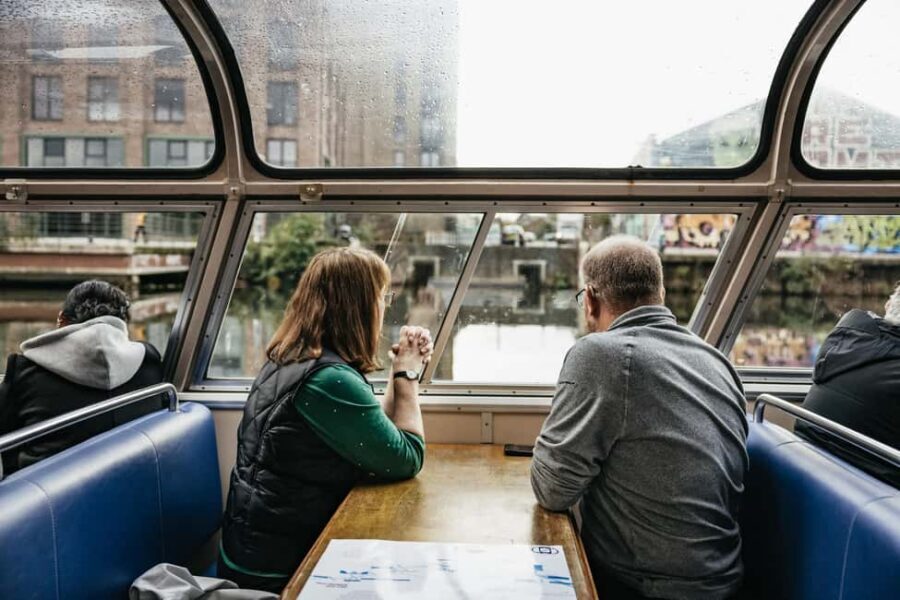
If weather is good, the outside deck is the fun zone for photos and skyline watching. If it’s grey or windy, staying inside can make the commentary easier to catch (and keeps your fingers from freezing when you’re trying to focus a camera).
Old Trafford and the football-watching angle
From the water, Old Trafford has a different feel. You get the scale and the setting without standing in the stadium-area chaos, and you can take in the surroundings in one sweep.
The cruise also highlights the home-ground identity—Manchester United’s stadium is often referred to as the Theatre of Dreams. Whether you’re a lifelong fan or you just like architecture and atmosphere, seeing it from the water gives you a new frame for a very familiar place.
It’s also a good reminder that this is not just a “pretty river” activity. The canal and river corridors run right alongside some of the city’s most recognizable modern landmarks.
Stephenson’s 1830 railway bridge and the Ordsall Chord contrast

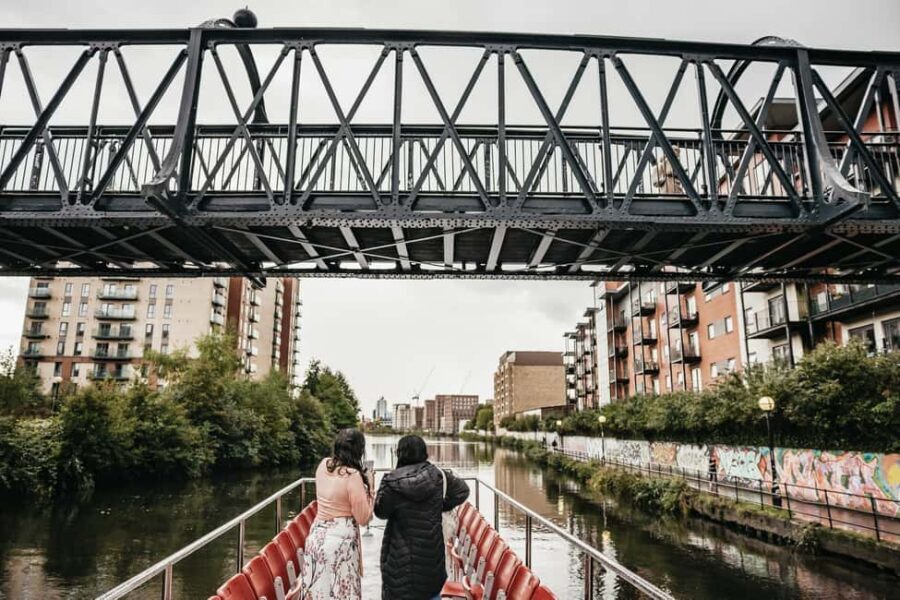
This is the sight that I think will make the cruise feel special even to people who think they’ve already seen Manchester from every angle. You get the view of George Stephenson’s railway bridge from 1830. Then you see the contrasting Ordsall Chord, a reminder that this area isn’t stuck in the past.
Why it works: bridges and rail lines are usually background. From the boat, they become the scene. The water gives you distance and perspective, so you can actually read how the infrastructure is laid out.
It’s also one of those moments where the narration earns its place. The commentary helps you connect what you’re seeing to how the city moved goods, people, and ideas—especially during the industrial boom years.



Hulme Lock and the railway arches over the canal
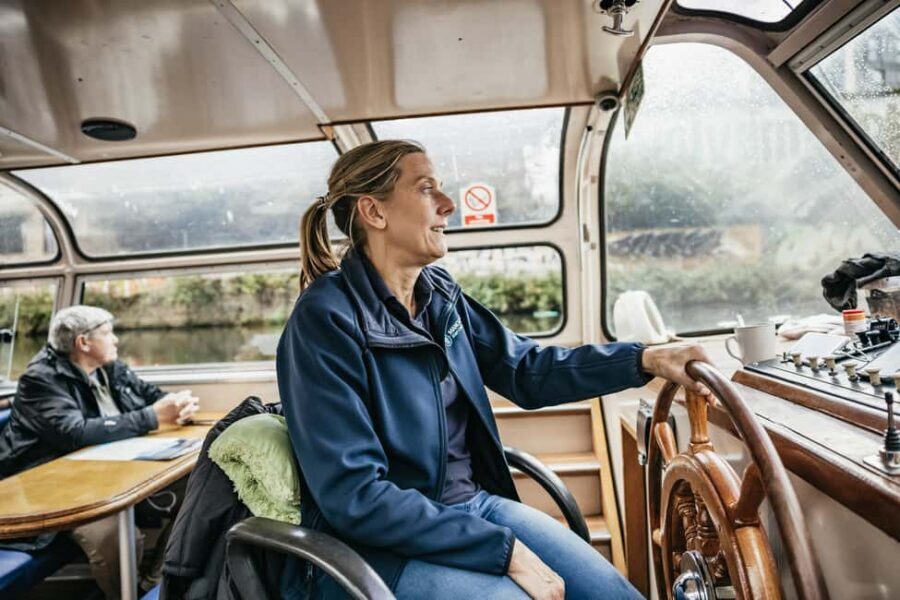
As you continue, you pass through canal country in a way street-level walking never quite reproduces. You’ll get views of railway arches over Hulme Lock, another detail that makes the canal feel like a live system instead of a museum piece.
This stretch is great for anyone who likes “engineering details.” The arches and waterline give you a layered look: transport, industry, and the city’s layout all stacked into one frame.
And if you’re into photos, these are typically the spots where the light can help. Even if the weather isn’t perfect, the geometric shapes usually photograph well.
Imperial War Museum and Pomona Docks: industrial-era landmarks in context
The cruise also passes the Imperial War Museum and the old Pomona Docks. These stops feel more meaningful because the commentary doesn’t treat them as random sights. It ties the canal story to the industries that built Manchester’s 19th-century reputation and to the present-day shift toward new development.
Pomona Docks, in particular, helps you picture the canal as a working corridor rather than a scenic backup. The docks are the kind of landmark that makes you understand why the Ship Canal mattered to the city’s economy and growth.
The first locks and what 120-metre locks mean in real life
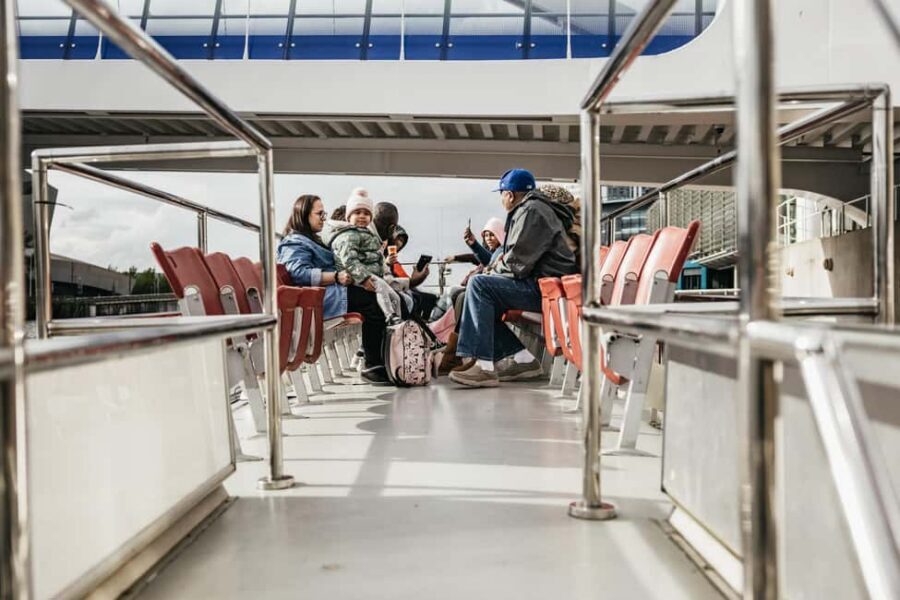
You’ll pass the first of the 120-meter-long locks of the Manchester Ship Canal. That detail is more than trivia once you see it. Big locks change how you imagine the waterway: these aren’t small streams for leisure boats. They’re designed for large-scale movement.
The narrated explanation gives you a sense of scale and purpose, which makes the lock area easier to “read” as you glide past. You’re not getting a stop where you hop out and explore, but you are seeing the structure long enough to notice it.
Wildlife along the canal and river edges
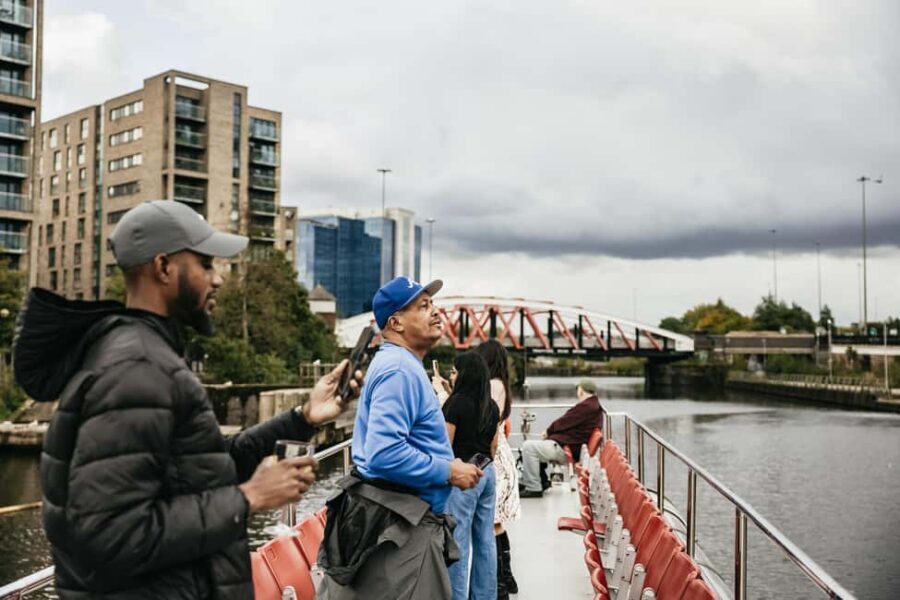
One of the best surprises on this kind of cruise is always the living stuff. You can often spot wildlife along the canal and river banks—birds like swans, cormorants, and ducks show up on these routes, and in some cases you might even catch a glimpse of a kingfisher.
Even if you’re not a bird person, it adds motion to the scenery. A canal can look busy without people, and wildlife is part of what keeps the hour feeling alive.
Inside vs outside: where you’ll hear the narration best
The cruise includes commentary, and the narration is the thread that keeps the different sights connected. In practice, the sound can be more reliable from inside the cabin than from the open roof deck area.
I’d plan like this:
- If you care most about hearing every fact, sit inside or closer to the areas where the audio is strongest.
- If you care most about photos and wide views, take the outside deck, but accept that wind and crowd noise can affect what you hear.
There’s also a bar on board. Food and drinks aren’t included with the ticket price, but you can typically buy refreshments, and the setup is designed for a casual break during the cruise. Toilets are available on board too, which is a small comfort that matters when you’re on a time-boxed hour.
How to make the most of your 60 minutes
This trip is short by design, so your choices before you board affect how satisfying it feels.
1) Choose your side for views. If you like city skyline photos, aim for a spot that gives you clear angles to the bridges and waterfront landmarks.
2) Plan for the commentary. If you’re there mainly for the story of Manchester and the Ship Canal, prioritize a seat where you can hear clearly.
3) Bring a camera mindset. The rail bridge, Ordsall Chord, and lock structures are the “read-this-in-one-glance” moments.
Also note: party groups aren’t allowed, and non-folding strollers can’t come along. If you’re traveling with kids, this is generally a fun boat experience, but it’s not suitable for school groups unless booked privately.
Who this cruise is perfect for
I think this cruise is strongest for three types of people:
- First-timers in Manchester who want a fast, visual overview of both the old industrial routes and the modern MediaCityUK area.
- Rail and engineering fans who enjoy seeing infrastructure from a new angle, especially bridges and locks.
- Football-focused visitors who want Old Trafford in a calmer setting than the usual match-day crush.
It’s also a nice middle option for mixed groups—say, someone who loves history and someone who just wants a relaxing outing with views. The hour format keeps everyone moving toward an end point instead of wandering into decision fatigue.
Who should skip it or adjust plans
If you’re using a wheelchair, this one is a no. The cruise isn’t wheelchair accessible because boarding requires one step up and four steps down. Strollers also need to be foldable and stowed under seating; full-sized baby strollers aren’t accommodated.
If you’re traveling as a large party group, this activity isn’t set up for that either. And if your goal is a long, meandering walk tour, you might find the hour too short. Several people do wish the cruise lasted longer, which tells you the hour is the main trade-off.
Price value: why $16 can feel like more than an hour
At about $16 per person for a one-hour narrated cruise, the value is tied to two things you don’t always get on sightseeing boats: the focused route and the structured onboard commentary.
You’re not only paying for transportation on the water. You’re paying for a guided explanation that turns bridges, locks, docks, and stadium views into a coherent story about why Manchester became so important in the industrial era—and what’s being built in its place now.
And because it’s short, it’s easy to fit into a day even if your schedule is tight. That’s a real budget benefit: one-hour experiences are often easier to “bank” than a half-day that risks slipping.
Also, there are two vessels running the same kind of trip, so you’re more likely to find a slot that works with your plans. The activity is also listed with free cancellation up to 24 hours in advance and a reserve now, pay later option, which helps if your Manchester day depends on weather or train changes.
Should you book the Manchester: Canal & River Cruise?
I’d book it if you want a low-effort, high-contrast way to see Manchester: TV studios and stadium walls on one side, canal locks and industrial landmarks on the other. The one-hour length is enough to feel like you learned something, but not so long that it drains your whole day.
I’d think twice if hearing the narration clearly is critical and you plan to spend most of the time on the outside deck in windy conditions, or if mobility access is a concern. For everyone else, this is a practical, scenic option that does a rare thing: it makes Manchester’s working waterways feel like part of the story, not just background scenery.
FAQ
How long is the Manchester Canal & River Cruise?
The cruise lasts 1 hour.
Where do I meet the boat for the cruise?
You board under the Millennium Lift bridge (blue and white) just by the Lowry Theatre at Salford Quays.
Is the cruise wheelchair accessible?
No. The cruise is not wheelchair accessible due to boarding steps (one-step up and four steps down).
Are food and drinks included with the ticket?
No. Food and drinks are not included. You may be able to purchase refreshments onboard, but you should plan on paying separately.
Can I bring a stroller?
Non-folding strollers are not allowed. Strollers must be foldable so they can be stored under the seating, and full-sized baby strollers can’t be accommodated.
Is there boarding in the city centre?
No. Boarding is only from Salford Quays, and the city centre is no longer operating for these trips.