REVIEW · MANCHESTER
Manchester: ‘5 Quarters’ Guided Walking Tour
Book on GetYourGuide →Operated by Quayside Tours Media City · Bookable on GetYourGuide
Manchester changes fast on this five-quarter walk. I love the way the tour links Manchester’s Roman roots to today’s creative scene, and I really like the individual headsets that keep you hearing every detail without craning your neck.
One thing to plan for is the pace: it’s about 2 hours 30 minutes on foot, and comfortable shoes matter, especially in cold or wet weather (and waterproof clothing isn’t included).
In This Review
- Key highlights before you go
- Entering Ancoats: Where the tour starts and how it sets the mood
- The 150-minute “time travel” pace from Ancoats to St. Peter’s Square
- The five quarters that explain Manchester: Northern, Medieval, Millennium, Business, Roman
- Northern Quarter: the creative pulse you can feel
- Medieval Quarter: understanding the city’s older shape
- Millennium Quarter: modern Manchester after the turning points
- Business Quarter: commerce, industry, and what drove change
- Roman Quarter: the earliest roots of Manchester
- Headsets and small-group design: hearing every story clearly
- Comfort break and real-world pacing for 2.5 hours on foot
- Price vs. value: what $20 buys you in Manchester
- What to bring (and what to skip) for a smooth walk
- Who should book this 5 Quarters tour
- Should you book the Manchester 5 Quarters guided walking tour?
- FAQ
- How long is the Manchester 5 Quarters guided walking tour?
- Where does the tour start?
- Is this a small group tour?
- Are headsets included?
- Does the tour include food and drinks?
- What should I wear?
Key highlights before you go
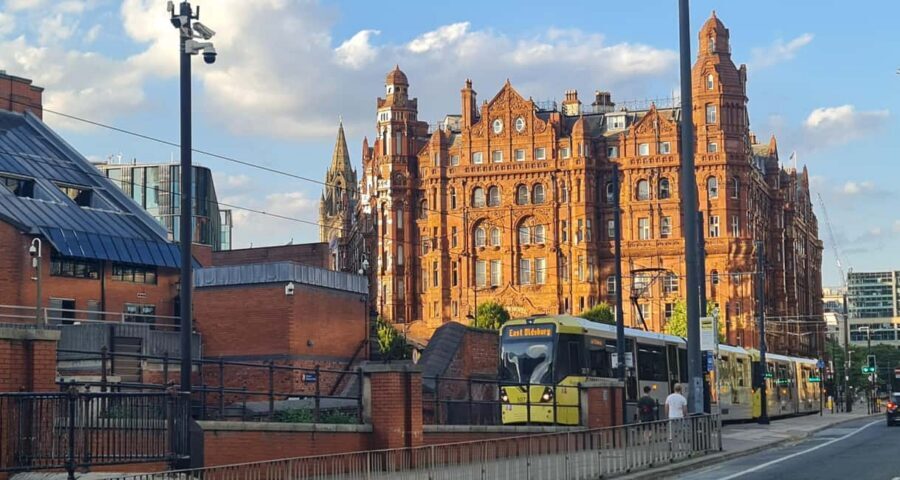
- Five quarters, one storyline that moves from old Manchester to what it has become
- Headsets for clear audio, useful in busier, noisier spots
- A tight small group size (up to 20) for a smoother, easier walk
- Ancoats start point that sets the tone in the city’s industrial heart
- A short comfort break halfway through to reset before the next quarter
Entering Ancoats: Where the tour starts and how it sets the mood
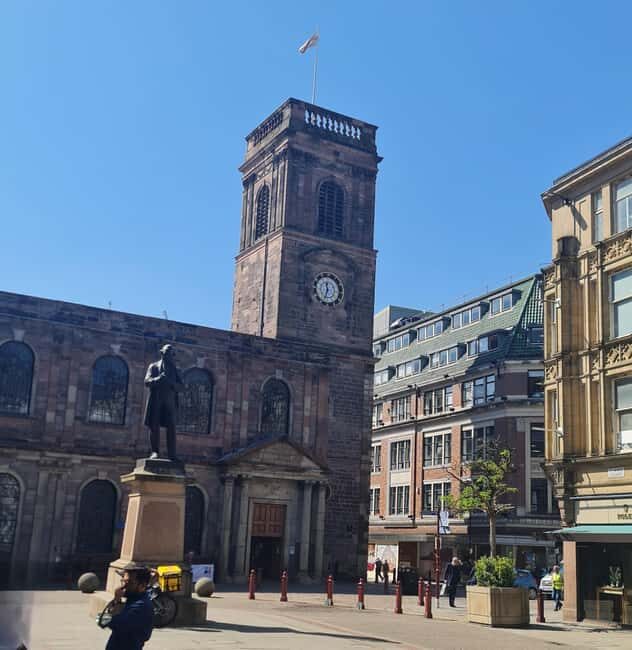
The meeting point is Cutting Room Square in Ancoats (opposite Halle St Peters, M4 6BF). Starting here is smart. Ancoats gives you an immediate sense of Manchester’s working history rather than dropping you into the center first and hoping you connect the dots later. If you like understanding how a city became itself, this opening choice helps.
From the start, you’re not just ticking off sights. The guide’s job is to thread the past, present, and future together as you walk. You’ll also notice the tour’s practical design right away: people spread out instead of crowding, because you’ve got your own audio channel.
If you’re coming from elsewhere in the city and want to get your bearings quickly, I like that this route ends in a civic hub too. Finishing at St. Peter’s Square means it’s easy to continue exploring after the walk, rather than getting stuck somewhere obscure.
You can also read our reviews of more walking tours in Manchester


The 150-minute “time travel” pace from Ancoats to St. Peter’s Square
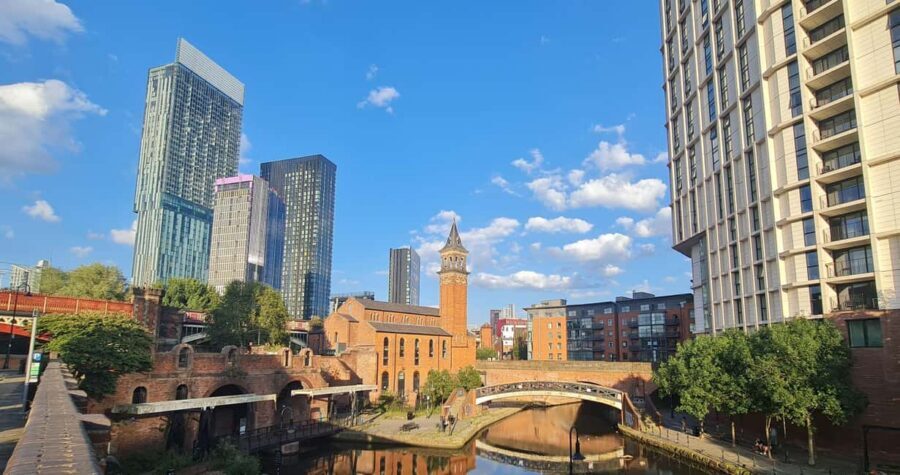
This experience runs about 150 minutes (so plan for roughly 2 hours 30 minutes of walking time). That length is long enough to feel like you actually learned something, but short enough that you won’t feel trapped out there all day.
The route is structured to feel chronological, moving through five named areas—Northern Quarter, Medieval Quarter, Millennium Quarter, Business Quarter, and Roman Quarter—before ending at St. Peter’s Square. Even if you don’t know Manchester’s geography well, the pacing helps. You build a mental map as the guide explains what each district contributes to the city’s story.
One reason I’d choose this format is the “walking museum” effect. You don’t just hear facts in a classroom-like way. You’re moving through the neighborhoods while the guide connects landmarks, street patterns, and changing eras into one flowing narrative.
The five quarters that explain Manchester: Northern, Medieval, Millennium, Business, Roman

The heart of this tour is that it doesn’t treat Manchester as one single flavor. It treats it like five overlapping chapters. You’ll hear how each part plays a role—from early settlement roots to industry and regeneration, and on into the city’s modern creative and tech life.
Northern Quarter: the creative pulse you can feel
The Northern Quarter stop is where the tone turns lively. This is the part of the story tied to Manchester’s buzzing creative arts and tech scene. If you’ve ever walked past posters, studios, and independent venues and wondered why the energy feels different here, this is where the guide explains the why behind it.
What I like about starting (or focusing) on this kind of district is that it makes the rest of the tour easier to understand. Once you see what’s happening now, you start noticing how today’s vibe grew out of earlier economic and cultural shifts.
Medieval Quarter: understanding the city’s older shape
The Medieval Quarter portion is about context. You’ll spend time in areas connected to Manchester’s older identity, with the guide putting the city’s development into perspective. This is helpful if you’ve visited before but never quite understood how the historic core influenced later growth.
A practical note: medieval-style streets can sometimes mean uneven footing or tighter turns. Nothing extreme is promised, but the tour does involve walking, so keep your shoes comfortable and ready for small changes in pavement.
You can also read our reviews of more guided tours in Manchester





Millennium Quarter: modern Manchester after the turning points
The Millennium Quarter is where you get a clear sense of Manchester moving forward—how the city reorganizes itself when new priorities take over. Even without a “wow, landmark” guarantee in the details you’re given, the idea of this stop is useful: it bridges the gap between old Manchester and the present-day districts you already recognize.
Think of it as the transition chapter. If you’ve ever struggled to connect industrial-era stories to what you see now, this part helps tighten that link.
Business Quarter: commerce, industry, and what drove change
Next comes the Business Quarter, which ties into the city’s more structured economic story. The tour frames Manchester as a place with a major industrial legacy, and this district helps you see how the city’s work life shaped its buildings, layout, and growth.
I also like that the guide doesn’t treat “business” as dry or purely corporate. It’s placed in the bigger narrative, so it feels like part of Manchester’s character rather than a separate topic.
Roman Quarter: the earliest roots of Manchester
The Roman Quarter is the anchor for the tour’s origin story. The experience specifically covers Manchester’s history from Roman times to present day, and this is where you get the earliest chapter.
Even if you’re not a Roman-silliness person, it’s worth paying attention here because it changes your baseline. You stop thinking of Manchester as a purely modern industrial city and start seeing it as a place with much older layers beneath the surface.
Headsets and small-group design: hearing every story clearly
One of the most praised pieces of this tour is the use of individual headsets. That sounds like a minor tech detail until you’re outside on a busy street. Audio carries unpredictably. People talk. Traffic moves. Wind messes with sound.
With separate headsets, you can actually follow the guide’s thread without constantly turning your head or watching their mouth. That matters on a tour like this, because the stories connect eras and locations. If you miss a line, the next turn can feel less meaningful.
It also helps with crowd control. Instead of everyone bunching around the guide, you can walk at a comfortable pace while still hearing clearly. Reviews you’ll find for this tour mention this exact benefit—especially on noisy sections—so it’s not just a nice-to-have.
The tour is also capped at a maximum group size of 20. In practice, that usually means you get a more conversational dynamic than big bus tours. You can hear, you can move, and you’re not stuck in a human traffic jam.
Comfort break and real-world pacing for 2.5 hours on foot
There’s a short comfort break halfway through. I appreciate this because it acknowledges the reality of walking tours: people need a minute to reset, especially when the weather is chilly.
This is also one of the reasons I’d recommend this tour to families. Not because it’s a theme park, but because it’s paced like a story hour: steady enough to keep momentum, long enough to satisfy curiosity, and structured enough that you don’t feel dragged.
That said, this is still a walking experience. If you’re sensitive to cold or you tire easily, treat the duration as a real factor and dress accordingly.
Price vs. value: what $20 buys you in Manchester
At $20 per person, this tour is priced like a budget activity, but it includes what usually costs extra: a live guide, a guided route through five distinct quarters, and individual headsets. That’s a lot of “production value” baked into the ticket.
Where the value shows up most is the time efficiency. Instead of spending a full day figuring out what connects Northern Quarter creativity to Roman-era origins (and everything between), you get a guided line you can follow in under three hours.
I also see value in the orientation you gain. The tour ends in St. Peter’s Square, and by the time you get there, you’re not just tired—you’re informed. That means your next stops around the city are more intentional, not random wandering.
Food and drinks are not included, so you’ll want to plan your meal separately. (This also makes the tour easier to fit into a schedule: you’re not locked into a long dining break.)
What to bring (and what to skip) for a smooth walk
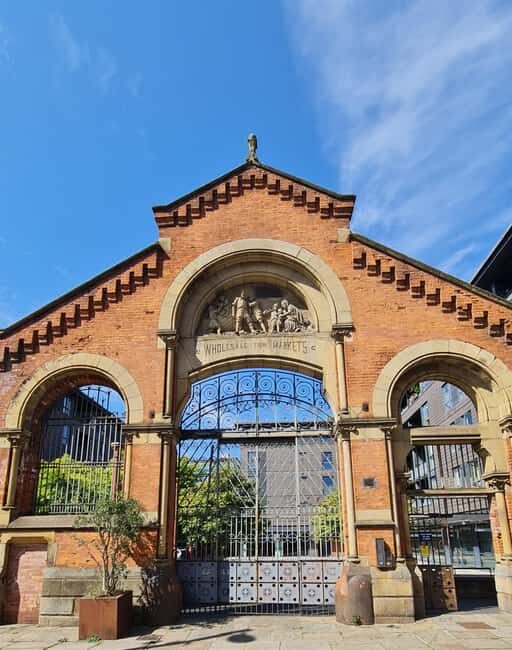
Based on what the tour specifically calls out, here’s what I’d actually prepare:
- Comfortable shoes: non-negotiable for a 2.5-hour walk.
- Weather-appropriate clothing: Manchester weather can change fast.
- Waterproof clothing is not included, so if you’re visiting in damp months, consider bringing a rain layer you’re comfortable walking in.
The tour lasts about 2 hours 30 minutes and stays in English, so plan to dress for that entire stretch outside.
If you like asking questions, this is also a good time. A well-paced guide makes the whole thing easier to follow—and several people rate the guide highly for being courteous, witty, and fun to listen to. One guide name that comes up again and again is Frank, described as doing a great job weaving the city’s locations into stories that make you understand the context.
Who should book this 5 Quarters tour
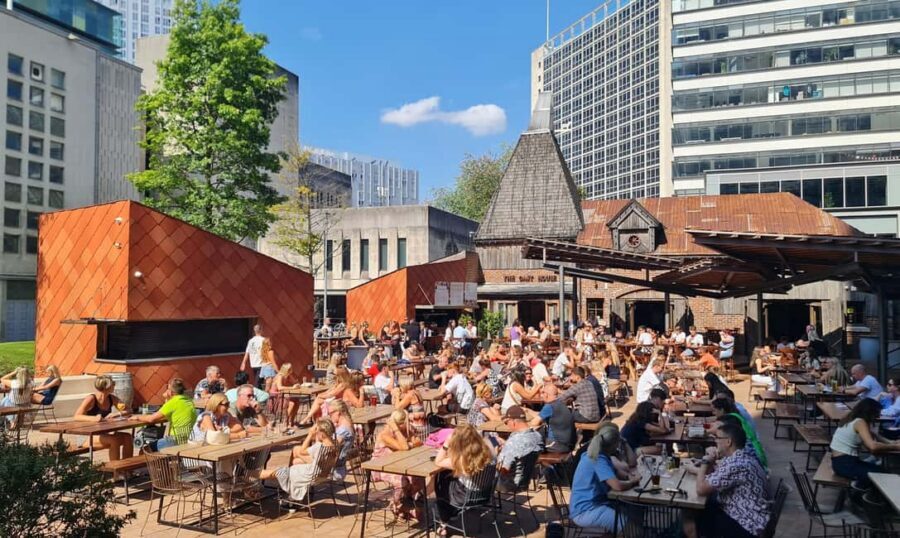
I’d book it if you want:
- a fast, structured way to understand why Manchester looks the way it does
- an easy intro to the city’s main “eras,” from Roman roots to modern creative life
- a walking tour where you can hear clearly without fighting the noise
- something that works for both first-time visitors and people who already live nearby but want the missing context
You might think twice if:
- you don’t do well with long walks in cool or wet weather (it is still a 150-minute walking experience)
- you’re hoping for a food-focused outing (food and drinks aren’t included)
Should you book the Manchester 5 Quarters guided walking tour?
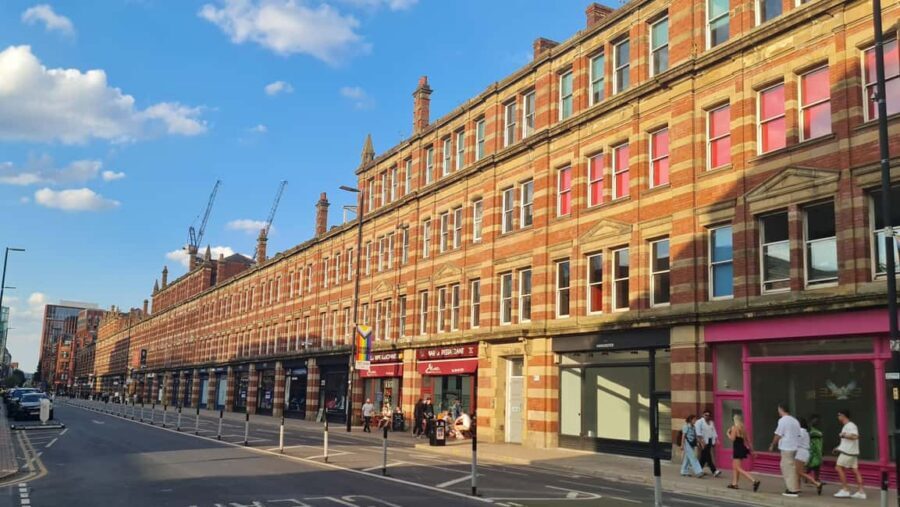
Yes—if your goal is to get a clear, story-driven understanding of Manchester in a short time. The mix of five named quarters, a practical small-group setup, and individual headsets makes this a smart value purchase for $20. It’s also ideal when you want your sightseeing to feel connected, not like a list of stops.
If you’re deciding between this and a self-guided wander, the guided structure is the differentiator. You’ll leave with a mental map and explanations that make it easier to choose what to see next around the city.
If you’re already confident in Manchester’s layout and just want pure nightlife or food, then it may not feel like the best match. But for history-to-present context—served at a comfortable walking pace—it’s a strong pick.
FAQ
How long is the Manchester 5 Quarters guided walking tour?
It takes about 150 minutes, so plan for roughly 2 hours and 30 minutes on foot.
Where does the tour start?
You meet at Cutting Room Square, opposite Halle St Peters, in Ancoats (M4 6BF).
Is this a small group tour?
Yes. The maximum group size is 20 guests.
Are headsets included?
Yes. Each person gets an individual headset for clearer listening.
Does the tour include food and drinks?
No. Food and drinks are not included.
What should I wear?
Bring comfortable shoes and weather-appropriate clothing. Waterproof clothing is not included.