REVIEW · MANCHESTER
Manchester: Sightseeing Bus Tour
Book on GetYourGuide →Operated by Manchester Bus Tours Ltd · Bookable on GetYourGuide
Manchester can look complicated at street level. But on an open-top bus, it clicks fast—one loop shows you the city’s big landmarks and the industrial story behind them. I especially like the recorded audio commentary that keeps the facts moving, and the fact you can hop on and off without re-planning your day at every stop. One thing to consider: the audio can be harder to hear from the upper deck if you sit farther from speakers.
I love how the route is built around the places you actually want to orient yourself—Town Hall area, Piccadilly, Manchester Cathedral, and the football sites—then it carries you out to Salford Quays. I also like the value angle: your ticket covers 2 calendar days, so you can return on another bus day if you want more time at museums or Quayside stops. The main drawback I’d flag is that you may want to time your get-off points carefully, because the tour is only about 1.5 hours for the full circuit.
If you want a quick, organized overview, this works. If you’re hoping for a slow, in-depth guided walk at each attraction, you might feel rushed—especially around popular places like Old Trafford.
In This Review
- Key things I’d zero in on before you ride
- An easy way to read Manchester: icons plus industrial context
- Starting at Bridgewater Hall: the smart place to begin
- The ride itself: open-top sightseeing plus recorded audio and Wi-Fi
- Manchester city centre stops: Town Hall, Piccadilly Gardens, and the cathedral area
- The National Football Museum stop: why it fits on this route
- Hop-off at Salford Quays: Lowry and Imperial War Museum North in one block
- MediaCityUK from the bus: BBC and ITV studio area
- Old Trafford pass-by: what you’ll see and how to plan
- The Science and Industry Museum: where the facts meet hands-on time
- Using the 2-day ticket for real savings of time and stress
- Timing, weather, and the upper deck audio challenge
- Is this good value compared to doing it all by yourself?
- Who should book this Manchester bus tour—and who might skip it
- Should you book this Manchester sightseeing bus tour?
- FAQ
- How long is the Manchester sightseeing bus tour?
- Where does the tour start and end?
- How many stops are on the route?
- Is the ticket valid for more than one day?
- Are entry fees included?
- Is the audio guide available in other languages?
Key things I’d zero in on before you ride
- Open-top views with a hop-on hop-off plan that keeps your day flexible
- Recorded English commentary designed to explain Manchester’s industrial influence
- Wi-Fi on board so you can check opening times as you go
- Salford Quays stop for Lowry and Imperial War Museum North in one go
- Route hits major icons like Manchester Cathedral and the Science and Industry Museum
- Two-day ticket value so you can repeat stops without buying a second ride
An easy way to read Manchester: icons plus industrial context
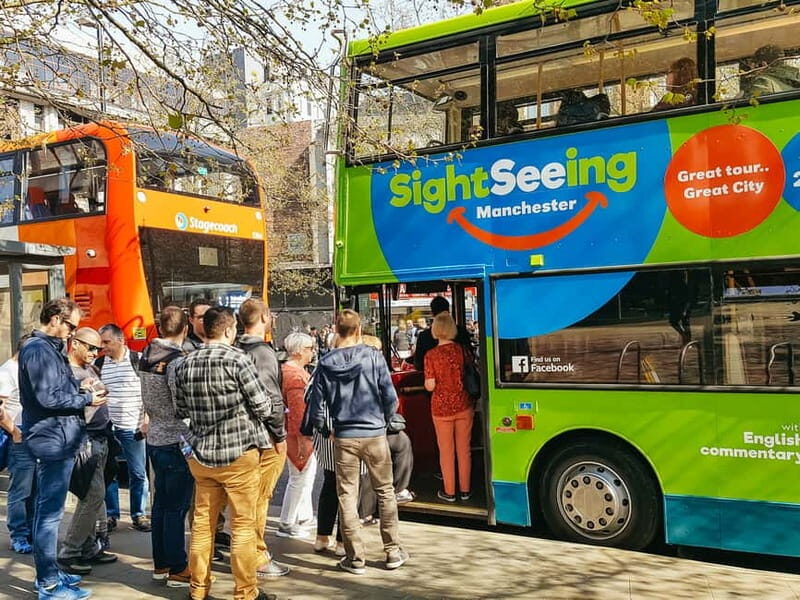
Manchester isn’t one style of city. It’s layers—old mill-era grit, post-industrial reinvention, and cultural swagger. This hop-on hop-off bus gives you the shortcut: you see the landmarks and you get the story behind why they matter, delivered through a recorded English guide you can listen to at your own pace.
The loop is also practical. You’re not stuck with one “guided walk” feeling where you must keep moving. Instead, you choose what to treat like a quick photo stop and what deserves real time on the pavement—like Salford Quays and its museums.
If you’re in town for a short stay, this is the kind of transport that helps you decide what to do later. You finish with a mental map and a sense of what theme you want to explore next: football, art, science, or media.
You can also read our reviews of more tours and experiences in Manchester.



Starting at Bridgewater Hall: the smart place to begin
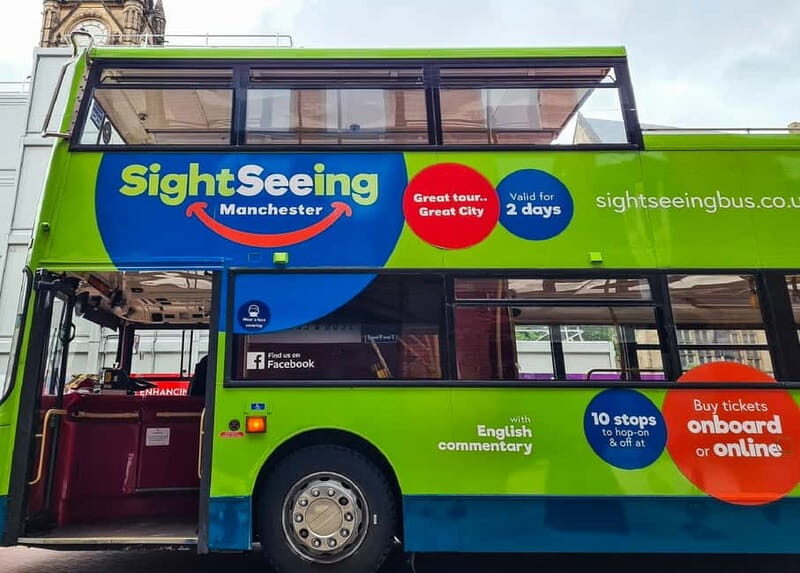
Your ride starts outside Bridgewater Hall on Lower Mosley Street (M2 3WS). It’s close to Manchester Central Convention Centre, the Midland Hotel, and St Peter’s Square Metrolink station. In plain terms: it’s not hidden, and it’s easy to connect to public transport if you’re staying downtown.
This starting point matters because the early part of the route takes you through central Manchester. Town Hall area, Piccadilly Gardens, and the cathedral zone are much easier to appreciate when you begin here, before you’re distracted by distance.
You’ll also end back at Bridgewater Hall, so you don’t have to figure out where the bus route finishes or how to get back. When you’re moving on to dinner, a museum slot, or an evening plan, that return-to-base layout is a quiet win.
The ride itself: open-top sightseeing plus recorded audio and Wi-Fi
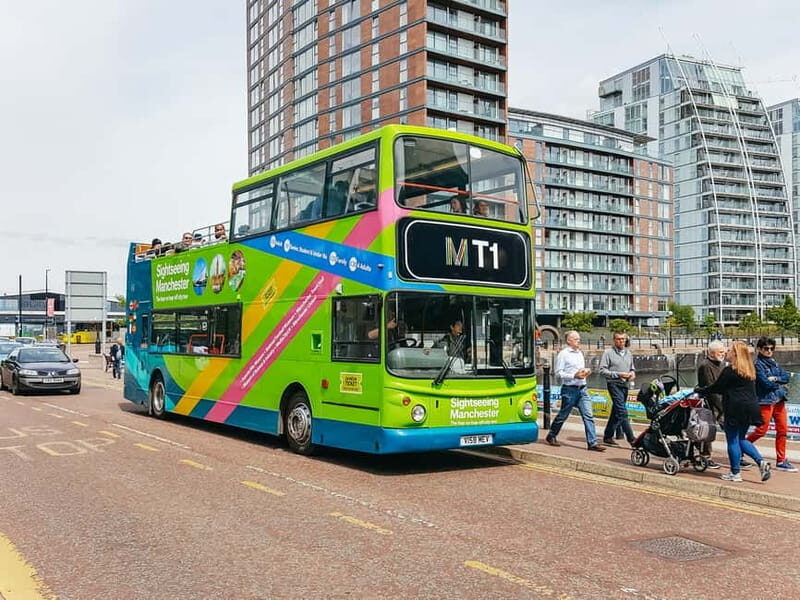
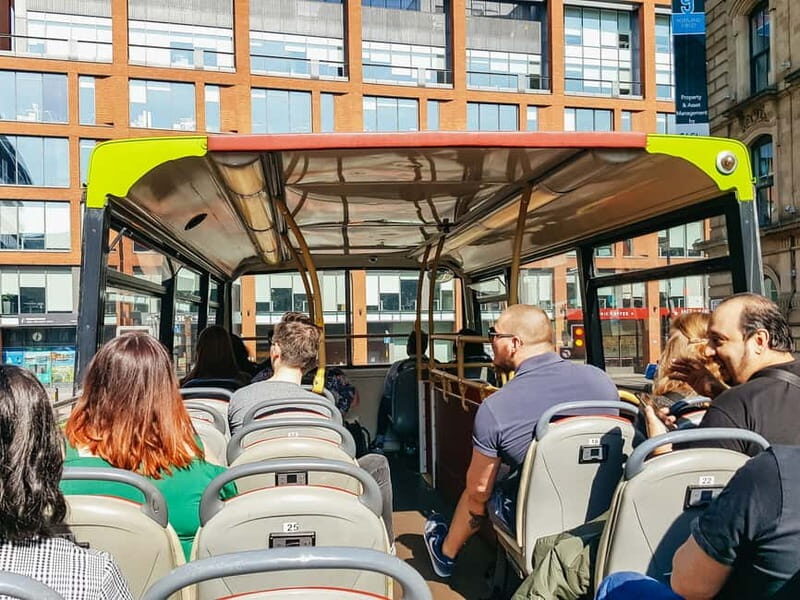
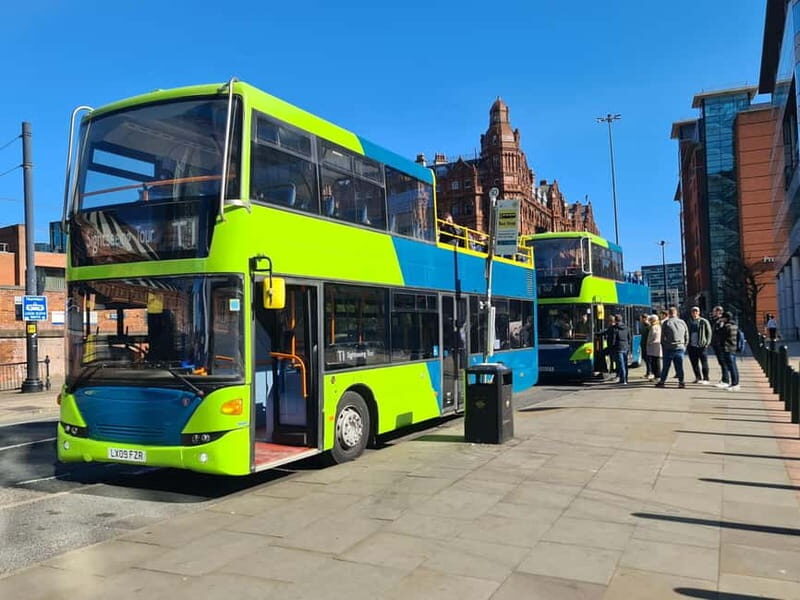
It’s an open-top bus, so expect classic “top deck” sightlines over streets and buildings. The experience is mostly about watching and listening while the bus glides past the city’s highlights. Since it’s hop-on hop-off, you can stay aboard for the full circuit, or get off and come back later at any of the stops.
The audio guide is recorded in English, and other languages are available if you download the provider’s app. You also get free Wi-Fi on board, which is handy for practical checks like museum opening times or looking up what you want to see during your hop-off window.
Here’s the tradeoff: several riders note the volume or clarity can be tricky depending on where you sit—especially when you’re up top. If you want the audio experience to be easy, pick a spot where you can hear without strain, and don’t wait until the loudest traffic moments to judge if you can hear comfortably.
Manchester city centre stops: Town Hall, Piccadilly Gardens, and the cathedral area
The route is built around the “core” sights, so your first pass feels like a fast orientation. You head out past the city-centre landmarks and then you’re in the zone where you can decide what you want to see properly later.
Passing Town Hall and Piccadilly Gardens is useful even if you don’t get off. These are the kind of places you’ll recognize later, and the bus commentary helps you understand what you’re looking at as more than just scenery. It frames Manchester as a city shaped by industry, politics, and civic identity—so when you later see a museum or historic facade, it connects.
Manchester Cathedral is another key stop on the route. Getting a bus view of the area is one thing. Getting off to look around is better, but even staying on gives you a feel for how the cathedral sits in the city’s broader layout—an old anchor in a city that keeps changing.
The National Football Museum stop: why it fits on this route
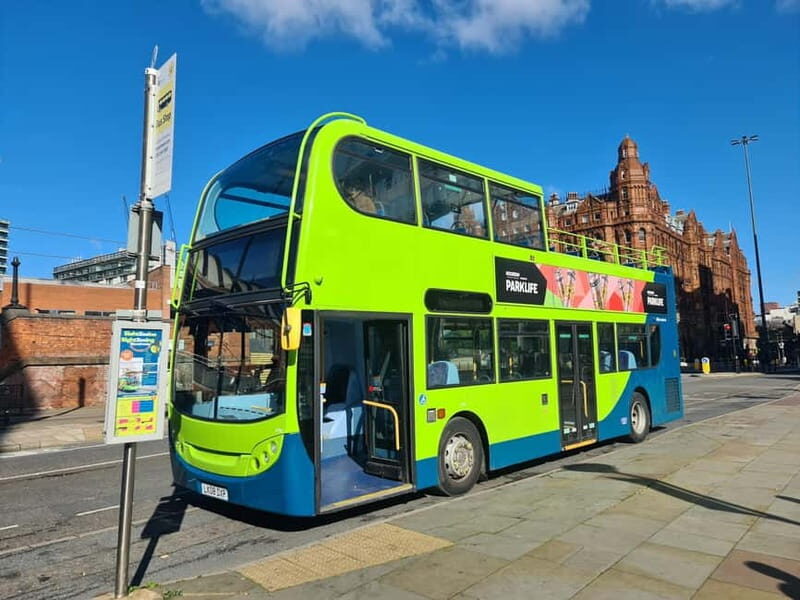
If football is part of your Manchester story, this is one of the best “theme” stops on the bus. The National Football Museum sits on the route, and even a brief look is a good way to calibrate how deeply the sport runs through the city’s culture.
The bus commentary connects football to the wider Manchester narrative—industrial-era life, community identity, and modern-day fandom. That means the stop isn’t just about tickets or displays. It’s about understanding why people care so much.
Practical tip: if you want to do the museum properly, plan for a focused hop-off moment rather than trying to rush it during the tour’s flow. The circuit is about 1.5 hours total, so your time disappears quickly once you step off.


Hop-off at Salford Quays: Lowry and Imperial War Museum North in one block
The route’s biggest payoff is the Salford Quays hop-off area. This is where Manchester’s industrial past meets new architecture and modern culture along the water.
Getting off here puts you close to two standout attractions you can plan around:
- The Lowry (art gallery)
- Imperial War Museum North in the Daniel Libeskind-designed building
The building style alone is worth attention—Libeskind’s work tends to feel like it’s in motion, even when you’re standing still. Pair that with a museum focused on conflict history and you get a very different experience than the city-centre landmarks.
Salford Quays also includes canal-side shops and restaurants, so it’s a logical place to turn a quick break into a longer stop. If you’re trying to structure a day without overthinking it, this is the spot to build your schedule around.
MediaCityUK from the bus: BBC and ITV studio area
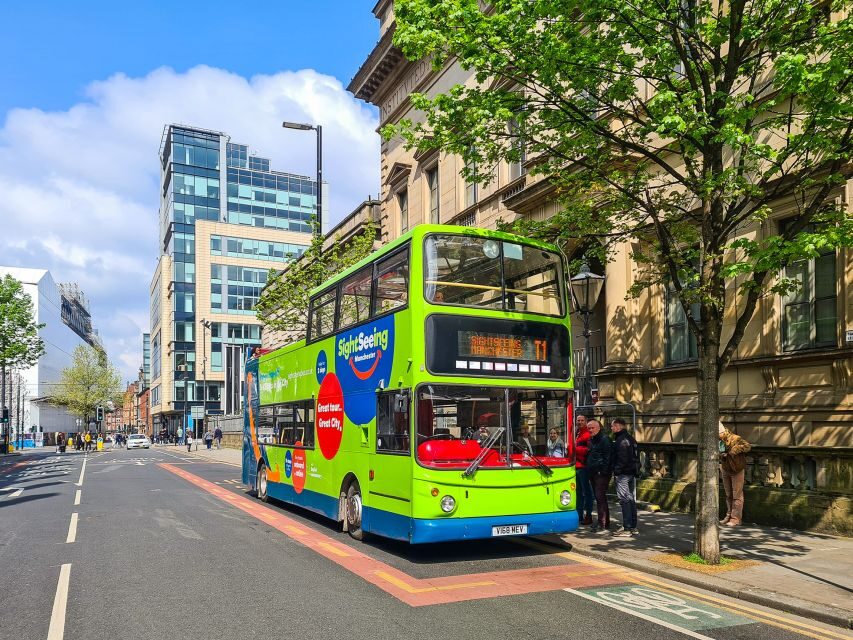
After Salford Quays, the route heads through Media City. This is the modern media hub where BBC and ITV have located TV studios, and it’s a strong contrast to the earlier industrial framing you hear on the audio.
Even if you don’t go inside studios, seeing the area helps you understand how Manchester’s “making and building” energy shifted into technology, media, and broadcasting. It’s also a good mental bridge. You start with mills and industry context, then you get a sense of the city’s present-day identity.
If you’re a screen person—news, TV, documentaries—this section tends to land well because it explains that Manchester isn’t only about the past. It’s active and current, and the bus route makes that contrast visible.
Old Trafford pass-by: what you’ll see and how to plan
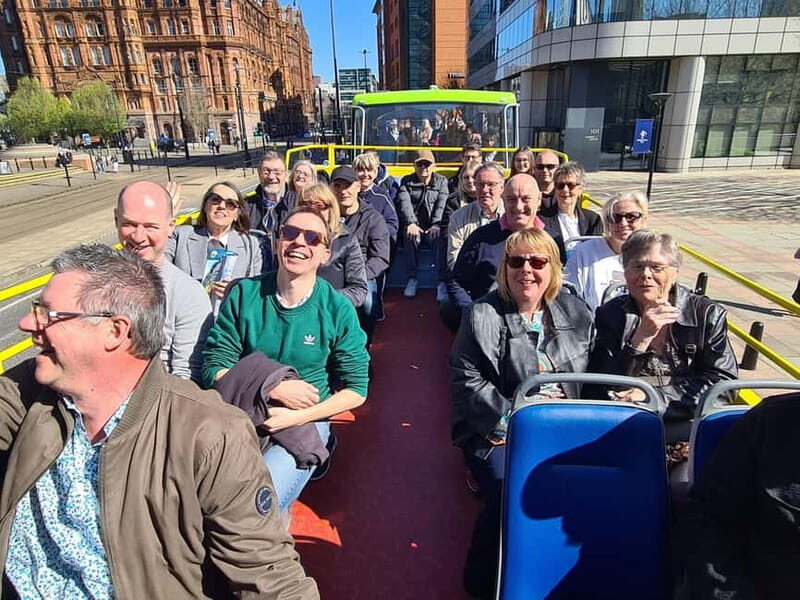
Old Trafford is on the route, though it’s mainly a pass-by viewpoint rather than a guaranteed time inside the stadium. That said, the bus still gives you a strong sense of scale and location.
If you want to do more than look—like arranging a stadium visit—you’ll need to plan ahead. The practical reality is that stadium-related plans can be limited by booking availability, so don’t assume you’ll be able to switch from bus ride to ticketed entry on the same day without checking.
Best move: use the bus to confirm what day/time fits your schedule, then decide later if it’s worth adding extra time. This keeps your itinerary from collapsing when something popular sells out.
The Science and Industry Museum: where the facts meet hands-on time
The bus route brings you to the Museum of Science and Industry area, another major stop for anyone who likes the “why” behind the city. Manchester’s industrial contributions aren’t just talking points here. The museum is built for visitors who want to see how science, engineering, and invention shaped real life.
From the bus, you get a clear sense that this is not random sightseeing—it ties back to the themes you heard earlier on the audio: how industry influenced politics, science, and cultural development. That’s what makes this stop feel logical rather than like a detour.
If you plan to hop off for this museum, give it time. Even if you only pick a couple galleries, you’ll get more out of it than trying to do everything while the bus schedule keeps moving.
Using the 2-day ticket for real savings of time and stress
One of the strongest value points is that your ticket is valid for 2 calendar days, and the second day is free on the following operating day. That turns the tour from a one-off into a flexible base ticket.
This matters because you can solve a common Manchester problem: the day you arrive doesn’t always line up with the museum you care about most. With two days, you can do the loop once for orientation, then return to the stops that actually deserve your time—Salford Quays, Lowry, or Imperial War Museum North.
A useful strategy is simple: do one full circuit early if you can, then plan your second day around what you liked most. That keeps you from “collecting stops” just to check boxes.
Also note: tours start at 10:30 AM, 12:00 PM, and 2:00 PM on the Pink timetable that runs all year. Extra tours run during summer months, so if you’re traveling in peak season, check your schedule before assuming the standard times.
Timing, weather, and the upper deck audio challenge
Open-top buses are great when the weather is kind, but Manchester weather loves curveballs. If it’s cold or windy, you’ll feel it more up top, and that can affect how long you’re willing to stay on the upper deck.
There’s also the audio factor. Some riders report the commentary can be hard to hear, or the volume can vary depending on where you sit. If you find the sound difficult, lower deck seating may help, or you can adjust your position before you miss the key lines of the story.
A smart approach is to treat the audio as something you can “catch” while you watch. If you miss a segment, you haven’t ruined the tour—you’re still getting a visual tour of the city’s main landmarks. The bus route plus hop-on freedom means you can always hop off and reconnect with your priorities.
Is this good value compared to doing it all by yourself?
This kind of tour doesn’t replace everything, but it’s very good at what it’s designed for: fast orientation, practical transport, and an explanation layer you don’t get from a standard bus route.
You’re paying for:
- a 1.5-hour loop experience with recorded guidance
- 15 stops you can use for hop-off time
- free Wi-Fi to help you plan on the fly
- 2-day ticket value, which is a big deal if you want museum time rather than just photos
Entry fees aren’t included, so you’ll still pay for museums if you choose paid exhibitions. But that’s normal for this style of tour. In return, you get to decide what to pay for based on what you actually care about once you see the city layout.
If you’re trying to maximize your time in Manchester without building a complicated itinerary, this tour is a strong fit. It’s like buying yourself a map that talks back.
Who should book this Manchester bus tour—and who might skip it
I’d recommend it if you want:
- an overview of Manchester and Salford Quays in a short time
- a guided explanation via recorded audio in English
- a flexible way to reach major landmarks without walking long distances between them
It’s also a nice option for people who don’t want to stress about connections. The route loops through the areas you’ll likely plan around anyway—centre sights, football sites, quayside attractions, and the science museum area.
I’d be a little more cautious if you’re the type who wants deep, unhurried time at a small number of sites. This bus helps you sample. If you want a museum-by-museum day with no interruptions, you might find it better to pair the bus with planned admissions and then keep the rest of the day slower.
Should you book this Manchester sightseeing bus tour?
Yes, you should book it if you value structure, flexibility, and an easy orientation. The route is designed around major stops, the audio guide helps you understand what you’re seeing, and the two-day ticket gives you a way to fix timing issues without buying another pass.
Book it especially if you’re mixing interests—football and museums in the same trip, plus art and history at Salford Quays. It’s also a good “first day” move when you don’t yet know where everything sits.
Just don’t treat it like the whole day’s plan. Use it as the spine of your itinerary, then hop off where you want real time.
FAQ
How long is the Manchester sightseeing bus tour?
The tour duration is 1.5 hours. It’s a hop-on hop-off route, so you can spend more time at stops by leaving the bus and returning later.
Where does the tour start and end?
It starts at the stop outside Bridgewater Hall on Lower Mosley Street, Manchester (M2 3WS) and ends back at the same meeting point.
How many stops are on the route?
The route includes 15 stops, with key sights planned along the way.
Is the ticket valid for more than one day?
Yes. Your ticket is valid for 2 calendar days from the date shown, and the second day is free on the following operating day (if the tour runs).
Are entry fees included?
No. Entry fees are not included.
Is the audio guide available in other languages?
The recorded commentary is in English, and other languages are available if you download the activity provider’s app.