REVIEW · NEWQUAY
Newquay: Paddleboarding Lesson & Tour
Book on GetYourGuide →Operated by Newquay Activity Centre · Bookable on GetYourGuide
SUP in Newquay feels like an instant coastal reset. You’ll get a real introduction to stand-up paddleboarding, plus a patient, safety-first setup before you head out for a tranquil tour along Cornwall’s dramatic shoreline. I like that the experience stays practical and hands-on, and I also love the top-quality kit and small group size that make it easier to learn quickly.
One consideration: this isn’t suitable for people with mobility impairments, and children must be at least 8 years old. If you’re fit and comfortable in a wetsuit, you’ll likely find it a great use of time in Newquay.
In This Review
- Key Things I’d Pay Attention To
- Why Paddleboarding Feels So Good on Newquay’s Coast
- Starting at the Towan Beach Facility: Kit, Warmup, and Storage
- Safety Briefing and Paddling Basics Before You Go
- The Rocky Slope Launch: Getting Your Balance Fast
- Two Seaside Coves, Wildlife Notes, and Direction Changes
- What You Learn in 2 Hours (and What to Practice After)
- Instructors Matter: Patient Coaching in a Small Group
- Gear, Comfort, and the Extra Touches That Add Value
- Cost, Value, and Timing for a Smart Two-Hour SUP Day
- Who This Newquay SUP Tour Suits Best
- Should You Book Newquay Paddleboarding Lesson & Tour?
- FAQ
- What’s included in the Newquay paddleboarding lesson?
- How long is the tour?
- What group size is it?
- Who can take part?
- Do I need to bring my own SUP equipment?
- Is food and drink included?
Key Things I’d Pay Attention To
- You start near Towan Beach with heated indoor comfort so you’re not scrambling to get dry and ready.
- Instruction covers both technique and confidence basics like launching, landing, balance, and direction changes.
- Safety is handled first with water safety briefing, weather checks, and proper kit familiarisation.
- You paddle between two coves for a mix of scenery and real “learn what you’re doing” practice.
- The tour includes wildlife and local heritage context, not just straight riding.
Why Paddleboarding Feels So Good on Newquay’s Coast
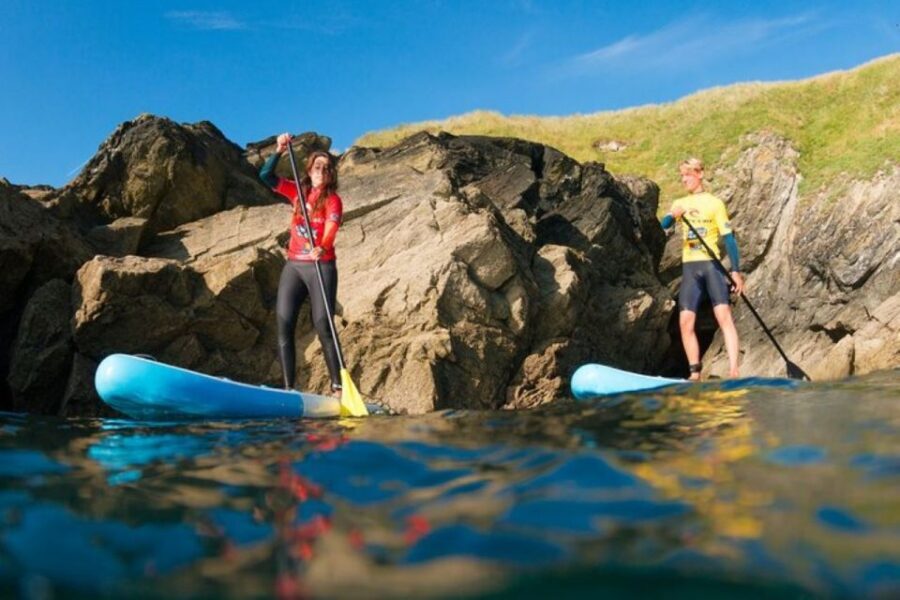
Newquay is the kind of place where the coastline does most of the work for you. The big cliffs, rocky edges, and tucked-away coves make paddleboarding feel more like coastal exploration than a training exercise.
Stand-up paddleboarding (SUP) is also one of those sports that spreads fast for a reason. It’s active, but it doesn’t require years of practice before it’s fun. With the right coaching, you stop thinking about the board and start noticing the water, the wind, and the coastline.
What I like about this particular SUP lesson is that it’s built for first-timers. You’re not just handed a board and sent off. You’re taught the fundamentals, then you use them during a route designed to show you the best of Newquay’s coastal edge.
A few more Newquay tours and experiences worth a look
Starting at the Towan Beach Facility: Kit, Warmup, and Storage
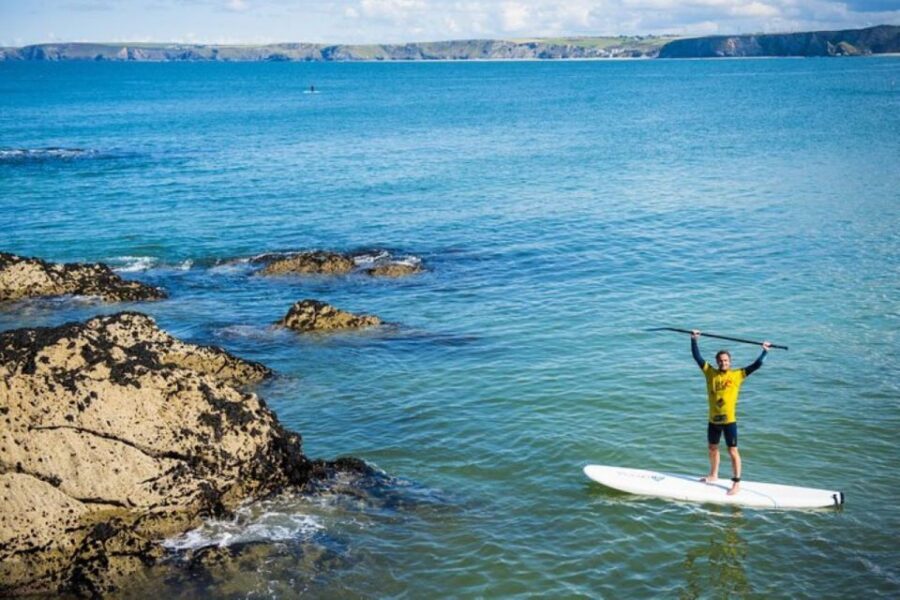
The day starts at a specially constructed facility close to Towan Beach. That matters more than you’d think. Being near the water reduces stress, and it keeps the session focused on learning rather than waiting around.
You’ll be provided with the full setup: a SUP board, paddle, wetsuit, and buoyancy aid. You also get heated changing rooms, secure storage for valuables, and hot outdoor showers after you’re done. If you’re traveling light, these basics are worth their weight in gold because they protect you from the post-activity chill and keep your gear safe.
Before you step into the water, you’ll do kit familiarisation and safety checks. That quick “get to know your equipment” moment helps a lot. A board can feel unstable at first, and the more familiar you are with the gear, the faster you relax.
Safety Briefing and Paddling Basics Before You Go
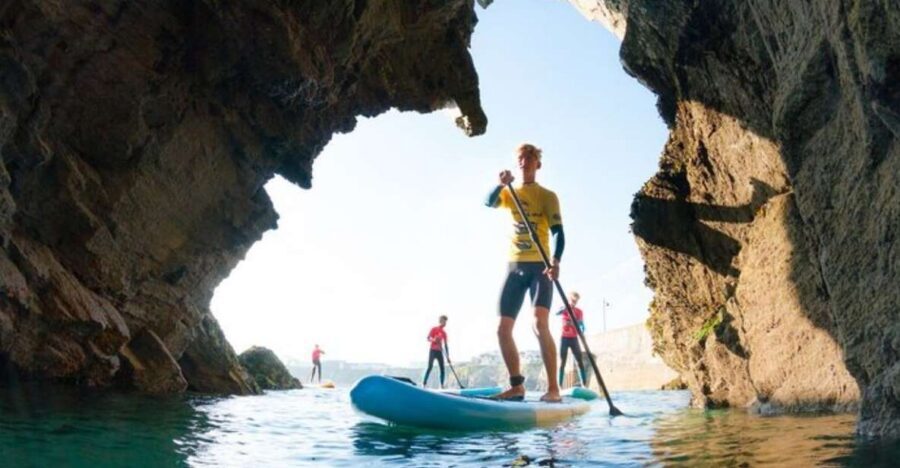
This is the part that makes or breaks a first SUP experience. You’ll get a full safety briefing, plus weather condition checks. Then comes instruction in the fundamentals of paddling.
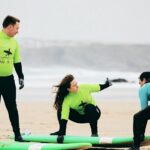
The lesson covers the practical skills you actually need outdoors: how to launch and land, how to stand and balance, how to hold the paddle, and how to use basic strokes. You’ll also learn how to change directions, which is where most beginners start to feel stuck.
The goal is simple: you should leave with skills you can keep using. By the end of the two hours, you’re not just saying you tried SUP. You’re understanding the steps behind it, so your next paddle feels more like building than starting over.
Also, the instruction is delivered by qualified, experienced, and insured instructors. That’s reassuring in a sport where the water and wind can change the feel quickly.
The Rocky Slope Launch: Getting Your Balance Fast
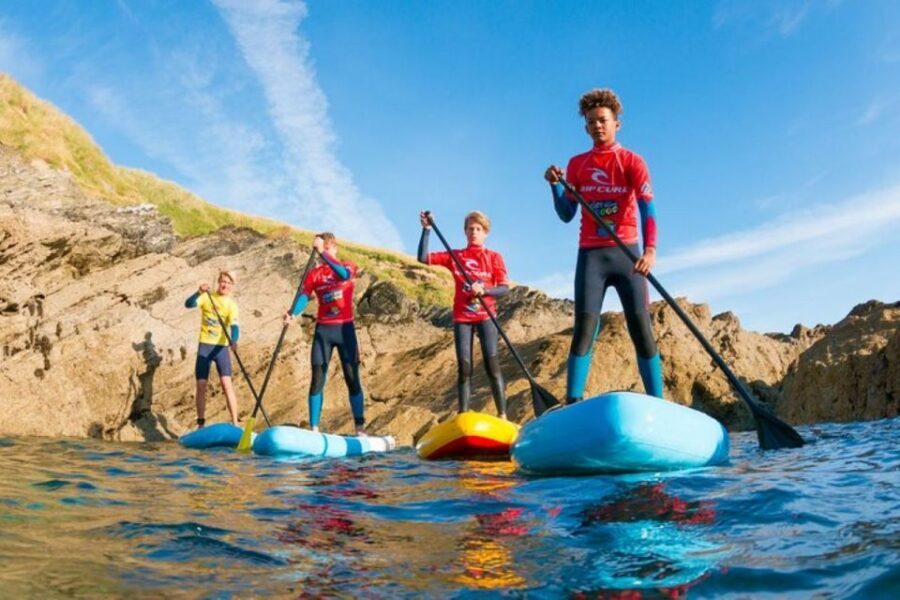
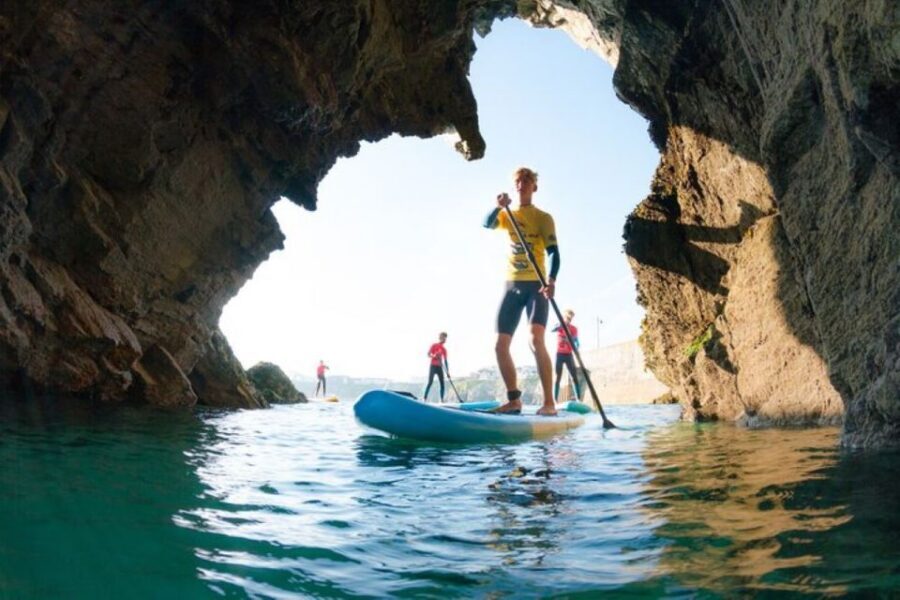
After the briefing, you’ll head to where the tour starts in the water. You make your way down a rocky slope to the edge and launch from there.
That rocky slope detail matters because it’s part of real SUP practice. You learn how to move with the board, how to handle your balance before you’re fully on the water, and how to land the board safely again when it’s time to finish. It’s not only about paddling. It’s about controlling the whole moment.
Once you’re afloat, you’ll focus on standing up and maintaining balance. The instruction is designed for newcomers, so you’re not expected to “figure it out” alone. You’ll work on holding the paddle properly and using strokes that move you in the direction you want.
If you’ve never stood on a board before, the first minutes can feel wobbly. That’s normal. The value here is that you get guidance right when you need it, instead of struggling through it and building frustration.
Two Seaside Coves, Wildlife Notes, and Direction Changes
One of the best parts of this SUP tour is that it uses two gorgeous, somewhat-secret coves as takeoff and landing points. That’s a smart choice for beginners.
Coves tend to feel calmer than open water, which gives you room to practice without fighting every wave. You still get the thrill of the coast, but the session stays manageable while you work on balance and steering.
Along the route, you’ll also hear tales of history and heritage. This is the sort of local storytelling that turns “paddling time” into “learning time.” It’s not heavy or academic. It’s the kind of context that makes the coastline feel connected to the place.
You’ll also get comprehensive leadership and wildlife information. And yes, wildlife sightings can happen. One recent tour noted meeting two seals along the way, which is exactly the kind of moment that makes a short session feel memorable.
In terms of technique, you’re not just going in a straight line. You’ll be taught basic strokes and how to change direction. That part is important because steering is what helps you enjoy yourself, not just survive the wobbles.

What You Learn in 2 Hours (and What to Practice After)
Two hours goes by quickly, but it can still be enough time to create real progress if the structure is right. This SUP session is designed to teach a bundle of fundamentals that support each other:
- Launch and land safely with confidence
- Stand up and keep balance long enough to paddle comfortably
- Hold the paddle correctly so it feels controllable
- Use basic strokes to move with purpose
- Change directions so you’re not stuck going wherever the board decides
The value is that these skills are repeatable. Even if you never become a hardcore paddler, you’ll still be able to enjoy a return session more smoothly because you’ll already know what to focus on.
I also like that the tour is framed as a way to continue the sport afterward. It’s not only about the two-hour lesson. It’s about leaving you with a clear path for the next step, whether that’s another SUP session or just feeling comfortable renting gear and getting out there.
Instructors Matter: Patient Coaching in a Small Group
This tour limits groups to 8 participants, which is a big deal for beginners. You get more attention, more feedback, and fewer “wait your turn” moments. In a sport where balance changes fast, that extra coaching time can be the difference between progress and frustration.
In at least one instance, the instructor’s style really stood out. Alex was described as very patient with new learners, and the group still got to enjoy an informative tour along the way. That combination is exactly what you want: someone calm who can teach the basics, plus someone who keeps the experience moving forward.
If you’re nervous about trying SUP, choose a session like this one because it’s designed around instruction. The most valuable part is not the board itself. It’s the way you’re taught.
Gear, Comfort, and the Extra Touches That Add Value
The essentials are handled for you: wetsuit, buoyancy aid, SUP board, and paddle. That means you don’t have to solve the equipment puzzle before your trip. It’s also easier to show up and get moving quickly.
On land, the comfort details are genuinely helpful. Heated changing rooms are a lifesaver if the weather turns cool. Secure storage keeps you from hauling your bag down the beach. Afterward, hot outdoor showers make it far more likely you’ll actually enjoy your rest of the day, instead of hiding from the chill.
Then there are the extras that extend the value beyond the water:
- 10% off further Newquay Activity Centre activities
- A discount card for apres SUP food and drink at local bars and cafes
- 15% off at Newquay’s Rip Curl store
- A dog sitter option if you need it (just contact the team)
Food and drinks are not included, so plan for that. Still, the apres discount is a nice touch if you want to make the whole outing feel complete.
Cost, Value, and Timing for a Smart Two-Hour SUP Day
At $80 per person for a two-hour session, you’re paying for guided instruction, top-quality equipment, and a structured route. For first-timers, that’s better value than trying to learn on your own, especially when you factor in the wetsuit, buoyancy aid, and the coaching.
You’ll also benefit from the time efficiency. Two hours is enough time to learn basics and experience the coastline without burning an entire day. That fits well if you’re juggling beaches, walking, and other Newquay activities.
Since the tour is run in small groups, you’ll likely get a good shot at standing up and paddling with support. And because you’re close to Towan Beach, the whole setup feels easy to fit into a normal travel schedule.
Who This Newquay SUP Tour Suits Best
This tour makes the most sense if:
- You’re new to SUP or want a structured fundamentals lesson
- You want a calm, guided paddle along Cornwall’s coast
- You prefer small-group instruction and clear safety guidance
- You’d like local history and wildlife information included in the ride
It may not fit if you have mobility impairments, because it’s listed as not suitable for that. It also isn’t for children under 8.
If you’re a confident swimmer and you’re comfortable in a wetsuit, you’re probably a great match. If you’re traveling with a sense of humor and patience for learning balance, you’ll do well.
Should You Book Newquay Paddleboarding Lesson & Tour?
Book it if you want a safe, well-run first SUP experience that mixes technique with real Newquay scenery. The combination of qualified instructors, top equipment, and a route that uses two coves gives you a strong chance to feel competent by the end.
Skip it if you need an accessibility-friendly setup, or if you’re bringing a child under 8. Also, if you’re hoping for a longer endurance paddle, this is a tight two-hour lesson rather than a full-day tour.
If you’re looking for a practical way to experience the coast and learn something you can actually use again, this is a solid choice.
FAQ
What’s included in the Newquay paddleboarding lesson?
You’ll receive a SUP board, paddle, wetsuit, and buoyancy aid. The session also includes a safety briefing, kit familiarisation, weather checks, and qualified instructors.
How long is the tour?
The experience runs for 2 hours.
What group size is it?
It’s a small group limited to 8 participants.
Who can take part?
Children must be at least 8 years old, and the activity is not suitable for people with mobility impairments.
Do I need to bring my own SUP equipment?
No. The paddleboard, paddle, wetsuit, and buoyancy aid are provided.
Is food and drink included?
No. Food and drinks are not included, though there’s a discount card for apres SUP food and drink at local bars and cafes.