REVIEW · OXFORD
Oxford University Tour
Book on GetYourGuide →Operated by Tour Minds · Bookable on GetYourGuide
Oxford makes more sense on foot. This Oxford University walking tour uses a tight, guided route to show you how the city’s famous colleges connect to founders, famous alumni, and everyday Oxford street life. You’ll also get a real hit of atmosphere at the Bodleian Library, plus passes and photo moments along the way past major colleges.
I especially like the small-group setup (max 10). With fewer people, your guide can point out what to look for and answer questions instead of rushing you like you’re part of a crowd. I also like the way the tour mixes big-name landmarks (like Christ Church) with the deeper college details—coat of arms, architecture, and the college philosophy—so the stories don’t feel like random trivia. The main consideration: while most experiences sound smooth, there have been a couple of reports of guides not showing up or being late at the meeting point, so build in a little buffer and confirm you’re at the right spot.
In This Review
- Key highlights worth circling
- Why this Oxford University walking tour works in just 1 hour
- Small-group format: the difference between a walk and a tour
- Meeting at Jericho Cheese Company on Ship Street
- Christ Church as the start/end anchor
- Entering a college founded in 1263 (the part that makes it feel real)
- Gardens, courtyards, and chapels: where Oxford’s mood becomes tangible
- Bodleian Library: what you learn from three miles of shelves
- Walking past Trinity and Jesus: why street views matter
- What “exclusive access” feels like in a short tour
- Price and value: is $87 per person fair for this setup?
- Guide quality matters: enthusiasm is a real part of the experience
- Wheelchair accessible, but plan for a walking pace
- Who should book this Oxford University tour
- Should you book this Oxford University walking tour?
- FAQ
- FAQ
- Where does the tour start?
- How long is the Oxford University walking tour?
- What’s included on the tour?
- Does the tour include the Bodleian Library?
- What group size should I expect?
- What are the cancellation rules?
Key highlights worth circling
- Max 10 participants for a calmer walk and more Q&A time
- Guided by Oxford alumni who can explain college culture, not just dates
- Bodleian Library visit with the scale and “book miles” facts (14 million books, three miles of shelves)
- A founding college established in 1263 with architecture, coat of arms, and famous former students
- Route through Christ Church, plus Trinity and Jesus College sights along the way
- Ends at Christ Church, a good visual “final scene” for your Oxford intro
Why this Oxford University walking tour works in just 1 hour
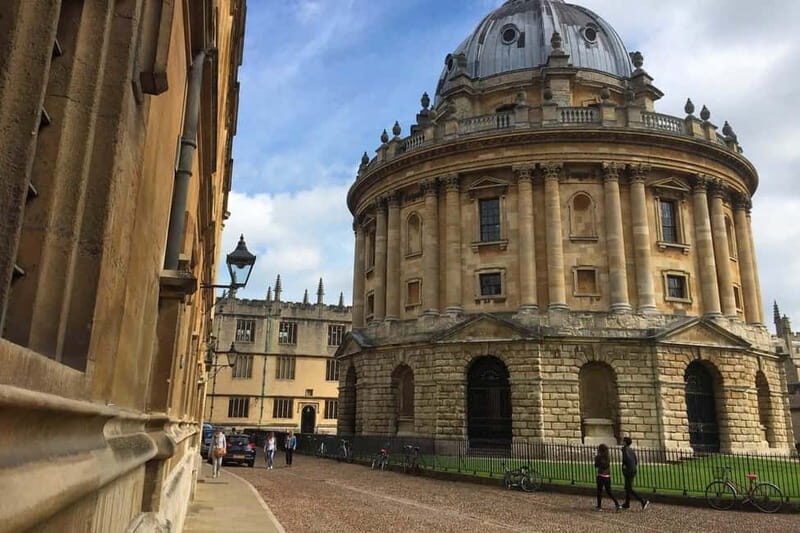
Oxford can swallow your whole day if you let it. This tour is designed for a quick, structured hit—1 hour—so you can get oriented without trying to see everything. You’ll walk through classic Oxford streets, then anchor the experience with inside moments at a founding college and a major library stop.
The best part is that the guide isn’t just pointing at buildings. They’re tying what you see to how Oxford thinks: founders’ goals, how college life evolved, and why certain alumni became famous. If you like history, you’ll leave with names and context. If you’re more architecture-and-vibes minded, you’ll still get plenty to look at—gates, courtyards, gardens, and old stonework—while someone explains what all that is really for.
You can also read our reviews of more tours and experiences in Oxford.



Small-group format: the difference between a walk and a tour
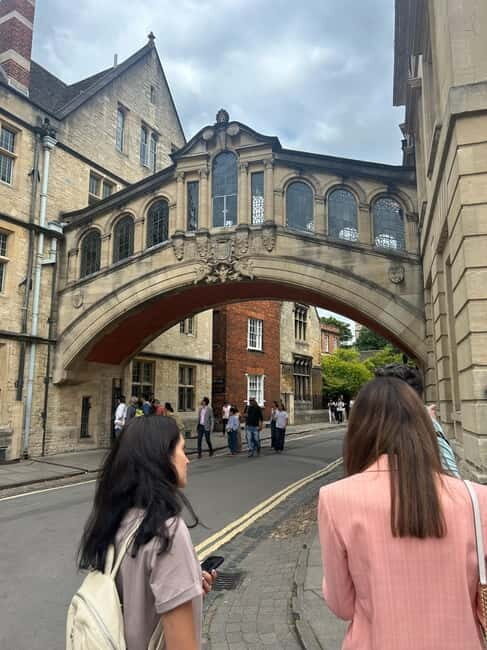
With a maximum of 10 participants, you avoid the “guided sightseeing bottleneck.” In a bigger group, guides spend most of their time herding people around, not teaching. Here, you can actually hear the story while standing close enough to notice details like coats of arms or the feel of a chapel-garden courtyard.
It’s also a comfort factor. Oxford’s college streets can be busy, but a small group helps you move like you know what you’re doing. You’ll likely feel less like you’re being rushed, and more like you’re getting a tailored walkthrough.
One practical note: because time is short, you won’t get “stay as long as you want” freedom inside each place. The tour aims for clarity and pace over deep lounging. If you’re the type who likes to linger quietly with sketches, plan extra time after the tour to return on your own.
Meeting at Jericho Cheese Company on Ship Street
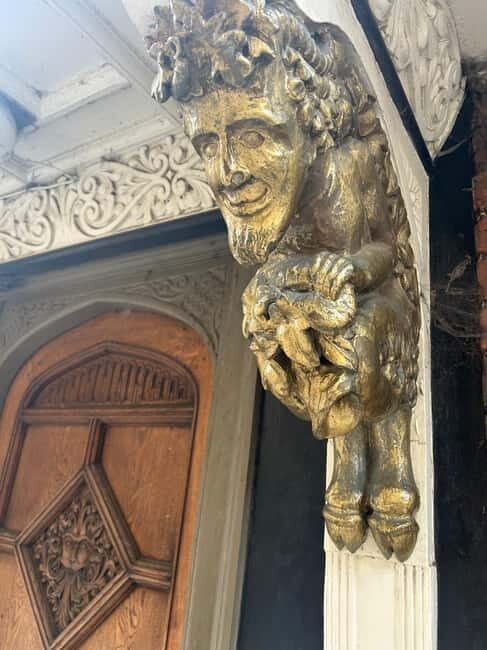
Your start point is on Ship Street outside St Michael’s church, at the Jericho Cheese Company. That matters more than it sounds, because Oxford is easy to get turned around in. A meeting spot that’s clear and consistent helps you avoid the stress of wandering around at the last minute.
If you want the easiest experience, arrive a little early, take a quick look at the street layout, and then wait. And because there have been a few reports of guide no-shows or long waits at the meeting point, it’s smart to keep an eye out for your guide’s group cues and be ready to ask if you’re in the right place.
Christ Church as the start/end anchor
The tour begins with the route context in Oxford and ends at Christ Church. That’s a strong choice. Christ Church sits at a crossroads of Oxford’s identity—both as a working college and as a place visitors recognize right away.
Finishing here gives you a natural “last big visual” after the more story-focused stops. It also helps you plan your next move. If you want food, a drink, or a museum nearby after you’re done, you’ll have a known, central landmark to work from.
Along the walk, you’ll also pass major college names like Trinity College and Jesus College. Even if you don’t go inside all of them, seeing these places from the street gives you a feel for how Oxford’s academic world lives right inside everyday city lanes.
Entering a college founded in 1263 (the part that makes it feel real)
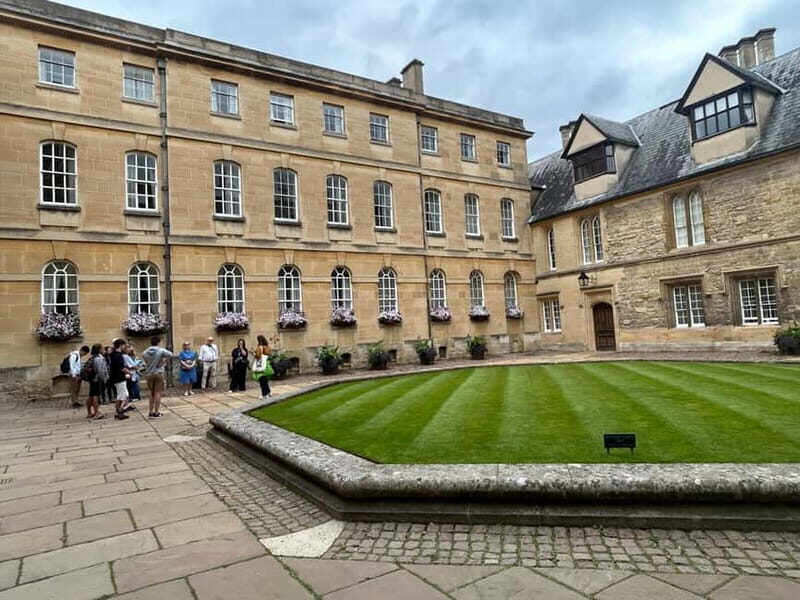
A key feature of this tour is the visit to the founding college of Oxford University, established in 1263. The promise here isn’t just a photo stop. You’re meant to understand how the college was built around a philosophy—and how the architecture reflects that.
Inside, you’ll get details like:
- the buildings’ architecture
- the college’s philosophy
- the coat of arms
- notable people who studied there
The tour also points you to the kind of alumni Oxford is known for—major scientists, politicians, and Nobel Peace Prize winners. That’s valuable because it turns a medieval building into a living system: education shaping people who then shape the world.
The main drawback of a one-hour format is that you can’t linger over every corner. You’ll see a lot, but only in a guided “best-of” way. If you want to read every plaque, this won’t replace a self-guided visit later.





Gardens, courtyards, and chapels: where Oxford’s mood becomes tangible
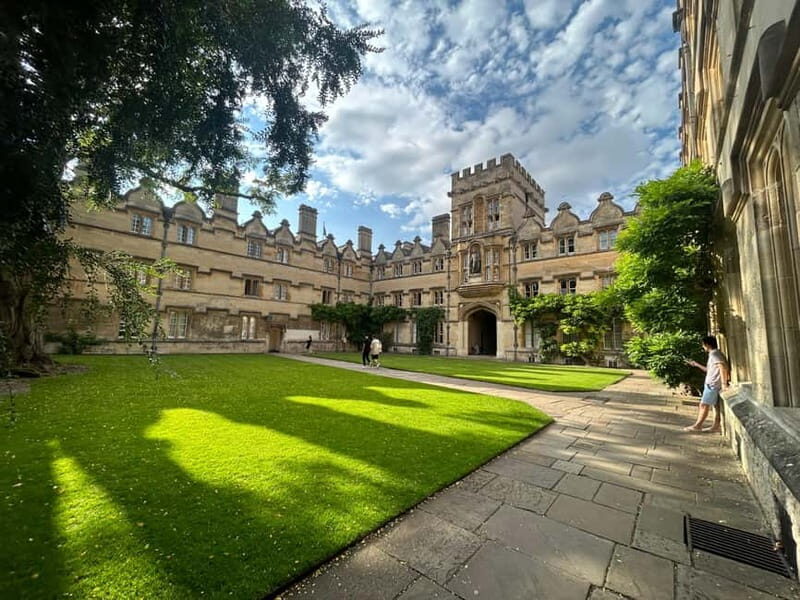
One of the things I like about this style of walking tour is that it doesn’t stay glued to the street. The experience includes access to some of Oxford’s oldest colleges, with gardens and historic chapels mentioned as part of the tour’s feel.
Even if you’re not a “garden person,” Oxford gardens do something important: they show you that colleges aren’t only classrooms. They’re also private worlds for reflection, community, and tradition. When you step into a garden space guided by someone who understands what the place represents, it stops being scenery and starts being context.
Similarly, chapels add a different layer. Oxford colleges carried religious and ceremonial purpose for centuries, and that shows up in how space is designed and how buildings are used. If you’re an architecture or history lover, this is often the moment you think, Oh—so this is why the buildings feel the way they do.
Bodleian Library: what you learn from three miles of shelves
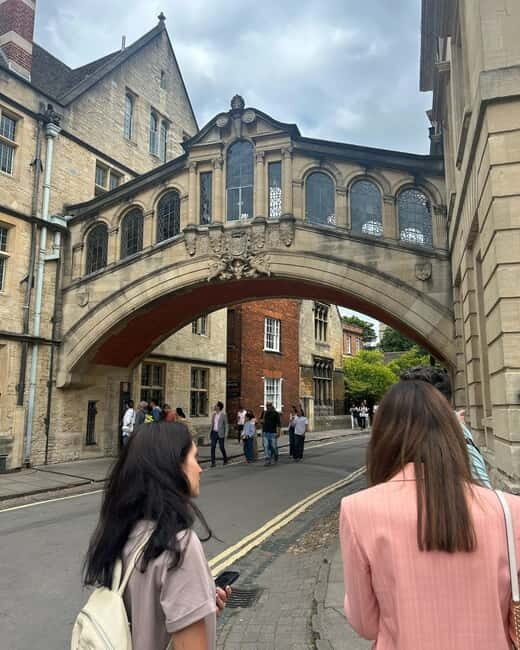
The biggest “wow” stop is the Bodleian Library. You’ll visit it as part of the tour, and the way it’s described is clear: it’s the second oldest library in the world and one of the most famous libraries in Europe.
You’ll also hear hard numbers that make the building’s size feel understandable, not abstract:
- over 14 million books
- about three miles of bookshelves
Those facts are more than trivia. They help you picture why the Bodleian isn’t just a pretty interior—it’s a working, massive knowledge machine. Even in a short visit, those scale reminders change how you look at the shelves and rooms. Instead of thinking This is where famous people studied, you think This is a system built to preserve and organize human knowledge for generations.
If you’re planning photos, go in with the attitude that you’re capturing moments, not trying to document every angle. The guide’s job is to show you the important parts quickly, while you enjoy the feeling of the place.
Walking past Trinity and Jesus: why street views matter
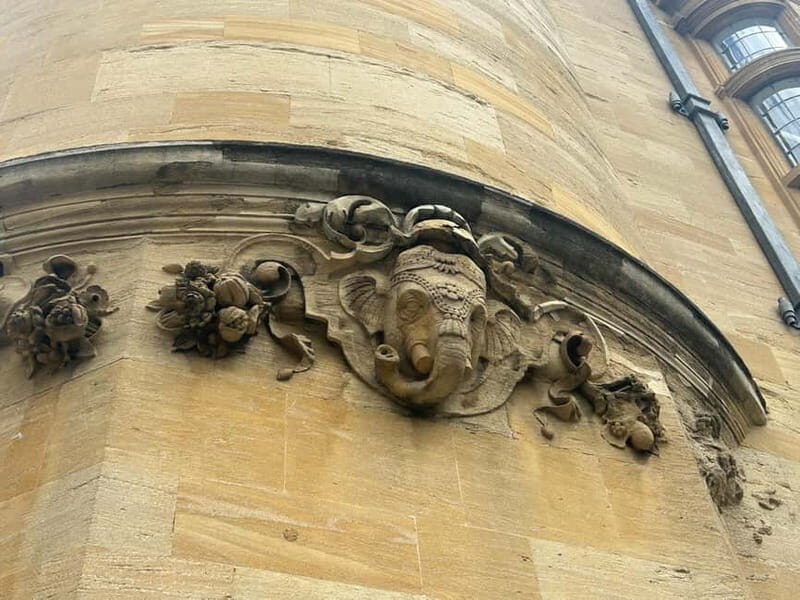
You’ll pass major landmarks along the walk, including Trinity College and Jesus College (plus the broader Christ Church context). You might wonder why the tour includes passes rather than full entries for each.
Here’s the practical reason: Oxford’s magic is partly in the relationship between colleges and the street. From the sidewalk, you see the entrances, boundaries, and how Oxford’s academic institutions sit inside a real city. Those quick street views help you connect what you learned inside to what’s right outside the gates.
Also, time is limited. In an hour, the tour has to prioritize the stops with the biggest payoff: the founding college experience and the Bodleian visit. The passing sights are the supporting cast that make the route feel like a true Oxford walk, not a list of separate destinations.
What “exclusive access” feels like in a short tour
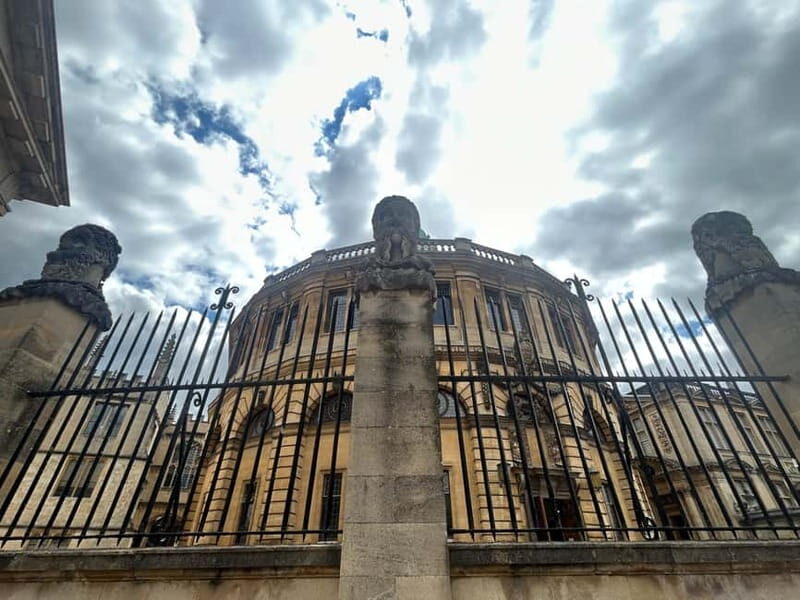
The description of the experience includes exclusive access to some of Oxford’s older colleges, gardens, and chapels. In practice, that translates to a guided route that gets you into meaningful spaces rather than just standing behind a fence.
You’ll get the kinds of details you don’t pick up from a quick internet search: why certain features exist, what the coat of arms symbolizes, and how college philosophy connects to the people who come through the doors. That’s exactly where a guided walk earns its keep. Buildings are static. Stories give them momentum.
Still, keep expectations realistic. This is a 1-hour format. You’re not buying a whole day of slow wandering. Think of it as a curated “Oxford orientation plus key interiors,” then follow up with independent time where you want to linger.
Price and value: is $87 per person fair for this setup?
At $87 per person for a 1-hour guided walking tour with small-group size, you’re paying for a few concrete things:
- a live guide (English) who can connect the sites to stories
- access to a founding college space and the Bodleian Library
- time saved versus planning a route yourself
If all you wanted was a self-guided stroll and a couple of exterior photos, you could likely do Oxford on your own for less. But the value here comes from guided interpretation and the inside-library component, plus the comfort of a small group.
Where the value gets slightly more complicated is the short time. You’re paying for a concentrated experience, so you’ll want to make sure your travel style matches that. If you like deep museum-level pacing, you may want a longer tour or to plan extra time afterward. If you want an efficient, story-driven intro, $87 can make sense.
Guide quality matters: enthusiasm is a real part of the experience
One guide name that pops up in the experience is Conor. He’s singled out for being enthusiastic and informative, and he even recommended the Turf Tavern after the tour. That kind of small, real-world suggestion is underrated. It turns your visit from just “sightseeing” into “I know where to go next.”
More broadly, the guide’s role is central here because Oxford is full of buildings with subtle differences. An enthusiastic guide helps you notice what you’d otherwise miss—especially in a short time window.
Just remember: because there have also been reports of guides not showing up, choose this tour with a “be prepared and check-in” mindset. If you’re tight on schedule, consider building in extra flexibility.
Wheelchair accessible, but plan for a walking pace
The tour is listed as wheelchair accessible. That said, it’s still a walking tour. Oxford streets and college approaches can involve uneven terrain and stair-adjacent designs, so your safest move is to contact the operator ahead of time if you use a wheelchair and need specifics.
For most visitors who can manage short walks, wheelchair accessibility should make the experience possible while still delivering the key stops.
Who should book this Oxford University tour
This is a great fit if:
- you want a guided Oxford University intro without spending a full day planning
- you like stories about founders and famous alumni, not just architecture
- you want small-group energy (up to 10 people)
- you care about seeing the Bodleian Library with guided context
It may not be the best fit if:
- you want to linger for long stretches inside colleges or read every detail at your own speed
- you’re traveling at a time when you can’t tolerate any chance of a delayed start (because some experiences have reported that risk)
Should you book this Oxford University walking tour?
If you want a focused, story-led sampler of Oxford’s colleges and you’ll benefit from a guided explanation, this tour is a smart buy. The small-group size and the combination of a founding college visit plus the Bodleian Library make it feel efficient rather than rushed.
My biggest caution is simple: check the meeting point carefully and give yourself buffer time, since a small number of experiences have reported late or missing guides. If you build that in, you’re likely to enjoy what this tour is clearly designed to do—turn Oxford’s “dreaming spires” into understandable, human-scale stories.
FAQ
FAQ
Where does the tour start?
The meeting point is on Ship Street outside St Michael’s church, at the Jericho Cheese Company.
How long is the Oxford University walking tour?
It runs for 1 hour.
What’s included on the tour?
You’ll visit the founding college (established in 1263), enter one of the university’s oldest colleges with access to gardens, and visit the Bodleian Library.
Does the tour include the Bodleian Library?
Yes. The tour includes a visit to the Bodleian Library.
What group size should I expect?
It’s a small-group experience with a maximum of 10 participants.
What are the cancellation rules?
You can cancel up to 24 hours in advance for a full refund.