REVIEW · PORTSMOUTH
Portsmouth: Spinnaker Tower Abseiling Experience
Book on GetYourGuide →Operated by Spinnaker Tower · Bookable on GetYourGuide
If heights make you nervous, this will test you fast.
This Spinnaker Tower abseiling session in Portsmouth turns fear into motion, with friendly, encouraging instructors and a full descent from the tower’s 100-meter platform. I also love the way the experience builds you up with onsite instruction right before you step out. One possible drawback: weather can change the plan, since the activity is canceled in dangerous conditions.
You’ll start in the reception area at Spinnaker Tower, get geared up, and then head up to begin your descent. The duration is about 1 hour, and the group stays small, capped at 6 participants, which helps you feel like you’re not being rushed or lost in a crowd. If you’re expecting a long, relaxed sightseeing stroll, this is more action than wandering.
In This Review
- Key things that make this abseiling stand out
- Why Portsmouth’s Spinnaker Tower abseil feels like a real challenge
- Getting ready at the reception: gear, helmet, and instruction
- Safety rules you should actually read before you go
- Stepping onto the 100-meter platform with the Solent in view
- The abseil descent: rope time, sea breeze, and a controlled landing
- Small-group attention: why the limit of 6 matters
- Price and value: is $155 worth one hour of nerves?
- Weather and what to do with it
- Who this is perfect for, and who should skip it
- Booking decision: should you do the Spinnaker Tower abseil?
- FAQ
- How high is the Spinnaker Tower abseiling descent?
- How long does the experience last?
- Where do I check in for the activity?
- What age do you need to be to abseil?
- Is there a weight limit for the harness?
- What safety training and equipment are included?
- What should I wear or bring?
- Do they run the activity in bad weather?
- Can I get a refund if I cancel?
Key things that make this abseiling stand out
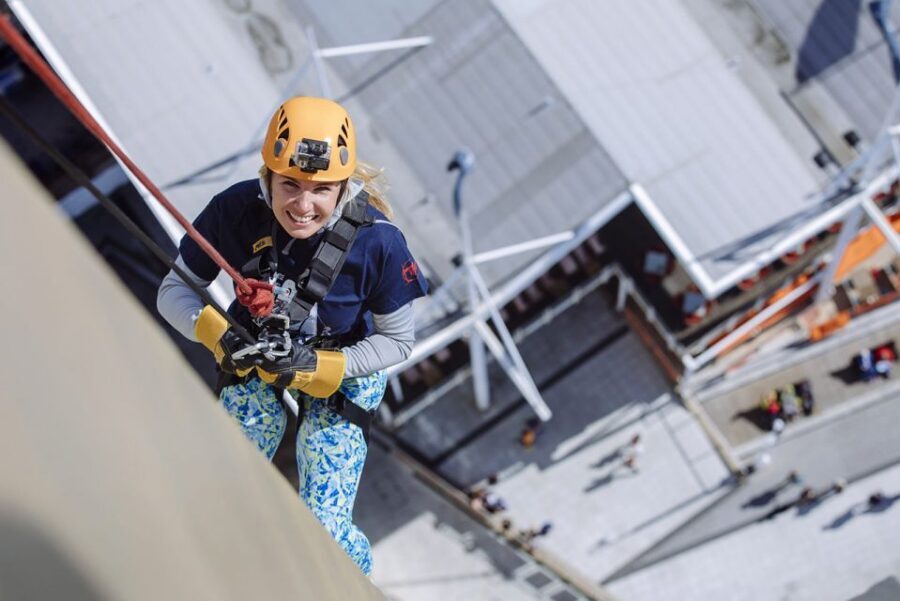
- 100-meter (328 ft) abseil on a famous Portsmouth landmark
- Onsite training plus safety equipment before you step onto the platform
- Big harbor views that reach across the Solent and toward the Isle of Wight
- Small group size with a limit of 6 participants
- Instructor encouragement that helps you focus on the rope and your next step
- Weather matters because it runs in most conditions but cancels for dangerous weather
Why Portsmouth’s Spinnaker Tower abseil feels like a real challenge
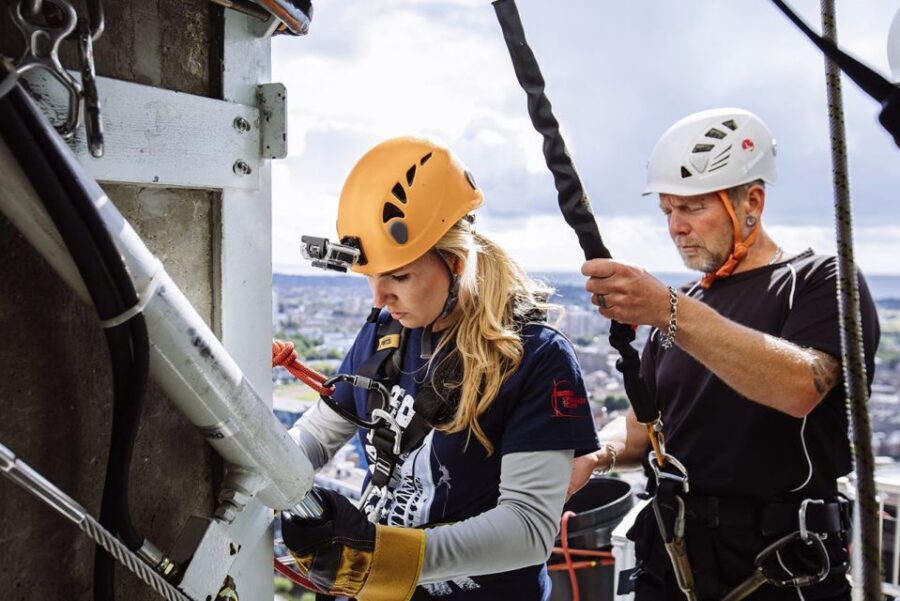
Abseiling at a standard climbing wall can be intense. Abseiling from a landmark tower is different because the height is part of the job. From the platform, you’re looking at Portsmouth Harbour, stretching over the Solent, with the Isle of Wight in the mix. That view does two things at once: it’s stunning, and it reminds you that your feet are no longer on solid ground.
What I like most is the way the experience forces a clean mental shift. You’re not just taking photos. You’re managing your body, breathing, and focus while moving down a rope. The cool sea air adds to it too, which sounds simple until you realize it’s one more sense you’ll need to steady while your harness and rope do their work.
There’s also the satisfaction factor. You finish back on the ground, smoothly, instead of crawling your way through a slow letdown. It caps off the whole moment with a calm landing, and you get to feel that you actually did something difficult.
You can also read our reviews of more tours and experiences in Portsmouth.


Getting ready at the reception: gear, helmet, and instruction
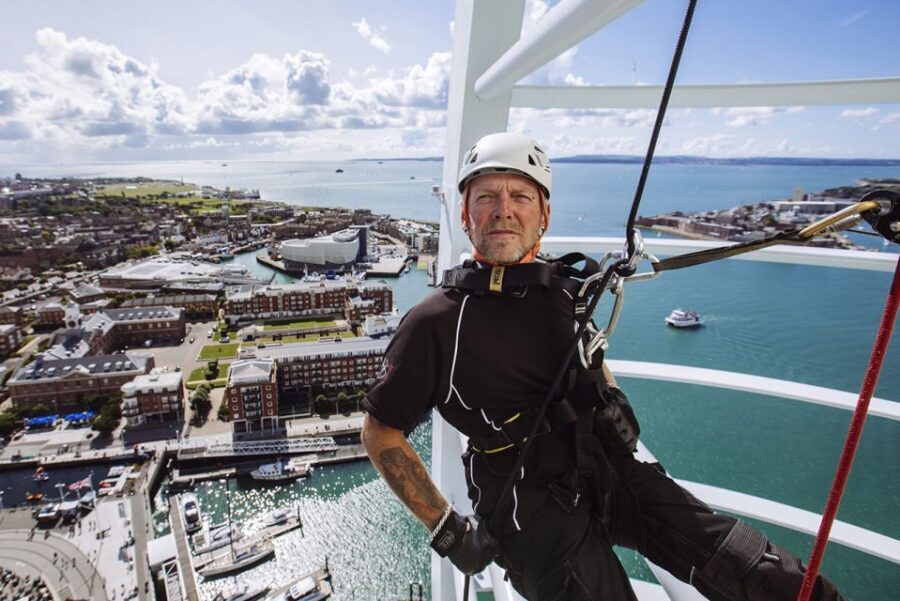
You’ll meet at the reception area of the Spinnaker Tower attraction. Bring your confirmation and check in at the front desk. From there, you’ll get through the practical parts before anyone starts talking adrenaline.
The core rhythm is pretty straightforward:
- Onsite training from a qualified instructor
- Getting strapped in and wearing the helmet
- A quick safety check before you move toward the platform
This is where the experience earns its keep. Most people don’t fear the rope as much as they fear the unknown. By the time you’re geared up, you already know what to do with your hands and body. You can also ask questions before stepping out, which matters if you’re the kind of person who needs to understand the plan, not just follow it.
They also run like a professional operation: the group is small, and instructors can give attention to each person. That tends to reduce the scary part, which is uncertainty.
Safety rules you should actually read before you go
This is adventure, not a theme park ride, so the rules are clear. Here are the key ones you need to plan around:
- Minimum age is 14. If you’re under 18, a guardian must be present to give written consent.
- The harness has a maximum supported weight of 266 pounds (120 kg).
- Proof of age may be required.
- You cannot take part if you’re intoxicated.
- Alcohol and drugs are not allowed.
- Not suitable for pregnant women.
- Shoes need to have flat soles.
One practical thought: flat-soled shoes are about grip and stability during gearing up and stepping onto the platform. Wear something you feel steady in, not something fancy with slippery soles.
Stepping onto the 100-meter platform with the Solent in view
Once you’re strapped in, you move out to the platform. This is the moment where your brain may try to negotiate a way out. The platform is 100 meters high, which is why this is such a strong fear-facing experience.
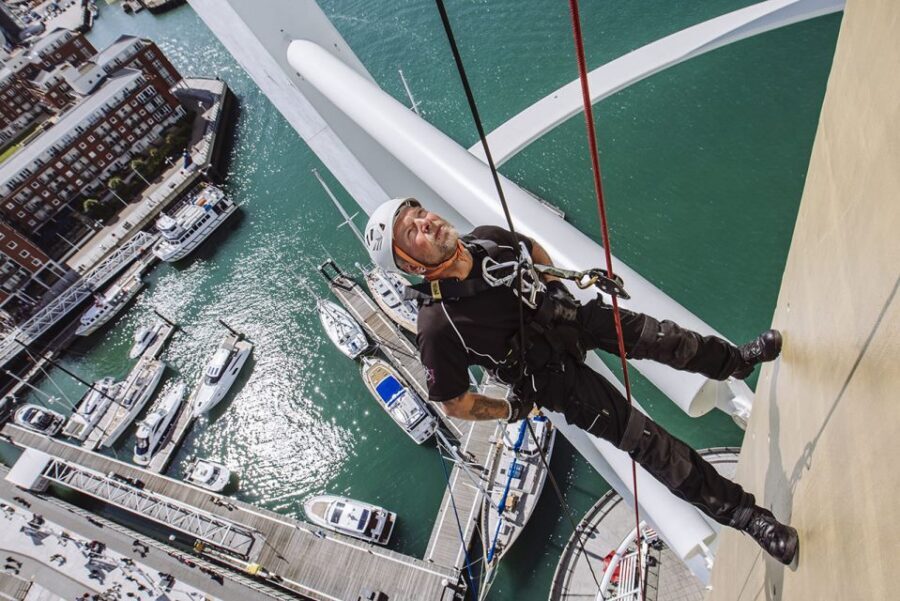
Before you start, you’ll hold the rope and wait for the cue. Then you step out and begin the descent. At that point, the view becomes part of your job. You’ll see Portsmouth Harbour spread out below you, the Solent stretching across the water, and the Isle of Wight in the distance.
It helps if you treat this like a focus exercise rather than a panic test. Look where you’re supposed to look. Trust the instructor’s guidance. Keep your attention on your grip and your next controlled movement. If you’ve ever watched wind and water from the shore and felt calm, you already understand the vibe you’re going for: stay aware, stay steady.
The abseil descent: rope time, sea breeze, and a controlled landing
The descent is the main event, and it’s described the way you’d hope a safety-first operator would describe it: strap in, hold on tight, feel the cool sea breeze, then ride the rope down.
The goal is smooth control. You’re not flung. You’re guided into a steady descent where your job is to hold on and follow instructions. That matters for two reasons:
- It keeps the experience fun instead of frantic.
- It helps first-timers feel like they’re doing something skill-based, not just surviving.
Then comes the best payoff. You touch down on the ground at the bottom of the tower and finish with a deep breath moment. That landing closes the loop. It’s not just adrenaline leaving your system; it’s proof that you did the full descent and got yourself down safely.
If you like structured challenges, this is satisfying. If you just want a dramatic view, you still get it, because the scenery is there all the way down.

Small-group attention: why the limit of 6 matters
One detail I’m genuinely glad is specified: the group is limited to 6 participants. That changes the experience. You’re not one of many identical bodies moving through the same steps. You’re more likely to get personalized coaching, especially at the key points: gearing up, checking your harness, and starting your descent.
It also makes the timing feel tighter. With a small group, the instructors can keep everyone informed and ready. That helps because you only get one shot at the platform moment, and being rushed makes everyone nervous.
The staff and instructors are also described as friendly and fun, with lots of encouragement. That matters more than people think. Encouragement doesn’t remove nerves. It helps you manage them and get moving anyway.
Price and value: is $155 worth one hour of nerves?
At $155 per person for about 1 hour, this isn’t the cheapest thing you can do in South East England. But it isn’t vague either. You’re paying for:
- Onsite training
- Safety equipment
- A complete abseil descent from a major landmark at 100 meters
So you’re not just renting gear. You’re buying a guided, safety-managed experience with professional supervision. For many people, that’s the difference between a once-in-a-lifetime story and a regrettable risk.
I’d also frame it as value in terms of how memorable it is. A scenic viewpoint is nice. This is a visceral memory: harnessed, stepping out, ropes, sea air, then a calm landing. If you want a true Portsmouth adrenaline highlight that still feels controlled, the price starts to make sense.
One note on practical value: weather can affect how good the views feel and whether the session can run at all. Since the activity is canceled in dangerous weather, you might end up with a day where the experience doesn’t happen. That’s not about the operator, but it’s part of planning your budget of time.
Weather and what to do with it
This activity runs in most weather conditions. Still, it will be canceled if weather becomes dangerous. That means your best move is to keep your schedule flexible and be ready to adapt.
If you’re traveling and you only have one tight window in Portsmouth, consider planning around the chance of cancellation. One of the letdowns people point out is simple weather luck. In other words, the experience can still be great even when conditions aren’t perfect, but if you’re hoping for the clearest possible harbor-and-Isle-of-Wight visibility, you’ll want at least some decent day.
Bring practical clothing too. You’ll feel the cool sea breeze on the way down, so assume it won’t feel like a warm stroll on the tower.
Who this is perfect for, and who should skip it
This is ideal if you:
- Want to beat a fear of heights with real guidance
- Enjoy active challenges more than passive sightseeing
- Like the idea of getting strapped in by qualified instructors and following a clear plan
- Want Portsmouth views that you can’t get from street level
It’s also for you if you like doing something that feels like it has a beginning, middle, and end. In about an hour, you’re checked in, geared up, on the platform, descending, and done.
Skip it if you:
- Are under 14 (or you can’t meet the under-18 guardian consent rule)
- Are pregnant
- Exceed the harness weight limit of 120 kg
- Plan to come with alcohol/drugs in your system, or you expect to be intoxicated
Booking decision: should you do the Spinnaker Tower abseil?
If you want a Portsmouth experience that mixes safety, instruction, and a real height challenge, this is one of the most direct ways to get it. The best part is how the operation reduces uncertainty: onsite training, safety gear, a small group, and instructors who give encouragement right when you need it.
I’d book it if you’re comfortable with physical activity and can follow safety rules. I’d think twice or plan extra time if your trip depends on perfect weather, since dangerous conditions can shut it down.
If you’re looking for a view from above, you can find those anywhere. If you want a memory that starts with a step onto a 100-meter platform and ends with your feet on the ground, this is the kind of experience you’ll still be talking about later.
FAQ
How high is the Spinnaker Tower abseiling descent?
The abseiling descent is from a height of 100 meters (328 ft).
How long does the experience last?
The experience lasts about 1 hour. Starting times depend on availability.
Where do I check in for the activity?
You meet at the reception area of the Spinnaker Tower attraction, and you’ll check in at the front desk with your confirmation.
What age do you need to be to abseil?
Each climber must be at least 14 years old. If you are under 18, a guardian must be present to provide written consent.
Is there a weight limit for the harness?
Yes. The harness supports a maximum of 266 pounds (120 kg).
What safety training and equipment are included?
Onsite training and safety equipment are included, along with a full abseiling descent on the Spinnaker Tower.
What should I wear or bring?
Wear appropriate shoes with flat soles. You’ll also need to follow the safety gear requirements provided at the venue.
Do they run the activity in bad weather?
It operates in most weather conditions, but it will be canceled if there is dangerous weather.
Can I get a refund if I cancel?
This activity is non-refundable.