REVIEW · LONDON
Victoria and Albert Museum London Private Guided Tour 3 hour
Book on GetYourGuide →Operated by ArtGuides · Bookable on GetYourGuide
One museum, five crafts, zero overwhelm. In three focused hours at the Victoria and Albert Museum, you get a bespoke route that connects jewelry, drawings, textiles, ceramics, woodwork, and decorative arts into something you can actually follow.
I like this experience for two main reasons: you get a live guide who can answer questions as you go, and you also get time to clock the museum’s own design and architecture, not just the objects behind glass.
One consideration: the tour is marked not suitable for visually impaired or hearing-impaired people, so if you have accessibility needs, plan carefully and confirm support in advance.
In This Review
- Key highlights worth planning for
- Why the V&A feels manageable in just three hours
- Meeting on Cromwell Road and getting your bearings fast
- How a guide turns V&A highlights into a story you can remember
- Jewels, drawings, and the “how” behind the design
- Textiles, ceramics, and woodwork: where you start noticing texture
- Decorative arts and fashion: the design logic behind everyday things
- The museum’s architecture matters, not just the collections
- What a tailored route really means in your time
- Price and logistics: is $263 worth it?
- Who should book this V&A private tour
- Practical tips for your day at the V&A
- Should you book this Victoria and Albert Museum private guided tour?
- FAQ
- FAQ
- How long is the Victoria and Albert Museum private guided tour?
- What does the tour cost, and how many people can join?
- Where do we meet the guide?
- What is included in the tour?
- Are temporary exhibitions included?
- Can the tour be tailored to my interests?
- Is the tour wheelchair accessible, and is it suitable for all visitors?
Key highlights worth planning for
- Private pacing: go at your own speed with a guide who can slow down or speed up for your questions
- Tailorable focus: you can steer the route toward your interests instead of getting one-size-fits-all museum mode
- Design across disciplines: jewelry, drawings, textiles, ceramics, woodwork, and decorative arts all show up in one outing
- Interactive moments: you can expect installations and hands-on-style displays that make design feel practical
- A guide who connects details: the goal is to help you see craftsmanship and intent, not just read labels
- Temporary exhibitions are separate: you can concentrate on the permanent collections without extra ticket pressure
Why the V&A feels manageable in just three hours
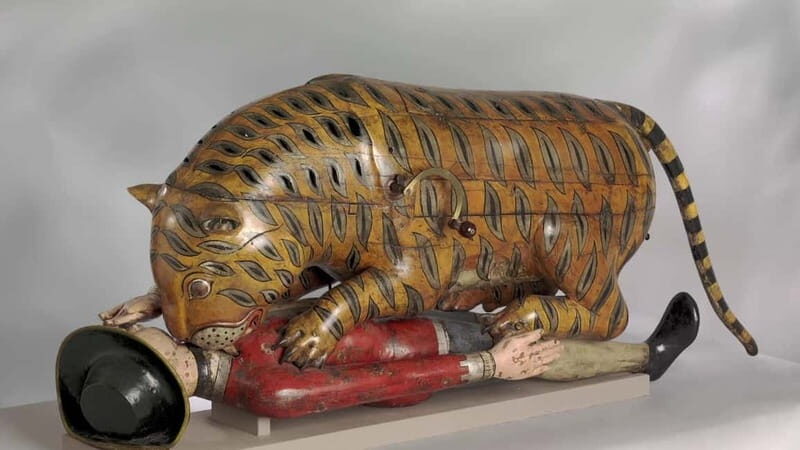
The Victoria and Albert Museum is big. Like, big in that way where you start out excited and end up sprinting between rooms. This private 3-hour format solves that problem fast.
What I like is that the tour is built around seeing “important treasures” in the collections, not trying to cover everything. You get a plan with room for you to ask questions, pause, and actually look. The museum’s collections span art and design, and a good guide helps you connect dots between fashion, craft, and everyday objects.
The other smart part is the private setup. For $263 per group (up to 5), you are effectively paying for time with a person who can tailor the route. That changes the feel of the visit. Instead of collecting facts, you start collecting perspective: why a piece was made, what materials reveal, and what design choices do.
You can also read our reviews of more guided tours in London



Meeting on Cromwell Road and getting your bearings fast
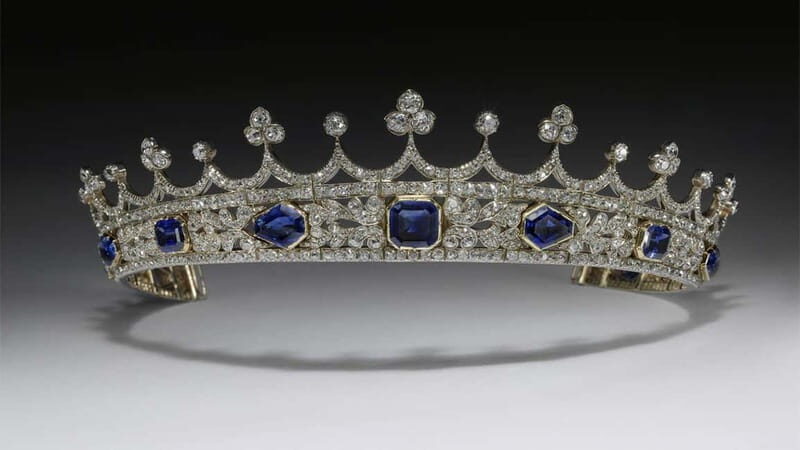
You meet your guide outside the main entrance of the Victoria and Albert Museum on Cromwell Road. That matters more than it sounds, because the museum can be easy to enter and hard to navigate if you do not know where to start.
On a private tour, you do not waste time figuring out logistics or hunting for the “right” entrance to the galleries. You step in, get oriented, and move. In three hours, that first momentum is everything.
If you plan to arrive early, use that time to get a quick sense of the building. Even before you enter galleries, you can notice how the museum itself signals that design matters. Then, when you start looking at objects, your brain is already in the right mode.
How a guide turns V&A highlights into a story you can remember
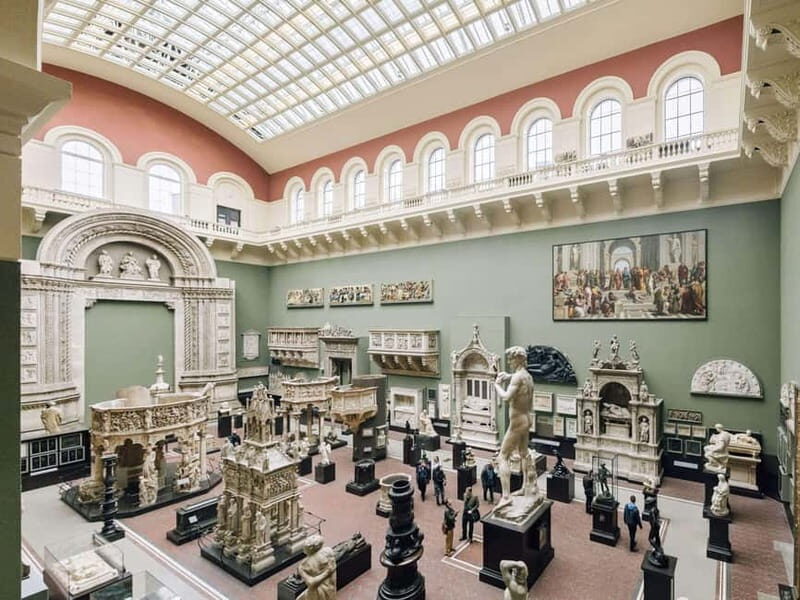
A museum tour can either be a list of stops or a guided way of seeing. This one aims for the second option.
Your guide leads you through celebrated pieces from the V&A collections, with information that brings the works to life. That does not mean you need to be a design expert. The point is to give you the context to see what you are looking at. For example, when you are staring at craftsmanship, you want help spotting the parts that took time: surfaces, joins, finishes, and decoration choices.
The best thing about the private setup is flexibility. You can tailor the tour to your interests, which is ideal because the V&A covers a wide spread of creative worlds. If you care more about fashion than drawings, you can push the route that direction. If you are more excited by material work like textiles or woodwork, your guide can spend more time there.
And yes, you can ask as many questions as you like. That sounds small, but it changes the visit. When you can ask, you stop guessing what you are seeing, and you start understanding what the maker was trying to do.
Jewels, drawings, and the “how” behind the design
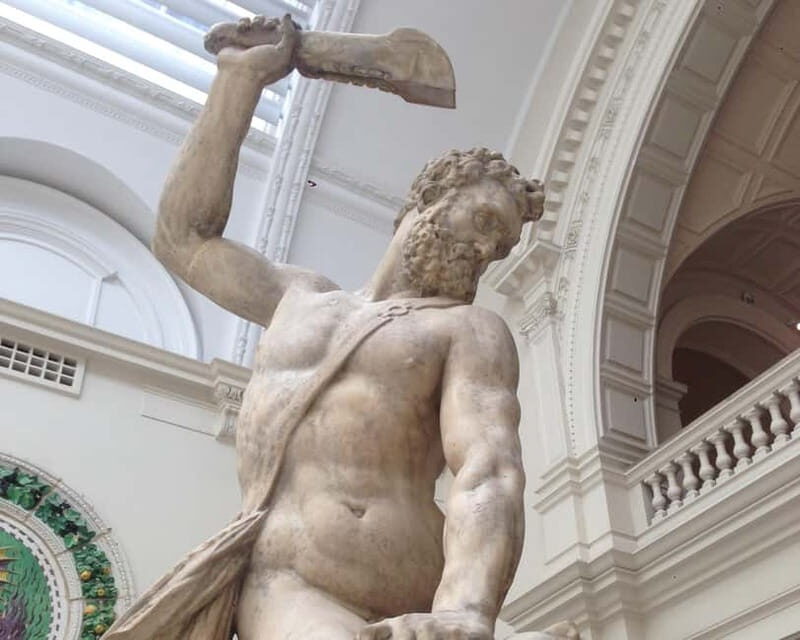
One of the most satisfying parts of this tour is how it moves across different types of objects. You are not stuck in one lane of the museum.
The tour includes time with jewelry and drawings, which are a great mix for learning because they show design from two angles. Jewelry often rewards close looking: details, metalwork, settings, and the way decoration interacts with light. Drawings can be about intention and process: what the artist planned, what they emphasized, and how they used line and proportion.
A private guide helps you slow down without feeling stuck. Instead of rushing through and reading labels, you get prompts like what to notice first, what to compare across pieces, and what craft detail often signals a bigger design idea.
If you are the type who likes to understand structure, this section is especially useful. Even if you do not care about art theory, spotting the practical choices can make the objects feel more human. People made these with tools, time, and constraints. Once you see the “how,” the museum stops feeling distant.
Textiles, ceramics, and woodwork: where you start noticing texture
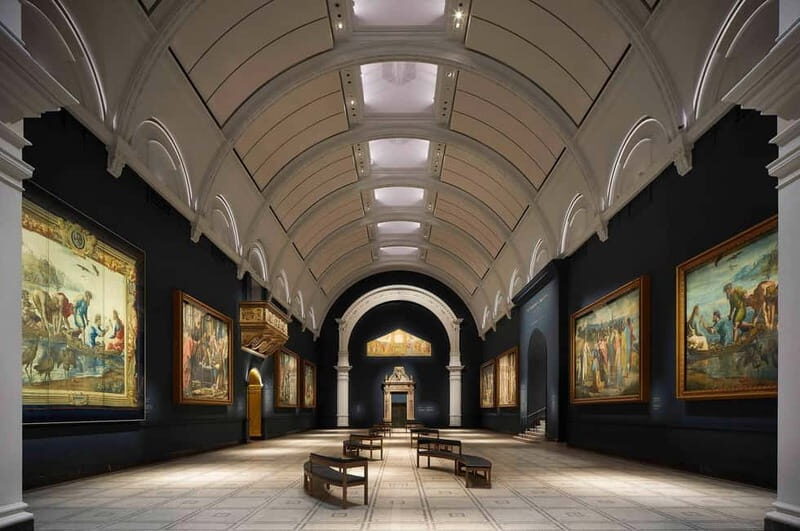
The V&A’s collections are strong in hands-on crafts. This tour leans into that, including textiles, ceramics, and woodwork.
This is the area where a guide really helps you. Textiles can be about pattern, weave, color choices, and how materials behave. Ceramics can be about form, surface treatment, and how decoration sits on shape. Woodwork can reward attention to joinery, carving, and finish.
You do not need to be able to identify every technique. What you need is a reason to look closely. A good guide gives you that reason.
And the benefit of doing this as a private tour is pacing. If you linger on a textile because the pattern feels familiar or the colors catch your eye, you can. If ceramics and woodwork feel more important to you, your guide can shift time toward those.
A practical note: the museum has plenty of display lighting, and different materials will look different under it. Taking a moment to look from a slightly different angle can reveal details you miss at first glance. In a self-guided visit, you might move on too quickly. On a guided one, you can slow down where it matters.
You can also read our reviews of more private tours in London






Decorative arts and fashion: the design logic behind everyday things
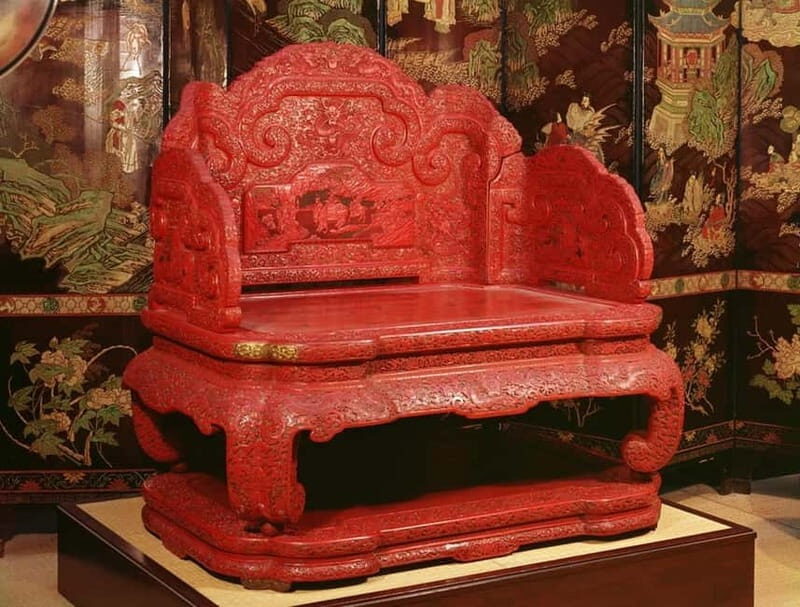
The tour does not treat “decorative arts” as an afterthought. It treats design as a system: style, function, and material all in conversation.
You will see decorative arts, and because the V&A is also known for fashion-related design thinking, you get a good sense of how objects reflect lifestyle and culture. Even without going deep into specific eras, you can learn to spot design cues: repeating motifs, shifts in color or ornament, and choices that suggest what a piece was meant to communicate.
This part is also where interactive displays and installations can add a lot. When design is presented in ways that feel hands-on, you learn faster. You might find yourself thinking about how someone would use an object, not only how it looks on a wall.
If you like museums but hate the feeling of reading long panels, this is where the tour can feel friendlier. You can keep your eyes on the objects and let the guide fill in the meaning.
The museum’s architecture matters, not just the collections
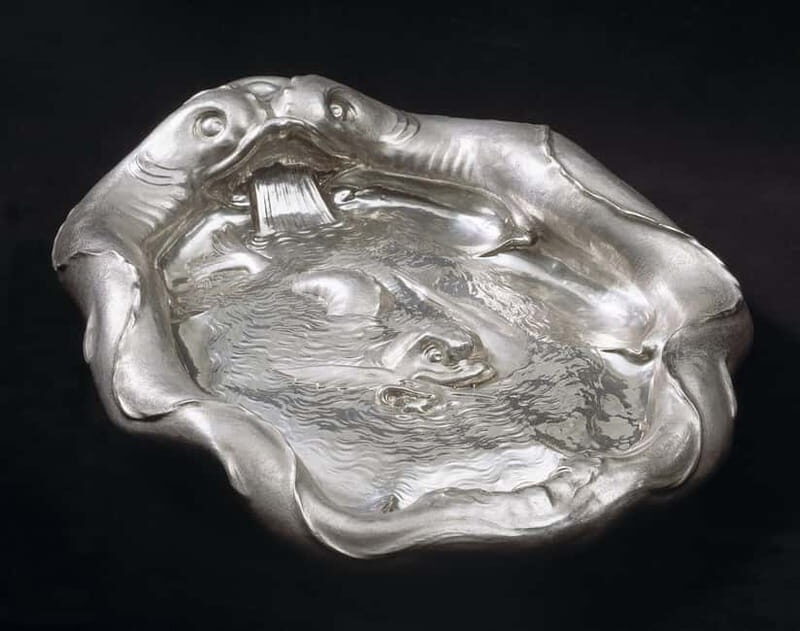
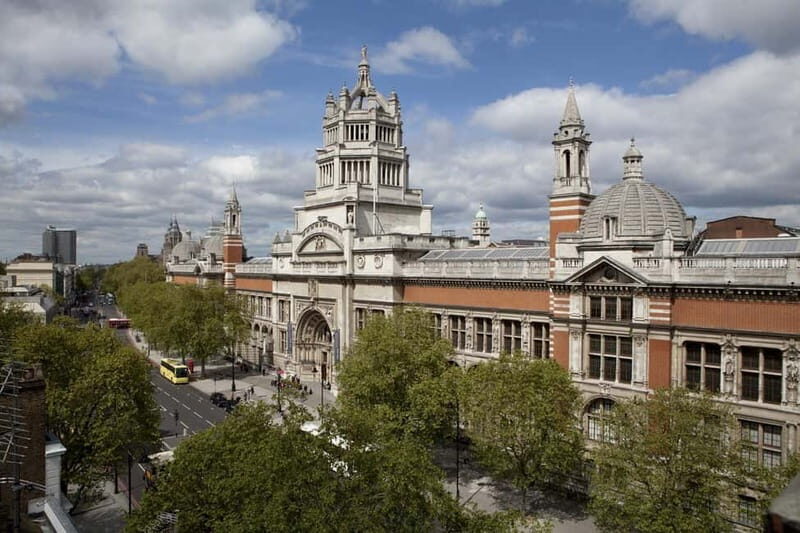
You are touring the V&A, so you get more than galleries. You also get time to appreciate the architecture and design of the museum itself.
That sounds like a throwaway line until you feel it in practice. When you understand how the building is laid out and how space shapes your movement, your visit becomes easier. You also start seeing design principles outside the display cases: balance, rhythm, and the way light and layout guide what you notice.
This matters most in a short tour. If you walk in and immediately feel lost, it is hard to relax and enjoy what you see. When you understand the building basics early, you can focus your attention on the real star: the craftsmanship.
What a tailored route really means in your time
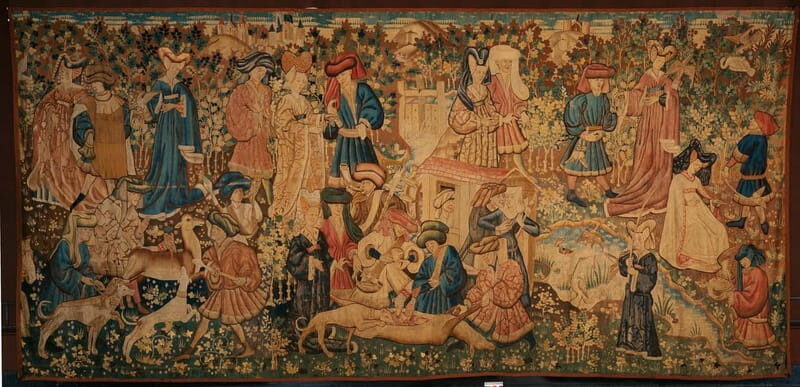
The tour is described as bespoke, and that is not just marketing fluff. In a three-hour window, tailoring affects two things: what you spend time with and what you leave out.
Here is what tailoring can look like in real life:
- You can ask for more time on one craft area, like textiles or ceramics
- You can spend less time on objects that are interesting but not your priority
- You can ask broader questions, like how materials and techniques influence the look
The guide’s job is to help you get a coherent visit. Without that, it is easy to see a lot of objects and still feel like you learned nothing. With tailoring, you leave feeling you built a personal mini-course on design.
It also helps if you have a “one thing” obsession. Maybe you love jewelry. Maybe you love drawing and the way line can communicate form. In a self-guided visit, you might chase that interest, but then you would have to navigate alone. Here, the guide does both: navigation and interpretation.
Price and logistics: is $263 worth it?
Let’s talk value. The price is $263 per group up to 5, for a 3-hour private guided tour. That means the cost per person drops fast if you travel with friends or family.
Is it worth it? In my view, it is when at least one of these is true:
- You want a guided route through a huge museum without spending hours planning
- Your group has mixed interests, and you want someone to manage the balance
- You enjoy asking questions and want the visit shaped around you
If you are traveling solo and you do not care about guidance, you might not need this format. You could do a self-guided visit and pick a couple galleries. But if you want the museum to make sense quickly, a private guide is one of the fastest ways to do it.
Also, temporary exhibitions are not included. That can be good value because your paid time stays focused on the permanent collections and the core categories listed for the tour. If a temporary exhibition is a must-see for you, you would need extra tickets and planning.
Who should book this V&A private tour
This tour is a strong fit for people who want art and design but do not want to feel lost in the scale of a major museum.
You will probably enjoy it if:
- You like close looking and want context for what you see
- You want your time spent on craftsmanship and materials
- You are traveling with up to four other people and want a private pace
It may not be the best fit if:
- You rely on accessibility support beyond standard wheelchair access, since it is marked not suitable for visually impaired or hearing-impaired people
- You want to attend temporary exhibitions during the same window without extra ticket planning
Practical tips for your day at the V&A
You can make this tour even smoother with a few simple moves.
First, decide what you want most: jewelry, drawings, textiles, ceramics, woodwork, or decorative arts. You can still be flexible, but giving your guide a starting point helps them build the route quickly.
Second, bring a question or two in your pocket. Even a simple prompt like what technique is most important for this piece can turn a viewing moment into learning.
Third, wear comfortable shoes. You are walking a lot in a museum, even when the pace feels controlled.
Finally, if you are curious about interactive displays and installations, plan to spend a little extra attention there. Those moments tend to stick because they teach you how design works, not only how it looks.
Should you book this Victoria and Albert Museum private guided tour?
If your goal is to get more out of the V&A in three hours, I think this is a smart booking. You are paying for time with a private guide, and you get a route that covers the main craft and design categories the museum is known for: jewelry, drawings, textiles, ceramics, woodwork, and decorative arts. You also get the chance to tailor the tour, which is ideal when your group has different favorites.
The biggest reason to book is simple: you reduce uncertainty. Instead of wandering and hoping the museum clicks, you get guided looking with space for questions. You leave with a clearer sense of how design and craftsmanship connect.
One reason to pause: if you need accommodations related to visual or hearing needs, the tour is not listed as suitable. In that case, contact the operator and confirm what support is possible before you commit.
FAQ
FAQ
How long is the Victoria and Albert Museum private guided tour?
It lasts 3 hours.
What does the tour cost, and how many people can join?
The price is $263 per group, up to 5 people.
Where do we meet the guide?
Meet your guide outside the main entrance of the Victoria and Albert Museum on Cromwell Road.
What is included in the tour?
You get a private guided bespoke tour around the museum focusing on important treasures in the collections, with flexibility to focus on your interests.
Are temporary exhibitions included?
No. Temporary exhibitions require separate pre-booked tickets at extra cost.
Can the tour be tailored to my interests?
Yes. Tours can be tailored to include your particular interest.
Is the tour wheelchair accessible, and is it suitable for all visitors?
It is wheelchair accessible. However, it is listed as not suitable for visually impaired people and not suitable for hearing-impaired people.