REVIEW · YORK
York: Private Guided Walking Tour
Book on GetYourGuide →Operated by Yorktour · Bookable on GetYourGuide
York rewards slow steps and sharp stories. This private 2-hour guided walk turns York into a living puzzle—medieval streets, snickelways, the city walls, and the Shambles, all tied together with why each twist exists. One stop even lets you line up the city’s layers of time with a simple turn in place, so the past feels practical, not abstract.
I like the way the guide builds a clear route and explains the big ideas in plain words—guides such as Alfred (and sometimes Sarah) have a knack for making small moments matter. I also like the variety packed into a gentle pace: you move from the Minster area to the walls, then off to the tight medieval cut-throughs, plus a Victorian garden that holds Roman and medieval remnants side by side. The only real catch: York Minster admission isn’t included, so if you want to go inside, you’ll need to sort your own ticket.
In This Review
- Key points to look for
- York’s best trick: making the medieval street maze make sense
- Starting at Library Square: easy meeting, low stress
- Victorian botanic garden as the tour’s time shortcut
- The turning point: seeing 2000 years by rotating in place
- York Minster area: why it’s called a Minster, not a cathedral
- Walking the ancient city walls: the best views, with an option
- Shambles: York’s crooked street and the Diagon Alley connection
- Snickelways: the medieval cut-throughs only locals use
- How the guide keeps the pace gentle (and why that matters)
- Skip-the-line benefit: helpful, but Minster tickets are on you
- Price and value: private for up to 8 people
- Who this tour is best for (and who might pass)
- My booking advice: when to choose it
- Should you book this York Private Guided Walking Tour?
- FAQ
- Where is the meeting point for the York walking tour?
- How long is the tour?
- Is York Minster admission included?
- What’s included in the price?
- Is this a private tour or a shared group?
- What language is the tour guide?
- Is the tour wheelchair accessible?
- Is it possible to cancel for a full refund?
- Can I reserve now and pay later?
Key points to look for
- Snickelways on foot: the tiny cut-through lanes you just do not see from a bus.
- A lawn-sized time machine: Roman fortress to ruined abbey in a Victorian botanic garden setting.
- Turn in place, see 2000 years: one spot is built for that exact moment.
- City wall walkway with railings: great views, optional if you’re wary of heights.
- Shambles, York’s crooked-street legend: the inspiration many people associate with Diagon Alley.
- Street names that actually mean something: why York’s streets are called Gates, and why gates are called Bars.
York’s best trick: making the medieval street maze make sense
York can feel like it was designed by a committee of Vikings, medieval masons, and chocolate fans. The street plan is tight, layered, and full of shortcuts that look like mistakes until you learn what they’re for. What makes this tour work is that you do not just get a list of sights—you get the logic behind them, which makes the whole city easier to enjoy after the tour ends.
The guide frames York as a chain of cause-and-effect. Constantine the Great is part of the early imperial story here. Viking raids help explain the chaotic street plan that later generations had to work around. Later, Quaker confectioners tie York to the KitKat name, giving you a modern pop-culture link to a very old place.
You can also read our reviews of more walking tours in York


Starting at Library Square: easy meeting, low stress

You meet in Library Square on Museum Street, outside the main central library (York Explore Library and Archive). The building is red brick, and your guide carries a sign with your name, so you can find them without playing airport-style guessing games.
Why I like this start: it puts you near the center without sending you on a scavenger hunt. York is also famously walkable, and this tour keeps distances reasonable. Even if you’re on vacation mode, you can focus on noticing details instead of worrying about logistics.
Victorian botanic garden as the tour’s time shortcut

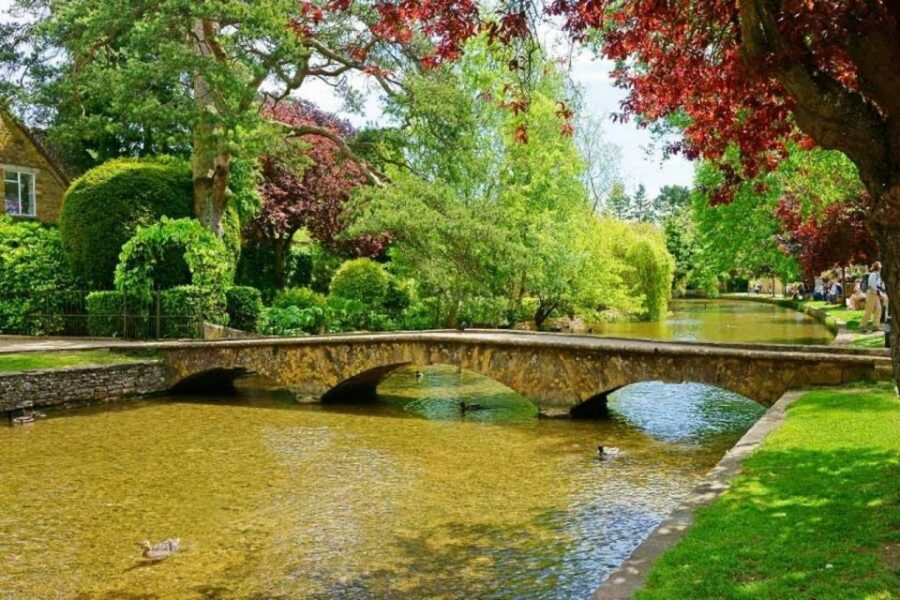
One of the best parts is the way the tour uses a Victorian botanic garden to show you multiple eras without making you march across town. In the garden setting, you can find a Roman fortress and a ruined abbey, plus more medieval material nearby—so you get the feeling of York’s timeline overlapping rather than running in neat lines.
This matters because York is not a single “old city.” It’s an old city with layers still visible in the ground, the buildings, and the street layout. Seeing Roman and medieval remnants near each other makes the later parts of the tour click: the Minster area, the Norman-era influences, and the Tudor shifts all become part of a bigger pattern.
If you want something you can picture later, this is the stop. The garden becomes your reference point, and suddenly the rest of the walk feels like a guided map instead of a set of random highlights.
The turning point: seeing 2000 years by rotating in place
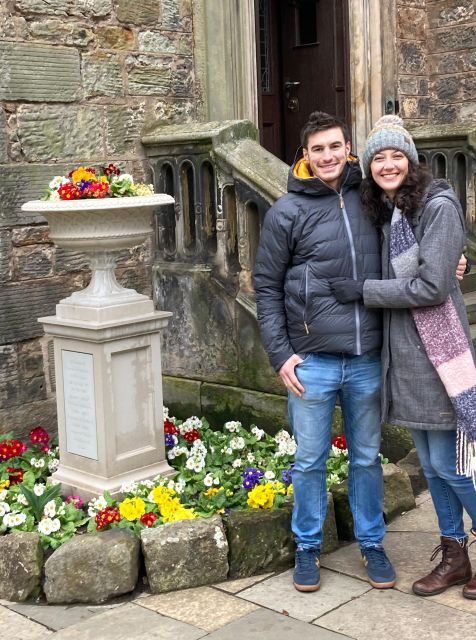
Yes, there’s a spot designed for one specific idea: you can take in around 2000 years of history simply by turning in a circle. The tour frames this moment like a lesson you can experience with your own eyes.
That small act changes your whole perspective. Instead of thinking of York as separate chapters, you start noticing how different building styles, city priorities, and power shifts overlap in the same space. It’s also an easy win for families, because it’s interactive without being complicated.
York Minster area: why it’s called a Minster, not a cathedral
You’re not just shown the church exterior and moved on. The guide explains why York’s main church is known as a Minster rather than a cathedral, and how that naming connects to older church structure and tradition.
Even if you’ve visited other UK churches, York has its own logic. The tour also plays with street terminology—why streets are called Gates, and why all the gates are called Bars. That might sound like trivia until you’re walking and suddenly every sign makes sense.
One note to plan ahead: York Minster admission isn’t included, so you’ll get the tour context and what you can see without entry. If going inside is on your must-do list, you’ll want to add your own ticket. The tour does include a skip-the-ticket-line benefit, which can help with time if you do choose to enter.
You can also read our reviews of more guided tours in York




Walking the ancient city walls: the best views, with an option
The elevated walkway around the city wall is a standout. It’s not just for photos—this section helps you understand how the city defended itself and how York’s center hangs together. The views are the reason most people remember this part, but the bigger value is the perspective. From up high, the city’s street puzzle starts looking like a designed system.
The good news: there are safety railings. The guidance also makes it clear that this part is not obligatory if you suffer from vertigo. That’s one of those practical touches that keeps a tour comfortable without killing the fun.
Shambles: York’s crooked street and the Diagon Alley connection
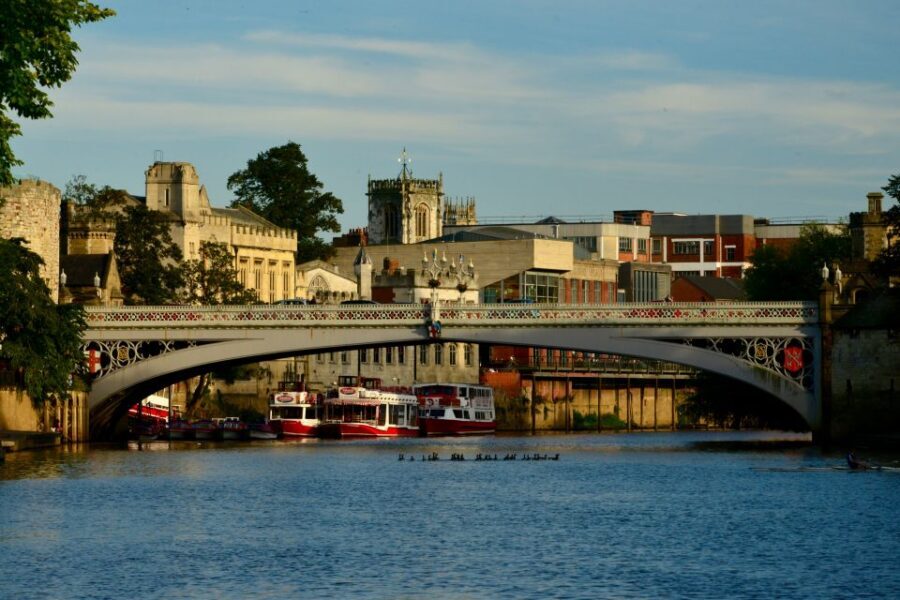
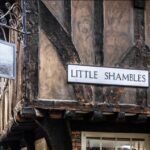
Then you get to The Shambles, the famously crooked street where old timber fronts and tight spacing make it feel like the city is compressed into a single scene. It’s the kind of street where you naturally slow down because it’s hard to stop looking at the storefront shapes, the overhangs, and the narrow plan.
People often link Shambles to Diagon Alley, and the tour uses that connection as a hook to explain how York’s medieval layout shaped later imagination. Even if you’re not chasing film references, the real payoff is how the street feels: you can sense why this kind of narrow, shop-lined street worked for daily life.
Snickelways: the medieval cut-throughs only locals use
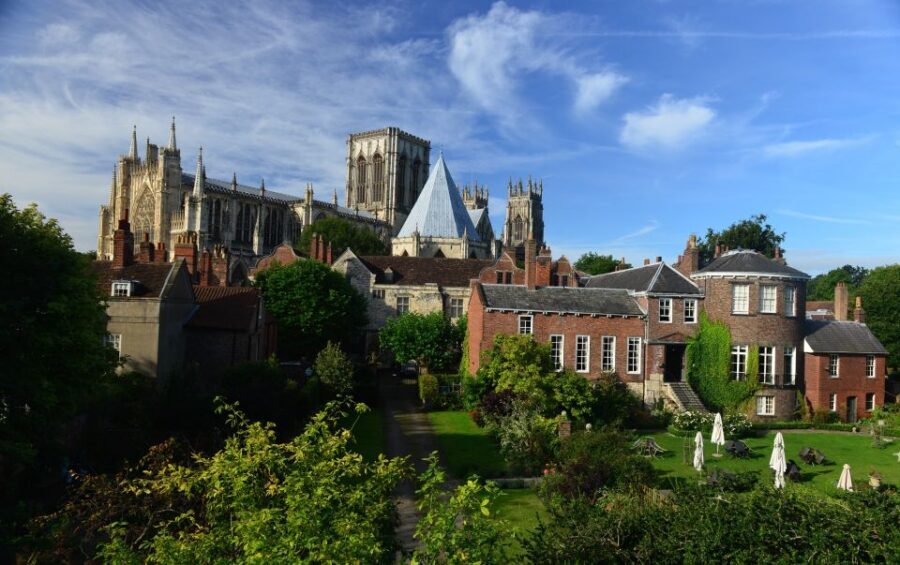
After the big landmarks, the tour veers off the main routes into the maze of ancient cut-throughs known as Snickelways. These tiny, winding lanes are where York shows its real personality. From the outside, York can look like a “see the main things” destination. Snickelways prove it’s also a working city layout that kept its secrets.
This is one of the tour’s strongest values: it gives you access to the city’s side streets in a way you could miss entirely on your own. You’re not just walking down narrow lanes—you’re being shown why they exist and what they meant for moving people through space.
It also helps with photo timing and fatigue. You avoid the most crowded stretches at the most interesting moments, because the route uses side paths as part of the story.
How the guide keeps the pace gentle (and why that matters)
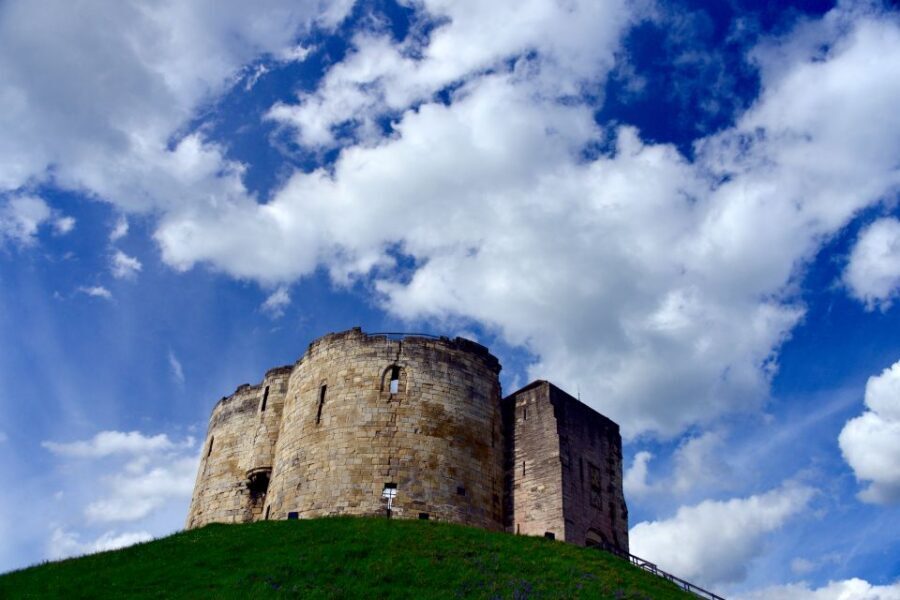
The walk is designed to be comfortable. York is forgivingly flat, and the tour pace is gentle, with distances not described as extreme. That matters because a history-heavy tour works best when you’re not fighting your feet the whole time.
This is also where the private-group format helps. You’re not squeezed into a fast-moving herd. If you’re traveling with kids, the pacing matters even more, and the guide’s style is well-suited to keeping questions flowing instead of turning it into a lecture.
Wheelchair accessibility is also listed, which is a good sign that the route is planned with realistic footpaths in mind. Still, it’s always smart to wear shoes that support you on uneven older streets.
Skip-the-line benefit: helpful, but Minster tickets are on you
The tour includes a skip-the-ticket-line benefit. At the same time, Minster admission isn’t included. Put together, this usually means you get smoother entry if you decide to add Minster time.
What this means for your planning: decide early whether you want to go inside. If you do, bring a plan for purchasing tickets so you don’t slow down the day. If you don’t, you’ll still get a strong walk focused on city structure, streets, walls, and the Shambles—just with exterior and street-level interpretation rather than interior time.
Price and value: private for up to 8 people
The price is $202 per group up to 8 for a 2-hour private walking tour. That can sound high until you do the math and compare it to taking two or three separate taxis or settling for generic audio narration.
If you fill the group to 8, it works out to about $25 per person. If you’re a smaller group, the per-person price climbs, but you still gain something you don’t get on a standard walking tour: your guide can respond to your questions and keep the route aligned to what you care about most.
In a city like York—where the street map and the naming conventions can feel like a riddle—having one guide who can explain what you’re seeing in real time is the value. This tour leans into that idea.
Who this tour is best for (and who might pass)
You’ll likely love this tour if you want York’s details explained in a way that makes the city easier to navigate. It’s also a strong fit if you care about how different eras overlap in one place—Romans, Vikings, medieval builders, and later changes.
If your plan is mostly quick photo stops and you hate walking, this may feel like too much movement for a short visit. The tour is still gentle and relatively short at 2 hours, but it is still a walking experience.
If you’re traveling with kids, the format can work well because there are interactive moments like the turning-in-place history idea and story-driven explanations that keep attention moving.
My booking advice: when to choose it
Book this private walking tour if you want a smart first look at York. It’s especially useful at the start of your trip, because the explanations about streets, walls, and church naming help you read the city on your own later.
If York Minster interior access matters to you, plan to budget for admission separately. The guide helps connect the church to the bigger story, but you’ll need to handle entry costs yourself.
Should you book this York Private Guided Walking Tour?
Yes, if you want York explained like a story with a map attached. The tour’s strongest selling points are the Snickelways, the city wall walkway perspective, and the way the Victorian garden and turning-in-place stop make time periods feel connected instead of separated.
One downside is simple: you’ll likely want to add York Minster admission if you care about seeing inside. If that’s fine with you, this is a solid use of two hours in York, with a guide style that clearly aims for clarity, pacing, and real city understanding.
FAQ
Where is the meeting point for the York walking tour?
You meet in Library Square, Museum Street, York YO17DS, outside the main central library (York Explore Library and Archive). The guide will have a sign with your name.
How long is the tour?
The tour lasts 2 hours.
Is York Minster admission included?
No. Admission to York Minster is not included, though the tour includes a skip-the-ticket-line benefit.
What’s included in the price?
The tour includes the exclusive service of a qualified local guide.
Is this a private tour or a shared group?
It’s a private group tour.
What language is the tour guide?
The live guide speaks English.
Is the tour wheelchair accessible?
Yes, the tour is listed as wheelchair accessible.
Is it possible to cancel for a full refund?
Yes. Free cancellation is available up to 24 hours in advance for a full refund.
Can I reserve now and pay later?
Yes. The tour offers a reserve now & pay later option.