REVIEW · LONDON
Covent Garden to Piccadilly Circus Walking Tour with an App
Book on GetYourGuide →Operated by Trippy Tour Guide · Bookable on GetYourGuide
A West End walk you can run on your time. This Covent Garden to Piccadilly Circus route is built around 23+ audio narration points and a clear run of iconic stops, from the Royal Opera House area all the way to Piccadilly Circus. It’s the kind of plan that helps you connect dots in London’s theatre zone without needing to study maps for hours.
I like two things most: you get a low-cost way to cover a lot of ground in just 2 hours, and the audio lets you pause, replay, or rewind when something catches your eye. The route also focuses on specific landmarks you can actually orient yourself by, like St. Paul’s Church and the London Coliseum.
The big consideration is tech. If the app won’t load or your phone runs out of battery, the “tour” part gets harder fast—one short review comment specifically mentioned the audio not working, and you’ll feel that immediately on a self-guided route.
In This Review
- Key highlights to know before you set off
- A Self-Guided West End Walk From Covent Garden to Piccadilly
- Before You Go: App Setup That Can Make or Break It
- Royal Opera House: Where the Tour Sets Its Tone
- Jubilee Market: Shopping, Snacks, and a Pause That Feels Natural
- St. Paul’s Church Stop: A Short History Breather
- London Coliseum and the Theatre Belt: Seeing Several Venues in One Walk
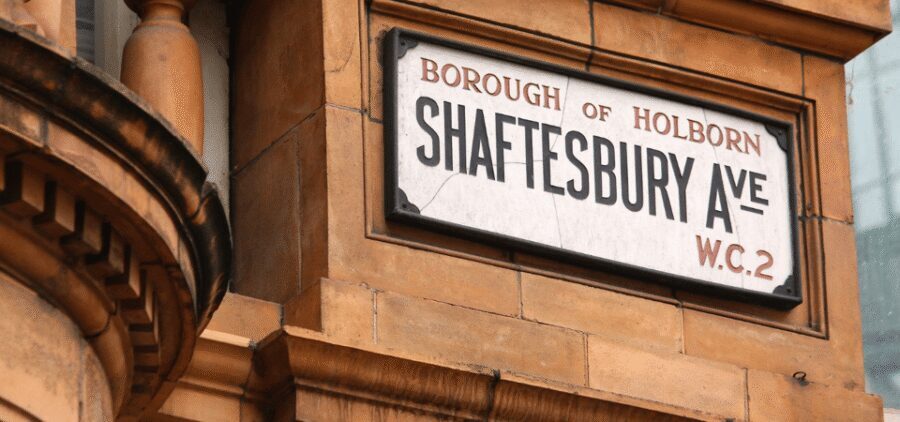
- Seven Dials and Shaftesbury Avenue: The West End Crossroads Energy
- Chinatown Gate to Leicester Square: When the Route Shifts Gears
- Piccadilly Circus Finish: Neon Lights as a Reward
- How Good Is the Audio Guide Really?
- Price and Value: Is $9 a Good Deal?
- Who This Tour Fits Best
- Should You Book This Covent Garden to Piccadilly Tour?
- FAQ
- How long is the Covent Garden to Piccadilly Circus walking tour?
- Where does the tour start and finish?
- What does the tour include?
- What is not included in the price?
- How do I access the tour?
- Do I need internet while walking?
- What should I bring?
- Can I control the audio?
- What languages are available?
- Can I cancel and get a refund?
Key highlights to know before you set off
- Royal Opera House start point: the walk begins at a major cultural landmark, setting up the theatre theme right away.
- Jubilee Market stop: built-in time for browsing, snacks, and people-watching in a busy shopping corner.
- St. Paul’s Church: you get a history-flavored pause rather than a rushed photo stop.
- Theatre belt sightings: London Coliseum, Arts Theatre, and Saint Martin’s Theatre appear along the way.
- Seven Dials and Shaftesbury Avenue: classic West End crossroads and the spine of theatreland.
- Piccadilly Circus finish: the route ends where the lights and crowds give you that instant London feeling.
A Self-Guided West End Walk From Covent Garden to Piccadilly
This tour is designed like a guided walk, minus the live guide. You follow the route on the Trippy Tour Guide app, and the stories play automatically as you move. That approach works well when you like structure but still want freedom—no waiting for anyone’s pace, and no pressure to stick with a group dynamic.
The route focus is smart for first-time visitors. You aren’t only hitting one “must-see.” You’re moving through the West End’s cultural strip: opera and theatres first, then markets and neighbourhood colour, and finally the full-on neon endcap at Piccadilly Circus.
And because it’s built to run in about 2 hours, it’s realistic for a half-day plan. You can pair it with dinner nearby or keep going to Leicester Square or Chinatown on foot after you finish.
You can also read our reviews of more walking tours in London



Before You Go: App Setup That Can Make or Break It
Here’s the deal: this experience depends on your phone doing its job. The instructions arrive by email, and you’ll need to use Wi‑Fi to install the app and download the tour. It’s not part of the GetYourGuide app, so don’t waste time hunting the tour in the wrong place.
Practical checklist:
- Bring headphones. The narration points are audio-based.
- Use a charged smartphone. You’ll rely on battery for navigation and playback.
- Get the app downloaded using Wi‑Fi before you start.
- Bring water. The walk is short, but London walking still adds up.
When you arrive at the starting location, you launch the tour inside the app. Then the stories run as you go. You can start, stop, replay, or rewind—handy if you want to linger at a façade or re-listen while you’re taking photos.
One more tip: do a quick test before you start walking. Start the tour audio once while you’re standing still. If it’s silent, you can troubleshoot right away instead of wandering with nothing helpful in your headphones.
Royal Opera House: Where the Tour Sets Its Tone
The walk kicks off at the Royal Opera House. Even if you’re not catching a performance, this is a strong place to start because it frames what the rest of the route is about: London’s world of stages and big-screen energy, just done in stone and design instead of cinema.
For your experience, this matters because the tour isn’t only about seeing buildings. The audio narration points tie the route together with context around the theatre culture around you. In other words, you’re more likely to look at the next venue and understand why people care about it.
If you’re planning your day, I’d treat the Royal Opera House area like your “orientation moment.” You set your pace here, get your audio running, and then you’re ready for the market-and-theatre rhythm that follows.
Jubilee Market: Shopping, Snacks, and a Pause That Feels Natural

After the opening, you move toward Jubilee Market. This stop is practical. It’s not just a name to capture on your camera roll—you can use it as your reset point to shop, grab food, and take a breath before the route threads into more formal theatre landmarks.
Why I like this inclusion: markets break up the “big attraction” loop. Instead of only chasing grand façades, you get a more everyday London moment. Even if you don’t buy anything, you’ll notice how the West End mixes tourist attention with regular foot traffic.
If you need a plan for lunch or a mid-walk snack, Jubilee Market is a built-in opportunity. Just don’t assume you’ll want a full sit-down meal here. Keep it light, keep moving, and save your longer meal for after Piccadilly.
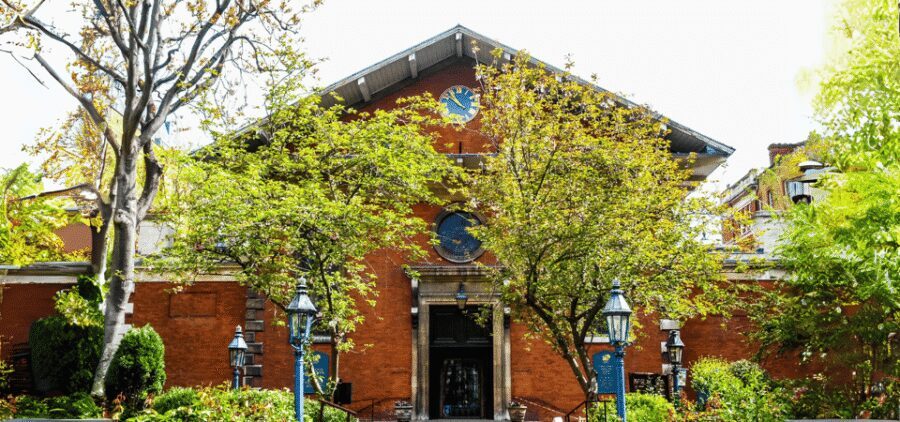
St. Paul’s Church Stop: A Short History Breather
Next up is St. Paul’s Church. The audio positioning here is a smart pacing choice. After the performance-focused sites, you get a quieter, more grounded stop that changes the tone of the walk.
What to do at this point:
- Use it as a moment to slow down and listen.
- Take a look around for architectural details mentioned through the narration points.
- Think of it as “place memory.” It helps you feel you’re moving through real neighbourhood layers instead of just passing landmarks on a checklist.
The drawback with any church stop is simple: opening hours aren’t covered by the tour data you provided. So plan to enjoy what you can see from outside, and if you want interior time, be ready to adjust based on what’s available that day.
A few more London tours and experiences worth a look






London Coliseum and the Theatre Belt: Seeing Several Venues in One Walk
The tour then hits a cluster of iconic theatre locations, including the London Coliseum, plus Arts Theatre and Saint Martin’s Theatre. This is the heart of the West End approach: you don’t just see one theatre. You see the neighbourhood’s “who’s who” as you walk the spine.
This part of the route is valuable because it lets you compare styles and sizes without taking multiple separate transit hops. If you’ve ever felt like London theatre is hard to “map” in your head, this kind of concentrated walk helps.
A practical way to enjoy the theatre belt segment:
- Keep your eyes up for signage and entrances.
- Watch for changes in street feel as you shift from one venue to the next.
- Use your audio pause function when you see something that looks like it’s related to the narration.
One caution: if you’re tired, you might want to shorten how much you stop for photos at each venue. The theatre cluster is dense by design, and your legs may have opinions.
Seven Dials and Shaftesbury Avenue: The West End Crossroads Energy
From the theatres, the route moves into Seven Dials and then along Shaftesbury Avenue. These are the kinds of streets that feel like London at street-level—busy corners, lots of people cutting across paths, and the sense that the city is always doing something.
Shaftesbury Avenue especially works well on a self-guided tour because it acts like a visual guide. Once you’ve found the street rhythm, it’s easier to stay oriented. The narration points help you understand why this corridor matters to theatreland, instead of treating it as just another long sidewalk.
If you’re walking with kids or someone who gets restless, this is also where the route naturally offers entertainment: watch the street flow, look at storefronts, and use the audio controls to keep the pacing comfortable.
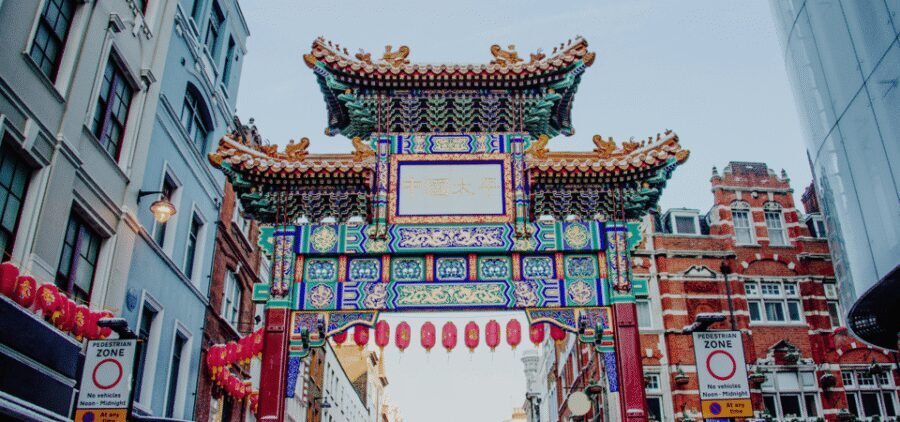
Chinatown Gate to Leicester Square: When the Route Shifts Gears
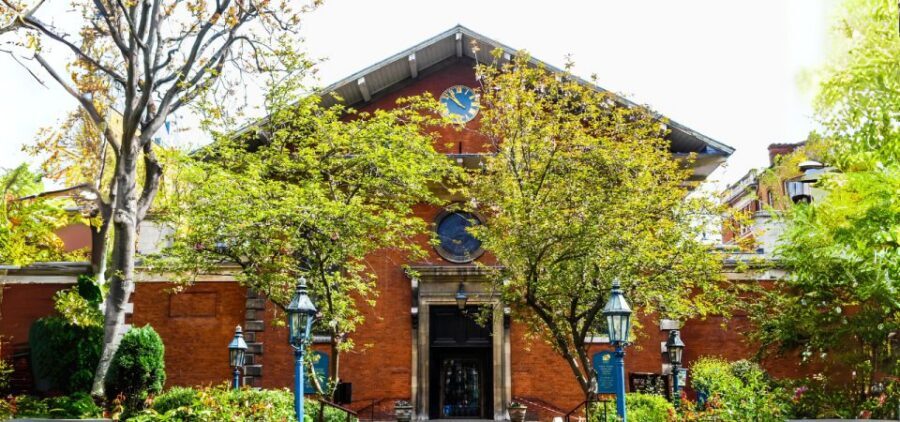
As you move closer to Chinatown, the tour includes the unmistakable gate, then continues toward Leicester Square and the Prince of Wales Theatre. This is a good transition moment because it changes the vibe. You’re no longer only in the high-theatre pocket—you’re moving into London’s “everybody gathers here” zone.
Why this segment is worth your attention:
- The Chinatown gate gives you a clear cultural landmark to anchor the route.
- Leicester Square is a visual magnet, so the walk feels event-like even when you’re not attending a show.
What I recommend here: don’t rush. Let your eyes do the work. In this part of London, the details you’ll notice—signage, crowd movement, and street theatrics—are a big part of why the end-to-end walk works.
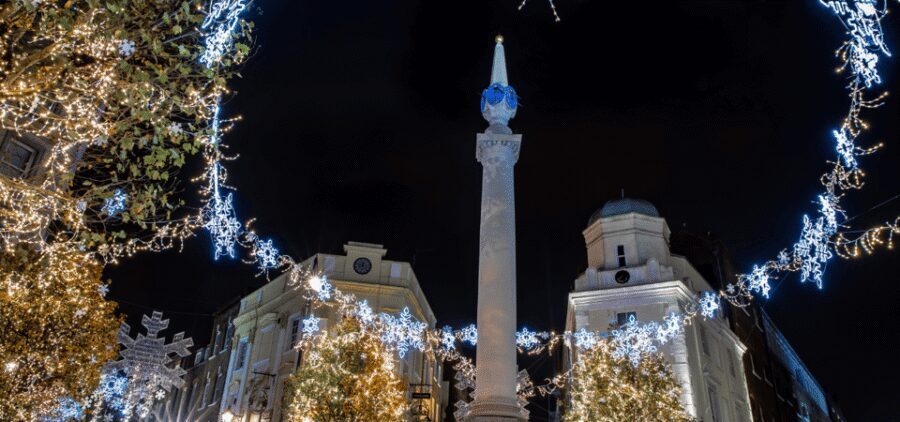
Piccadilly Circus Finish: Neon Lights as a Reward
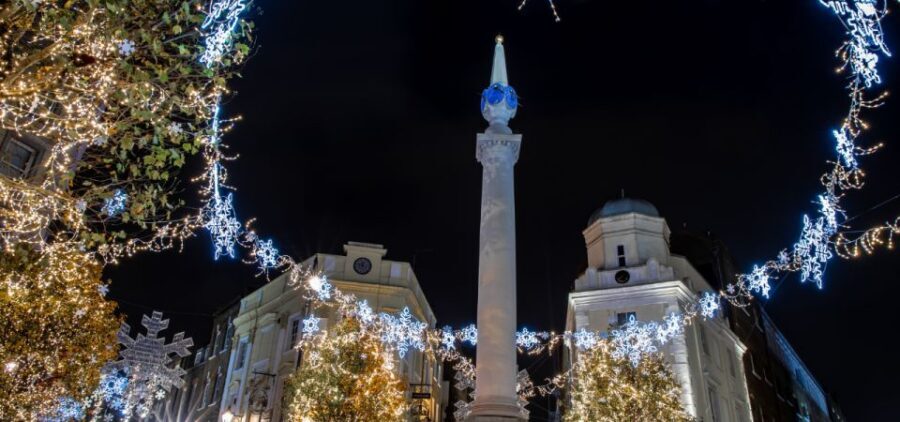
The walk ends at the Piccadilly Circus area, described as ever-bustling and neon-lit. That finish is ideal because Piccadilly Circus gives you a built-in payoff. After the theatres and streetscapes, you reach the moment that feels unmistakably like London entertainment.
If you want to keep the momentum after the tour ends, Piccadilly is an easy launch pad for more walking. You can stay in the area for photos, do a late snack, or branch out toward other sights nearby without needing to figure out “where am I, really?”
Keep in mind: the tour ends where the crowd is. If you’re sensitive to noise, consider using that last part for quick photos and then shifting to a quieter side street for decompressing and recharging your phone.
How Good Is the Audio Guide Really?
The tour description promises audio in English, Spanish, French, and German, with over 23 narration points. It also gives you control: you can start, stop, replay, or rewind.
That’s the good news. Here’s the reality check based on the provided review snippets: the lowest rating comments mention two problems—audio that felt useless or boring, and an inability to get the audio to work at all. Those aren’t small issues on a self-guided audio tour.
So I’d judge the audio guide like this:
- If you enjoy learning while walking and you like short, location-based storytelling, you’re the target audience.
- If you get frustrated easily when apps glitch, you’ll want extra precautions (download on Wi‑Fi, headphones ready, phone charged).
A simple strategy: before you commit to the full route, listen during the first narration point. If it lands for you, keep going. If not, you can skip later segments and still use the walk for the sightseeing.
Price and Value: Is $9 a Good Deal?
At $9 per person for a route that takes about 2 hours, this is positioned as a budget-friendly way to experience major West End sights. The value comes from the combination of:
- A tight walking itinerary from Covent Garden through key theatre landmarks to Piccadilly Circus
- Audio narration points (23+)
- Detailed directions to well-known attractions and hidden spots
What you should consider is what you’re not getting. There’s no in-person guide included, and entry fees aren’t included. If you want museum or theatre ticket time, you’ll need to handle that separately.
In plain terms: you’re paying for structure and guidance, not for access to paid venues. If your biggest goal is to see the exteriors, understand what you’re looking at, and walk efficiently, the price makes sense.
If your goal is lots of inside-theatre time or you need a human to answer questions, you may end up wanting something else.
Who This Tour Fits Best
This walking tour fits you best if you:
- Want a self-guided West End plan you can run on your schedule
- Like walking through concentrated neighbourhoods—Covent Garden, theatre streets, Chinatown, and Piccadilly
- Enjoy audio learning and can handle troubleshooting a phone-based experience
- Prefer buying your own snacks and moving at your own pace
It’s less ideal if:
- You rely on the tour working perfectly on mobile data and you can’t get Wi‑Fi to download beforehand
- You dislike audio narration while walking (or you’re not great with headphones on busy streets)
- You need someone to clarify things in real time
If you’re planning with a group, keep in mind you’re all using one format: each person’s phone experience will vary, so set expectations ahead of time.
Should You Book This Covent Garden to Piccadilly Tour?
I’d book it only if you’re comfortable with a phone-led walk and you’re willing to do one small prep step: download the tour on Wi‑Fi, test audio at the start, and carry a charged phone with headphones ready.
Given the low price and the strong set of landmarks—Royal Opera House, Jubilee Market, St. Paul’s Church, London Coliseum, Arts Theatre, Saint Martin’s Theatre, Seven Dials, Shaftesbury Avenue, Chinatown gate, Leicester Square, Prince of Wales Theatre, and Piccadilly Circus—it’s a sensible way to connect London’s theatre zone into one coherent route.
But I’d be cautious if you’re the type who gets stuck when an app misbehaves. The provided review snippets point to app or audio problems, and with no in-person guide included, you’ll feel that instantly.
If you want a fast, structured taste of West End London in about two hours, this tour is worth a try—just make the tech part your priority.
FAQ
How long is the Covent Garden to Piccadilly Circus walking tour?
It takes about 2 hours.
Where does the tour start and finish?
It starts at the Royal Opera House area and finishes at Piccadilly Circus.
What does the tour include?
You get access to the walking tour in the Trippy Tour Guide app, plus over 23 narration points and detailed directions to attractions and hidden spots.
What is not included in the price?
Entry fees, parking fees, and an in-person guide are not included.
How do I access the tour?
Check your email for instructions and credentials to download the tour in the Trippy Tour Guide app. Then launch the tour when you reach the starting location.
Do I need internet while walking?
You need a strong internet connection for the email and download steps. The tour is designed to play stories as you go once the tour is installed and running.
What should I bring?
Bring headphones, a charged smartphone, the downloaded app, and water.
Can I control the audio?
Yes. You can start, stop, replay, or rewind the audio as you like.
What languages are available?
Audio is available in English, Spanish, French, and German.
Can I cancel and get a refund?
Yes. Free cancellation is available up to 24 hours in advance for a full refund.