REVIEW · BATH
Explore Bath in Spanish: With Olga, local guide
Book on GetYourGuide →Operated by RutasUK · Bookable on GetYourGuide
Bath has a way of pulling you in.
This Spanish walking tour with local guide Olga is a focused, story-driven way to see the big sights without feeling rushed. I like that the route mixes iconic Bath landmarks with quieter corners, and I also like the way Olga ties each place to a clear theme—Roman water, Georgian design, and Jane Austen-era life. One thing to note: it’s Spanish only, so if you’re not comfortable with Spanish, this won’t be your best fit.
You’ll get real value from the pacing too. The 2 hours 30 minutes plan covers enough ground to get your bearings fast, and Olga’s explanations help you understand what you’re actually looking at (instead of just snapping photos). If you want a slow, museum-style day, this is more of a “walk, learn, and move” format.
One possible drawback: because it’s a walking tour on uneven surfaces with some slopes, very limited mobility might find it challenging—even though it’s marked as wheelchair accessible.
In This Review
- Key things I’d focus on
- Meeting Olga at Rebecca’s Well: start in the right place
- Guildhall and Bath Abbey: how the medieval roots shape what you see
- Pump Room and Sally Lunn: where Bath’s water turns into daily life
- Abbey Green and the Theatre Royal: picture Bath in film and on stage
- Roman Baths and the Cross Bath: the thermal water story, from legend to ritual
- Queen Square and the Jane Austen thread that ties the day together
- The Circus and Royal Crescent: Georgian design you can actually picture
- Pulteney Bridge finish: your photo stop and your graceful landing
- Price and value: is $21 worth 2.5 hours of Spanish guidance?
- Who should book Explore Bath in Spanish with Olga?
- Practical tips so you enjoy the walking pace
- Should you book this Bath walk?
- FAQ
- Is this tour offered in Spanish only?
- How long is Explore Bath in Spanish with Olga?
- Where do I meet the guide?
- What should I bring?
- Does the tour run in bad weather?
- Is the tour suitable for wheelchair users or pets?
Key things I’d focus on
- Spanish with Olga, a long-time Bath lover: you get local context, not a generic script.
- Thermal water explained in plain terms: Roman Baths, Pump Room traditions, and the Cross Bath connect into one story.
- Jane Austen stops that actually matter: Queen Square and Bath’s literary vibe feel purposeful, not random.
- Georgian architecture with named designers: you’ll learn about John Wood Sr. and what The Circus symbolizes.
- Practical “do this after the tour” guidance: you leave with a plan for paid attractions and your next meals.
- Designed for 2.5 hours: you cover the highlights while still leaving time to explore on your own.
Meeting Olga at Rebecca’s Well: start in the right place
Your tour meets at Rebecca’s Well, on the north side of Bath Abbey. It’s easy to spot the guide: Olga wears a blue lanyard with a RutasUK badge. If you’re arriving via the Tootbus Bath area, plan a short walk to Rebecca’s Well so you don’t start stressed.
This matters more than you might think. Bath is compact, but directions can feel confusing if you’re tired or you’re juggling other plans. Starting near Bath Abbey puts you in the center of everything—Roman-era layouts, Georgian streets, and the literary neighborhood vibe are all within reach.
From the start, Olga sets the tone. She frames Bath like a conversation: elegant, historical, and a little mysterious. That approach works well in a short tour. You’re not trying to “learn everything.” You’re learning enough to understand what makes Bath distinctive, then you can branch out with confidence.
You can also read our reviews of more guided tours in Bath
Guildhall and Bath Abbey: how the medieval roots shape what you see
Right away, the walk anchors you in Bath’s civic identity. You’ll pass Guildhall, the city’s former town hall, right near Rebecca’s Fountain. Rebecca’s Fountain (1861) is a Victorian touchstone in the streetscape—an elegant fountain inspired by the Bible, often linked to the idea of hospitality. It’s the kind of detail most people miss because they’re looking at the larger buildings and skipping the street-level storytelling.
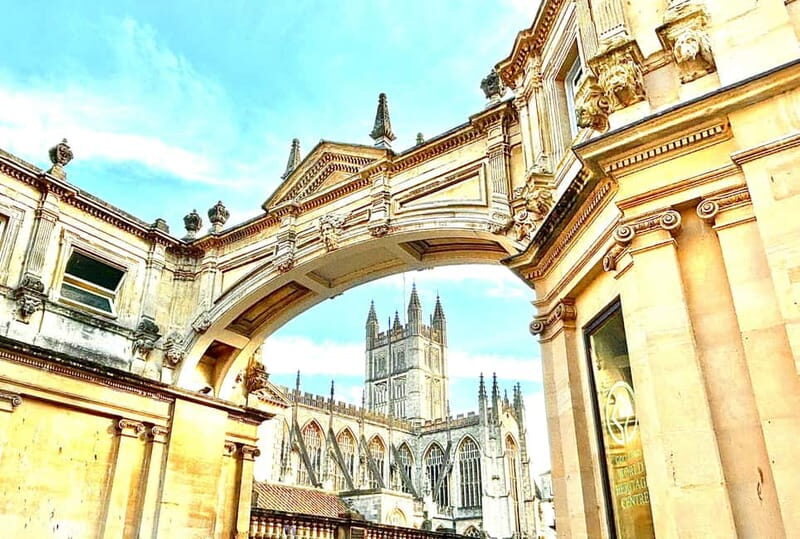
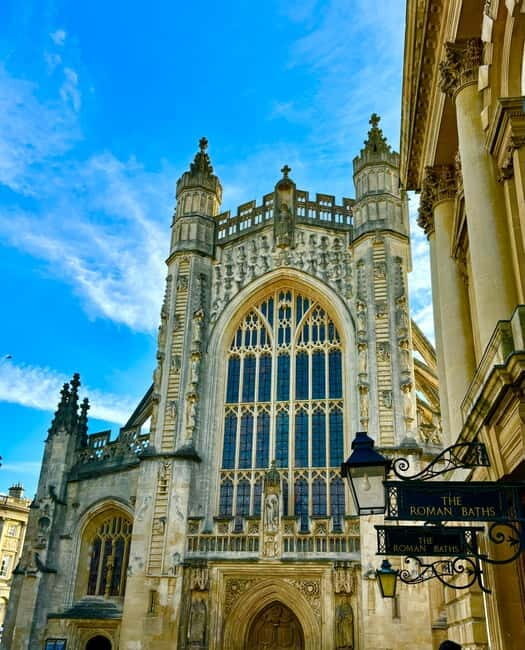
Then comes Bath Abbey. You’ll learn how far back the site’s story goes—since at least the 7th century—then Olga brings out the Gothic details you can actually spot while you’re standing there. The key value here is clarity: you’ll understand why the Abbey feels dramatic even though Bath itself is so graceful.
Practical mindset: spend a minute looking for visual clues Olga mentions rather than trying to photograph everything at once. If you do that, the Abbey stops becoming a “pretty church” and turns into a landmark you can interpret.
Pump Room and Sally Lunn: where Bath’s water turns into daily life
Next is the Pump Room Restaurant, a Georgian hall from the 18th century with a reputation tied to the ritual of drinking thermal water. Olga doesn’t treat it like a history lecture. She turns it into a social story—Bath as a place people traveled to, dressed for, and discussed life.
A standout part is the Jane Austen connection. You get anecdotes tied to the Austen atmosphere, which makes the Pump Room feel less like a tourist stop and more like a real meeting place. Even if you’re not a dedicated Austen fan, it helps you see why Bath became a cultural magnet.
After that, you’ll visit Sally Lunn’s Historic Eating House & Museum. You’ll hear the story behind the famous Sally Lunn Bun, including the idea of its creator as a French refugee. And you’ll also get the bigger point: Bath’s food history is part of the same story as its spa culture—people came for water and stayed for community.
If you’re hungry, this stop is a good time to think about what you want to eat next. Even without buying anything, you’ll leave knowing where the local “old Bath” flavor sits.
Abbey Green and the Theatre Royal: picture Bath in film and on stage
You’ll pause at Abbey Green, a cobbled square framed by 18th-century houses. The vibe here is simple: it’s a picturesque pause in the middle of a city famous for grand buildings. Olga also points out how often this spot shows up in films, which is fun because it changes how you look at the streets. Instead of scanning for monuments, you start noticing the angles and small visual rhythms that make Bath look like a set.
Then you’ll head toward the Theatre Royal, one of the oldest and most beautiful theaters in the UK, opened in 1805. Olga’s approach gives you a timeline you can hold in your head. And you’ll pick up curious anecdotes about its more contemporary history, so the theater feels like a living piece of the city rather than a relic.
Practical note: theaters, squares, and street corners in Bath can be crowded at peak times. If you keep moving at Olga’s pace, you’ll catch the atmosphere without spending your whole tour dodging people.
Roman Baths and the Cross Bath: the thermal water story, from legend to ritual
This is where Bath becomes genuinely special—because the thermal water isn’t just a backdrop. It’s the engine.
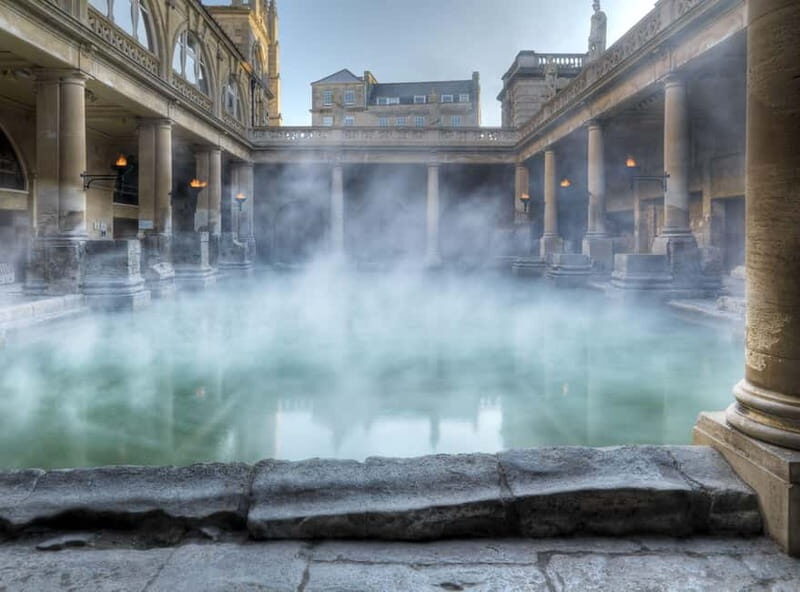
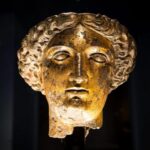
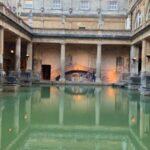
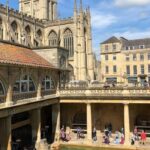
You’ll see the Roman Baths and learn how the complex grew around a sacred spring tied to Sulis Minerva. Olga explains how and why the Romans built around that religious site, and she’ll connect that spiritual idea to the practical mechanics of bathing and water use. Even if you don’t go inside every paid area, you’ll leave understanding the logic of the space.
Olga also doesn’t stop at Roman times. You’ll visit the Cross Bath, smaller but historic, with natural outdoor thermal waters. You’ll hear about the origin of these waters and the healing tradition that shaped their reputation—plus how that legacy relates to Thermae Spa today.
This pair of stops is great for anyone who likes “why things exist.” You’re not just seeing a tourist attraction—you’re seeing a system, a belief, and a habit that kept repeating across centuries.
Quick tip for your own planning after the tour: since you’ll get practical tips for paid attractions like the Roman Baths, use that guidance immediately. If you leave and then forget the details, you’ll lose the advantage of having someone local point you to the best order.
Queen Square and the Jane Austen thread that ties the day together
Bath’s literary presence is real, and Olga points you to it in a grounded way.
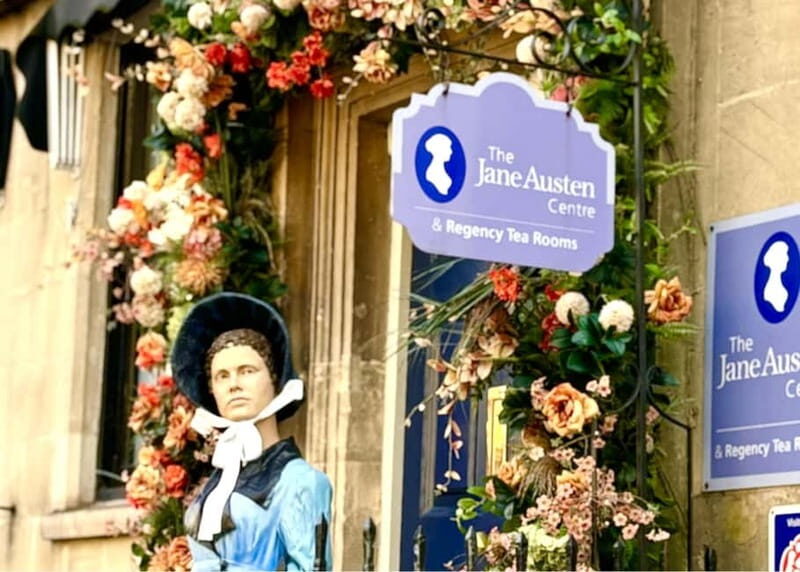
At Queen Square, you learn it was a temporary residence of Jane Austen. Olga also introduces the Jane Austen Centre, which gives you a next-step option if you want to go deeper. The value here is the connection: you start noticing the kind of social life that would fit a writer’s world—manners, salons, conversation, and all the daily rituals behind the literature.
This stop works particularly well if you like culture that isn’t behind glass. Queen Square is the kind of place you can look at and instantly imagine people arriving, talking, and observing the city from within a respectable neighborhood.
The Circus and Royal Crescent: Georgian design you can actually picture
Now the tour shifts into architecture mode, but it stays easy to follow.
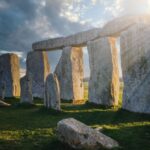
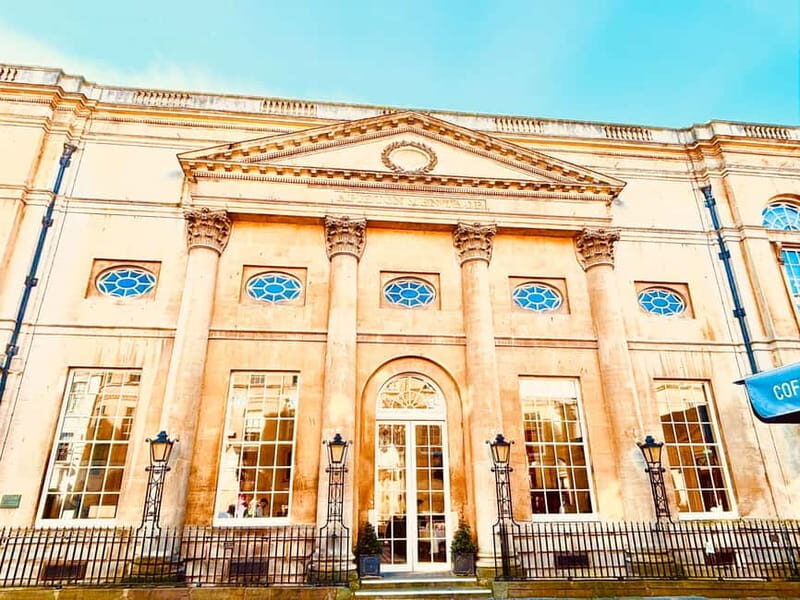
You’ll see The Circus, a perfect architectural circle formed by Georgian houses designed by John Wood Sr. Olga ties it back to symbolism—its inspiration associated with Stonehenge, and the idea of connecting nature, history, and art. That’s the kind of interpretation that makes a building memorable, because it gives your eyes something to hunt for.
From there, you’ll reach the Royal Crescent, one of Bath’s icons. Olga will share interesting facts about former residents and you’ll get a breathtaking view out over the gardens of Royal Victoria Park. Even people who aren’t architecture nerds usually react to the scale here. It’s the “wow” factor of Bath, but explained enough that you’ll understand why it looks the way it does.
If you’re photographing: pace yourself. Royal Crescent is a photo magnet. You’ll get better shots by letting Olga pause the group for a moment of orientation, then taking pictures once you know where the key perspective points are.
Pulteney Bridge finish: your photo stop and your graceful landing
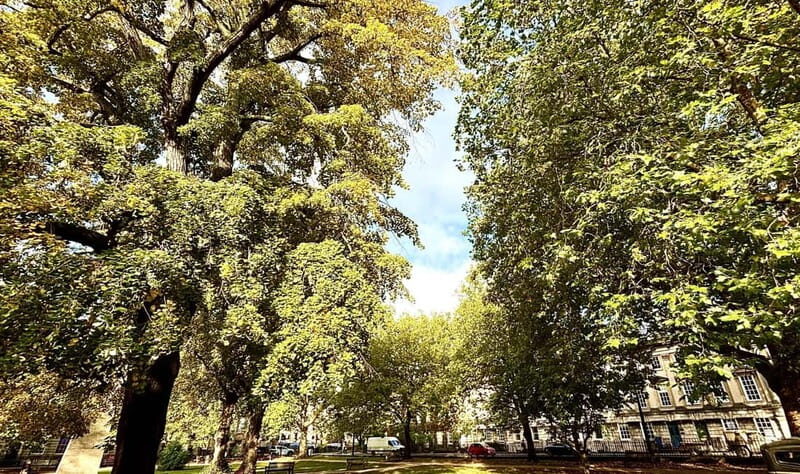
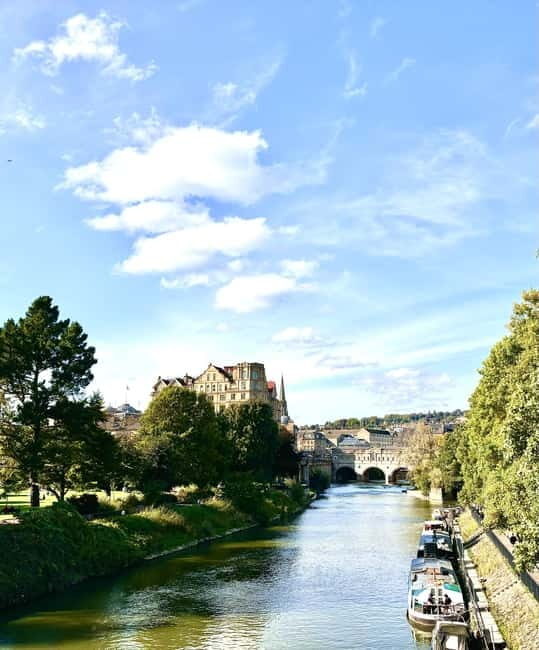
The tour ends on Pulteney Bridge, an 18th-century bridge over the River Avon with shops on both sides. Olga highlights the fact that it was inspired by Ponte Vecchio in Florence, which is a fun cross-country connection and helps you compare styles across Europe.
This finish is a smart choice. You get:
- a classic Bath view with water and stone
- a place to linger for photos
- a clear emotional closing point before you head to dinner or a self-guided walk
And because you’ve learned how Bath’s story connects—Roman water to Georgian elegance to literary life—you’ll notice more on your own after the tour, not less.
Price and value: is $21 worth 2.5 hours of Spanish guidance?
At $21 per person for about 2.5 hours, this tour offers solid value if you want structure plus local insight. For that price, you’re not paying for one museum ticket. You’re paying for guided interpretation across multiple major landmarks, plus personalized recommendations for eating, drinking, and visiting afterward.
That matters in Bath because the city’s highlights are spread out, and many attractions feel repetitive if you don’t understand the “why.” Olga’s explanations help you keep the day coherent. Add in the option for small groups (more interactive, less crowded feeling) and the ability to ask questions during the walk, and the price starts to make sense fast.
The one financial “watch out” is that some highlights you’ll see are paid attractions. But you’re given tips for planning those visits, so you’ll spend your money more intentionally.
Who should book Explore Bath in Spanish with Olga?
I think this tour fits best if you:
- want Bath’s main landmarks in a short visit (great for a few hours)
- like history that includes stories and everyday connections, not just dates
- are comfortable with Spanish, since the tour is conducted exclusively in Spanish
- want a local guide who can recommend what to do next, not just deliver facts
It’s also a good option if you enjoy mixing interests—Roman Baths + Georgian architecture + Austen context in one walk.
If you’re traveling with friends or family who can handle Spanish, it can be a fun shared experience. If Spanish isn’t your strength, you’ll miss the flow that Olga builds.
Practical tips so you enjoy the walking pace
Bring comfortable shoes. Bath’s charm includes uneven surfaces and occasional slopes, and the tour follows a relaxed pace but it’s still a walking tour.
Dress for the weather. The tour runs even in the rain, and in extreme conditions you’ll be contacted in advance to reschedule or cancel.
Bring a bottle of water, and if you like, something to take notes or photos. Olga also shares useful tips for paid attractions and ways to continue exploring on your own, so take a quick note if you tend to forget details once you start walking independently.
Two small rules to remember: no alcohol or drugs during the tour, and audio recording isn’t allowed.
Should you book this Bath walk?
If you want to understand Bath quickly—how the Roman thermal water legacy becomes Georgian social life, and how Jane Austen’s world fits into the streets—you should book this tour. Olga’s Spanish guidance is passionate, and the itinerary hits the kind of variety that keeps a short visit from feeling like a checklist.
The decision hinges on one thing: your comfort with Spanish. If you’re good with Spanish, this is a smart, high-value way to use limited time. If not, you may find yourself stuck on what you can’t follow.
If you can match that language requirement, I’d call it a great first (or only) guide-led walk for Bath.
FAQ
Is this tour offered in Spanish only?
Yes. The tour is conducted exclusively in Spanish.
How long is Explore Bath in Spanish with Olga?
It lasts about 2 hours 30 minutes.
Where do I meet the guide?
Meet at Rebecca’s Well, located on the north side of Bath Abbey. The guide identification is a blue lanyard with a RutasUK badge.
What should I bring?
Wear comfortable shoes and comfortable clothes. It’s also smart to bring a bottle of water, and you can bring something to take notes or photos if you want.
Does the tour run in bad weather?
Yes, it takes place even in the rain. In extreme conditions, you’ll be contacted in advance to reschedule or cancel.
Is the tour suitable for wheelchair users or pets?
The tour is marked as wheelchair accessible, but it includes some slopes and uneven surfaces, so it may not suit people with very limited mobility. Pets are welcome as long as they are kept on a leash and supervised.