REVIEW · GLASGOW
Glasgow: Street Art Guided Walking Tour
Book on GetYourGuide →Operated by Walking Tours In · Bookable on GetYourGuide
Street art makes Glasgow feel personal fast. Instead of big monuments, this guided walk focuses on walls, alleys, and the people behind them. You’ll see how murals and graffiti turn ordinary streets into a citywide conversation about identity.
I like the local guide angle most—the stories come with context, not just captions. I also like the tight route of mural trail stops that lets you take in a lot without burning a whole day.
One thing to consider: you’re on foot, so comfortable shoes are a must, and rain can stretch the experience (some groups report it running close to two hours).
In This Review
- Quick hits before you go
- Why this Glasgow street art walk feels different
- Getting started at 81 Mitchell St: the easiest win for your timing
- The Lighthouse stop: where the story gets framed
- Wind Power (#12 Glasgow Mural Trail): reading scale and intent
- Bubbles (#19): street art as everyday mood
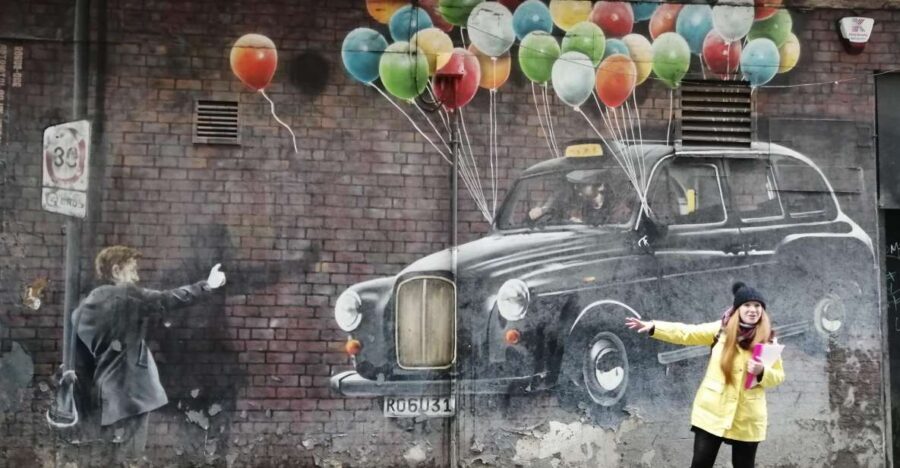
- The World’s Most Economical Taxi (#10): humor with a message
- The Clutha (#8): when public walls carry weight
- Billy Connolly trail (#.09): pop culture with local roots
- SPACEMAN (Mural Trail #5): art that makes you look twice
- Fellow Glasgow Residents: the city talks back
- Finish point at NCP Car Park Glasgow Ingram Street
- Timing, pace, and what to wear (rain in Glasgow is real)
- Price and value: why $16 can make sense
- Who this tour is best for
- Guides to look out for: what the best ones do
- Should you book this Glasgow street art walk?
- FAQ
- How long is the Glasgow street art guided walking tour?
- Where do I meet the guide?
- Where does the tour end?
- Is the tour wheelchair accessible?
- What language is the tour guide?
- What should I bring?
- What’s included in the price?
- Can I cancel for a refund?
- Can I reserve without paying right away?
Quick hits before you go
- Meet at 81 Mitchell St by the Wind Turbines mural, next to the NCP car park, with a guide in a bright orange jacket
- A focused 90 minutes that still covers multiple mural trail highlights across central Glasgow
- Graffiti vs street art explained, including how the city approaches public wall art
- Artist stories, not just photos: inspiration, intent, and what each piece is reacting to
- Real Glasgow streets—no grand buildings or cathedral stops, just the city’s everyday textures
- Good for first-timers and locals, including families (some guides actively engage children)
Why this Glasgow street art walk feels different
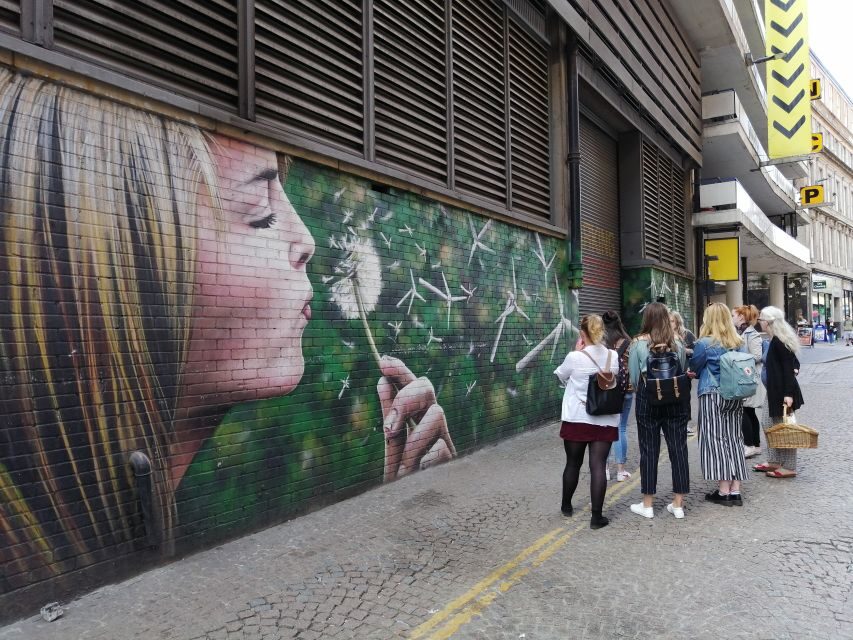
Glasgow street art works because it’s close-up. On a standard sightseeing day, you’re usually looking outward—over streets, up at stonework, across plazas. On this kind of tour, you’re looking sideways at walls. That shift makes the art read like part of daily life, not something you only see from a distance.
What makes this walk especially useful is the way it’s organized around big public pieces and a “story” approach. You’re not just hunting for Instagram-friendly murals. You’re learning the difference between graffiti and street art, why Glasgow’s look has changed over the last decade, and how local structures (including Glasgow City Council) affect what shows up on walls.
And the tone stays practical: it’s about what you’re seeing as you walk. That matters in Glasgow, where street art can feel like it’s everywhere—and it can be hard to separate what’s new, what’s commissioned, and what’s grown from underground scenes.
You can also read our reviews of more walking tours in Glasgow
Getting started at 81 Mitchell St: the easiest win for your timing
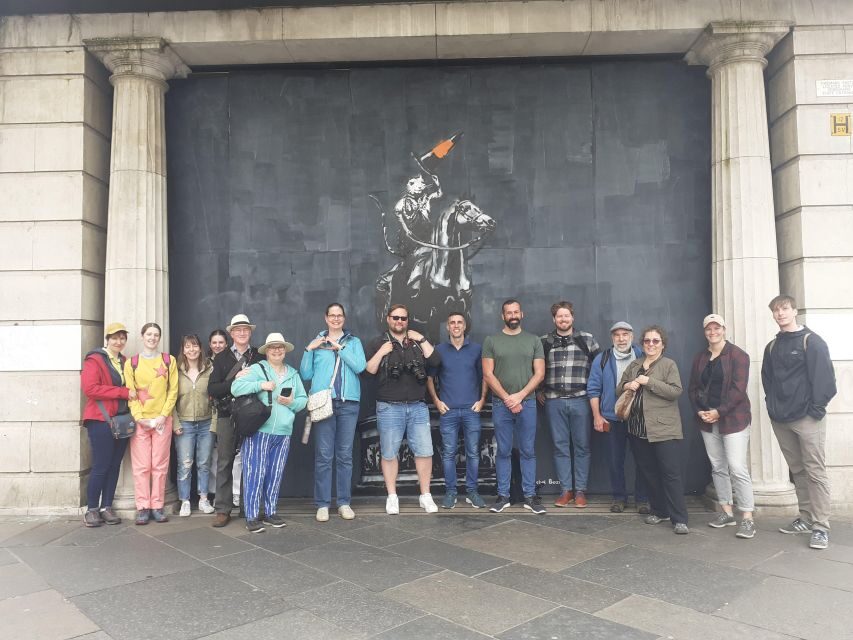
You’ll begin at 81 Mitchell Street, right by the Wind Turbines mural and next to the NCP car park. Your guide will be easy to spot in a bright orange jacket. This is a good setup for two reasons.
First, it keeps the start simple. You’re in central Glasgow and you’ve got a clear visual marker to rendezvous. Second, starting here gives you momentum: you don’t waste the first chunk of time getting oriented with maps and transit.
If you like to travel light but hate losing minutes, arrive a few minutes early and take a quick look around the block before you meet your guide. That small habit helps you settle in once the walk begins, because your first mural won’t feel like a cold start.
The Lighthouse stop: where the story gets framed
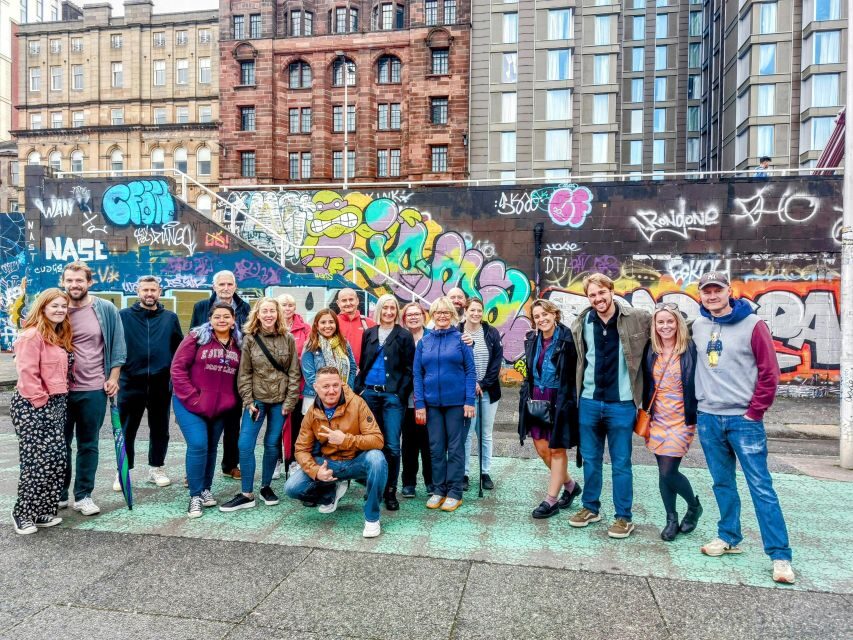
One of the first named stops is The Lighthouse. Even if you’re mostly there for street art, this pause is a smart way to frame what you’re about to see.
The tour’s whole point is that Glasgow’s street art has layers: artists, communities, and the rules that shape what’s allowed to grow in public. A stop like The Lighthouse gives you a mental “anchor” early on. You get context before the route gets more lane-and-corner focused, so the murals don’t feel random.
It’s also a good time to ask questions if your group is the chatty type. Many guides run with the energy of the crowd, and you’ll get more out of the rest of the walk if you set your interest early—politics, artistic styles, or just the simple how-and-why of the city’s walls.
Wind Power (#12 Glasgow Mural Trail): reading scale and intent
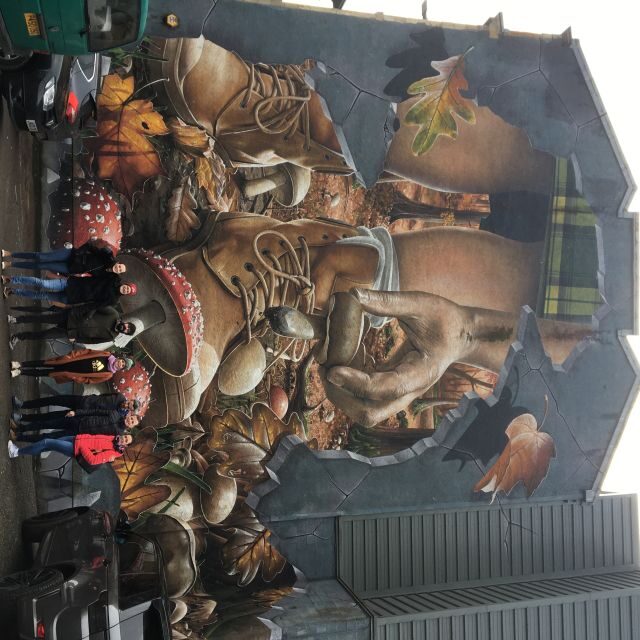
Next you’ll head to Wind Power (#12 on the Glasgow Mural Trail). This is the kind of piece that’s worth seeing in real size rather than on a screen. Mural art can be “explained” all day, but the big takeaway is usually visual: scale, color balance, and how figures or symbols sit within a street-level viewpoint.
What helps on this tour is that your guide ties each stop to the bigger theme of Glasgow’s evolution. You’re learning how the street art scene has shifted over time, and how different artists—world-renowned muralists and local underground figures—fit into that change.
If you’re new to street art, focus on two things here:
- what grabs your eye first
- what details your eyes keep returning to once you slow down
That’s how you’ll start spotting the differences between quick graffiti marks and mural work designed for public storytelling.
Bubbles (#19): street art as everyday mood
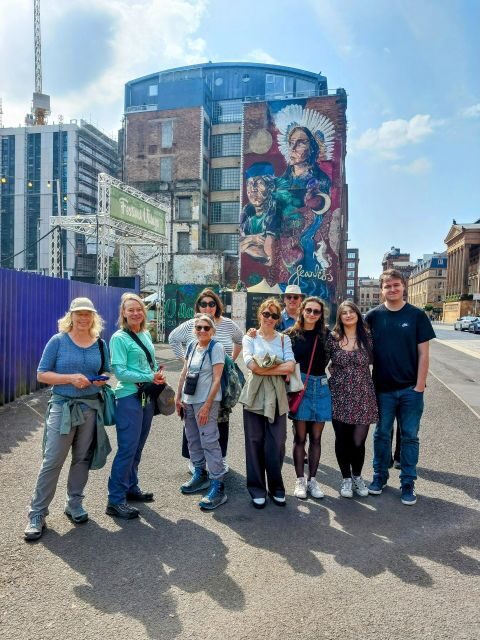
Then comes Bubbles (#19). Pieces like this are a reminder that public art isn’t only “serious.” In Glasgow, street art often carries humor, personality, and a sense of the city’s mood—sometimes all at once.
On this walk, you’re encouraged to listen for what the artist is reacting to. That could be cultural pressure, local identity, or just the need to claim space visually in a city that’s always been opinionated.
Practical tip: if you want photos, take one quick shot early, then step back and let the guide talk. The best mural details often show up after you’ve heard what to look for.
You can also read our reviews of more guided tours in Glasgow



The World’s Most Economical Taxi (#10): humor with a message
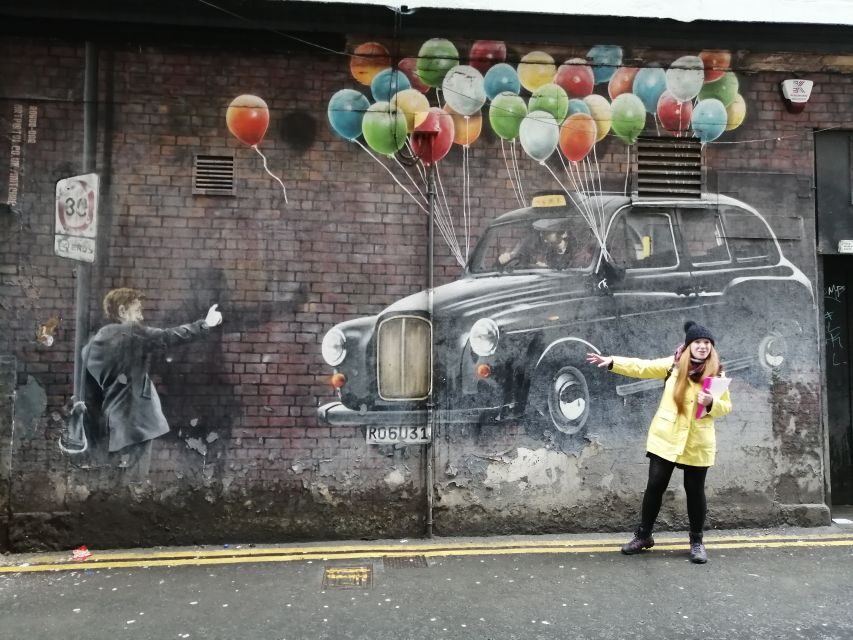
The World’s Most Economical Taxi (#10) is exactly the kind of stop that makes this tour more than a “look and move” circuit.
Taxi-themed art has a way of turning daily city routines into a symbol. The wordplay and visual storytelling can read playful, but the guide’s job is to connect that play back to what’s going on in the city—its character, its history, and the community values embedded in street visuals.
This is also where you’ll start to feel the tour’s attention to the difference between graffiti and street art more clearly. Graffiti often feels like tagging identity or presence. Street art in the mural trail format tends to feel like composed narrative—still sometimes political, sometimes personal, but designed for sustained viewing.
The Clutha (#8): when public walls carry weight
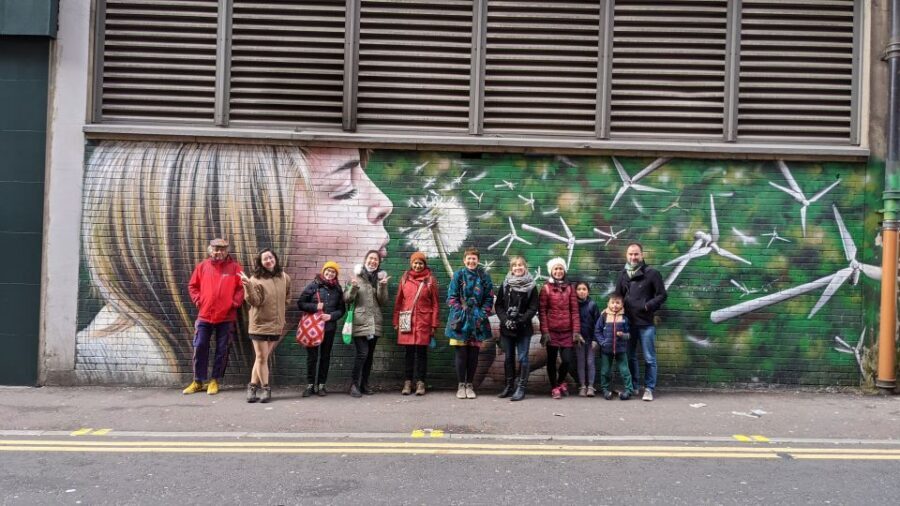
Next is The Clutha (#8). This stop matters because it brings weight into the walk—street art isn’t always light. When a piece is tied to real events or collective memory, the mural becomes a kind of outdoor record.
You’ll learn stories and inspiration behind what you see, and you’ll start noticing how guides handle meaning. They don’t just point at symbols; they explain why people respond to the images and what makes that reaction part of Glasgow’s contemporary character.
If you’re traveling with someone who thinks street art is only “scribbles,” this is a strong moment to prove otherwise. It shows how murals can function like local storytelling, where the street becomes a public page.
Billy Connolly trail (#.09): pop culture with local roots
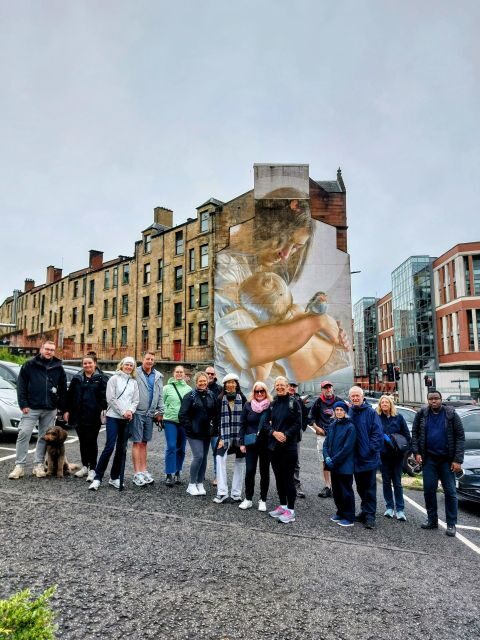
Then you’ll reach Mural Trail #.09 Billy Connolly. This is Glasgow pride in another form: the city’s voice through a figure people recognize, turned into street-level art.
Stops like this work well on a walking tour because you’re not just learning about a name—you’re seeing how Glasgow puts its own cultural references into public space. That makes the experience feel current and personal, especially if you’re already a fan of Scottish comedy and entertainment.
And if you’re traveling with teens or kids, these are the moments that usually land. Children often latch onto recognizable characters and the guide can connect it to the bigger theme without turning the walk into a lecture.
SPACEMAN (Mural Trail #5): art that makes you look twice
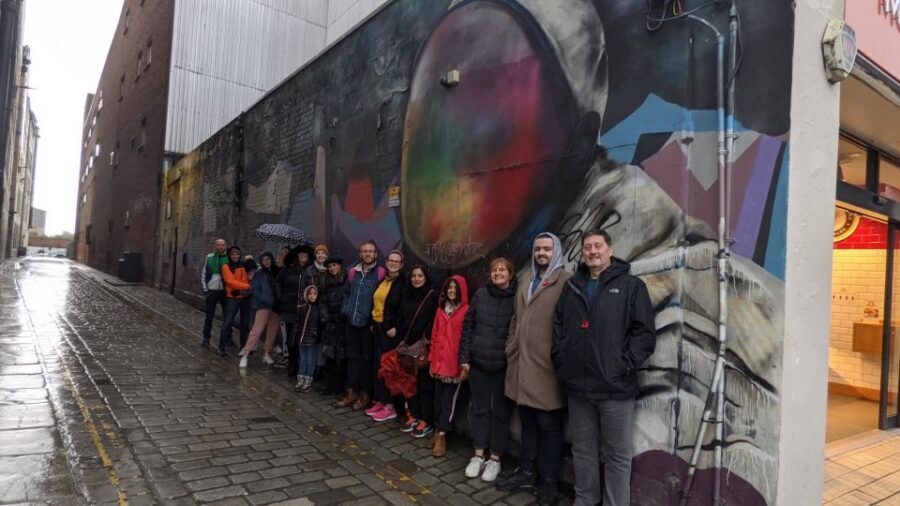
Next up is SPACEMAN (Mural Trail #5). Pieces with a “character” feel often reset your attention. You stop trying to decode symbolism and start watching composition—how the figure interacts with the wall, how the colors behave, and what the artist is doing with negative space.
This stop is useful even if you only remember one thing from the walk: street art is a design practice. Even the wild ideas require structure—line, proportion, and placement.
Guides often bring humor or quick anecdotes into these stops. You may hear stories about why certain styles appeared and how the scene evolved, plus the difference between work made to be seen quickly versus work made to last.
Fellow Glasgow Residents: the city talks back
The final mural stop is Fellow Glasgow Residents. The title alone signals what this tour tries to do: show you street art as communication from the city to itself.
This is where the walk often ends feeling reflective. You’ve already seen murals tied to humor, events, and cultural icons, and you’ve also heard the “how did Glasgow get here?” explanation—how graffiti and street art became a major part of the city’s modern identity.
If you enjoy nightlife and contemporary city culture, this is also the mental bridge the tour is aiming for. Street art in Glasgow isn’t separated from everyday life; it’s part of the same energy that keeps the city turning after dark.
Finish point at NCP Car Park Glasgow Ingram Street
You’ll finish at the NCP Car Park Glasgow Ingram Street. Having a clear end point matters because you’re ready to keep moving afterward—dinner, a pub, or another neighborhood walk—without guessing where you’ll end up.
If you’re planning your day tightly, I’d build in a buffer at the end. Walking routes can run a little longer than the posted time, especially with weather. Some people have reported it closer to two hours, and rain slows foot traffic without ruining the experience.
Timing, pace, and what to wear (rain in Glasgow is real)
The tour is listed as 1.5 hours, and that’s a solid target. Still, Glasgow pace is human. If your group asks questions, the guide will usually go with it—because the art stories are the point.
Weather-wise: bring weather-appropriate clothing. One common theme is that the walk stays fun in rain. You’ll see plenty of art up close even when streets are slick, but you’ll enjoy it more if you’re not cold and squinting.
Shoes are non-negotiable. You’re walking lanes and hidden corners, so pick something you can stand in for a while. If you’re the type who gets sore on cobblestones or uneven pavement, err on the side of sturdier footwear.
Price and value: why $16 can make sense
At about $16 per person for roughly 90 minutes, this is one of the more cost-friendly ways to get a guided, story-driven look at a specific side of Glasgow.
Street art tours can cost more when they cover huge areas or require transport. Here, the value comes from concentration: multiple mural trail stops packed into one walk, plus a live guide explaining what you’re seeing, including the role of local institutions and the evolution of the scene.
For locals, it can still feel worth it because you’ll learn the background you’d skip if you were just taking photos. For first-time visitors, it’s even better: you get a curated way to understand why certain images exist and why Glasgow residents connect to them.
And the ratings back the feel: an average of 4.8 out of 5 across about 385 reviews suggests consistent delivery—especially on guide energy and engagement.
Who this tour is best for
This is a strong fit if you:
- want to see Glasgow without the “checklist” of monuments
- like art with context—why it was made, not just what it looks like
- enjoy meeting locals through a topic (many guides are lively and funny)
- travel with kids or mixed ages, since some guides manage group energy well
It’s also a good choice if you’re a repeat visitor. Street art changes, and this format helps you spot that change. Even if you’ve walked around before, you’ll usually come away with a clearer map in your head of how the city’s mural trail connects.
Guides to look out for: what the best ones do
The tour is run by live English-speaking guides, and names you may see include Sophie, Gabriel, Grace, David, Caron, Liz, Gabe, and Morag. The common thread in how people describe the experience is engagement: the guide explains clearly, keeps the group moving at a comfortable pace, and makes room for questions.
Some guides also go beyond the art itself. One guide style you’ll likely appreciate is connecting murals to political and historical context. Another is making street art basics easy for complete beginners—so you don’t feel lost when you’re staring at a wall full of overlapping styles.
If you care about humor, you’re in luck. Many guides bring a light touch, which helps when you’re walking in wind or drizzle.
Should you book this Glasgow street art walk?
Book it if you want a focused, story-led way to understand Glasgow’s modern identity—and you’d rather look at streets than just buildings.
Skip it only if you’re expecting a tour that covers famous sightseeing architecture or if you hate walking in the elements. Otherwise, this walk is a great value use of time: central, clear meeting point, and a route built around public art that you can actually see, not just read about later.
If your goal is to leave Glasgow feeling like you understood its street-level voice, this is one of the cleanest ways to do it in about an afternoon.
FAQ
How long is the Glasgow street art guided walking tour?
It runs for 1.5 hours.
Where do I meet the guide?
Meet by the Wind Turbines mural at 81 Mitchell Street, next to the NCP car park. The guide wears a bright orange jacket.
Where does the tour end?
The tour finishes at NCP Car Park Glasgow Ingram Street.
Is the tour wheelchair accessible?
Yes, the tour is listed as wheelchair accessible.
What language is the tour guide?
The live tour guide speaks English.
What should I bring?
Bring comfortable shoes and weather-appropriate clothing.
What’s included in the price?
You get the guide and the walking tour.
Can I cancel for a refund?
Yes. Free cancellation is available up to 24 hours in advance for a full refund.
Can I reserve without paying right away?
Yes. You can reserve now and pay later, meaning you can book and pay nothing today.