REVIEW · LONDON
London: British Museum Guided Tour with Priority Timeslots
Book on GetYourGuide →Operated by BEST TOURS LONDON LTD · Bookable on GetYourGuide
Two hours, no aimless roaming. This British Museum guided tour uses priority timeslots and a headset-friendly plan to help you hit the museum’s biggest stories fast, with stops built around the Great Court, the Parthenon Sculptures, and Egypt’s most famous objects. You also get a strong survey jump to Anglo-Saxon England with a focus on Sutton Hoo, so it feels like more than just a quick look-around.
I especially like how the tour uses clear, guided narration to keep the pace tight while still leaving room for questions with guides like Daniel, James, and Joey. One thing to keep in mind: the British Museum is huge—8 million artefacts across 70+ galleries—so in 2 hours you’re seeing the highlights, not trying to master the entire museum.
In This Review
- Quick hits
- Why a 2-Hour British Museum Tour Works
- Finding the Meeting Point Inside the Museum
- Great Court First: The View That Resets Your Brain
- Parthenon Sculptures (Elgin Marbles) Without the Confusion
- Egypt in Focus: Rosetta Stone, Book of the Dead, and Mummies
- The Enlightenment Room and the Museum’s 18th-Century Mind
- Chinese and Southeast Asian Collections: Art You Can Read
- Anglo-Saxon England and the Sutton Hoo Ship Burial
- How Guides Keep the Pace (and the Crowd) Under Control
- Value Check: Is $53 Worth It for a Priority-Timeslot Tour?
- What Might Be a Dealbreaker for You
- Should You Book This Priority-Timeslot British Museum Tour?
- FAQ
- How long is the British Museum guided tour with priority timeslots?
- What is included in the price?
- Where do I meet the guide?
- Is the tour skip-the-line?
- Are headsets provided?
- Is flash photography allowed?
- FAQ
- Is this tour suitable for wheelchair users or people with mobility impairments?
- Is it suitable for hearing-impaired people?
Quick hits
- Priority timeslots + separate entrance so you spend less time in lines and more time looking at objects.
- Great Court glass roof is a “look up” moment, not a background detail.
- Headsets available so you can hear explanations clearly even in a crowded museum.
- Egypt stop is built around meaning, including mummies, the Book of the Dead, and the Rosetta Stone.
- Sutton Hoo focus gives you real texture for Anglo-Saxon England, not just a name drop.
- Guides like Daniel, James, Antonio, and Lucy get repeated praise for timing, humor, and handling questions.
Why a 2-Hour British Museum Tour Works
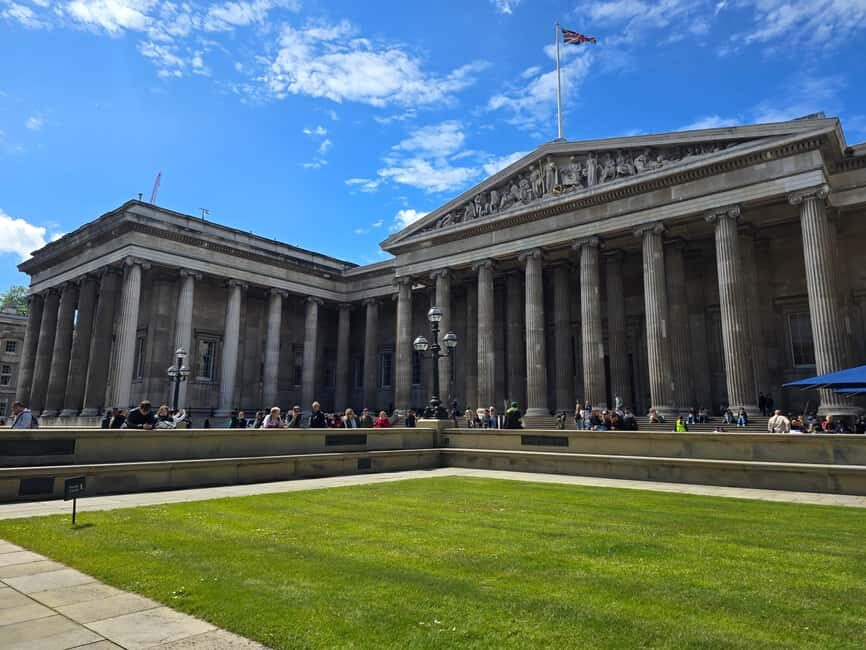
The British Museum can feel like trying to drink from a firehose. With over 8 million artefacts spread across 70+ galleries, a first visit can turn into a blur of “wow” that still leaves you missing the objects you actually came for.
This tour is designed for the real-life London schedule problem: you have limited time, you want the big highlights, and you don’t want to waste hours plotting routes. The priority timeslot entry and “skip-the-line” approach matters because the museum’s popularity is constant. When you walk in already set up to see the key rooms, two hours suddenly feels like a proper plan.
Best of all, the guide-led format gives you context you won’t get from wandering alone. You’re not just staring at marble or gold; you’re learning what to notice and why it mattered to the people who made it.
You can also read our reviews of more guided tours in London



Finding the Meeting Point Inside the Museum
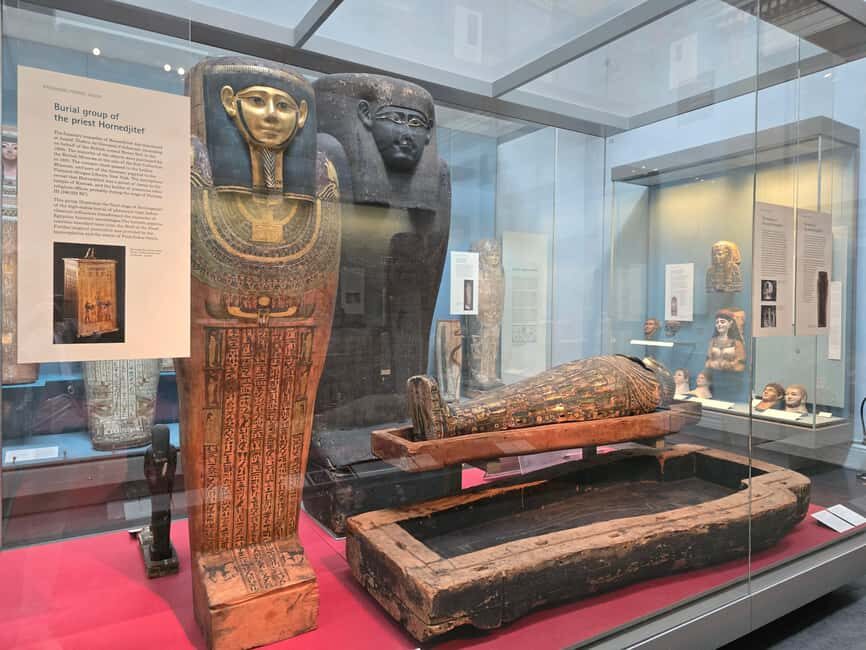
Start at 52 Great Russell St, then head into the museum with your eyes open. Your guide meets you inside the museum on the right side of the information desk, next to a column, carrying a yellow flag about 5–10 minutes before the tour starts.
This small detail is worth respecting. The museum layout plus the crush of visitors can make even a “simple meet-up” tricky if you arrive at the exact minute the tour begins. I’d aim to be there a bit early so you’re not negotiating crowds while everyone else is already assembling.
Once you locate the guide, you’re in the sweet spot: you go from arriving to viewing fast, which is the whole point of the priority timeslot.
Great Court First: The View That Resets Your Brain
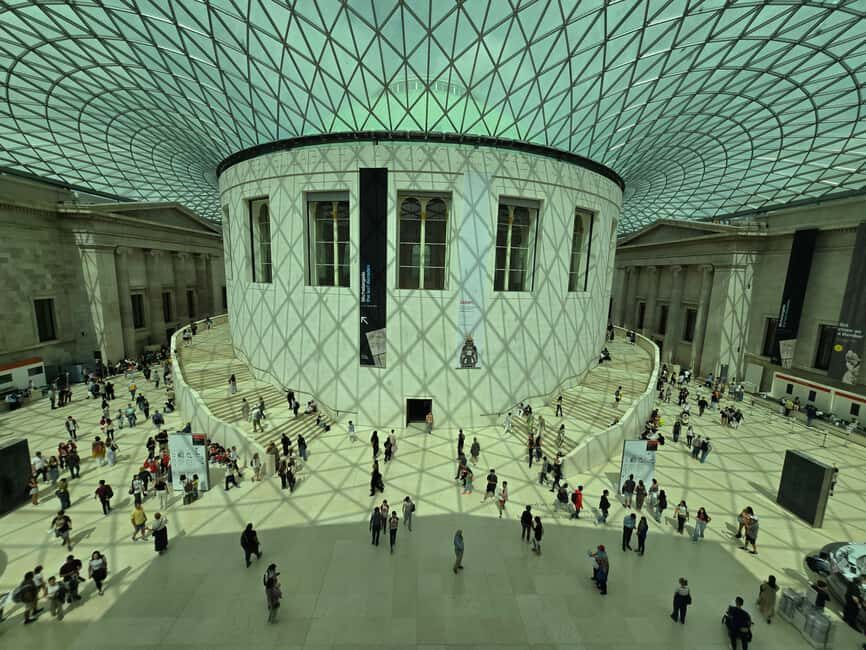
The tour starts with a signature British Museum move: a strong first look at the ceiling and the Great Court. Then you’ll spend time admiring the glass roof, which is stunning even if you’ve seen photos before.
This is more than pretty architecture. Seeing the Great Court early helps you orient yourself. From there, the museum doesn’t feel like endless corridors. It feels like a structured world with sections you can understand.
Practical tip: slow down here. People rush past it because the museum has bigger “headline” objects coming later. But if you take 30 seconds to look up and absorb the space, you’ll enjoy every next room more, because you’ll feel how the building holds the collections together.
Parthenon Sculptures (Elgin Marbles) Without the Confusion
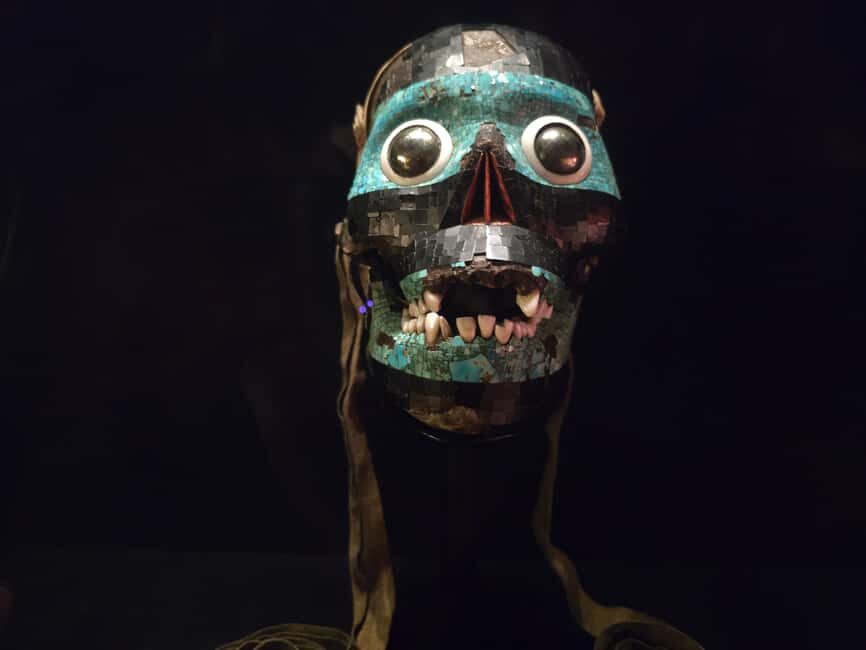
The tour’s Greek stop centers on the Parthenon Sculptures, often called the Elgin Marbles. You’ll get stories and framing that connect the pieces to the myths and legends of ancient Greece, instead of treating them like detached art fragments.
In a museum this big, it’s easy to leave the Greek galleries thinking you saw stone. A good guide changes that. The narration helps you notice details you’d otherwise skip—facial expressions, composition choices, and the sense of story told through sculpture.
One reason this stop lands well on a highlights tour: the objects are famous enough that you’ll recognize what you’re looking at, but the context is what makes it click. That combination is ideal when you only have two hours.
Egypt in Focus: Rosetta Stone, Book of the Dead, and Mummies
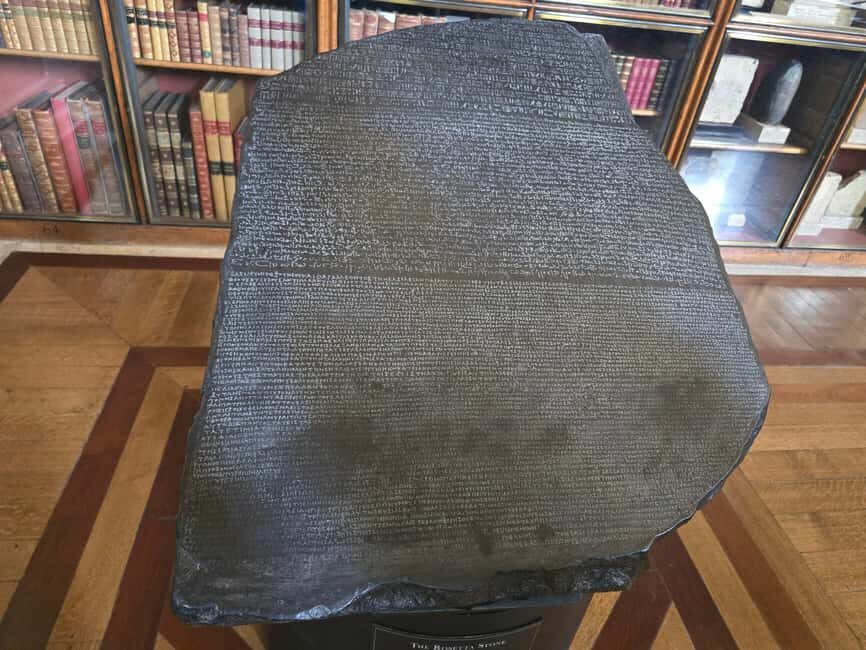
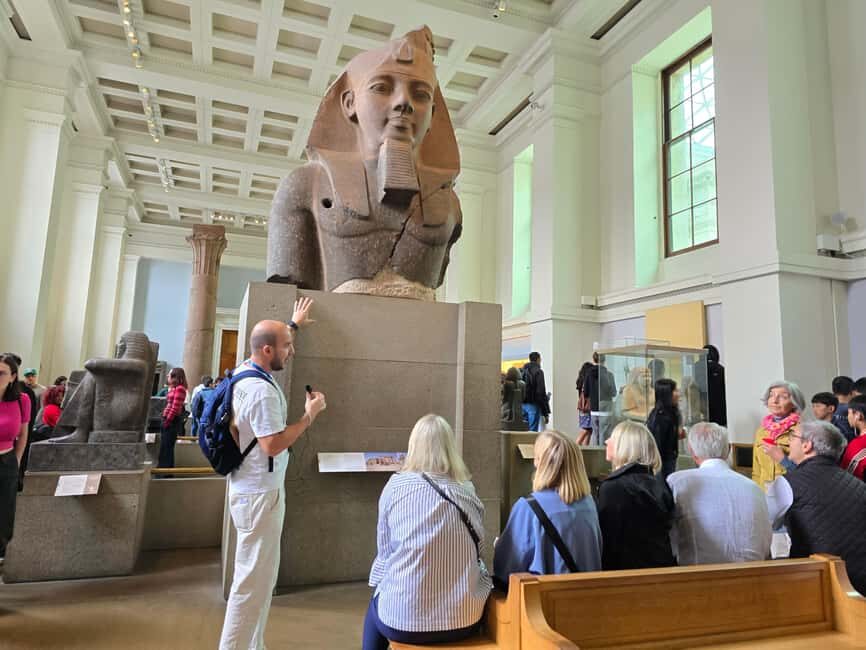
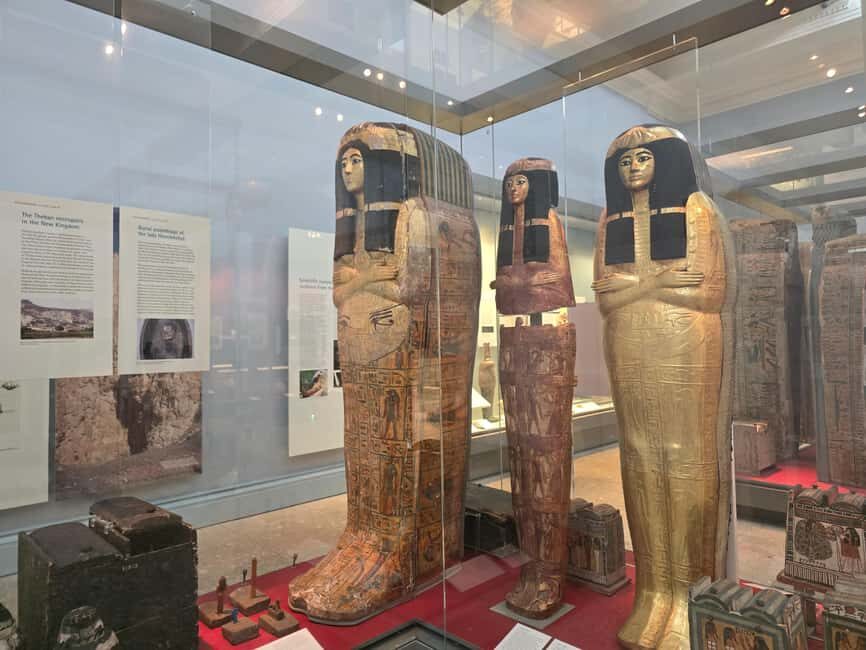
If there’s one part of the tour that makes people sit up straighter, it’s Egypt. You’re guided to major anchors like Egyptian mummies and related material, the Book of the Dead, and the bust of Ramesses II. You also get attention on burial practices and religious beliefs, not just a quick “here’s what this is.”
Then comes one of the museum’s most mythic objects: the Rosetta Stone. Even if you’ve heard of it in school history, seeing it in person is different. The guide’s role is key here—connecting the object to what it enabled, and why that matters to how we read the past.
Mummies can also be an emotional hit for some visitors. The tour handles this in an educational way, focusing on what the objects meant to Egyptians. That tone helps you keep your feet on the ground instead of turning the visit into pure shock value.
You can also read our reviews of more museum experiences in London





The Enlightenment Room and the Museum’s 18th-Century Mind
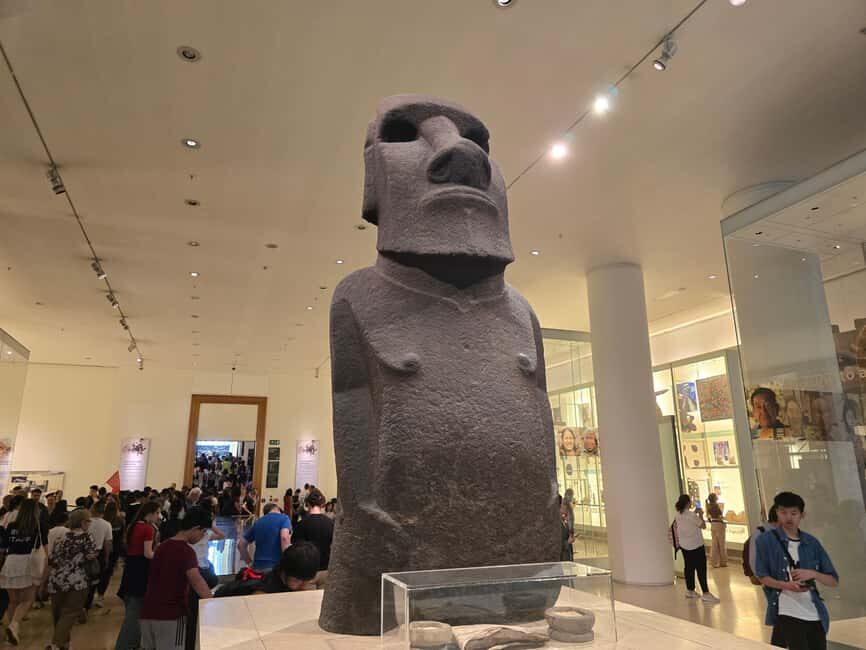
Next you’ll see the Enlightenment Room, where the tour highlights the spirit of discovery from the 18th century. This section includes diverse artefacts that reflect intellectual curiosity and scientific advancements of the era.
What I like about including a room like this in a highlights itinerary is that it widens your idea of the British Museum beyond “ancient stuff.” You’re reminded the museum is also a record of how people in more recent centuries thought, collected, tested, and tried to explain the world.
If you’re the type who likes your history with a cause-and-effect thread, this is a satisfying pause. It gives you a bridge between different civilizations and different ways of understanding knowledge.
Chinese and Southeast Asian Collections: Art You Can Read
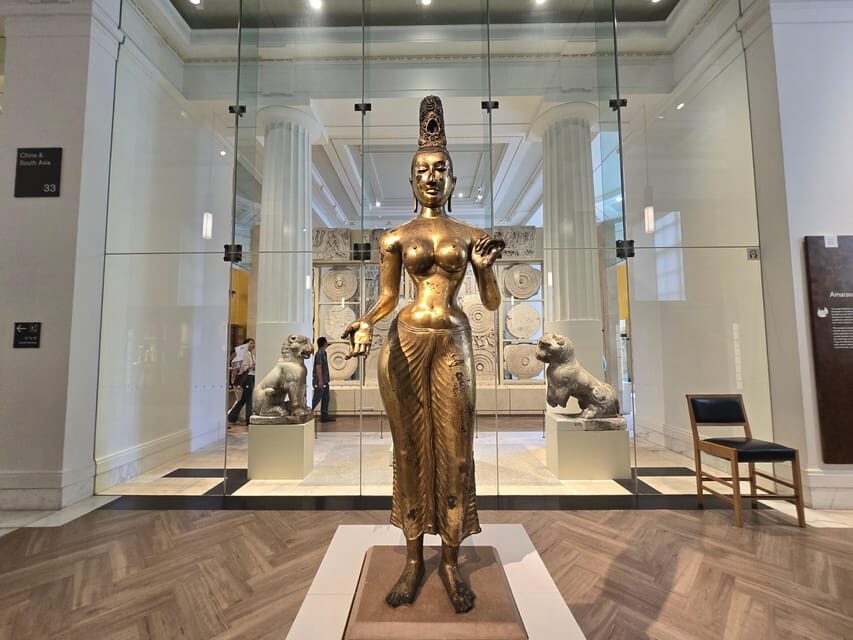
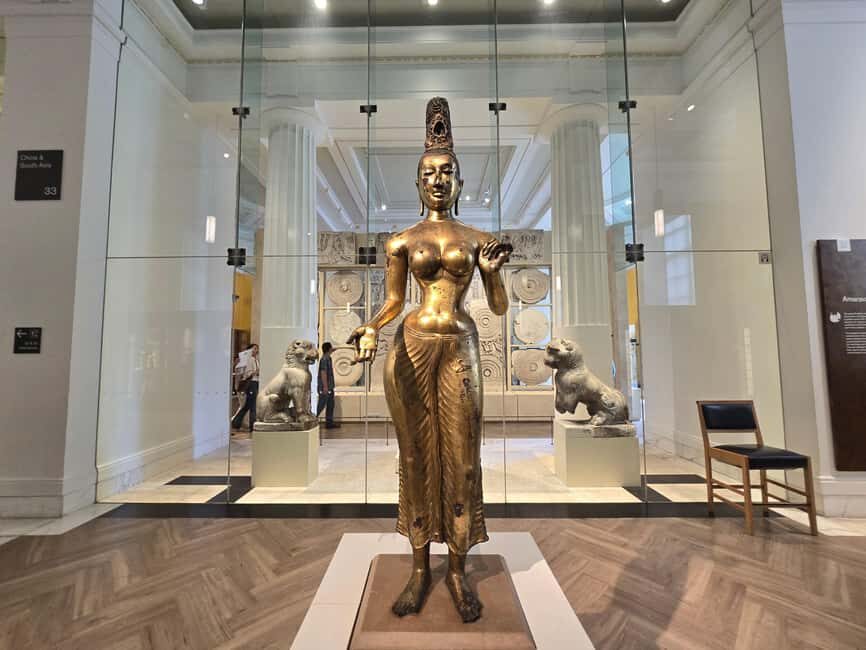
The tour also makes time for the museum’s Chinese collection, plus finely crafted items from Southeast Asia. The guide’s explanation connects the objects to cultural and artistic traditions, so you’re not only admiring craftsmanship—you’re learning how to interpret it.
Even in a fast-moving highlights tour, these sections are where you can feel the “human scale” of art. Details in materials and design choices stop being random decoration and become language you can partially read through the guide’s framing.
This is also a good segment if you’ve been mainly focused on the big-name Western world objects. It refreshes your perspective and reminds you that the British Museum’s story is global.
Anglo-Saxon England and the Sutton Hoo Ship Burial
Toward the end of the tour, you’ll focus on Anglo-Saxon England with a spotlight on Sutton Hoo ship burial. Expect to see iconic objects such as the intricately crafted helmet and shield, plus other items tied to the burial.
This stop often feels like a time machine because Sutton Hoo doesn’t read like a distant legend. You get a sense of craftsmanship and culture—what elite power looked like, how objects were made for status, and how belief systems shaped burial practices.
One thing to watch for: Sutton Hoo artifacts are visually impressive, but the best part is the guide’s explanation of what those objects suggest about early medieval England. That’s where the tour earns its ticket.
How Guides Keep the Pace (and the Crowd) Under Control
A two-hour museum tour lives or dies on pacing. This one seems built around moving efficiently between major stops while still making time for questions.
In real feedback patterns, guides like Daniel get praise for finding the right speed and balance between moving through highlights and providing useful details. Others like James are praised for professional, patient delivery, and for using the headset system in a way that stays clear even when the museum is crowded.
I also liked seeing repeated comments about crowd management and headset clarity. The headset option is a big deal. In a place like the British Museum, it’s the difference between hearing enough to follow the story and constantly asking someone nearby what the guide is saying.
Small practical note: if your headset seems hard to hear, tell the guide right away. One guide got feedback for being hard to understand even with headphones, which is a reminder that audio quality depends on volume, fit, and attention. Fixing it early helps.
Value Check: Is $53 Worth It for a Priority-Timeslot Tour?
At $53 per person for a 2-hour highlights tour, the value comes from what’s included and what it prevents.
You’re not just paying for a guide. Your ticket includes British Museum entrance with priority timeslots, plus skip-the-line via a separate entrance. On top of that, the tour includes English/Italian live commentary, and there’s an option for headsets.
That combination matters if you’re visiting during peak days. Queue time at the British Museum can steal your best energy. If you’re short on time, paying for priority is basically paying for focus: you get to spend your limited hours looking at objects, not staring at ticket lines.
I’d think of it like this: if you’re the kind of person who plans your route, great—then this tour becomes a guided shortcut to the top objects. If you’re not great at planning, it becomes the structure you need so the museum doesn’t overwhelm you.
What Might Be a Dealbreaker for You
This tour isn’t for everyone.
First, the duration is short by definition. Since the museum holds millions of artefacts, you’ll leave with highlights, not mastery. If you want a slow, deep museum day, you might prefer a longer independent visit.
Second, the tour specifies it is not suitable for people with mobility impairments or wheelchair users, and it is also not suitable for hearing-impaired people. Those details are important, and they’re not the kind of things you want to gamble on.
Finally, flash photography isn’t allowed. That one is standard museum practice, but it’s still part of the rules you’ll follow.
Should You Book This Priority-Timeslot British Museum Tour?
I’d book this if:
- you’re a first-time visitor and want a fast, meaningful overview
- you only have a couple hours in London and you’d rather see the right objects than everything a bit
- you like your history with clear storytelling across different cultures, including Greece, Egypt, China, and Anglo-Saxon England
- you want help navigating crowds, with headsets to keep the narration clear
I’d skip it if:
- you want to spend most of your day in one theme (like only Egypt or only Greek art)
- you need full accessibility support not covered by the tour’s suitability notes
- you prefer quiet, self-paced looking without a structured itinerary
If you’re on the clock, this tour is a solid way to make the British Museum feel doable. You’ll get the big visual hits—Great Court glass, Elgin Marbles, mummies, Rosetta Stone, and Sutton Hoo—while a guide helps you see what to notice and what it means.
FAQ
How long is the British Museum guided tour with priority timeslots?
The tour lasts 2 hours.
What is included in the price?
The package includes a guided tour with English/Italian commentary, British Museum entrance tickets with priority timeslots, and an option for headsets.
Where do I meet the guide?
Meet inside the British Museum on the right side of the information desk, next to a column. Your guide is there 5–10 minutes before the tour starts with a yellow flag.
Is the tour skip-the-line?
Yes. It includes skip-the-line entry through a separate entrance with priority timeslots.
Are headsets provided?
Headsets are available as an option. They are meant to help you hear the guide’s commentary clearly.
Is flash photography allowed?
No. Flash photography is not allowed.
FAQ
Is this tour suitable for wheelchair users or people with mobility impairments?
No. The tour is not suitable for people with mobility impairments or wheelchair users.
Is it suitable for hearing-impaired people?
No. The tour is not suitable for hearing-impaired people.